
Itami Jun Museum By ITM Yooehwa Architects | A Contemplative Architecture in Jeju, South Korea
Itami Jun Museum in Jeju honors Jun Itami with contemplative concrete architecture, integrating nature, light, and serene spaces for reflection.

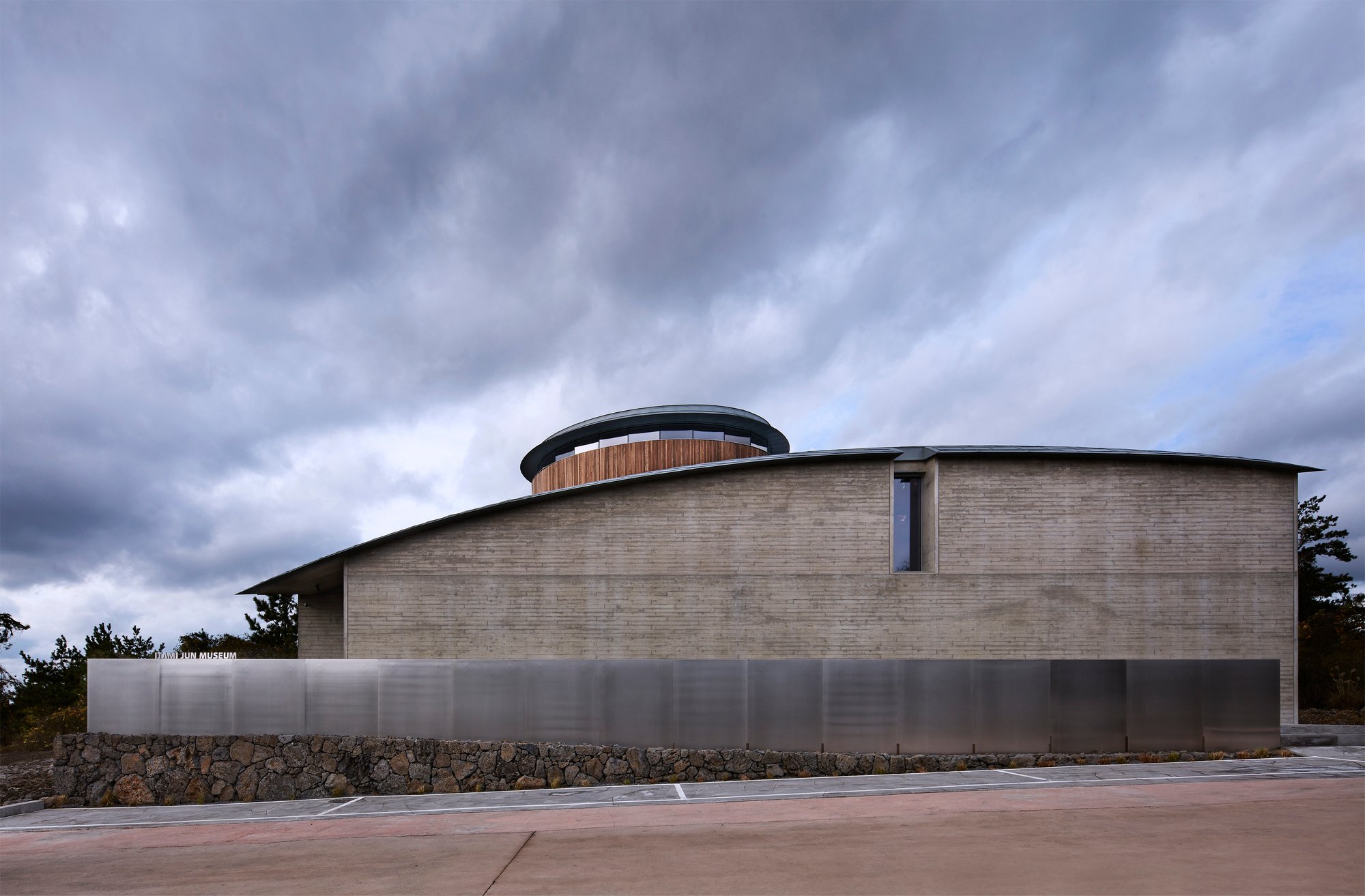
Nestled within the dense forest landscape of Gokjawal on Jeju Island, the Itami Jun Museum is a deeply introspective work of architecture dedicated to the late Japanese-Korean architect Jun Itami. Designed by ITM Yooehwa Architects under the lead of Ehwa Yoo, the museum embodies Jun Itami’s lifelong philosophy: architecture must be rooted in place and bear fruit from local context and tradition.
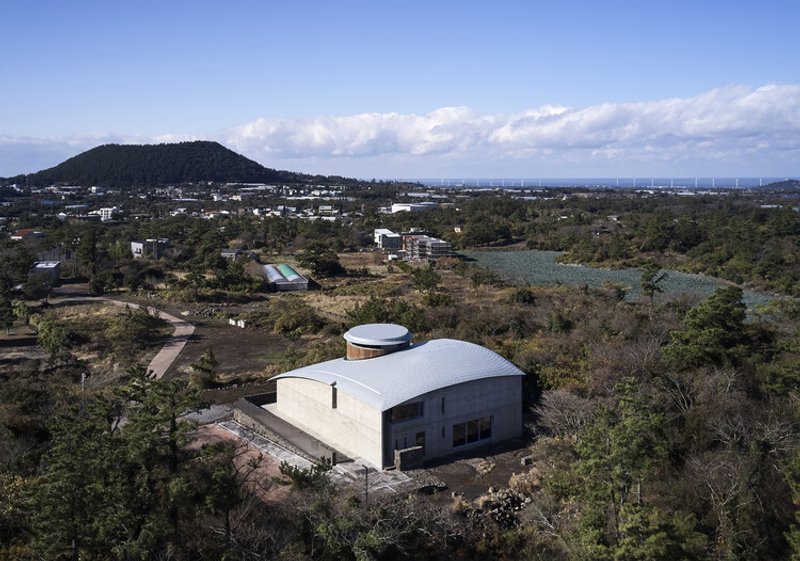
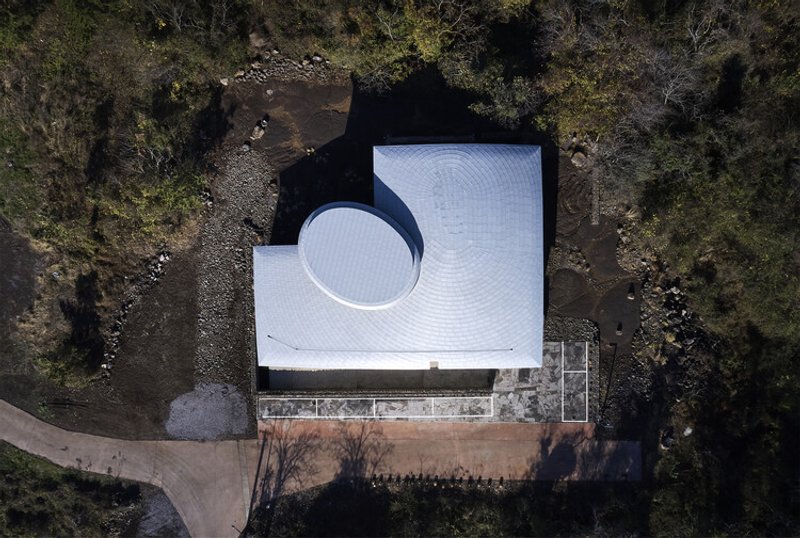
Rather than asserting itself as an object, the museum settles quietly into the land, preserving the horizontal serenity of Jeju’s volcanic forest and establishing a profound dialogue between architecture, nature, and memory.
Architecture Shaped by Place and Philosophy
The museum’s form responds sensitively to Jeju’s landscape, avoiding vertical dominance and instead emphasizing calm, grounded massing. Its architectural language draws from Jun Itami’s own work, where silence, materiality, and restraint are used to create emotional depth rather than visual excess.
The building does not interrupt the surrounding forest but adapts to it, allowing the terrain, trees, and light to shape the visitor’s experience. This respectful integration reflects Itami’s belief that architecture should coexist with nature rather than compete with it.
Material Expression and Transitional Thresholds
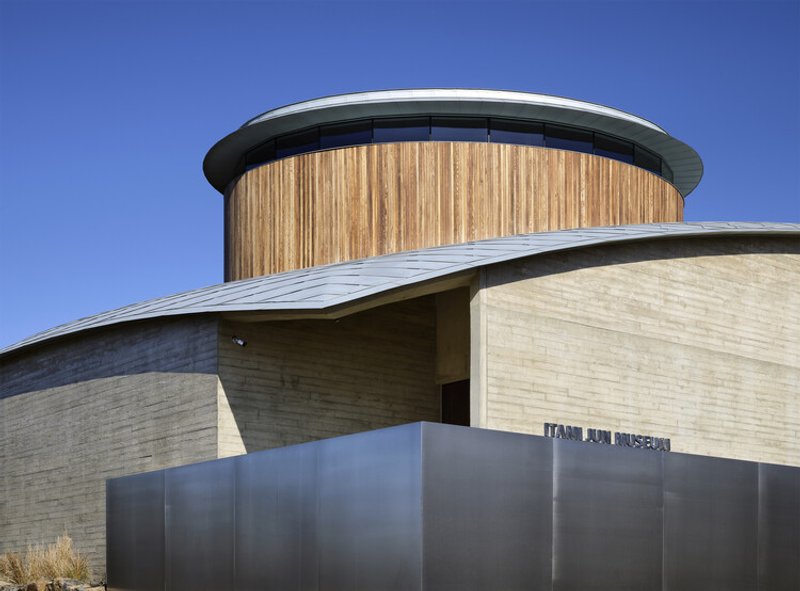
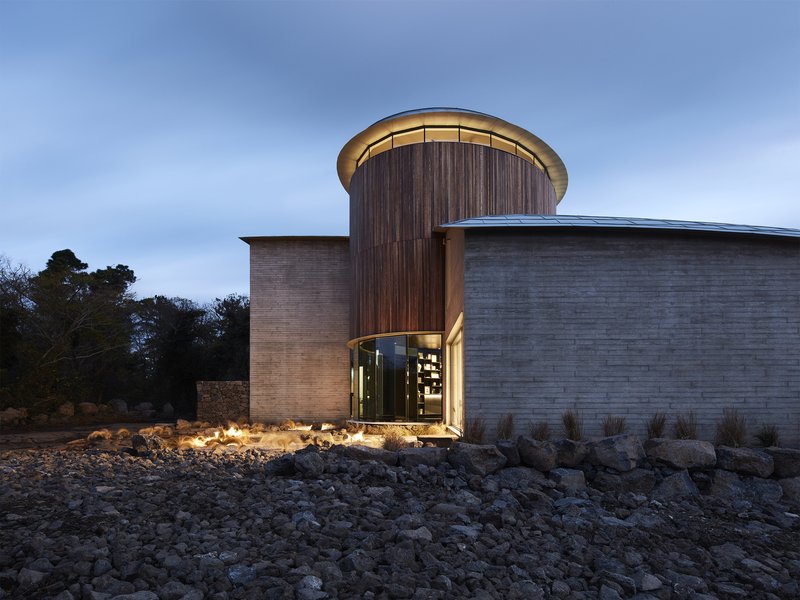
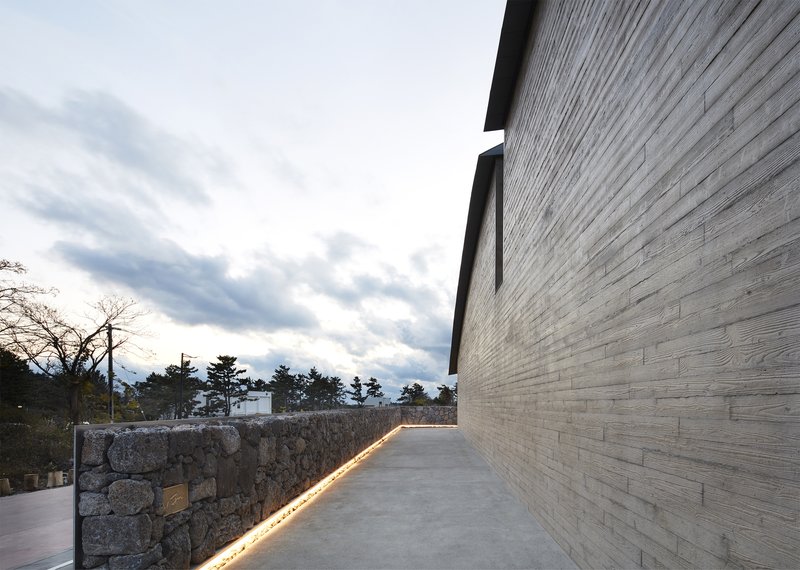
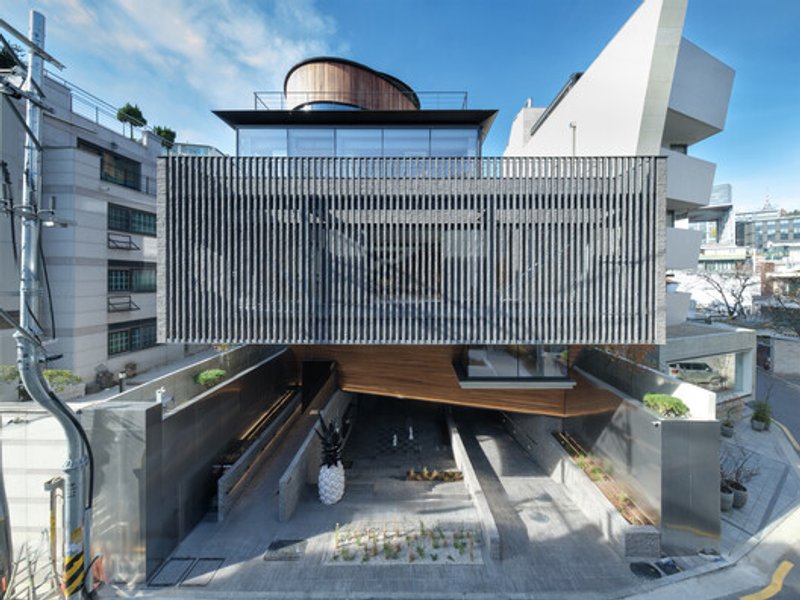
The exterior is defined by exposed concrete walls featuring an ogee pattern that subtly echoes the grain of wood. This delicate texture softens the inherent coldness of concrete, creating a tactile surface that bridges the natural and the constructed.
In dialogue with Jeju’s traditional stone walls, stainless steel elements introduce a contemporary contrast, reinforcing the tension between tradition and modernity that runs throughout the project. The entrance unfolds along this textured wall, acting as a transitional space between the wild forest and the contemplative interior.
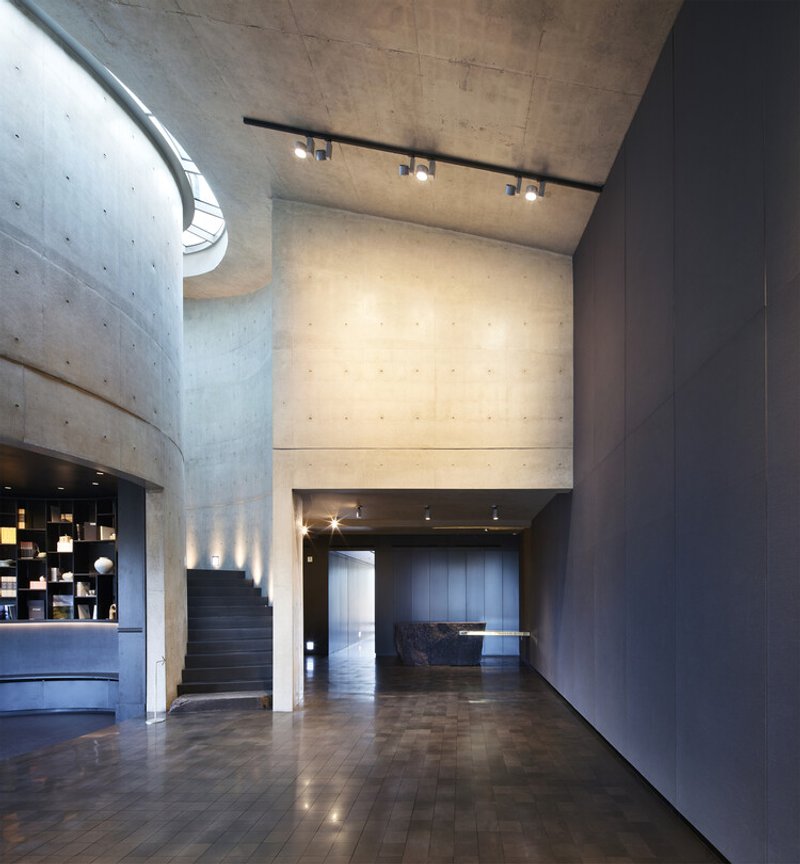
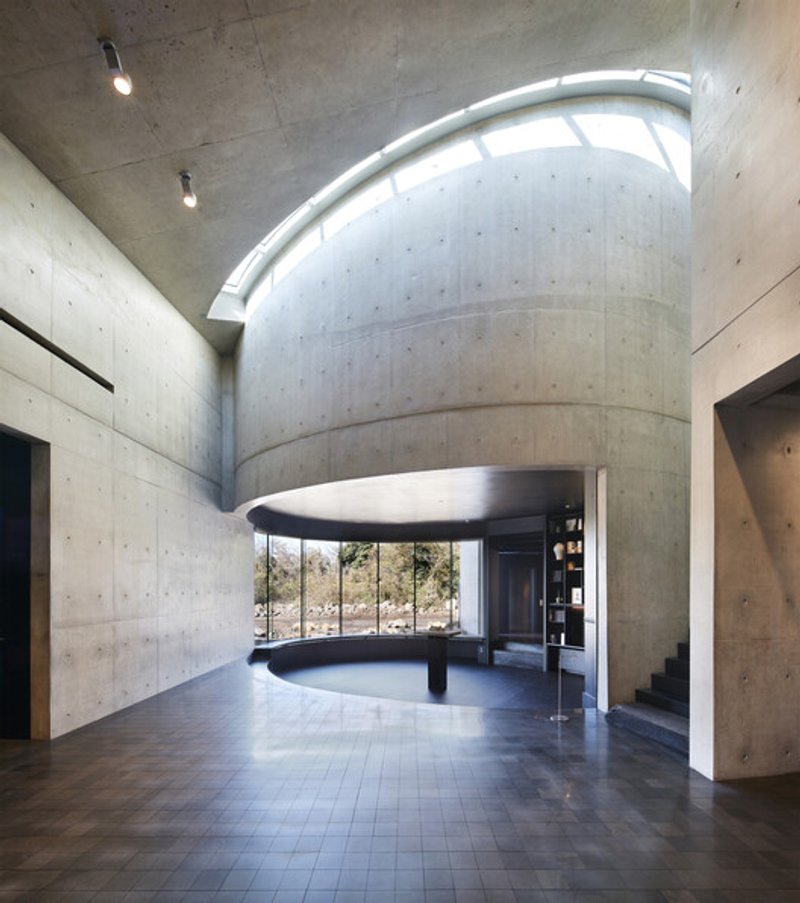
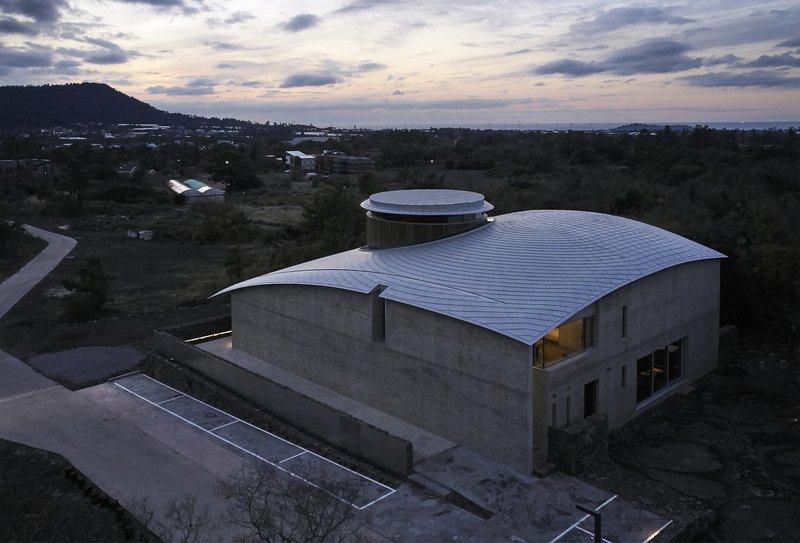
At the heart of the lobby, an elliptical mass, visible from the exterior, penetrates the space, establishing a strong spatial and symbolic core.
Light, Silence, and the Elliptical Core
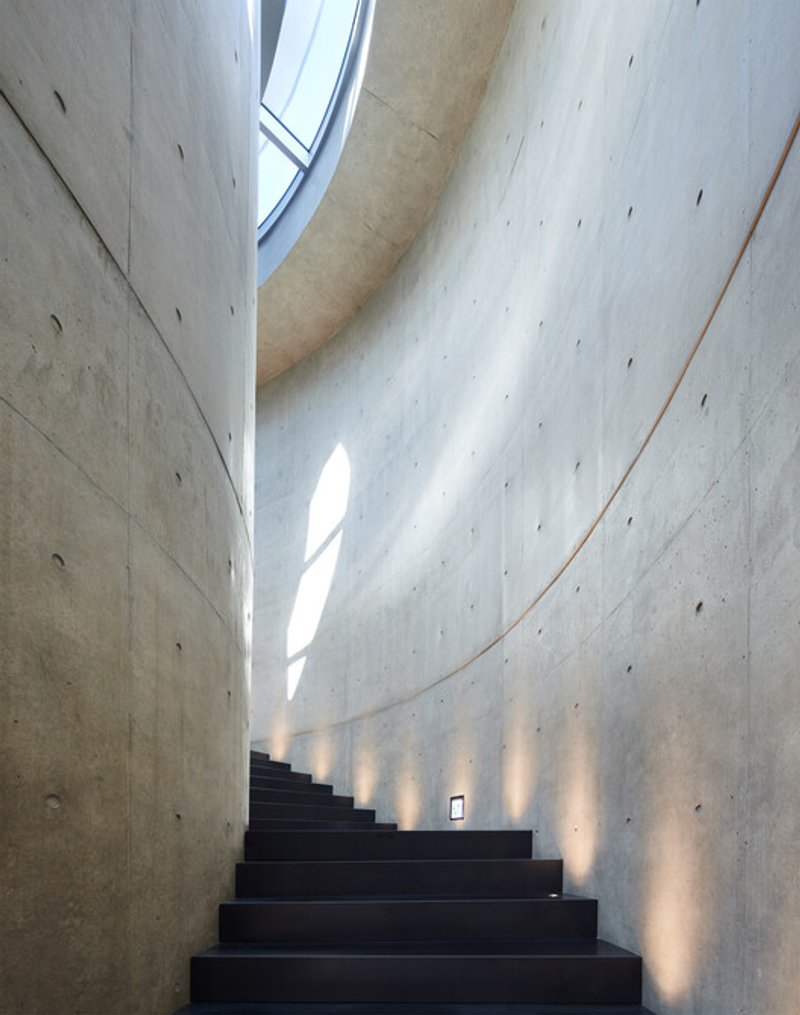
Artificial lighting is intentionally minimized. Instead, natural light filters gently through narrow gap windows located between the elliptical mass and the roof, tracing the curvature of the interior and creating a subtle rhythm of light and shadow throughout the day.
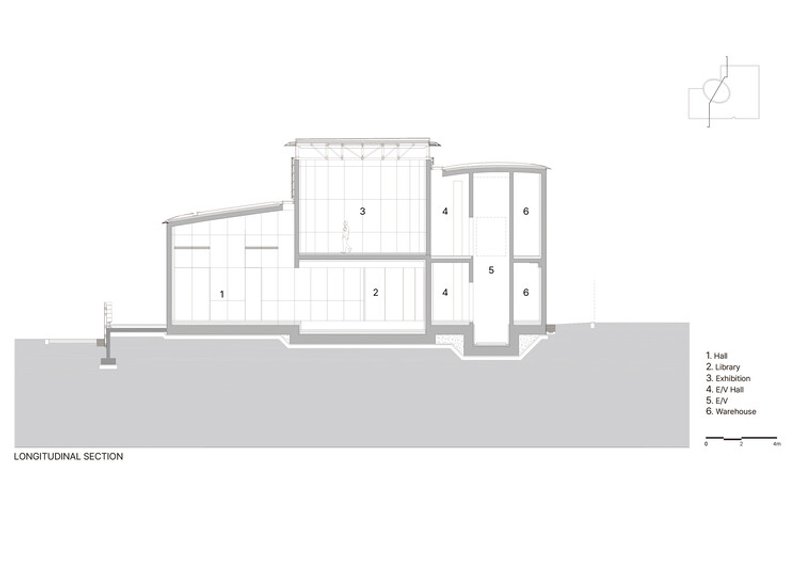
This elliptical form becomes a vertical axis of movement and perception. As visitors ascend the stairs wrapped around this luminous core, they experience a gradual transition from grounded stillness to contemplative immersion.
The Indian Ink Space: Immersion and Creation
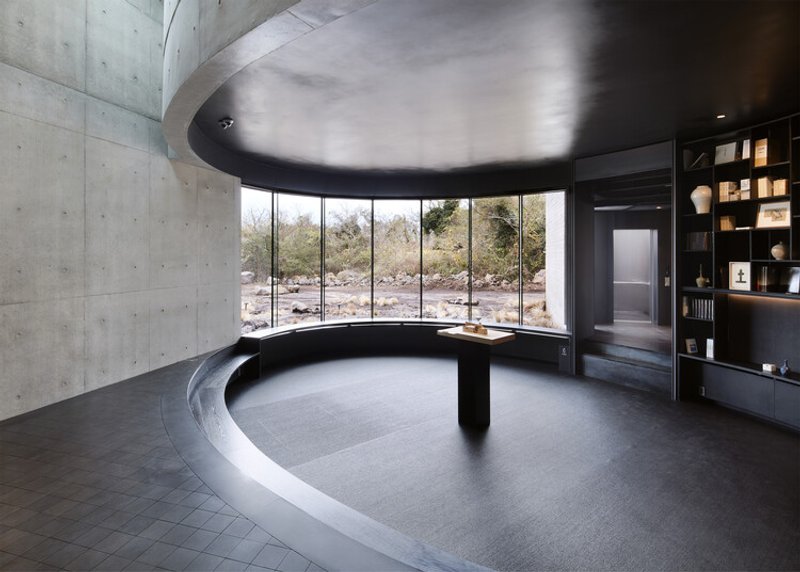
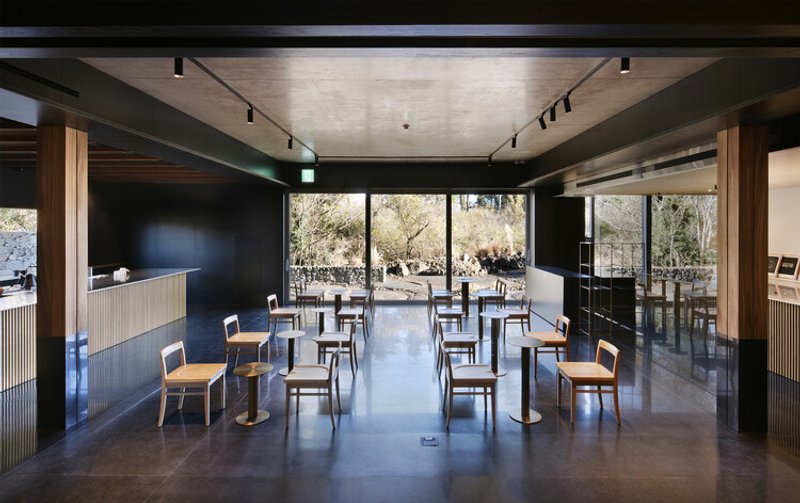
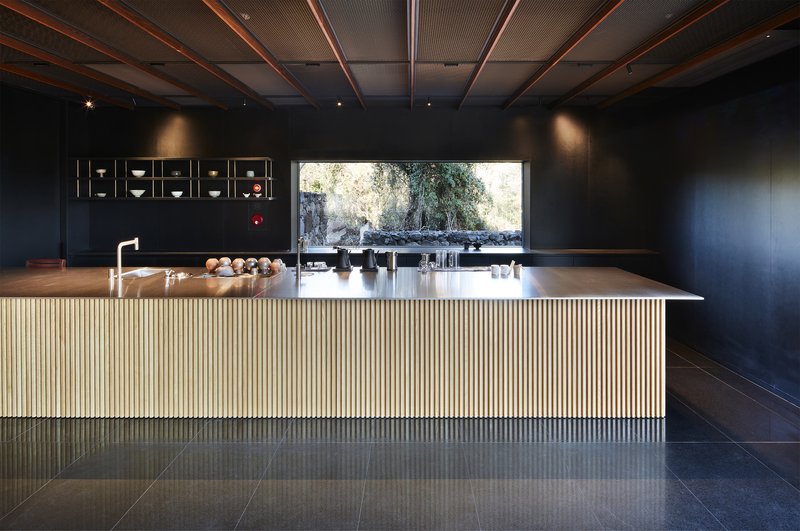
On the first floor, the library is conceived as an “indian ink” space, a signature color deeply associated with Jun Itami’s own studio and creative process. Floors, walls, and ceilings are composed in varying tones and materials of deep black, producing subtle acoustic and tactile differences.
This space symbolizes immersion, solitude, and creation, key themes in Itami’s life and work. It is a place where darkness carries warmth, silence holds meaning, and light emerges with restraint. The architects describe it as “a space of light in darkness, silence in solitude,” reflecting the introspective nature of Jun Itami himself.
Spatial Continuity and Nature Integration
The museum’s first-floor spaces maintain continuous visual and physical connections to the surrounding forest through carefully placed openings. Nature is never excluded; instead, it becomes an ever-present backdrop to contemplation.
Moving upward, visitors arrive at the second-floor exhibition spaces, where the architecture becomes more focused and inward-looking, guiding attention toward the works on display while maintaining a sense of calm enclosure.
Permanent Exhibition: The Shape of Jeju
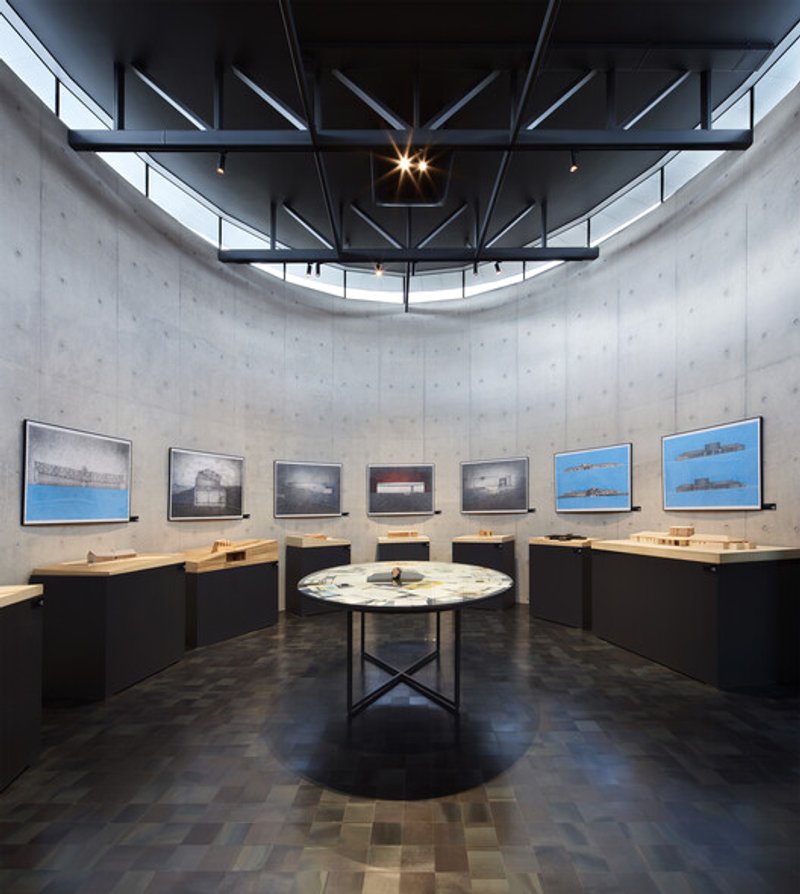
The centerpiece of the museum is the oval-shaped permanent exhibition hall on the second floor. Its form is inspired by the shape of Jeju Island itself, reinforcing the deep bond between Jun Itami’s work and the island that influenced much of his architecture.
This central space houses a curated collection of Itami’s representative works, allowing visitors to engage with his architectural legacy within a form that echoes both geography and philosophy.
Architecture of Coexistence
The Itami Jun Museum is ultimately an architecture of coexistence: between nature and building, light and shadow, memory and presence. It does not seek spectacle but invites quiet reflection, offering an environment where architecture becomes a medium for thought, emotion, and reverence.
Through restrained materiality, careful use of light, and profound respect for context, ITM Yooehwa Architects have created a museum that stands not only as a tribute to Jun Itami, but as a continuation of his architectural spirit.
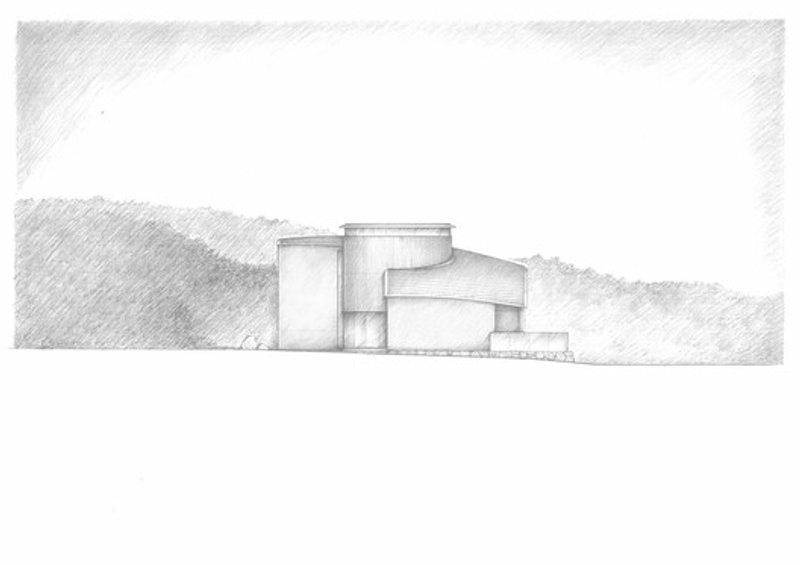
All the photographs are works of Yongkwan Kim




Popular Articles
Popular articles from the community

Milan Crossover: Sustainable Architecture for a New Fashion Culture in Milan
Milan Crossover transforms fashion culture through sustainable architecture, linking material libraries, remake studios, and public runways.

Kaffeebühnen: Coffee Shop Architecture Designed as a Civic Stage Between Vienna’s City and Park
Kaffeebühnen turns coffee shop architecture into a civic stage, linking Vienna’s park edge, urban life, warm timber yards, and coffee craft.
PLATAFORMArq Folds a Concrete Roof Over the Portuguese Mountains in House #474
A 220-square-meter residence in Teixoso, Portugal, wraps board-formed concrete into an angular canopy that frames the Serra da Estrela foothills.
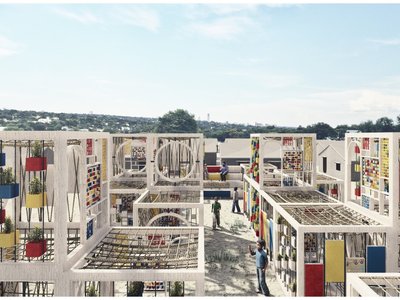
The Faith: Modular Architecture for Play, Learning, and Hope in Kutupalong Refugee Camp
A modular playground architecture project in Bangladesh where play, learning, safety, and hope rebuild childhood inside a refugee camp anew.


Similar Reads
You might also enjoy these articles

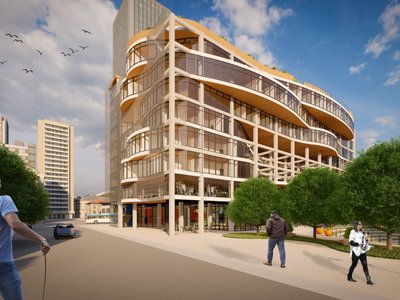
Olio Towers: A Mid-Rise for Performers That Fuses Housing, Rehearsal, and Stage
Located blocks from Houston's Theater District, this modular tower stacks living units around a central performance atrium.
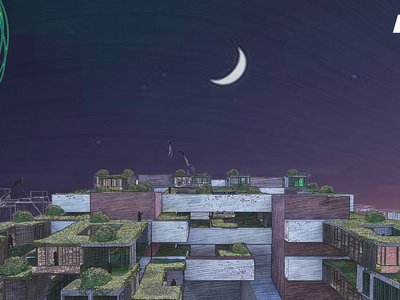
Oasis: Modular Green Housing Carved into Dhaka's Urban Fabric
A shortlisted Plugin Housing entry reclaims unauthorized settlements in Dhaka with stepped concrete volumes, green roofs, and ventilation-driven design.

Black Hole: A Floating Megastructure for the Post-Physical Era
Emiliano Mazzarotto envisions a spherical, self-scaling arena where e-sports, digital hotels, and holographic stadiums replace traditional public space.
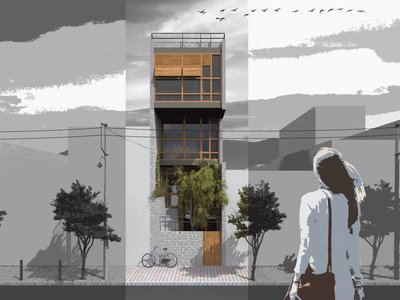
Compact & Sustainable Living in Piraeus: A Four-Level Family Home Built Around Light and Air
A narrow townhouse in one of Greece's densest port cities uses a central atrium and passive strategies to house three generations under one roof.
Explore Cultural Architecture Competitions
Discover active competitions in this discipline




The International Standard for Design Portfolios


The Global Benchmark for Architecture Dissertation Awards


The Global Benchmark for Graduation Excellence


Challenge to reimagine the Iron Throne
Comments (0)
Please login or sign up to add comments
No comments yet. Be the first to comment!