

IzQ Innovation Center by Ofisvesaire
Adaptive reuse of Izmir Chamber of Commerce into a dynamic innovation hub, integrating kinetic façade, collaborative spaces, and waterfront connectivity.


Reimagining the İzmir Chamber of Commerce Building as a Hub for Innovation
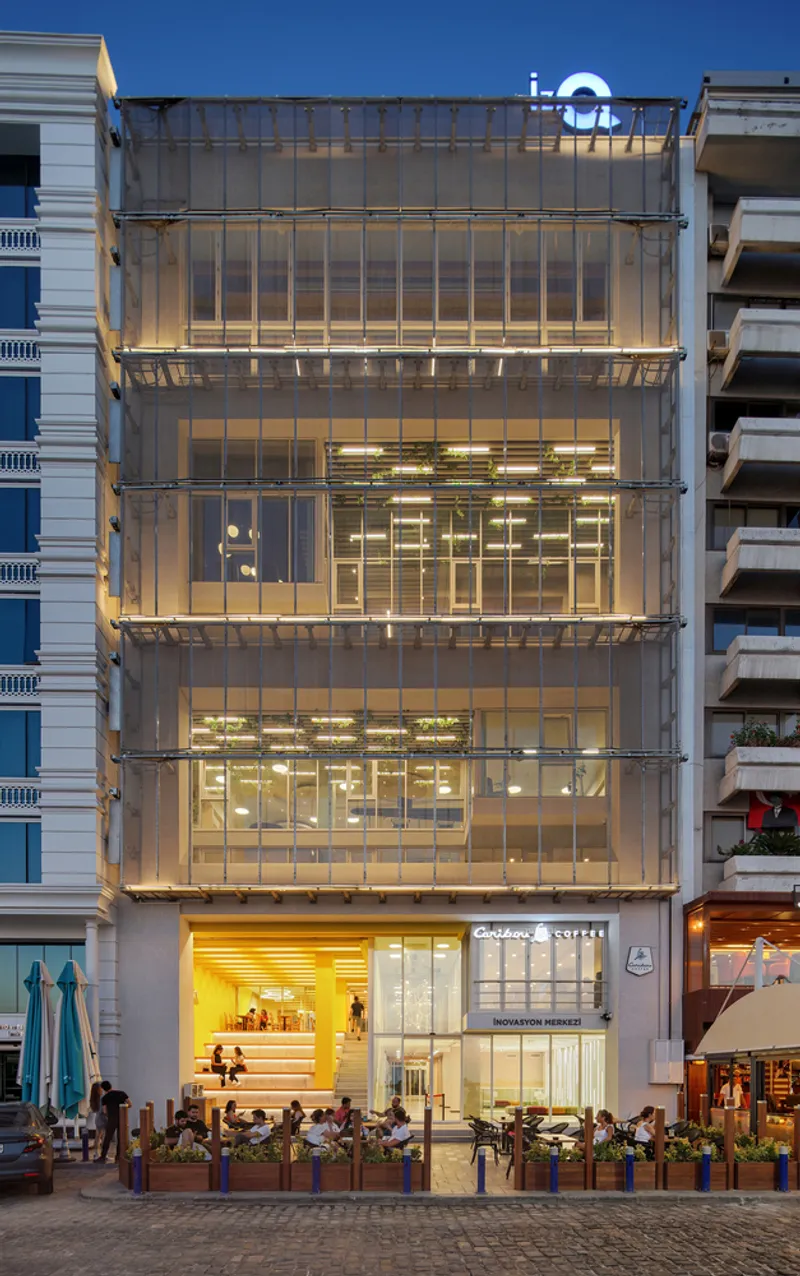
Originally designed in 1986 for the administrative needs of the İzmir Chamber of Commerce, the IZTO building stood as a modernist icon along the city’s waterfront. Over time, however, its rigid structure no longer served the evolving needs of a dynamic urban landscape. The transformation into the IzQ Innovation Center, led by Ofisvesaire, marks a striking example of adaptive reuse in contemporary Turkish architecture — one that revives an existing structure to meet the social, technological, and environmental demands of today.
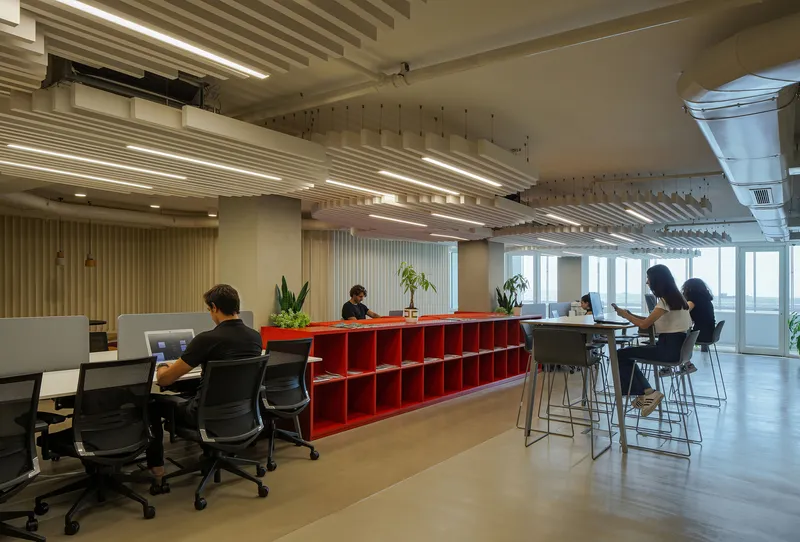
Through meticulous research and structural analysis, the architects devised a layered strategy to repurpose the building into an integrated public innovation hub. The new design introduces flexible workspaces, collaborative areas, and social zones, encouraging creativity and knowledge exchange across disciplines.
Adaptive Reuse and Architectural Transformation
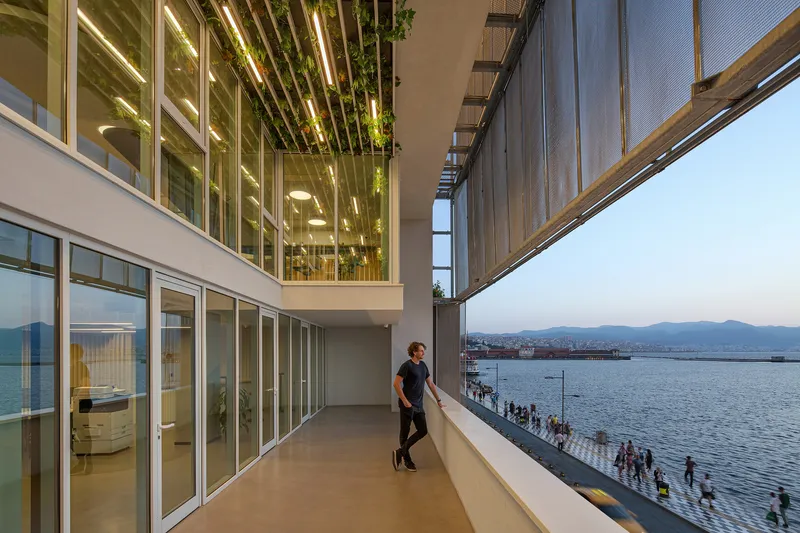
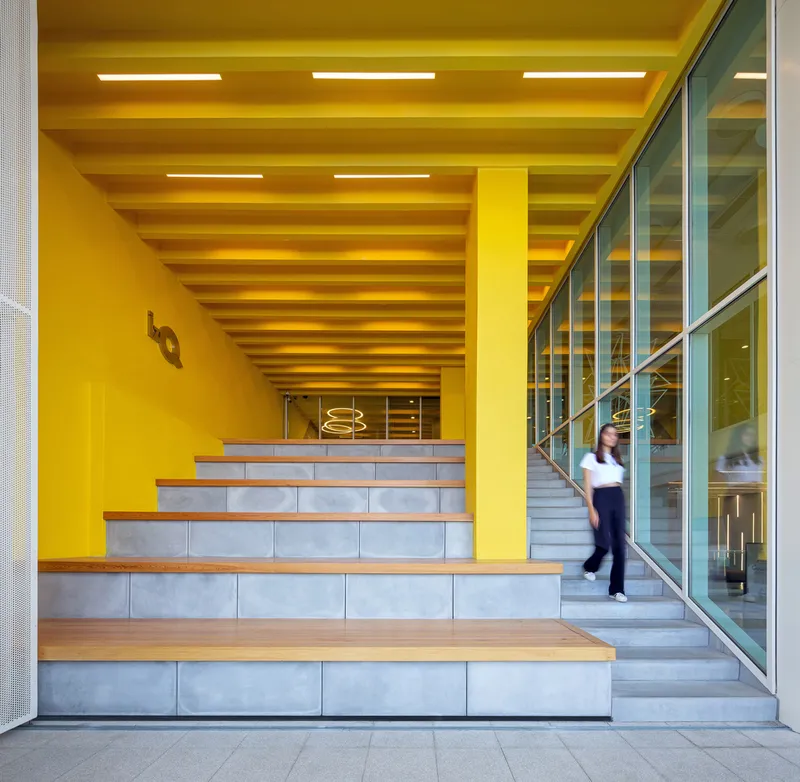
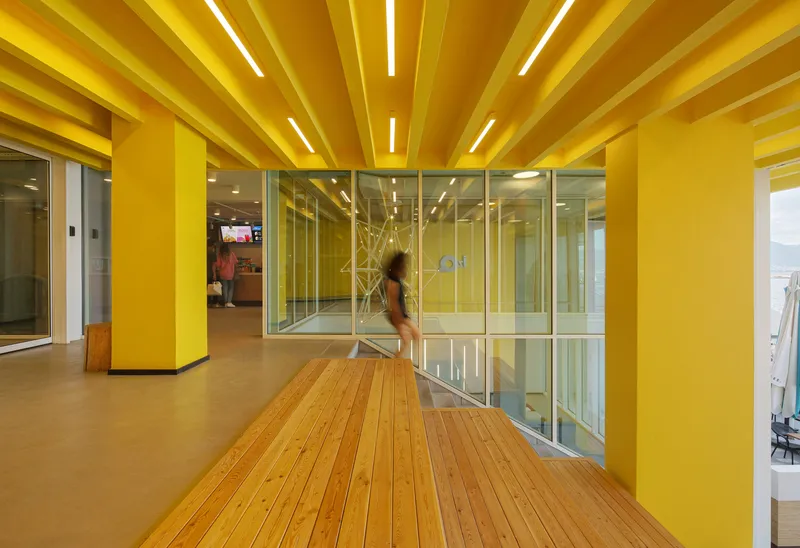
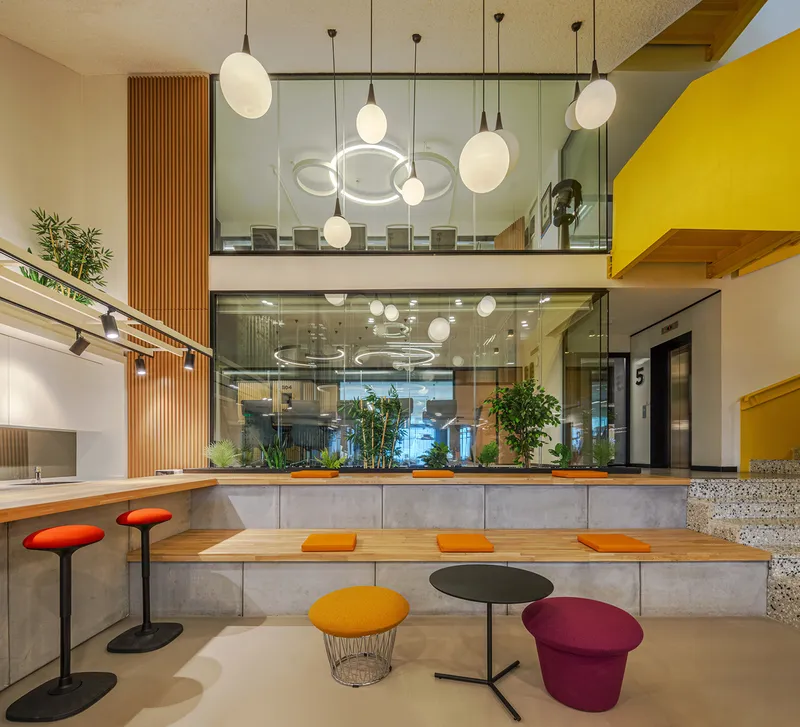
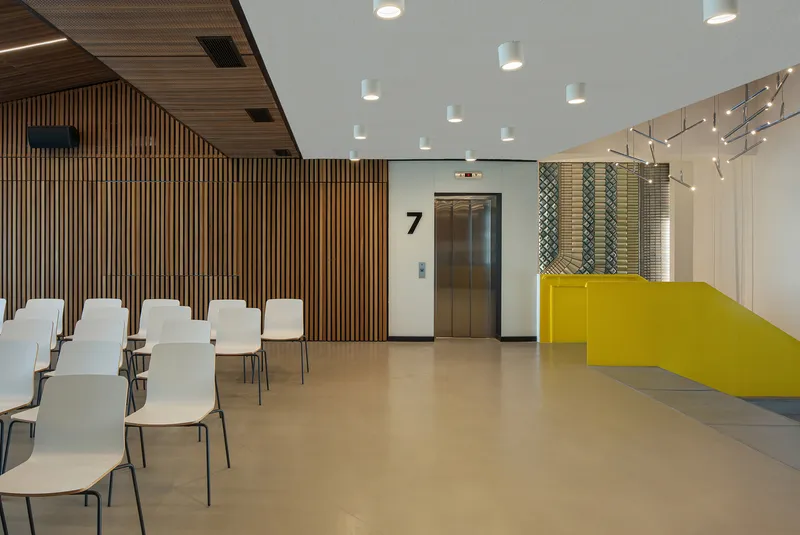
Working within the limitations of the existing concrete frame, Ofisvesaire employed a series of innovative interventions to renew the building’s spatial and structural logic. The most striking element — the yellow vertical circulatory spine — anchors the new design. It enhances spatial communication and embodies the idea of connectivity and co-existence, encouraging encounters among users at every level.
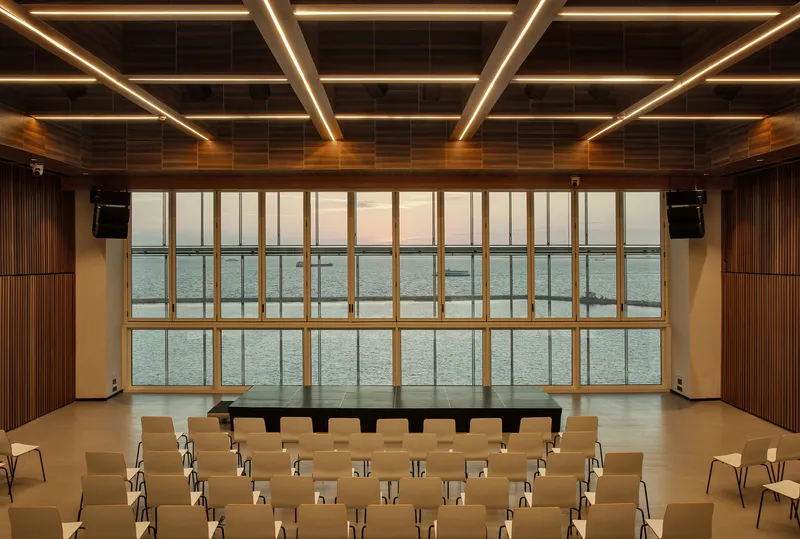
Other major interventions include the introduction of a kinetic façade system and a responsive roof structure, both designed to interact with natural light, wind, and sea air. These additions allow the building to breathe, reflect, and adapt — much like the innovative spirit it represents. On the ground level, a small amphitheater facing the waterfront creates a fluid dialogue between the interior and the sea, inviting the public to engage with the building in new ways.
Spaces for Collaboration and Community
The concept of “innovation” extends beyond technological invention — it becomes a spatial philosophy. Within the IzQ Innovation Center, “micro-habitats” have been designed as semi-open and enclosed niches, fostering both focus and interaction. These spaces are connected by a dynamic circulation path that encourages movement, visibility, and participation.
Since its opening, the center has become a vibrant meeting point for entrepreneurs, researchers, and the public, hosting workshops, exhibitions, and educational programs. It not only supports start-ups and creative industries but also enhances İzmir’s cultural and economic vitality.
A New Urban Identity for İzmir’s Waterfront
The IzQ Innovation Center represents a critical step in sustainable urban transformation, where architecture acts as a bridge between the past and the future. Through adaptive reuse, the project reconnects a once administrative structure to the life of the city, transforming it into a beacon of innovation and collaboration.
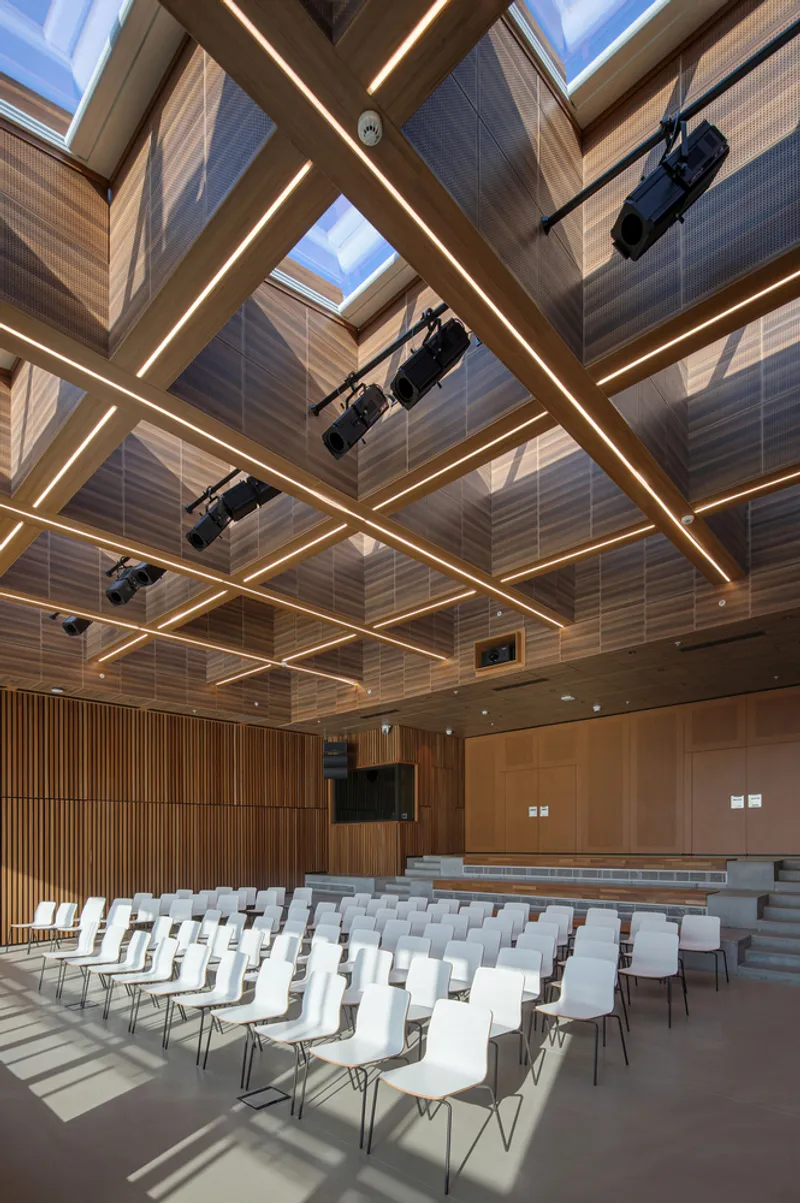
In this new phase of its life cycle, the building reaffirms its role in İzmir’s urban narrative — a place where the city, sea, and citizens converge through architecture.
All Photographs are works of Zeren Yasa & Mehmet Yasa


Popular Articles
Popular articles from the community


The Earth Pod: 3D Printed Homes for Resilient Refugee Communities
The Earth Pod reimagines refugee housing through 3D printed homes made from clay, combining resilience, self-sufficiency, and rapid shelter.

Play: Fragments of Their World
Familiar architecture becomes modular playground design, creating safe spaces where displaced children can learn, connect, imagine and play.

Riyadh For All: Intergenerational Urban Design for Active Aging in Rabat
Riyadh For All reimagines urban design in Rabat with intergenerational co-living, adaptive courtyards, and Moroccan cultural exchange today.

Conexión: Biophilic Design Reimagines High-Rise Living in Hong Kong
Conexión reimagines high-rise living in Hong Kong through biophilic design, green facades, shared spaces, daylight, water and nature within.


Similar Reads
You might also enjoy these articles


Hodi-Mandai Geram
Project Function: Preservation and revitalization of the Intangible heritage and socio-spatial identity of the Hodi by Housing, Cultural Memory Center, Sacred Grove, landscape, local tourism economy


Olio Towers: A Mid-Rise for Performers That Fuses Housing, Rehearsal, and Stage
Located blocks from Houston's Theater District, this modular tower stacks living units around a central performance atrium.

Oasis: Modular Green Housing Carved into Dhaka's Urban Fabric
A shortlisted Plugin Housing entry reclaims unauthorized settlements in Dhaka with stepped concrete volumes, green roofs, and ventilation-driven design.

Black Hole: A Floating Megastructure for the Post-Physical Era
Emiliano Mazzarotto envisions a spherical, self-scaling arena where e-sports, digital hotels, and holographic stadiums replace traditional public space.


Explore İshak Şimşek Arhitecture Competitions
Discover active competitions in this discipline



Challenge to reimagine the Iron Throne


Photograph architecture without architects


Illustrate the lost glory of Angkor Wat - Render Challenge


Design challenge to reuse E-waste
Comments (0)
Please login or sign up to add comments
No comments yet. Be the first to comment!