

Jack C. Taylor Visitor Center: A Modern Gateway to the Missouri Botanical Garden
The Jack C. Taylor Visitor Center merges nature with modern design, enhancing the Missouri Botanical Garden’s mission to educate and inspire.


The Jack C. Taylor Visitor Center at the Missouri Botanical Garden, designed by Ayers Saint Gross, is a stunning example of biophilic design. This state-of-the-art facility welcomes over one million annual visitors, offering a space that connects nature with architecture and engages visitors in a seamless experience. The visitor center’s thoughtful design integrates both natural and built environments, enhancing the overall mission of the Garden: to discover and share knowledge about plants and their ecosystems. In this article, we explore how this center has become a modern gateway to the historic Missouri Botanical Garden.

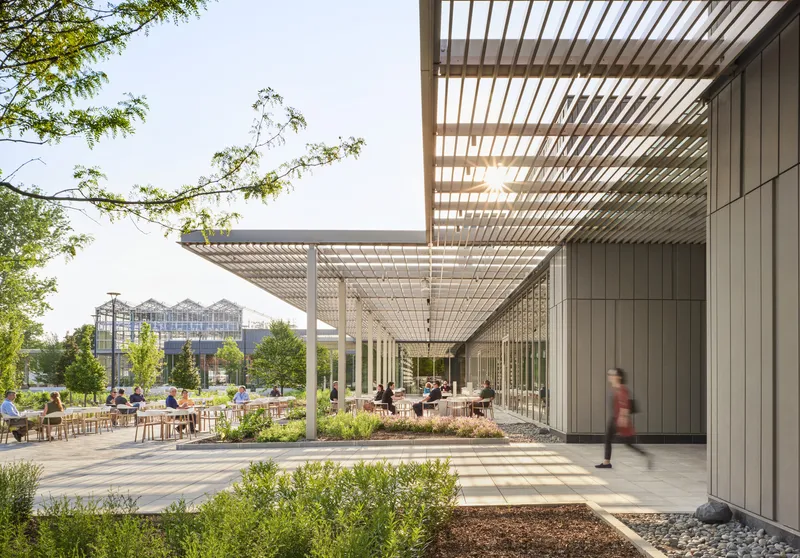
A Bold New Vision for a Historic Botanical Garden
The Missouri Botanical Garden, known as one of the nation's oldest botanical gardens in continuous operation, has long been a leader in plant science research. As the Garden steps into a new era, the Jack C. Taylor Visitor Center becomes an iconic part of its transformation. Located in St. Louis, this visitor center serves as a primary gateway, connecting guests to over 46,000 plants and countless educational opportunities. The new facility represents the Garden’s commitment to both environmental stewardship and public engagement.
Design Inspired by Nature
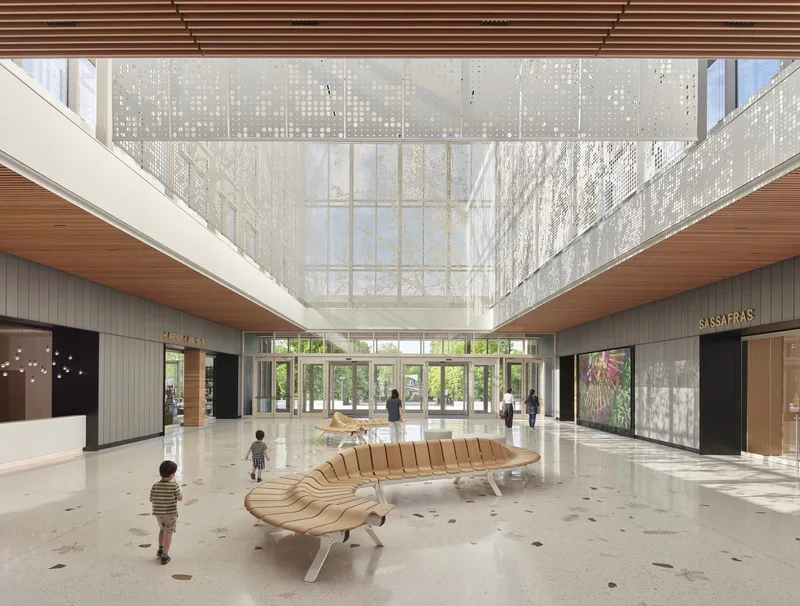
The Jack C. Taylor Visitor Center is not just a place to gather information, but an immersive experience that blurs the boundaries between indoor and outdoor spaces. Drawing inspiration from the Garden's vast plant collection, the design incorporates elements of nature throughout the building. One of the key design features is the use of natural light, which fills the space through the transparent south-facing façade, allowing visitors to enjoy panoramic views of the surrounding gardens.
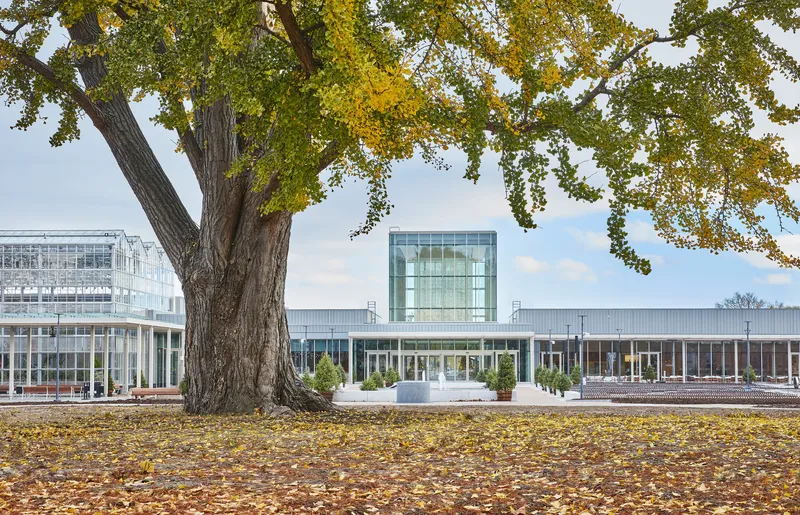

The building itself is designed with sustainability in mind. The use of durable, local materials such as Missouri-native limestone, bronze, and granite reflects the Garden’s history and the importance of its mission. These materials also provide longevity, ensuring the center stands the test of time.

Immersive Features and Biophilic Design
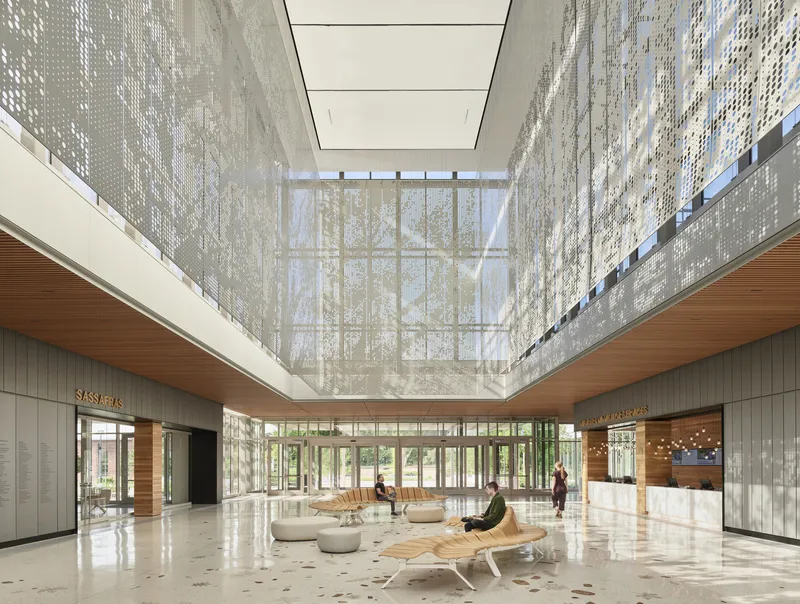
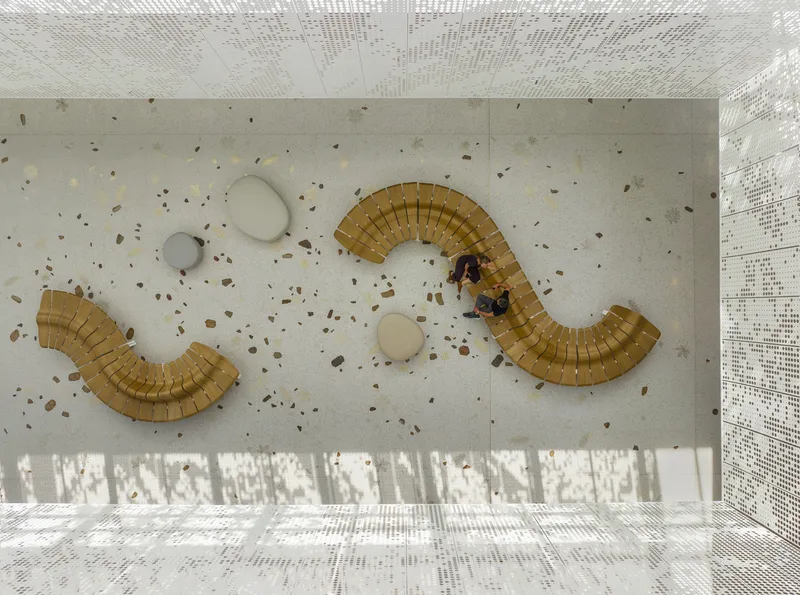
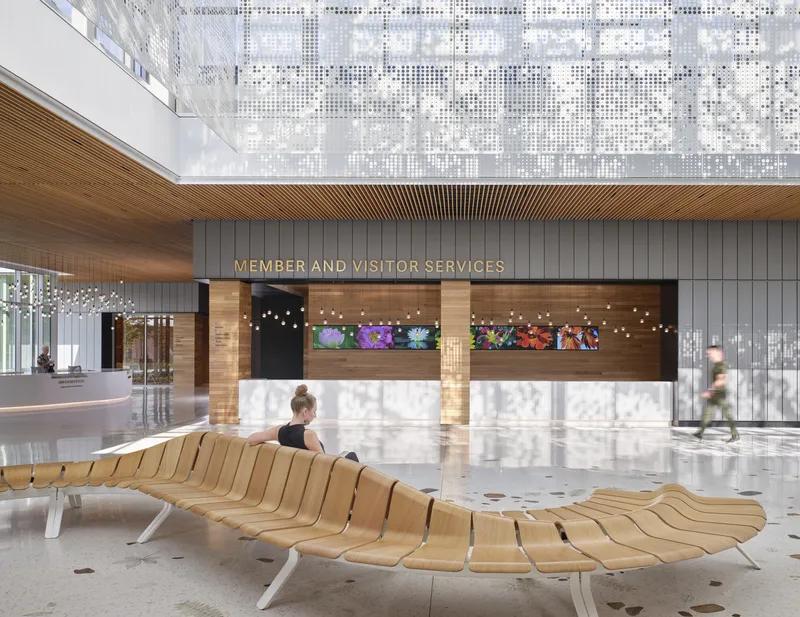
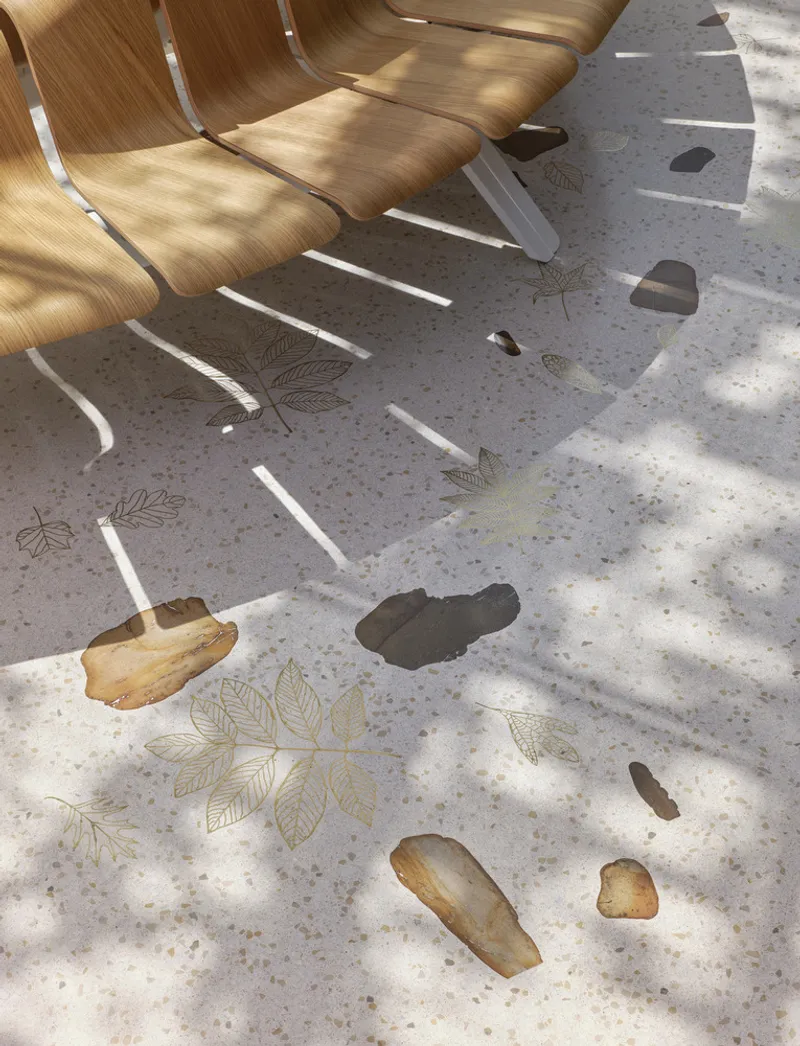
Biophilic design, which fosters a connection with nature, is evident throughout the visitor center. Custom terrazzo flooring, inlaid with river rocks and brass accents, mirrors the local landscape, while the ticketing and visitor engagement desk is inspired by the shapes of rounded pebbles. Overhead, pendant lights evoke the ambiance of fireflies or droplets of rain, creating a calming environment for guests.
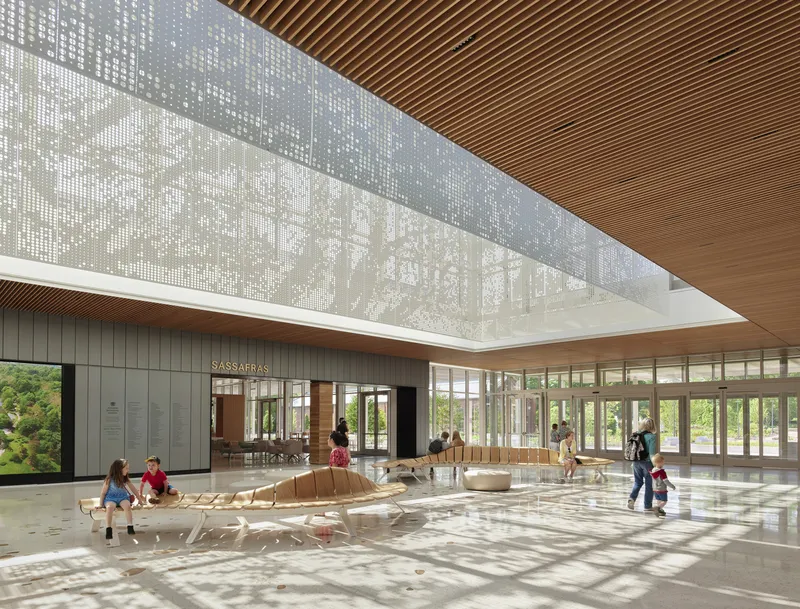
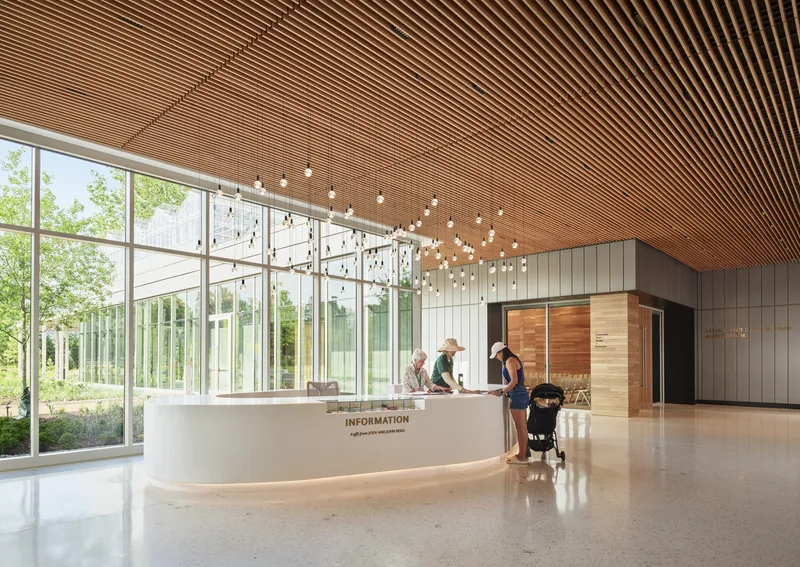
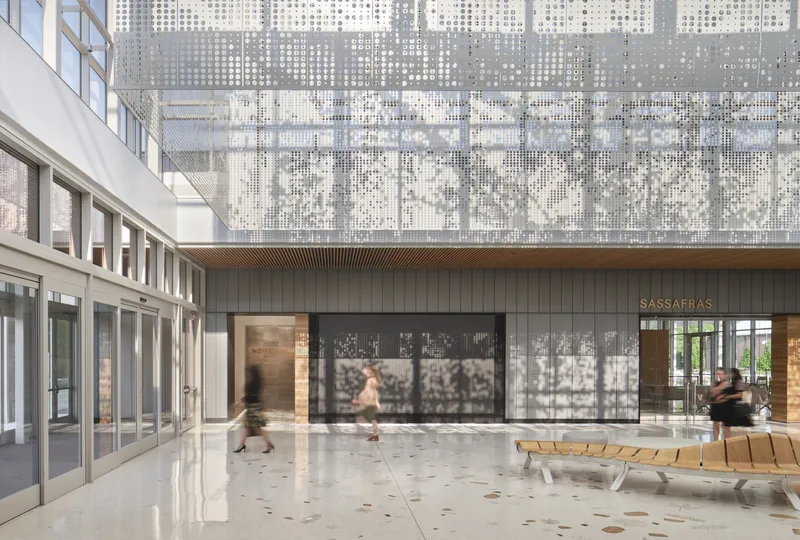
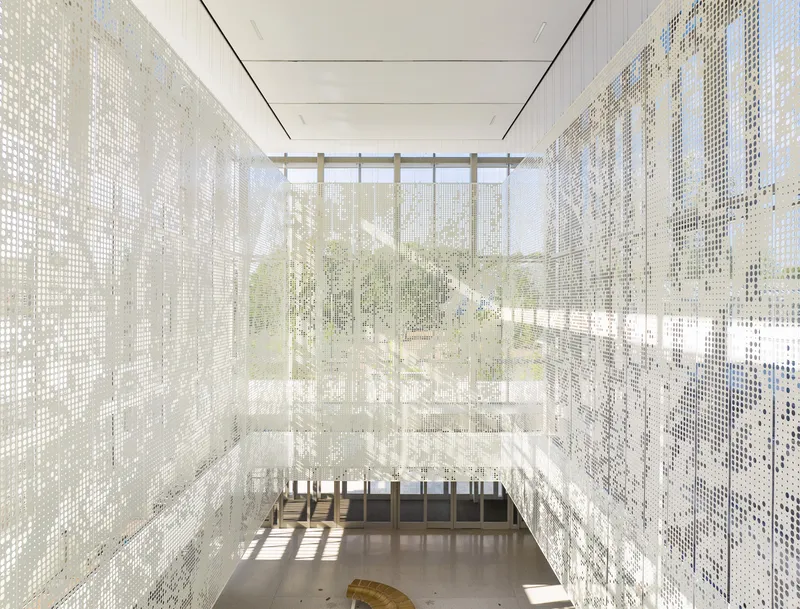
The center’s iconic lantern feature, suspended from the ceiling, adds an enchanting touch. The lantern’s perforated pattern, inspired by tree canopies, filters dappled light into the lobby, simulating the experience of walking through a wooded clearing. At night, the lantern glows, welcoming both visitors and the local community.
Visitor Experience and Accessibility
The center is designed with accessibility in mind, ensuring that all visitors can enjoy the experience. Features such as barrier-free restrooms, family-friendly facilities, and a calming room cater to the diverse needs of guests. Additionally, the new north garden provides gently sloping paths and spacious terraces, perfect for resting and enjoying the scenery.

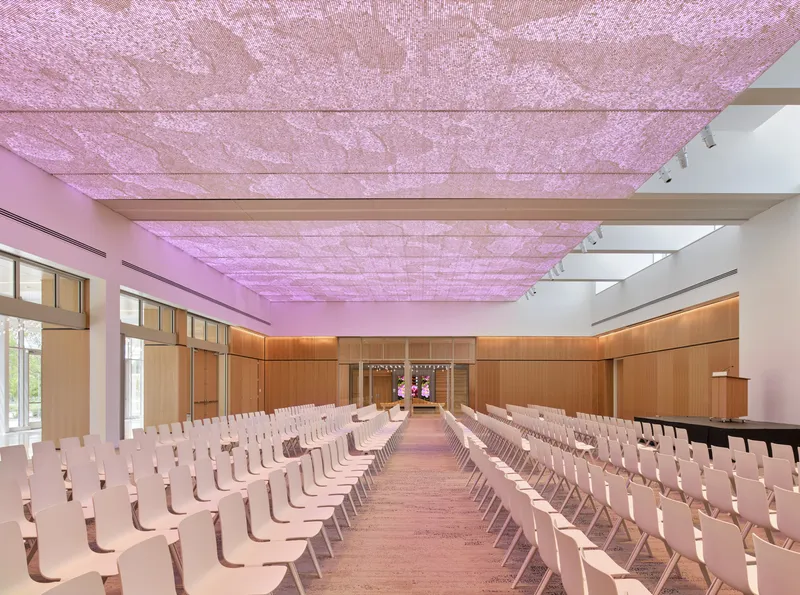
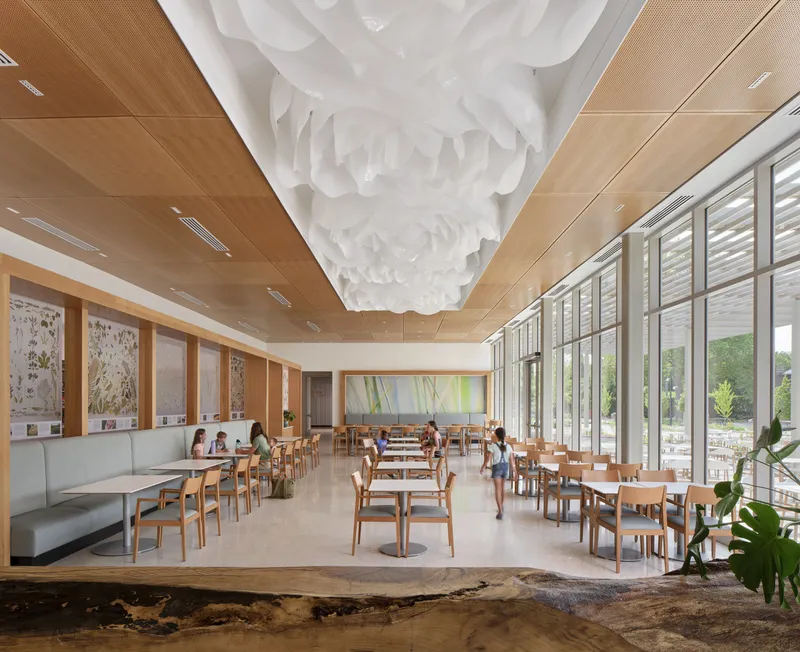
The visitor center also includes a flexible auditorium and classrooms for educational programming, as well as the Sassafras Restaurant and Café, which serves as a community space for gathering. The use of locally sourced materials and design details, such as a custom bench and community table made from a Shumard Oak tree, add a sense of connection to the local environment.
Surrounding Gardens: A Living Library
The Jack C. Taylor Visitor Center is part of the newly expanded garden complex, which includes a world-woodland garden. This garden, designed to highlight plant diversity, is a living library of over 46,000 plants representing more than 300 species from around the world. It serves as a crucial part of the Garden's educational and conservation efforts. Visitors can explore seasonal events, weddings, and educational programs in these expanded, flexible spaces.
The Jack C. Taylor Visitor Center is a prime example of how architecture can serve as both a functional and aesthetic gateway to a larger cultural and environmental mission. By seamlessly integrating biophilic design elements, sustainable materials, and thoughtful visitor amenities, the center enhances the Missouri Botanical Garden’s mission to preserve and share knowledge about plants. This iconic facility sets a new standard for visitor centers in botanical gardens, offering a transformative experience for all who enter.
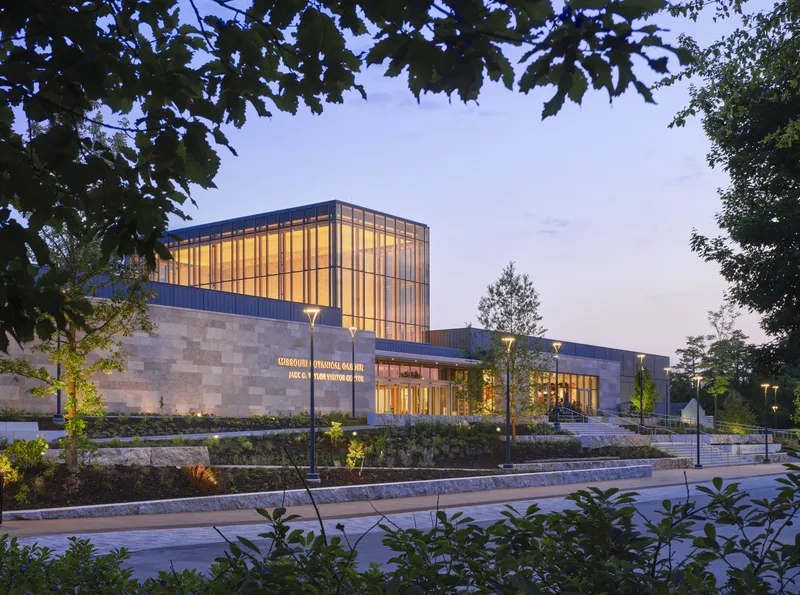

All Photographs are work of Casey Dunn, Wesley Law




Popular Articles
Popular articles from the community

EW PARK: Sustainable Architecture Reimagines the Future of Urban Parking
EW PARK reimagines city parking as a modular wooden tower combining automation, solar energy, electric mobility, and adaptable urban design.

Hill & Cross Opera: Sculptural Opera House Architecture Shaped by Tallinn’s Landscape and Identity
Hill & Cross Opera reimagines opera house architecture in Tallinn through its sculptural hill, civic plaza, glass wave and a luminous cross.
AL-JANNAH: Sustainable Architecture and Permaculture for Afghan Widows
AL-JANNAH uses sustainable architecture and permaculture to create resilient oasis of housing, learning, work and renewal for Afghan widows.

The Musturak Paradise: Senior Living Architecture for a Connected Future in Temara, Morocco
The Musturak Paradise reimagines senior living architecture in Temara via private homes, social spaces, culture, community, and shared care.


Similar Reads
You might also enjoy these articles


Hodi-Mandai Geram
Project Function: Preservation and revitalization of the Intangible heritage and socio-spatial identity of the Hodi by Housing, Cultural Memory Center, Sacred Grove, landscape, local tourism economy


Olio Towers: A Mid-Rise for Performers That Fuses Housing, Rehearsal, and Stage
Located blocks from Houston's Theater District, this modular tower stacks living units around a central performance atrium.

Oasis: Modular Green Housing Carved into Dhaka's Urban Fabric
A shortlisted Plugin Housing entry reclaims unauthorized settlements in Dhaka with stepped concrete volumes, green roofs, and ventilation-driven design.

Black Hole: A Floating Megastructure for the Post-Physical Era
Emiliano Mazzarotto envisions a spherical, self-scaling arena where e-sports, digital hotels, and holographic stadiums replace traditional public space.

Explore Architecture Competitions
Discover active competitions in this discipline



Challenge to reimagine the Iron Throne


Photograph architecture without architects


Illustrate the lost glory of Angkor Wat - Render Challenge


Design challenge to reuse E-waste
Comments (0)
Please login or sign up to add comments
No comments yet. Be the first to comment!