
Jan Frans Willems Kindergarten and Music Academy: A Harmony of Learning and Design
An innovative kindergarten and music academy blending tradition, sustainability, and flexible design for dynamic, nature-integrated learning spaces in Belgium.

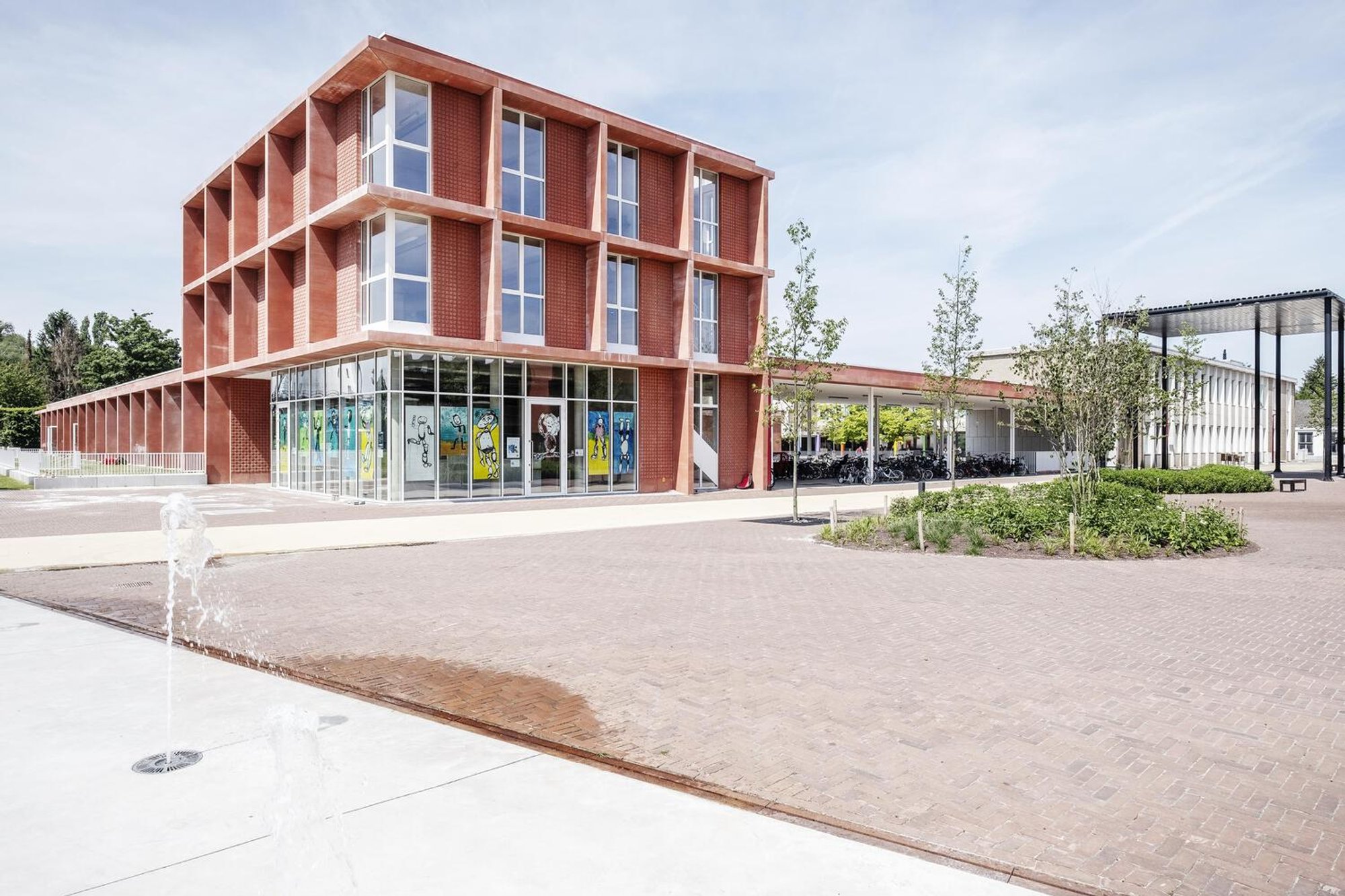
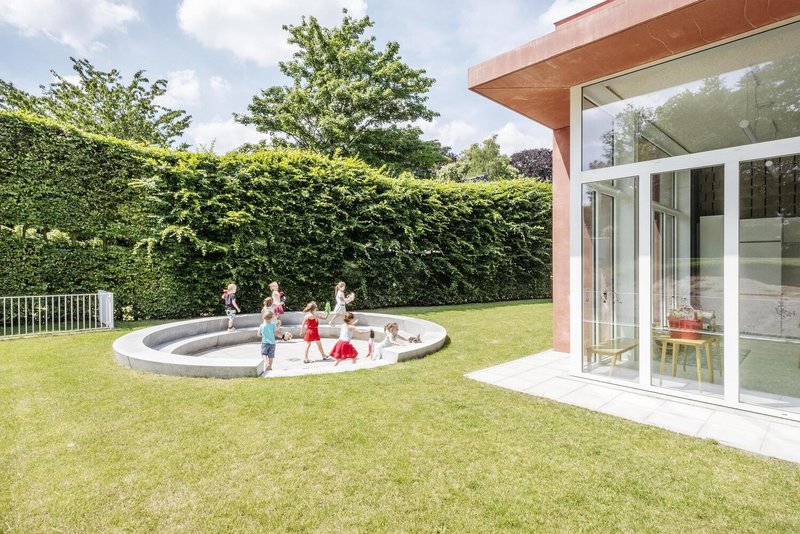
The Jan Frans Willems Kindergarten and Music Academy, designed by STAUT Architecten and Perifer, is a benchmark in modern educational architecture. Located in Boechout, Belgium, this 3700 m² project completed in 2019 integrates tradition, flexibility, and sustainability to create a multifunctional learning environment.
Bridging Past and Present
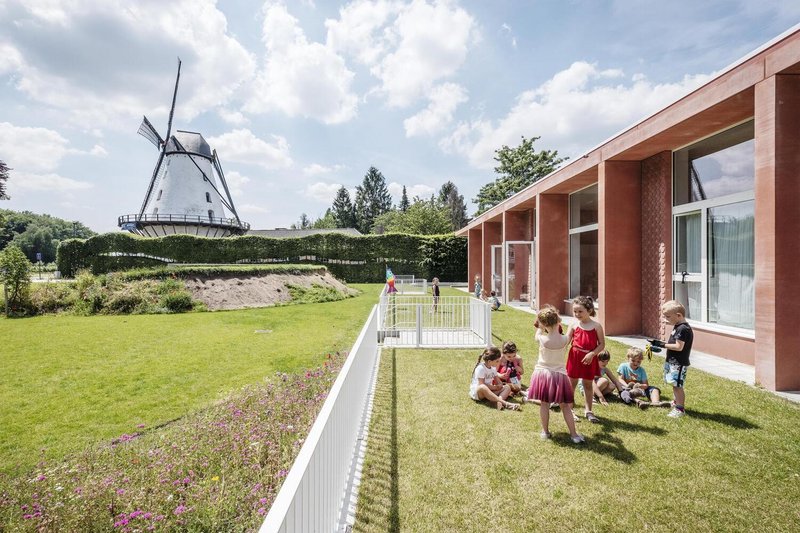
The architectural concept respects the historical narrative of the site, particularly the 18th-century windmill (1782), which remains a defining feature. The design ensures that each classroom maintains a visual connection to the mill, creating a sense of continuity between the past and the present. Inspired by traditional school typologies and monastery cloisters, the layout follows a natural growth pattern, ensuring adaptability and expansion without encroaching on the surrounding green spaces.
Flexible and Multifunctional Spaces
Unified Roof Design
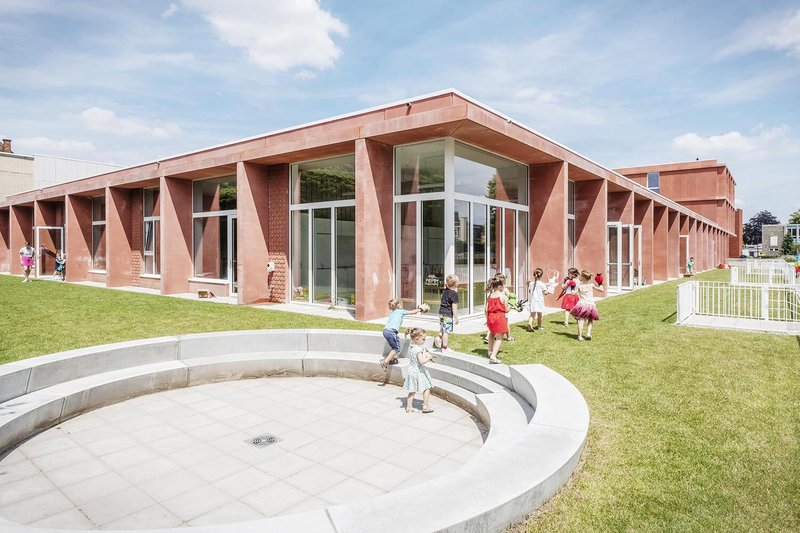
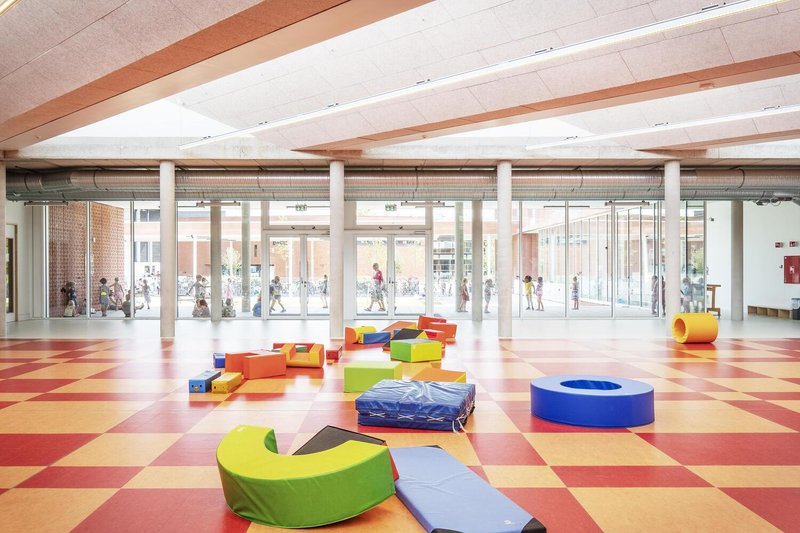
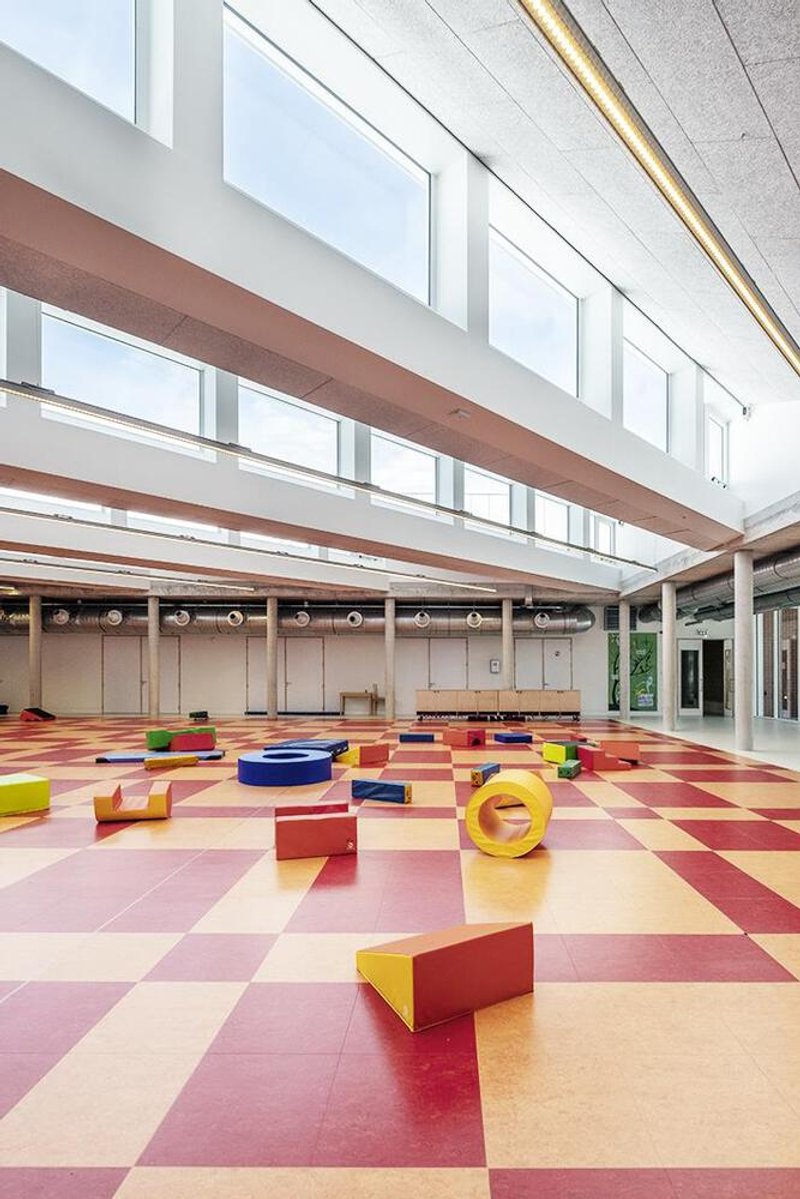
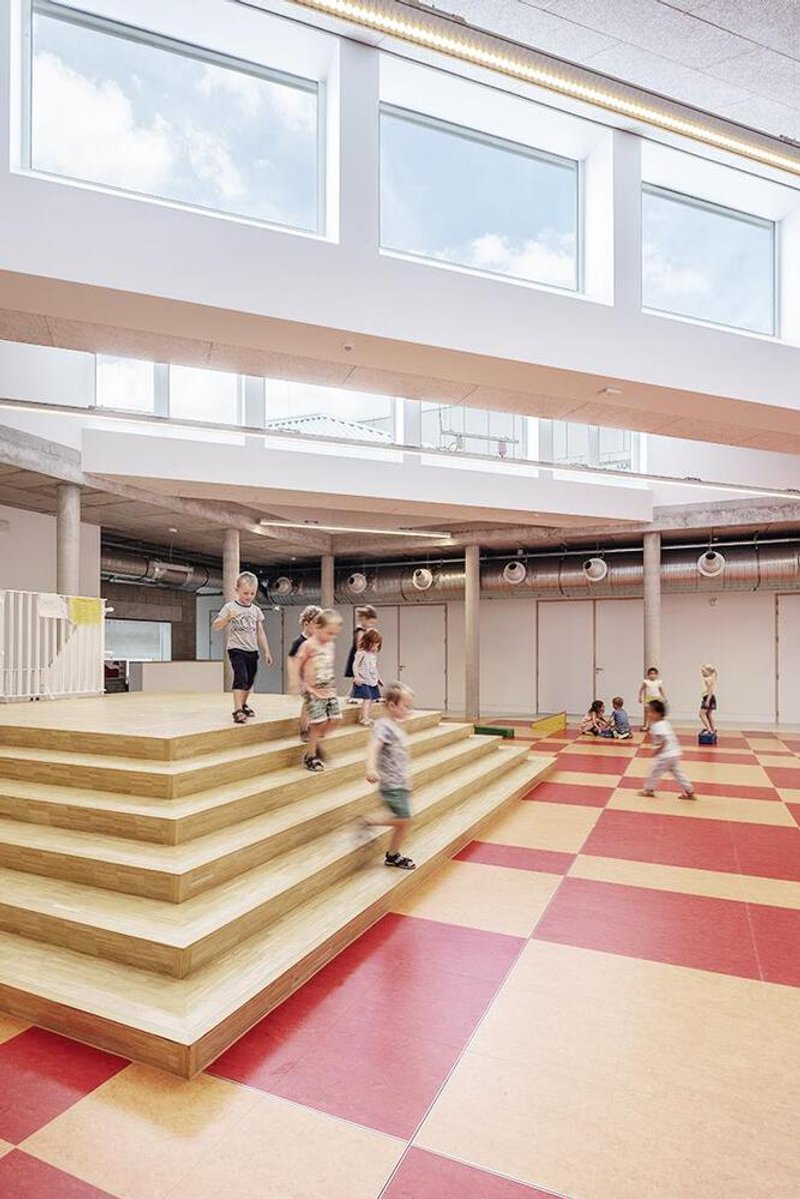
The iconic twisted shed roof is a defining architectural feature, tying together the kindergarten, elementary school, and the multipurpose indoor playground. This playground doubles as a hall for various activities, fostering a flexible environment that meets the diverse needs of the community.
Classroom-Centered Organization
The classrooms are organized around the central indoor playground, providing children with immediate access to spaces for learning and play. The layout emphasizes smooth transitions, with intermediate spaces serving as buffers between the structured classroom settings and the dynamic play areas.
Outdoor Integration
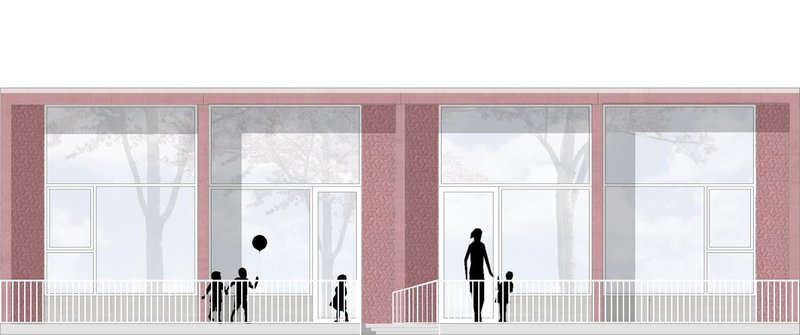
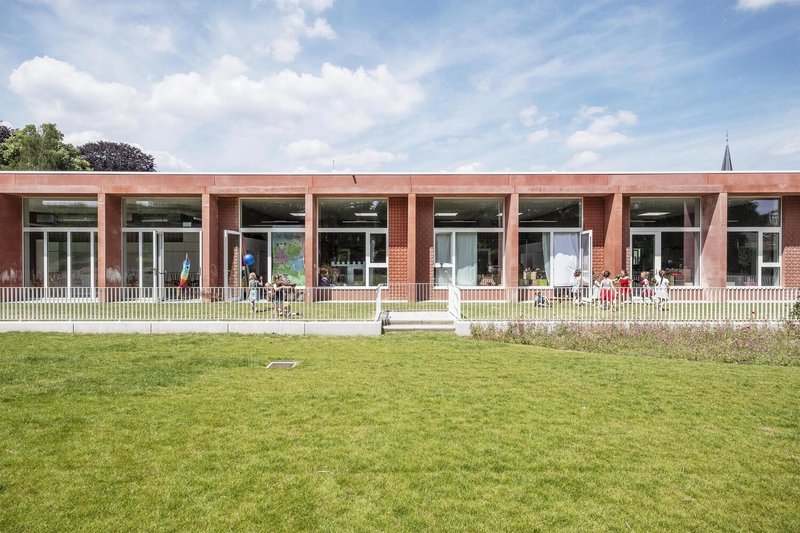
Each classroom opens into its private garden space, connecting students with nature. These gardens act as transitional zones between the building and the surrounding park, enhancing the overall learning experience through exposure to greenery.
Sustainability and Efficiency in Design
The building integrates sustainability at every level:
- Centralized Services: The mechanical systems are centrally positioned to minimize ductwork, reducing material usage and costs.
- Accessible Components: The design leaves technical elements exposed and accessible, ensuring ease of maintenance and adaptability for future upgrades.
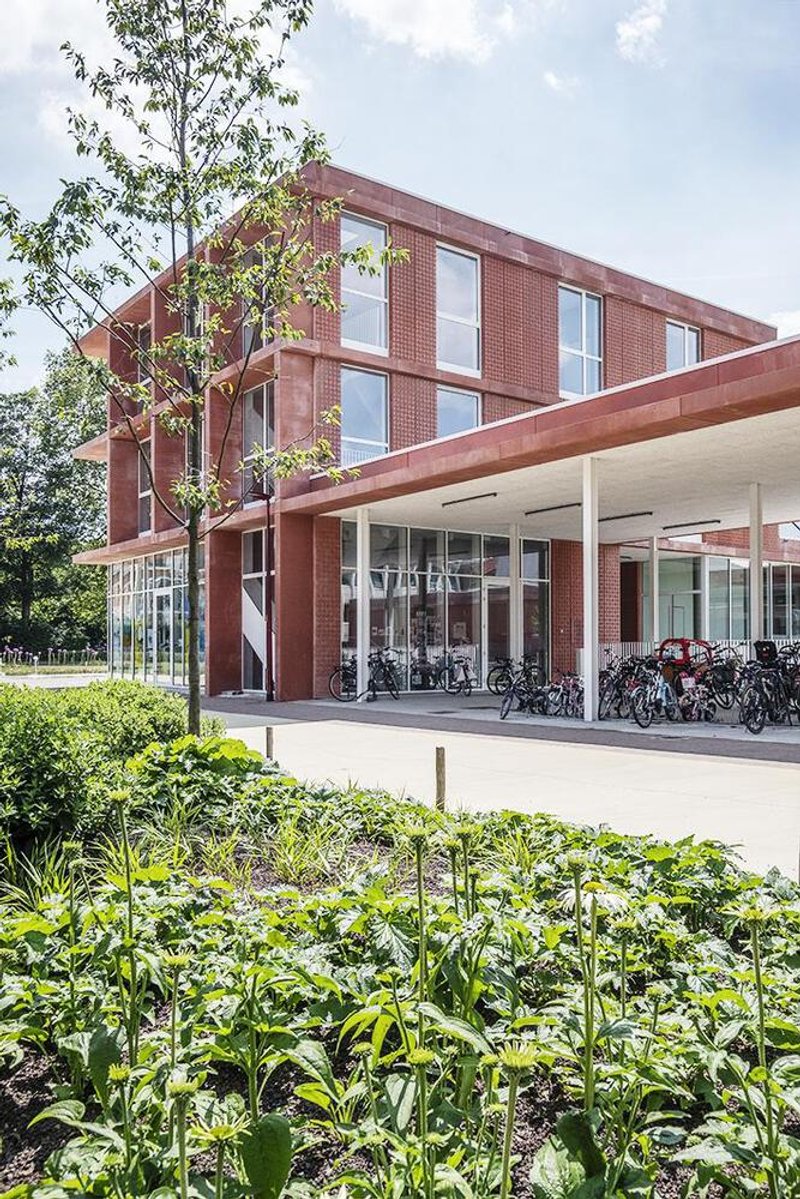
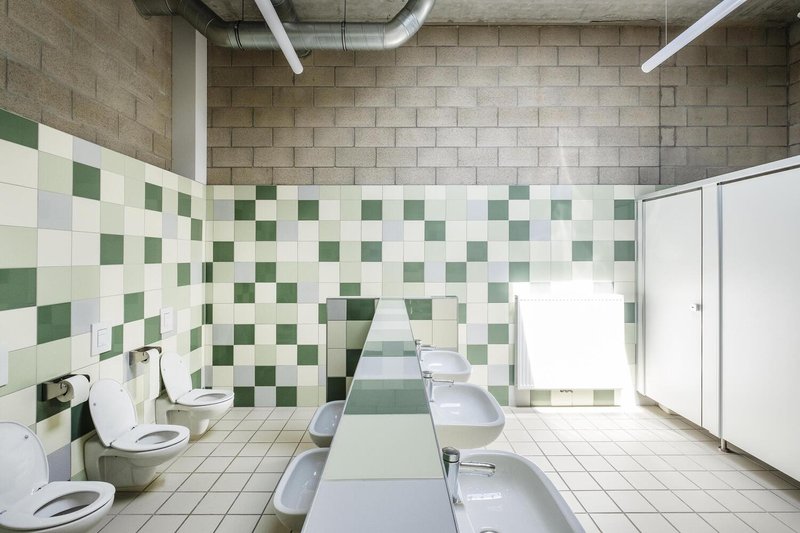
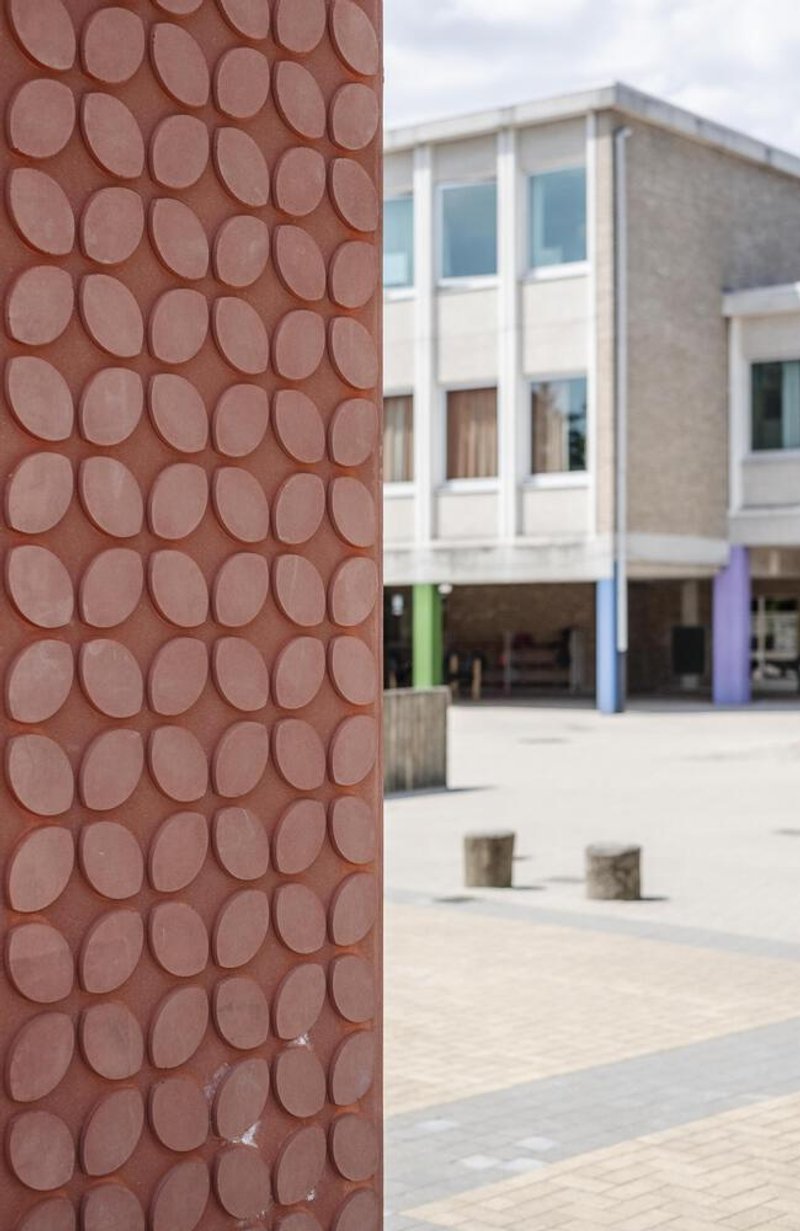
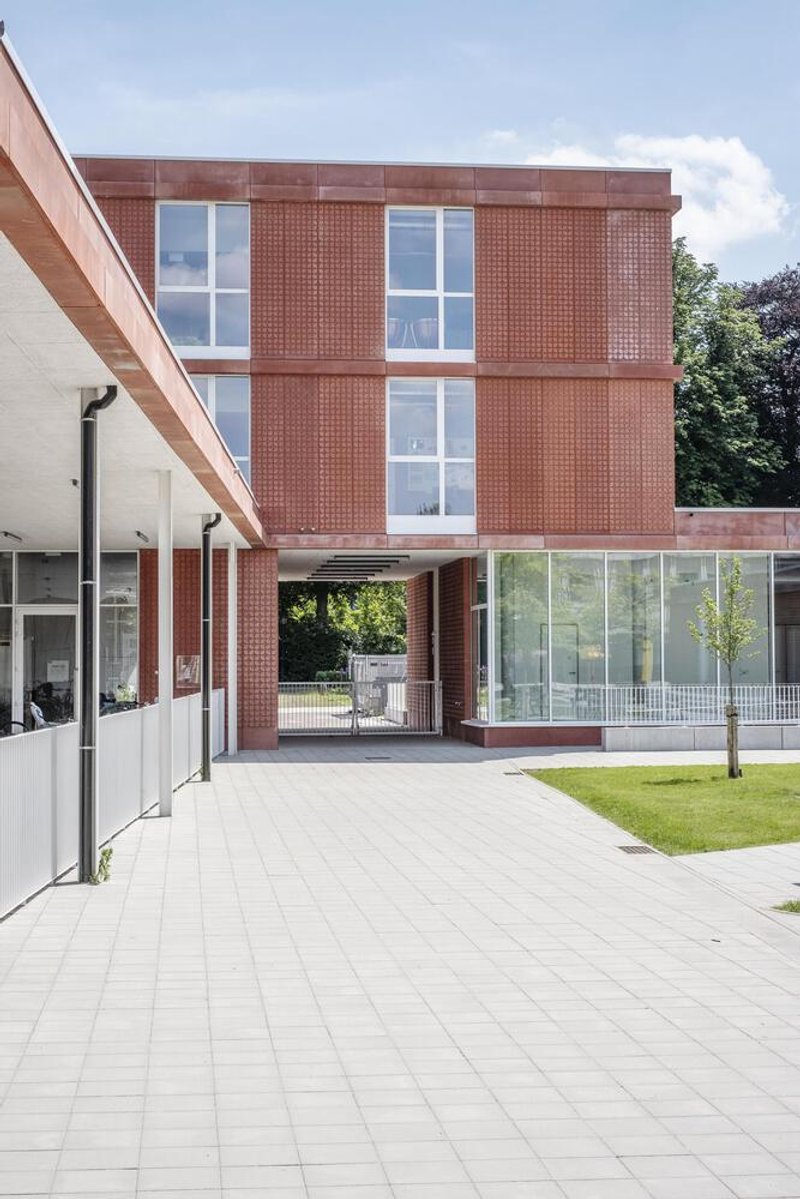
- Sustainable Materials: Standardized and robust materials, such as red concrete cladding, contribute to the building's longevity and environmental responsibility.
The facade, adorned with a relief pattern inspired by birch leaves, not only softens the structure but also pays homage to the local flora, emphasizing the school’s connection to its surroundings.
Child-Centered Design Philosophy
A Balance of Play and Learning
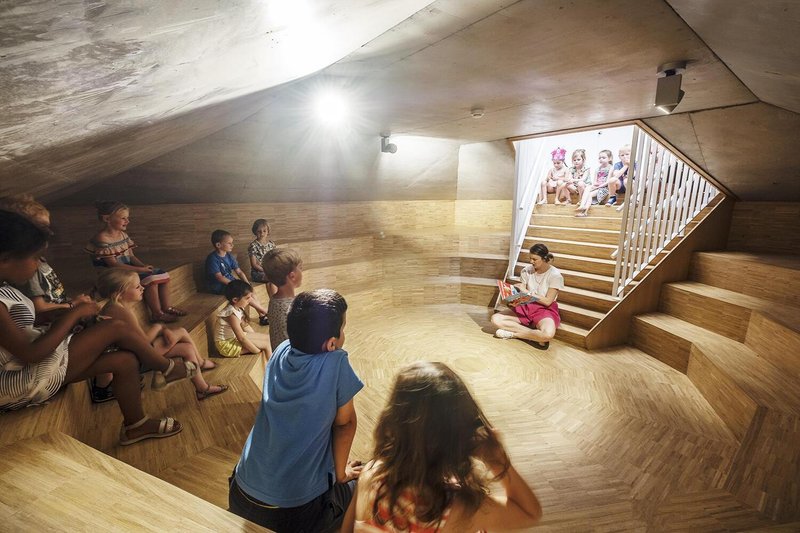
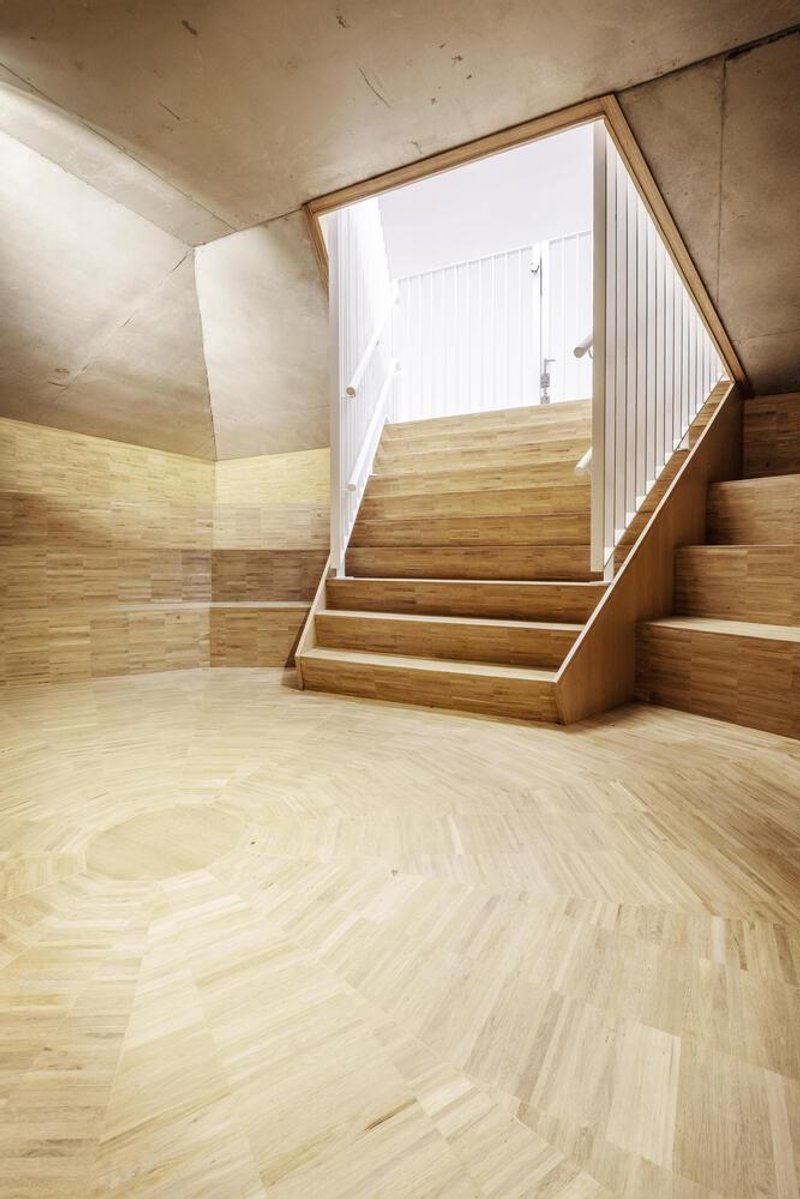
The architects conceptualized the classrooms as spaces for contemplation and academic focus, while the play areas—both indoor and outdoor—were designed to encourage adventure and dynamism. The inclusion of cloakrooms at transition points facilitates a smooth shift between activities.
A Multipurpose Hub
The indoor playground serves as the heart of the school. In addition to recreation, it functions as a multipurpose hall, reinforcing the school's extended-use philosophy by allowing the community to utilize the space beyond school hours.
Architectural Coherence and Community
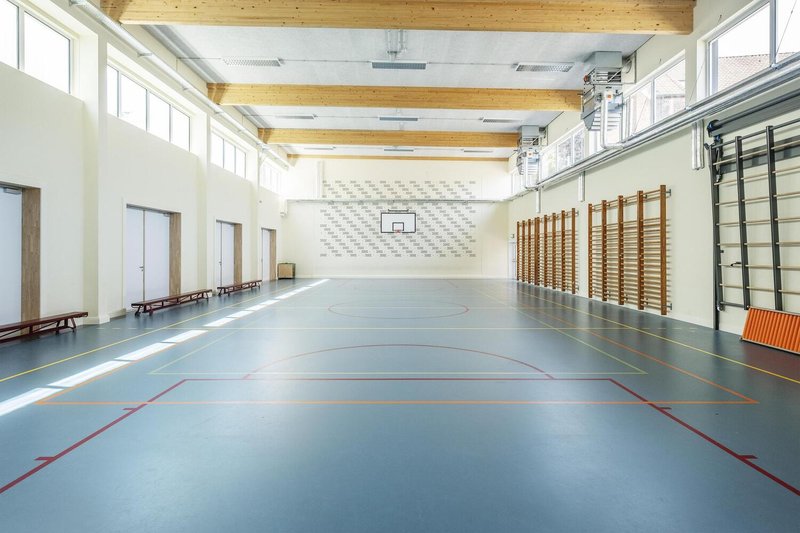
The design connects the kindergarten and music academy with the nearby gymnasium, fostering a cohesive architectural language across the educational campus. This integration ensures that the school serves as a hub for both education and community engagement.
A Model for Modern Educational Spaces
The Jan Frans Willems Kindergarten and Music Academy is more than just a school—it’s an inspiring example of how educational architecture can honor tradition while embracing modernity. By seamlessly integrating historical references, sustainable practices, and flexible spaces, the project sets a new standard for schools worldwide.
This innovative design proves that thoughtful architecture can enhance not only the learning experience but also the connection between a building, its users, and the environment.




Popular Articles
Popular articles from the community

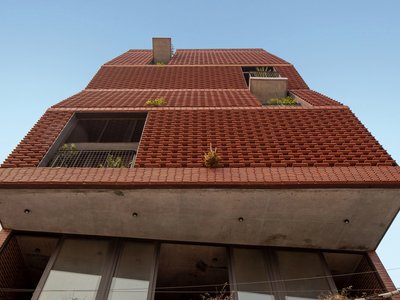
H&P Architects Stack a Vertical River of Brick and Greenery in Hanoi
A perforated terracotta tower in Dong Anh channels water, light, and air through eight staggered levels of domestic life.
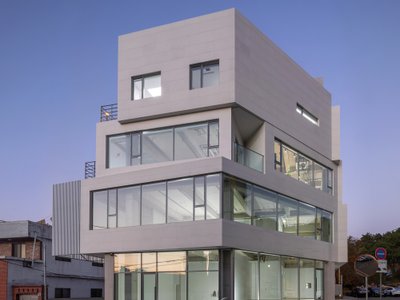
Architects Group RAUM Stacks Offset White Volumes into a Compact Office Tower in Busan
A 524-square-meter building on a tight corner lot in Haeundae plays with sunlight rights and shifting floor plates to create generous terraces.
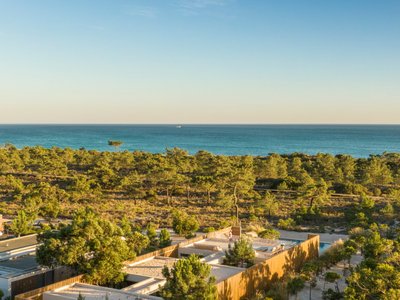
BICA Arquitectos Buries a Coastal Home in a Man-Made Dune on Portugal's Tróia Peninsula
A 300-square-meter house of timber, sand mortar, and travertine dissolves into the dune landscape it helped regenerate on the Alentejo coast.
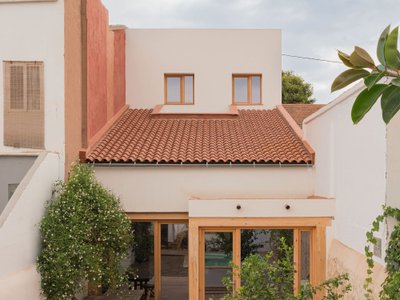
Paco Oria Estudio Rebuilds a 1949 Valencian Town House Around Timber, Terracotta, and a New Interior Patio
In Godella, Spain, a semi-detached house from the postwar era is stripped to its party walls and rebuilt with wood and ceramics.


Similar Reads
You might also enjoy these articles

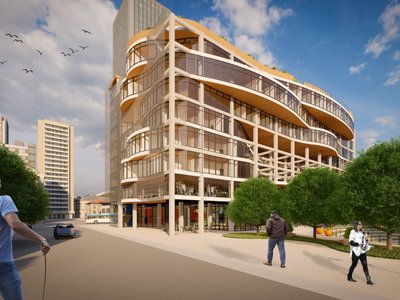
Olio Towers: A Mid-Rise for Performers That Fuses Housing, Rehearsal, and Stage
Located blocks from Houston's Theater District, this modular tower stacks living units around a central performance atrium.
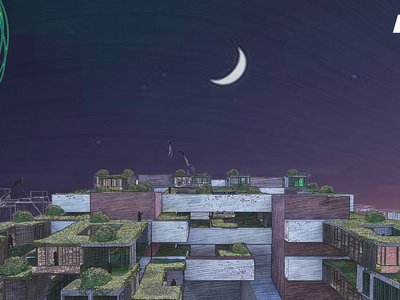
Oasis: Modular Green Housing Carved into Dhaka's Urban Fabric
A shortlisted Plugin Housing entry reclaims unauthorized settlements in Dhaka with stepped concrete volumes, green roofs, and ventilation-driven design.

Black Hole: A Floating Megastructure for the Post-Physical Era
Emiliano Mazzarotto envisions a spherical, self-scaling arena where e-sports, digital hotels, and holographic stadiums replace traditional public space.
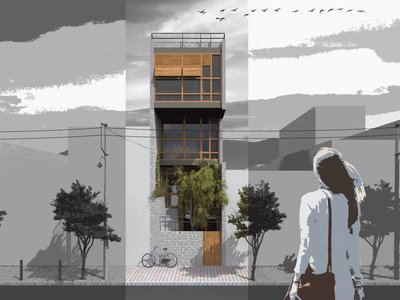
Compact & Sustainable Living in Piraeus: A Four-Level Family Home Built Around Light and Air
A narrow townhouse in one of Greece's densest port cities uses a central atrium and passive strategies to house three generations under one roof.


Explore Architecture Competitions
Discover active competitions in this discipline




The International Standard for Design Portfolios


The Global Benchmark for Architecture Dissertation Awards


The Global Benchmark for Graduation Excellence


Challenge to design public laboratory
Comments (0)
Please login or sign up to add comments
No comments yet. Be the first to comment!