
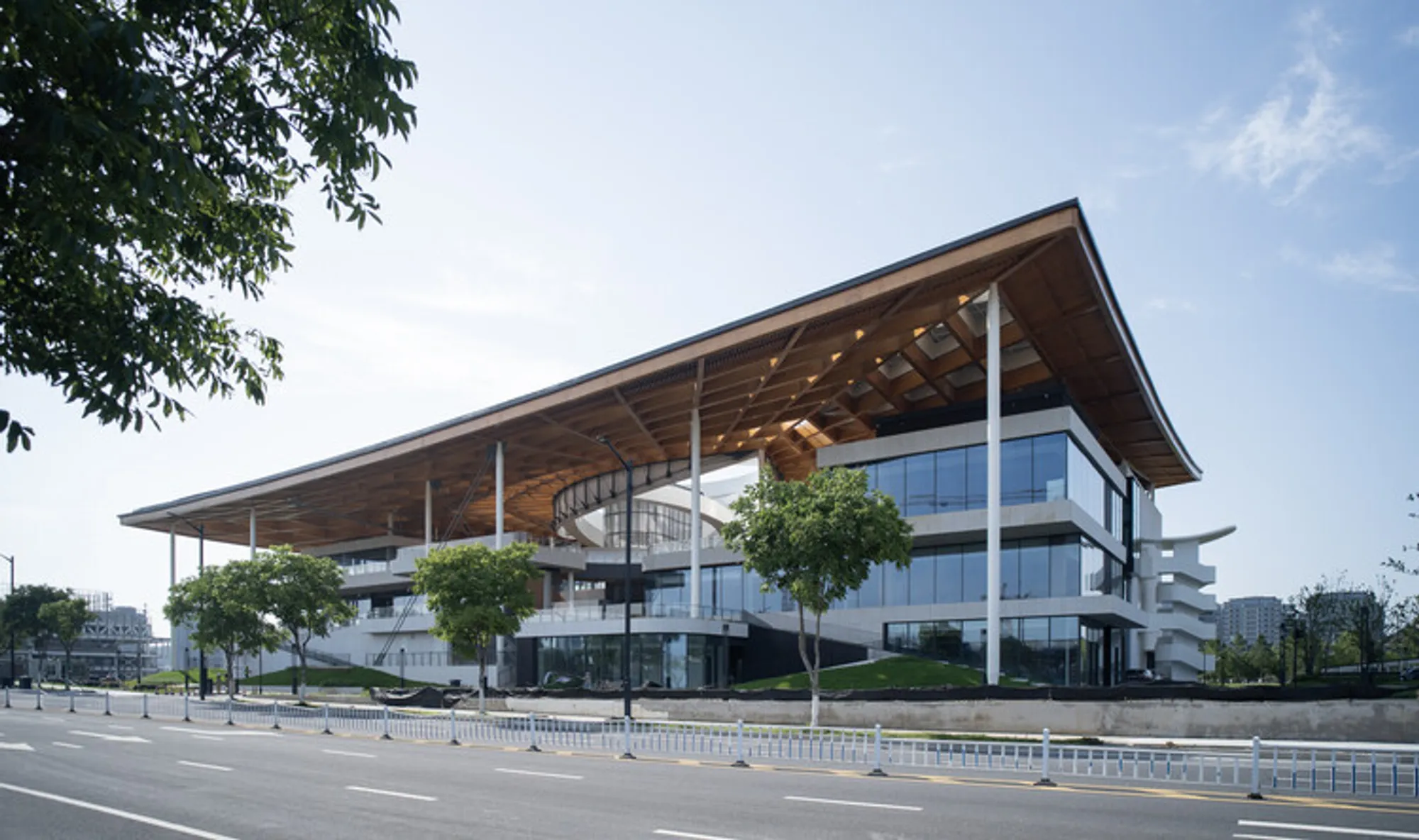
Jiaxing HRNT Cultural Center By THAD SUP Atelier
Jiaxing HRNT Cultural Center by THAD SUP Atelier integrates waterfront public spaces, low-carbon systems, flexible programs, and iconic terraced architecture for urban vitality.


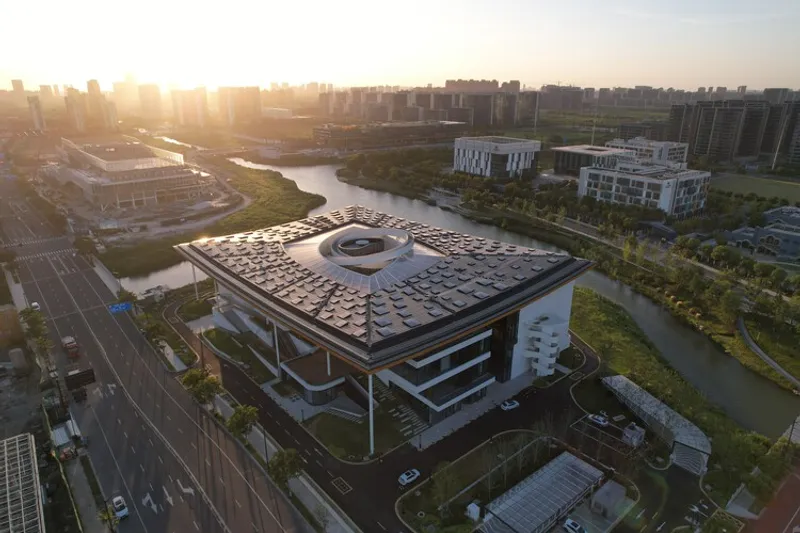
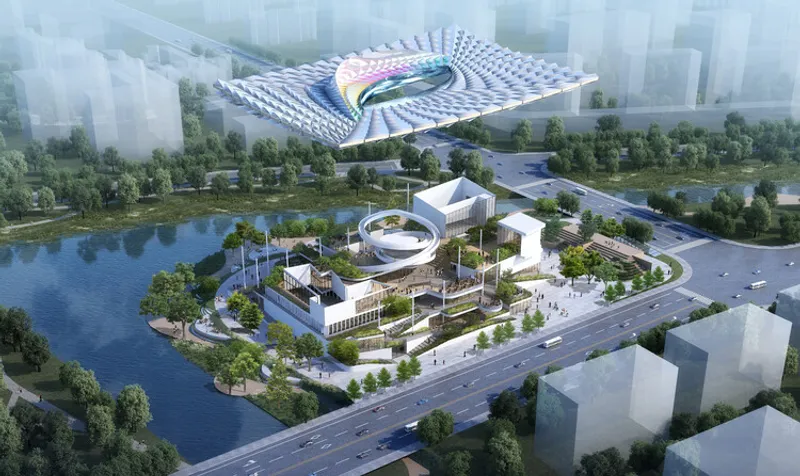
Located at the heart of Jiaxing High-Speed Rail New Town, the Jiaxing HRNT Cultural Center is a 26,082 m² civic landmark designed by THAD SUP Atelier and completed in 2025. Positioned at a strategic node within the city’s water and landscape network, the project redefines contemporary cultural architecture in China by integrating low-carbon technologies, resilient urban strategies, and inclusive public programming.
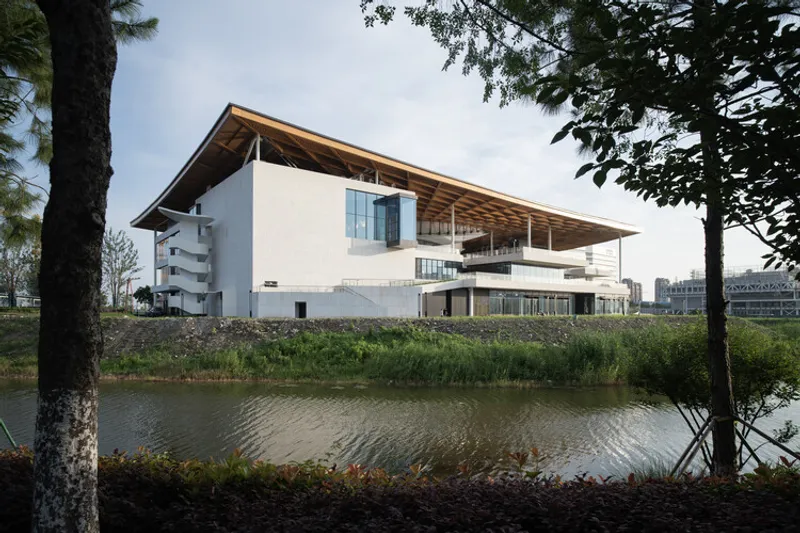
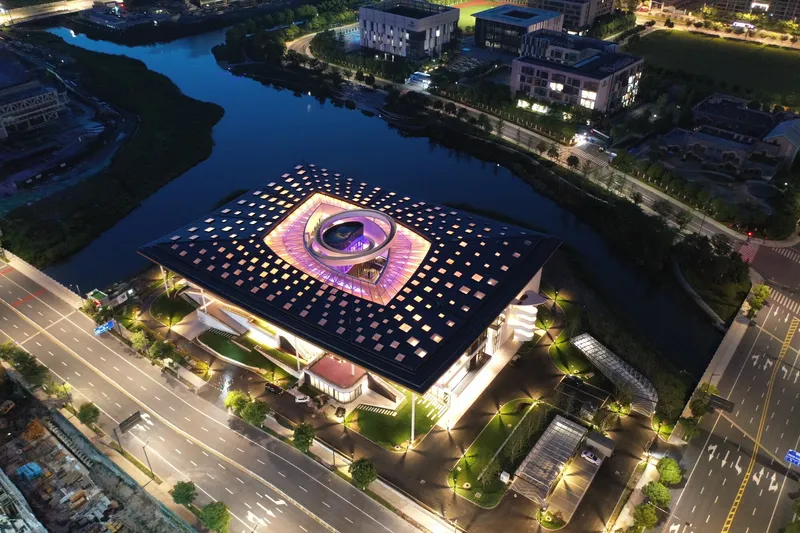
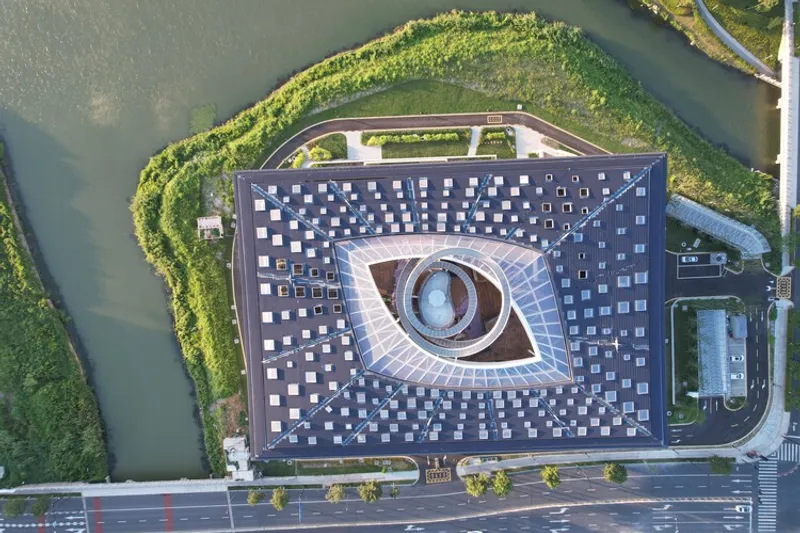
Bordered by open waterfronts to the north and west and major urban roads to the south and east, the cultural center functions as both the “City Living Room” and the “Eye of the Town.” Surrounded by residential neighborhoods, schools, and healthcare facilities, the project anchors the emerging district as a vibrant civic core. Designed as an all-day accessible public building, it catalyzes urban vitality while shaping a future-oriented ecological identity for Jiaxing.
An Inclusive Urban Living Room
At its core, the Jiaxing HRNT Cultural Center promotes openness, flexibility, and civic sharing. Conceived as a multifunctional cultural complex, it accommodates exhibitions, theater performances, film screenings, markets, and creative industries under a rational zoning strategy that supports low-cost, diversified operations.
Major public volumes, including the exhibition hall and theater, are placed on the ground floor to maximize accessibility and efficiency. The theater features a separate northwest entrance, enabling independent evening and weekend operation and supporting Jiaxing’s growing nighttime economy.
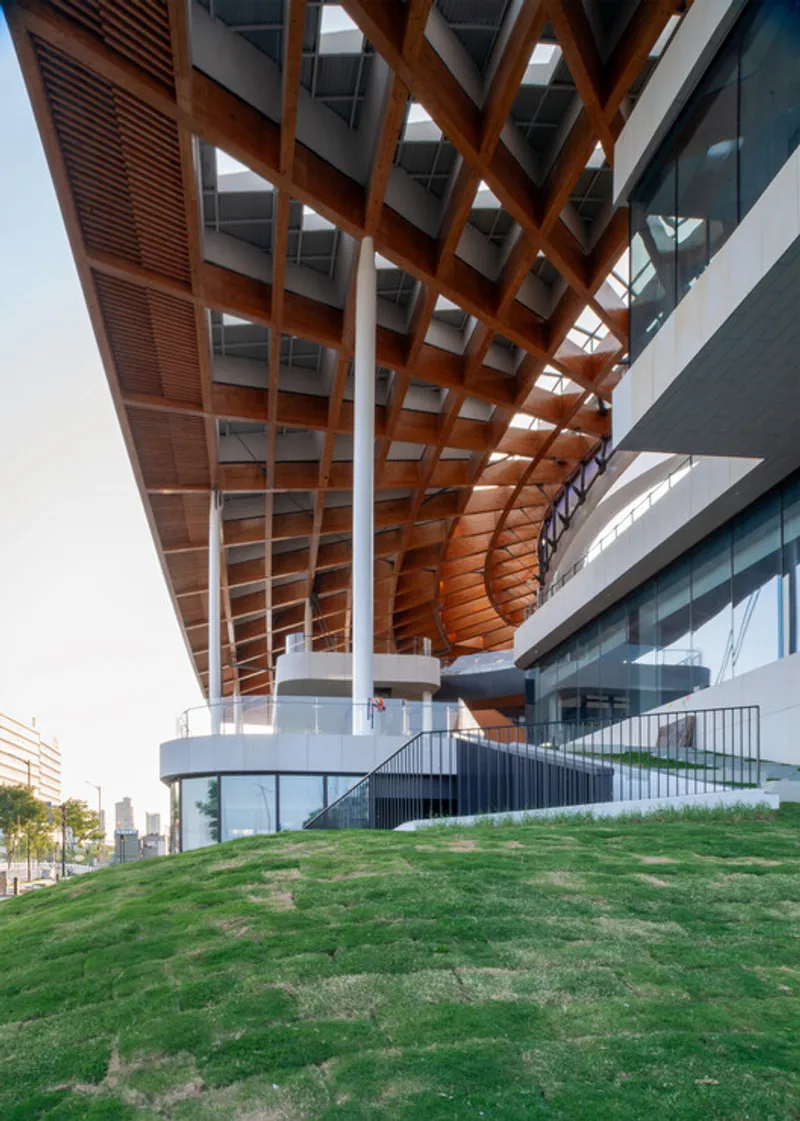
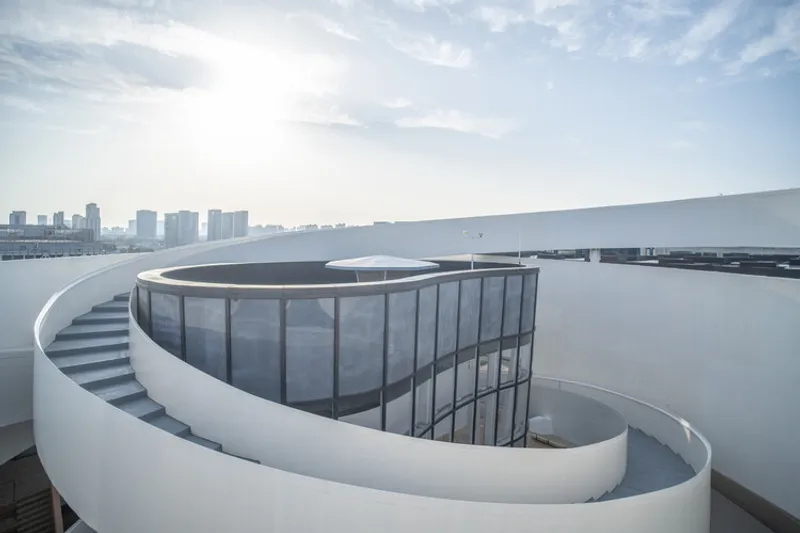
Above the exhibition spaces, the under-roof zone transforms into a three-dimensional public promenade described as “three mountains embracing two rivers.” This elevated circulation system allows citizens to walk, gather, and enjoy panoramic waterfront views without entering ticketed galleries. Rooftop plazas, terraced landscapes, and commercial streets create layered public experiences, forming a 24-hour climbable architectural landmark. Rather than blocking the waterfront, the massing enhances visual permeability and accessibility, reinforcing a friendly, open, and inclusive civic environment.
Adaptive Spatial Strategies for Urban Resilience
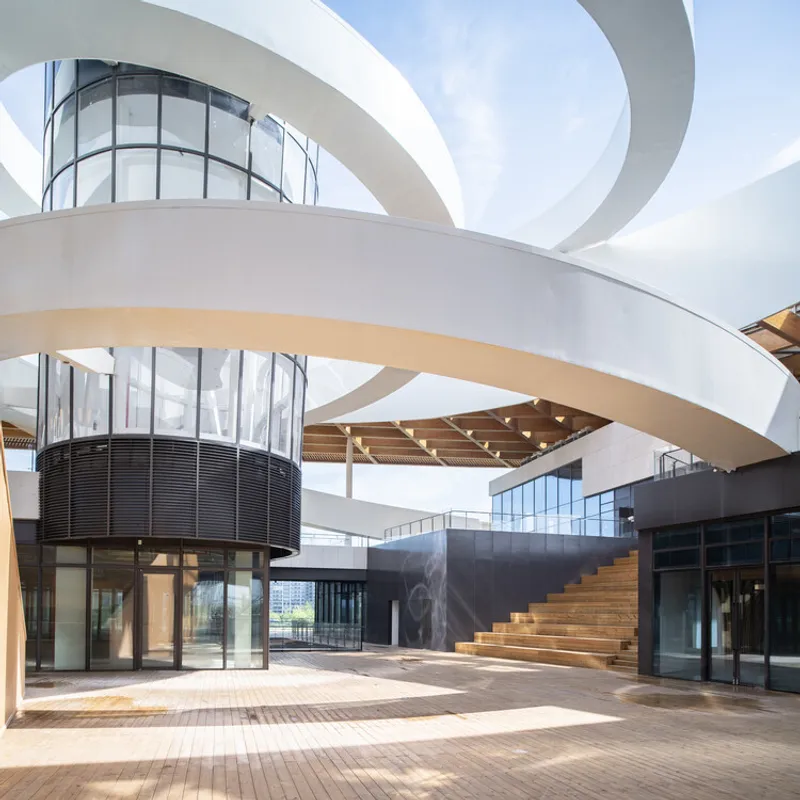
Responding to Jiaxing’s mild and humid climate, the project employs climate-responsive architectural strategies to reduce energy demand. Through hierarchical spatial planning, indoor conditioned spaces are minimized while circulation areas and galleries transition into semi-outdoor environments.
Outdoor platforms integrated with Building-Integrated Photovoltaic (BIPV) canopies and native vegetation enhance microclimatic comfort. The waterfront landscape incorporates multi-level ecological wetland terraces that function as part of the city’s sponge infrastructure, managing stormwater and adapting to fluctuating water levels.
By embracing environmental uncertainty, the design establishes a resilient waterfront model that addresses climate variability while delivering long-term public value. Flexible layouts ensure adaptability for future programming changes, reinforcing operational sustainability.
Form-Performance Synergy and Human Comfort
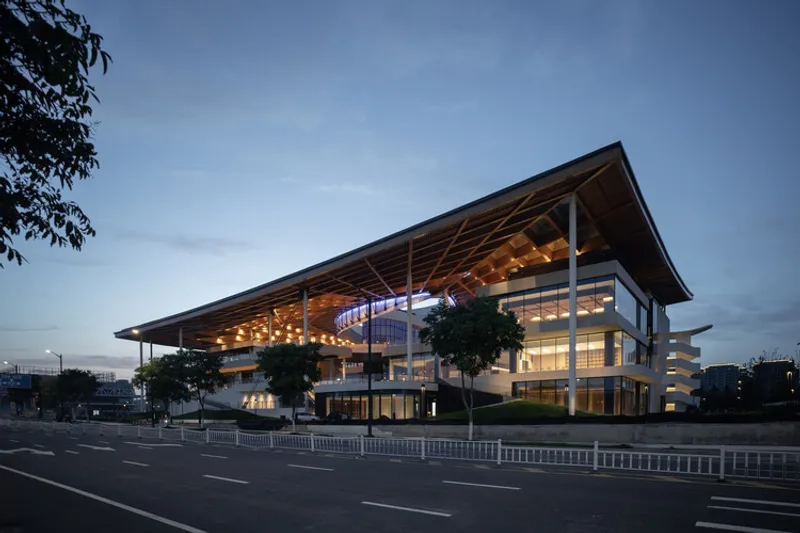
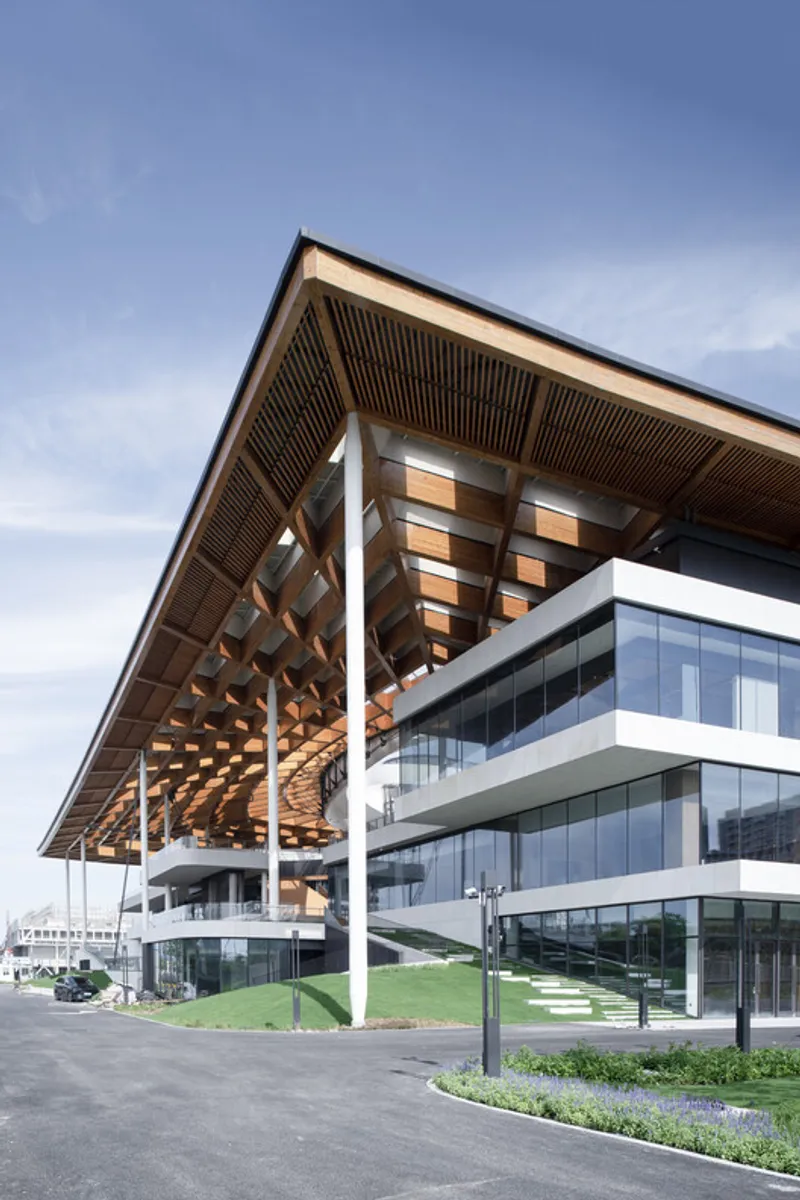
The design philosophy centers on “form-performance synergy,” aligning architectural expression with environmental performance and human experience. A sweeping rooftop canopy, inspired by traditional Chinese eaves and interpreted through contemporary curved geometry, enhances shading, daylight control, and thermal comfort. This iconic element not only improves semi-outdoor spatial quality but also establishes a recognizable urban landmark.
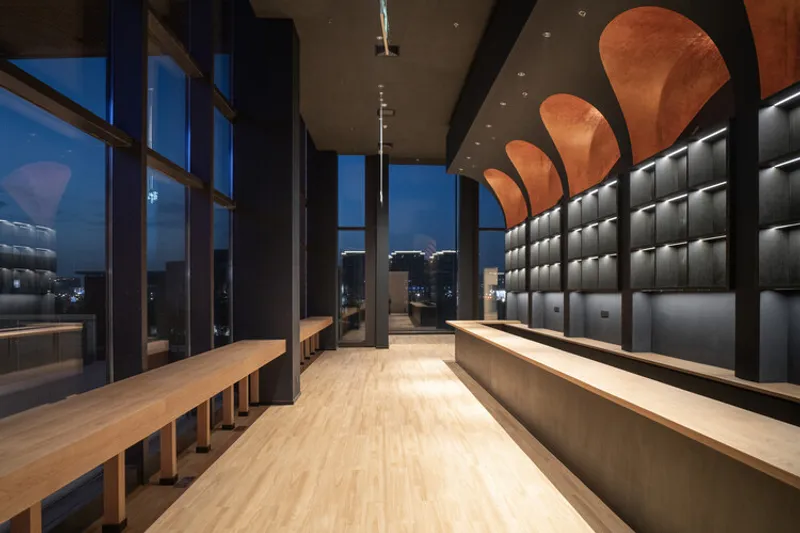
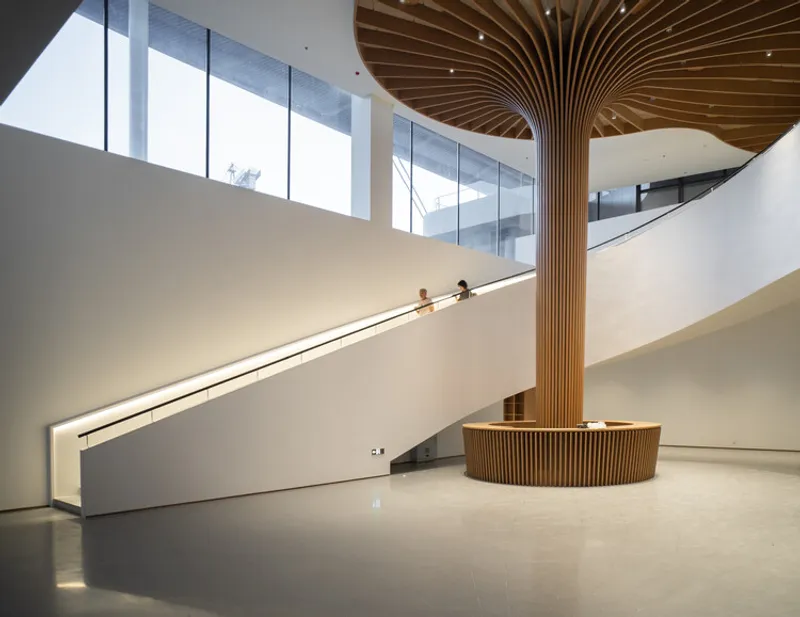
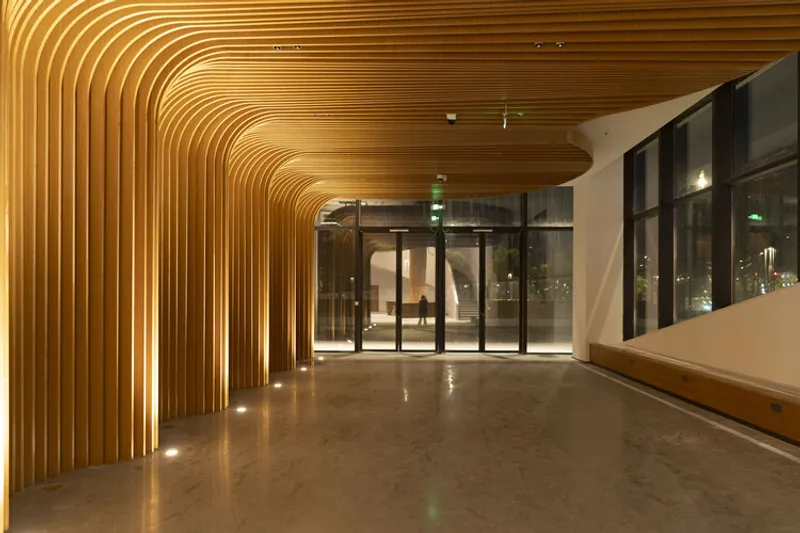
Interior spaces: such as the entrance hall, theater, and cinema lobby: prioritize material warmth, acoustic performance, and visual clarity. Green materials and minimal finishes characterize non-core areas to reduce environmental impact. Intelligent lighting systems ensure balanced illumination, while multifunctional halls adapt seamlessly for conferences, exhibitions, and performances.
Acoustic design was optimized through advanced simulation tools. Perforated curved panels with Helmholtz resonance properties absorb targeted frequencies, while MLS diffusers evenly distribute sound throughout audience areas, enhancing clarity and eliminating unwanted reflections.
Low-Carbon Construction and BIPV Innovation
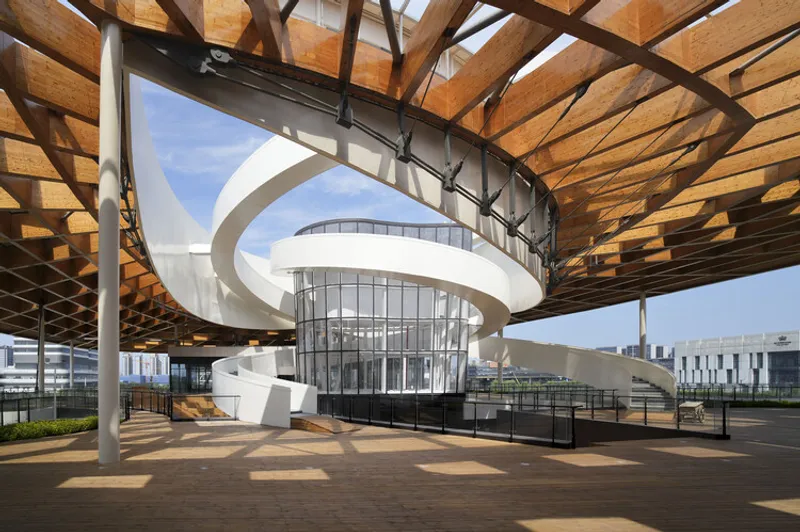
The Jiaxing HRNT Cultural Center exemplifies sustainable large-span architecture. A “flexible cable, rigid support synergy” structural system combines high-strength prestressed cables with rigid steel supports, achieving lightweight stability and reducing steel consumption by 23% compared to initial projections.
The roof operates as an integrated environmental system, merging daylighting, photovoltaic energy generation, and rainwater management. Parametric design coordinates slope, shading, drainage, and PV array placement for maximum efficiency and aesthetic continuity.
Complex roof geometries are clad in aluminum panels, while ETFE skylights diffuse natural light into semi-outdoor spaces. A steel-wood composite structure elevates the roof by 1.1 meters to accommodate PV systems and drainage networks. Digital modeling and 3D scanning ensured precision construction and refined light-shadow effects.
Intelligent Energy Systems and Smart Operation
The building adopts a graded “PV, Storage, DC, Flexible” energy framework to maximize renewable energy use. Photovoltaic generation feeds multiple subsystems, while direct current (DC) supply reduces energy conversion losses. The operational strategy follows a “PV first, storage-assisted, grid backup” model, enhancing resilience and efficiency.
A real-time monitoring platform continuously tracks environmental conditions, enabling adaptive energy dispatch and optimized microclimate comfort. Through intelligent control systems, the cultural center balances low-carbon performance, operational efficiency, and user comfort, positioning it as a benchmark for sustainable cultural architecture in China.
A Future-Oriented Civic Landmark
The Jiaxing HRNT Cultural Center stands as a transformative urban catalyst for Jiaxing High-Speed Rail New Town. By integrating ecological resilience, smart energy strategies, inclusive public programming, and iconic architectural form, THAD SUP Atelier delivers a contemporary model of low-carbon cultural infrastructure.
The project demonstrates how civic architecture can simultaneously activate public life, embrace waterfront landscapes, and pioneer sustainable innovation, shaping a dynamic and environmentally responsible future for urban China.
All the photographs are works of
Xinxing Chen, Weizhi Gao



Popular Articles
Popular articles from the community


Hill & Cross Opera: Sculptural Opera House Architecture Shaped by Tallinn’s Landscape and Identity
Hill & Cross Opera reimagines opera house architecture in Tallinn through its sculptural hill, civic plaza, glass wave and a luminous cross.

Lunar Spiral: Space Architecture Shaped by the Mathematics of the Universe
Lunar Spiral reimagines space architecture through Fibonacci geometry, lunar regolith, levitating habitats, and self-sustaining Moon living.

The Ocean Hive: Sustainable Architecture for a Self-Sufficient Civilization at Sea
The Ocean Hive imagines sustainable architecture at sea, where modular habitats, algae, wave power and ocean waste sustain a growing colony.

Conexión: Biophilic Design Reimagines High-Rise Living in Hong Kong
Conexión reimagines high-rise living in Hong Kong through biophilic design, green facades, shared spaces, daylight, water and nature within.

Similar Reads
You might also enjoy these articles

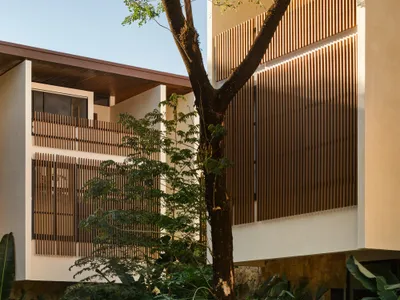
FAMM Arquitectura Organizes Ten Villas Around Courtyards and Jungle in Nosara, Costa Rica
El Molino pairs two elongated volumes with deep overhangs and timber louvers to build a compact coastal community five minutes from the beach.
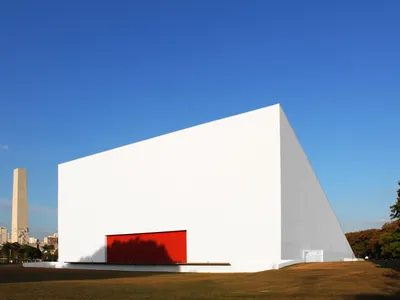
Oscar Niemeyer's Ibirapuera Park Pavilions Define São Paulo's Cultural Identity in Concrete and Curve
A constellation of modernist volumes set within São Paulo's most important urban park, conceived for the city's 400th anniversary in 1954.
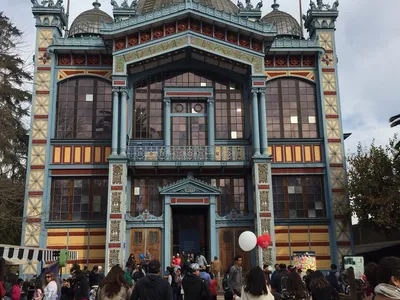
How Henri Picq's 1889 Paris Pavilion Traveled 11,000 Kilometers to Become Santiago's Artequín Museum
A prefabricated iron and glass pavilion built for the Paris Universal Exposition found a second life as a children's art museum in Chile.
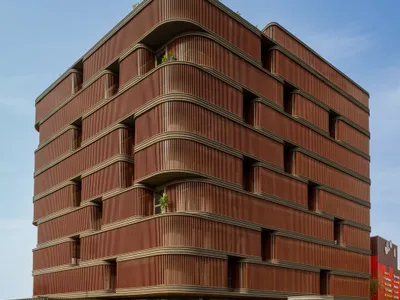
Sanjay Puri Architects Wraps a Jaipur Office Tower in Capsule-Shaped Green Buffers
A nine-level climate-responsive workplace near Jaipur Airport uses stacked planter terraces and aluminium screens to fight 40°C heat.

Explore Architecture Competitions
Discover active competitions in this discipline



Challenge to reimagine the Iron Throne


Photograph architecture without architects


Illustrate the lost glory of Angkor Wat - Render Challenge


Bring back Drive In's
Comments (0)
Please login or sign up to add comments
No comments yet. Be the first to comment!