
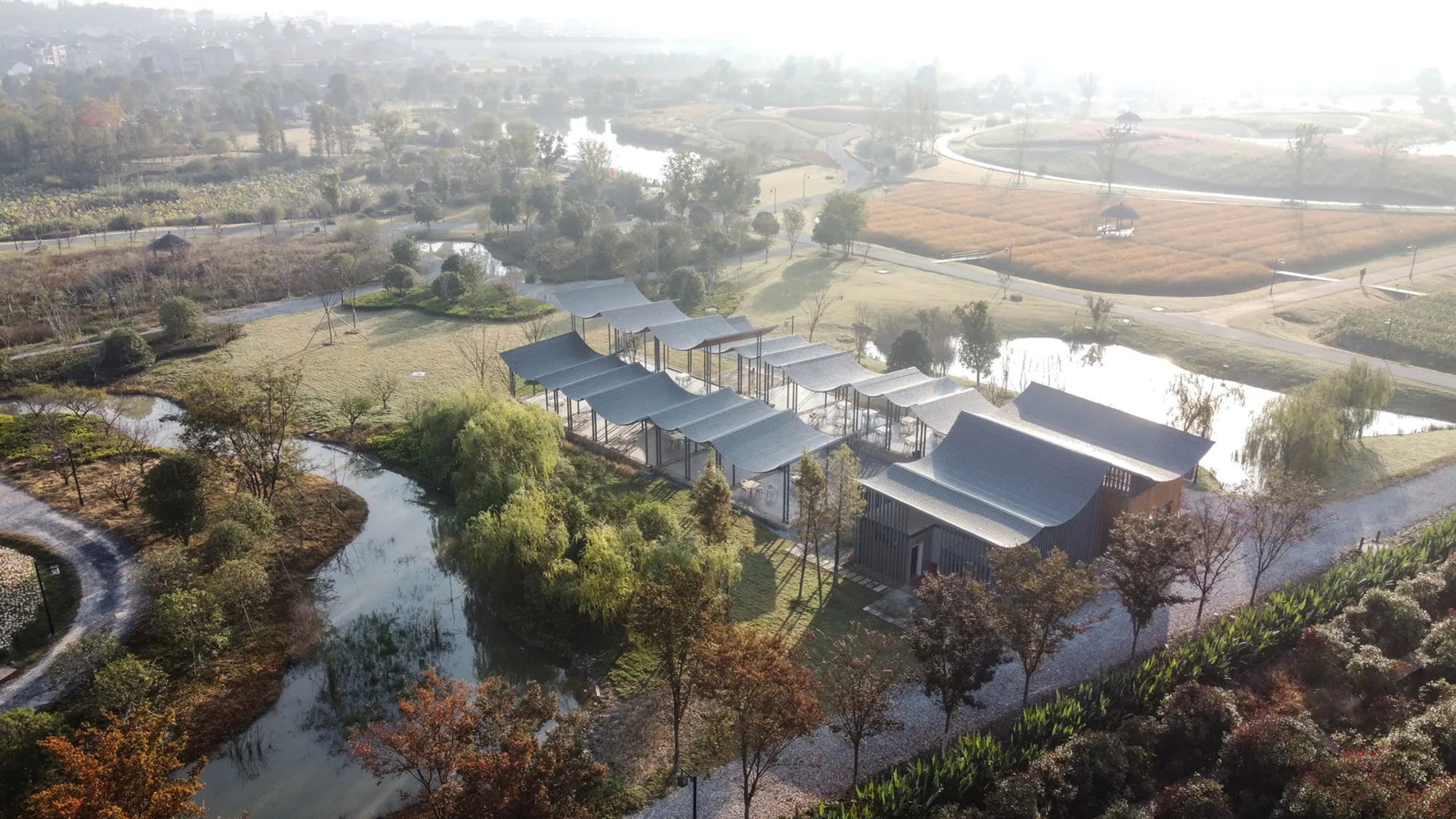
Jingshan Flower Sea Tent Pavilion: A Floating Canopy in the Sea of Flowers
A lightweight, modular pavilion inspired by tea culture, blending steel and wood to create a floating canopy in floral landscapes.


Rooted in Nature, Inspired by Tea Culture
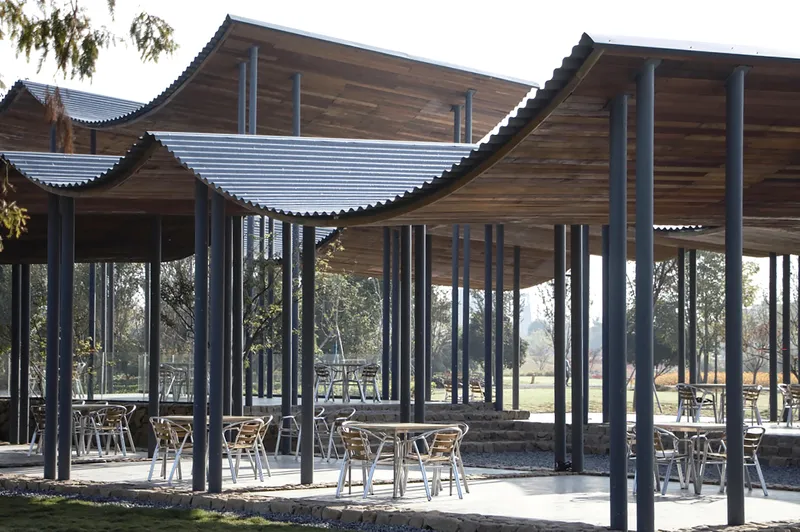
The Jingshan Flower Sea Tent Pavilion sits amidst the serene beauty of Jingshan, a region known for its lush forests, tranquil Buddhist ambiance, and deep-rooted tea culture. Designed by Zhejiang A&F University Landscape Architecture Institute in collaboration with Beeeed Atelier, the pavilion responds to its context by reimagining the archetypal tea sunshade into a lightweight, contemporary structure that evokes a sense of primal connection between humans and nature.
The form of the pavilion is a poetic interpretation of suspended roofing—mirroring the informal, ephemeral shading structures that dot the Tea Mountains of the region. This architectural gesture grounds the project in vernacular inspiration, while employing modern engineering techniques to achieve both elegance and structural integrity.
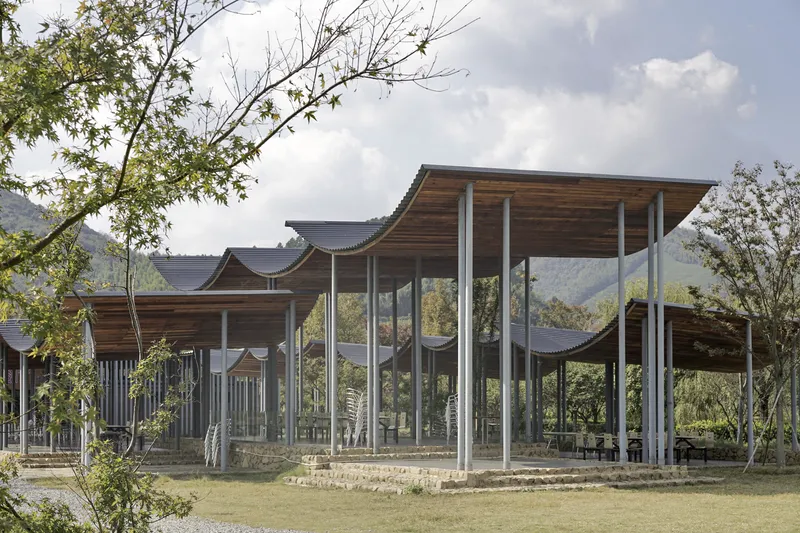
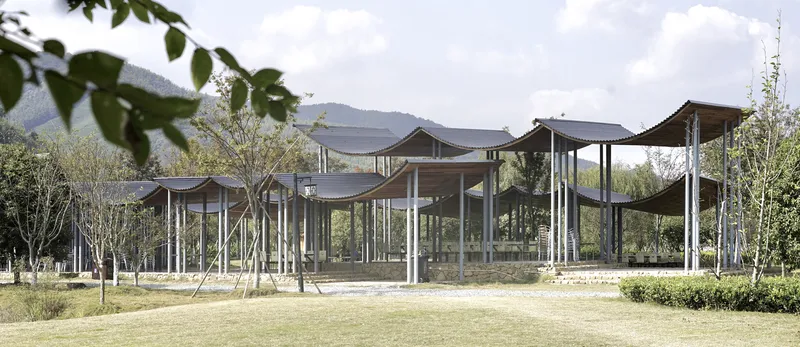
Seasonal Usage and Spatial Flexibility
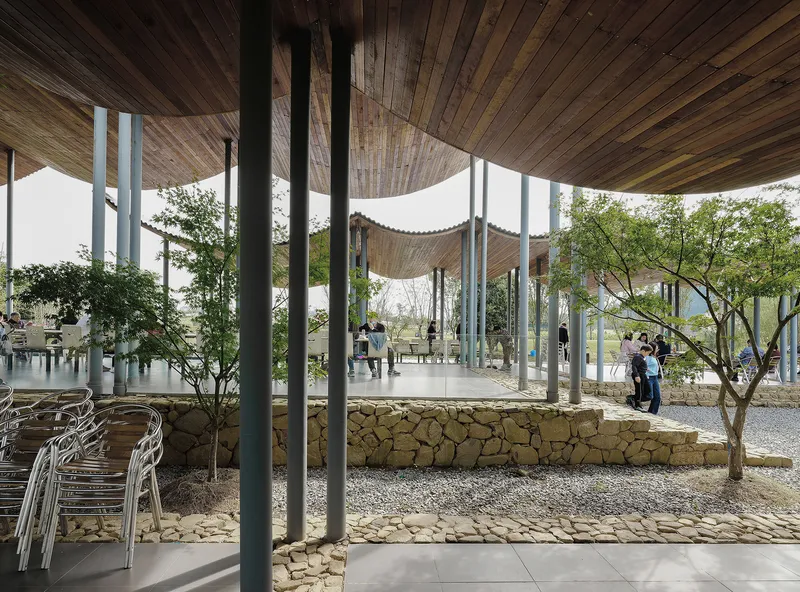
The pavilion functions as a visitor center and public gathering space primarily during spring and autumn, aligning with the seasonal blooming of the adjacent Flower Sea Park. Offering tea, coffee, light meals, and a space for children's flower education programs, the structure serves as a multifunctional, open-air pavilion that adapts to nature’s rhythms. Without rigid climate boundaries, it becomes a “floating tent” over the landscape—both visually and experientially.
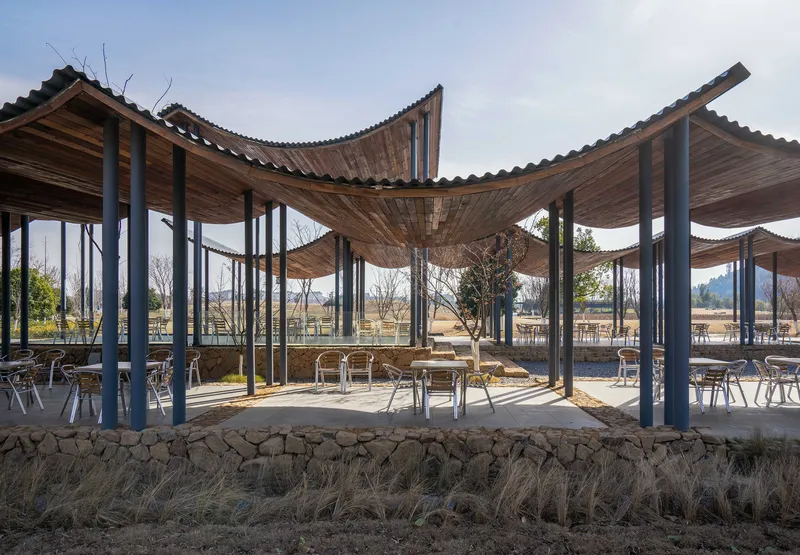
A Modular and Lightweight Structural System
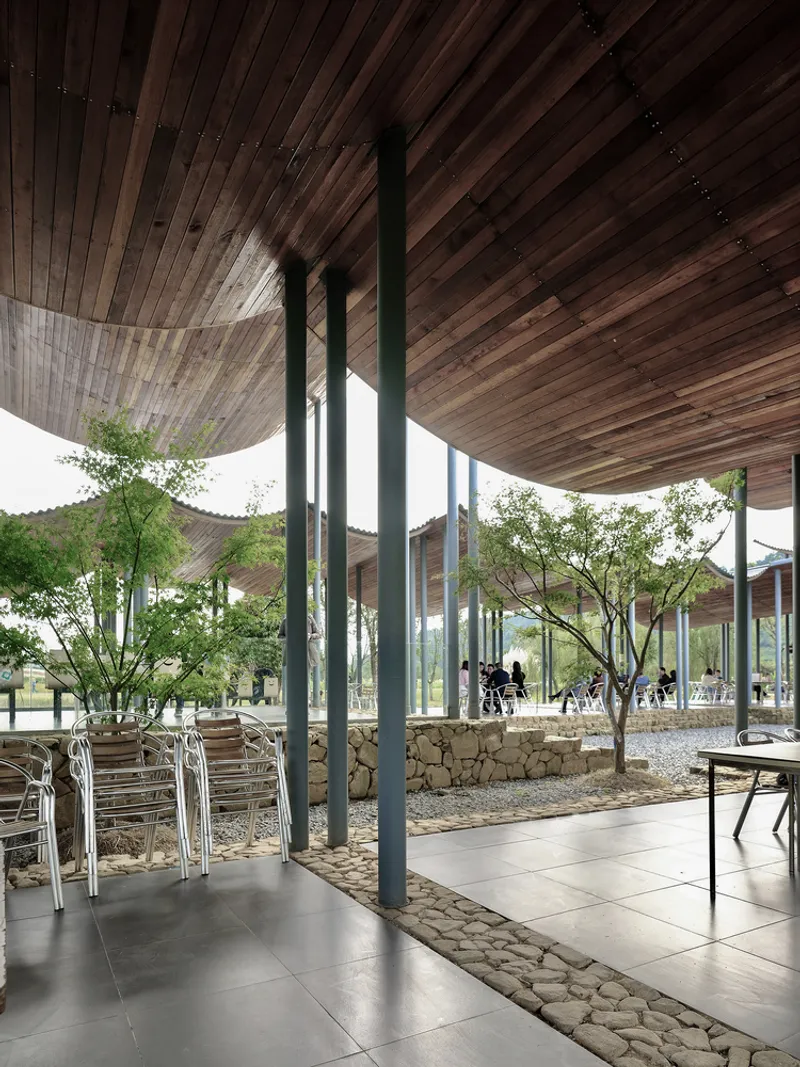
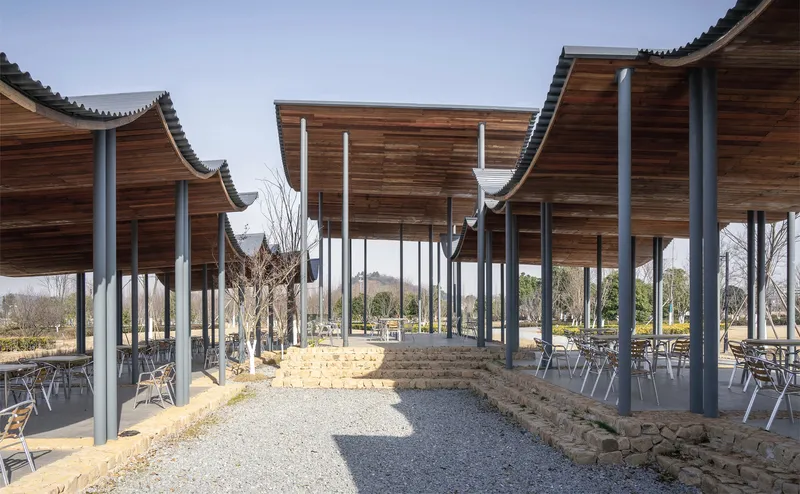
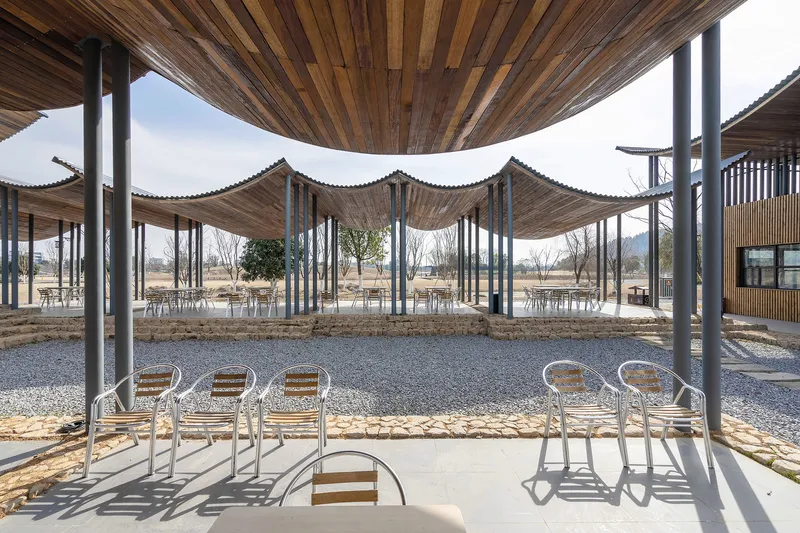
The design follows a modular layout using 6×6m and 6×3m grid units, organizing spaces into functional zones: service, performance, and gathering. Four main tent units frame a central ceremonial courtyard, offering flexibility for events and performances.
The layered roofscape, seemingly weightless, enhances this spatial modularity. Columns are discreetly integrated at internal corners and hidden joints elevate the interior's expansive feel. Vertical supports—slender and randomly distributed—mimic the rhythm of trees in a forest, encouraging organic movement and exploration beneath the canopy.
Innovative Structural Engineering: Steel-Wood Hybrid System
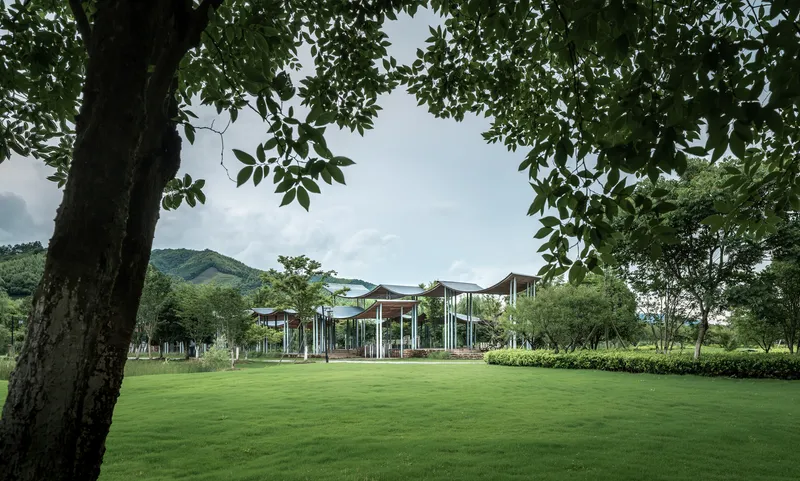
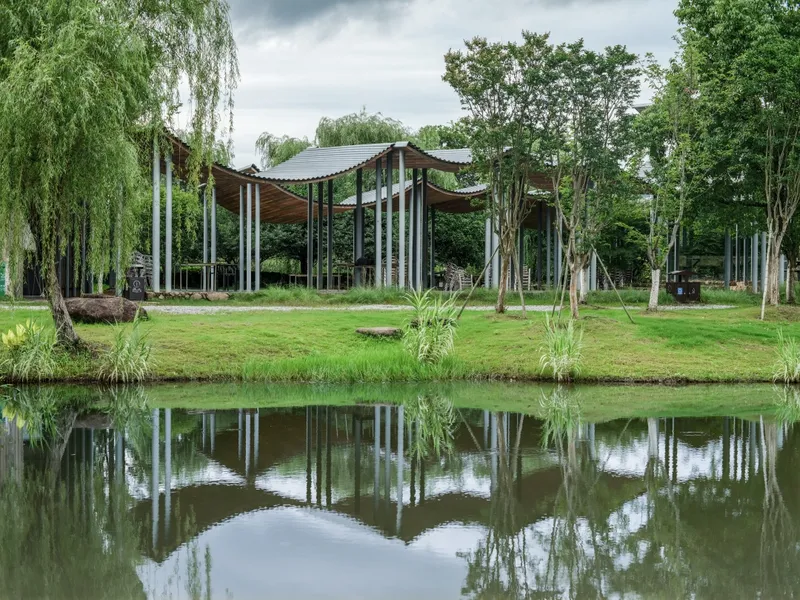
Originally conceived as a rigid, suspended system using post-tensioned wooden shells, the pavilion’s final structure evolved into a more viable steel-wood composite system. Prefabricated wooden shell units rest on flexible steel strips, suspended between portal steel frames, transferring loads via membrane action rather than conventional rigidity.
To address wind, snow, and seismic conditions, the design integrates folded truss elements at the roof ridge and increases the number of vertical supports at load-bearing points. This forms a three-dimensional steel frame that reinforces lateral stability without compromising the open and light-filled character of the space.
Construction Adaptation and Material Innovation
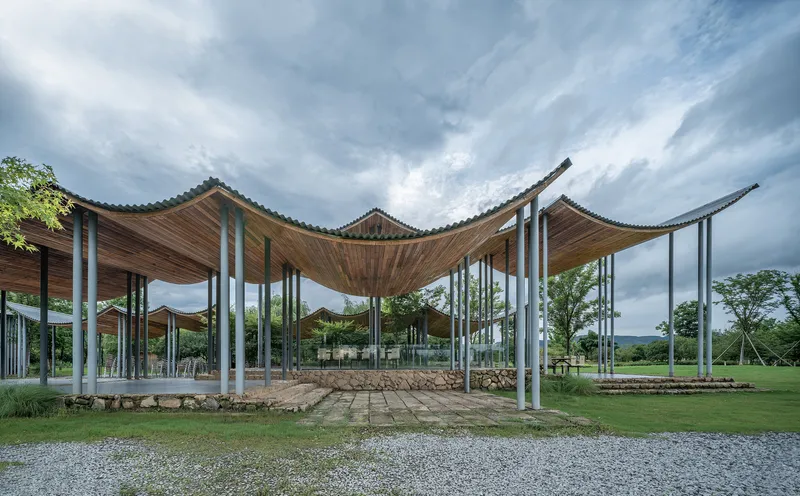
Budget constraints necessitated a shift from glued laminated timber to locally sourced eucalyptus wood. This change required rethinking the shell's weight and lifting process, resulting in a system of custom-fabricated curved steel grids paired with wooden panels. This assembly balances lightness with rigidity, improving in-plane stiffness while visually refining the inner surfaces by eliminating intrusive steel supports.
Ultimately, the structure presents a refined interplay of repetition, flexibility, and material economy, embracing imperfections and adaptations while remaining faithful to its poetic origin.
All Photographs are works of Weijie Lu,




Popular Articles
Popular articles from the community


Co-Life: Senior Housing Design That Reconnects Older Adults With the City
Co-Life reimagines senior housing design through healing gardens, shared streets, workshops, and a sustainable community across generations.

Co-life: Sustainable Architecture for Age-Friendly Community Living
Co-life reimagines sustainable architecture for seniors through courtyards, rammed earth, shared gardens, and spaces designed for belonging.

Riyadh For All: Intergenerational Urban Design for Active Aging in Rabat
Riyadh For All reimagines urban design in Rabat with intergenerational co-living, adaptive courtyards, and Moroccan cultural exchange today.

Lunar Spiral: Space Architecture Shaped by the Mathematics of the Universe
Lunar Spiral reimagines space architecture through Fibonacci geometry, lunar regolith, levitating habitats, and self-sustaining Moon living.


Similar Reads
You might also enjoy these articles


Hodi-Mandai Geram
Project Function: Preservation and revitalization of the Intangible heritage and socio-spatial identity of the Hodi by Housing, Cultural Memory Center, Sacred Grove, landscape, local tourism economy


Olio Towers: A Mid-Rise for Performers That Fuses Housing, Rehearsal, and Stage
Located blocks from Houston's Theater District, this modular tower stacks living units around a central performance atrium.

Oasis: Modular Green Housing Carved into Dhaka's Urban Fabric
A shortlisted Plugin Housing entry reclaims unauthorized settlements in Dhaka with stepped concrete volumes, green roofs, and ventilation-driven design.

Black Hole: A Floating Megastructure for the Post-Physical Era
Emiliano Mazzarotto envisions a spherical, self-scaling arena where e-sports, digital hotels, and holographic stadiums replace traditional public space.


Explore Cultural Architecture Competitions
Discover active competitions in this discipline



Challenge to reimagine the Iron Throne


Photograph architecture without architects


Illustrate the lost glory of Angkor Wat - Render Challenge


Bring back Drive In's
Comments (0)
Please login or sign up to add comments
No comments yet. Be the first to comment!