
Jo Nagasaka Burrows Guest Quarters and a Bar into a Seto Inland Sea Hillside
Two sunken concrete volumes on a Japanese island give visitors solitude and community without stealing the view from the house above.


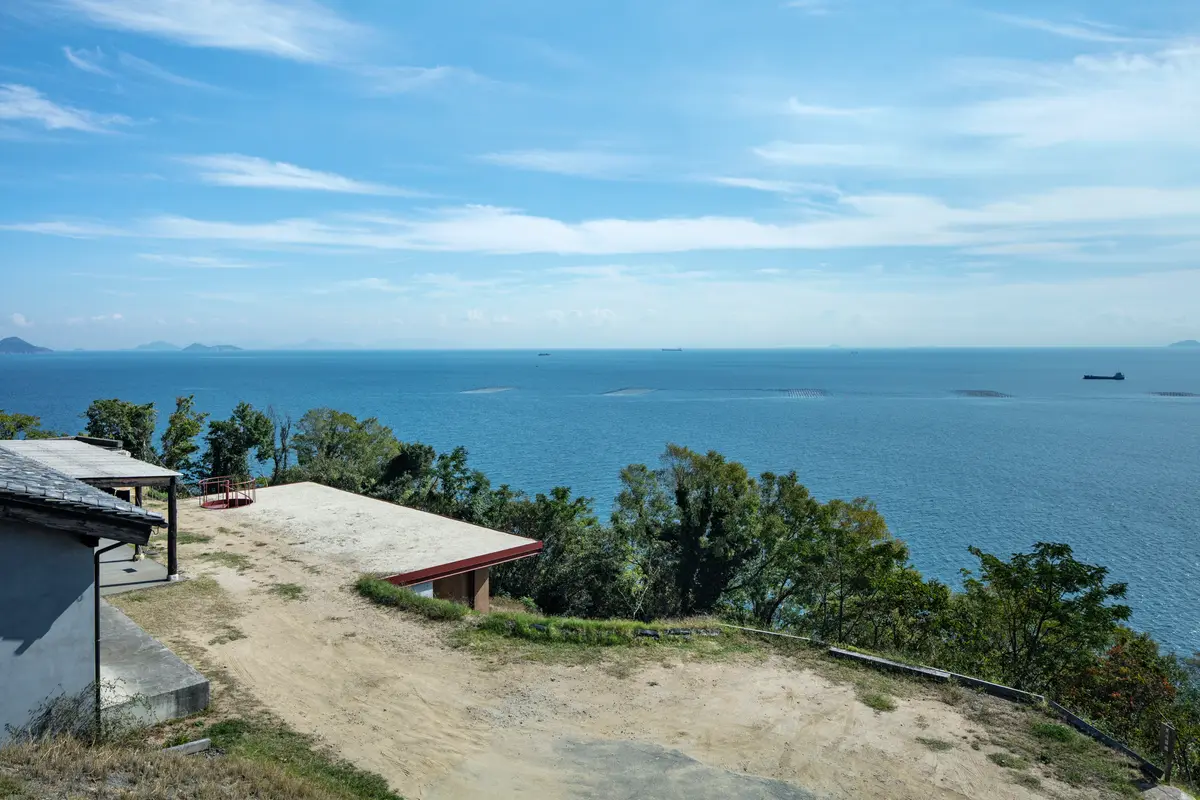
Adding to someone's house on an island is a charged proposition. You're working with a finite, ecologically fragile parcel, a homeowner who already has views worth protecting, and the psychological weight of building on a place that, by definition, cannot expand. On one of the islands scattered across Japan's Seto Inland Sea, Jo Nagasaka of Schemata Architects answered the problem by going down, not up. DOKUBO and EL AMIGO, two compact additions totaling just 69 square meters, are pressed into the hillside so their roofs become extensions of the existing house's foreground, preserving unbroken sightlines to the water.
The two volumes share a site strategy but almost nothing else. DOKUBO, meaning "solitary," is a steel-framed dormitory of five tiny bedrooms arranged off a single corridor, inspired by shukubo, the austere lodgings at Buddhist temples. EL AMIGO is its social opposite: a reinforced concrete bunker bar centered on a kitchen island, entered through a dramatic gull-wing door. Together they complete a compound that already included a main house, a tearoom, guest quarters, and a dining room, giving the homeowner a place to host family and friends without sacrificing the quiet of island life.
Disappearing into the Terrain
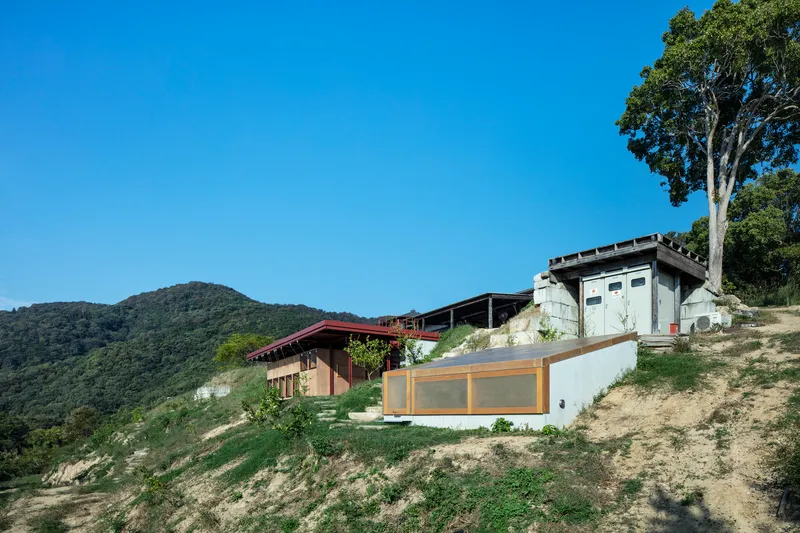
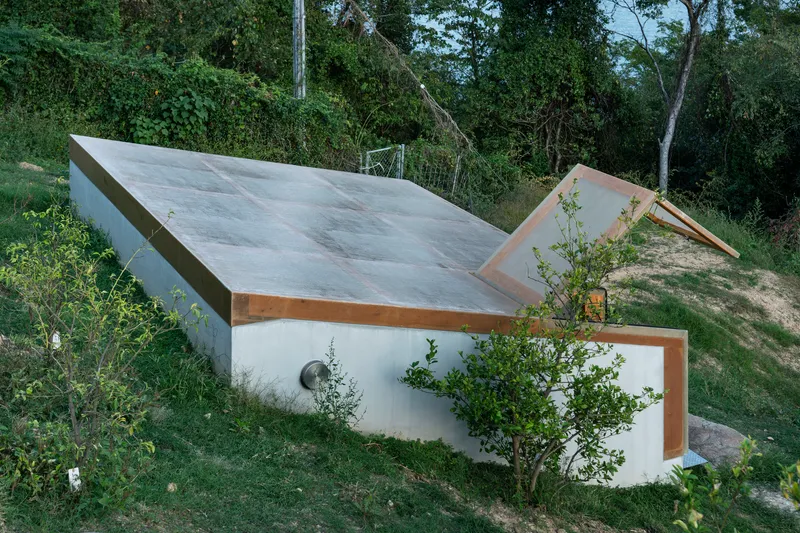
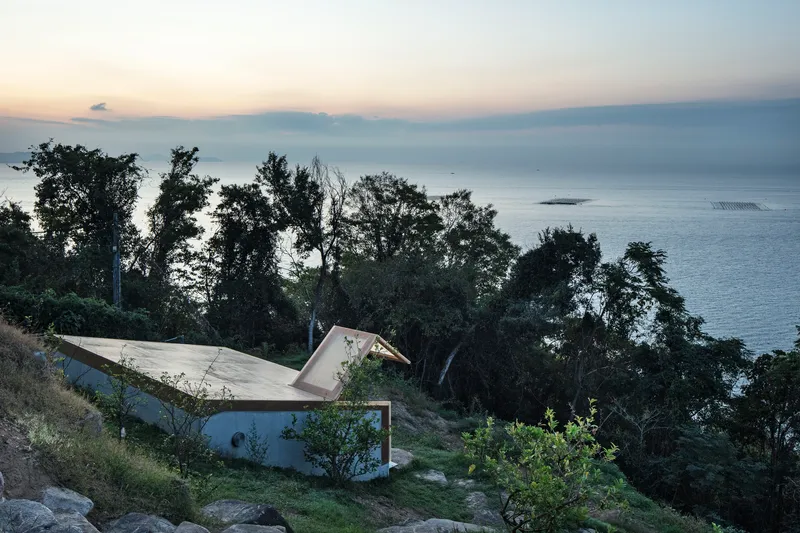
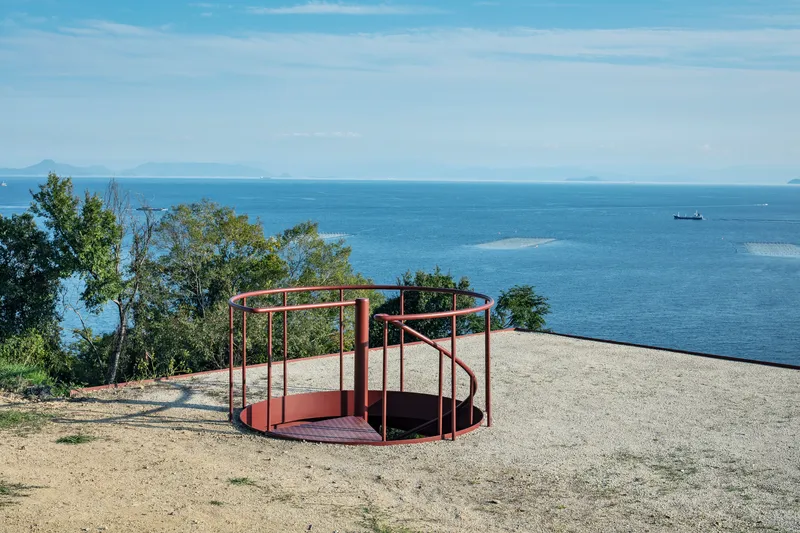
The hillside rises gently in a counterclockwise spiral, and Nagasaka used that geometry to tuck both structures below grade. DOKUBO is reached by a spiral staircase that appears to drill directly into the earth. Its rooftop platform then reads as a natural extension of the slope, not as architecture at all. The critical constraint was that the new roofs had to align with the floor level of the main house's dining room so that the existing sea panorama remained completely intact.
EL AMIGO takes the bunker metaphor further. Viewed from the path above, its folded concrete planes emerge from the grass like geological features. At dusk the effect intensifies: the bar glows from within, a warm pocket of light set into the dark hillside, while the ocean stretches beyond.
DOKUBO: The Solitary Dormitory
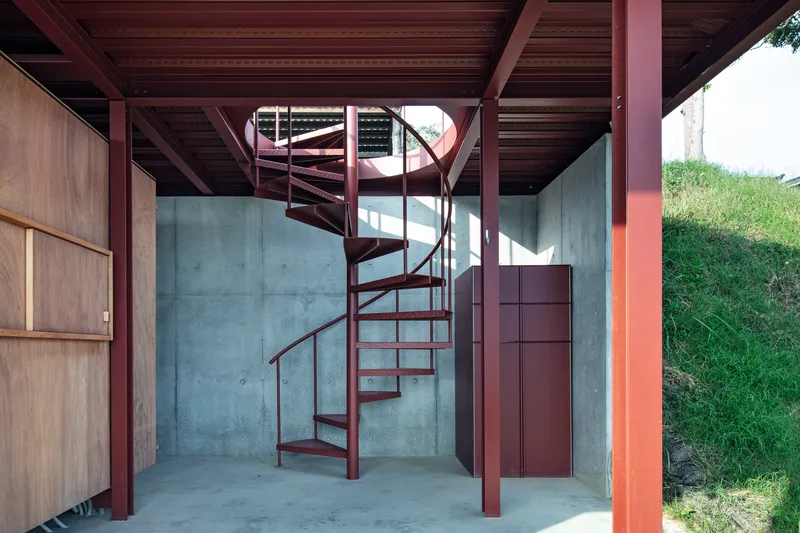
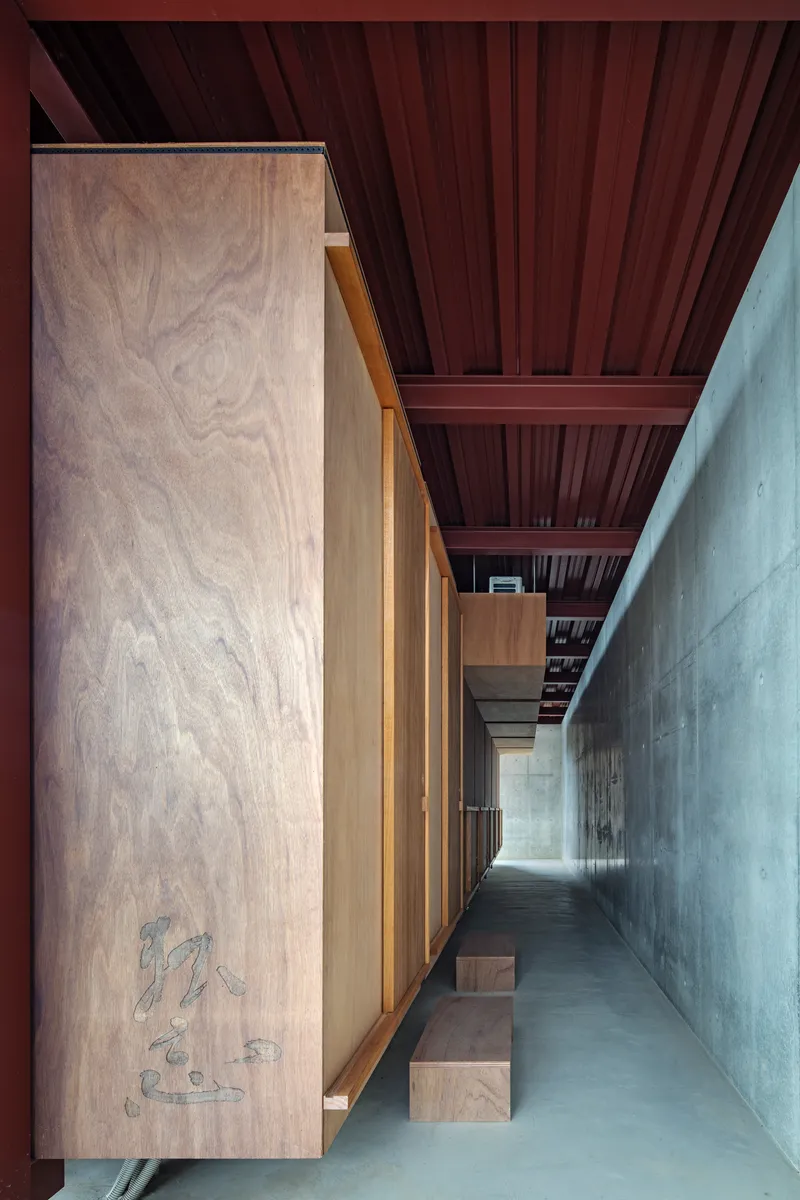
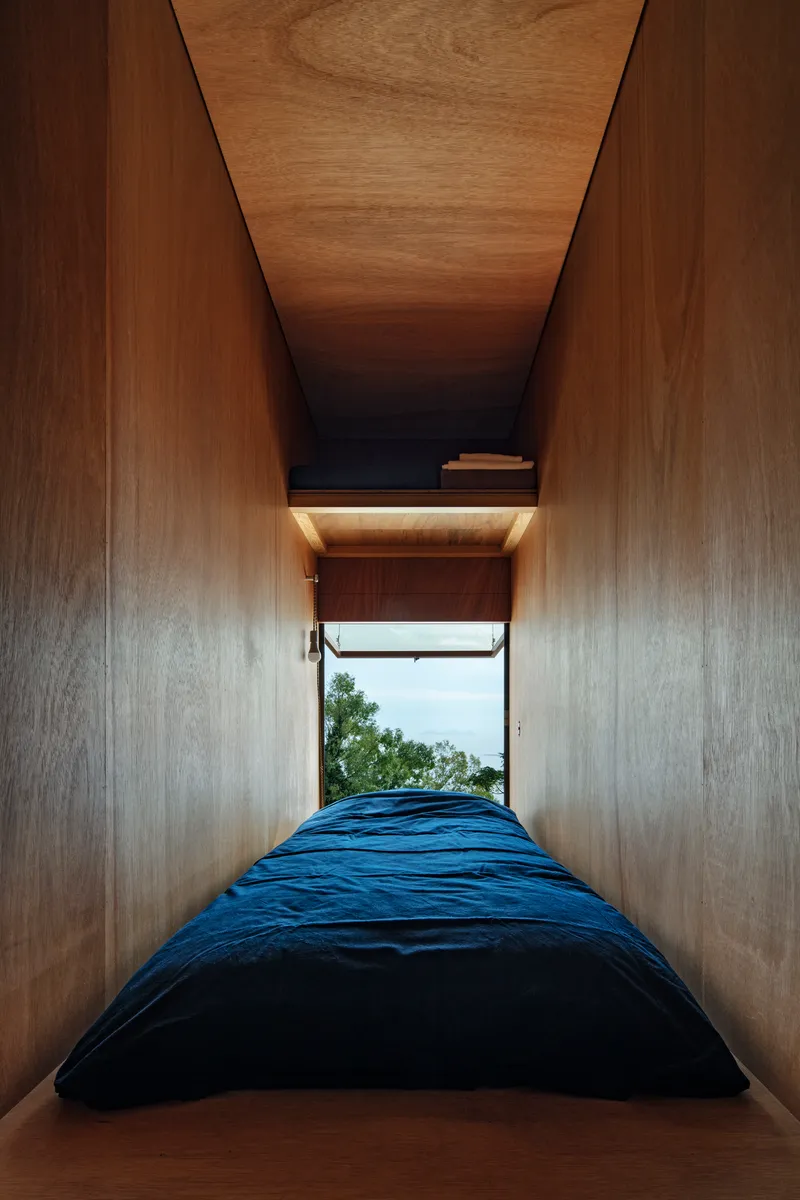
Descending the red spiral stair is a deliberate act of withdrawal. The steel frame supports a narrow corridor flanked by exposed concrete walls, with five sleeping nooks branching off to one side and a shower room and restroom completing the program. Each bedroom is barely larger than a berth, lined in plywood, and terminated by a single window that frames the ocean and distant islands. The compression is the point. Nagasaka drew on the shukubo tradition to create a place where children and guests return to solitude, disconnected from the social life of the house above.
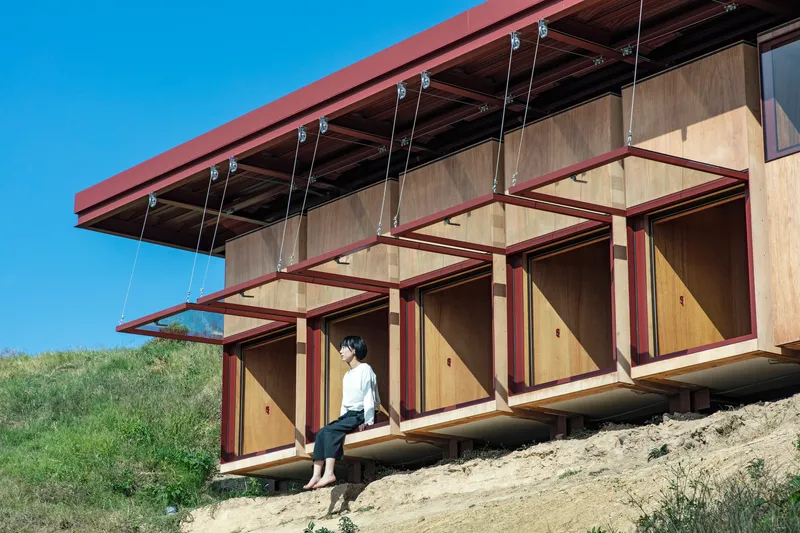
The corridor ceiling is corrugated metal, reflecting daylight that filters down from above and giving the passage an almost industrial frankness. Full-height pivot windows in the bedrooms can be cranked open with a steel wire pulley system attached to the overhanging roof, turning each nook into a screened loggia when the weather permits.
Straw, Concrete, and Texture
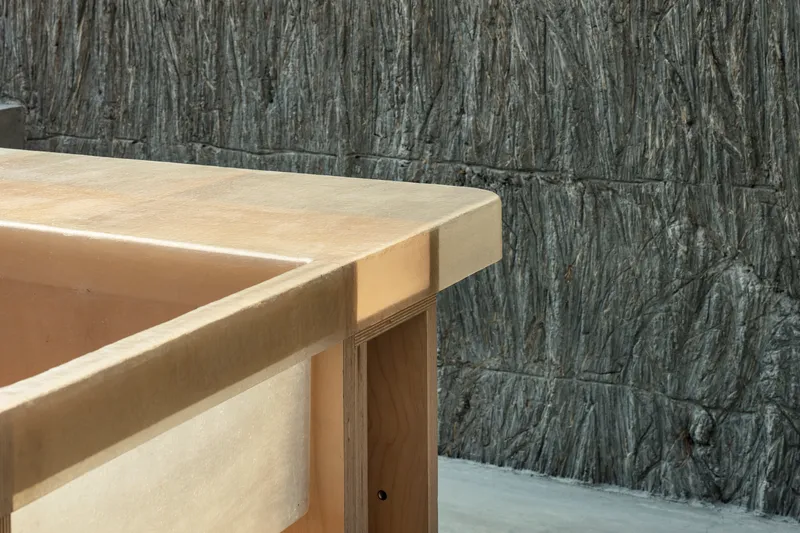
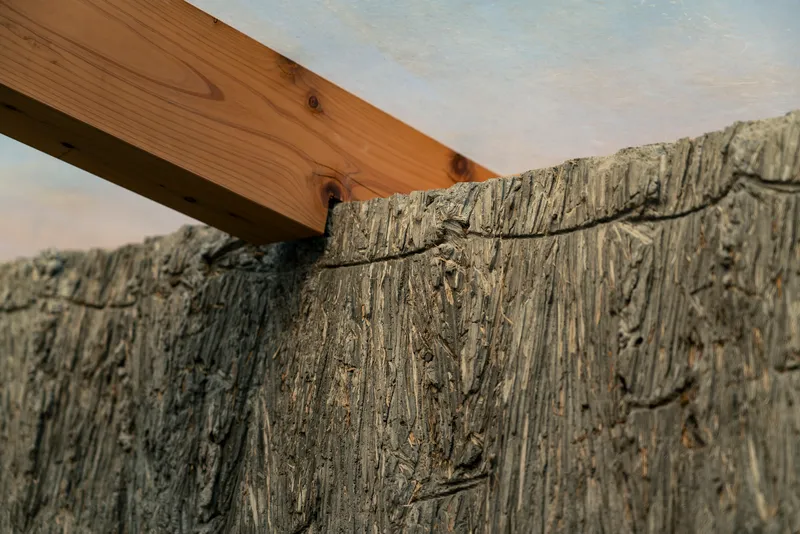
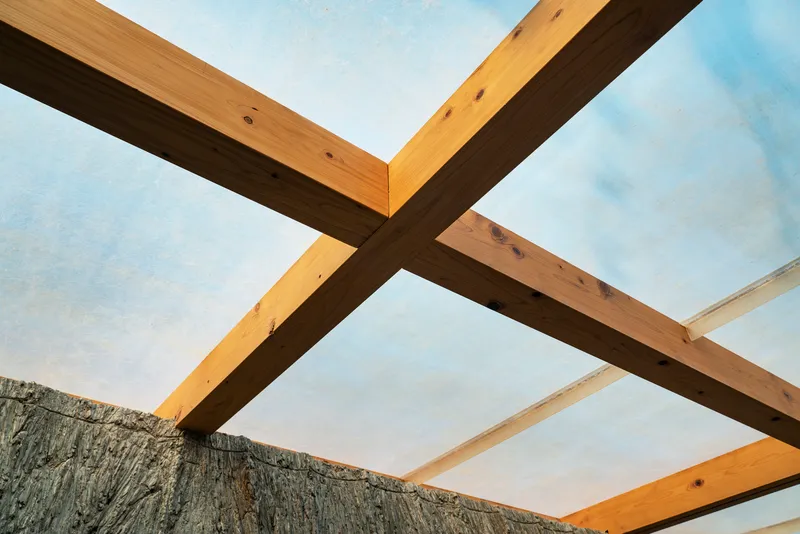
The most inventive material move is in EL AMIGO's walls. Rice straw was layered inside the formwork before the concrete was poured; once the forms were stripped, the straw left a deeply textured imprint across the surface. The result is concrete that reads as something closer to rammed earth or hempcrete, organic and rough to the touch, entirely unlike the smooth board-formed surfaces of DOKUBO's corridor walls.
The contrast is deliberate. DOKUBO's interior is precise and restrained, plywood and corrugated metal under a steel frame. EL AMIGO's walls are wild, almost geological, and the FRP roof panels overhead filter daylight in a way Nagasaka likens to the soft glow of traditional shoji screens. The two buildings share a palette of concrete, wood, and steel but deploy it to completely different emotional ends.
EL AMIGO: The Hole in the Ground
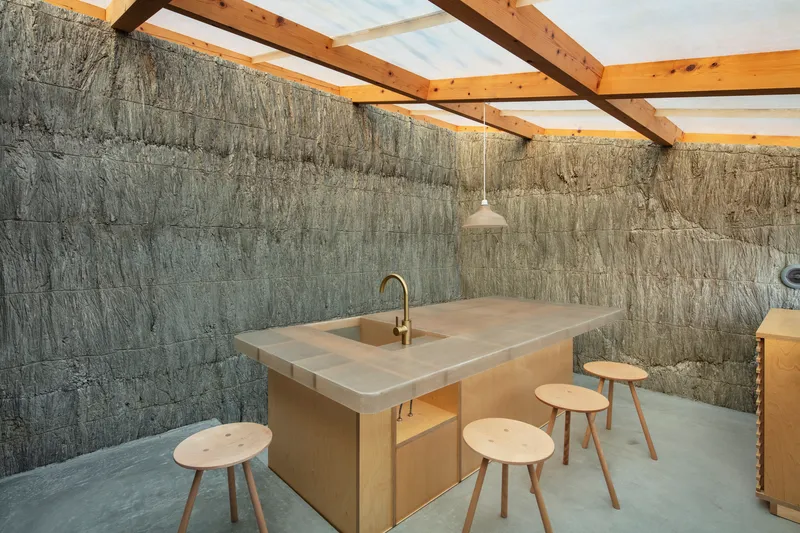
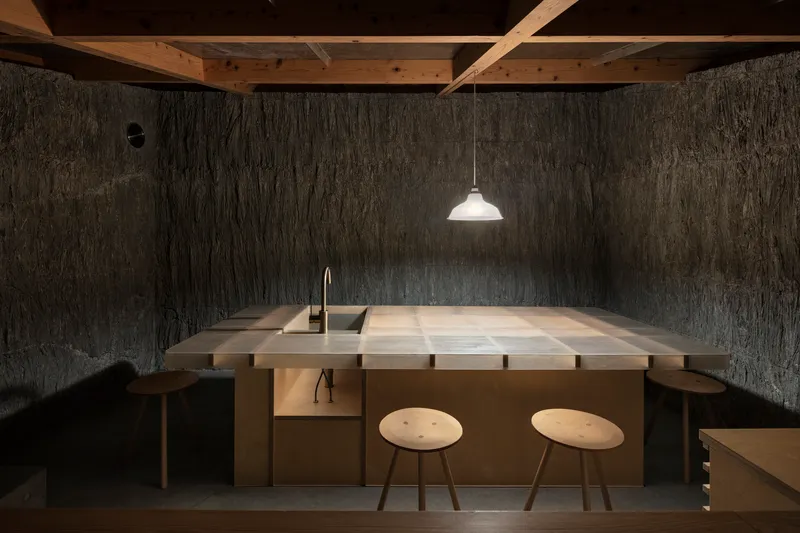
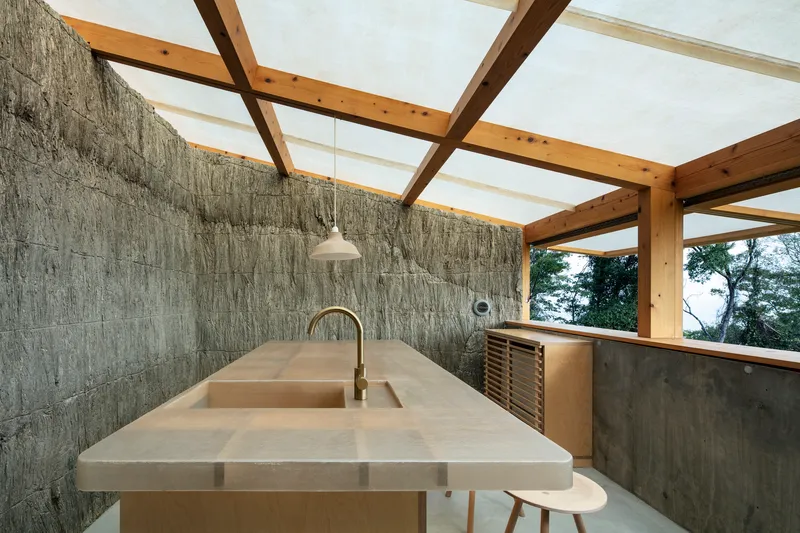
Walk through the gull-wing door and you step down into a space that is essentially one room, organized around a kitchen island with a sink, storage below, and a stone countertop. Wooden stools line up underneath exposed timber beams. A pendant light drops low. The proportions are deliberately snug, scaled for conversation rather than cooking. Nagasaka describes EL AMIGO as a "hole in the ground for cozy drinking," and the bar-like atmosphere is unmistakable.
The FRP roof is the key technical element here. By day it turns the ceiling into a luminous plane, distributing even, milky light throughout the single room. The standing-height island also makes the space suitable for ryurei, the standing-style tea ceremony, connecting a casual drinking spot to a far older Japanese social ritual.
Framing the Setouchi

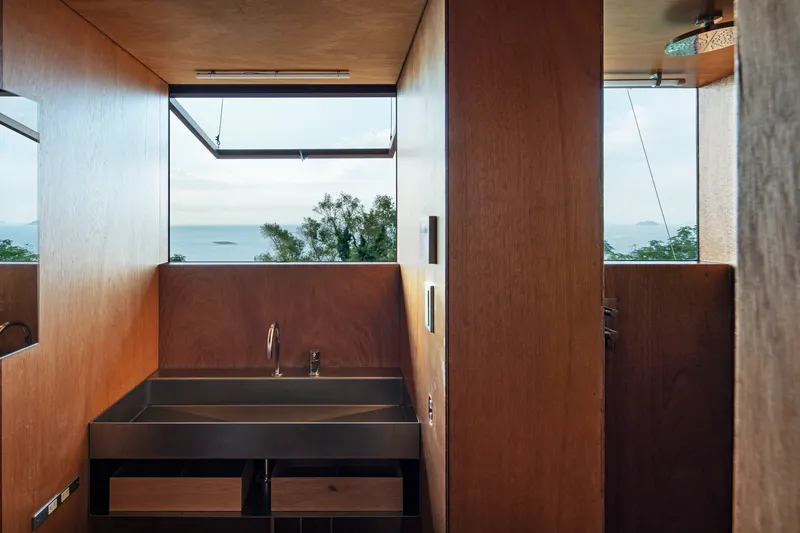
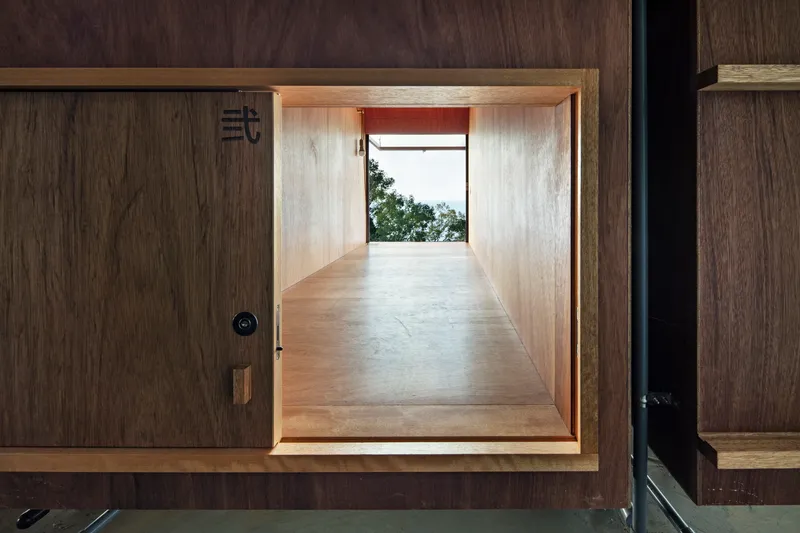
For a project that goes underground, DOKUBO+ EL AMIGO is remarkably porous to its setting. Every bedroom ends in a window that frames the ocean at floor level, forcing you to lie down to see the full picture. The kitchen sink in EL AMIGO sits beneath a clerestory slot that captures distant islands and treetops. Even the corridor's sliding wood panel can be pulled aside to reveal a plywood-lined passage terminating in yet another sea view.
These are not panoramic windows. They are carefully sized apertures that crop the Seto Inland Sea into individual compositions, giving each room a private relationship with the landscape. The strategy works precisely because the buildings are buried: looking outward from below grade creates a horizon line that feels intimate rather than expansive.
The Compound at Twilight
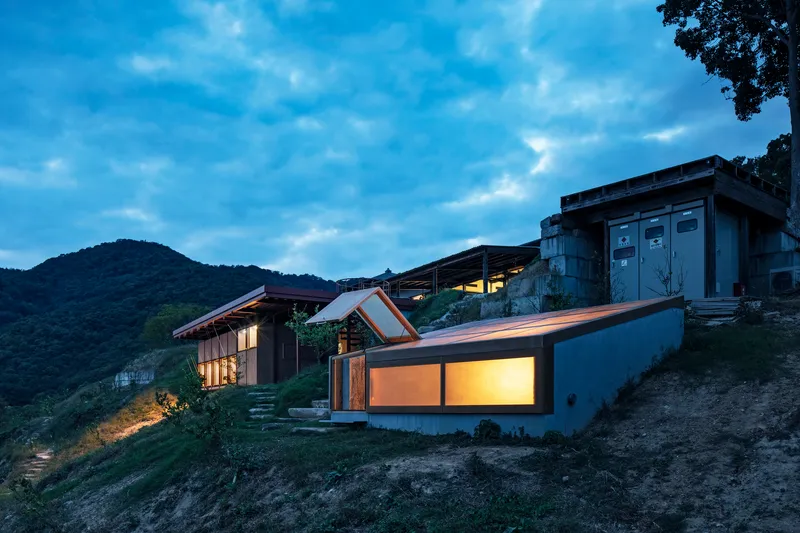
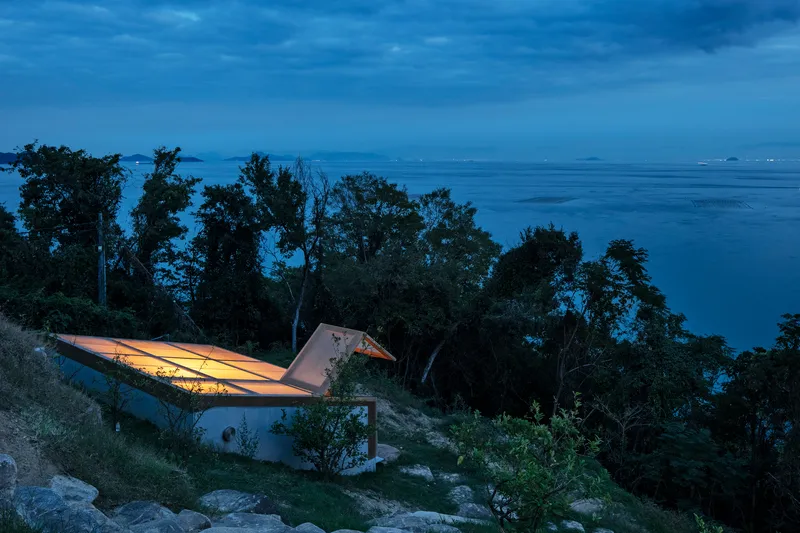
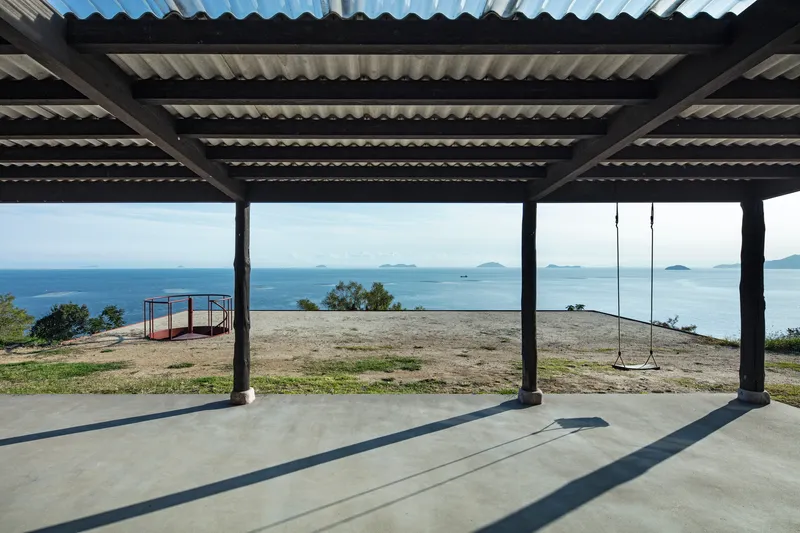
At night the compound reveals its full logic. The cluster of angled roofs reads as a single topographic gesture, each volume distinguished by the quality of light it emits. DOKUBO's bedrooms glow faintly through operable timber panels. EL AMIGO's cantilevered roof broadcasts warm light across the hillside. The covered terrace above, with its corrugated roof and swing overlooking the coast, becomes a liminal zone between the social bar below and the silent sleeping quarters further down the slope.
The separation of programs along the hillside is what makes the compound work as architecture rather than just as accommodation. You move from communal to solitary by descending, a spatial gradient that mirrors the topography itself.
Craft Details
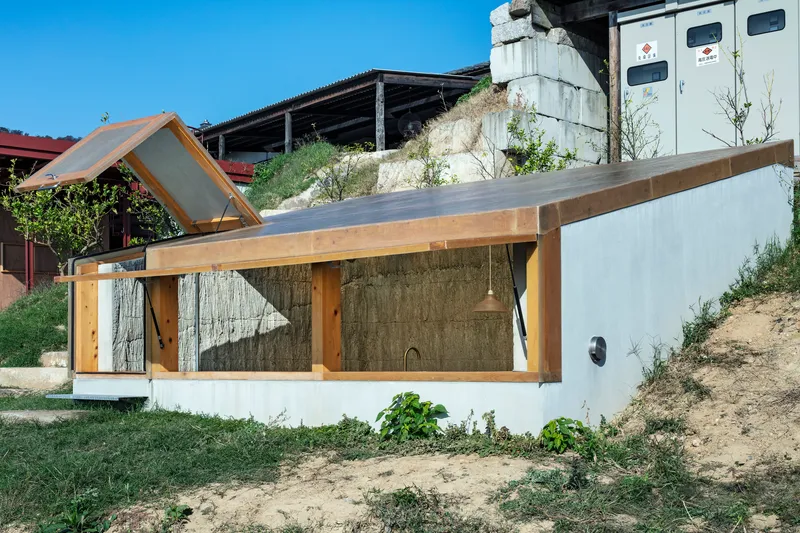
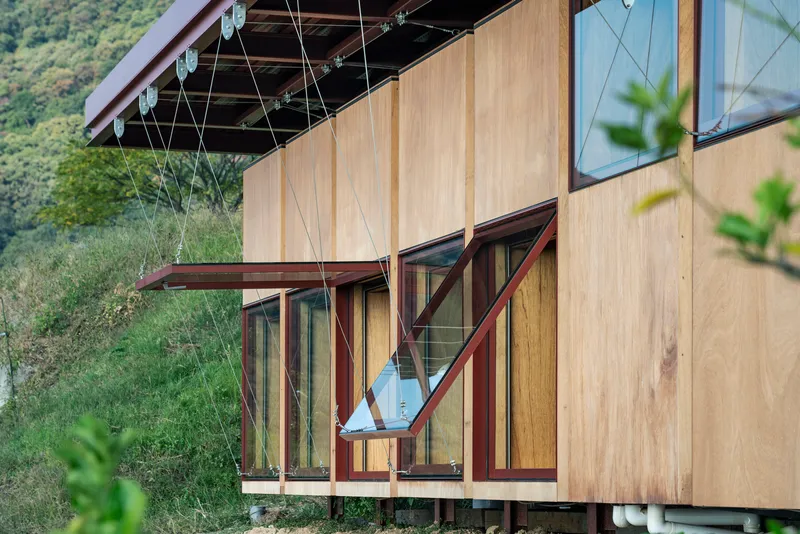
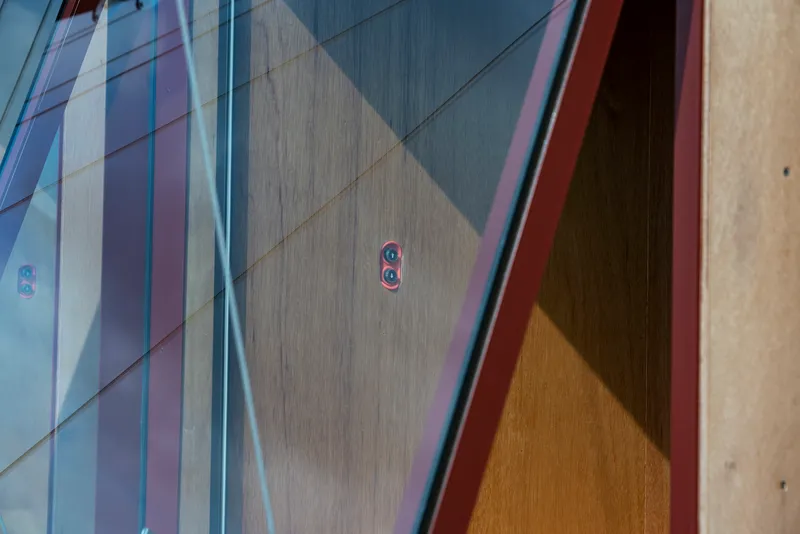
Up close, the buildings reward scrutiny. DOKUBO's facade combines board-formed concrete, white stucco base, and timber-framed operable panels held in tension by cable bracing. The mix is unpolished by intention. Steel columns meet plywood surfaces without trim. Corrugated metal curves around wet-room walls, reflecting daylight and doubling as a waterproof finish. Every joint is legible, which gives the small buildings a sense of being assembled rather than finished.
That legibility extends to the circular steel observation platform on the gravel terrace, a piece of furniture at landscape scale. It suggests that Nagasaka sees the outdoor spaces as rooms in their own right, each requiring its own frame and its own relationship to the sea.
Plans and Drawings
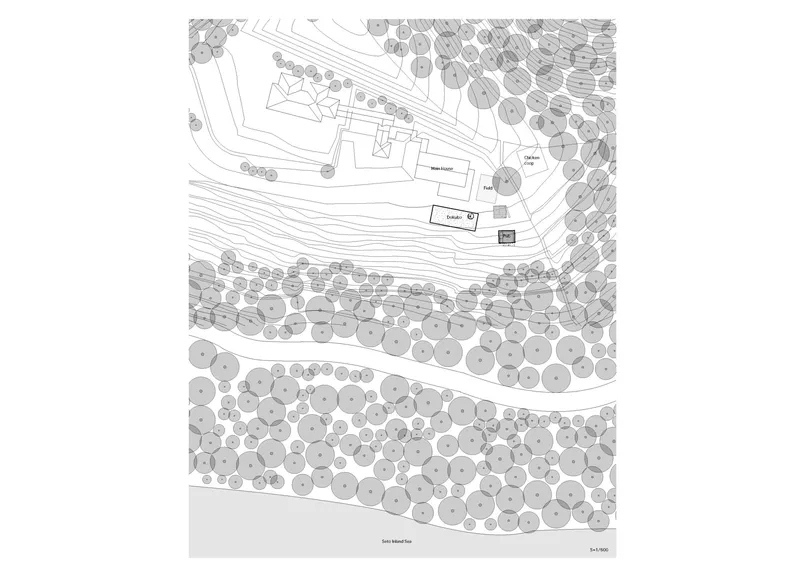
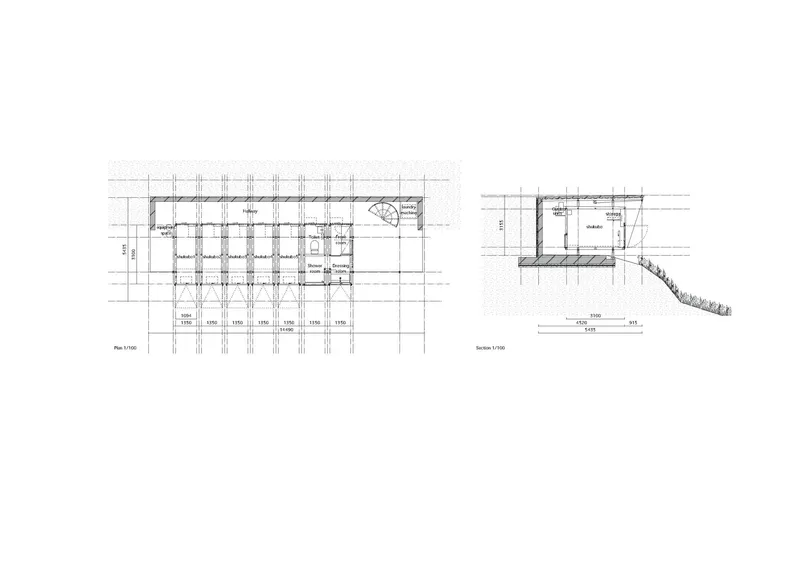
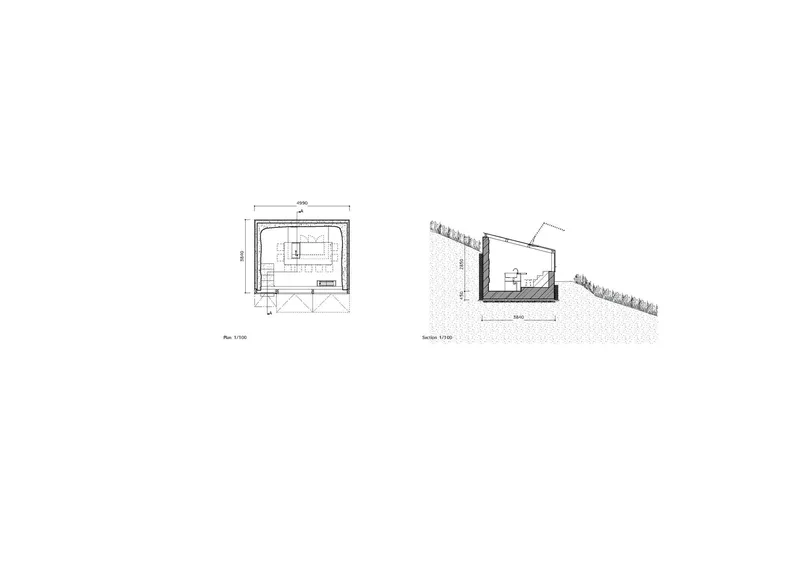
The site plan confirms what the photos suggest: the new buildings are minor incidents within a dense tree canopy, positioned to preserve existing circulation and views. Sections show DOKUBO descending along the hillside in a series of half-level shifts, its corridor following the natural grade. EL AMIGO's section reveals the depth of its burial, with the folded concrete roof barely cresting the surrounding terrain. Together the drawings make the case that this is landscape architecture as much as it is building design.
Why This Project Matters
The default approach to island guest accommodation is the pavilion: a freestanding object that commands views and announces its presence on the slope. Nagasaka rejected that model entirely. By sinking the new program into the hillside and aligning rooftops with existing floor levels, he turned addition into subtraction, a kind of negative architecture where what you don't see matters more than what you do. The compound grows without appearing to change, which is exactly the right ethic for a fragile island site.
More broadly, DOKUBO and EL AMIGO demonstrate that small buildings can carry real conceptual weight. Sixty-nine square meters split into five bedrooms and a bar sounds like a brief for a hostel. In Nagasaka's hands it becomes a meditation on solitude and sociability, on how architecture can calibrate the distance between people by the simple act of placing them at different points on a hill. The shukubo reference is not decorative. It is structural: the project's entire spatial logic derives from the idea that retreat and gathering require separate architectures, and that the terrain between them is the most important room of all.
DOKUBO+ EL AMIGO House Expansion by Jo Nagasaka / Schemata Architects. Fukuyama, Hiroshima, Japan. 69 m². Completed 2021. Photography by Kenta Hasegawa.
About the Studio
Schemata Architects
Share Your Own Work on uni.xyz
If projects like this are the kind of work you want to make, uni.xyz is a place to publish your own, find collaborators, and enter design competitions.


Popular Articles
Popular articles from the community


GROUP A Strips a 1969 Rotterdam Harbor Headquarters to Its Frame and Wraps It in Timber Louvers
In Rotterdam's M4H harbor district, Ferro Offices reuses a 1969 frame, adds one timber storey and reaches BREEAM-NL Outstanding.

U.GA Architects Wraps an Oval Rooftop Pool in Curved Board-Formed Concrete on Busan's Jeollidan-gil
In Busan's Jeonpo-dong, a 454 m² mixed-use block stacks a neighborhood facility, guest rooms and an oval rooftop pool inside spiraling concrete walls.

Juan García Correa, John González and Claudia Rueda Sink a Circular Amphitheater into a Manizales Engineering Building
On the La Nubia campus in Manizales, Colombia, the S1 Building folds labs and offices into a hillside of ramped lawns that double as a campus route.

longwave studio Reorganizes a 112 m² Tainan Apartment Around the Daily Routines of a Family and Two Cats
In Tainan, Taiwan, birch plywood, rust-red furniture and a freestanding plaster wall link arrival, storage, work and family life in one apartment.

Similar Reads
You might also enjoy these articles


LAVA Architecten Gives Vocational Education a Sawtooth-Roofed Face on a Mechelen School Campus
In Mechelen, Belgium, a 2,053 m² STEM school on a 6×6 m grid turns workshops and classrooms into rooms that can be rearranged as teaching changes.

KEMA Studio Turns a Derelict Marvila Attic into a 60 m² Lighthouse Apartment Above Lisbon
In Lisbon's Marvila district, a rebuilt roof, four skylights and two plywood volumes turn an unlivable attic into a bright home facing the Tagus.

Pixel Gardens: One Repeated Module Stacked Into a Terraced Social Housing Tower for Famagusta
Salem Bader's shortlisted housing tower builds a vertical neighbourhood from one repeated module, offsetting units to carve terraces, light and air.

Bao Huynh Watercolor Atelier: A Serene Art Retreat in Hội An
Bao Huynh Watercolor Atelier in Hội An blends multifunctional art spaces, sustainable design, local materials, and family-friendly living in a serene environment.

Explore Residential Building Competitions
Discover active competitions in this discipline

Challenge to design a portable theatre

Challenge to design a portable music platform

Challenge to design an open learning module for the elderly

Challenge to design mud housing for contemporary communities
Comments (0)
Please login or sign up to add comments
No comments yet. Be the first to comment!