

Joslyn Art Museum Expansion by Snøhetta and Alley Poyner Macchietto Architecture
Joslyn Art Museum expansion blends historic Art Deco architecture with light-filled galleries, community spaces, and revitalized gardens, enhancing public access and cultural engagement.


The Joslyn Art Museum, Omaha’s premier cultural landmark, reopens to the public in September 2024 following a transformative expansion, renovation, and site redesign. Spearheaded by Snøhetta in partnership with Alley Poyner Macchietto Architecture, this project redefines how visitors experience Nebraska’s largest art museum, blending historic Art Deco architecture with modern, light-filled design.
Rhonda & Howard Hawks Pavilion: A Light-Filled Cultural Hub
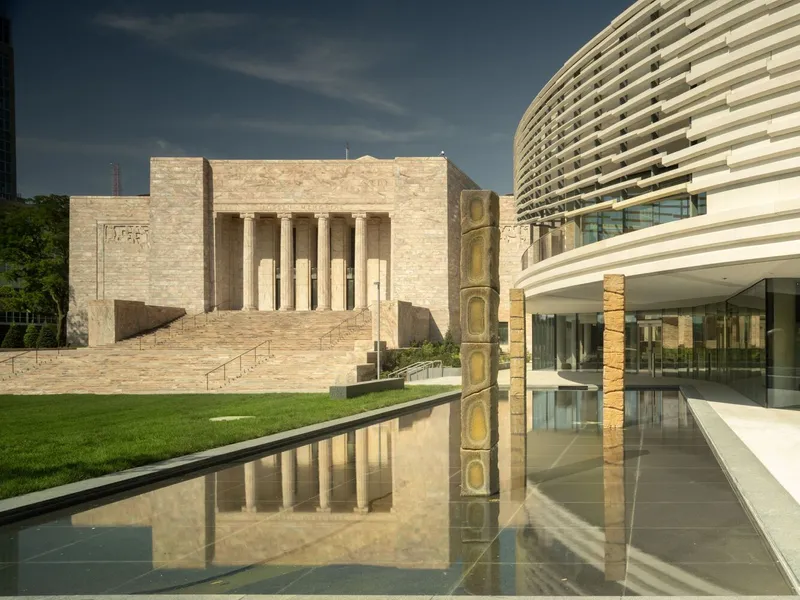
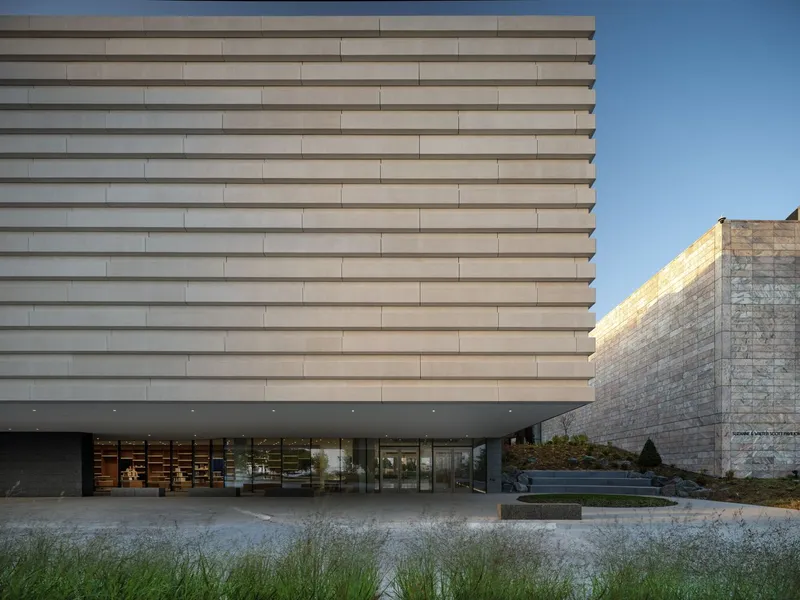
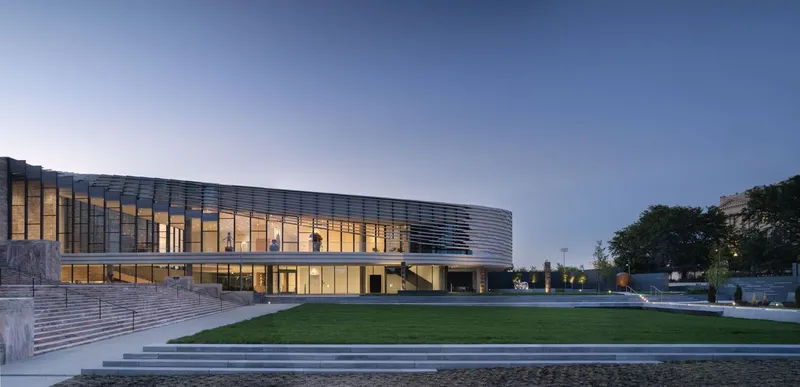
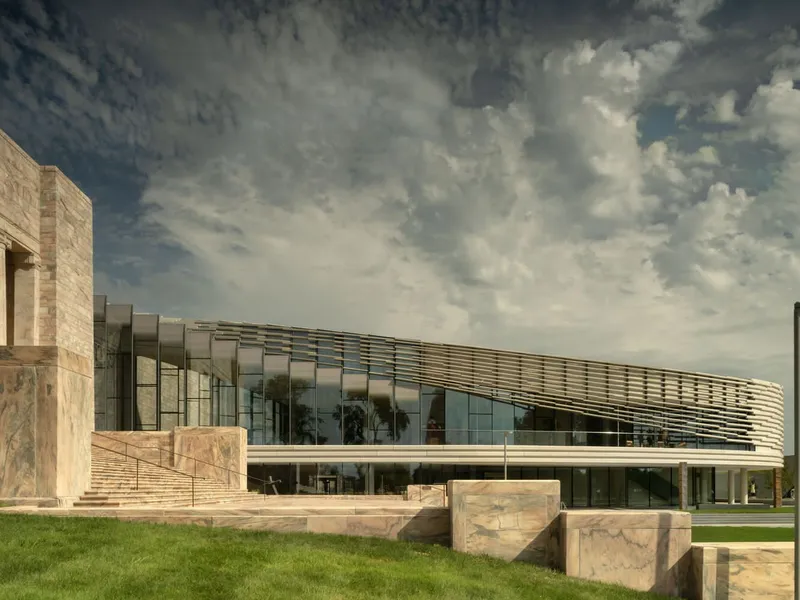
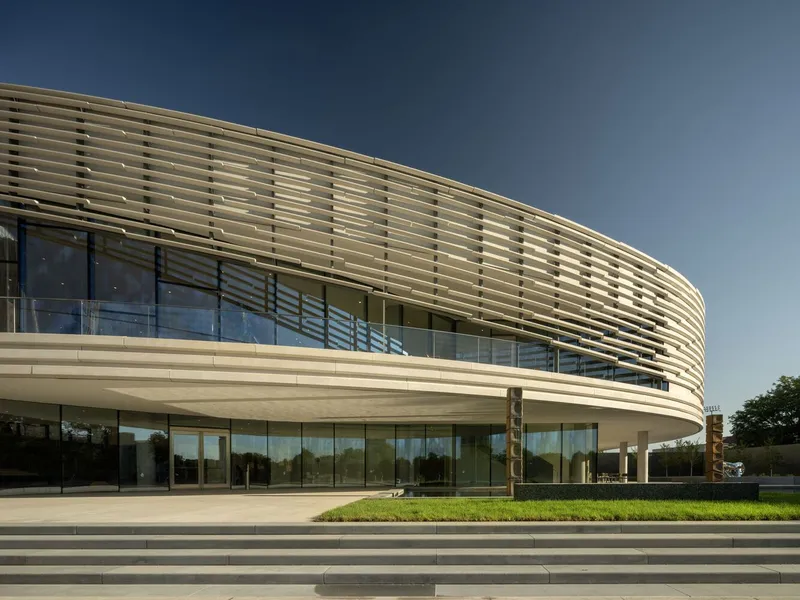
Central to the project is the new 42,000-square-foot Rhonda & Howard Hawks Pavilion, which introduces expansive galleries, community spaces, a Museum shop, and a striking new main entrance. Designed to maximize natural light and create immersive exhibition environments, the pavilion elevates the visitor experience while offering a 40% increase in display space to accommodate the Museum’s growing permanent collection.
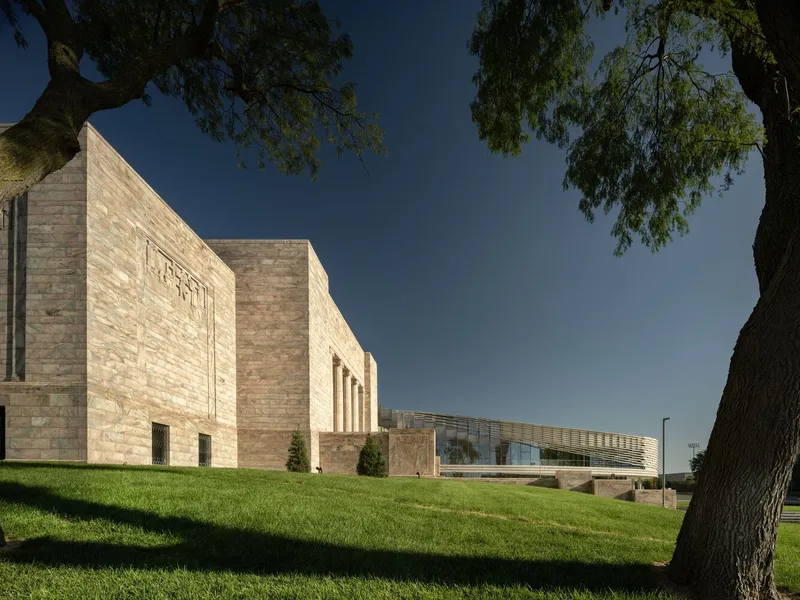
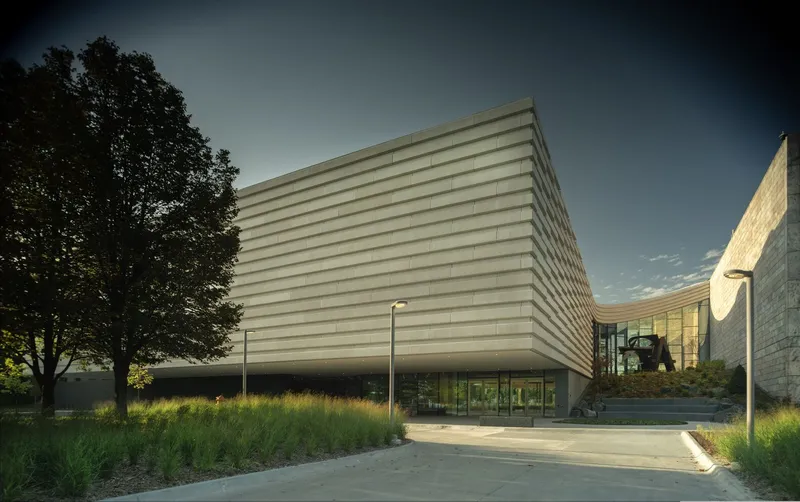
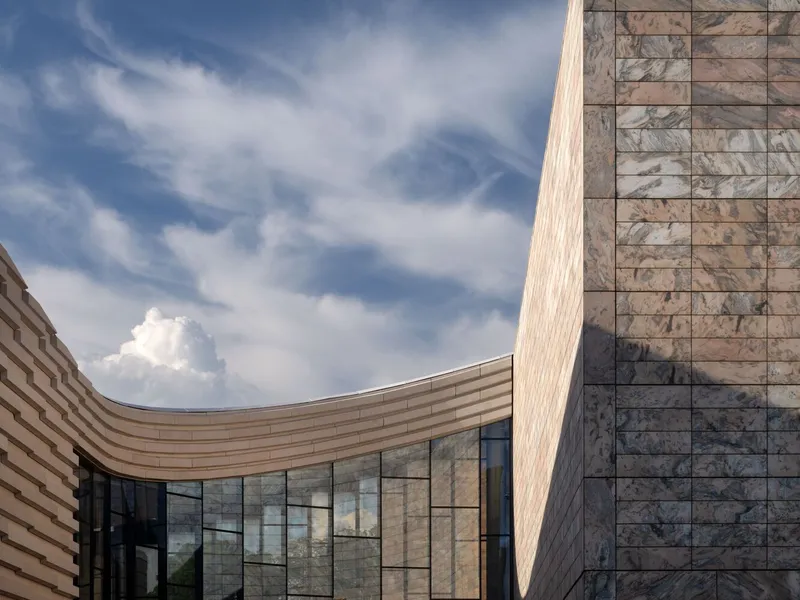
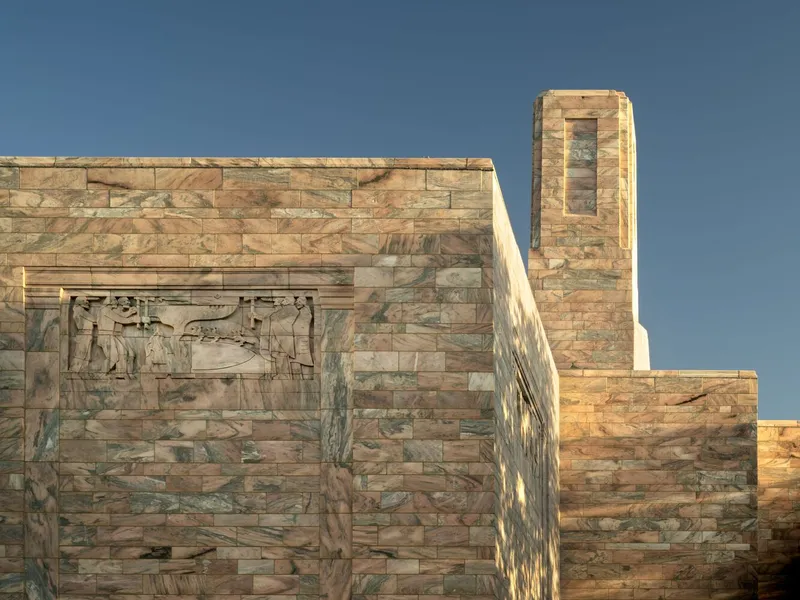
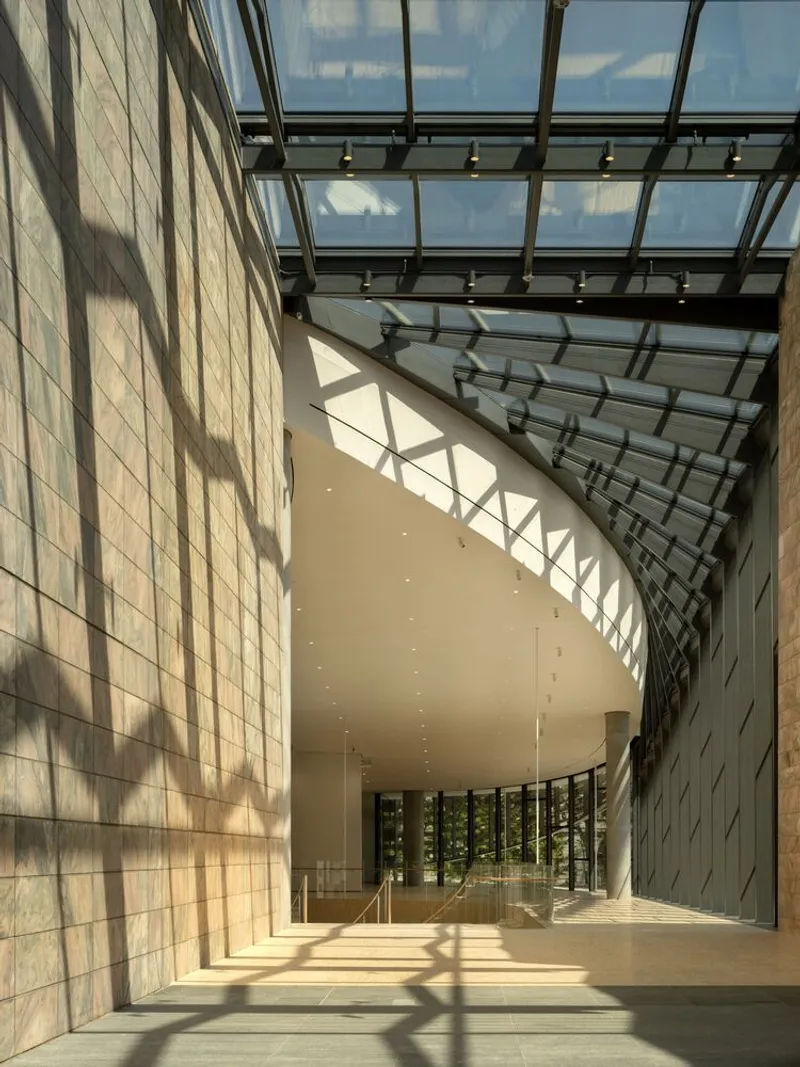
Visitors enter beneath the cantilevered structure of the Hawks Pavilion into a soaring glass atrium, which seamlessly connects with the historic 1931 Joslyn Building and the 1994 Walter & Suzanne Scott Pavilion, Norman Foster’s first U.S. commission. A gently sloping central staircase enhances circulation and provides panoramic views of the Georgia Pink marble facades, celebrating the Museum’s architectural heritage while integrating contemporary design.
Renovation of Existing Buildings
The project meticulously renovates the Museum’s historic and mid-century structures, including:
- Classrooms and lecture halls, modernized to support educational programming
- Cafe refurbishment, with new daylighting windows opening onto the atrium garden
- Office and studio upgrades, preserving functionality while enhancing user comfort
- Scott Pavilion galleries, restored with a new gabled glass atrium canopy to optimize natural lighting
This sensitive approach ensures the Museum’s historic identity is honored and preserved, while embracing 21st-century design and operational efficiency.
Reimagined Landscape and Public Spaces
The expansion extends beyond the buildings, encompassing over three acres of revitalized gardens, outdoor spaces, and public art installations. The entry sequence has been carefully reoriented, aligning visitors with the heart of the expansion and the new main entrance.
The landscape strategy includes:
- Sculpted garden terraces and outdoor rooms that enhance spatial connectivity
- A redesigned arrival drive and raised gardens that create a clear, welcoming front
- Integration of sculptural works, including Jesús Moroles’ The Omaha Riverscape, linking art with nature
- Outdoor circulation paths that float above granite garden walls, referencing Prairie School architecture and the Great Plains horizon
Architectural Expression and Materials
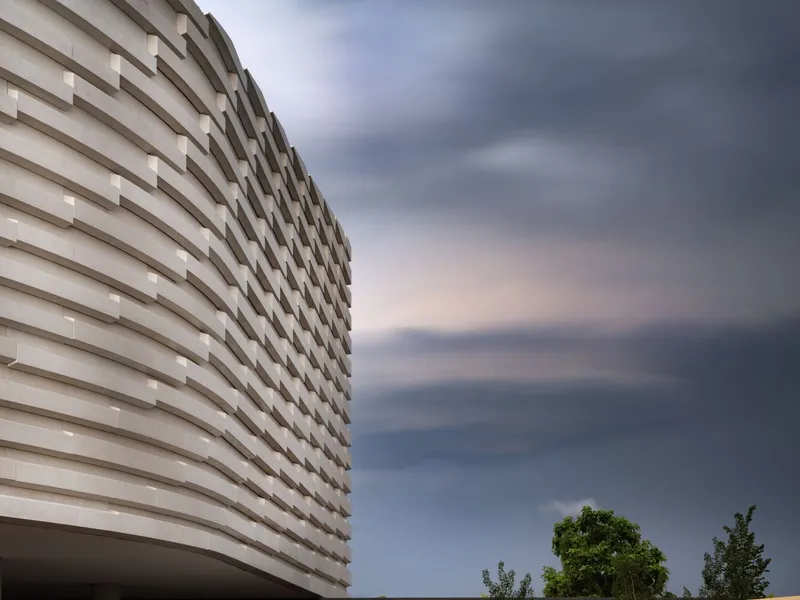
The Hawks Pavilion floats gracefully above the site, with a transparent first floor that emphasizes openness and accessibility. Light-colored precast facade panels feature embedded pink aggregate, reflecting the existing Georgia Pink marble of the 1931 Joslyn Building. Horizontal lines in the facade mirror the monumental Grand Steps, creating a dialogue between old and new architecture.
The design balances weightless modernity with the museum’s historic presence, capturing the dynamic sky of the Great Plains while enhancing visitor orientation, connectivity, and inclusivity.
A Cultural Landmark for the Community
Strategically located near Downtown Omaha, Creighton University, and Central High School, the Joslyn Art Museum expansion strengthens its role as a cultural hub. By providing free public access, inclusive community spaces, and innovative design interventions, the Museum reinforces its vision as an accessible, engaging, and inspiring destination for all audiences.
All photographs are works of Nic Lehoux




Popular Articles
Popular articles from the community


The Earth Pod: 3D Printed Homes for Resilient Refugee Communities
The Earth Pod reimagines refugee housing through 3D printed homes made from clay, combining resilience, self-sufficiency, and rapid shelter.

Conexión: Biophilic Design Reimagines High-Rise Living in Hong Kong
Conexión reimagines high-rise living in Hong Kong through biophilic design, green facades, shared spaces, daylight, water and nature within.
AL-JANNAH: Sustainable Architecture and Permaculture for Afghan Widows
AL-JANNAH uses sustainable architecture and permaculture to create resilient oasis of housing, learning, work and renewal for Afghan widows.
EW PARK: Sustainable Architecture Reimagines the Future of Urban Parking
EW PARK reimagines city parking as a modular wooden tower combining automation, solar energy, electric mobility, and adaptable urban design.


Similar Reads
You might also enjoy these articles


Hodi-Mandai Geram
Project Function: Preservation and revitalization of the Intangible heritage and socio-spatial identity of the Hodi by Housing, Cultural Memory Center, Sacred Grove, landscape, local tourism economy


Olio Towers: A Mid-Rise for Performers That Fuses Housing, Rehearsal, and Stage
Located blocks from Houston's Theater District, this modular tower stacks living units around a central performance atrium.

Oasis: Modular Green Housing Carved into Dhaka's Urban Fabric
A shortlisted Plugin Housing entry reclaims unauthorized settlements in Dhaka with stepped concrete volumes, green roofs, and ventilation-driven design.

Black Hole: A Floating Megastructure for the Post-Physical Era
Emiliano Mazzarotto envisions a spherical, self-scaling arena where e-sports, digital hotels, and holographic stadiums replace traditional public space.

Explore Cultural Architecture Competitions
Discover active competitions in this discipline



Challenge to reimagine the Iron Throne


Photograph architecture without architects


Illustrate the lost glory of Angkor Wat - Render Challenge


Bring back Drive In's
Comments (0)
Please login or sign up to add comments
No comments yet. Be the first to comment!