

Just School: Where Flexible Architecture Replaces the Rigid Classroom
An honorable mention in the Learn Better competition proposes a school built around self-directed learning, craft studios, and green courtyards.


What happens when you strip the system out of the education system and hand the agency back to students? Just School answers that question with architecture: a building that refuses to sort learning into isolated boxes and instead treats every corridor, courtyard, and workshop as a site for discovery. The programme is dense, mixing metalwork studios with cooking labs, concert halls with open-air gyms, all organized around central axes that keep movement fluid and spatial relationships legible. It is a school designed not to contain knowledge but to provoke it.
Designed by Жук Иван and Пoлина Вязoвская, the project received an Honorable Mention in the Learn Better competition on uni.xyz. The brief called for rethinking educational infrastructure, and this entry responds with a layered, human-centric proposal that treats the school as enabler rather than enclosure.
Timber and Brick: A Dual Material Language


The street view at dusk reveals the building's material logic immediately: stacked volumes clad in warm timber sit atop a grounded dark brick base. The combination reads as both civic and inviting, heavy enough to anchor the school in its urban context yet light enough to signal openness. Timber cladding wraps the upper floors where classrooms and studios live, softening the institutional scale and creating a domestic warmth uncommon in school buildings.
Inside, that warmth deepens. The split view of the entrance foyer shows timber screens filtering light into the arrival sequence, while a planted interior courtyard garden brings trees and greenery directly into the plan. These are not decorative gestures. The atrium, evergreen garden, and green balconies form a deliberate network of biophilic spaces intended to support emotional well-being and mental stimulation throughout the school day.
A Glazed Upper Volume That Watches the Street

From the corner, the relationship between the transparent upper volume and the solid brick base becomes clearest. Glass corridors and generous glazing on the upper floors expose the life of the school to the public realm, while the dark brick plinth provides privacy and a sense of protection at ground level. A single figure walking past the base reinforces the building's human scale. The design employs this visual openness strategically: parents and visitors can see student achievements not through report cards but through the real-world outputs visible inside, from art installations to workshop projects.
Horizontal Volumes Against the Urban Skyline

The long elevation drawing pulls back to show how Just School sits in its neighborhood. Horizontal timber-clad and brick volumes stretch across the site, deliberately low-rise against the residential towers rising behind. The proportions are assertive without being monumental. The building reads as a civic ground plane, a place that belongs to the community rather than towering over it. This horizontal emphasis also serves the interior organization: classrooms distribute around central axes, and the elongated plan allows fluid transitions between learning zones, leisure spaces, and practical workshops.
Four Facades and a Landscape Strategy

The elevation drawings lay out all four facades, and what stands out is the consistent presence of tree symbols marking landscape elements along each face. Landscape is not pushed to a rear courtyard or relegated to a single garden. It wraps the building, reinforcing the project's commitment to green courtyards and natural light as pedagogical tools. The sectional logic visible here, with clear hierarchies of space and light management, confirms that the environmental strategy is embedded in the architecture rather than applied as an afterthought.
Workshops, Kitchens, and Concert Halls: Programme as Pedagogy
The programme list alone distinguishes Just School from conventional educational buildings. Science, art, music, and textile classrooms sit alongside metalwork and woodworking studios, cooking and nutrition zones, a sports hall, an open-air gym, and a concert hall complete with backstage access. Each space is calibrated to a specific mode of learning: intellectual, physical, emotional, social. The designers avoid rigid compartmentalization in favor of flexible zones that can adapt as teaching methods evolve, a decision that keeps the architecture useful well beyond any single curriculum cycle.
Why This Project Matters
Just School makes a quiet but persistent argument: that educational architecture should be measured not by the efficiency of its floor plan but by the agency it gives its students. By distributing craft studios, performance spaces, gardens, and cooking labs throughout a single coherent structure, the design treats every activity as equally legitimate learning. The building does not privilege the lecture hall over the woodworking bench.
In a moment when school design too often defaults to open-plan platitudes or corporate flexibility diagrams, Жук Иван and Пoлина Вязoвская offer something more grounded: a building with material specificity, a clear urban posture, and a programme rich enough to actually support the self-directed learning it promises. The Honorable Mention from the Learn Better jury is well placed.
View the Full Project
About the Designers
Designers: Жук Иван, Пoлина Вязoвская
Enter a Design Competition on uni.xyz
uni.xyz runs architecture and design competitions year-round that reward proposals with spatial conviction and real site intelligence.
Project credits: Just School by Жук Иван, Пoлина Вязoвская Learn Better (uni.xyz).


Popular Articles
Popular articles from the community

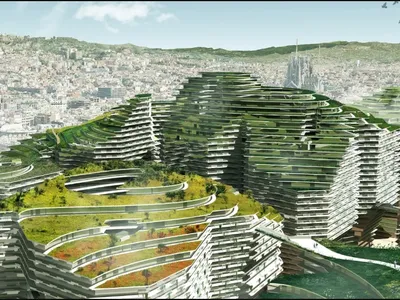
Manzana Morphosis: Stretching Barcelona's Grid into a Living Landscape for 2050
A radical reworking of the Eixample manzana turns density into a tool for generous public space, vertical ecology, and environmental performance.
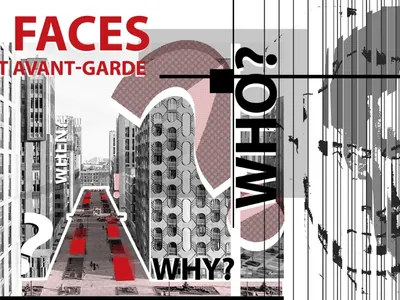
Faces of the Soviet Avant-Garde: Turning Moscow's Street Names into an Open-Air Museum
A network of sculptural installations across a Moscow residential district transforms forgotten architect names into spatial encounters with cultural memor
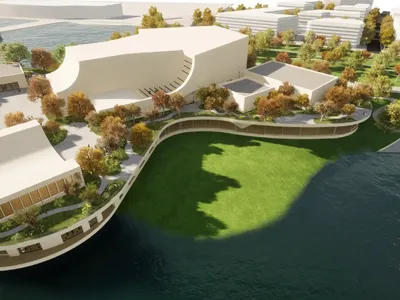
The Amber Palace Opera: A Geological Fiction Surfaces on Tallinn's Baltic Waterfront
Pierre Brillard reimagines a Baltic legend as a public landscape, opera house, and waterfront promenade rooted in Tallinn's coastal identity.
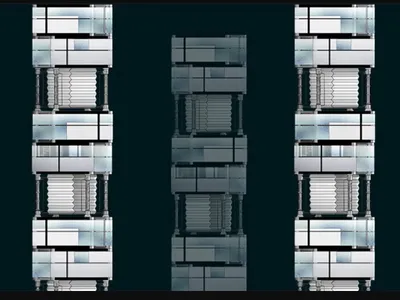
Tsunami Convergenics: Turning Catastrophic Ocean Forces into Underwater Housing Infrastructure
A speculative underwater settlement off the coast of Onagawa, Japan, treats tsunamis and typhoons as energy sources rather than threats.

Similar Reads
You might also enjoy these articles

Shakur's House: Exposed Brick as an Interior Organiser in a 168 m² Mashhad Residence
Brick moves indoors in this Mashhad residence, where masonry walls, glass partitions and teal planes sequence a compact home without closing it off.
Day and Night Park: A Time-Based Urban Newsstand in Beijing
A temporary urban newsstand in Beijing blending travel, light, and reading through poetic colors, compact form, and community-focused design.

Modernist Patio Renovation in El Masnou, Barcelona by Oliver Segura Arquitectura + Cebrià Arquitectura
Modernist patio renovation blending tradition and innovation with a movable pool, leveled floors, and Catalan materials in El Masnou.
Alto Residencial Coop: Cooperative Housing Development in Santiago de Compostela by Carbajo Barrios Arquitectos
A linear cooperative housing complex blending white volumes and perforated metal façades, enhancing community living, natural light, privacy, and urban integration.

Explore Educational Building Competitions
Discover active competitions in this discipline

Challenge to design public laboratory

Challenge to reimagine the Iron Throne

Photograph architecture without architects

Illustrate the lost glory of Angkor Wat - Render Challenge
Comments (0)
Please login or sign up to add comments
No comments yet. Be the first to comment!