

Kalyon Karapınar 1.350 MWp Solar Power Plant – Central Control Building by Bilgin Architects
Kalyon Karapınar 1.350 MWp SPP Central Control Building by Bilgin Architects integrates sustainable solar energy, reflective façade, and desert-adapted design.


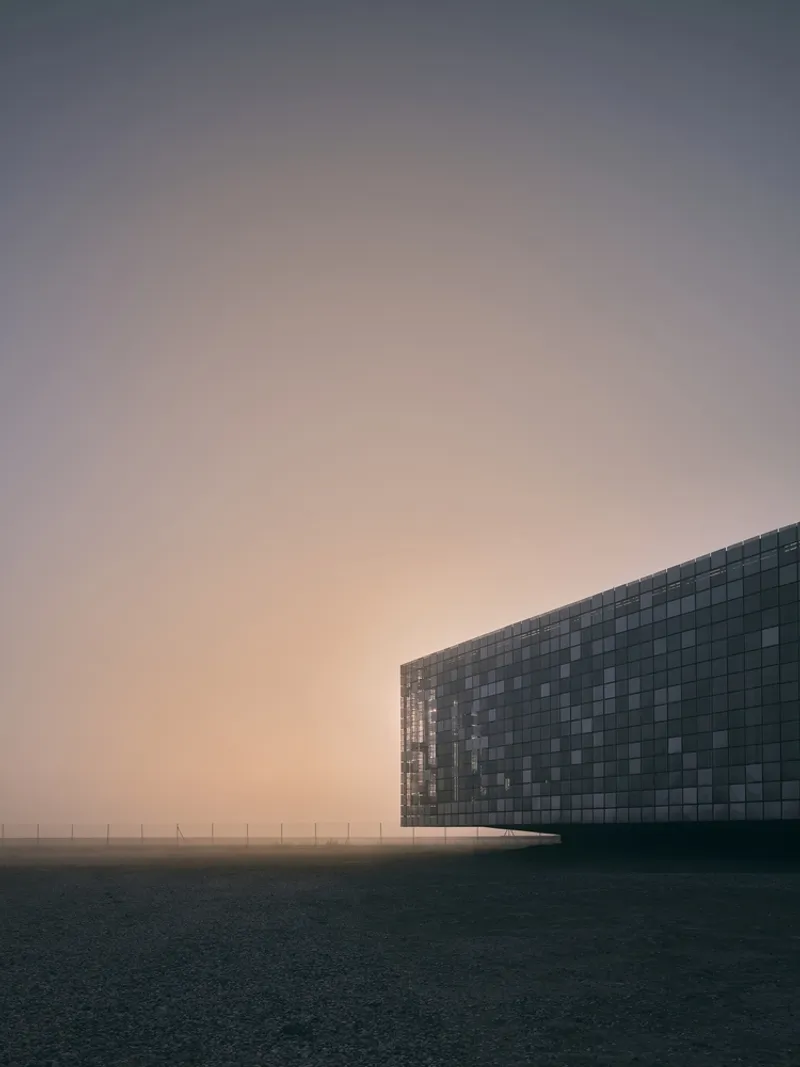
Located in Karapınar, Türkiye, Bilgin Architects’ Central Control Building serves as the operational and symbolic hub of the Kalyon Karapınar 1.350 MWp Solar Power Plant (SPP), the largest solar energy facility in Europe. Spanning an area of 2,778 m², this single-story, detached structure seamlessly integrates cutting-edge technology, sustainable design, and architectural elegance within the unique desert landscape.
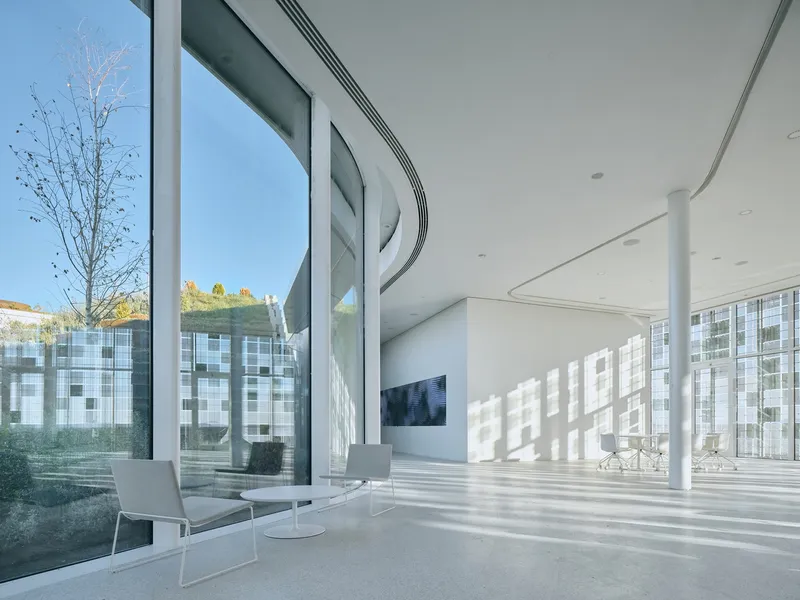
Dialogue with the Earth
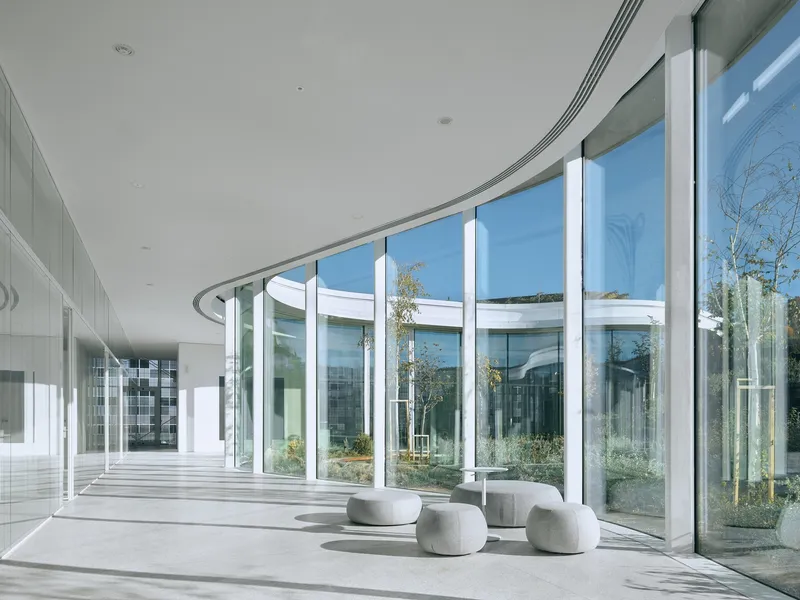
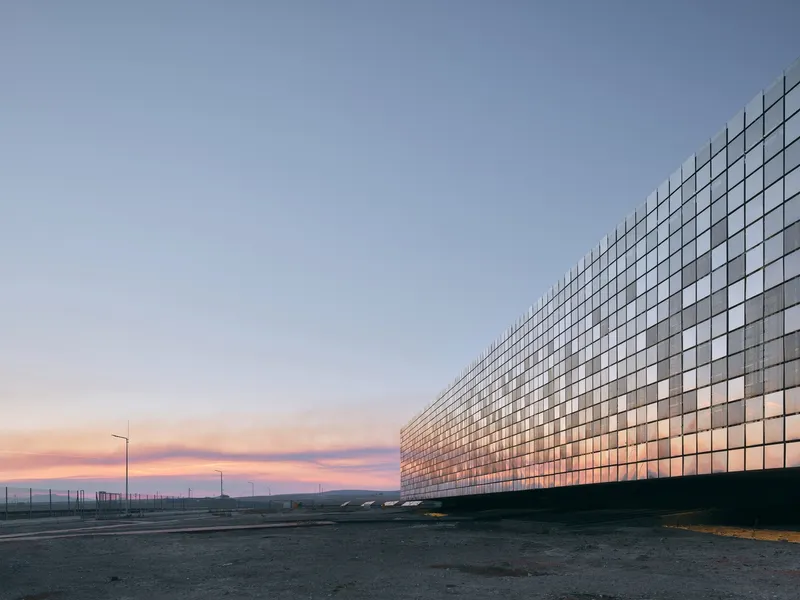
Karapınar’s desert climate, unique within Türkiye, presents both challenges and opportunities. A 20-square-kilometer area, rendered unsuitable for agriculture, has been transformed into an energy specialization zone. The 1,350 MWp solar power plant, with its 3.2 million solar panels, is positioned in this flat, expansive terrain to harness maximum solar potential. The Central Control Building is strategically located 40 meters away from the panels to avoid casting shadows, creating an operational and visual interface with the renewable energy infrastructure.
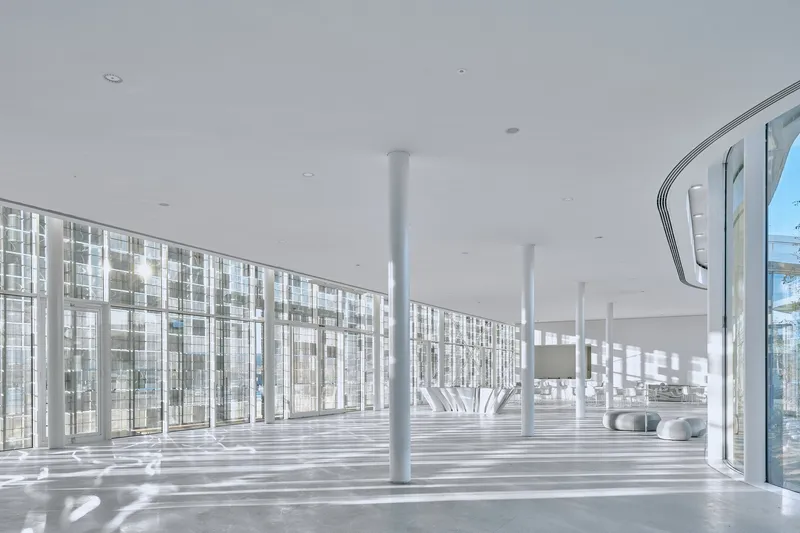
Dialogue with the Sky
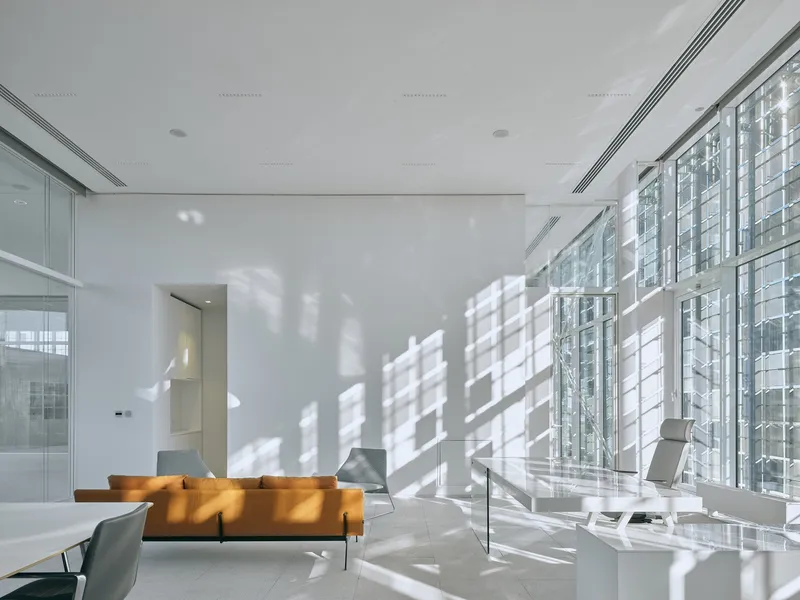
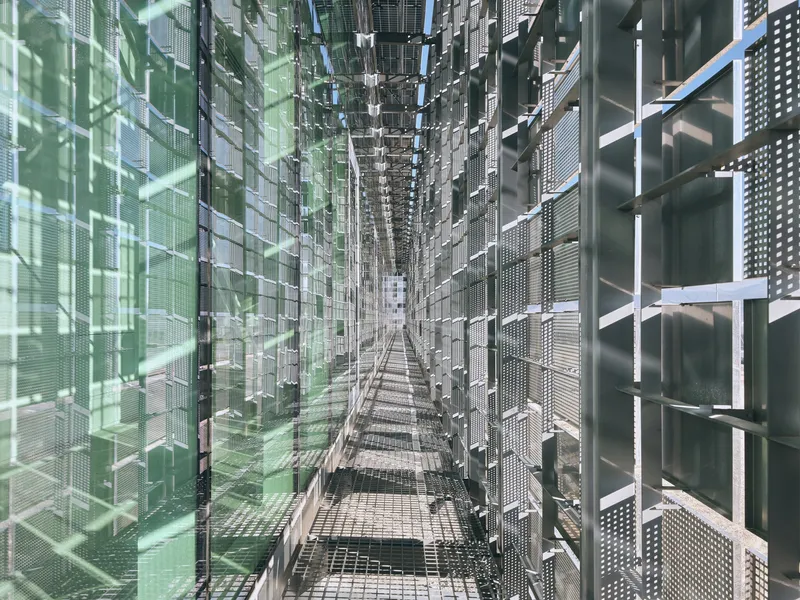
The building’s façade is designed as more than an architectural shell—it forms a dynamic interface between the earth and sky. Featuring 7,200 stainless steel panels at four varying transparency levels, the reflective double-layered façade minimizes solar radiation while responding to geographical orientation and natural light requirements. Its kinetic surface interacts with changing daylight, creating a visually dynamic, passive energy-efficient experience. By night, the façade transforms, revealing interior courtyards and blending seamlessly with the surrounding environment.
Experiential Interior Spaces
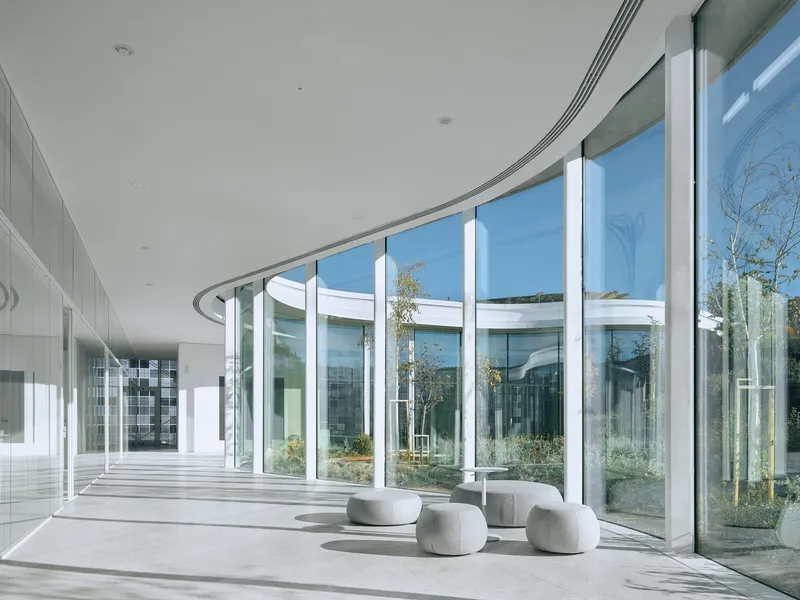
Inside, the Central Control Building fosters human interaction with technology and nature. The foyer and multipurpose areas serve as hubs for panels, workshops, and events, while the interior layout prioritizes flexibility and connectivity. The building’s central courtyard, planted with endemic species that require minimal irrigation, establishes a sustainable microclimate. This green oasis contrasts with the arid surroundings and defines circulation paths, space hierarchy, and the boundary between private and common areas.
Sustainable Integration
Every aspect of the project emphasizes environmental consciousness—from the use of reflective façade materials that reduce heat gain to the design of low-maintenance landscaping. The building is both a technological command center and a symbolic representation of sustainable energy innovation, forming a harmonious dialogue with the desert environment it inhabits.
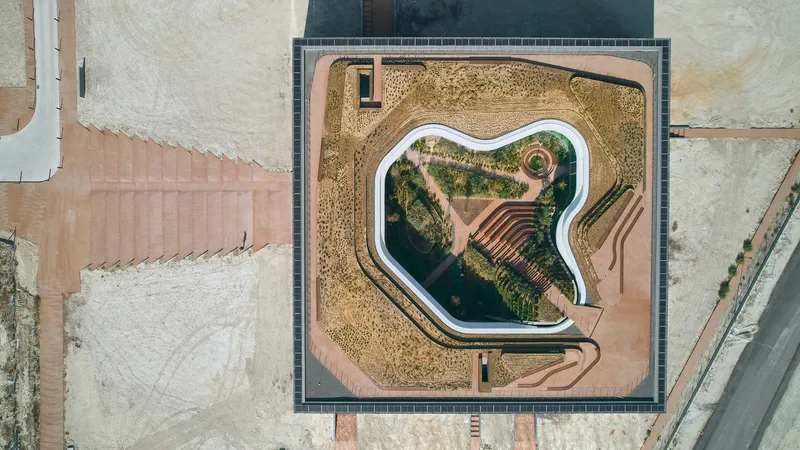
All Photographs are works of Egemen Karakaya


Popular Articles
Popular articles from the community


David Ortega Stacks a Two-Story Mexico City Penthouse Around a Steel Stair and a Pergola-Shaded Roof Terrace
In Colonia Roma, a 300 m² penthouse uses oak joinery, a planted steel stair and a slatted roof pergola to make a new-build apartment feel like a house.

Jaramillo Van Sluys Arquitectura and Urbanismo Turn a Demolished Registry Lot in Quito into an Orchard Plaza
In Quito's Centro Histórico, a 2,800 m² plaza exposes the San Agustín convent wall and redraws its lost Augustinian orchard in volcanic stone.

LT2A and OPEN Architectes Thread a Brick and Glass High School Through a Wooded Belgian Campus
In Braine-l'Alleud, a 3,000 m² wing for Collège Cardinal Mercier pairs pale brick with a glazed colonnade, deferring to a small chapel and a dense wood.

U.GA Architects Wraps an Oval Rooftop Pool in Curved Board-Formed Concrete on Busan's Jeollidan-gil
In Busan's Jeonpo-dong, a 454 m² mixed-use block stacks a neighborhood facility, guest rooms and an oval rooftop pool inside spiraling concrete walls.

Similar Reads
You might also enjoy these articles


Hodi-Mandai Geram
Project Function: Preservation and revitalization of the Intangible heritage and socio-spatial identity of the Hodi by Housing, Cultural Memory Center, Sacred Grove, landscape, local tourism economy


Olio Towers: A Mid-Rise for Performers That Fuses Housing, Rehearsal, and Stage
Located blocks from Houston's Theater District, this modular tower stacks living units around a central performance atrium.

Oasis: Modular Green Housing Carved into Dhaka's Urban Fabric
A shortlisted Plugin Housing entry reclaims unauthorized settlements in Dhaka with stepped concrete volumes, green roofs, and ventilation-driven design.

Black Hole: A Floating Megastructure for the Post-Physical Era
Emiliano Mazzarotto envisions a spherical, self-scaling arena where e-sports, digital hotels, and holographic stadiums replace traditional public space.

Explore Solar Fabric Competitions
Discover active competitions in this discipline

Challenge to reimagine the Iron Throne

Photograph architecture without architects

Illustrate the lost glory of Angkor Wat - Render Challenge

Design challenge to reuse E-waste
Comments (0)
Please login or sign up to add comments
No comments yet. Be the first to comment!