
Kanna Pavilion: A Sculptural Fishermen’s Retreat in Val de Chaise, France
Kanna Pavilion is a triangular wooden retreat for anglers, offering sheltered fishing, mountain views, and tranquil immersion in the Marlens lakeside landscape.


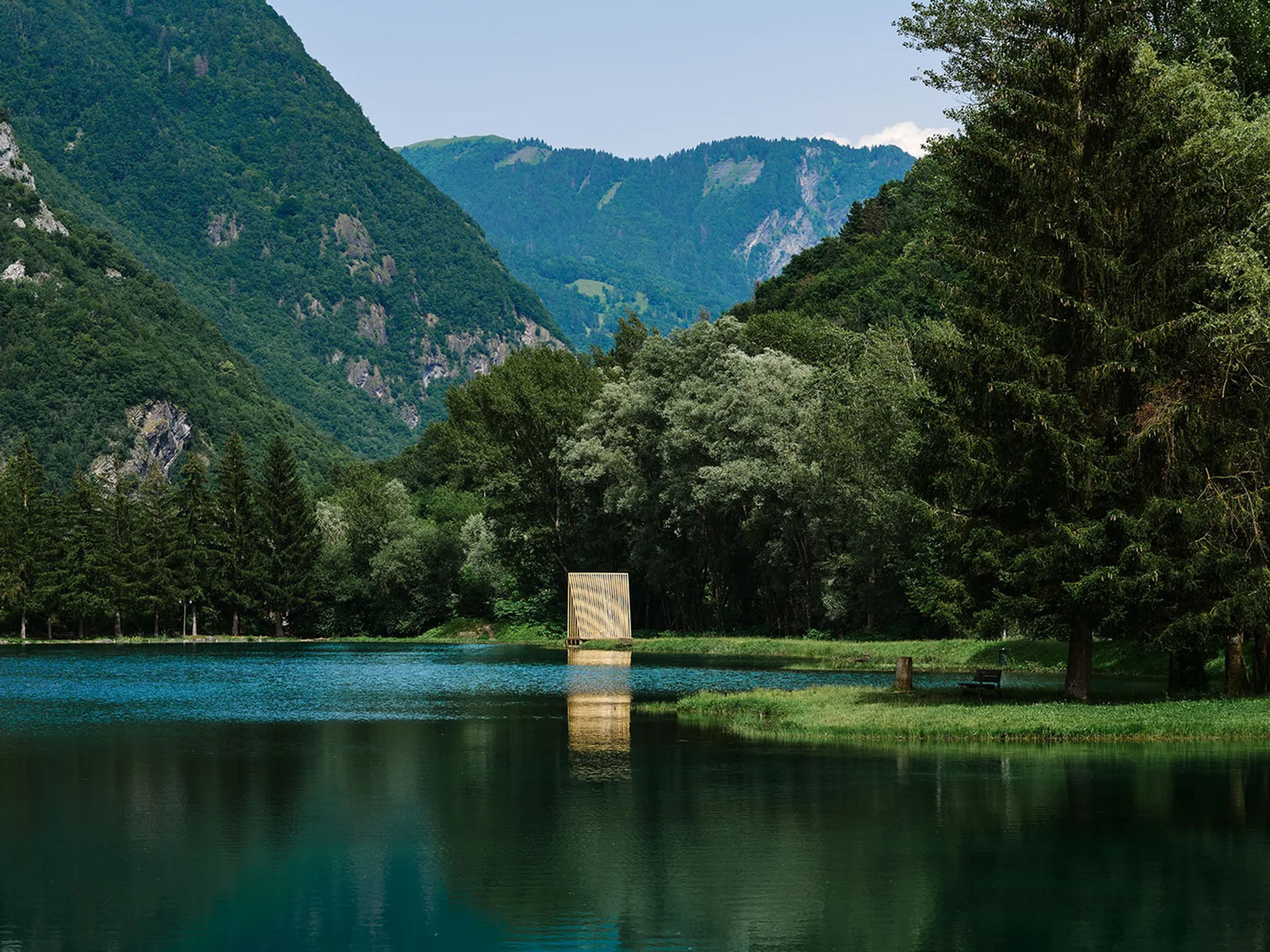
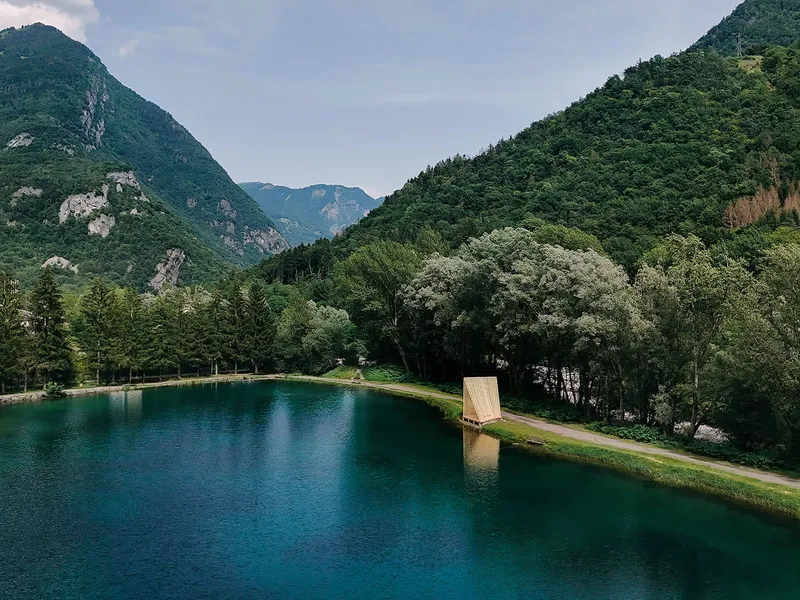
The Kanna Pavilion, designed by Laure Friès Architecture, is a poetic and highly functional fishermen’s retreat located on the serene shores of the Marlens water body in Val de Chaise, France. Completed in 2024, this sculptural wooden pavilion creates a meditative escape for anglers and wanderers alike, blending seamlessly into the forested landscape while offering uninterrupted views of the surrounding mountains.
A Quiet Shelter Designed for Anglers and Nature Lovers
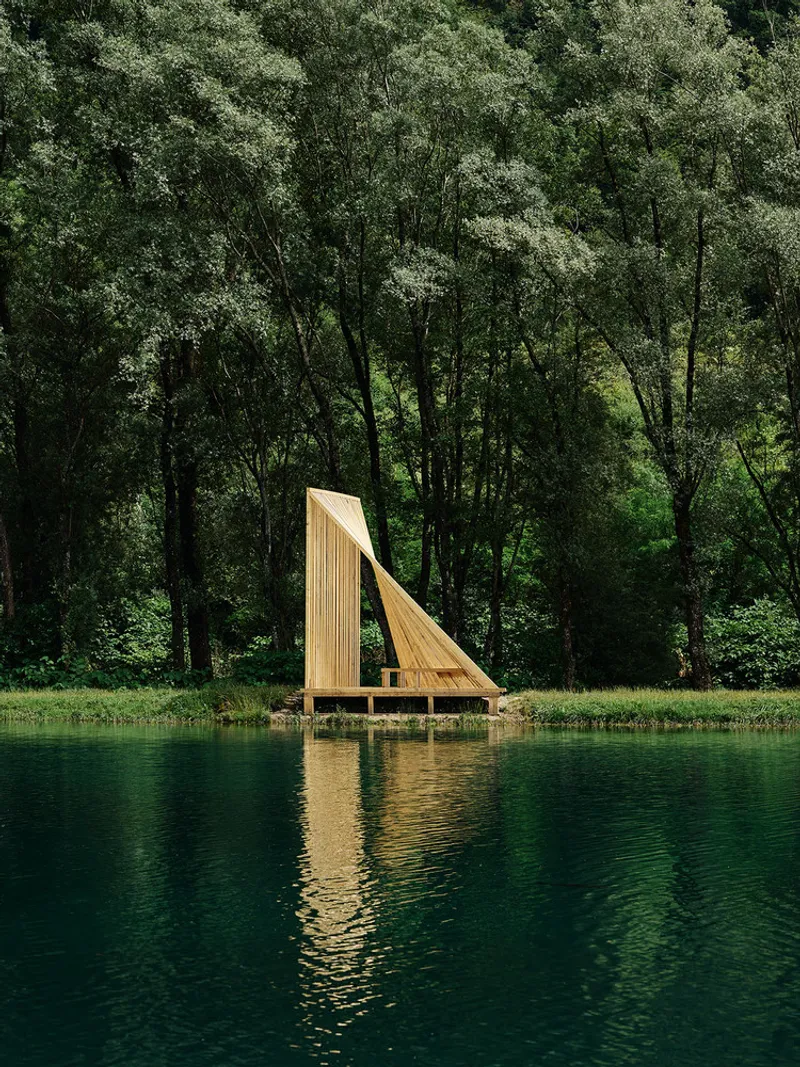
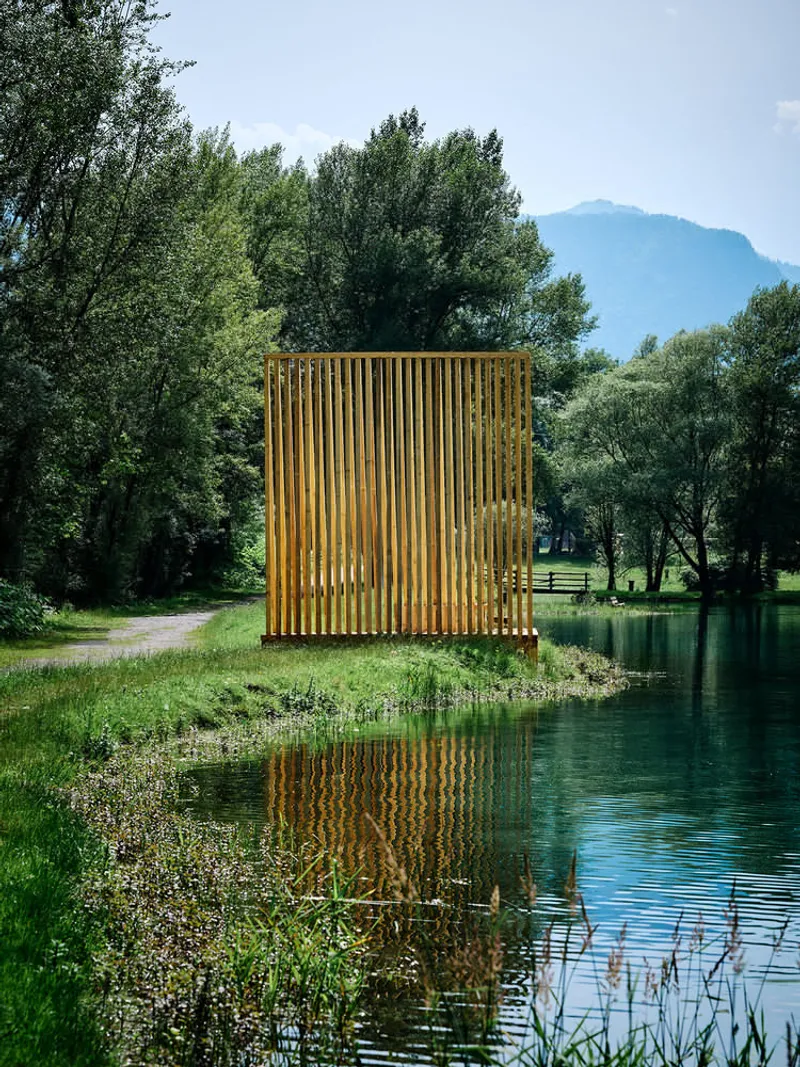
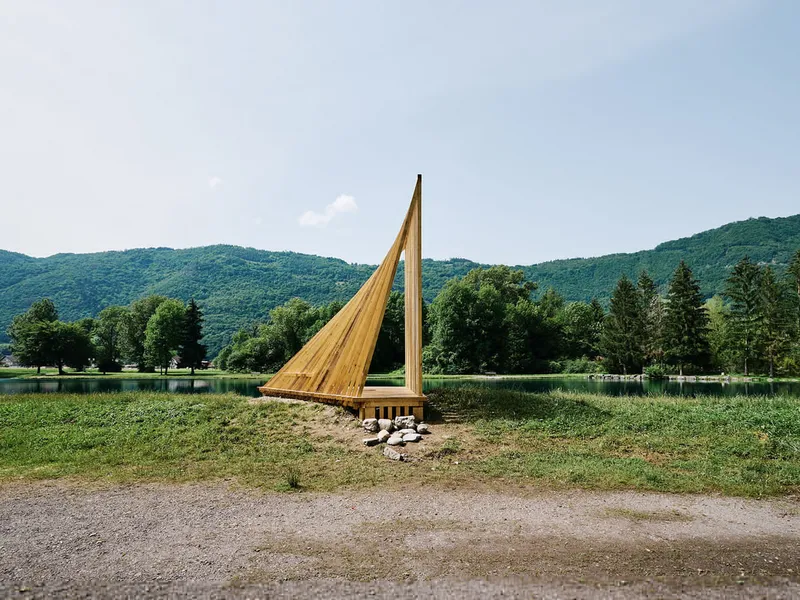
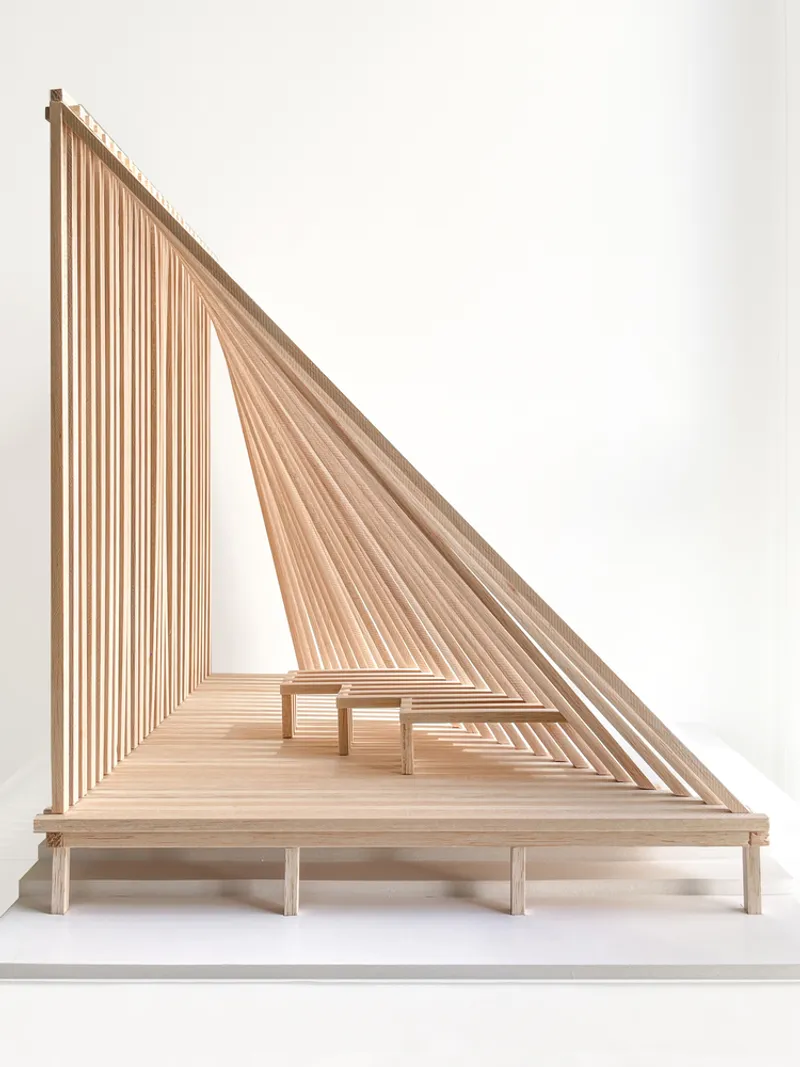
The pavilion is conceived as a triangular wooden cabin, carefully positioned to maintain privacy and serenity, allowing visitors to withdraw from public view while remaining fully immersed in nature. Rising to a height of 4.5 meters, the structure is specifically shaped to support precise lure casting, an intentional gesture that makes the pavilion both symbolic and practical for fishing culture.
Its triangular geometry unfolds toward the water, framing the expansive mountain panorama. The design serves as a protective shell that opens outward, creating a balance between shelter and landscape immersion.
Landscape Integration and Minimal Impact Design
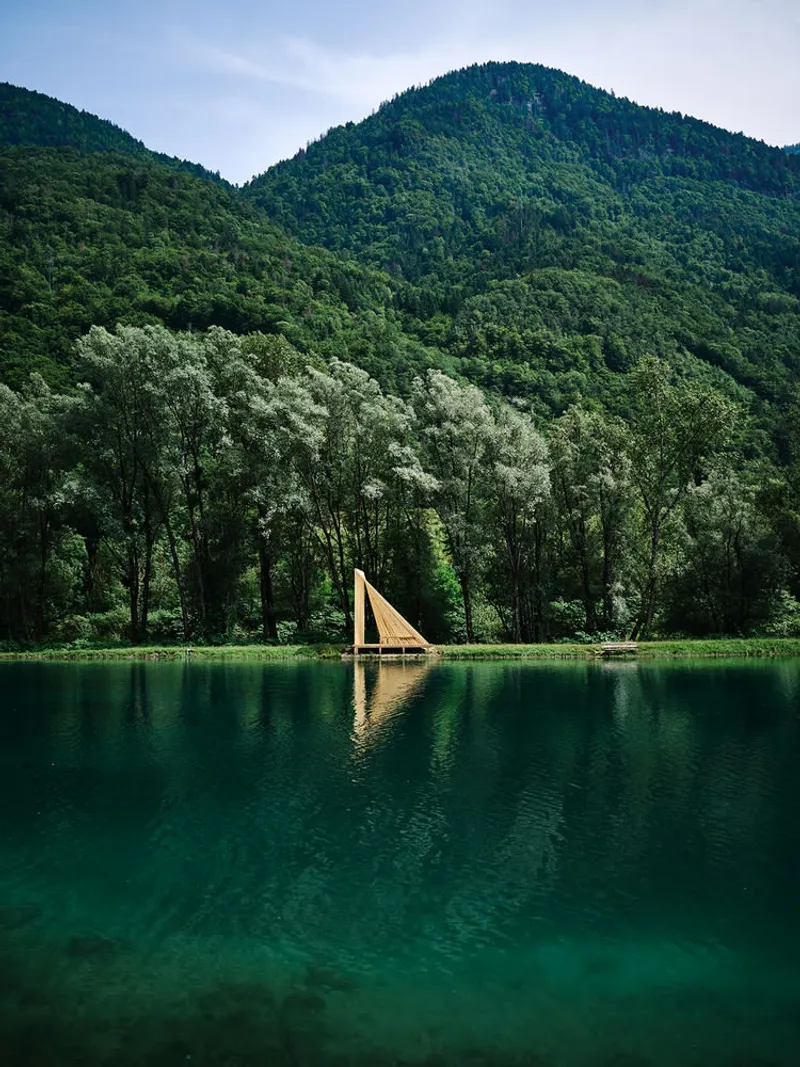
Located between the Chaise River and the Marlens water body, the pavilion sits in a valley known for its lush topography and dynamic natural features. Air, water, and mountain vistas converge in this site, making the environment exceptionally conducive to slow living, contemplation, and outdoor leisure.
To preserve the ecosystem, the pavilion is positioned one meter from the water’s edge, ensuring minimal disruption to the aquatic habitat. The Marlens water body is a well-loved fishing destination and continuously stocked with fish, which increases the importance of an architectural intervention that respects both the environment and local community practices.
A Structure Inspired by the Movement of Fishing
The pavilion’s form emerges from the choreography of angling, the motion of casting and retrieving a lure. This repetitive action creates a sequence of triangular gestures, which ultimately informed the architectural language of the structure. From this movement, the concept of Kanna was born, referencing the Greek word meaning tube or reed, the origin of the term “rod.”
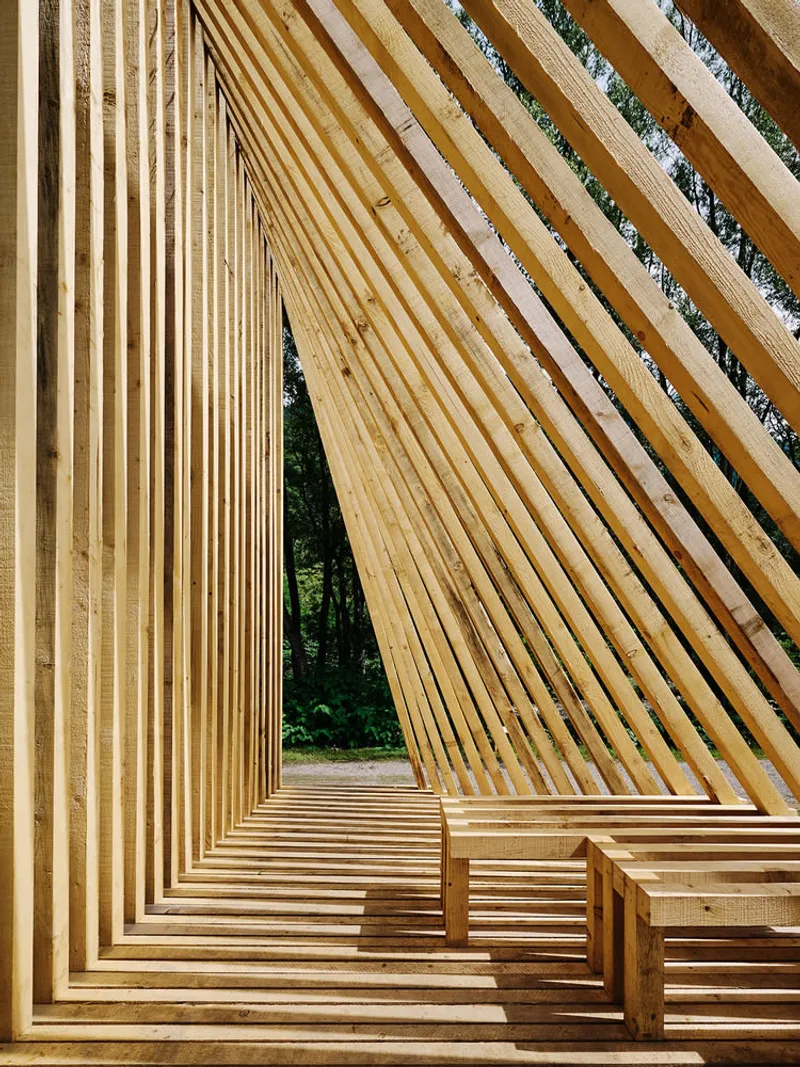
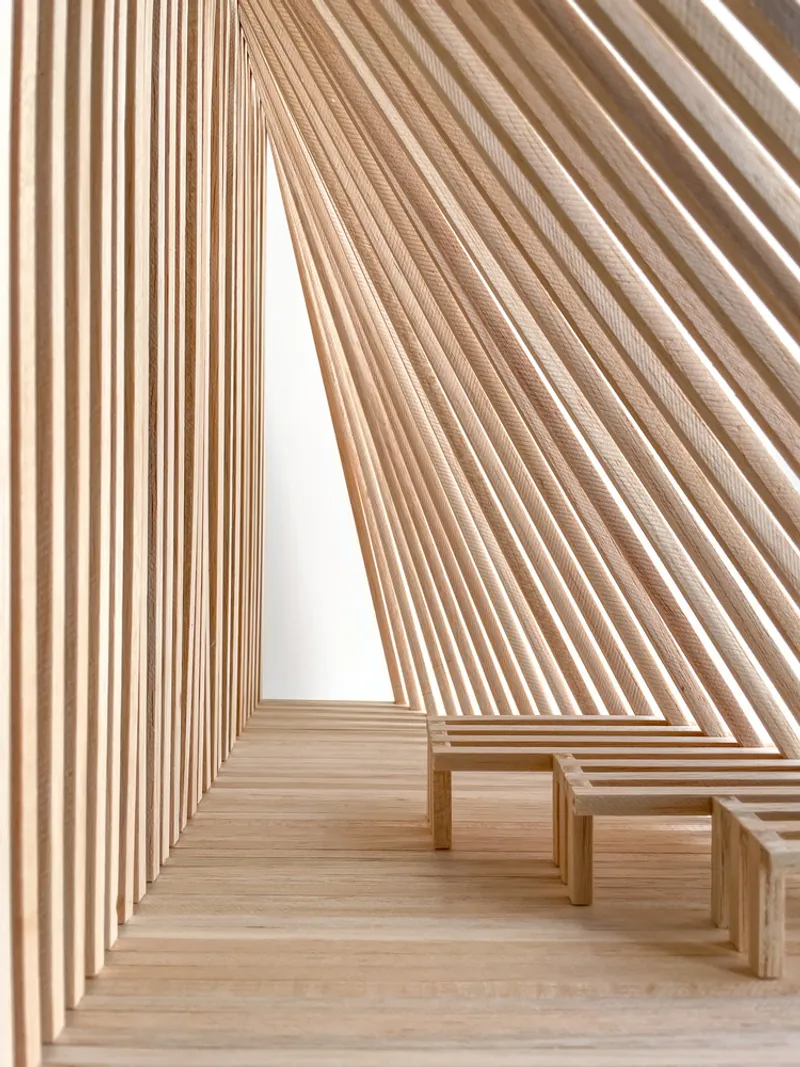
Recognizing that fishing rods can reach up to 2.2 meters in length and vary in flexibility depending on the catch, the design ensures that the internal height and spatial layout accommodate these needs comfortably. The result is a shelter that not only enhances the fishing experience but poetically mirrors the essence of the activity itself.
A Retreat for Reflection and Contemplation
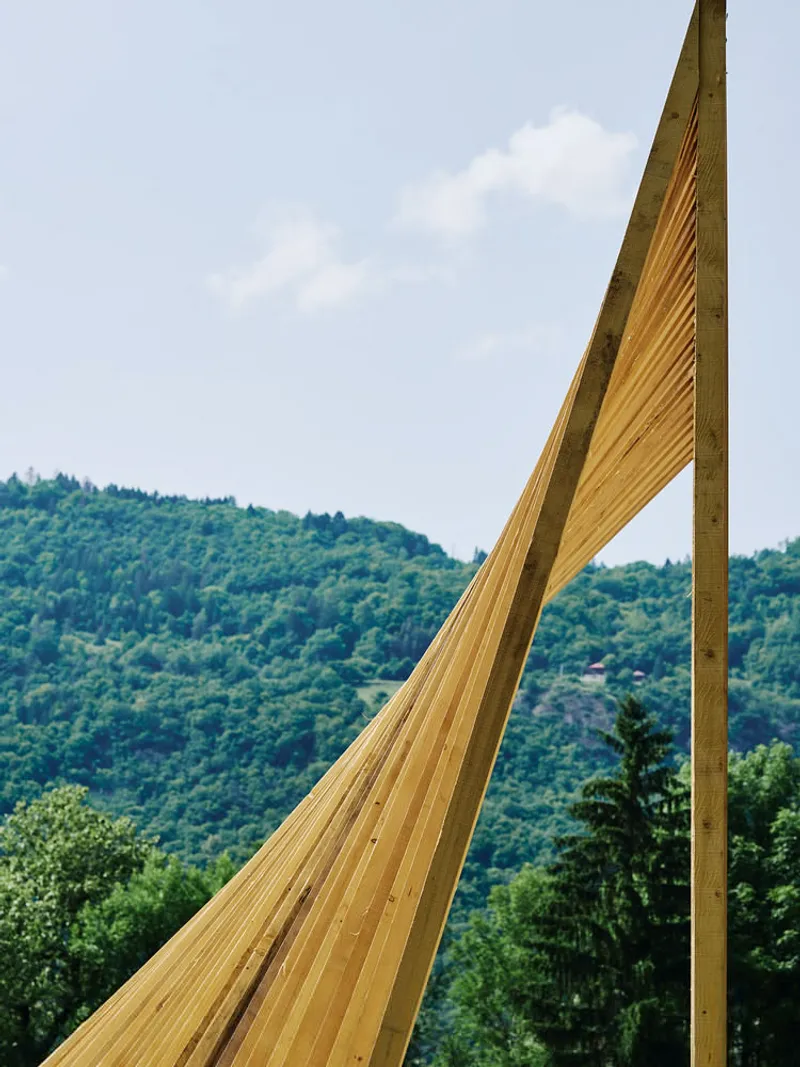
While primarily intended for anglers, the Kanna Pavilion also welcomes walkers, hikers, and curious visitors seeking a moment of stillness. Its expanding triangular frame guides the user toward the water, offering a place to think, observe, and reconnect with nature. The interplay of light, shadow, and landscape reflection creates a calm atmosphere, enhancing the meditative character of the pavilion.
All photographs are works of David Foessel



Popular Articles
Popular articles from the community


Riyadh For All: Intergenerational Urban Design for Active Aging in Rabat
Riyadh For All reimagines urban design in Rabat with intergenerational co-living, adaptive courtyards, and Moroccan cultural exchange today.

Play: Fragments of Their World
Familiar architecture becomes modular playground design, creating safe spaces where displaced children can learn, connect, imagine and play.

Conexión: Biophilic Design Reimagines High-Rise Living in Hong Kong
Conexión reimagines high-rise living in Hong Kong through biophilic design, green facades, shared spaces, daylight, water and nature within.

Hill & Cross Opera: Sculptural Opera House Architecture Shaped by Tallinn’s Landscape and Identity
Hill & Cross Opera reimagines opera house architecture in Tallinn through its sculptural hill, civic plaza, glass wave and a luminous cross.

Similar Reads
You might also enjoy these articles


Hodi-Mandai Geram
Project Function: Preservation and revitalization of the Intangible heritage and socio-spatial identity of the Hodi by Housing, Cultural Memory Center, Sacred Grove, landscape, local tourism economy


Olio Towers: A Mid-Rise for Performers That Fuses Housing, Rehearsal, and Stage
Located blocks from Houston's Theater District, this modular tower stacks living units around a central performance atrium.

Oasis: Modular Green Housing Carved into Dhaka's Urban Fabric
A shortlisted Plugin Housing entry reclaims unauthorized settlements in Dhaka with stepped concrete volumes, green roofs, and ventilation-driven design.

Black Hole: A Floating Megastructure for the Post-Physical Era
Emiliano Mazzarotto envisions a spherical, self-scaling arena where e-sports, digital hotels, and holographic stadiums replace traditional public space.

Explore Architecture Competitions
Discover active competitions in this discipline


Challenge to design a portable theatre

Challenge to design a portable music platform


Challenge to design an open learning module for the elderly


Challenge to reimagine the Iron Throne
Comments (0)
Please login or sign up to add comments
No comments yet. Be the first to comment!