
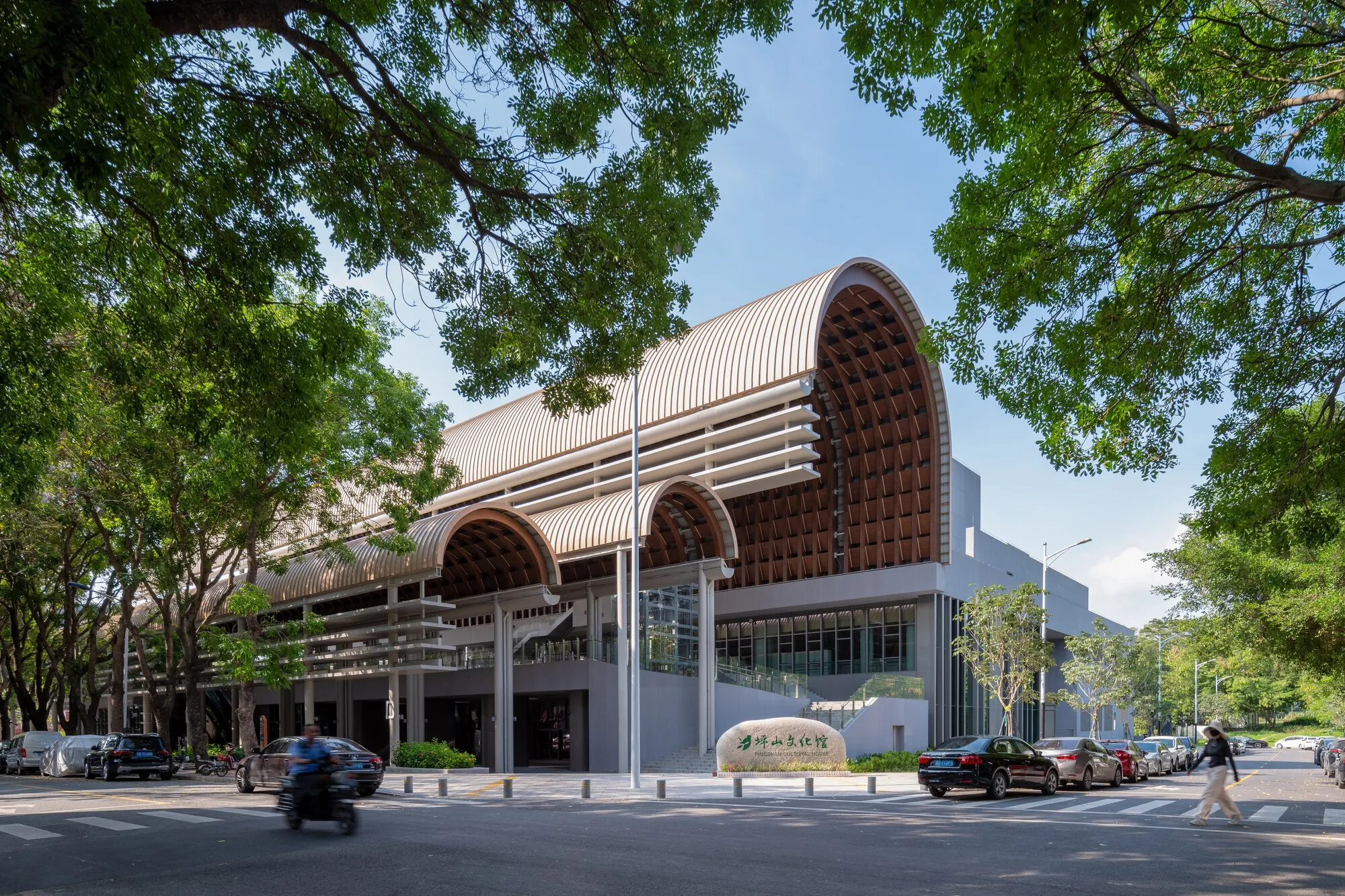
Kengzi Cultural and Technology Centre By Tanghua Architects & Associates
Kengzi Cultural and Technology Centre in Shenzhen blends modern architecture, public plazas, and engineered wood, connecting culture, technology, heritage, and community engagement.


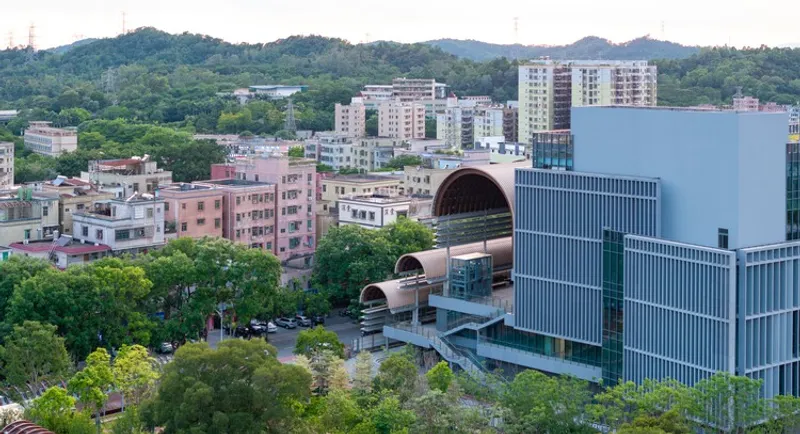
The Kengzi Cultural and Technology Centre, designed by Tanghua Architects & Associates, is a landmark cultural hub located in Pingshan District, Shenzhen, China. Spanning a total construction area of 72,436.62 m², the project seamlessly integrates a Science and Technology Museum, Book Mall, and Cultural Center, serving as a bridge between tradition, urban development, and modern innovation. Completed in 2024, the center demonstrates how contemporary architecture can respond to both historical context and the functional needs of a vibrant city.

Site Context and Urban Integration
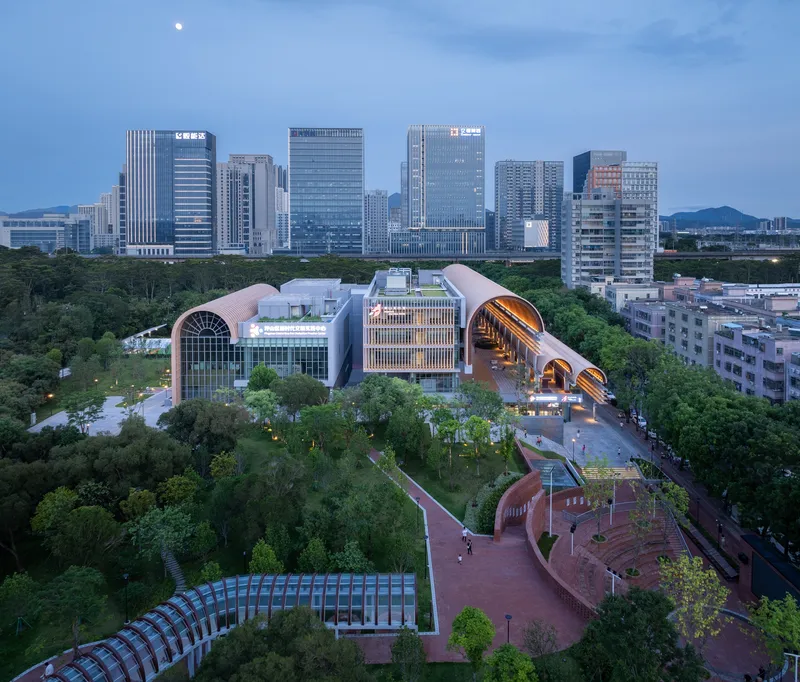
Situated west of Guangzu Park, north of Danzi East Road, south of Jikang Road, and east of Guangzu South Road, the site is divided into two plots separated by over 130 meters, creating opportunities for a dynamic urban intervention. The north plot hosts a six-story building above ground with two basement levels for the Pingshan District Science and Technology Museum and Book Mall, while the south plot features an eight-story cultural center with two basement levels. Beneath these structures lies a multifunctional underground parking lot that also supports civil defense functions.
The project responds to a complex urban context: advanced industrial parks to the south, an organic cluster of Hakka walled compounds to the north, and the historic urban village to the west, with Guangzu Park providing a green buffer to the east. This diverse environment demanded a design that could unify urban textures, link cultural functions, and respect local heritage.

Architectural Design and Concept
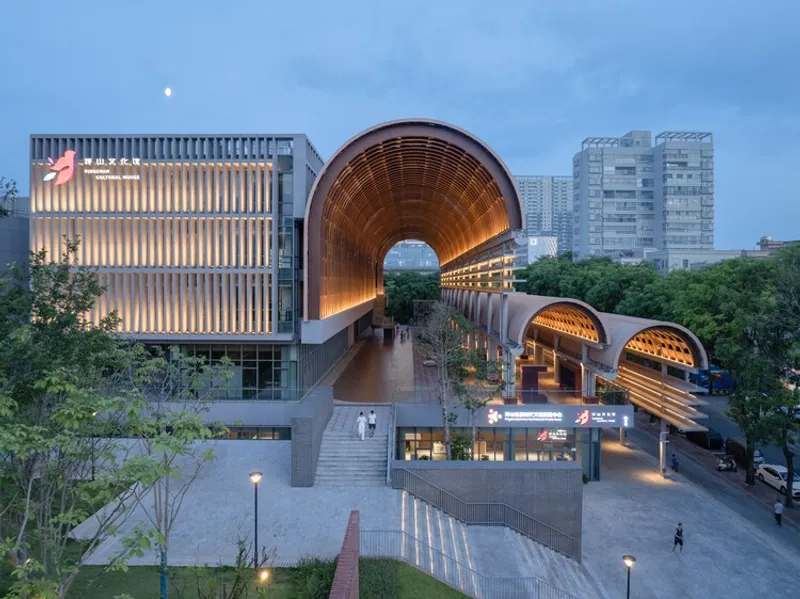
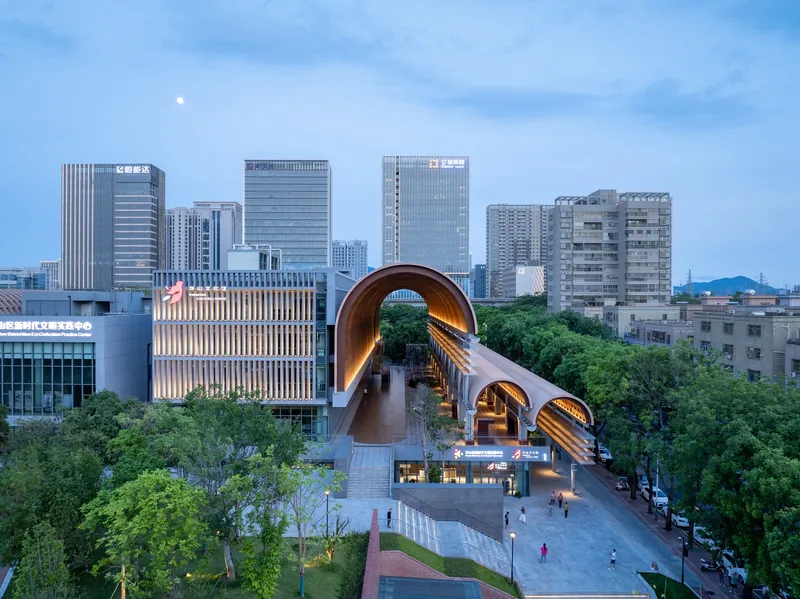
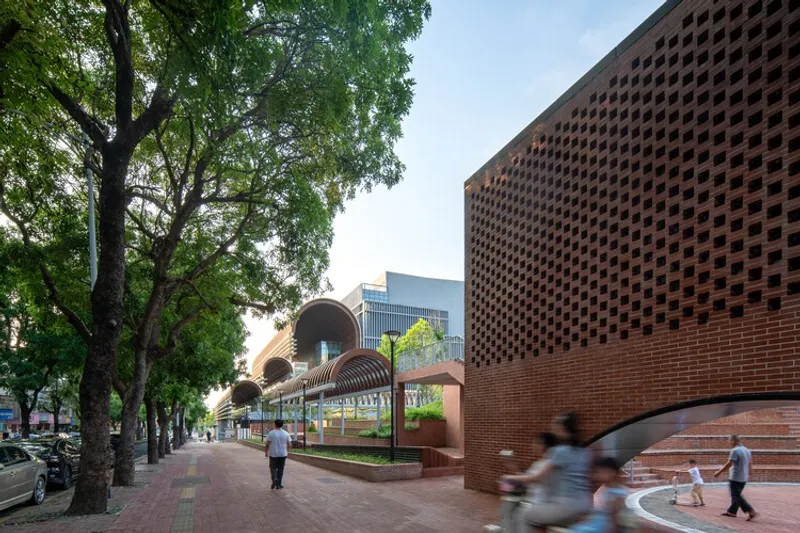
The design strategy prioritizes urban connectivity, functional efficiency, and cultural identity. Despite land constraints, the western side of Guangzu Park is incorporated into the design to connect the north and south plots, forming a continuous street façade and enabling rich social, cultural, and economic interactions.
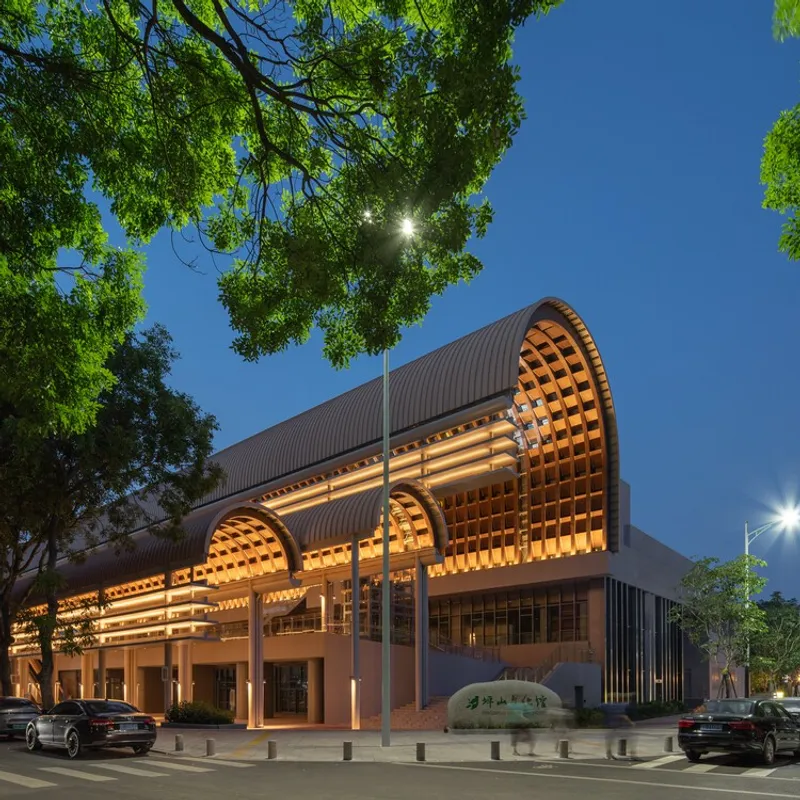
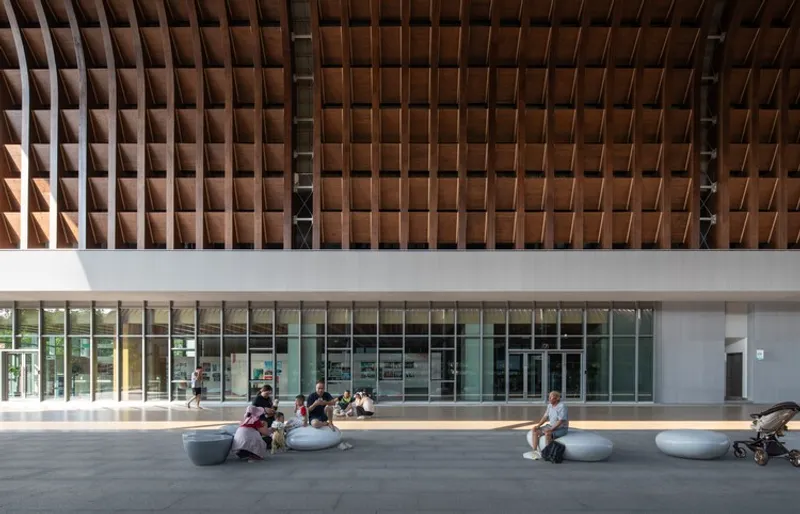
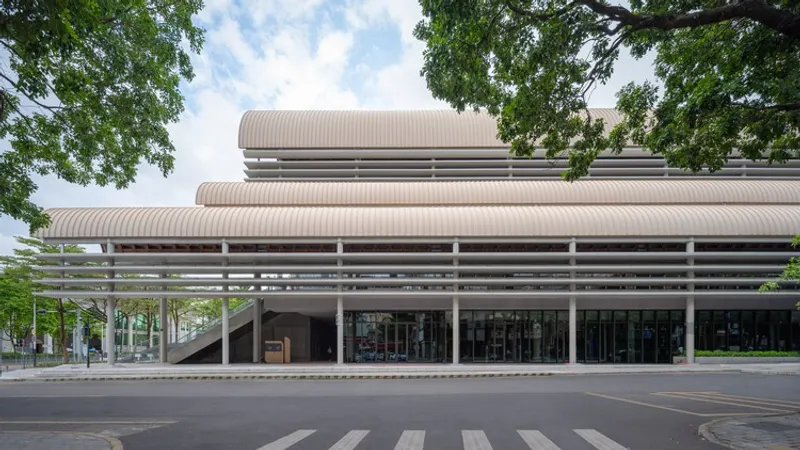
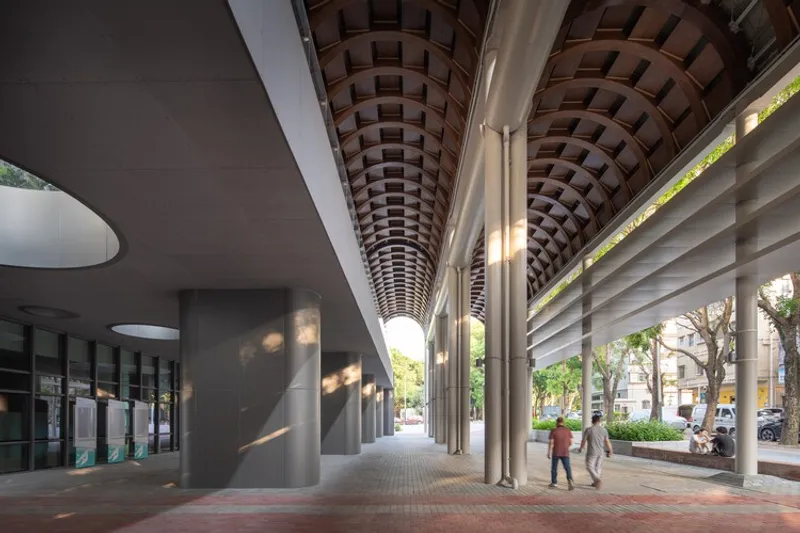
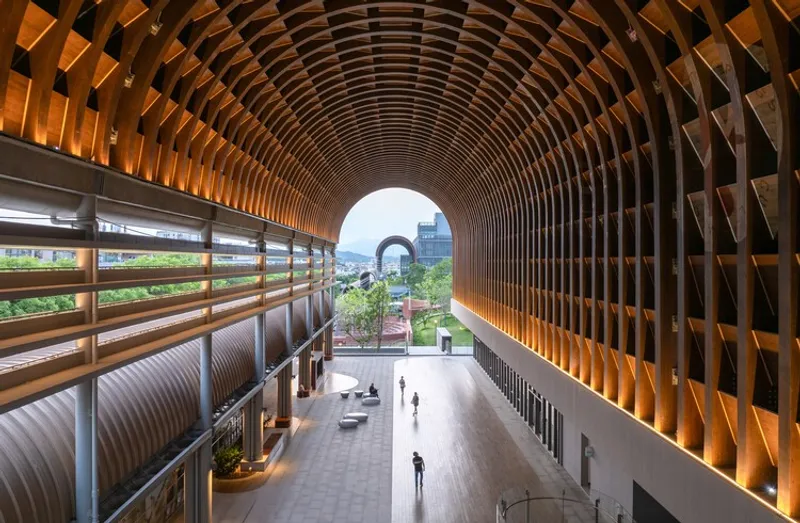
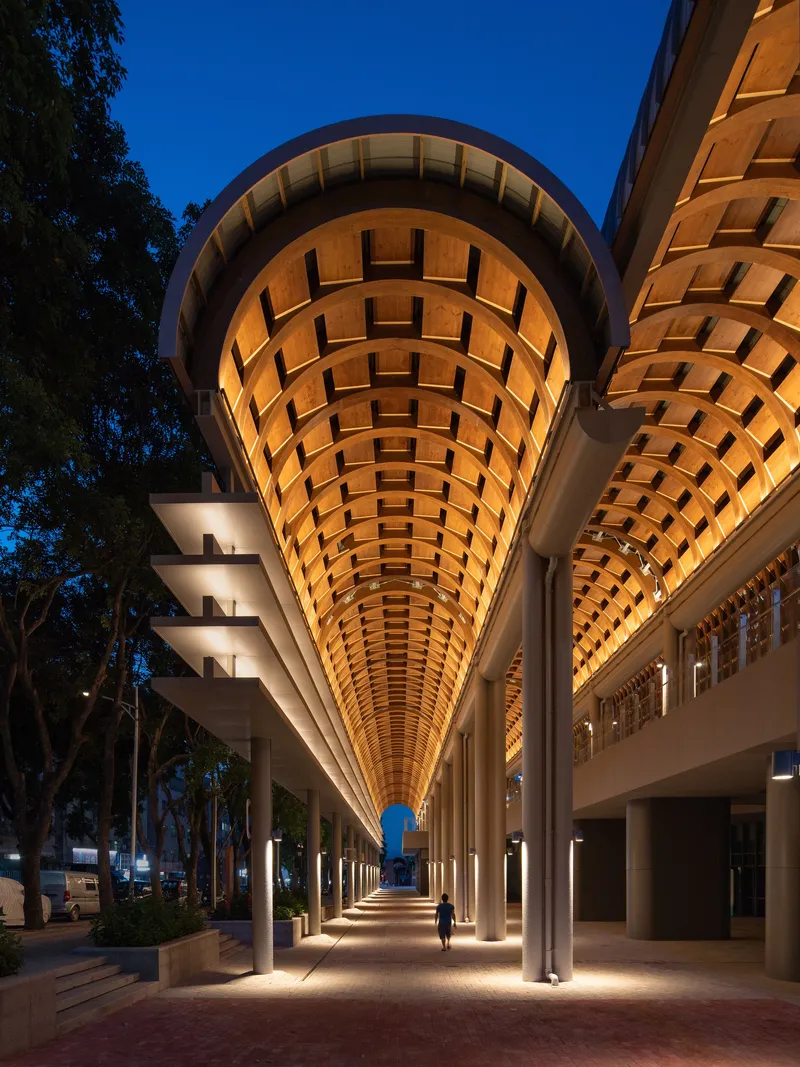
To respond to limited land availability, terracing is applied on the second and third floors, creating arcade-style plazas along city roads. These covered public spaces, topped with staggered arch roofs, provide versatile venues for outdoor exhibitions, performances, and social gatherings. The design encourages indoor-outdoor integration, enhancing spatial efficiency while echoing traditional Lingnan architectural elements.
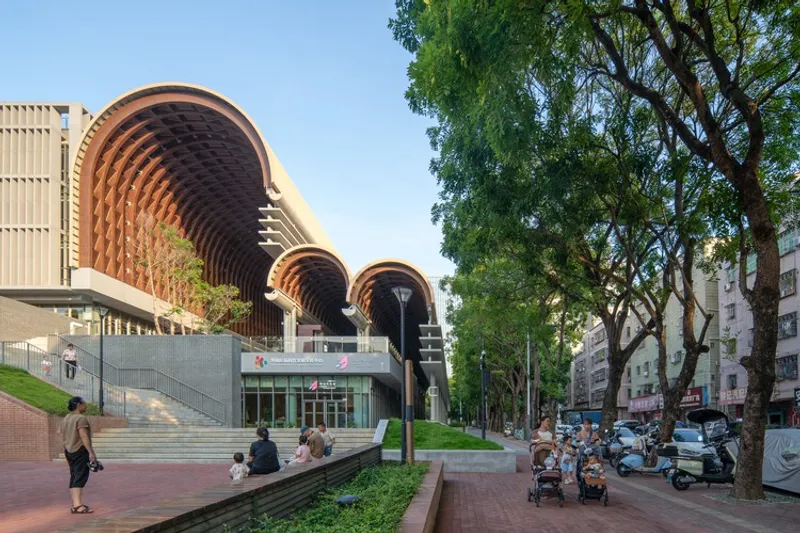
The arcades themselves are a signature feature, constructed using modern engineered wood for a warm, inviting aesthetic. This choice aligns with national energy-saving policies and represents a mature approach to sustainable materials and construction techniques. Compared to metal and concrete, engineered wood enhances visual identity, creates a human-scale experience, and reinforces cultural resonance.
Cultural and Social Impact
The center fosters rich public life by creating linear open spaces along streets, reflecting traditional Guangdong outdoor activities. These spaces encourage community engagement, supporting interactive experiences between the Science and Technology Museum and the Cultural Center. By blending modern architecture with local customs, the project strengthens civic identity and revitalizes urban streetscapes.
From a functional perspective, the center balances cultural, technological, and educational programming while maintaining accessibility and sustainability. Public terraces, plazas, and arcades not only host events but also connect the urban fabric with the historical village environment, creating a dynamic, layered cultural ecosystem.
The Kengzi Cultural and Technology Centre exemplifies how contemporary architecture can respect heritage, enhance urban life, and create a culturally vibrant, environmentally responsive, and socially interactive hub. By integrating modern materials, thoughtful public spaces, and historical references, the project represents a forward-looking model for cultural and technology centers in China.
All the photographs are works of
Chao Zhang



Popular Articles
Popular articles from the community

AL-JANNAH: Sustainable Architecture and Permaculture for Afghan Widows
AL-JANNAH uses sustainable architecture and permaculture to create resilient oasis of housing, learning, work and renewal for Afghan widows.

Co-Life: Senior Housing Design That Reconnects Older Adults With the City
Co-Life reimagines senior housing design through healing gardens, shared streets, workshops, and a sustainable community across generations.

Co-life: Sustainable Architecture for Age-Friendly Community Living
Co-life reimagines sustainable architecture for seniors through courtyards, rammed earth, shared gardens, and spaces designed for belonging.

The Earth Pod: 3D Printed Homes for Resilient Refugee Communities
The Earth Pod reimagines refugee housing through 3D printed homes made from clay, combining resilience, self-sufficiency, and rapid shelter.

Similar Reads
You might also enjoy these articles

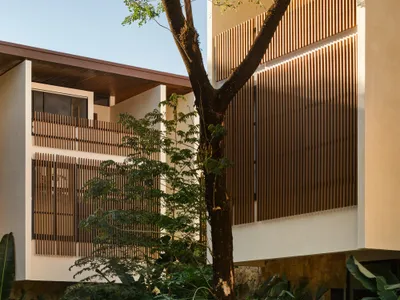
FAMM Arquitectura Organizes Ten Villas Around Courtyards and Jungle in Nosara, Costa Rica
El Molino pairs two elongated volumes with deep overhangs and timber louvers to build a compact coastal community five minutes from the beach.
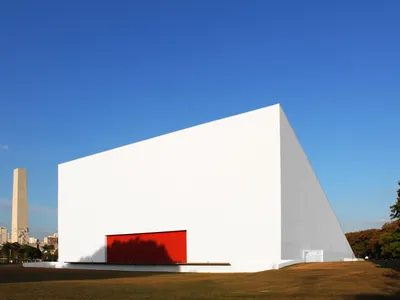
Oscar Niemeyer's Ibirapuera Park Pavilions Define São Paulo's Cultural Identity in Concrete and Curve
A constellation of modernist volumes set within São Paulo's most important urban park, conceived for the city's 400th anniversary in 1954.
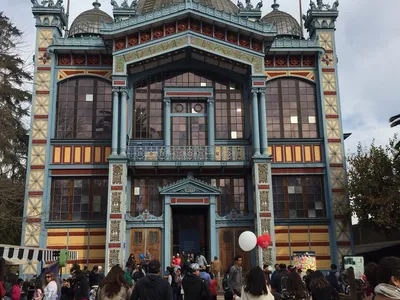
How Henri Picq's 1889 Paris Pavilion Traveled 11,000 Kilometers to Become Santiago's Artequín Museum
A prefabricated iron and glass pavilion built for the Paris Universal Exposition found a second life as a children's art museum in Chile.
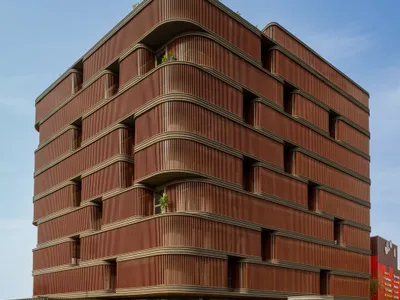
Sanjay Puri Architects Wraps a Jaipur Office Tower in Capsule-Shaped Green Buffers
A nine-level climate-responsive workplace near Jaipur Airport uses stacked planter terraces and aluminium screens to fight 40°C heat.


Explore Architecture Competitions
Discover active competitions in this discipline



Challenge to reimagine the Iron Throne


Photograph architecture without architects


Illustrate the lost glory of Angkor Wat - Render Challenge


Bring back Drive In's
Comments (0)
Please login or sign up to add comments
No comments yet. Be the first to comment!