
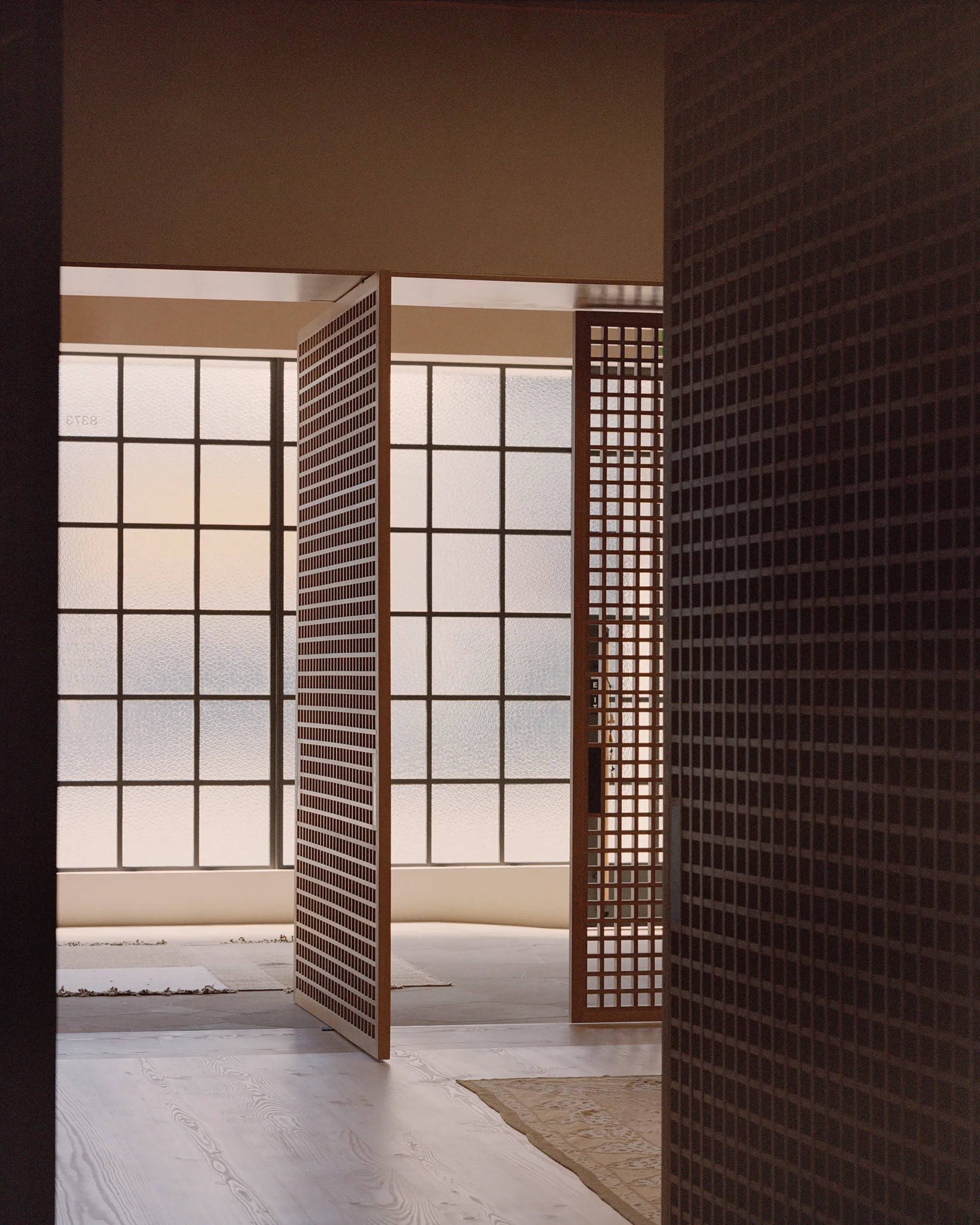
Knight Associates and Lara Hoad Architecture Turn a Melrose Gallery into a Sanctuary for Lingerie
Lonely's first international flagship on Melrose Avenue balances raw materiality with intimate, transformable retail spaces.


A lingerie store has to do something most retail spaces never attempt: it has to feel both public and deeply private at the same time. On Melrose Avenue in West Hollywood, Knight Associates, Lara Hoad Architecture & Design converted a former gallery into Lonely's first international flagship. The 220-square-meter store serves as the New Zealand brand's entry into the American market, and the architects treated the commission not as a standard retail fit-out but as an exercise in calibrating visibility and seclusion.
What makes the project genuinely interesting is the timber lattice system that does the heavy lifting. Rather than relying on conventional partitions or curtains to carve intimacy out of an open floor plate, the design team developed a series of operable joinery screens in Douglas fir that can pivot, slide, and reconfigure to shift the space from open showroom to private consultation room. The material palette, limited to Dinesen Douglas fir, aged brass, pitted plaster, and stained elm, speaks to a dialogue between hardness and softness that mirrors the brand's identity. It is a retail interior that asks you to slow down.
A Storefront That Signals Restraint
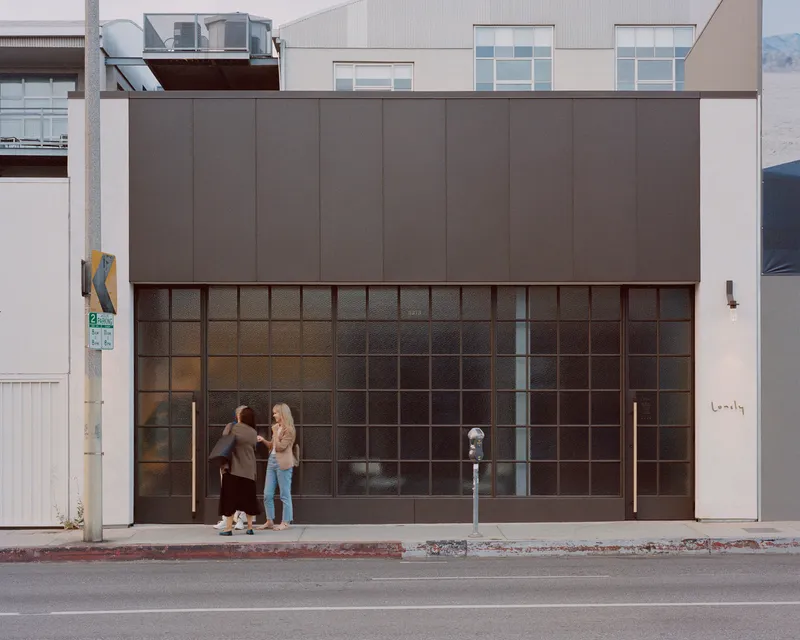
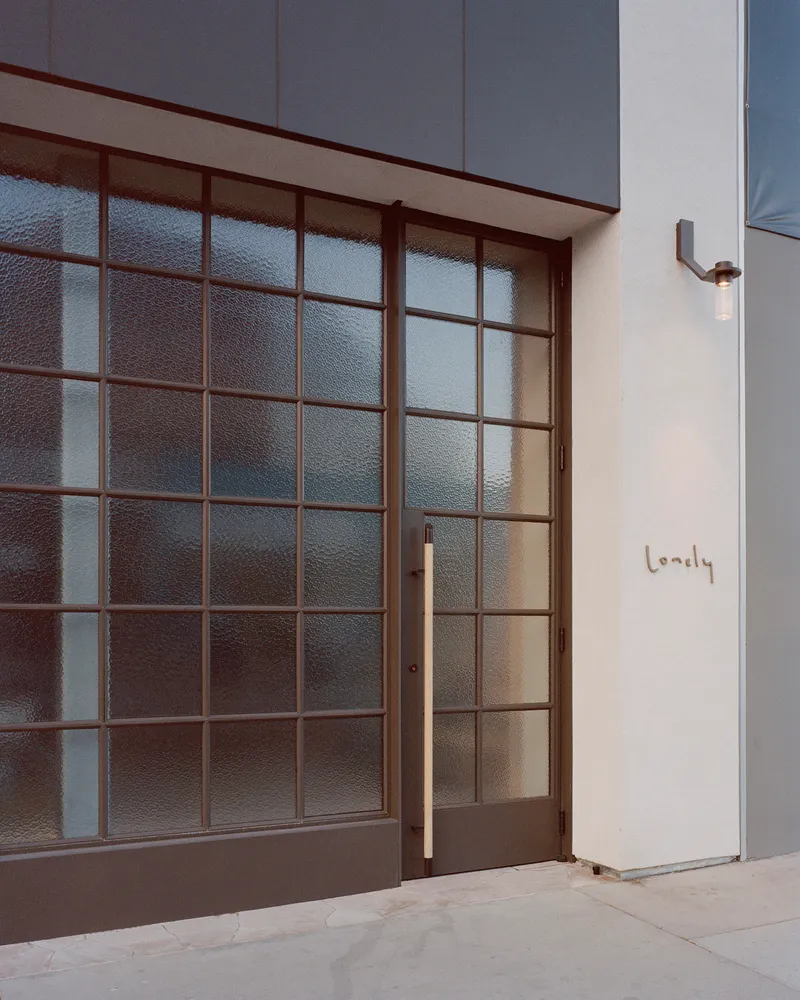
Melrose Avenue is loud. The street's commercial fabric runs from vintage clothing shops to hypebeast temples, and most of them are designed to scream for attention. Lonely's facade takes the opposite approach. A gridded glass storefront sits below a dark metal panel upper volume, and the composition reads more like a small gallery than a lingerie shop. The brass door handle and wall sconce at the entry are the only hints of warmth before you step inside. It is the kind of storefront that rewards curiosity rather than demanding it.
The gridded translucent glass of the entry door picks up the lattice motif that governs the entire interior. From outside at dusk, the store glows rather than glares. That restraint is intentional: the architects framed the building as a sanctuary, and sanctuaries do not advertise.
Timber Lattice as Spatial Device
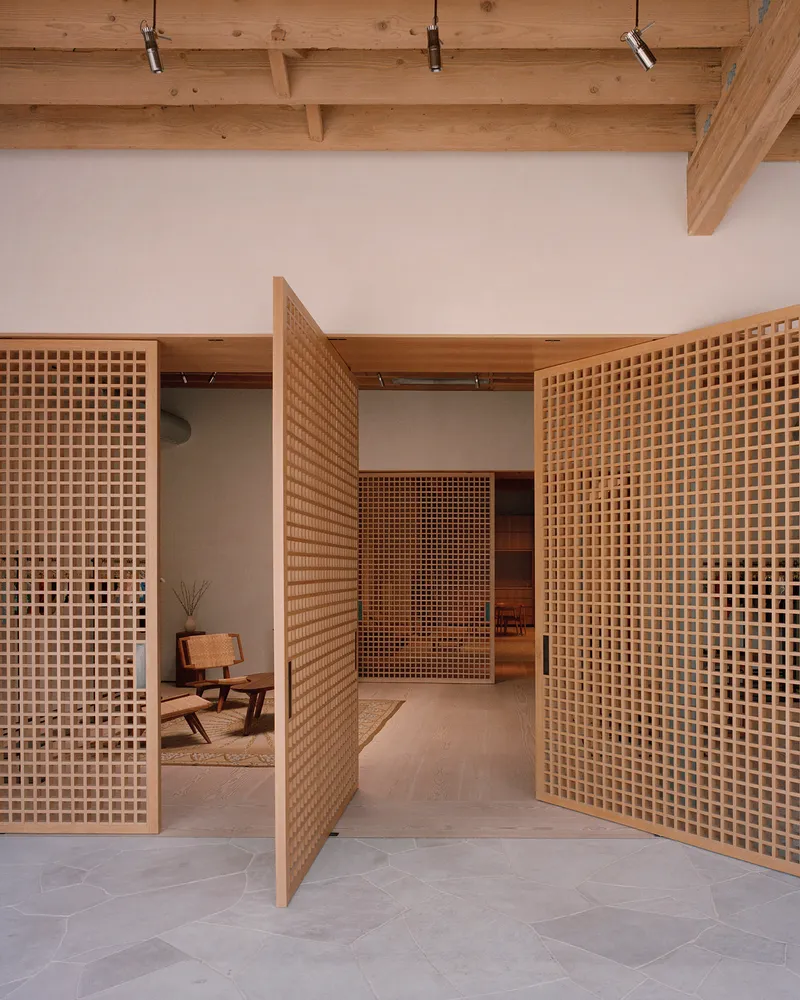
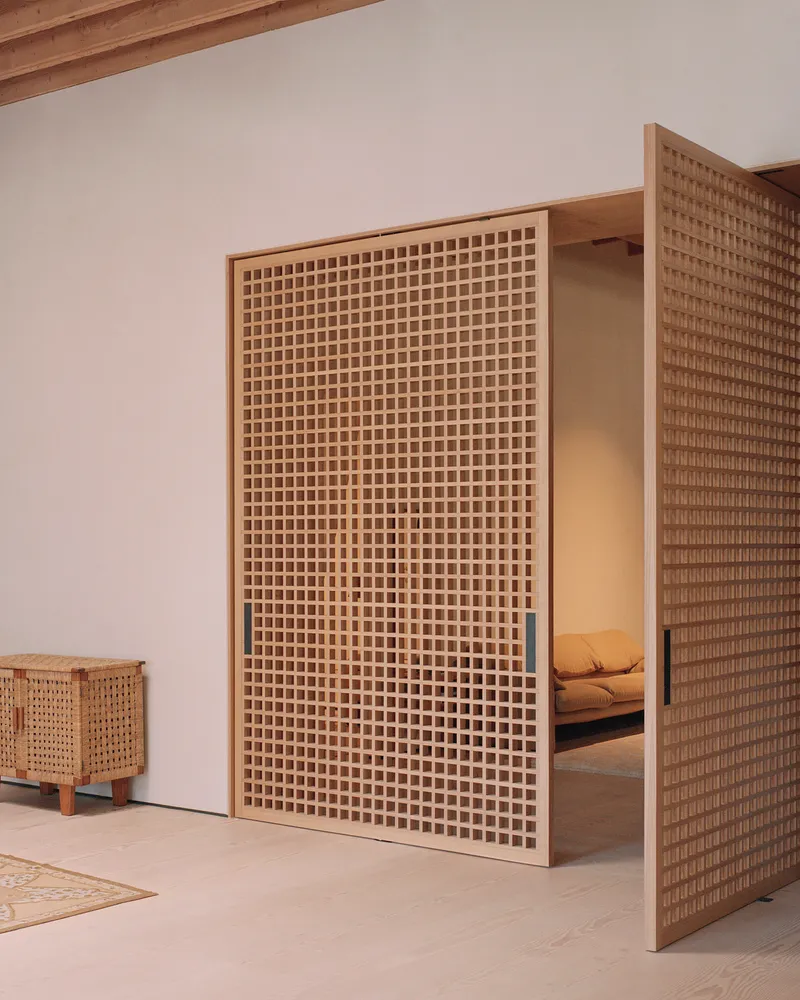
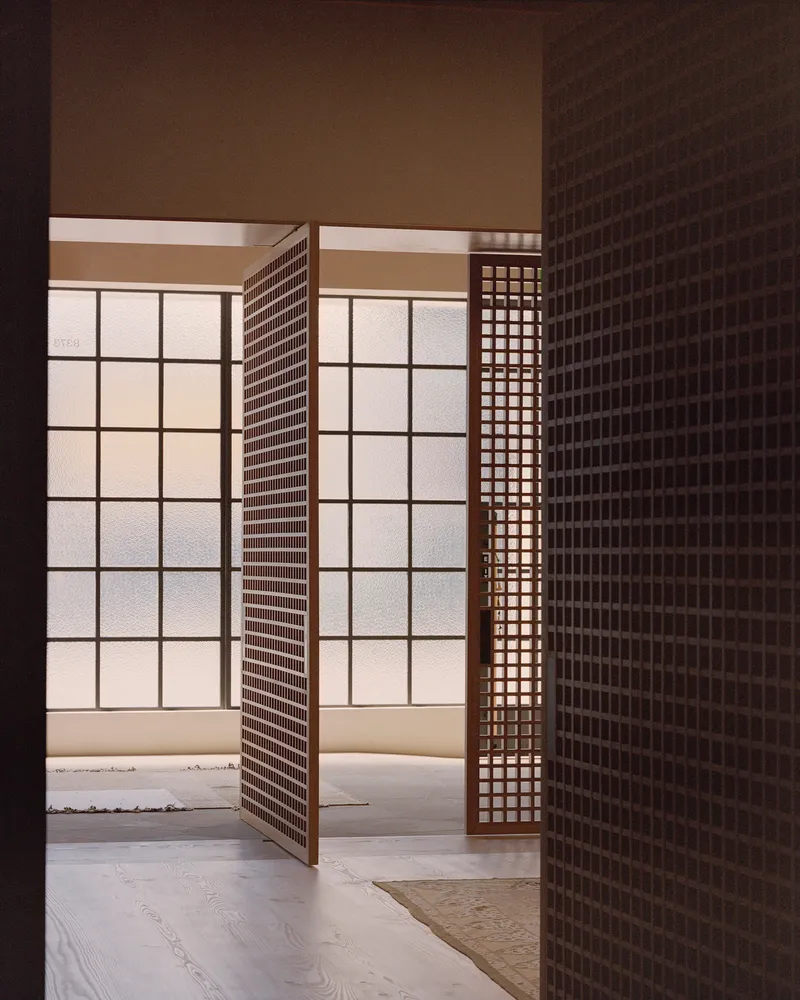
The lattice screens are the project's defining element. Built from 28-millimeter-thick, 350-millimeter-wide Douglas fir planks cut to random lengths between five and seven meters, the square-grid screens subdivide the open plan without sealing it. They filter views, soften light, and create the sensation of layered depth even in a compact footprint. The effect is closer to a Japanese shoji screen than to a Western retail partition, though the material warmth keeps it firmly rooted in a tactile, Californian register.
Critically, these are not decorative. The large operable joinery panels allow the space to transform: open for browsing, closed for fittings. Sightlines were carefully planned so that from nearly any position in the store, you see through multiple layers of lattice, each one reducing visual noise and increasing the feeling of enclosure. It is architecture doing the work that curtains and signage usually do.
Between Confidence and Intimacy
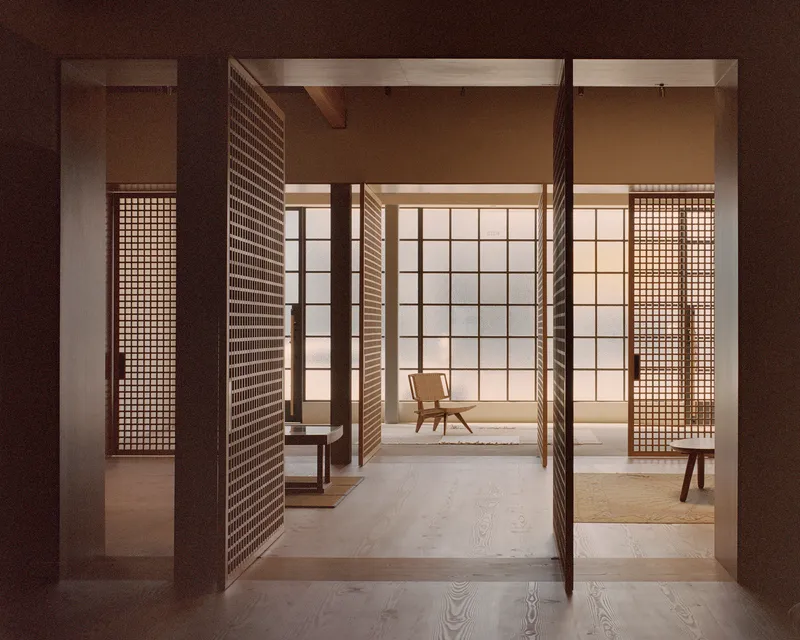
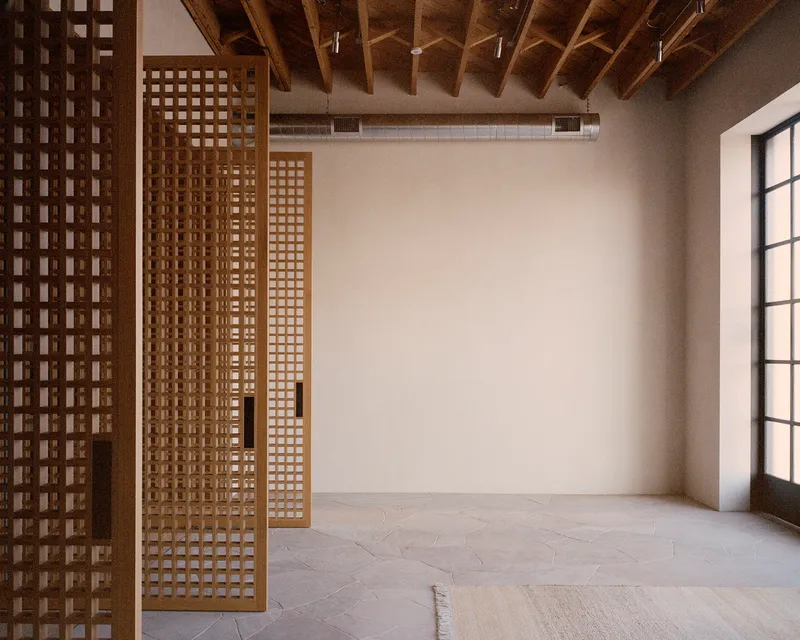
The phrase the designers use, a dialogue between hard and soft surfaces, between confidence and intimacy, could easily slide into marketing copy. But it holds up spatially. The pitted plaster walls have a mineral roughness that plays against the smooth grain of the elm and fir. Translucent wall panels glow behind the lattice screens, creating backlit planes that soften the room without making it feel precious. The exposed beam ceiling and track lighting overhead maintain an honest, slightly industrial edge that prevents the space from tipping into spa territory.
Light stone flooring in some zones transitions to warm timber in others, marking thresholds without requiring signage. The effect is a sequence of moods rather than a single atmosphere, which is exactly what a store selling both swimwear and lingerie needs.
Retail as Living Room
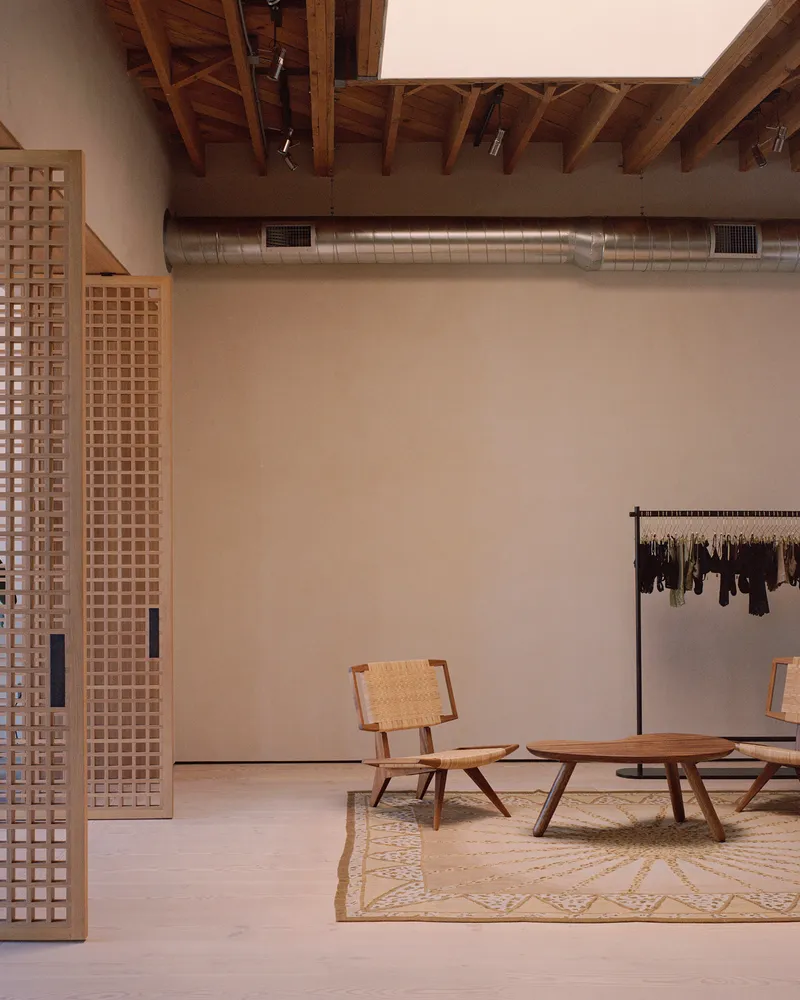
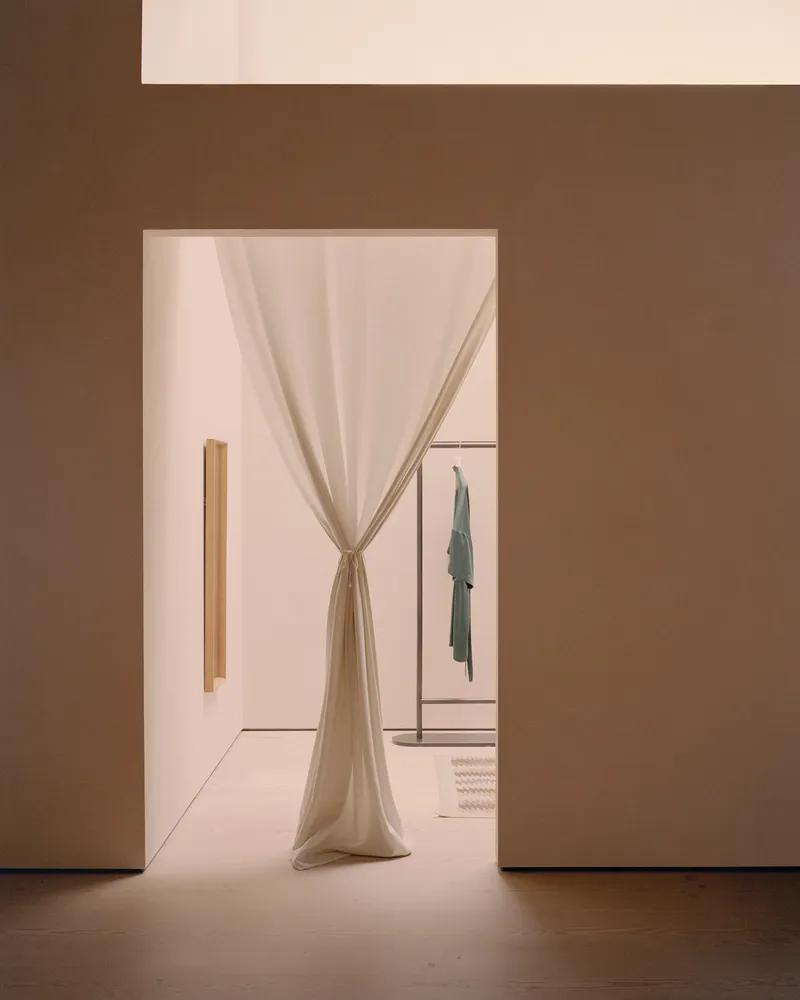
The interior furnishing strategy reinforces the sanctuary concept. Clothing racks sit alongside timber furniture on patterned rugs, and the exposed ductwork overhead is left visible rather than concealed, grounding the space in a kind of relaxed honesty. One doorway is framed by warm brown walls with a draped linen curtain tied back, revealing merchandise beyond. It reads as domestic rather than commercial, a threshold you might find in someone's apartment rather than a fitting room entrance.
For a brand that markets self-love and body positivity, this domestic register is strategic. It invites customers to linger and try things on in an environment that feels like a friend's well-designed bedroom, not a fluorescent box with a three-item limit. The architecture does the emotional labor that brand messaging alone cannot accomplish.
Plans and Drawings
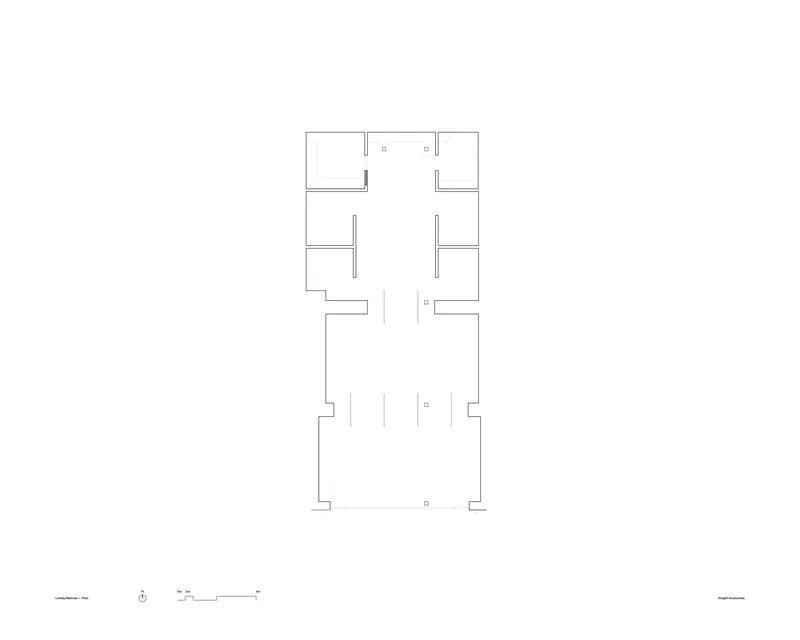
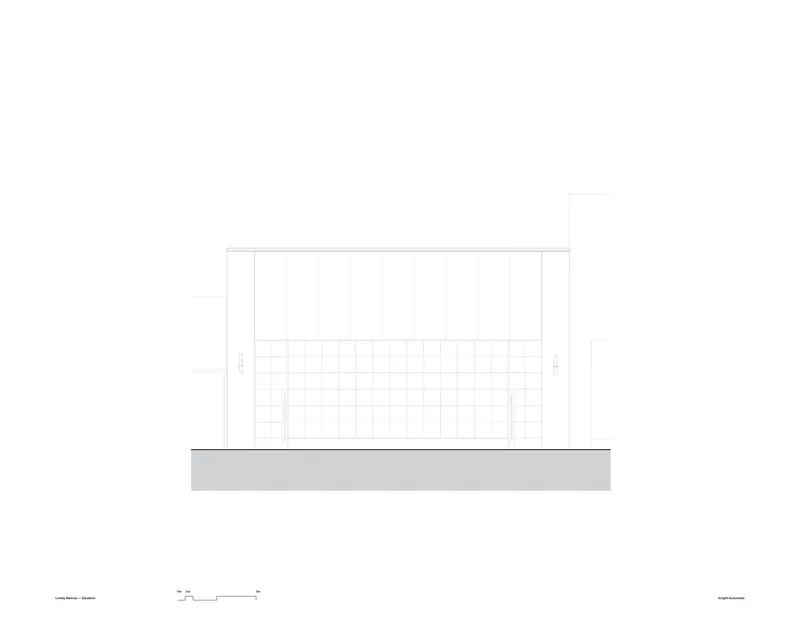
The floor plan reveals a rectangular layout with rooms organized around a central circulation spine. What looks fluid in person is, in plan, a tightly choreographed sequence of open and enclosed zones, each one precisely dimensioned to serve a different programmatic need. The elevation drawing shows how the lattice pattern extends from the interior screens to the facade itself, creating a unified graphic language that ties inside to outside. The solid base plinth anchors the composition and gives the storefront its quiet street presence.
Why This Project Matters
Most retail architecture in Los Angeles operates in two modes: blank minimalism or aggressive spectacle. Lonely's Melrose store carves out a third position by using material warmth and spatial flexibility to create a genuinely intimate commercial environment. The timber lattice system is not just a signature detail; it is the mechanism through which the architecture negotiates between display and privacy, between brand expression and individual comfort. That functional honesty gives the project a durability that trend-driven interiors rarely achieve.
The collaboration between Knight Associates, Lara Hoad Architecture, and Design also demonstrates what happens when a brand trusts architects to solve emotional problems with spatial tools. Instead of relying on scented candles and curated playlists to manufacture intimacy, the design team built it into the walls. The result is a store that feels less like a transaction point and more like a place, which is exactly the kind of distinction that keeps people coming back.
Lonely Melrose Store, designed by Knight Associates, Lara Hoad Architecture, and Design, Los Angeles, United States. 220 m². Completed in 2021. Photography by Rory Gardiner.
About the Studio
Share Your Own Work on uni.xyz
If projects like this are the kind of work you want to make, uni.xyz is a place to publish your own, find collaborators, and enter design competitions.




Popular Articles
Popular articles from the community


Hill & Cross Opera: Sculptural Opera House Architecture Shaped by Tallinn’s Landscape and Identity
Hill & Cross Opera reimagines opera house architecture in Tallinn through its sculptural hill, civic plaza, glass wave and a luminous cross.

The Ocean Hive: Sustainable Architecture for a Self-Sufficient Civilization at Sea
The Ocean Hive imagines sustainable architecture at sea, where modular habitats, algae, wave power and ocean waste sustain a growing colony.

The Musturak Paradise: Senior Living Architecture for a Connected Future in Temara, Morocco
The Musturak Paradise reimagines senior living architecture in Temara via private homes, social spaces, culture, community, and shared care.

Co-life: Sustainable Architecture for Age-Friendly Community Living
Co-life reimagines sustainable architecture for seniors through courtyards, rammed earth, shared gardens, and spaces designed for belonging.


Similar Reads
You might also enjoy these articles

Bao Huynh Watercolor Atelier: A Serene Art Retreat in Hội An
Bao Huynh Watercolor Atelier in Hội An blends multifunctional art spaces, sustainable design, local materials, and family-friendly living in a serene environment.

Atelier Macri Concept Store Interior Design by CASE-REAL
Atelier Macri store features a "ko" counter, walnut wood details, cork displays, blending retail, gallery, and seamless customer experiences.

Manuel Vargas Izquierdo Stadium and High-Performance Sports Center: Architectural Excellence in Jalpa de Méndez
The Manuel Vargas Izquierdo Stadium blends sustainable design, inclusive sports facilities, and cultural-inspired architecture, revitalizing Jalpa de Méndez’s public spaces.

KAKR Buluh Awar Hall: Revitalizing Community and Ecology Through Bamboo Architecture
Community built bamboo hall revitalizes Buluh Awar village, empowering youth, restoring ecology, celebrating vernacular craftsmanship through sustainable architecture and culture.


Explore Commercial Buildings Competitions
Discover active competitions in this discipline


Challenge to design luxury tourism on rails


VR headsets Storefront design competition


Designing a staircase for a client
Comments (0)
Please login or sign up to add comments
No comments yet. Be the first to comment!