

Koala Circle: Reimagining Sustainable Wildlife Conservation Architecture
A seamless fusion of landscape and architecture, this koala sanctuary redefines conservation through sustainable design, education, and immersive habitat integration.


The Koala Circle project, designed by Shuyu Zhang, Xiaoxuan Hu, and Linlan ZENG, proposes a refined approach to sustainable wildlife conservation architecture. Positioned as a hybrid between a natural habitat, a tourist interface, and an emergency rescue center, the project challenges conventional zoo and rehabilitation typologies by dissolving boundaries between built form and ecology.
At its core, the Koala Homeland is not merely an architectural intervention. It is an environmental system that integrates conservation, education, and public engagement within a carefully calibrated spatial framework. The design emphasizes coexistence, minimizing ecological disruption while maximizing awareness and interaction.
Editor's Choice entry of Haven 2020


Landscape as Generator of Form
The project derives its architectural logic directly from the site’s undulating terrain. Instead of imposing a rigid structure, the design adapts to topography through a continuous, flowing geometry that merges with the landscape. The building rises and falls with the ground, creating a low-profile form that avoids visual and ecological intrusion.
This approach aligns with contemporary principles of sustainable wildlife conservation architecture, where the built environment is treated as an extension of the ecosystem rather than an external imposition. The result is a structure that feels embedded, almost invisible within its natural context.
Dual-Yard System and Spatial Organization
A defining feature of the project is the creation of two circular yards, each dedicated to different stages of koala rehabilitation. These yards are not isolated enclosures but interconnected ecological zones that support training, recovery, and long-term habitation.
The architectural form emerges from the relationship between these two yards. Programmatic elements are distributed along their perimeters, creating a looped circulation system that organizes movement while maintaining clear separation between humans and animals.
This dual-yard strategy introduces a layered spatial hierarchy:
- Inner zones for koala habitation and recovery
- Intermediate zones for controlled observation
- Outer circulation paths for visitors and staff
Such zoning ensures minimal stress for animals while enabling meaningful human engagement.
Circulation as Experience
Circulation in Koala Circle is treated as a narrative device rather than a purely functional element. Distinct routes for visitors, staff, and service operations are carefully orchestrated to avoid overlap while maintaining operational efficiency.
Visitors are guided along elevated pathways and roof-accessible routes that provide immersive visual access to the habitat without direct interference. This elevated circulation strategy allows the architecture to frame views of the koalas within a natural setting, reinforcing the illusion of an untouched landscape.
The roof itself becomes an extension of the ground plane. At its highest point, it aligns with the natural terrain, allowing seamless pedestrian access. This move eliminates the perception of entering a building, instead offering a continuous landscape experience.

Material Strategy and Environmental Integration
Material selection plays a critical role in reinforcing the project’s sustainability agenda. The structure predominantly utilizes locally sourced timber, including Broad-leaved Stringybark and eucalyptus-based materials. These choices reduce transportation impact while supporting regional ecological cycles.
Timber construction also transforms the building into a carbon sink, replacing more energy-intensive materials such as concrete and steel. Lightweight aluminum roofing and fire-resistant eucalyptus plywood further enhance performance while maintaining structural efficiency.
The use of native materials extends beyond construction into landscape integration. Vegetation, shading devices, and façade systems are designed to respond to local climatic conditions, ensuring thermal comfort and ecological compatibility.
Minimizing Ecological Impact
One of the project’s most compelling aspects is its ability to reduce ecological disturbance. The building’s mass is lifted and distributed in response to terrain, significantly reducing earthwork and preserving existing site conditions.
By embedding circulation into the roof and aligning built levels with natural contours, the design avoids excessive excavation and maintains soil integrity. This approach reflects a broader commitment to low-impact construction, a key principle in sustainable wildlife conservation architecture.
Education and Community Engagement
Koala Circle extends beyond conservation into public education. The inclusion of exhibition spaces, media rooms, and training facilities transforms the project into a knowledge hub where visitors can learn about koala ecology and rehabilitation practices.
The design encourages active participation. Locals can access certain areas, observe rehabilitation processes, and engage with educational programs. This interaction fosters a deeper understanding of wildlife conservation and strengthens community involvement.
Importantly, these interactions are carefully controlled to ensure that the presence of humans does not disrupt the animals. The architecture mediates this relationship through spatial separation and visual connectivity.
Architecture as Ecological Interface
Koala Circle exemplifies a shift in architectural thinking, where buildings act as interfaces between human systems and natural ecosystems. Instead of isolating wildlife, the project integrates human presence into a controlled, respectful framework.
The continuous loop form, the integration of circulation with landscape, and the use of local materials collectively position the project within a new paradigm of architecture. It is not about dominance over nature, but coexistence within it.
Koala Circle redefines the possibilities of sustainable wildlife conservation architecture by merging ecological sensitivity with spatial innovation. Through its adaptive form, strategic zoning, and material intelligence, the project creates a balanced environment where conservation, education, and human experience coexist.
By minimizing ecological impact while maximizing awareness, the design offers a replicable model for future conservation architecture. It demonstrates that architecture can move beyond shelter and function as an active participant in environmental restoration and stewardship.


Popular Articles
Popular articles from the community

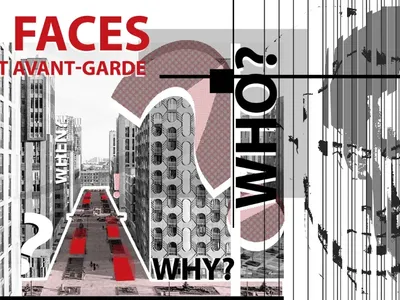
Faces of the Soviet Avant-Garde: Turning Moscow's Street Names into an Open-Air Museum
A network of sculptural installations across a Moscow residential district transforms forgotten architect names into spatial encounters with cultural memor
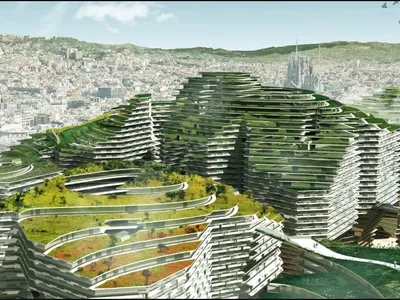
Manzana Morphosis: Stretching Barcelona's Grid into a Living Landscape for 2050
A radical reworking of the Eixample manzana turns density into a tool for generous public space, vertical ecology, and environmental performance.

Opera on the Sea: Driftwood Logic Shapes a Timber Opera House on Estonia's Coast
Trevor Orgill's opera house translates the entangled drift of floating timber into a civic building where wood, water, and music converge.

Opera by the Sea Estonia: Three Shells Dissolving Architecture into Tallinn's Coastline
A winning opera house proposal replaces monumental form with interconnected shells that blur the boundary between building, park and Baltic Sea.

Similar Reads
You might also enjoy these articles

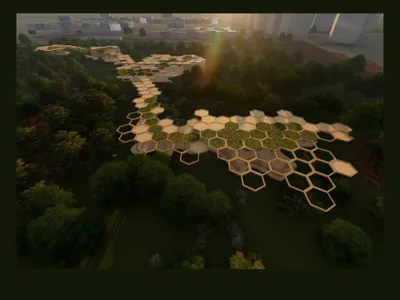
Eco Chapel: A Green Architecture Pavilion Designed in Symbiosis with the Forest
Eco Chapel uses green architecture to weave prayer, learning and reuse into a forest pavilion shaped by modular hexagonal canopies for life.
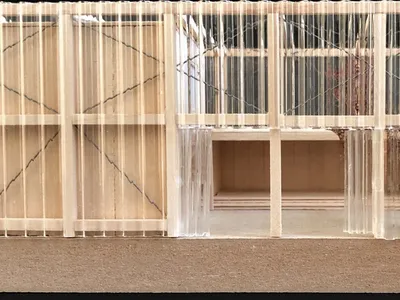
Kaffeebühnen: Coffee Shop Architecture Designed as a Civic Stage Between Vienna’s City and Park
Kaffeebühnen turns coffee shop architecture into a civic stage, linking Vienna’s park edge, urban life, warm timber yards, and coffee craft.
Healing Façade: Sustainable Architecture for Reforestation, Community, and Sacred Ecology in Ethiopia
Healing Façade reimagines sustainable architecture as a living wall that restores soil, catches water and renews Ethiopia's forest churches.


Urban Forest: A Vertical Ecosystem for 5,000 Workers in Singapore's Changi Business Park
Radially stacked pods and layered green decks turn a 7-acre plot into 47 acres of ecological workspace projected for 2040.

Explore Koala Competitions
Discover active competitions in this discipline

Challenge to reimagine the Iron Throne

Photograph architecture without architects

Illustrate the lost glory of Angkor Wat - Render Challenge

Design challenge to reuse E-waste
Comments (0)
Please login or sign up to add comments
No comments yet. Be the first to comment!