
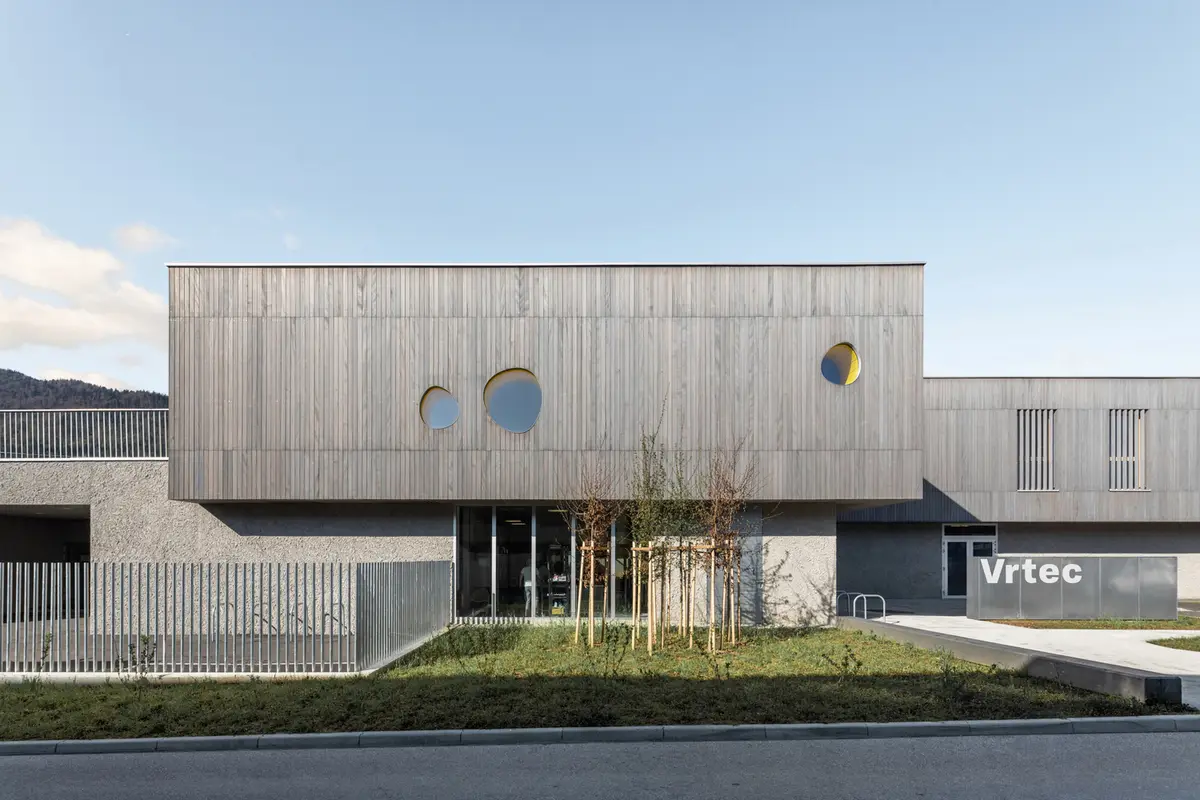
Kočevje Kindergarten – Bee Unit: A Sustainable Learning Oasis
Sustainable Kočevje Kindergarten by SVET VMES features eco-friendly design, Passivhaus certification, playful spaces, and community-centered architecture in Slovenia.


Bee Unit
Located in Kočevje, Slovenia, the Kočevje Kindergarten – Bee Unit by SVET VMES is an architectural masterpiece that blends sustainability, playful design, and educational innovation. Completed in 2023, this 5,025 m² facility regenerates a former brownfield site and provides a modern, child-focused learning environment for 350 children. Designed with sustainable materials and energy-efficient systems, it exemplifies the ideals of green architecture while creating a nurturing space for growth and creativity.
A Vision for Sustainable Education
Eco-Friendly Construction
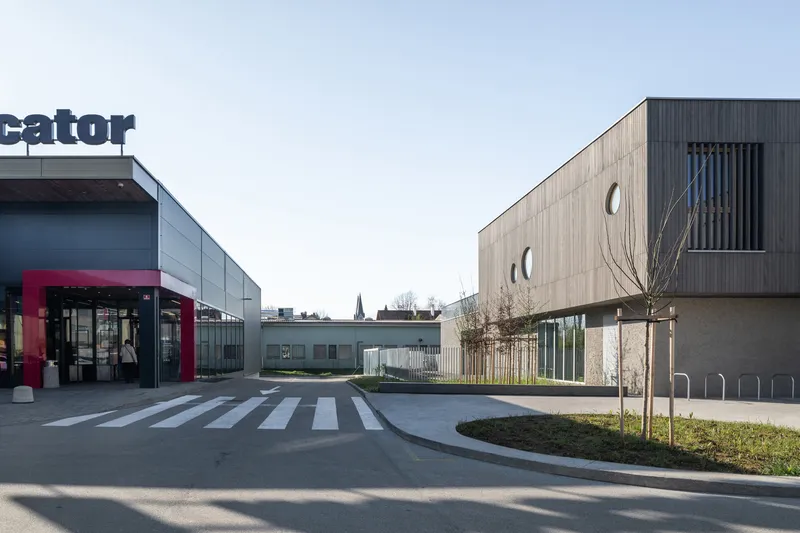
The kindergarten is a testament to sustainable design principles, featuring cross-laminated timber (CLT) construction, wood-fiber insulation, and a ventilated façade of thermally treated spruce. These choices emphasize durability, natural aesthetics, and environmental responsibility.
To achieve the stringent Passivhaus standard, the building incorporates:
- Energy-Efficient Heating: Powered by district heating using wood biomass, the facility minimizes its carbon footprint.
- High-Performance Insulation: Wood-fiber insulation ensures thermal efficiency, reducing energy consumption.
- Ventilated Façade: A natural wooden exterior not only enhances aesthetics but also ensures breathability and longevity.
Innovative Design for Play and Learning
Dynamic Spatial Organization
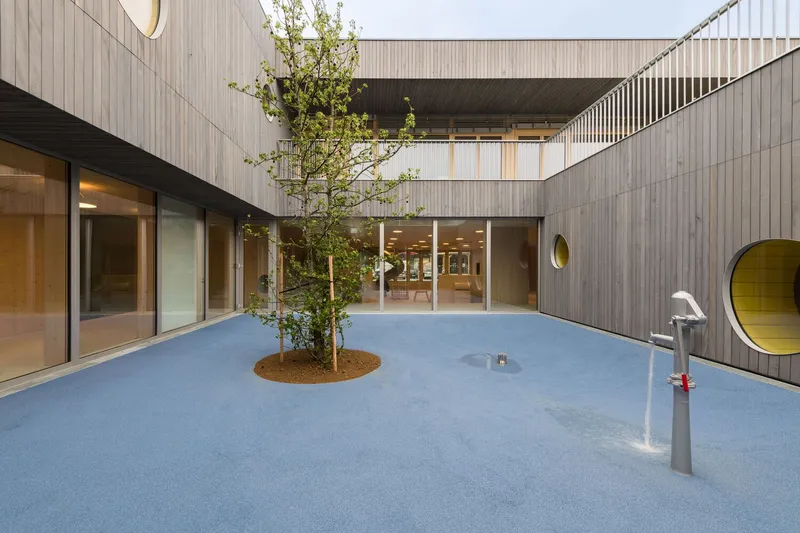
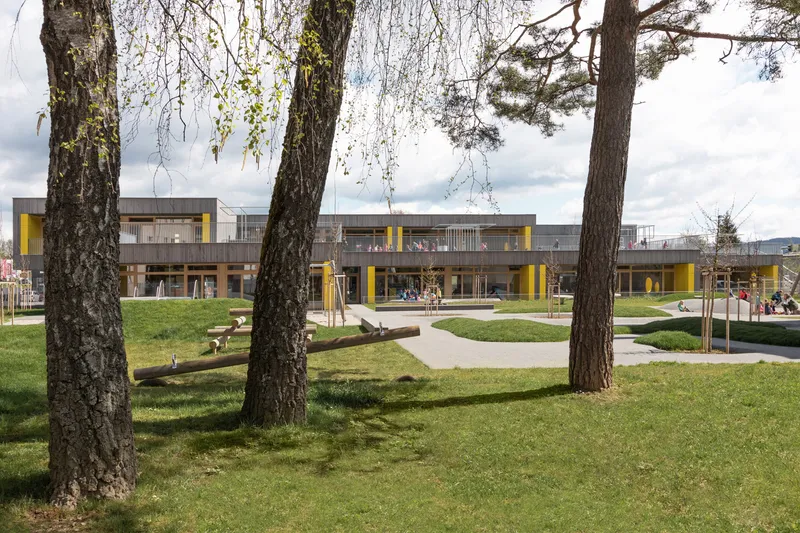
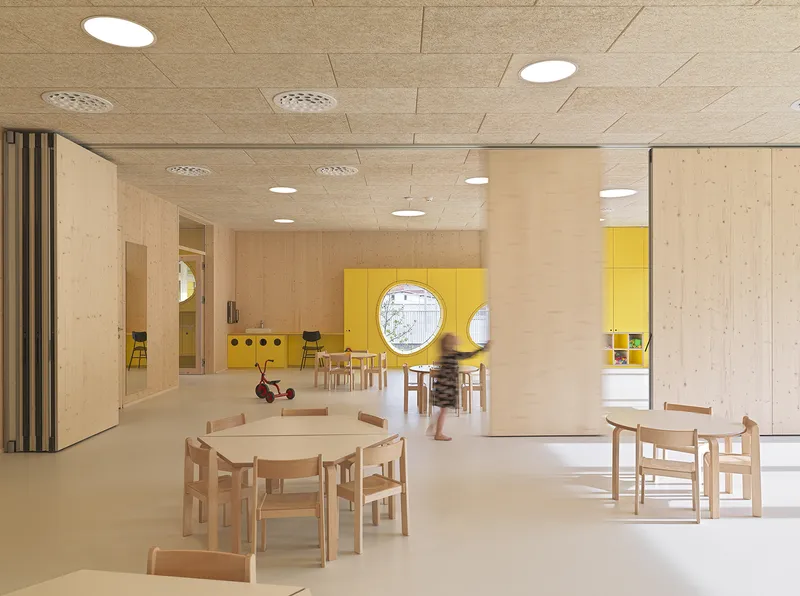
The kindergarten's layout prioritizes children’s autonomy and interaction. Units are organized around two central atria—"puddle" and "hill"—designed to flood the interiors with natural light while creating unique spatial experiences.
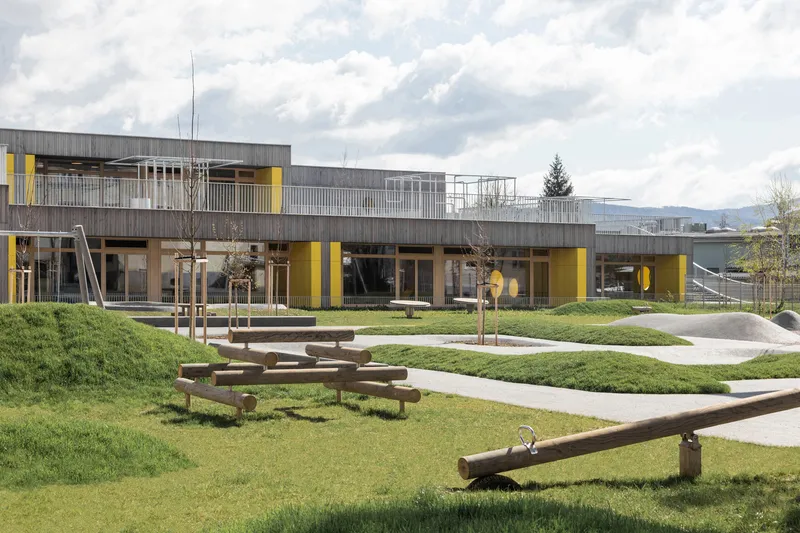
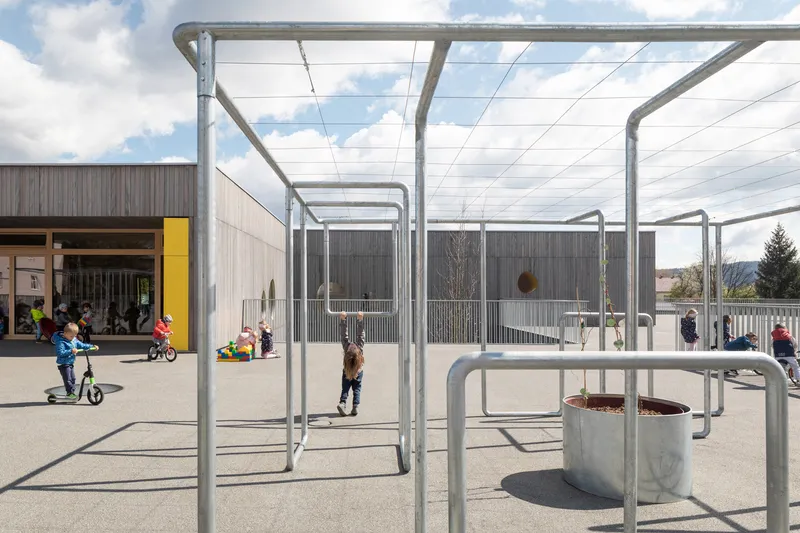
- Ground Floor for Younger Children: Direct access to outdoor playgrounds fosters a seamless connection between indoor and outdoor learning.
- First Floor for Older Children: Rooftop play areas provide elevated spaces for exploration and recreation.
Interactive Façade and Play Features
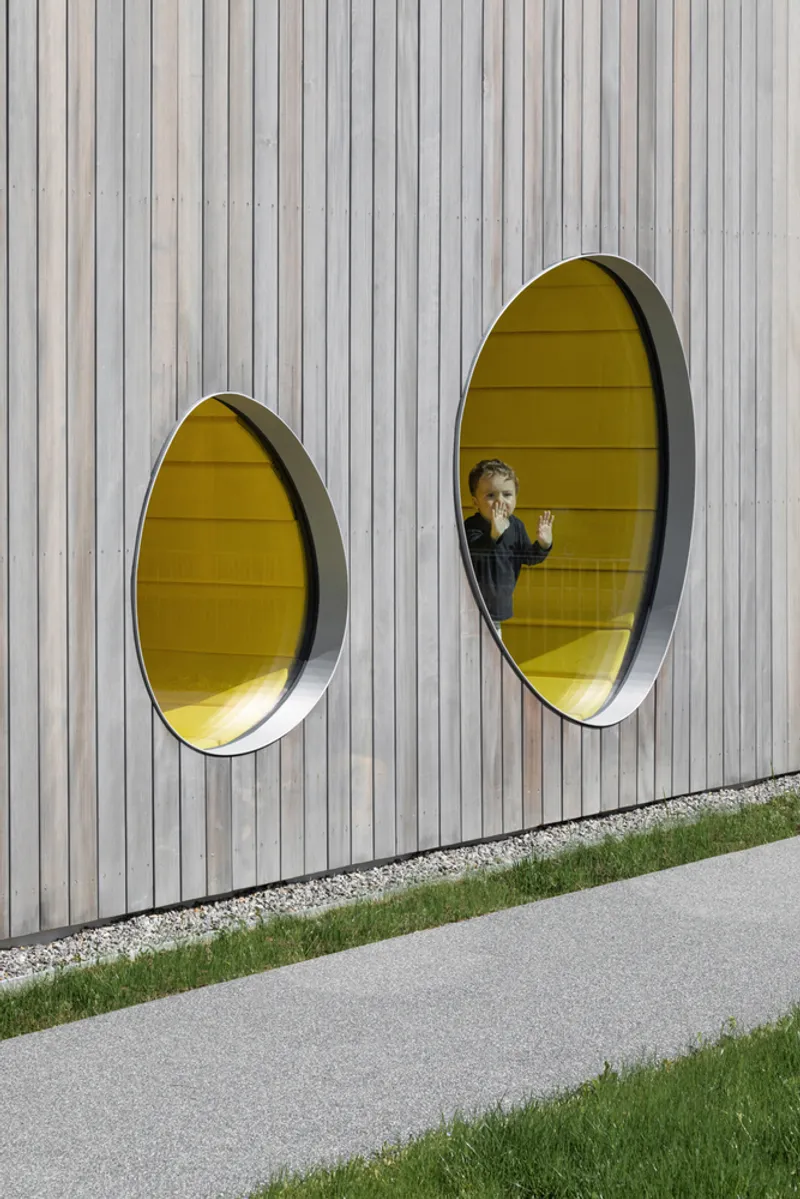
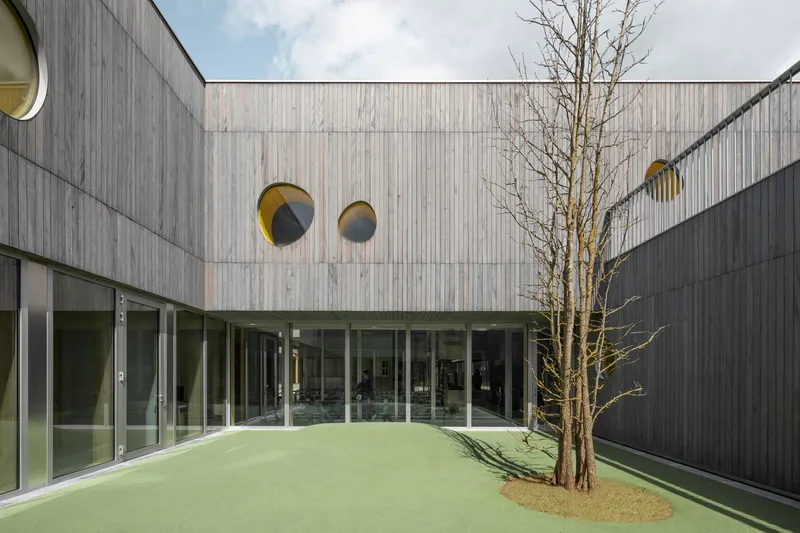
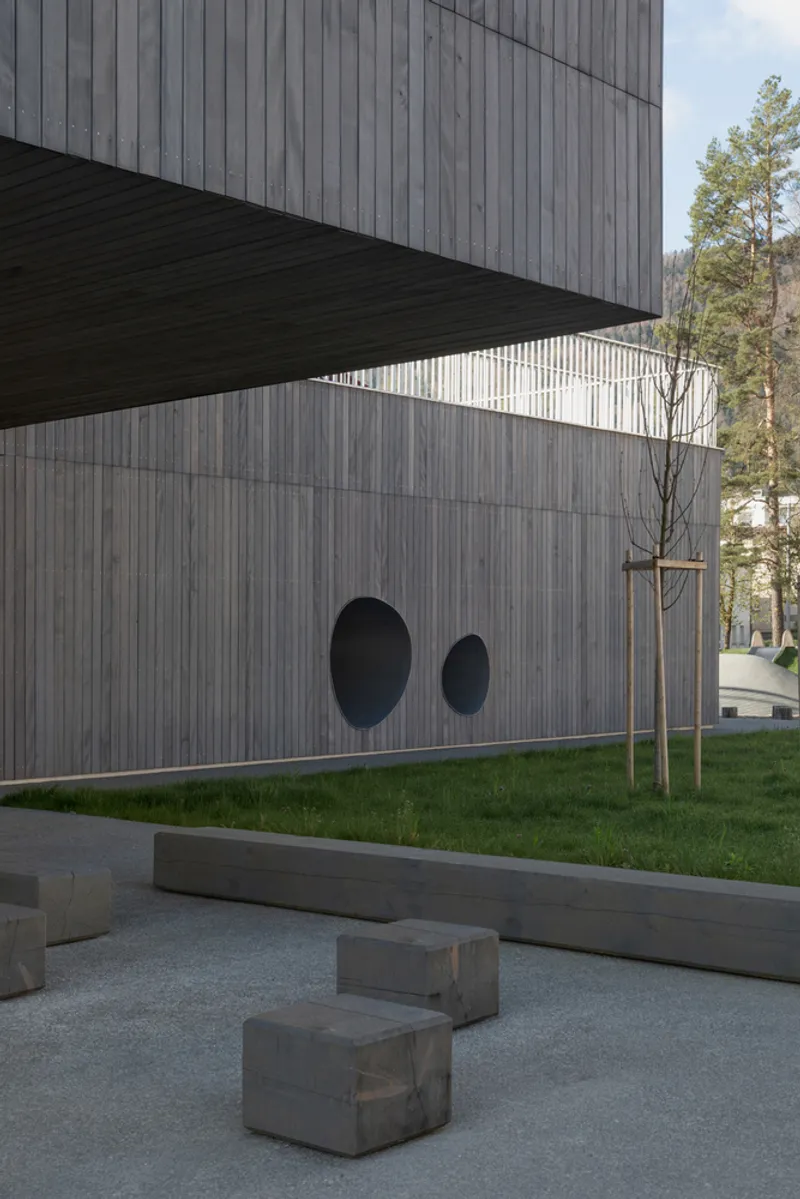
The irregular façade includes playful nooks and windows that act as an ever-changing stage for children. These elements encourage curiosity and transform the façade into a dynamic part of the learning environment.
Inside, child-centric features include:
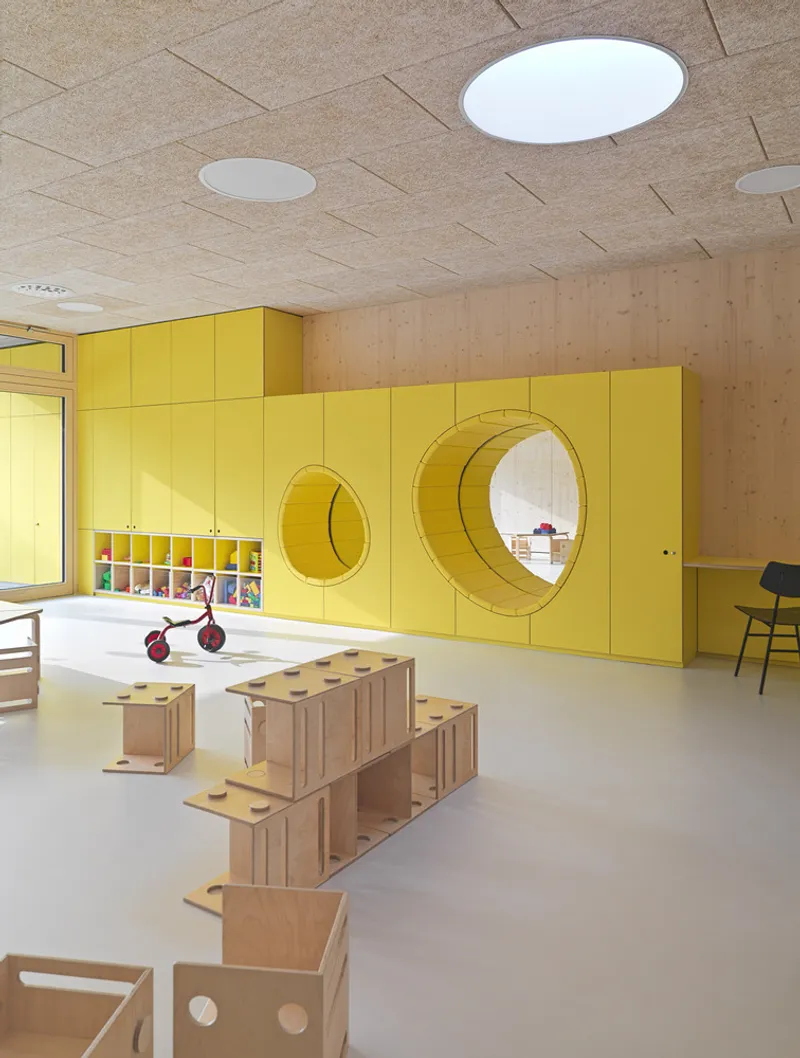
- Thick Playroom Walls: Integrated storage for toys and daybeds, along with cozy nooks for privacy.
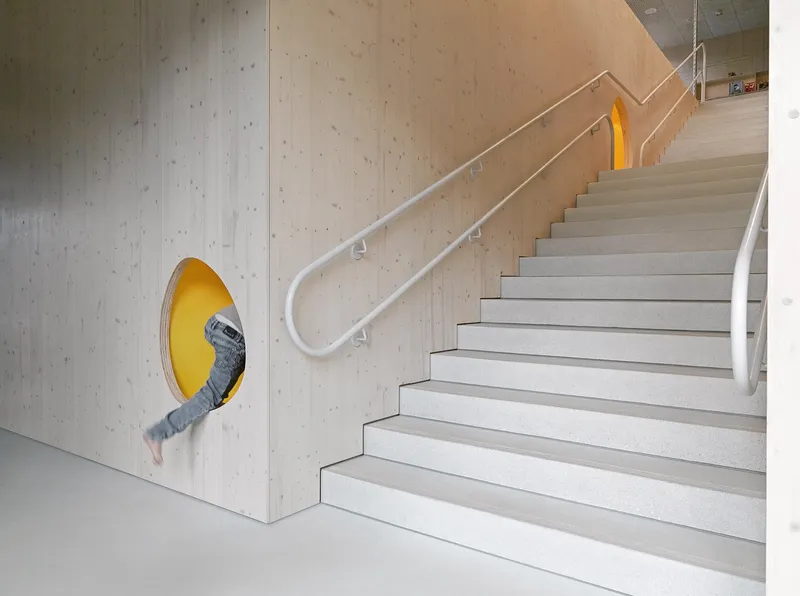
- Creative Stair Design: A kid-friendly tunnel runs alongside the stairs, ending in a slide that blends fun with function.
Warm and Inviting Interiors
Wooden Structures for Comfort
The interior design showcases the building's wooden structure, creating a warm and tactile environment. Exposed timber surfaces enhance spatial sensitivity and provide a natural aesthetic that aligns with the project’s sustainable ethos.
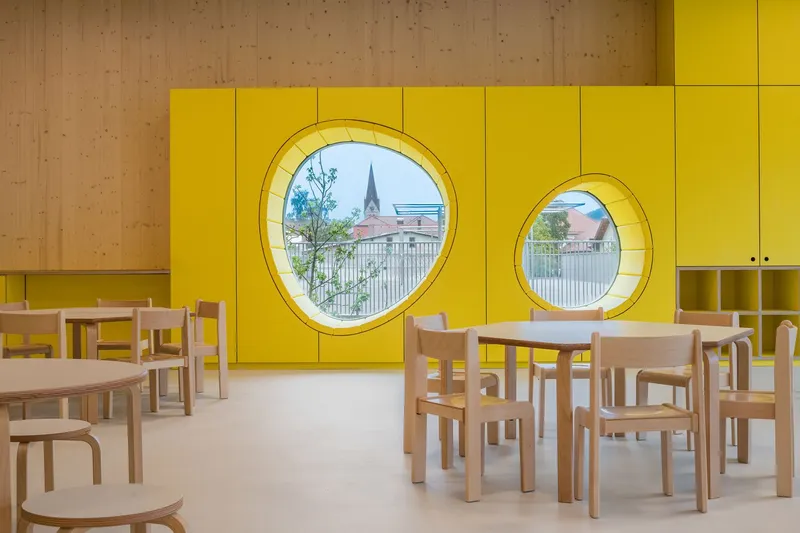
Spaces for Exploration and Observation
Children are encouraged to observe and connect with their surroundings. Large windows allow them to watch their friends arrive in the morning or see their parents pick them up in the afternoon, fostering a sense of community and belonging.
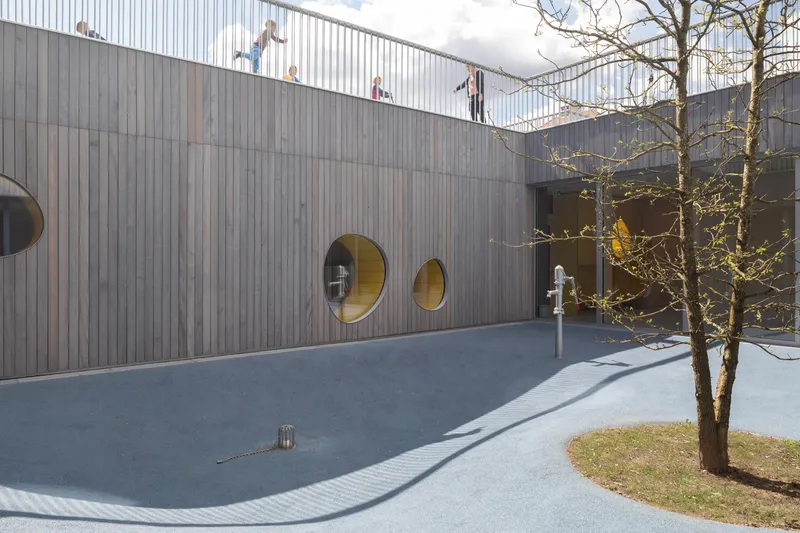
A Community-Centric Kindergarten
The Kočevje Kindergarten – Bee Unit is more than just an educational building. It is a space for interaction among children, parents, teachers, and caretakers. Its design reflects the importance of community, offering a stage for the daily lives of everyone involved.
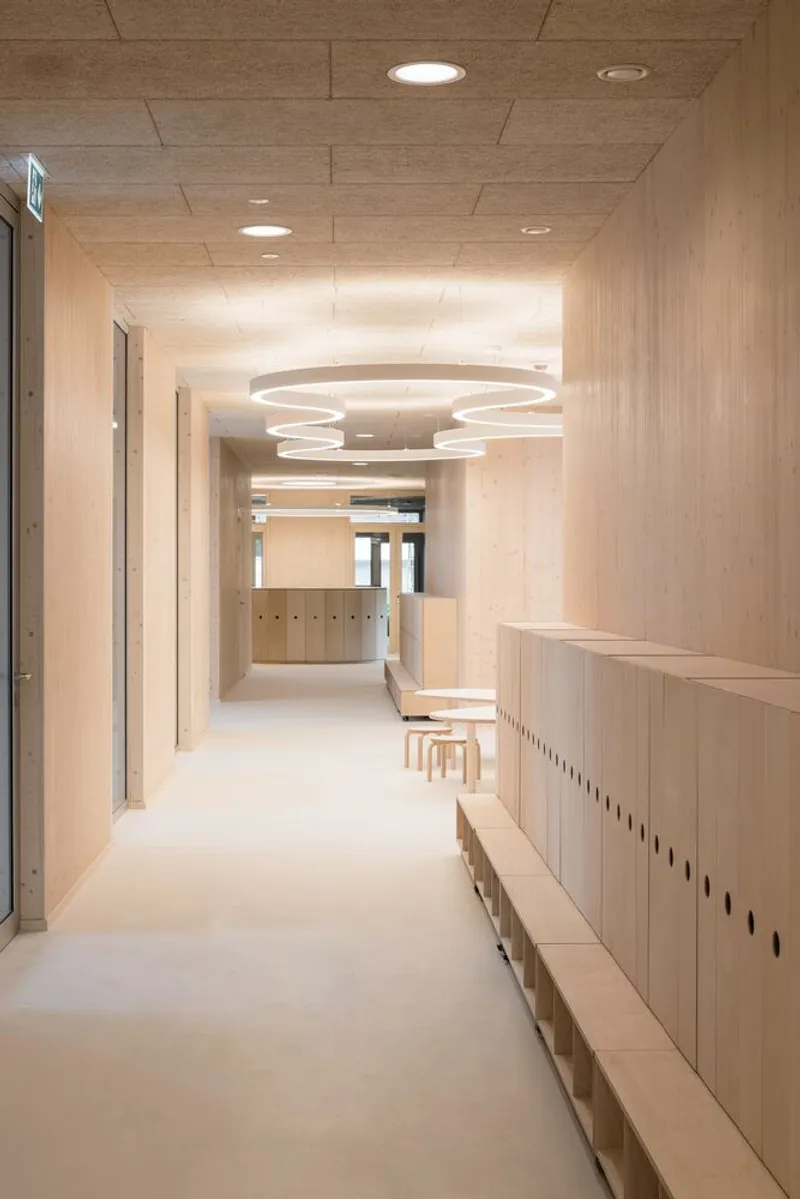
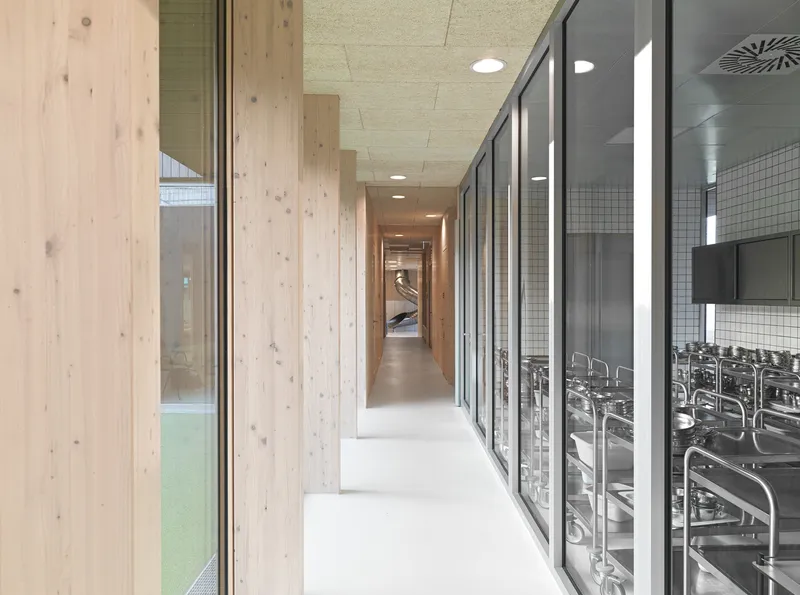
Meeting Sustainability Goals
A Brownfield Regeneration Project
Built on a former brownfield site, the project breathes new life into an underutilized area of Kočevje, contributing to urban revitalization while maintaining a minimal environmental footprint.
Energy Efficiency and Passive Design
The Passivhaus-certified building achieves unparalleled energy efficiency through thoughtful design and material selection, setting a benchmark for future educational facilities.
A Model for Future Learning Spaces
The Kočevje Kindergarten – Bee Unit exemplifies the perfect balance between sustainability, design innovation, and child-focused learning. Its use of natural materials, energy-efficient systems, and creative spaces makes it a pioneering example of green architecture in educational settings.
This kindergarten not only nurtures young minds but also serves as a reminder that sustainable design can create spaces that are as functional as they are inspiring.


Popular Articles
Popular articles from the community


Cube Design Draws an Ecological Corridor Between Two Shenzhen Hills with the Nankai Building
Beside Shenzhen's container docks, the Nankai Building pairs stacked balconies with a climbing green screen to connect two hillsides across its height.

U.GA Architects Wraps an Oval Rooftop Pool in Curved Board-Formed Concrete on Busan's Jeollidan-gil
In Busan's Jeonpo-dong, a 454 m² mixed-use block stacks a neighborhood facility, guest rooms and an oval rooftop pool inside spiraling concrete walls.

LT2A and OPEN Architectes Thread a Brick and Glass High School Through a Wooded Belgian Campus
In Braine-l'Alleud, a 3,000 m² wing for Collège Cardinal Mercier pairs pale brick with a glazed colonnade, deferring to a small chapel and a dense wood.

David Ortega Stacks a Two-Story Mexico City Penthouse Around a Steel Stair and a Pergola-Shaded Roof Terrace
In Colonia Roma, a 300 m² penthouse uses oak joinery, a planted steel stair and a slatted roof pergola to make a new-build apartment feel like a house.

Similar Reads
You might also enjoy these articles


Hodi-Mandai Geram
Project Function: Preservation and revitalization of the Intangible heritage and socio-spatial identity of the Hodi by Housing, Cultural Memory Center, Sacred Grove, landscape, local tourism economy


Olio Towers: A Mid-Rise for Performers That Fuses Housing, Rehearsal, and Stage
Located blocks from Houston's Theater District, this modular tower stacks living units around a central performance atrium.

Oasis: Modular Green Housing Carved into Dhaka's Urban Fabric
A shortlisted Plugin Housing entry reclaims unauthorized settlements in Dhaka with stepped concrete volumes, green roofs, and ventilation-driven design.

Black Hole: A Floating Megastructure for the Post-Physical Era
Emiliano Mazzarotto envisions a spherical, self-scaling arena where e-sports, digital hotels, and holographic stadiums replace traditional public space.

Explore Educational Building Competitions
Discover active competitions in this discipline

Challenge to design public laboratory

Challenge to reimagine the Iron Throne

Photograph architecture without architects

Illustrate the lost glory of Angkor Wat - Render Challenge
Comments (0)
Please login or sign up to add comments
No comments yet. Be the first to comment!