

KOKUYO DIG by DDAA + KOKUYO: Redefining Learning Spaces Through Curiosity and Collaboration
KOKUYO DIG by DDAA + KOKUYO creates a flexible learning space blending curiosity, collaboration, and focus through adaptive, nature-inspired design.


Redefining Learning in the Workplace
Learning is more than the transfer of information; it is a continuous process where curiosity sparks exploration, inquiry deepens understanding, and knowledge enriches life. This philosophy guided the creation of KOKUYO DIG, a dynamic workspace in Tokyo designed to inspire creativity, collaboration, and lifelong learning for employees.
Commissioned by KOKUYO, the project aimed to provide a space where employees could pursue personal interests, explore ideas, and expand knowledge organically. Rather than imposing structured learning, the architects at DDAA embraced a design strategy that fosters curiosity and encourages cross-divisional knowledge sharing. The workspace itself became a platform for learning—a living experiment in the possibilities of architectural influence on human interaction.
A New Paradigm of Learning Architecture
The KOKUYO DIG project by DDAA and KOKUYO reimagines what it means to design for learning in the contemporary workplace. Rooted in the belief that true learning stems from curiosity rather than instruction, the project challenges traditional educational architecture by creating a space where curiosity, focus, and collaboration coexist naturally.
Rather than a conventional training center, KOKUYO DIG serves as a dynamic platform where employees explore personal interests, exchange ideas, and develop knowledge beyond departmental boundaries. It is both a physical and conceptual framework for lifelong learning, transforming architecture into a medium that nurtures curiosity and communication.

Architecture as a Catalyst for Learning
Learning, at its core, reshapes perception—it unveils what we do not know and invites us to question further. For DDAA, the challenge lay in translating this cycle of discovery into spatial form. The architects and KOKUYO’s internal design team approached the project as a shared educational journey, blurring the lines between client and designer. Through continuous dialogue, they co-developed methodologies, exchanged perspectives, and systematized insights, making the design process itself an act of learning.
The resulting space does not teach directly—it creates the conditions for self-motivated exploration. Here, architectural design becomes an invisible framework that encourages employees to engage, share, and find inspiration through spatial experience.
Designing for Curiosity: The Concept of Spatial Coexistence
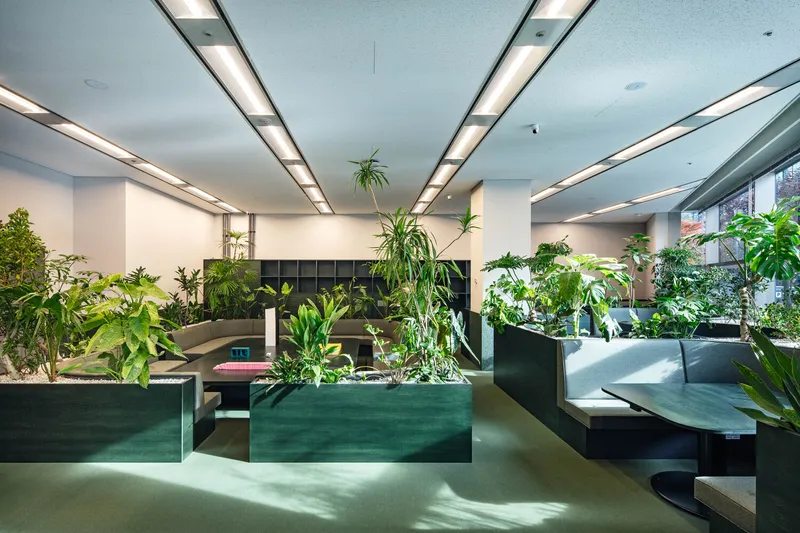
The key architectural challenge was to create an environment that supports both deep concentration and spontaneous interaction—two seemingly contradictory modes of learning. Inspired by Japanese family restaurants, which effortlessly accommodate diverse activities within one space, DDAA translated this cultural typology into a new model for learning environments.
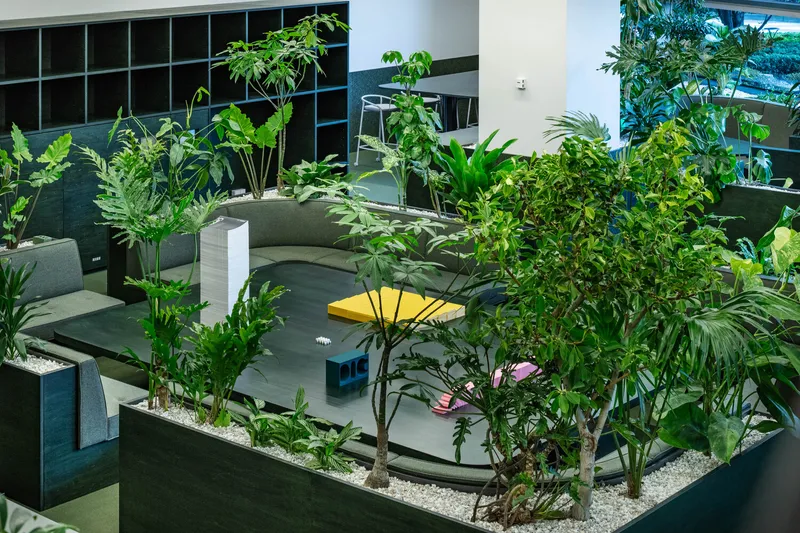
Just as people in a restaurant can read, converse, or relax side by side, KOKUYO DIG offers zones for focused work, casual exchange, and informal collaboration. This spatial coexistence allows curiosity to emerge organically, with chance encounters and overheard conversations sparking new ideas.

Three Core Design Strategies
1. Dual Spatial Structure
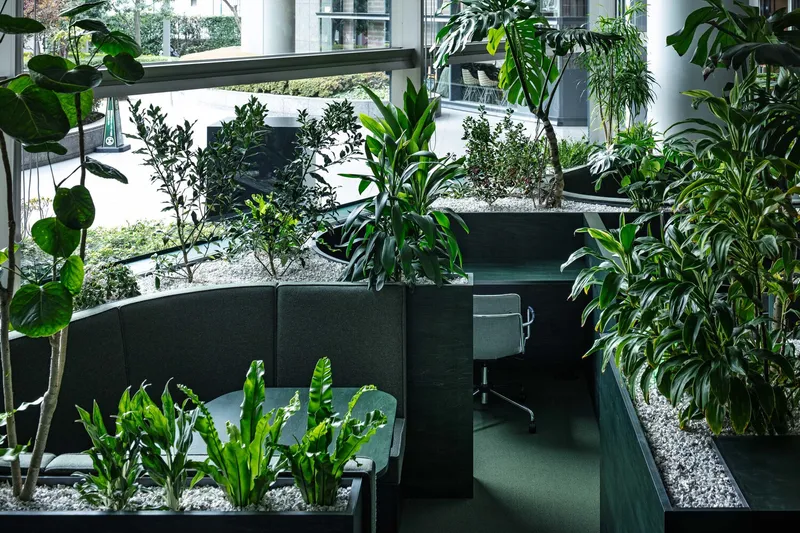
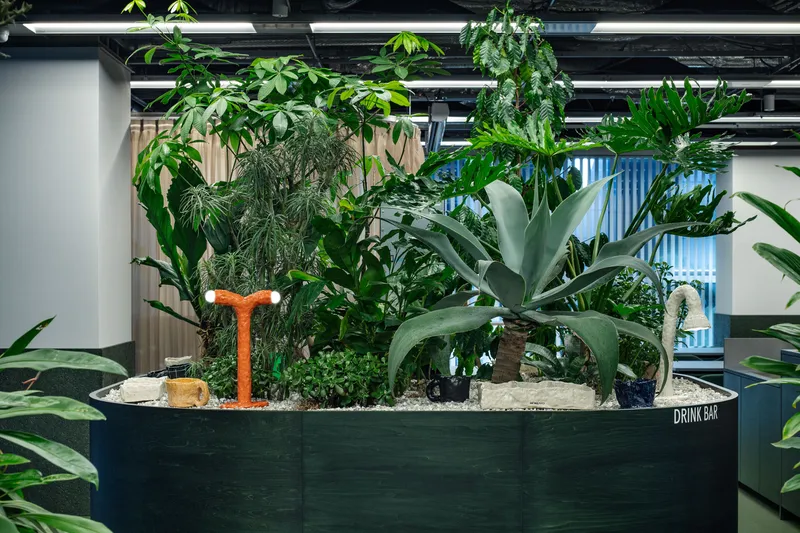
The architects developed a layered spatial hierarchy—the lower level encourages private focus, while the upper level remains open and social. Furniture heights gradually increase toward the back of the space, balancing visual privacy with communal visibility. Green-toned furniture and plant partitions tie the environment together, evoking nature’s calm while subtly dividing zones without isolating users.
2. Distributed Destinations
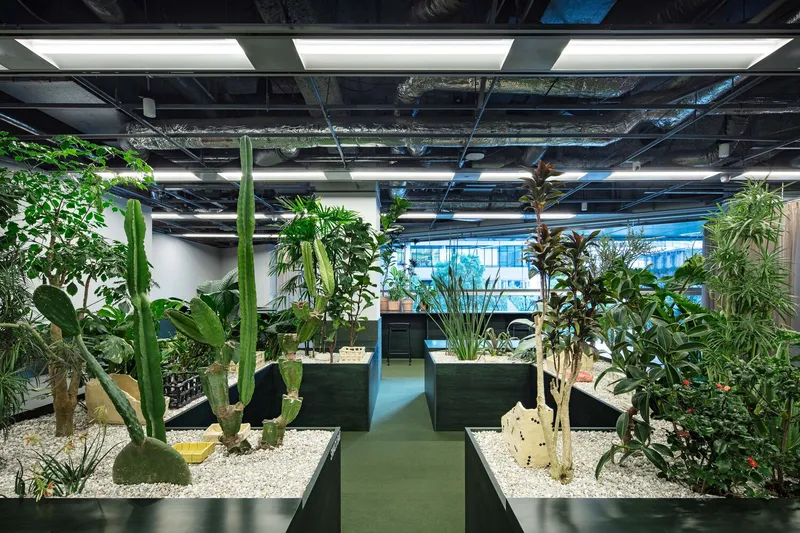
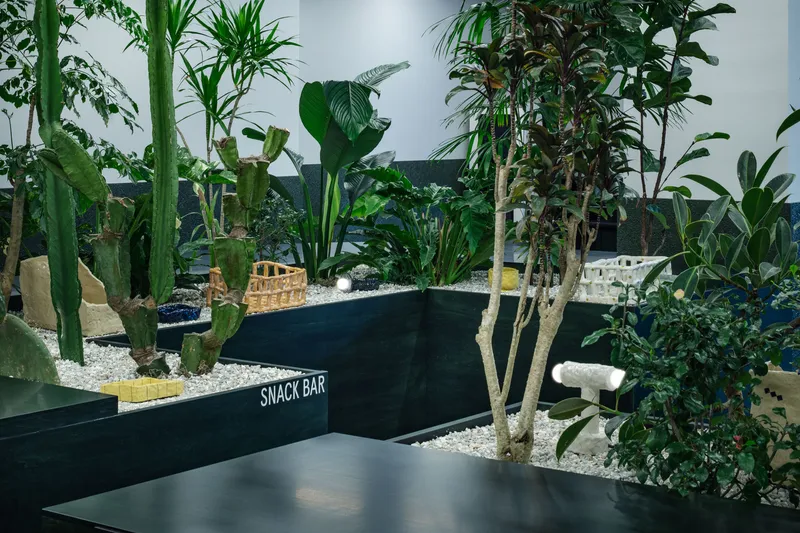
Instead of centralizing amenities, DDAA dispersed key functions—such as a small library, drink bar, and supply area—throughout the building. These scattered “destinations” promote movement and serendipitous encounters, fostering natural collaboration. Circulation paths mimic organic patterns, blurring the boundary between workspace and social space.


3. Flexible Tables for Fluid Collaboration
Drawing inspiration from restaurant booth seating, the tables vary in size and function, allowing flexible use. Individuals can work independently or collaborate in groups without spatial restriction. The large communal tables at the entrance serve as visible symbols of openness and creativity, where ongoing projects and materials remain on display—an architectural expression of active learning.

A Space for Continuous Discovery
At its essence, KOKUYO DIG is less a workplace and more an ecosystem of curiosity. The architecture does not dictate behavior but enables discovery, providing the fertile ground where ideas can take root and evolve. By merging concentration with sharing, it fosters cycles of learning that continuously renew both individual creativity and collective intelligence.


All photographs are works of Kenta Hasegawa




Popular Articles
Popular articles from the community

AL-JANNAH: Sustainable Architecture and Permaculture for Afghan Widows
AL-JANNAH uses sustainable architecture and permaculture to create resilient oasis of housing, learning, work and renewal for Afghan widows.

Co-life: Sustainable Architecture for Age-Friendly Community Living
Co-life reimagines sustainable architecture for seniors through courtyards, rammed earth, shared gardens, and spaces designed for belonging.

Riyadh For All: Intergenerational Urban Design for Active Aging in Rabat
Riyadh For All reimagines urban design in Rabat with intergenerational co-living, adaptive courtyards, and Moroccan cultural exchange today.
EW PARK: Sustainable Architecture Reimagines the Future of Urban Parking
EW PARK reimagines city parking as a modular wooden tower combining automation, solar energy, electric mobility, and adaptable urban design.


Similar Reads
You might also enjoy these articles


Hodi-Mandai Geram
Project Function: Preservation and revitalization of the Intangible heritage and socio-spatial identity of the Hodi by Housing, Cultural Memory Center, Sacred Grove, landscape, local tourism economy


Olio Towers: A Mid-Rise for Performers That Fuses Housing, Rehearsal, and Stage
Located blocks from Houston's Theater District, this modular tower stacks living units around a central performance atrium.

Oasis: Modular Green Housing Carved into Dhaka's Urban Fabric
A shortlisted Plugin Housing entry reclaims unauthorized settlements in Dhaka with stepped concrete volumes, green roofs, and ventilation-driven design.

Black Hole: A Floating Megastructure for the Post-Physical Era
Emiliano Mazzarotto envisions a spherical, self-scaling arena where e-sports, digital hotels, and holographic stadiums replace traditional public space.
Explore Learning Spaces Competitions
Discover active competitions in this discipline



Challenge to design public laboratory


Challenge to reimagine the Iron Throne


Photograph architecture without architects


Illustrate the lost glory of Angkor Wat - Render Challenge
Comments (0)
Please login or sign up to add comments
No comments yet. Be the first to comment!