
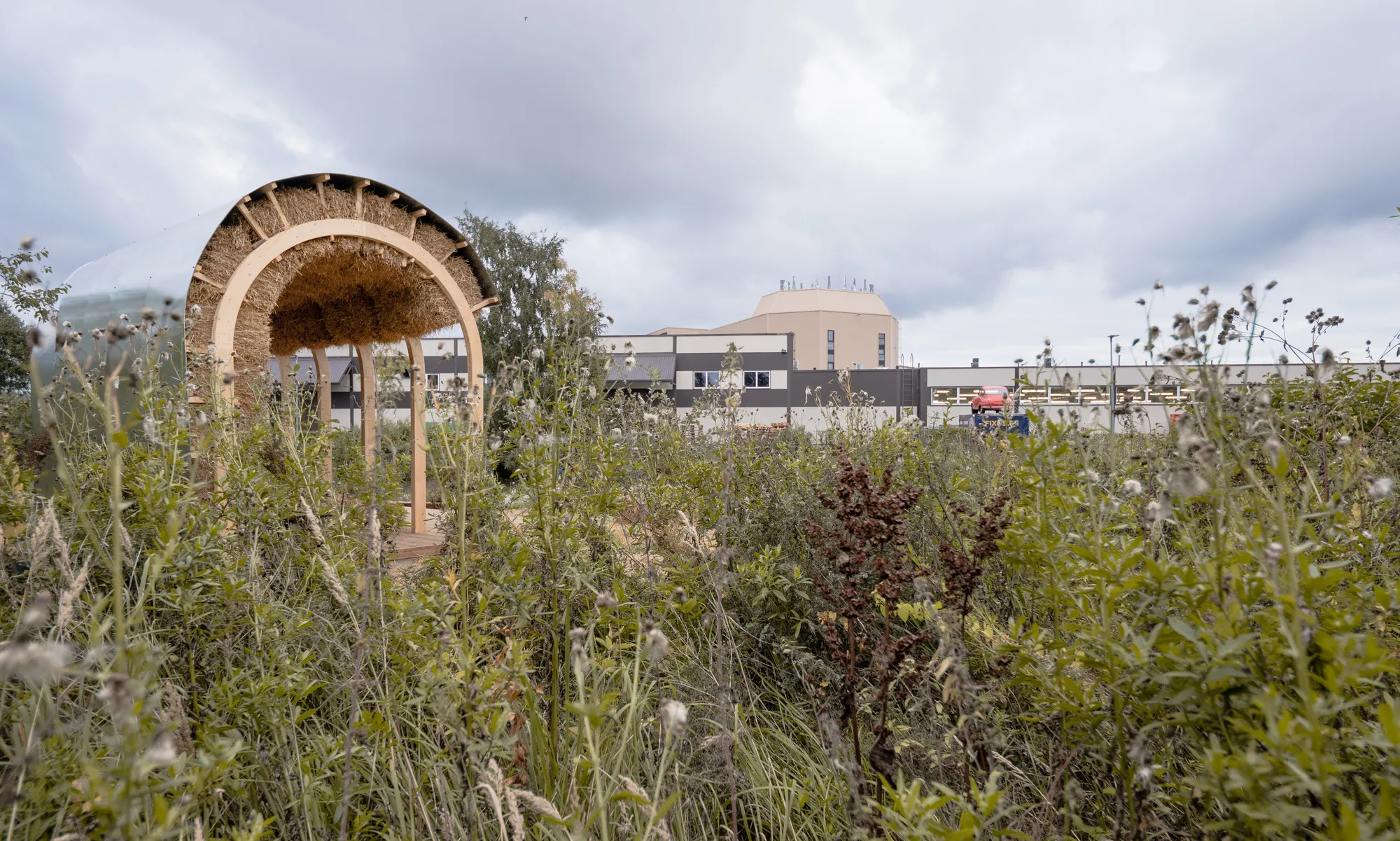
Kollektiiv Builds a Straw Chapel on Tallinn's Pollinator Highway
A 40-square-meter pavilion of straw bales, recycled timber, and community labor rises from a wildflower corridor in Mustjõe, Estonia.


Straw is one of the most ancient building materials on earth, and also one of the most disrespected. It gets carted off as agricultural waste, burned, or compressed into animal bedding. The fact that it insulates, absorbs sound, sequesters carbon, and can bear structural loads barely registers in contemporary practice. Kollektiiv, a Tallinn-based studio, decided to make a public argument for straw by building a chapel-like pavilion out of it on the Pollinator Highway, a linear green corridor threading through the Mustjõe neighborhood that serves both insects and humans.
Winner of the public competition 'Place Buzz,' the Straw Chapel is a 40-square-meter gathering space held up by CLT arches and filled with straw bale walls that curve into vaulted forms. It was partially constructed during a community workshop, with recycled materials requiring design decisions to be made on the fly. The result is rough, honest, and unexpectedly monumental: a small building that reads like a ruin before it has even aged.
A Vault in the Meadow
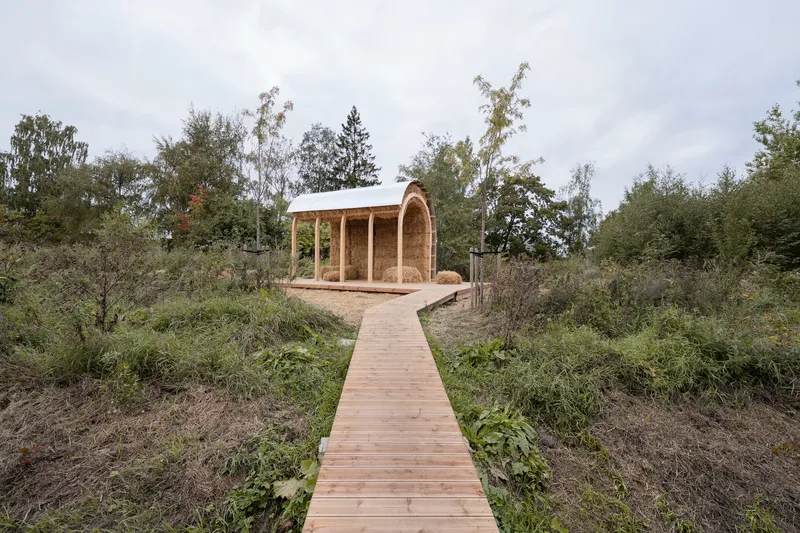
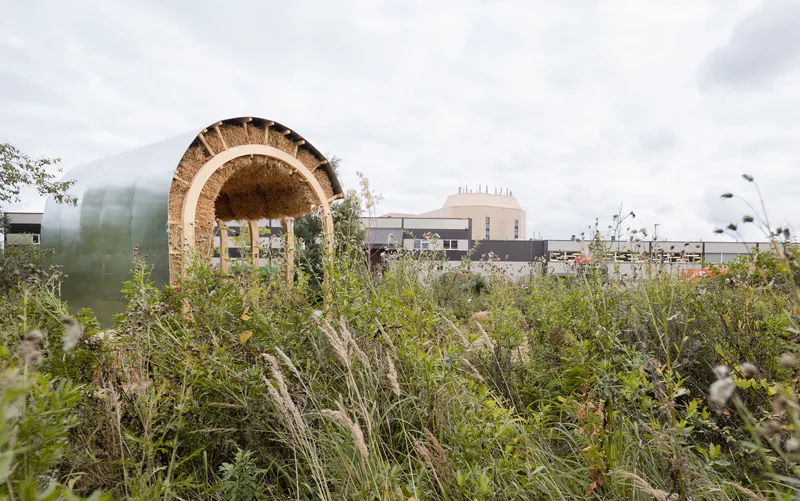
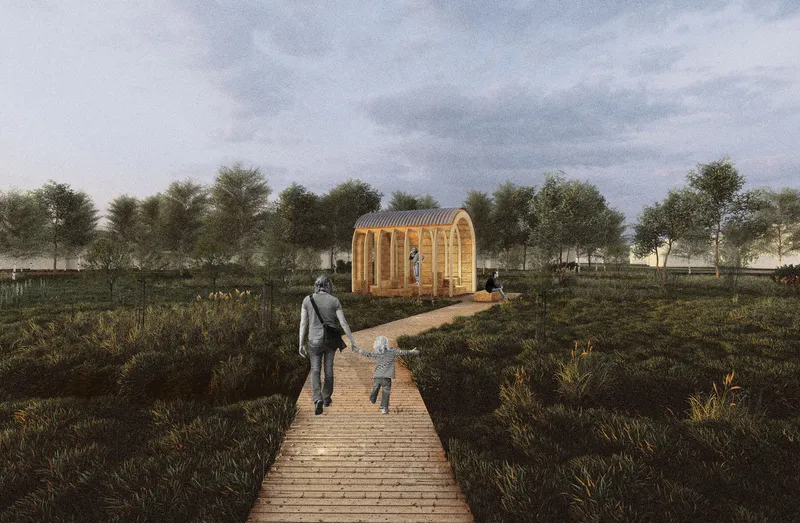
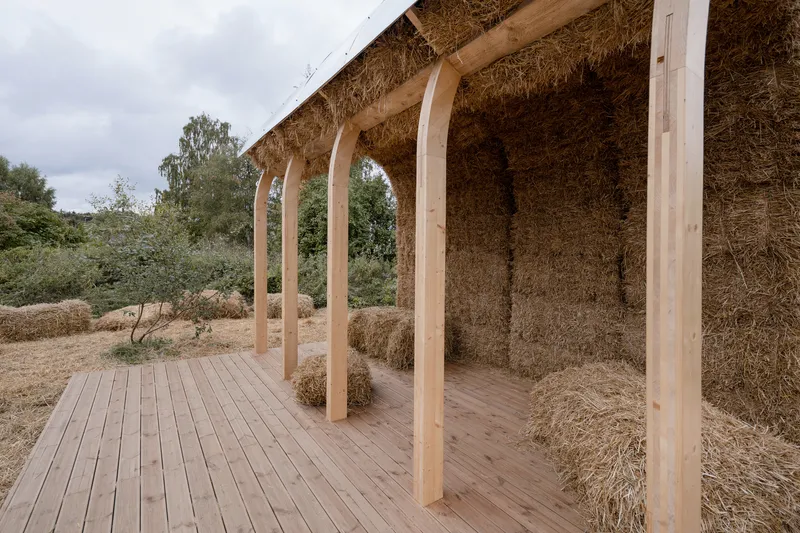
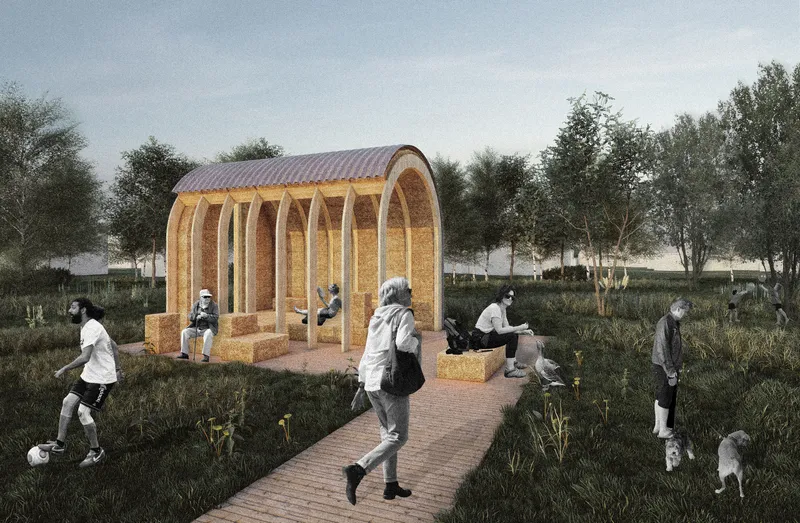
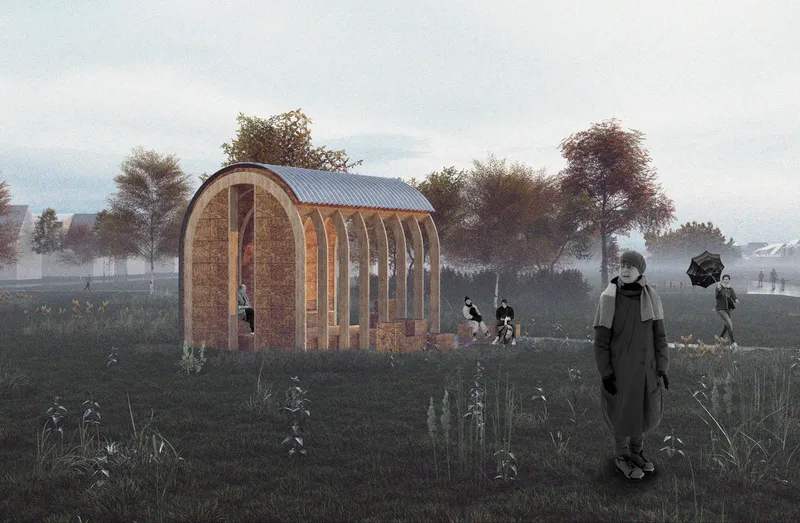
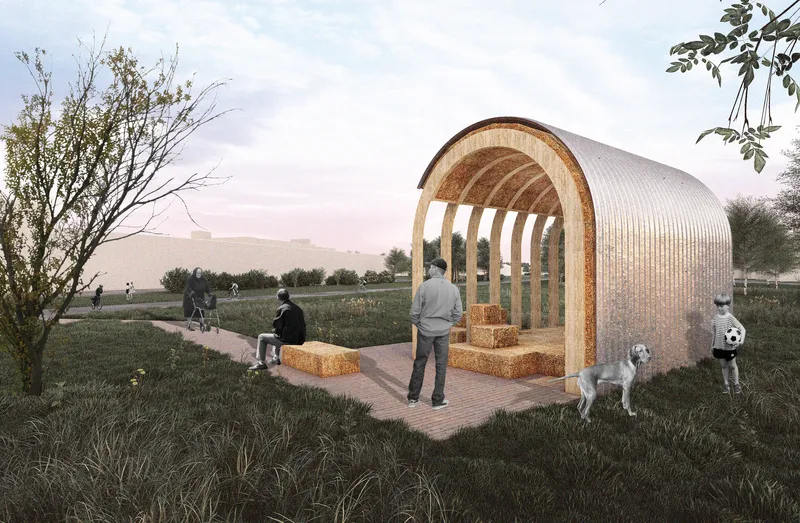
Approached along a timber boardwalk that parts the wildflower meadow, the chapel presents itself as a series of arched bays. The straw walls are thick enough to create real shadow and the kind of ambient warmth you associate with much heavier masonry structures. From a distance, through the tall grasses, the building looks as if it has always been there, half-emerging from the landscape rather than dropped onto it.
The siting matters. The Pollinator Highway is not a manicured park but a deliberate rewilding strip designed to support biodiversity. Placing a public pavilion here turns ecological infrastructure into social infrastructure. The chapel gives residents of Mustjõe a reason to linger in a place that was previously only passed through.
Three Bays and a Timber Skeleton
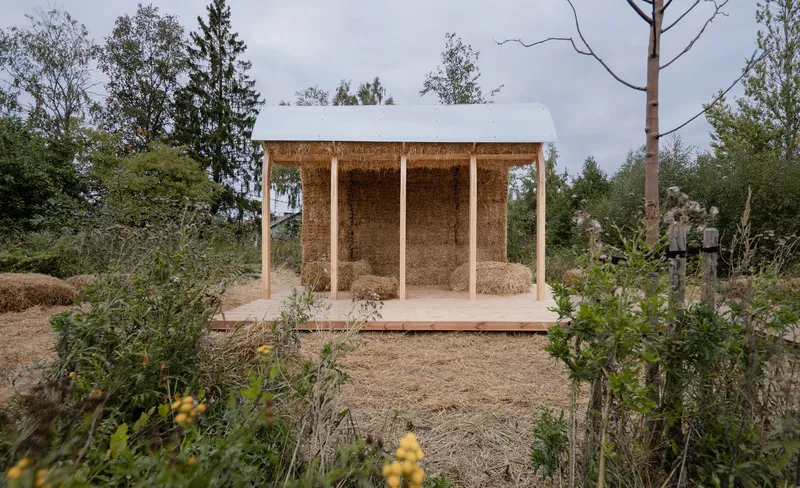
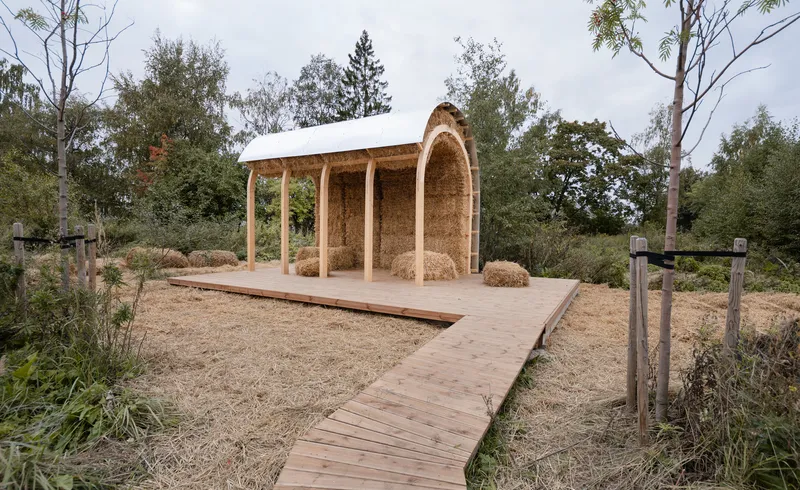
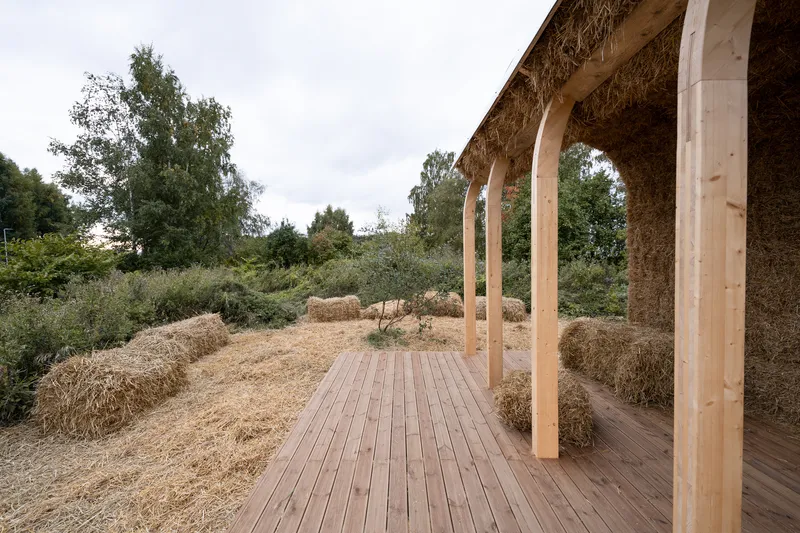
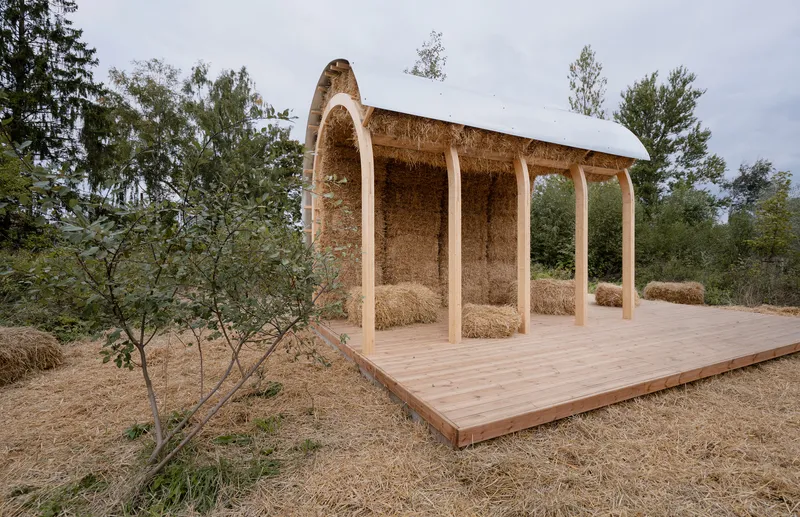
The front elevation reveals the structural logic clearly: three arched bays of straw bale, each framed by laminated timber posts and beams, sheltered under a flat sheet-metal roof. The repetition gives the tiny building a rhythmic presence that belies its footprint. Each bay opens outward like an invitation, framing different slices of the surrounding landscape.
Kollektiiv kept the palette tight. CLT ribs, raw straw, timber decking, corrugated metal overhead. No finishes, no cladding, no paint. The legibility of the construction is itself a pedagogical act, showing visitors exactly how straw can be shaped and supported. The pavilion doubles as a full-scale building sample.
Inside the Vault
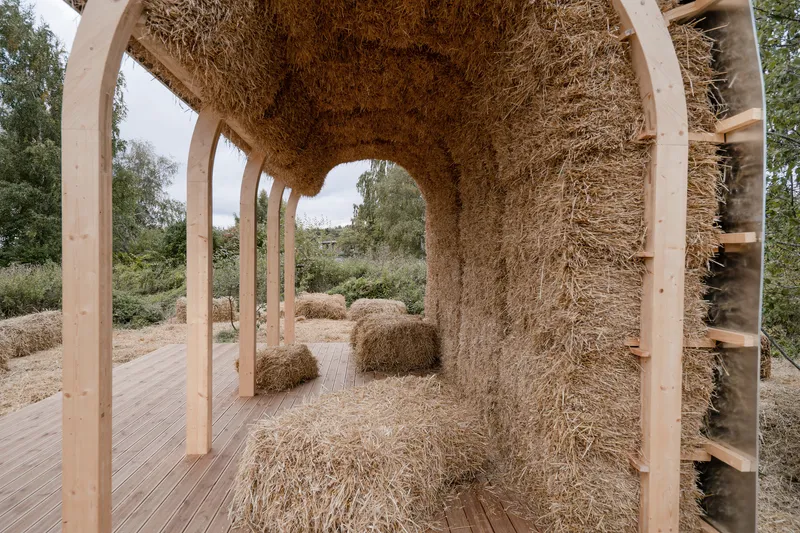
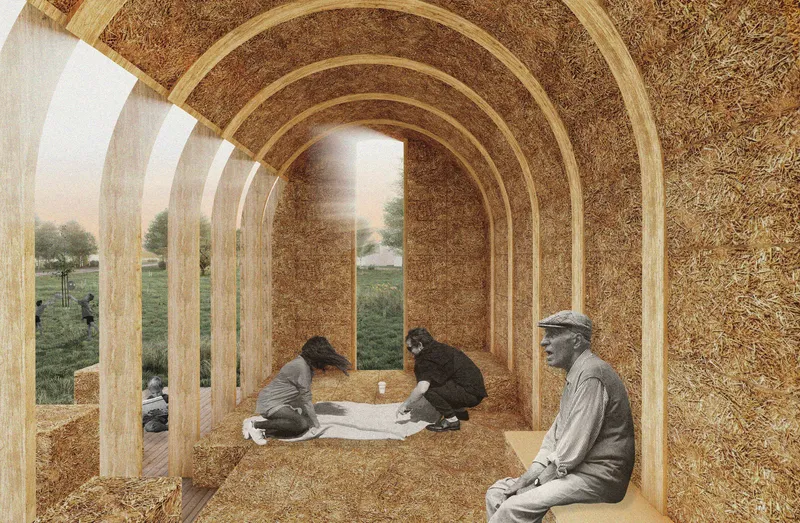
Step inside and the acoustic quality shifts immediately. Straw's cellular structure absorbs sound, and the vaulted geometry concentrates it, creating a quiet interior that feels genuinely chapel-like. The golden tone of the bales catches whatever light comes through the openings, and the texture is uneven, tactile, alive. It is the opposite of the smooth white surfaces that dominate contemporary public architecture.
Timber columns march through the interior without obstructing it, and scattered bales serve as informal seating. The space can host workshops, small events, or nothing at all. Its looseness is the point. It does not prescribe a program; it provides a roof and walls and lets the community decide what happens inside.
Material Details and Weathering
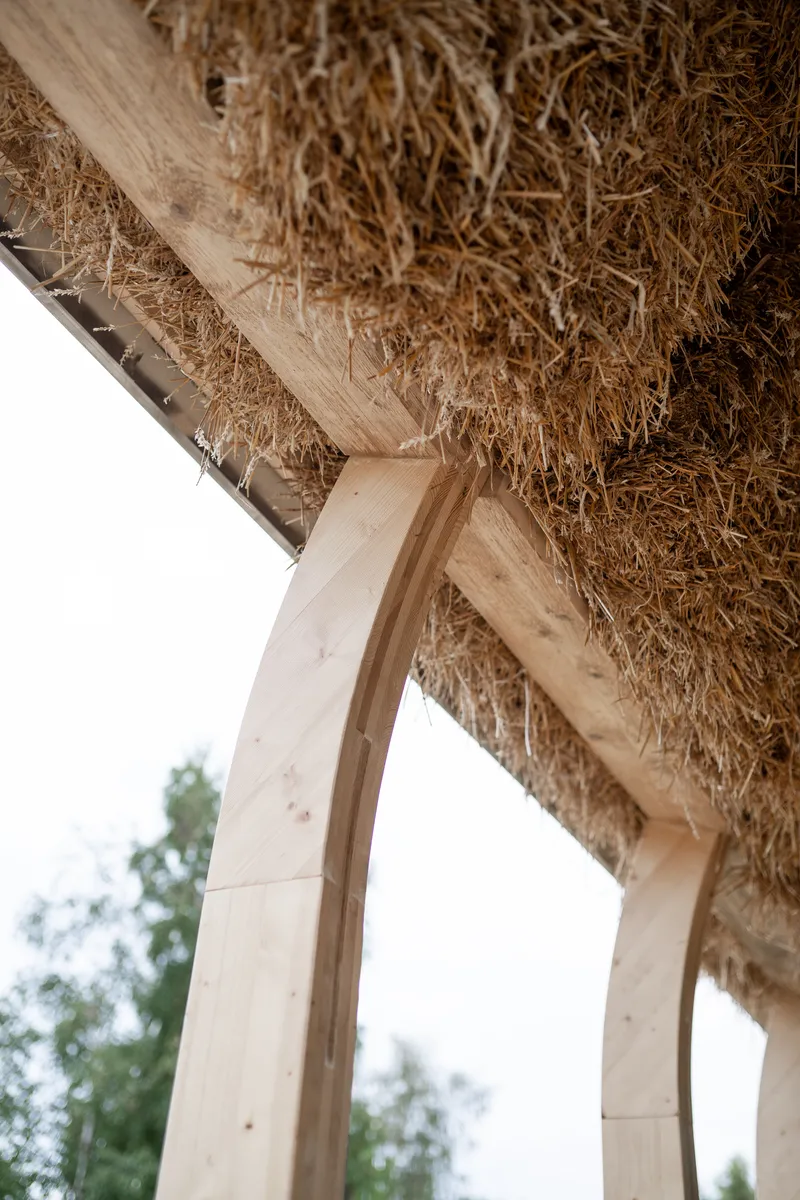
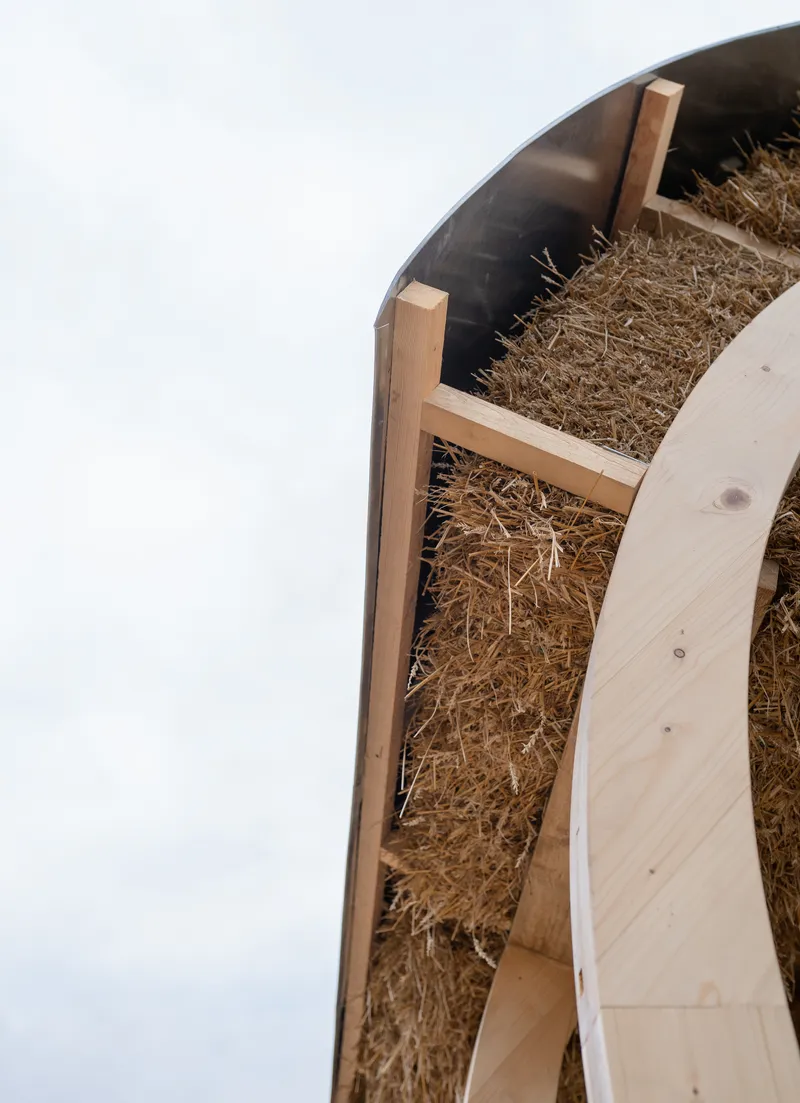
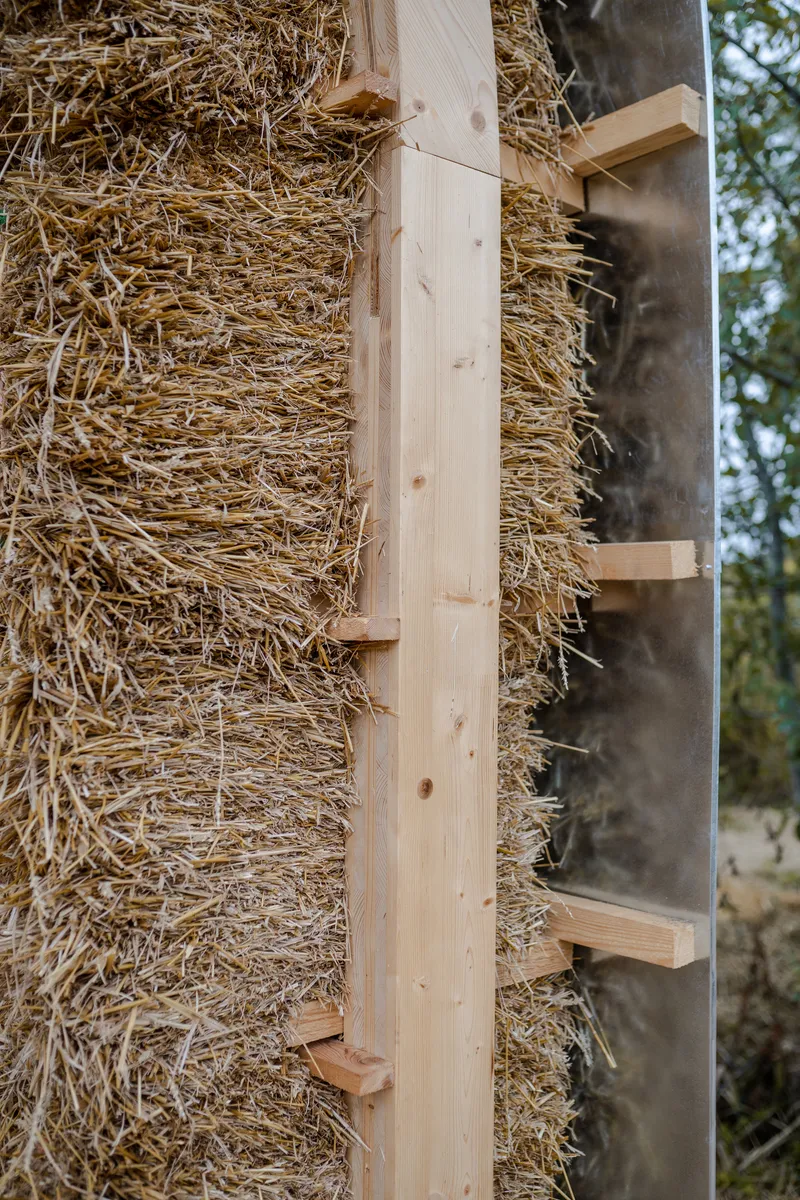
The close-up details reveal a building that accepts imperfection as a design parameter. Curved timber ribs press against straw bale insulation; wooden pegs hold framing members together; column bases meet the decking with clean but unfussy joinery. These are not high-tech connections. They are legible, repairable, and ultimately decomposable.
Kollektiiv intended the pavilion as a live experiment in how straw behaves in non-traditional shapes when exposed to weather. The rainproof roof protects from direct downpour, but the walls breathe and age. Over time, the structure will demonstrate straw's durability, or its limits, in real climatic conditions. Either outcome is valuable data for a construction industry that barely considers the material.
Community Build and Circular Logic
A large share of the materials were recycled, which meant that the design had to flex. Kollektiiv ran an experimental workshop where locals helped assemble the structure, turning construction into a communal activity rather than a service delivered by specialists. When recycled timber arrived in non-standard dimensions, decisions were made on-site. The building records those improvisations in its slightly irregular geometry.
The life cycle is explicitly part of the concept. Straw comes from local grain harvest, performs as insulation and structure for the pavilion's lifespan, and eventually decomposes back into the soil. The metal roof and CLT elements can be disassembled and reused. Nothing here demands a landfill. For a 40-square-meter pavilion, that circularity might seem like a small gesture, but it is a proof of concept for a much larger conversation about how buildings should end.
Plans and Drawings
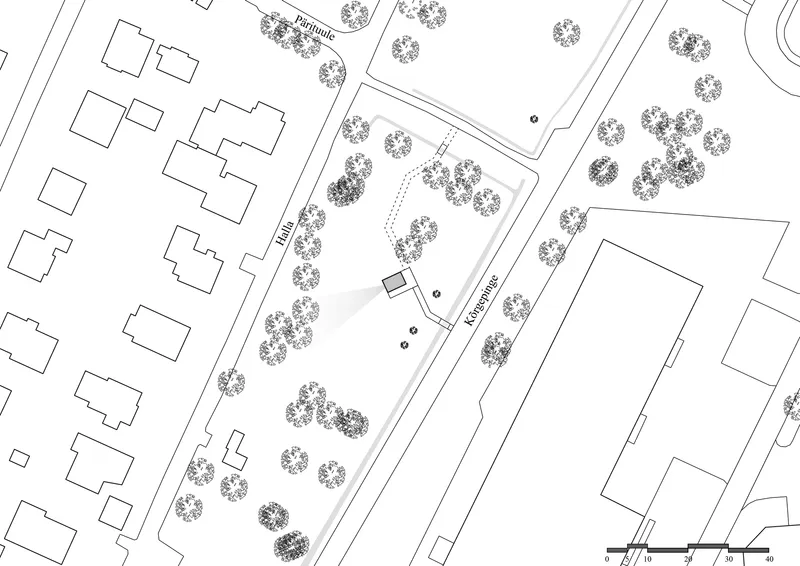
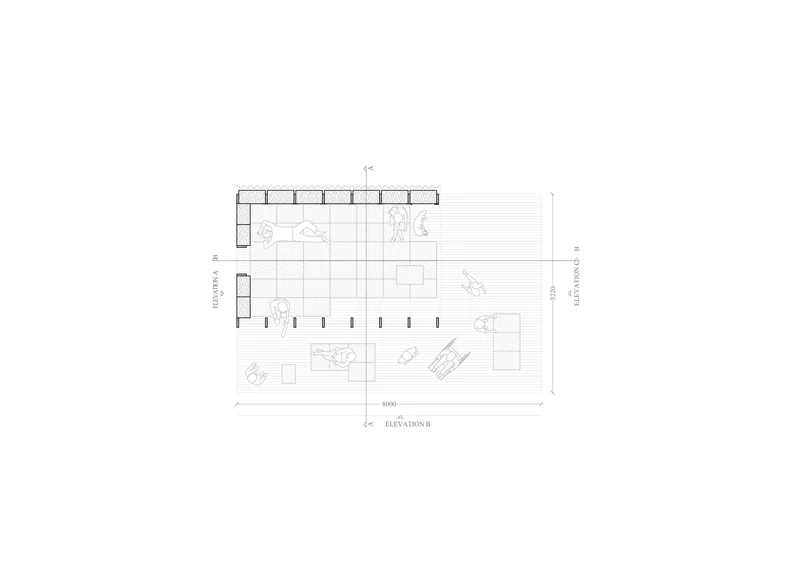
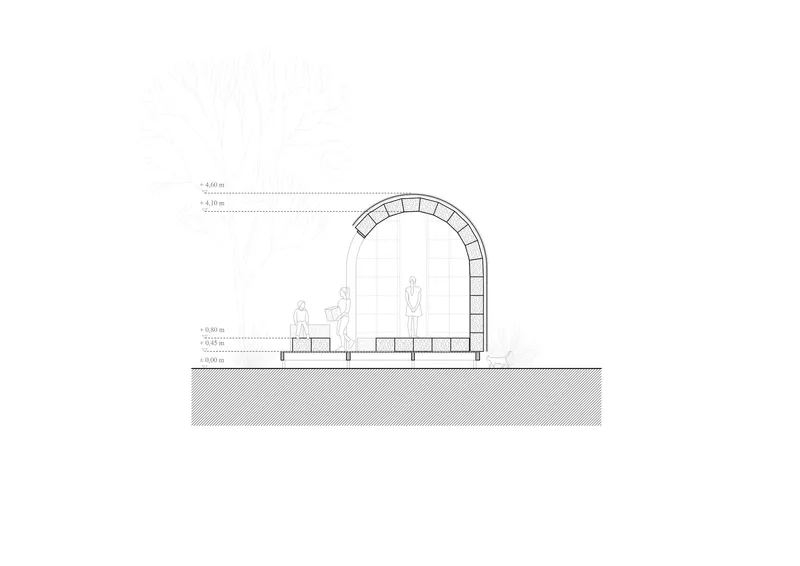
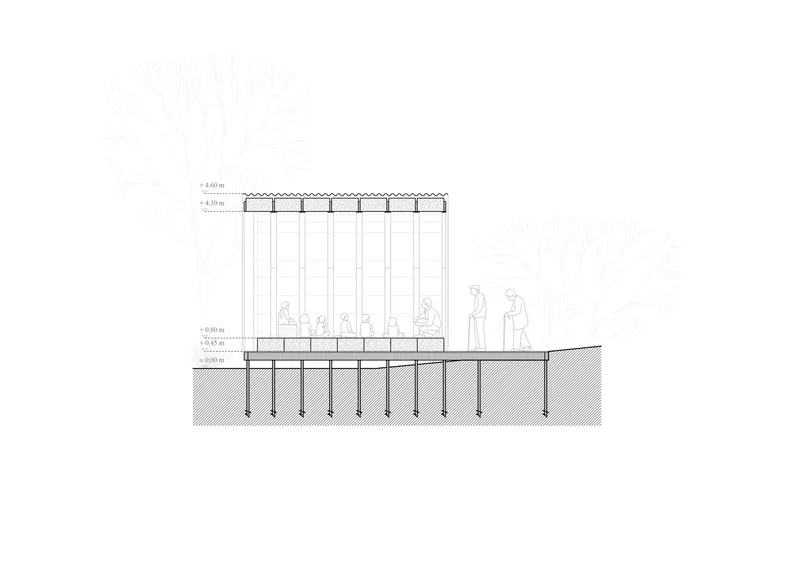
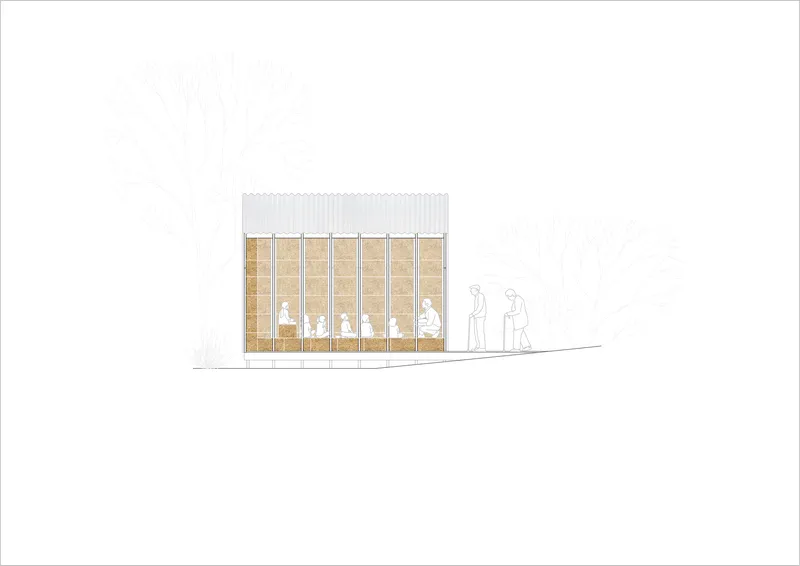
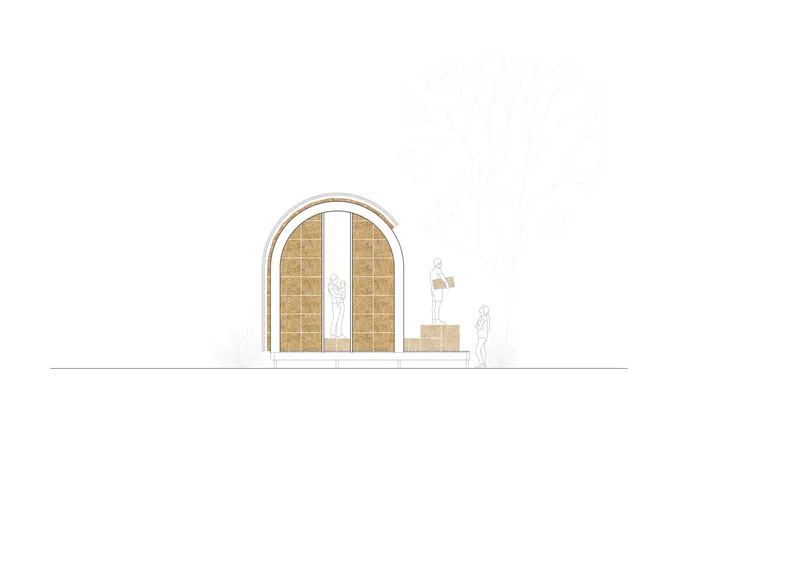
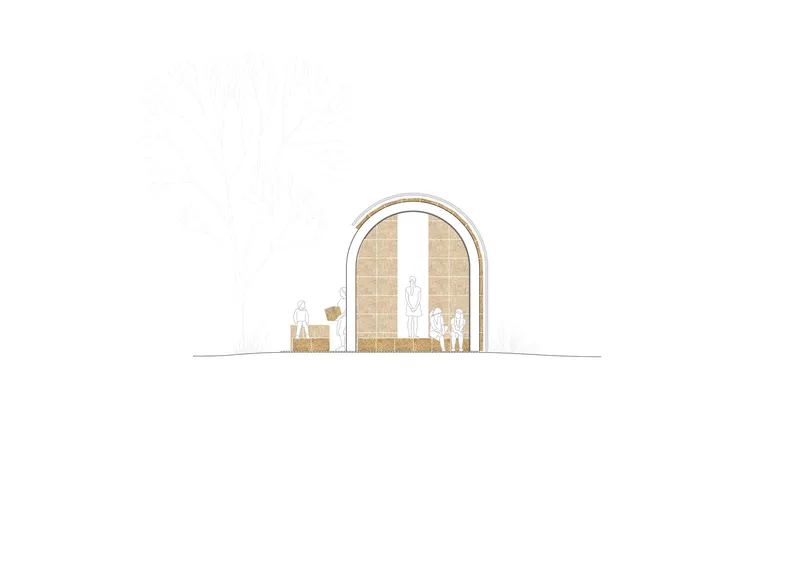
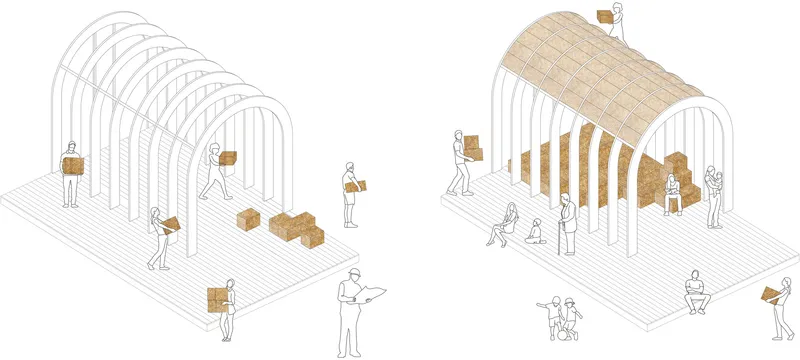
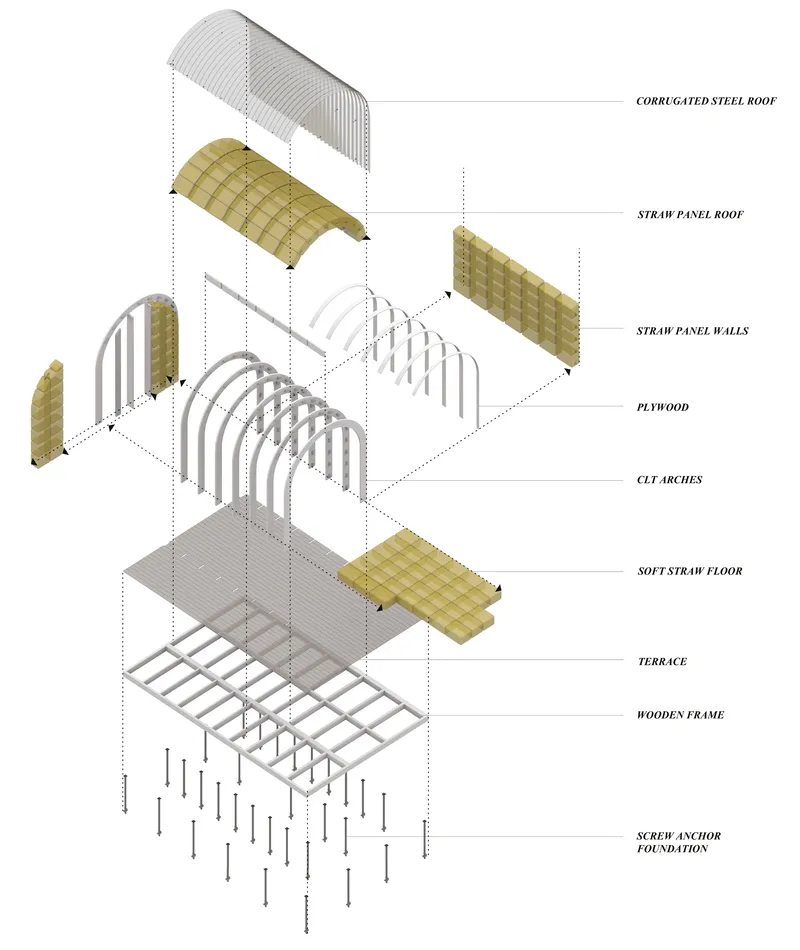
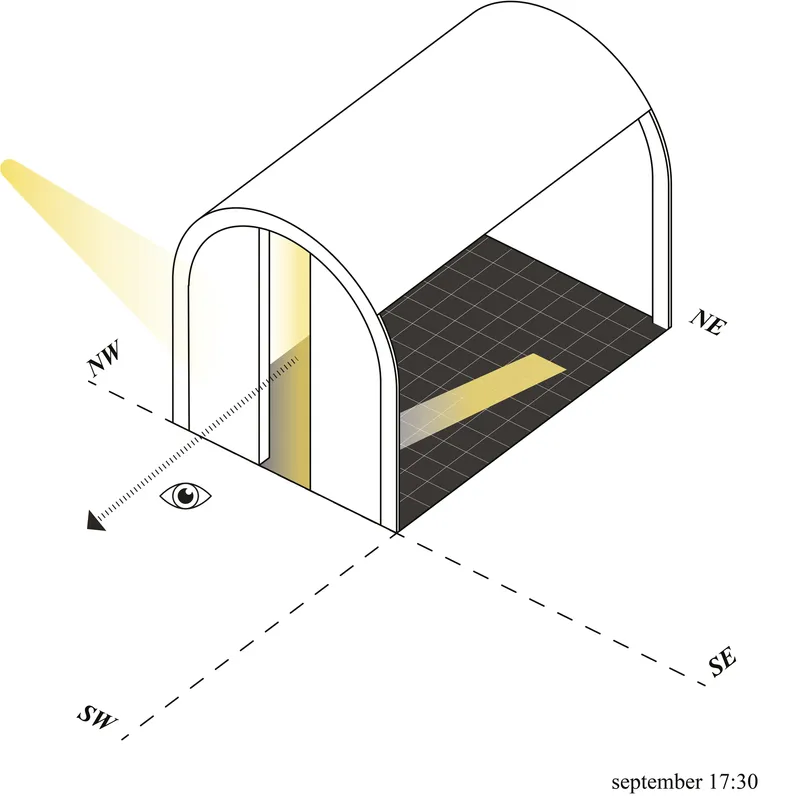
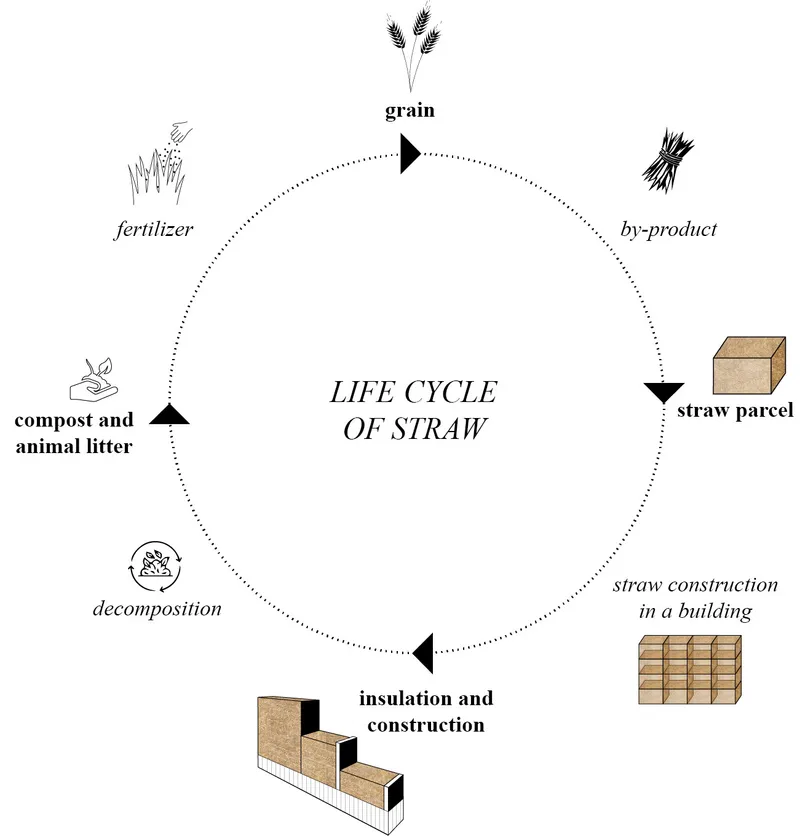
The drawing set tells a remarkably complete story for such a small project. The exploded axonometric peels the building apart from screw anchors to corrugated roof, labeling every component. Sun path diagrams show how the northwest opening admits afternoon light in September. A life-cycle diagram traces straw from grain harvest through construction to decomposition. These are not decorative graphics; they are arguments for a material system.
The sections confirm how much spatial ambition Kollektiiv packed into 40 square meters. The arched profile is tall enough to feel generous, while the raised timber platform lifts the entire pavilion off the ground on piles, protecting both the straw from moisture and the meadow beneath from compaction. The elevations show two distinct personalities: the arched straw facade on one side, a more rectilinear corrugated profile on the other.
Why This Project Matters
The Straw Chapel is valuable not because it solves a housing crisis or redefines pavilion typology, but because it takes a material that most architects ignore and subjects it to genuine architectural thinking. The vaulted forms, the layered transparency, the careful siting on an ecological corridor: these are real design moves, not just sustainability theater. The building asks visitors to touch, smell, and sit inside a material argument.
It also demonstrates that community-built does not have to mean community-designed-by-committee. Kollektiiv maintained a clear spatial vision while leaving room for on-site improvisation and participatory labor. The result has authorship and looseness at the same time, which is a harder balance to strike than it looks. If architecture is going to take bio-based materials seriously, it will need more projects like this: small enough to be experimental, public enough to be seen, and rigorous enough to be convincing.
Straw Chapel by Kollektiiv, Tallinn, Estonia. 40 m², completed 2022. Photography by Laura Rohtlaan, Paco Ulman, and Lars Erik Elseth.
About the Studio
Share Your Own Work on uni.xyz
If projects like this are the kind of work you want to make, uni.xyz is a place to publish your own, find collaborators, and enter design competitions.




Popular Articles
Popular articles from the community


The Earth Pod: 3D Printed Homes for Resilient Refugee Communities
The Earth Pod reimagines refugee housing through 3D printed homes made from clay, combining resilience, self-sufficiency, and rapid shelter.

Conexión: Biophilic Design Reimagines High-Rise Living in Hong Kong
Conexión reimagines high-rise living in Hong Kong through biophilic design, green facades, shared spaces, daylight, water and nature within.

Co-life: Sustainable Architecture for Age-Friendly Community Living
Co-life reimagines sustainable architecture for seniors through courtyards, rammed earth, shared gardens, and spaces designed for belonging.

Play: Fragments of Their World
Familiar architecture becomes modular playground design, creating safe spaces where displaced children can learn, connect, imagine and play.


Similar Reads
You might also enjoy these articles

Bao Huynh Watercolor Atelier: A Serene Art Retreat in Hội An
Bao Huynh Watercolor Atelier in Hội An blends multifunctional art spaces, sustainable design, local materials, and family-friendly living in a serene environment.

Atelier Macri Concept Store Interior Design by CASE-REAL
Atelier Macri store features a "ko" counter, walnut wood details, cork displays, blending retail, gallery, and seamless customer experiences.

Manuel Vargas Izquierdo Stadium and High-Performance Sports Center: Architectural Excellence in Jalpa de Méndez
The Manuel Vargas Izquierdo Stadium blends sustainable design, inclusive sports facilities, and cultural-inspired architecture, revitalizing Jalpa de Méndez’s public spaces.

KAKR Buluh Awar Hall: Revitalizing Community and Ecology Through Bamboo Architecture
Community built bamboo hall revitalizes Buluh Awar village, empowering youth, restoring ecology, celebrating vernacular craftsmanship through sustainable architecture and culture.





Comments (0)
Please login or sign up to add comments
No comments yet. Be the first to comment!