

Kosomi Studio by STAY Architects: A Harmonious Blend of Memory, Art, and Modern Functionality
Kosomi Studio in Seoul transforms a family home into an art-filled, multifunctional space, blending traditional Korean materials with contemporary adaptive design.


Located in the vibrant city of Seoul, South Korea, Kosomi Studio by STAY Architects is a masterful example of how adaptive reuse and thoughtful design can transform a personal residence into a multifunctional artistic space. Completed in 2023, this 66 m² project serves as both a home for the artist and a creative studio, while maintaining a deep connection to the building’s past.
The project, led by architects Junghee Hong and Justin Ko, with landscape design by Botanical Studio SAM, carefully balances memory and modernity. Each interior and exterior space has been meticulously redesigned to create new functionality without erasing the sentimental value of the original house. The design philosophy emphasizes a symbolic new beginning, preserving the emotional and physical context of the neighborhood while introducing contemporary elements.
Preserving Context and Street Character
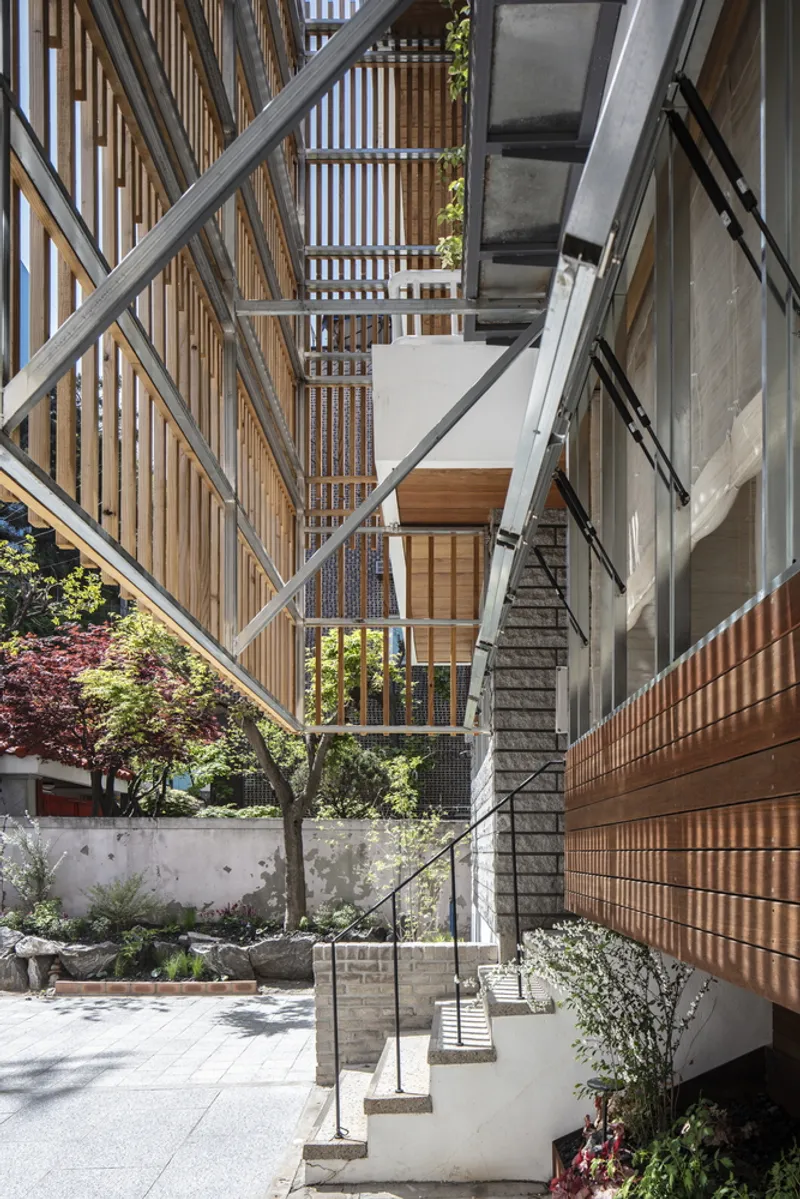
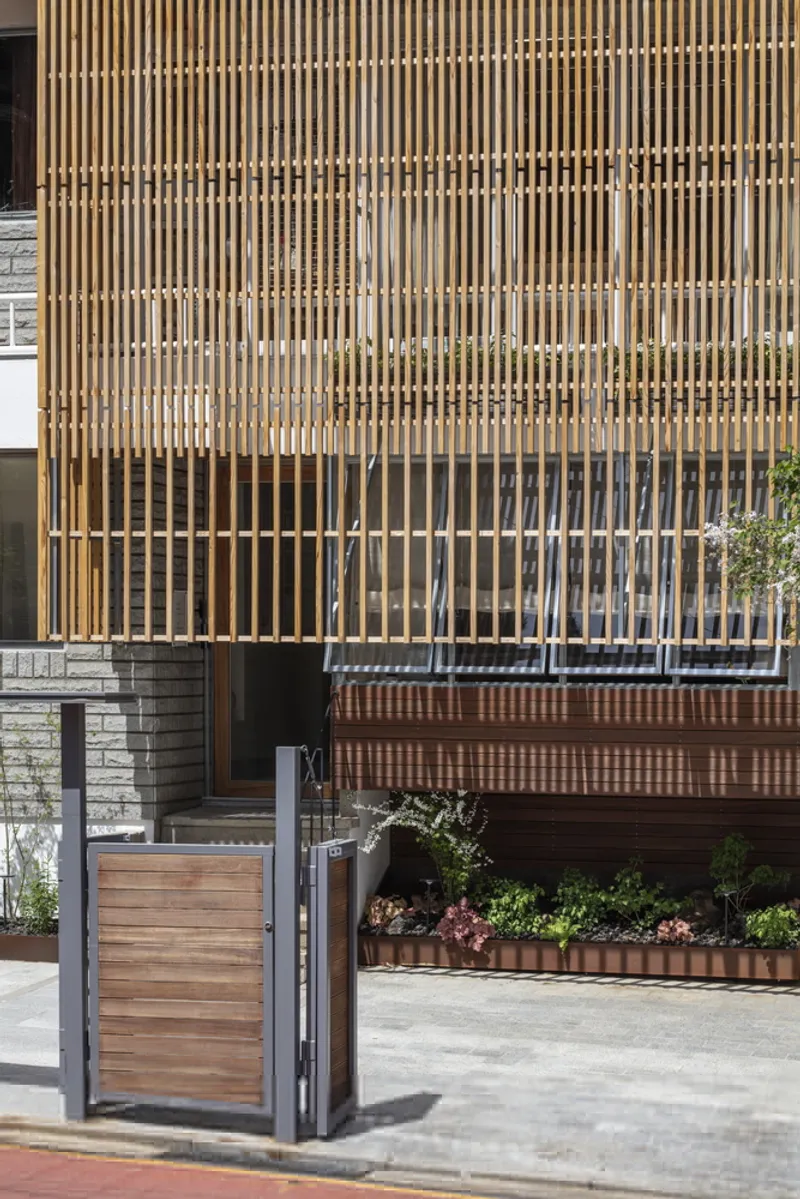
From the street, Kosomi Studio maintains a warm, inviting presence that resonates with the surrounding single-family homes. Rather than imposing modern materials that could disrupt the scale and character of the street, the architects opted for wooden façade structures. This approach preserves the intimate scale of the area while reinforcing the building’s identity. The double wooden skin serves both functional and aesthetic purposes, controlling south-facing sunlight in the first-floor tea room and ensuring privacy for the second-floor studio.
A Thoughtfully Curated First-Floor Showroom
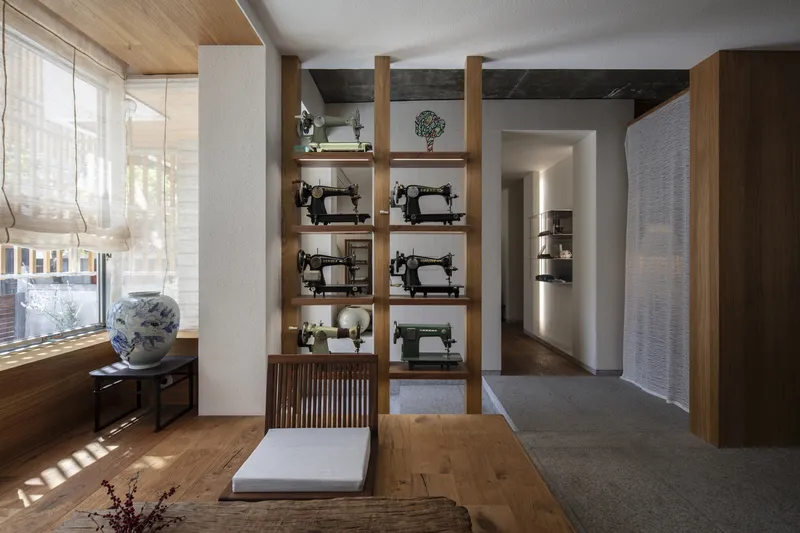
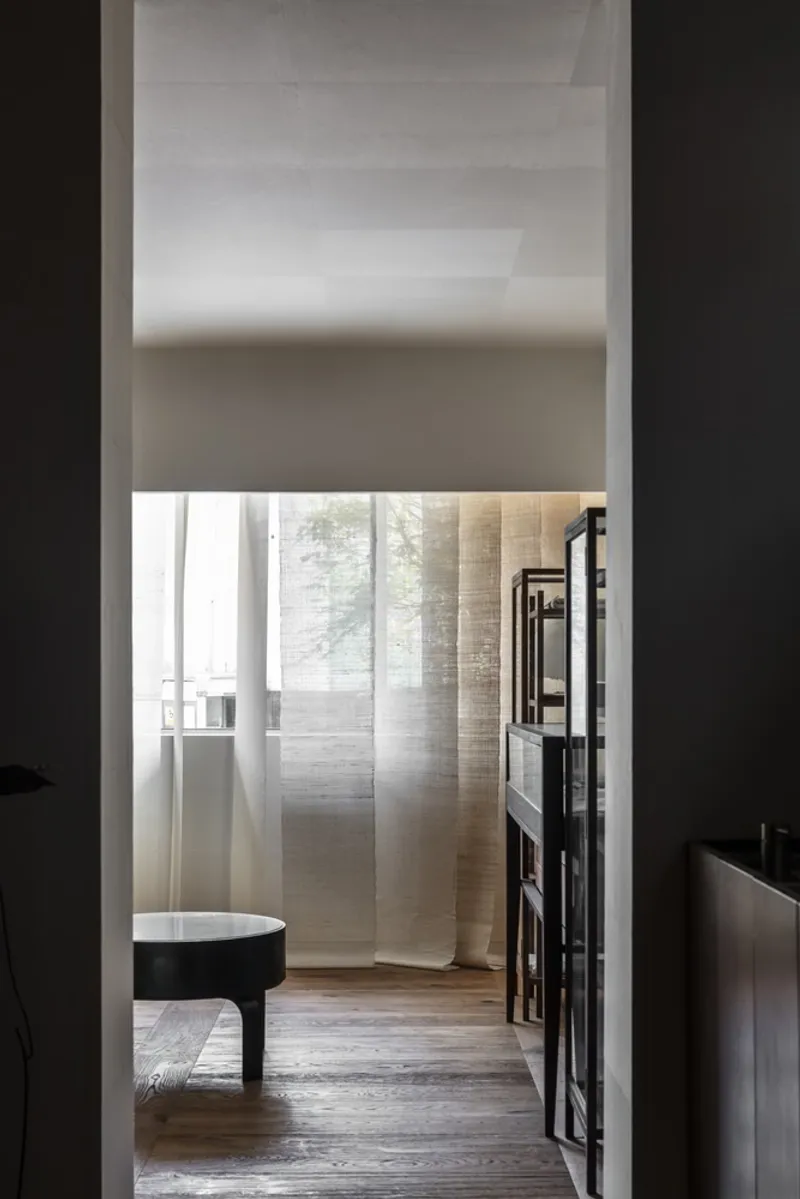
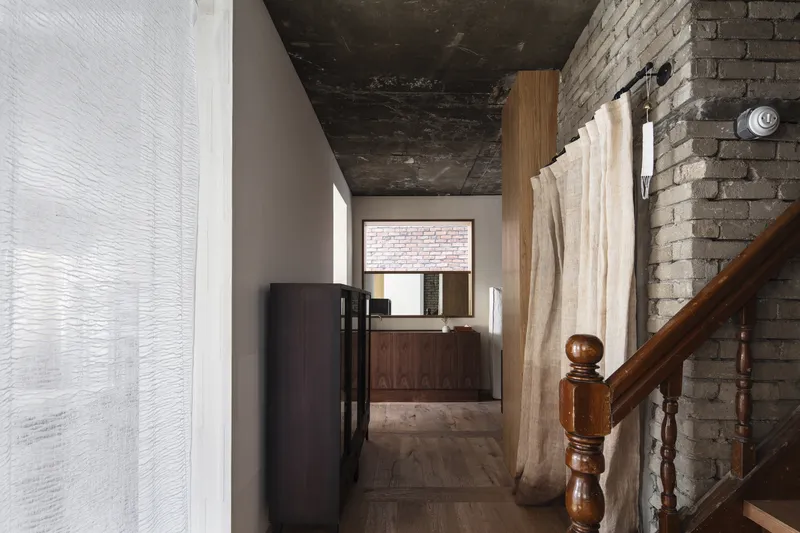
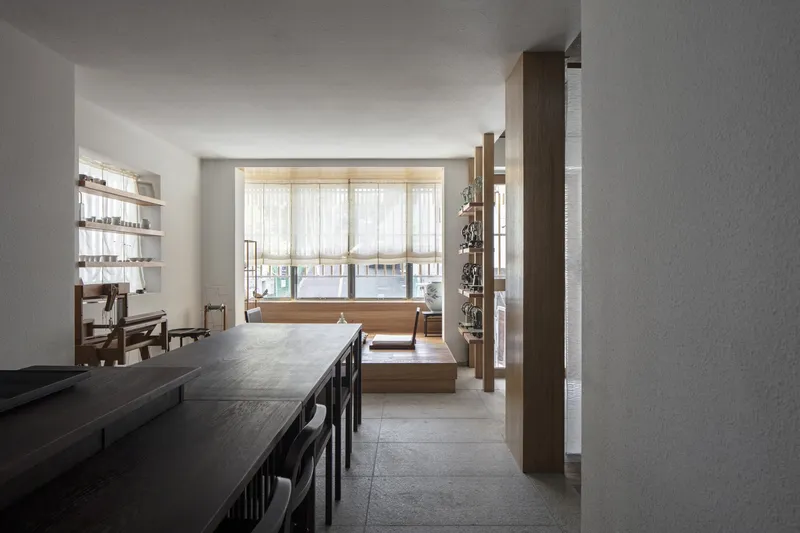
The first-floor showroom is a seamless blend of open space and functional zoning, divided into a tea room, living room, and two exhibition areas. Walls are kept to a minimum, allowing for fluid movement and a sense of openness. Material selection was critical: the main space features granite floors in a traditional Korean style, complemented by fumigated wood finishes and spray-painted textures. Artistically woven fabrics adorn the interiors, enhancing the oriental aesthetic while integrating the artist’s work into the environment. Some exposed walls and ceilings reveal traces of the building’s original structure, connecting visitors to its history.
Raw and Functional Second-Floor Studio
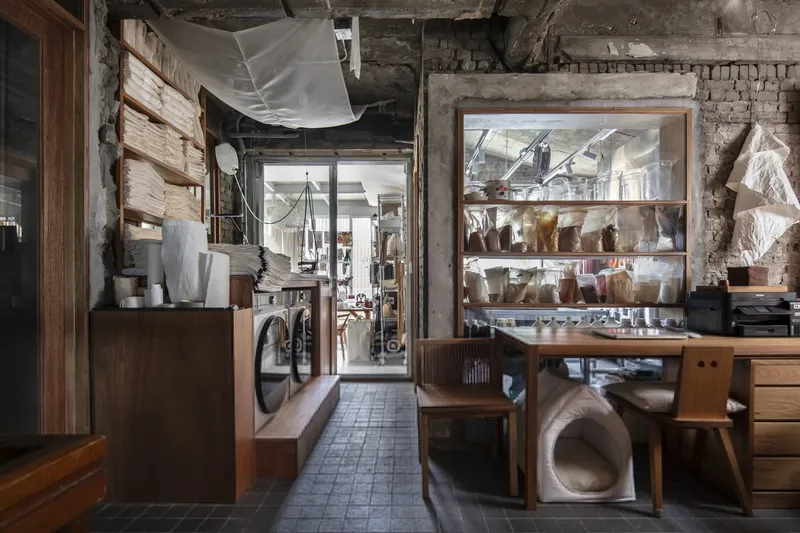
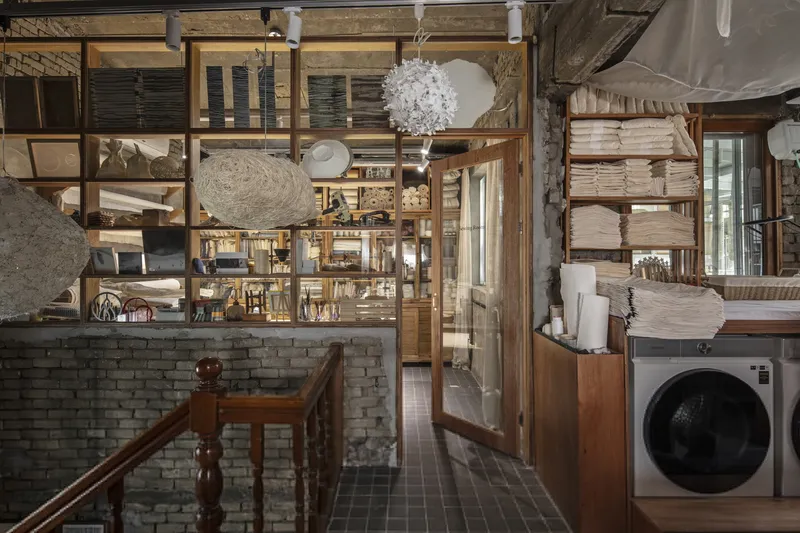
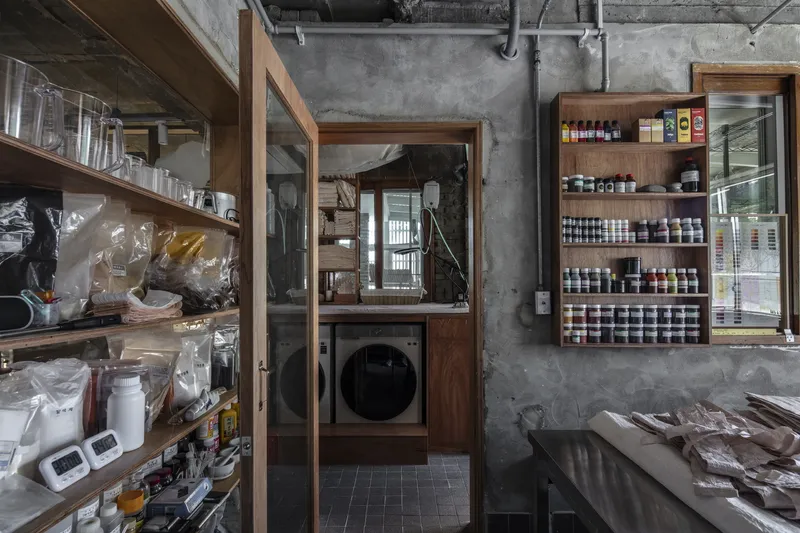
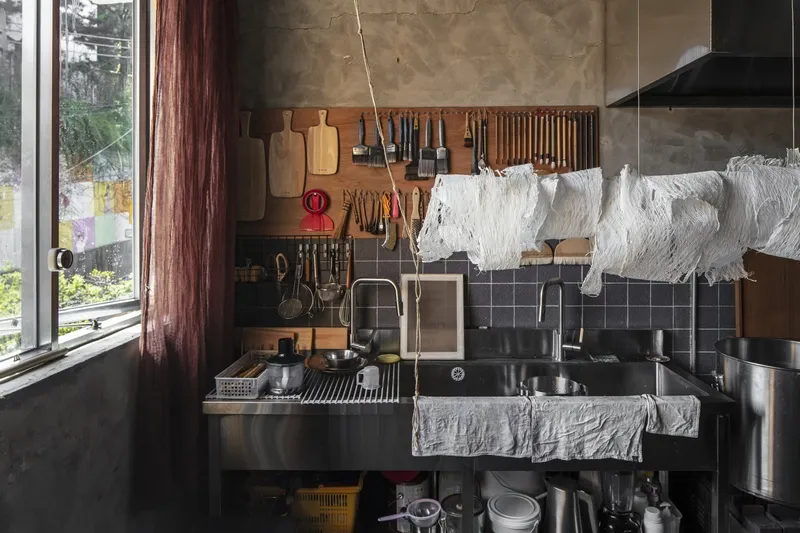
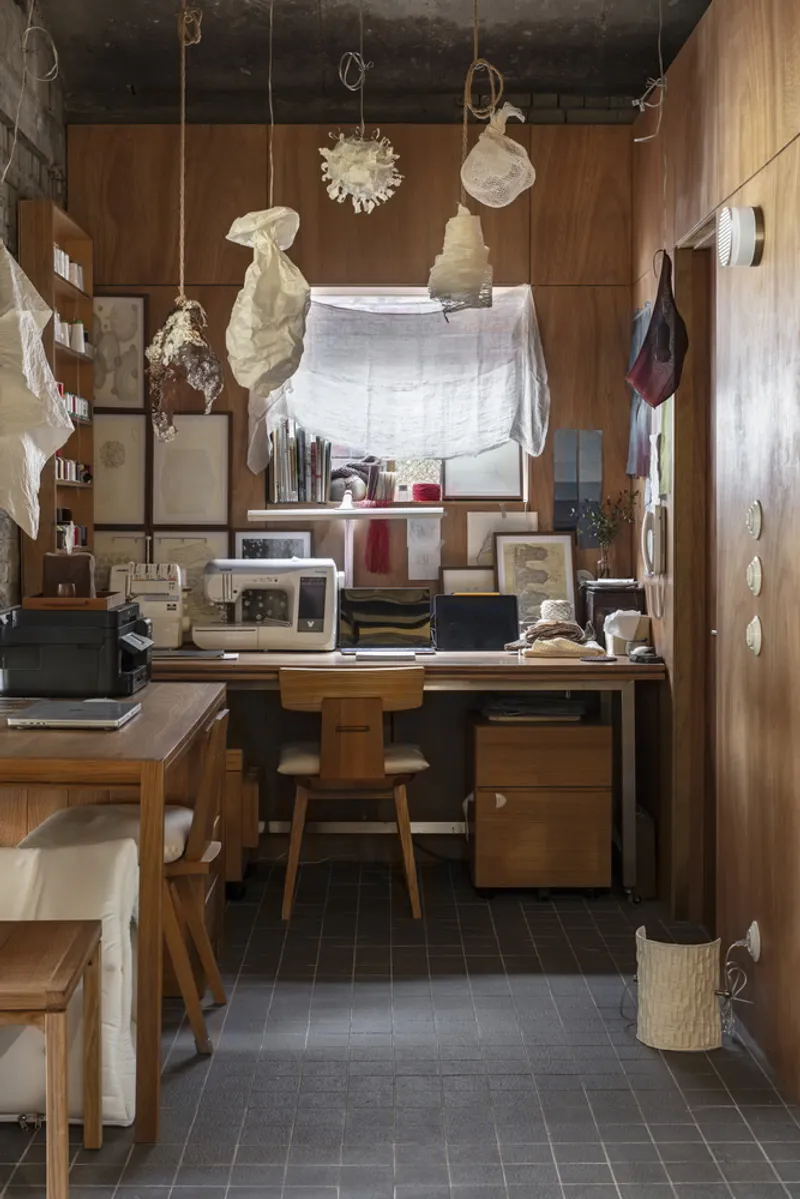
The second-floor studio is designed as a raw, utilitarian space, emphasizing functionality for artistic creation. Exposed walls highlight the history of the gable roof, while the old wooden floor frame was reinforced and recast with high-strength tiles suitable for intensive work. The studio is divided into specialized areas: a molding room, a dyeing room, and a sewing room, with the molding room designed as a greenhouse-type environment to accommodate drying and shaping of paper and fabrics.
A Dialogue Between Past and Present
Kosomi Studio’s interiors harmoniously blend traditional Korean materials like hanji paper and granite with contemporary design elements. The artist’s woven works punctuate the spaces, while structural features such as wooden stairs and exposed beams narrate the building’s history. This careful integration not only respects the village landscape but also showcases how adaptive reuse can create a space that is both functional and deeply expressive.
All photographs are works of Hong Kiwoong


Popular Articles
Popular articles from the community


Extended Shell: Retrofitting Kolkata's Balconies as Living Urban Thresholds
A modular retrofit system recovers the social and environmental intelligence of Kolkata's historic verandas for contemporary Park Street residents.

Faces of the Soviet Avant-Garde: Turning Moscow's Street Names into an Open-Air Museum
A network of sculptural installations across a Moscow residential district transforms forgotten architect names into spatial encounters with cultural memor

Opera on the Sea: Driftwood Logic Shapes a Timber Opera House on Estonia's Coast
Trevor Orgill's opera house translates the entangled drift of floating timber into a civic building where wood, water, and music converge.

Singing Woman: An Opera House That Performs Before the Curtain Rises
Ovidiu Cristian Pavel's conceptual opera house translates Estonia's choral identity into a sculpted waterfront landmark facing the Baltic Sea.

Similar Reads
You might also enjoy these articles


Hodi-Mandai Geram
Project Function: Preservation and revitalization of the Intangible heritage and socio-spatial identity of the Hodi by Housing, Cultural Memory Center, Sacred Grove, landscape, local tourism economy


Olio Towers: A Mid-Rise for Performers That Fuses Housing, Rehearsal, and Stage
Located blocks from Houston's Theater District, this modular tower stacks living units around a central performance atrium.

Oasis: Modular Green Housing Carved into Dhaka's Urban Fabric
A shortlisted Plugin Housing entry reclaims unauthorized settlements in Dhaka with stepped concrete volumes, green roofs, and ventilation-driven design.

Black Hole: A Floating Megastructure for the Post-Physical Era
Emiliano Mazzarotto envisions a spherical, self-scaling arena where e-sports, digital hotels, and holographic stadiums replace traditional public space.

Explore KSA Architects Competitions
Discover active competitions in this discipline

Challenge to reimagine the Iron Throne

Photograph architecture without architects

Illustrate the lost glory of Angkor Wat - Render Challenge

Design challenge to reuse E-waste
Comments (0)
Please login or sign up to add comments
No comments yet. Be the first to comment!