

kouple Builds a Minimalist Aviation Base for Ukraine's Most Daring Aerobatics Collective
Cement board panels, exposed steel trusses, and frameless glass define a 400 square meter hangar and crew quarters in an undisclosed Ukrainian location.


Aerotim is not a typical client. The collective, led by Timur Fatkullin, brings together aerobatics pilots, freestyle motocross riders, and skydivers under one organizational roof. Their operational base needed to house light sport aircraft on the ground floor, keep a crew comfortable on a mezzanine above, and do all of it with the kind of disciplined material logic that a team of precision athletes would respect. kouple delivered exactly that in a 400 square meter facility completed in 2025 at an undisclosed location in Ukraine.
What makes the project worth studying is its refusal to separate utility from design ambition. The hangar is genuinely industrial: full-height steel trusses, corrugated metal cladding, a vertically lifting entrance gate wide enough for aircraft. Yet the crew quarters inserted on the second level read as carefully considered architecture, not an afterthought bolted onto a shed. kouple threaded a single material vocabulary, anchored by Cement Bonded Particle Board (CBPB), through both programs so that the line between infrastructure and interior dissolves.
The Hangar as a Room
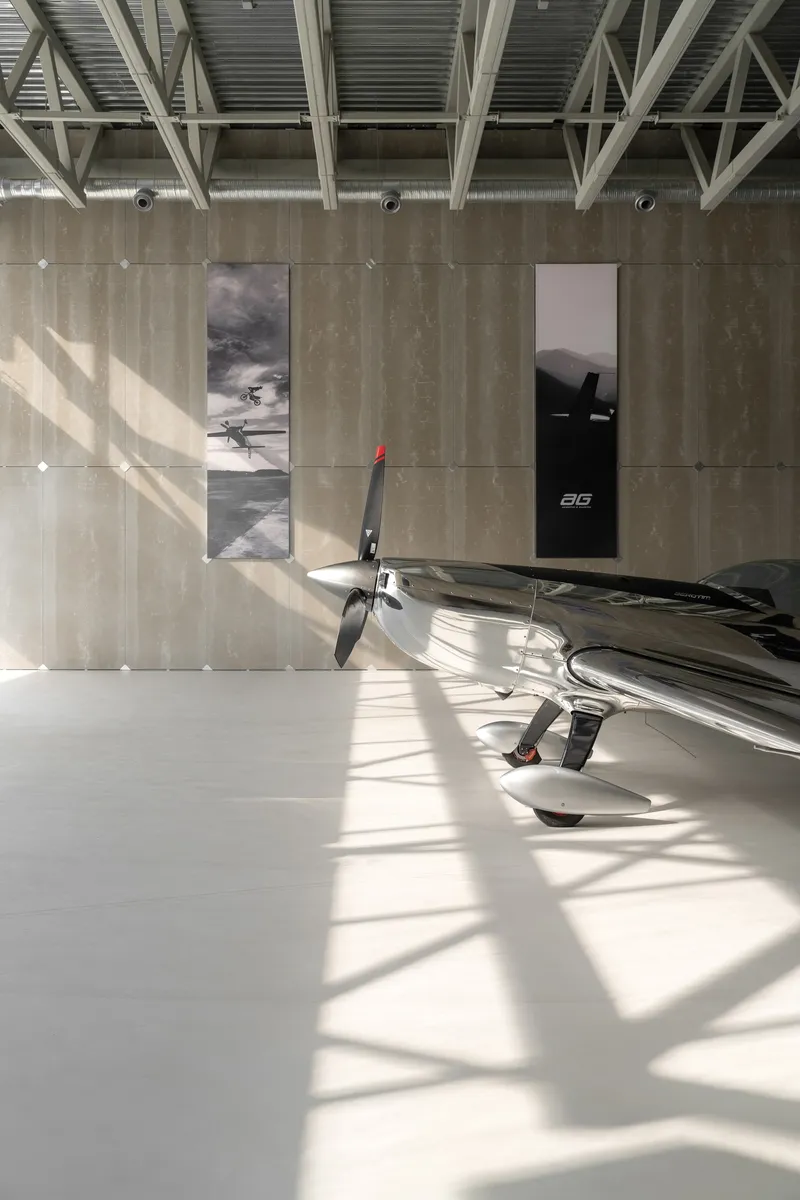
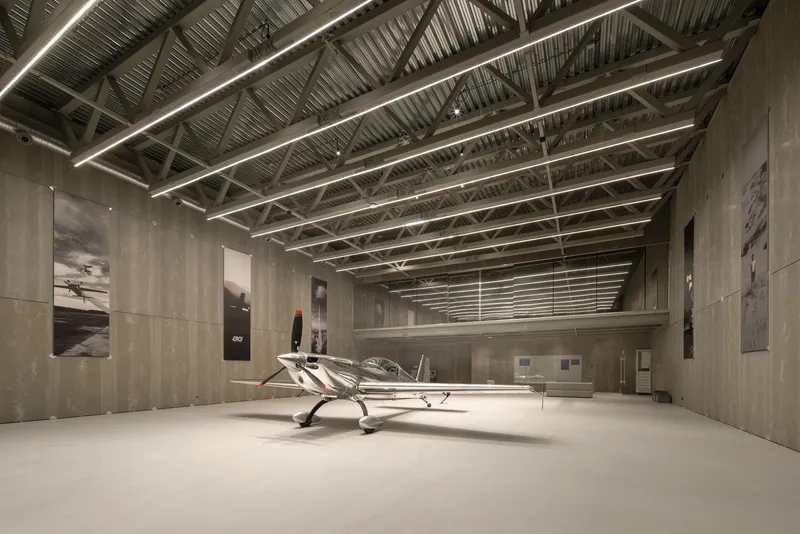
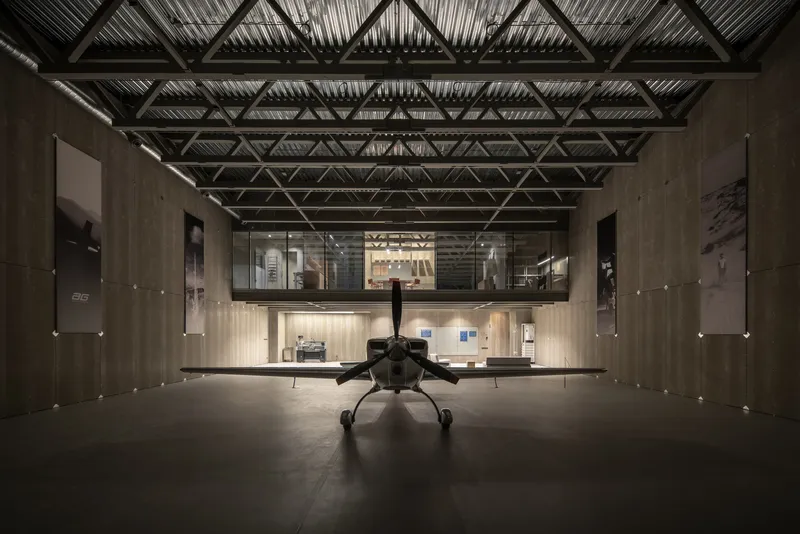
The main volume is a single, uninterrupted space defined by exposed steel trusses and linear LED strips that follow the structural grid. It could have been nothing more than a big box, but the proportions feel intentional. CBPB wall panels are mounted with visible joints, a detail kouple says references the rivet-fastening techniques found on aircraft fuselages. The consistency of that reference, running from wall cladding to doors to worktables and shelving, gives the hangar an internal coherence most aircraft shelters never approach.
A seamless polymer floor sits beneath the aircraft, easy to clean and visually quiet enough to let the structure above do the talking. At the far end, the mezzanine crew station floats behind a frameless glass wall, visible from ground level as a luminous band of activity. The section is straightforward but effective: aircraft below, people above, a single sightline connecting both.
Entrance and Exterior Skin
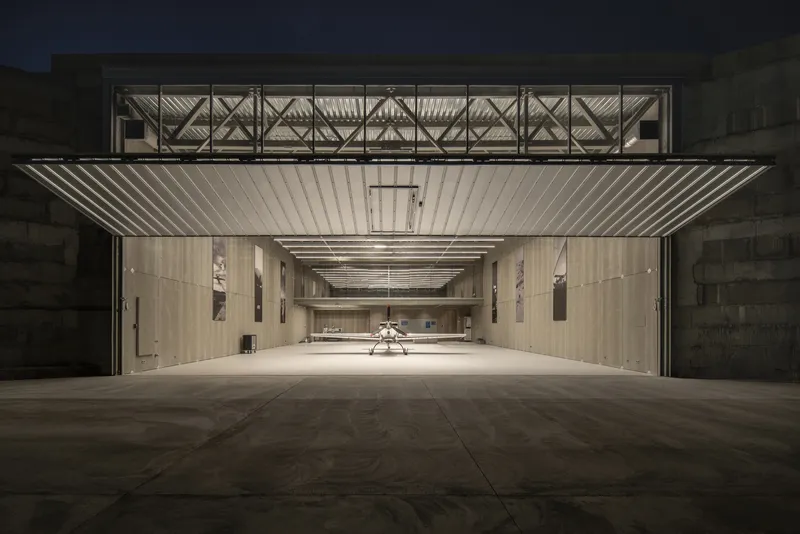
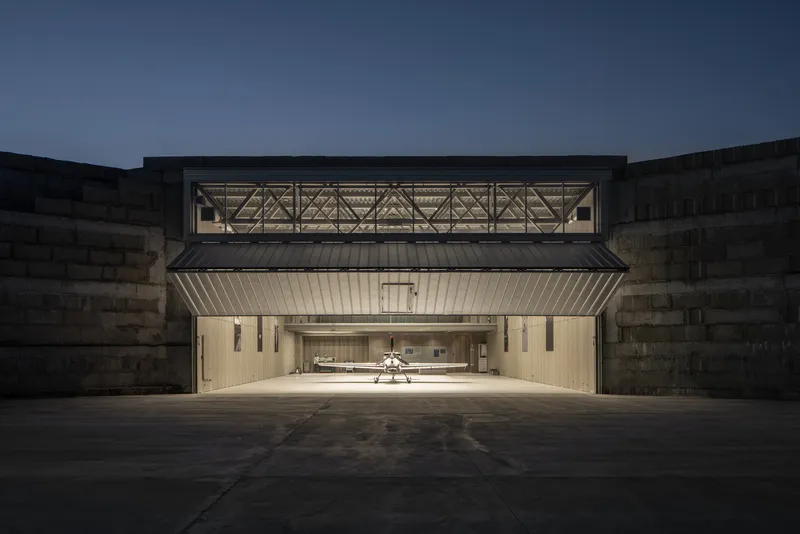
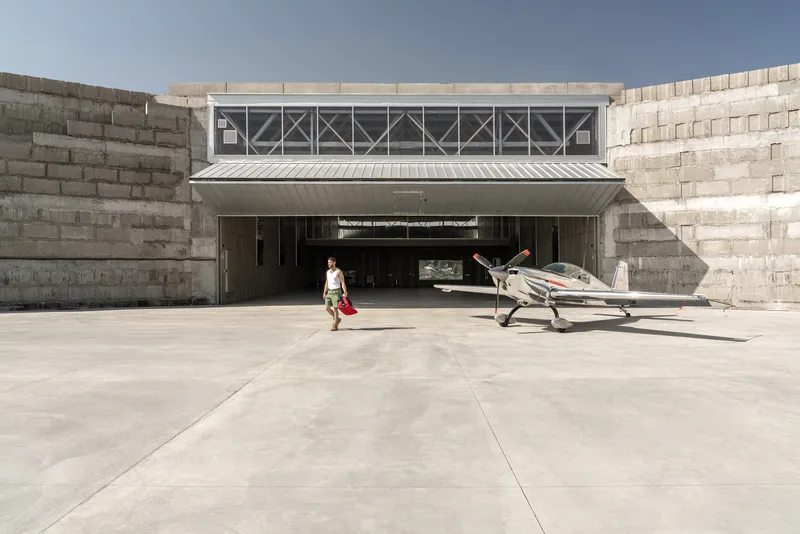
The hangar's public face is the full-width, vertically lifting gate clad in raw zinc sheets. At dusk, it frames the interior as a single glowing aperture. The corrugated metal soffit and exposed truss ends visible above the opening give the elevation an honest, even blunt quality. Polycarbonate panels in the upper facade section serve as a daylight strategy rather than a decorative gesture, drawing natural light deep into the hangar without compromising the thermal envelope.
The approach is pared back: stepped concrete retaining walls, a paved apron, nothing competing for attention. The project's location remains undisclosed for security reasons, which gives the exterior photographs a slightly unreal, decontextualized quality. Without a landscape or streetscape to anchor it, the hangar reads as pure object.
The Crew Station
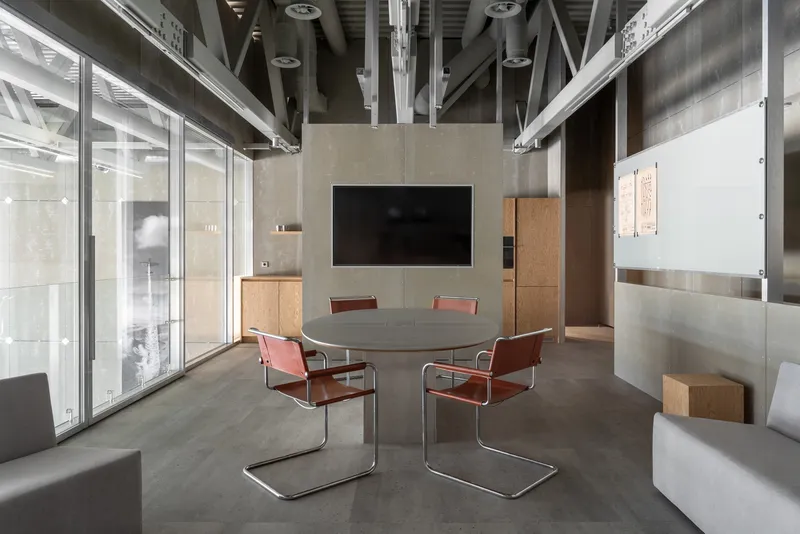
The 94 square meter second-level crew station is organized around a central round table that serves as the operational nucleus: flight briefings, maintenance scheduling, task planning. Red cantilever chairs add a single hit of color against the grey CBPB and white steel. Floor-to-ceiling glazing wraps the space, giving the crew an unobstructed view down into the hangar. It is both a conference room and a control tower, and the absence of partition walls keeps communication instantaneous.
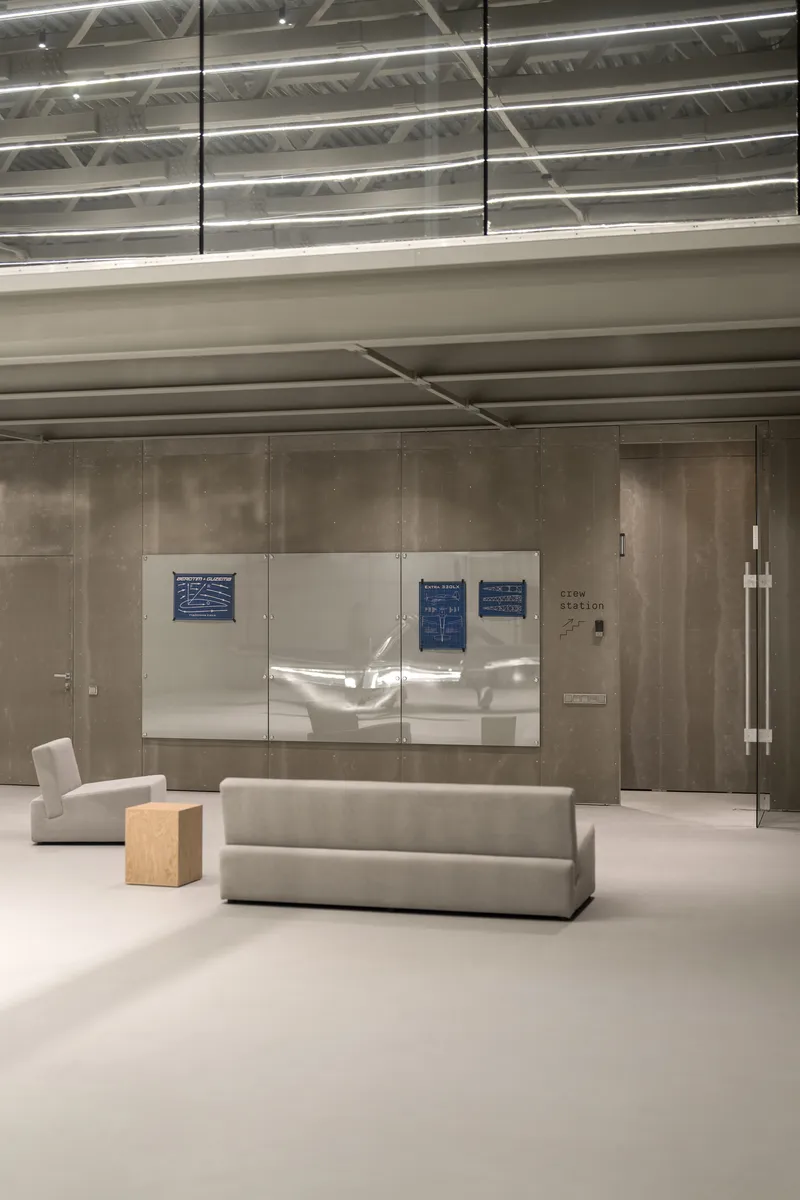
Surrounding the central table, the program breaks into kitchen, office, locker, and sleeping zones. A whiteboard mounted on concrete panels holds project drawings and notes. The wall-mounted glass boards elsewhere serve a similar purpose for aircraft task planning and crew coordination. These are operational surfaces, not decoration, and they reinforce the idea that the space is designed around workflows rather than aesthetics for their own sake.
Kitchen and Living Zones
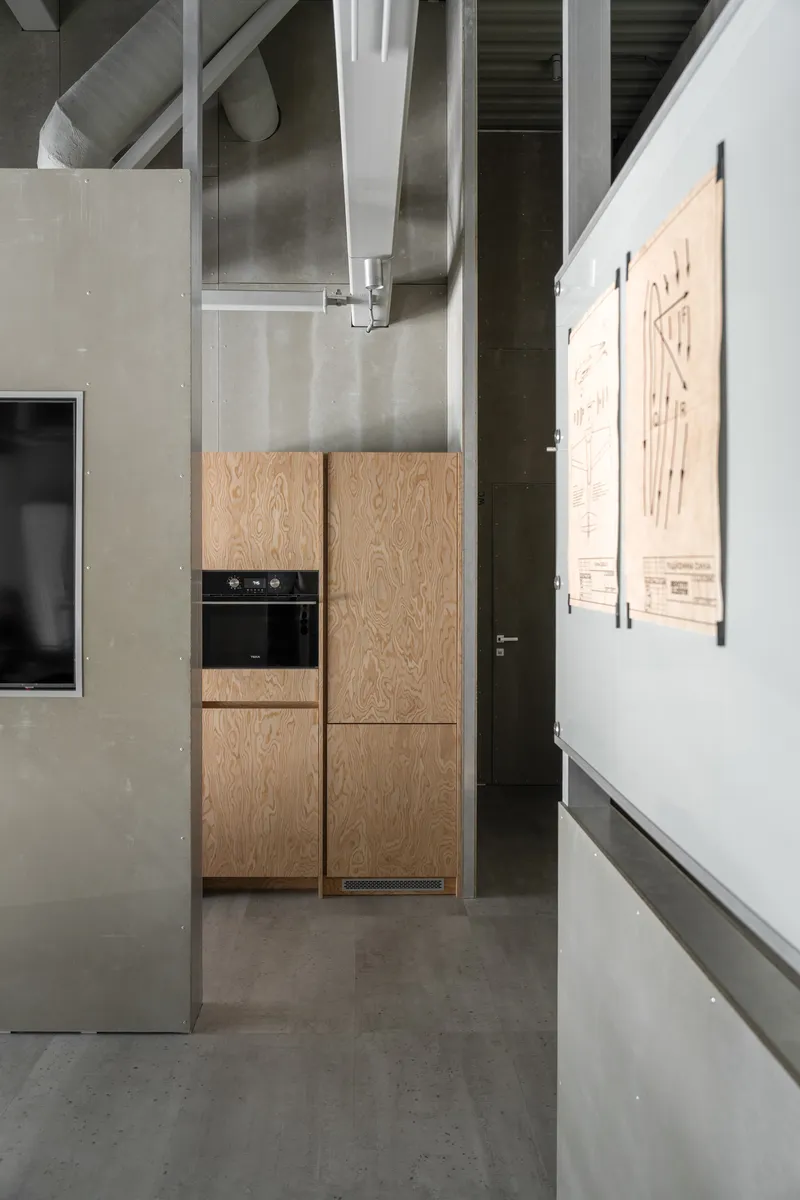
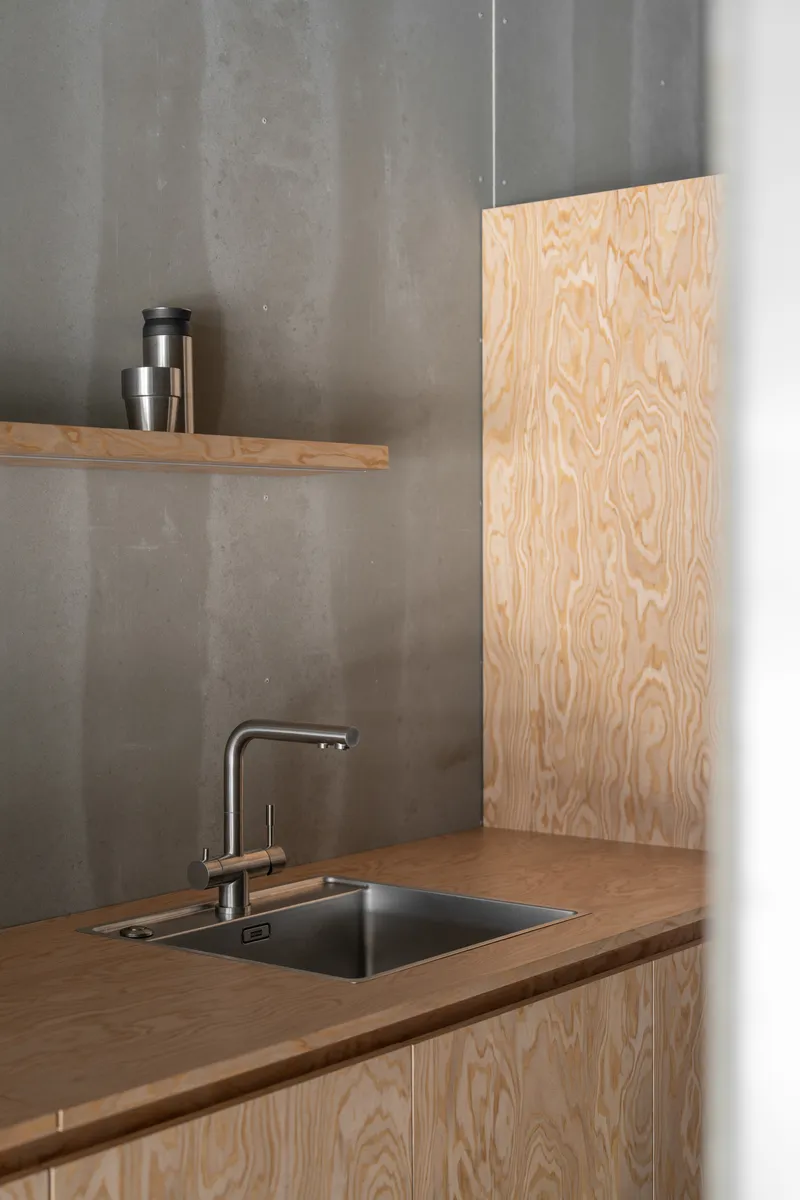
The kitchenette is compact and efficient: pale wood veneer cabinetry, a built-in oven, stainless steel sink, and a floating shelf against the CBPB wall. The wood is one of the few warm-toned materials in the entire project, and kouple uses it sparingly enough that it reads as a deliberate contrast rather than a concession to comfort. Exposed structural beams run overhead, a reminder that you are still inside a hangar.
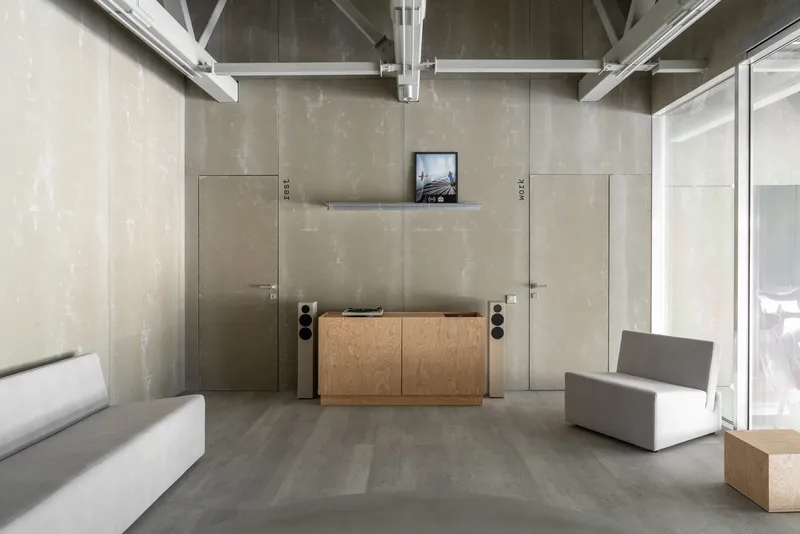
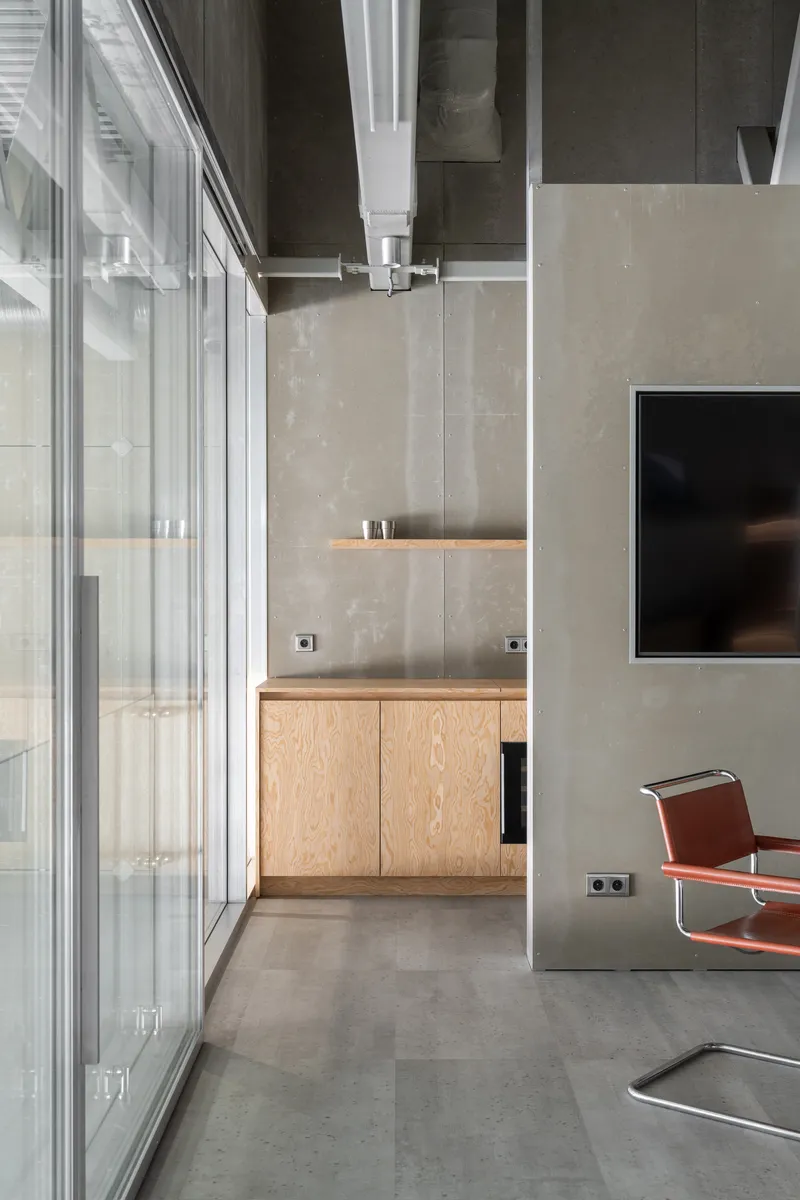
The living area nearby pairs plywood storage cabinets with a wall-mounted screen and the same red chair seen in the conference room. The consistency of furniture selections across zones is worth noting: it prevents the crew quarters from feeling like a collection of unrelated rooms and reinforces the singular material discipline that defines the project.
Sleep, Lockers, and the Stainless Steel Shower
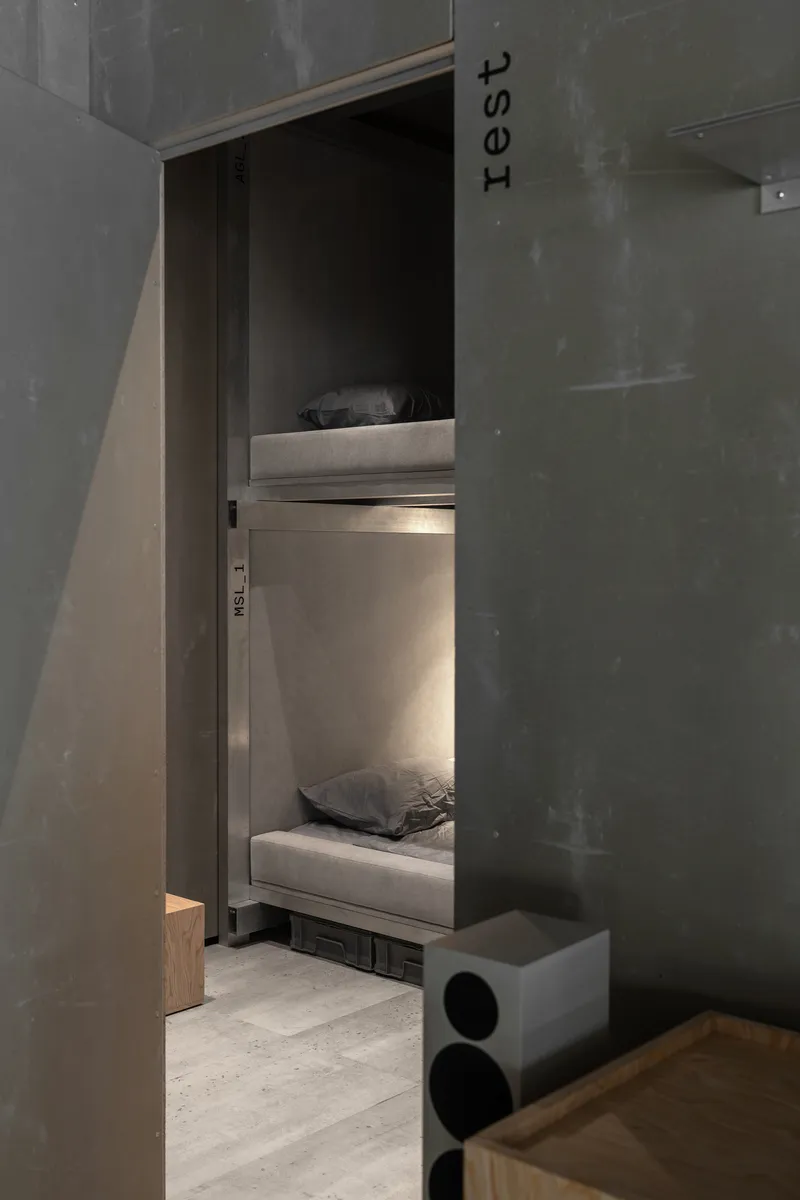
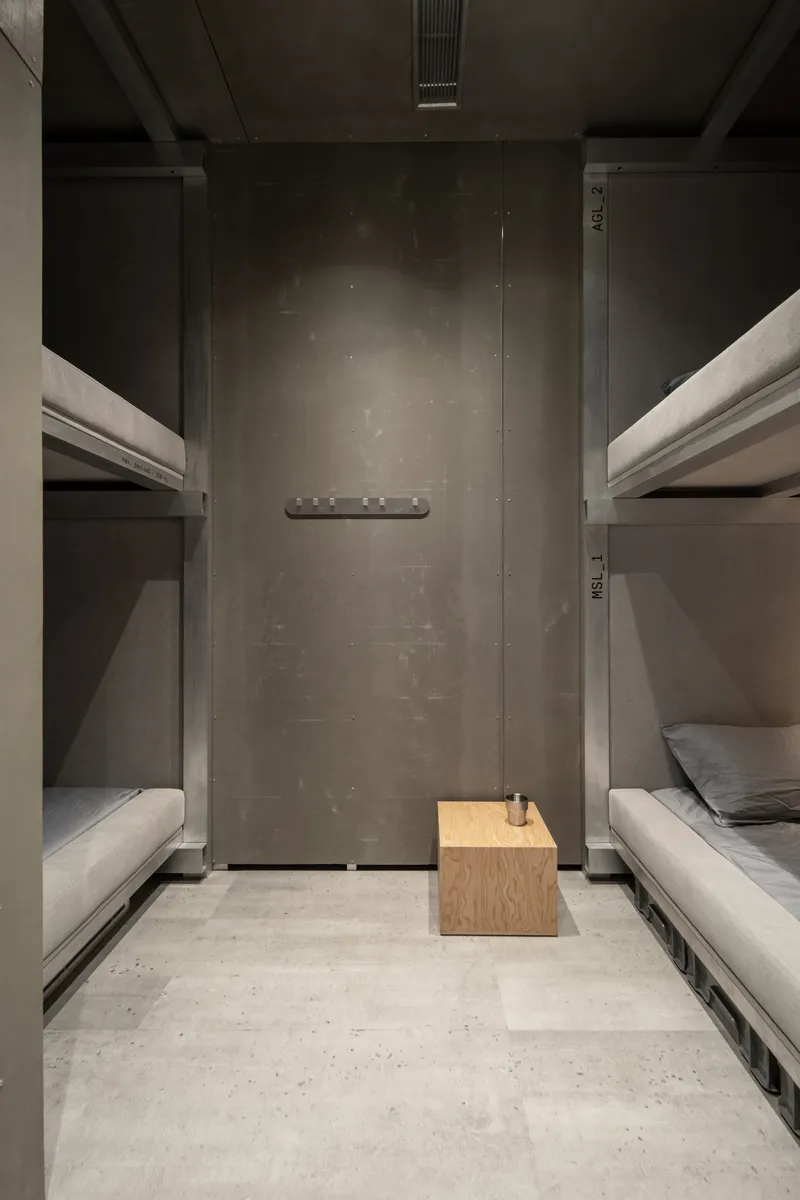
The sleeping quarters are tight and deliberately so. Facing bunk beds in a narrow concrete-walled room, soft integrated lighting, and upholstered fabric panels providing acoustic absorption. The scale recalls a submarine berth or a capsule hotel, and for a team accustomed to cockpits and freefall, that compression probably feels familiar. A small wooden cube side table is the only furniture; everything else is built in.
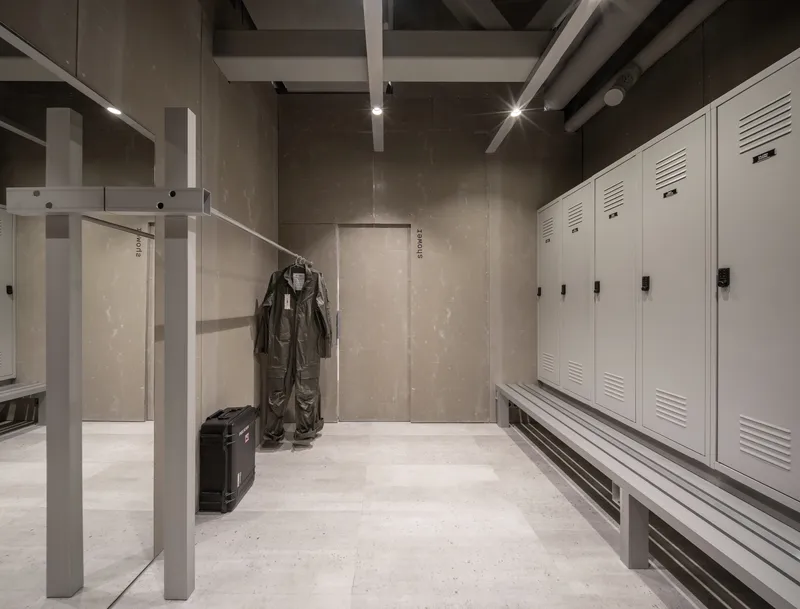
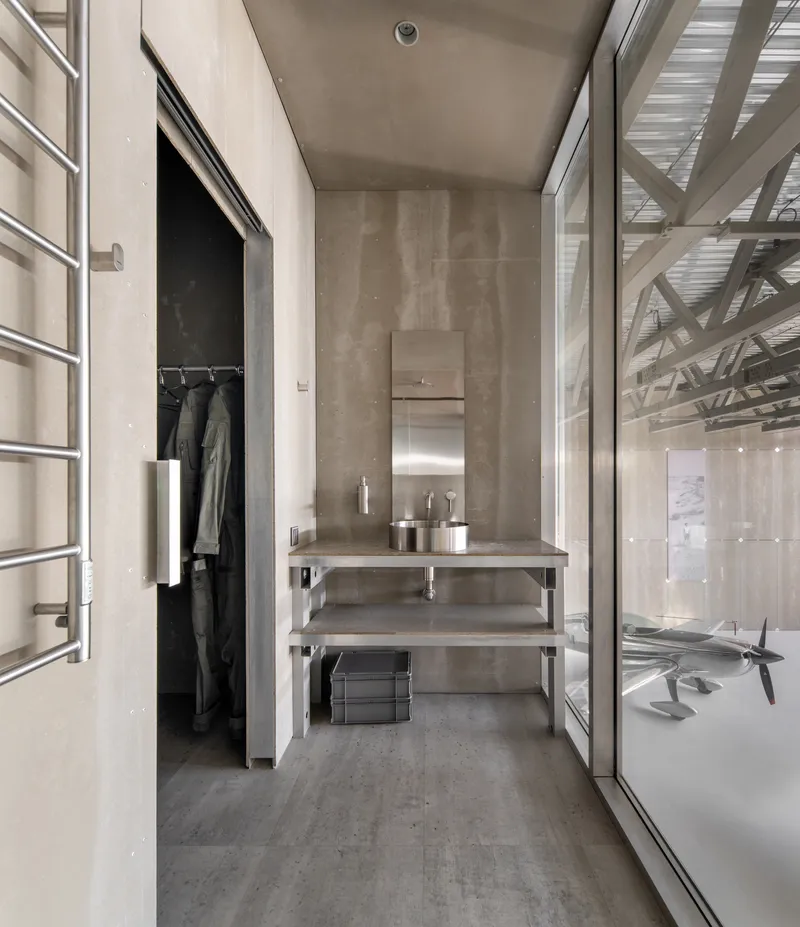
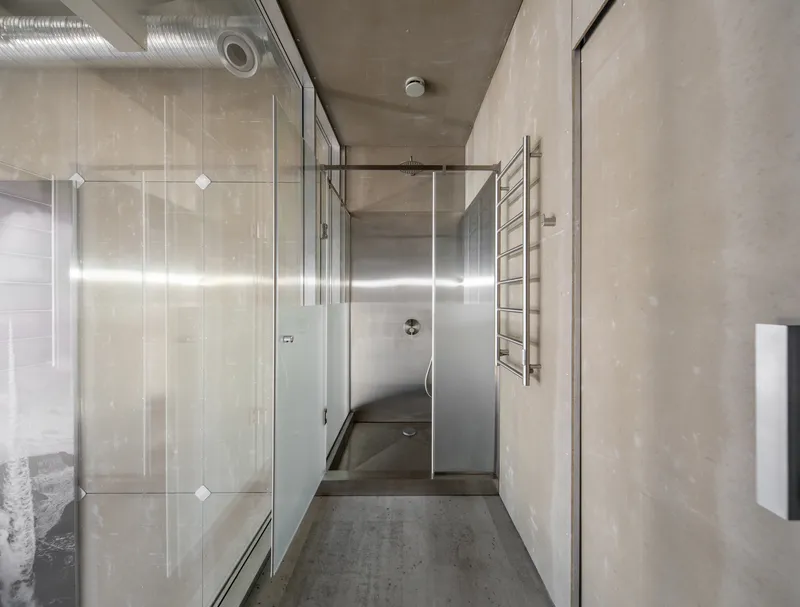
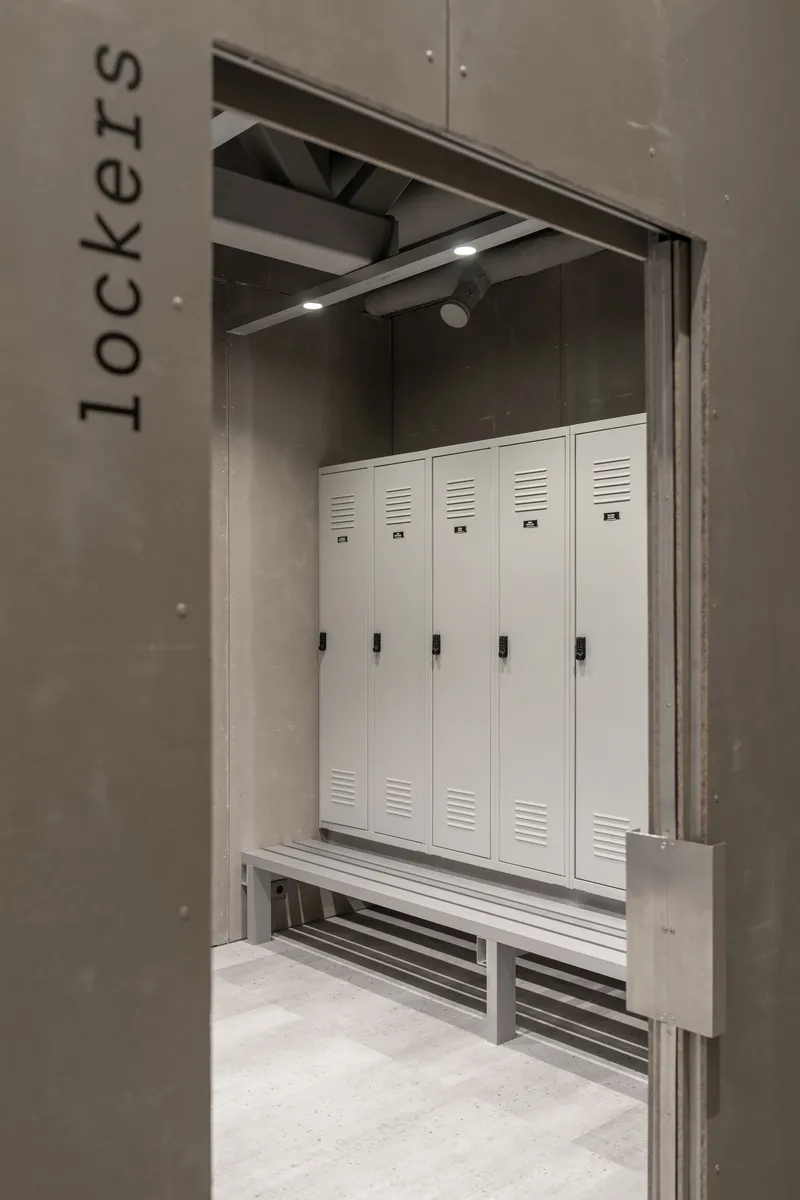
The locker room houses white metal storage units, benches, and a security scanner frame. A hung flight suit visible in one locker collapses the distance between domestic routine and extreme sport. The changing room connects directly to a shower area that kouple clad in stainless steel and set against a glass facade, giving occupants a view down to the aircraft below. It is one of the project's most provocative spatial moves: an intimate program exposed to the full volume of the hangar, mediated only by frameless glass.
Details That Earn Their Place
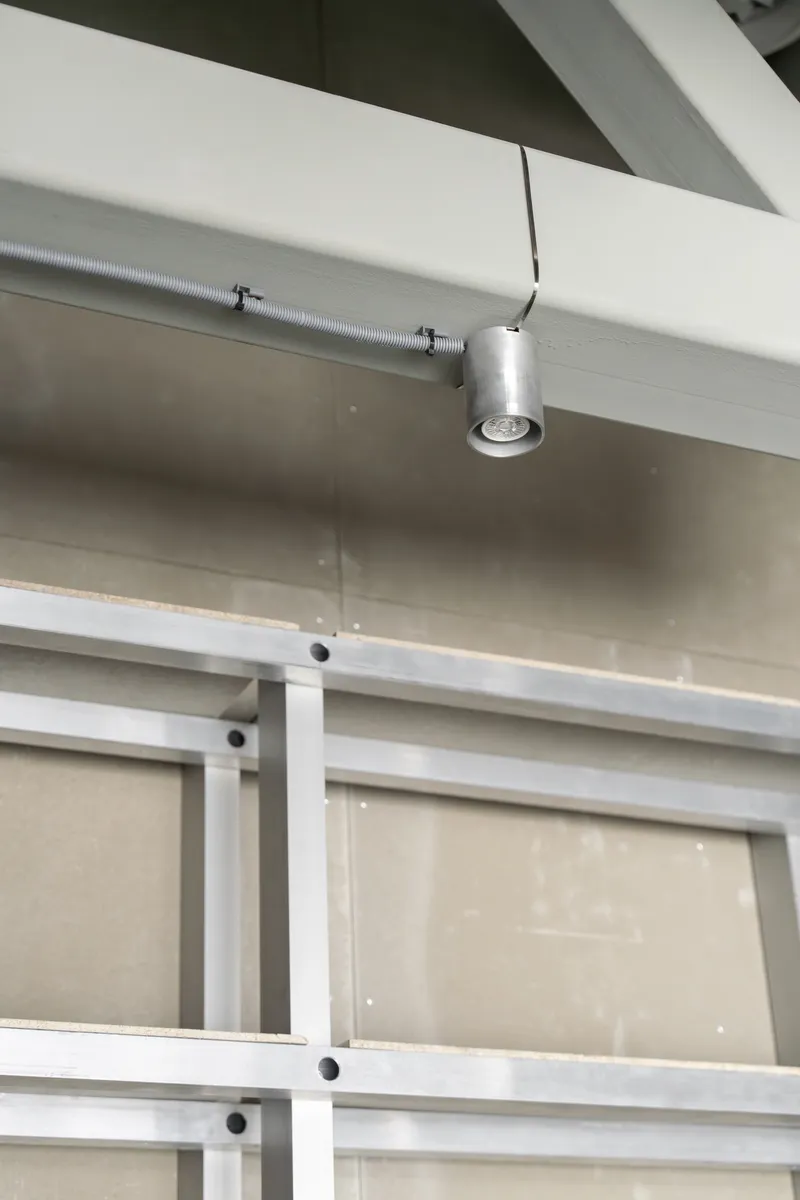
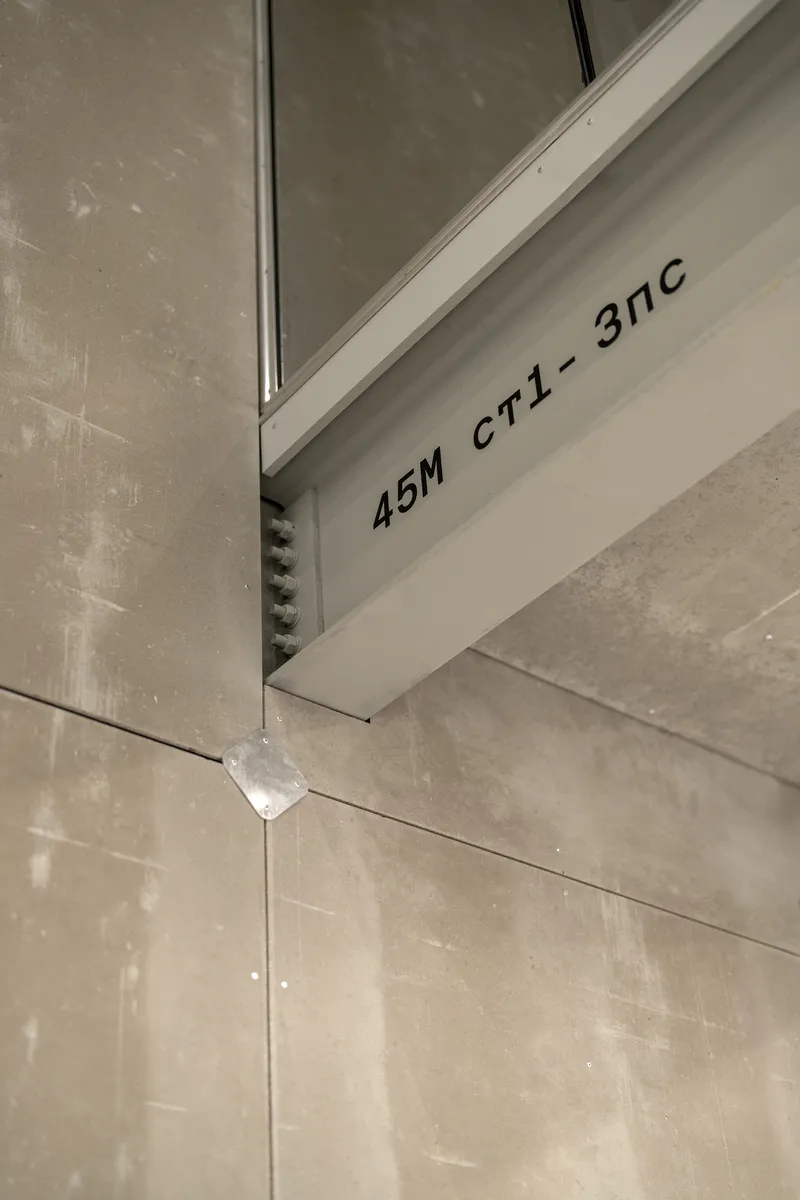
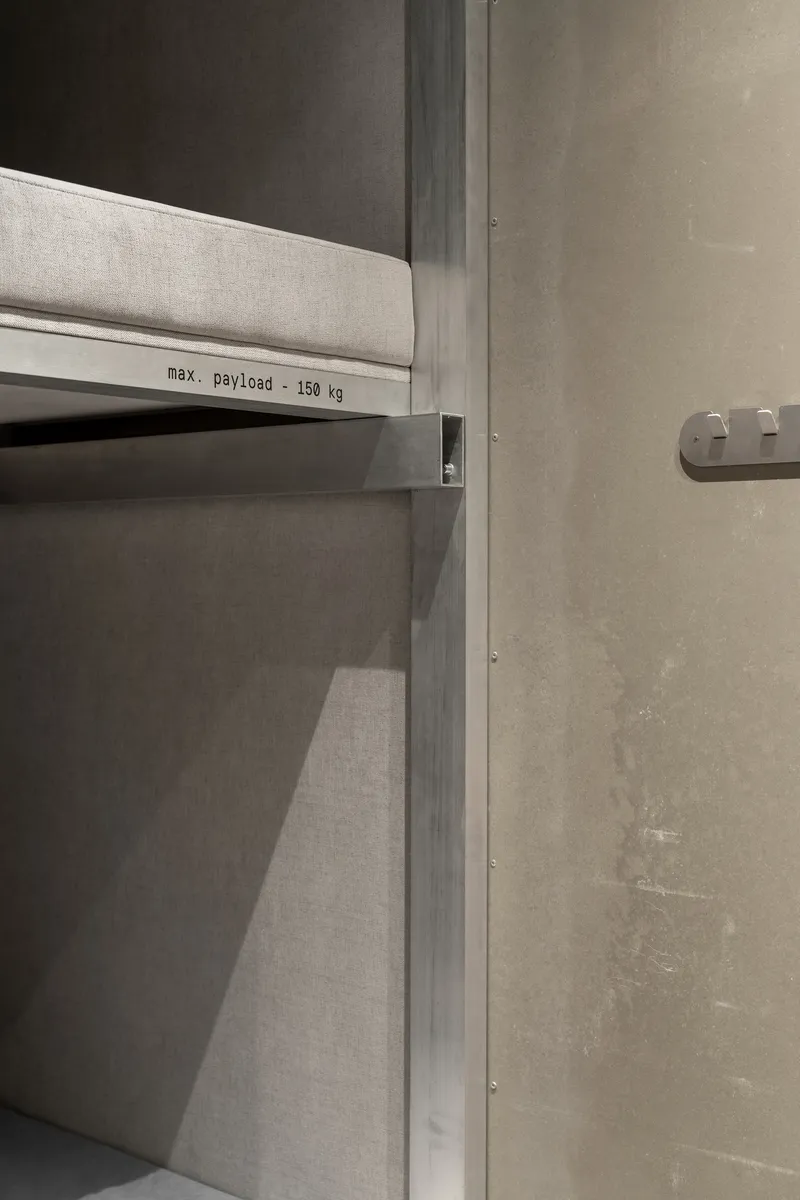
The detailing throughout the project is specific without being fussy. A cylindrical spotlight fixture hangs from exposed conduit along the white painted steel frame. Stenciled code markings appear on structural members at panel joints. An industrial shelf unit carries a maximum payload label. These are not decorative choices; they are consequences of a design approach that accepts and celebrates the technical identity of its materials.
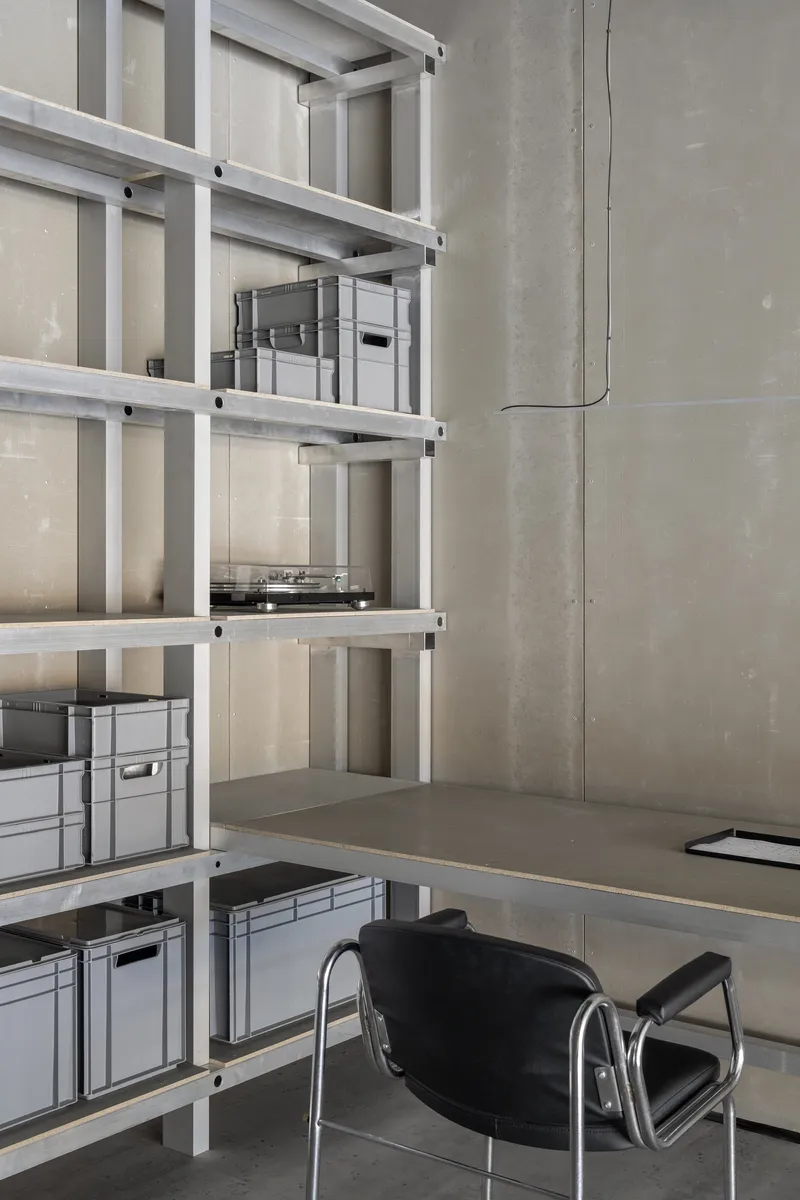
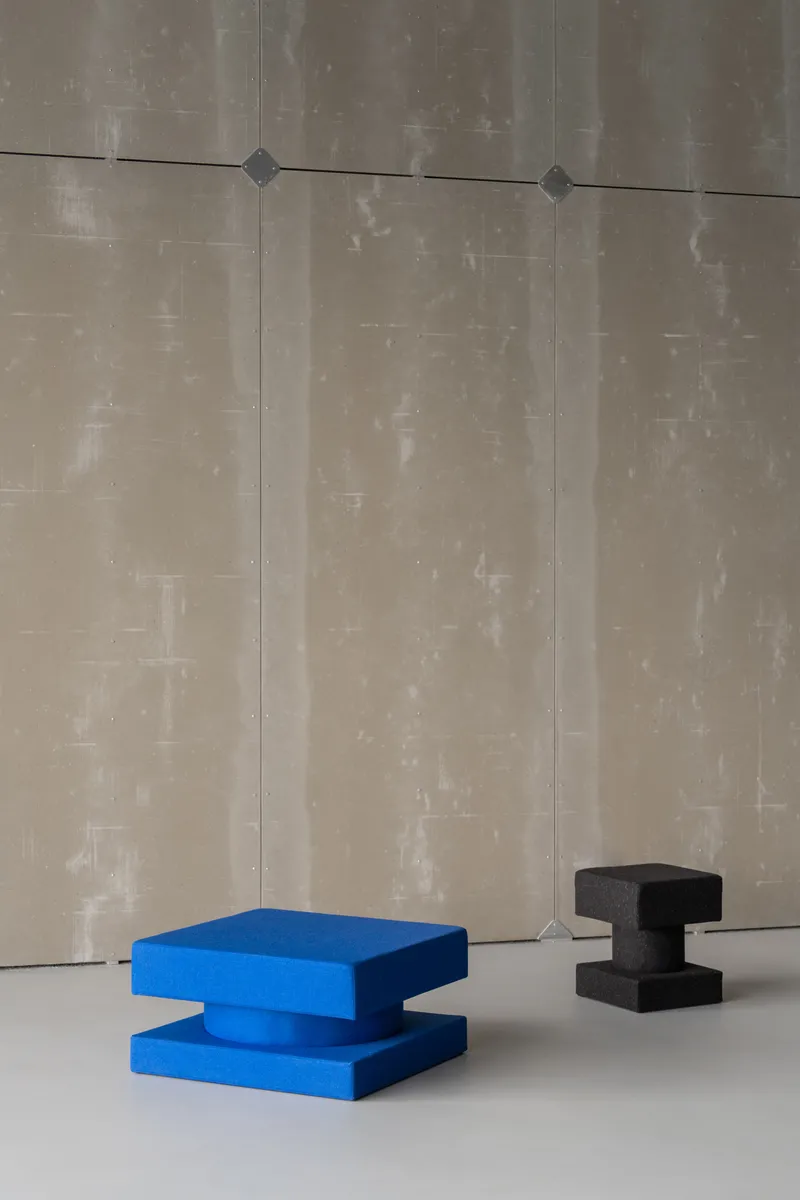
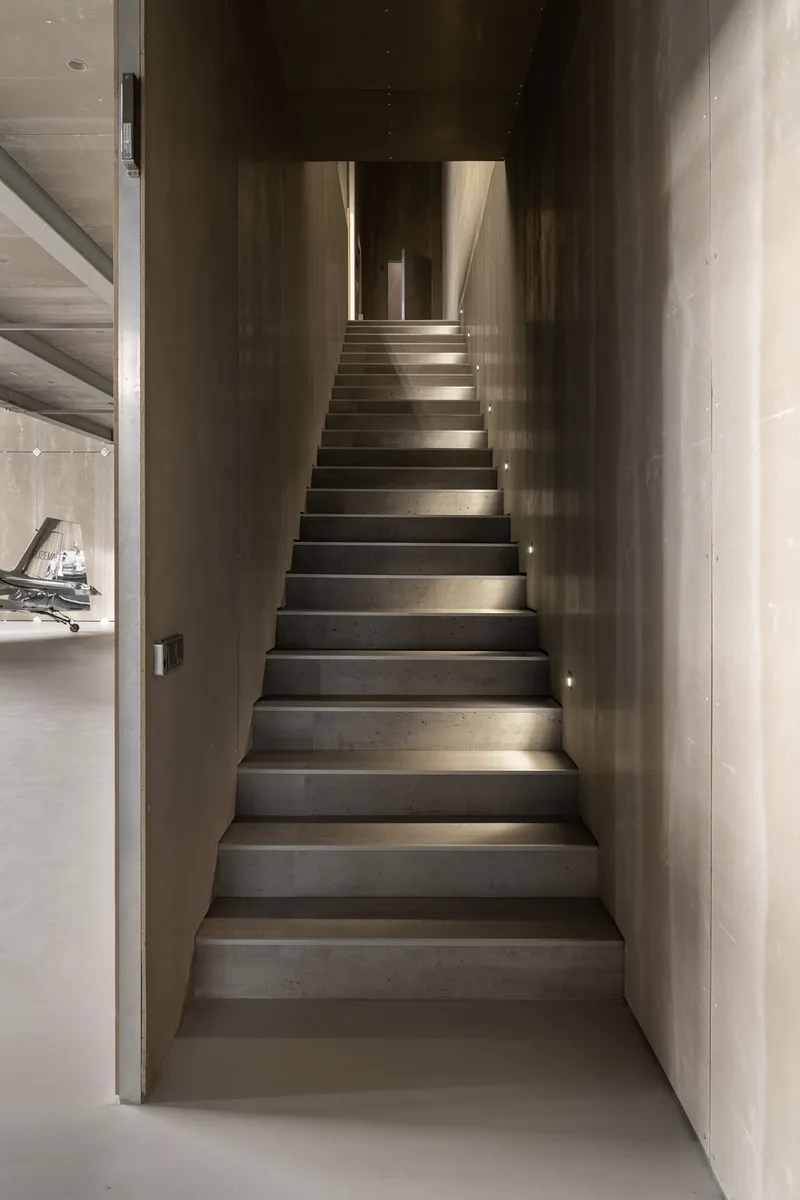
The luminaire made on-site from aluminum wall-profile offcuts is a standout detail. It is resourceful fabrication that happens to produce an elegant fixture, the kind of move that only emerges when designers are present during construction and willing to work with what is at hand. The cantilevered desk with open aluminum shelving, the sculptural seating blocks on the white hangar floor, and the stairwell with integrated step lighting all share this quality of precision applied to simple means.
Workspaces and Circulation
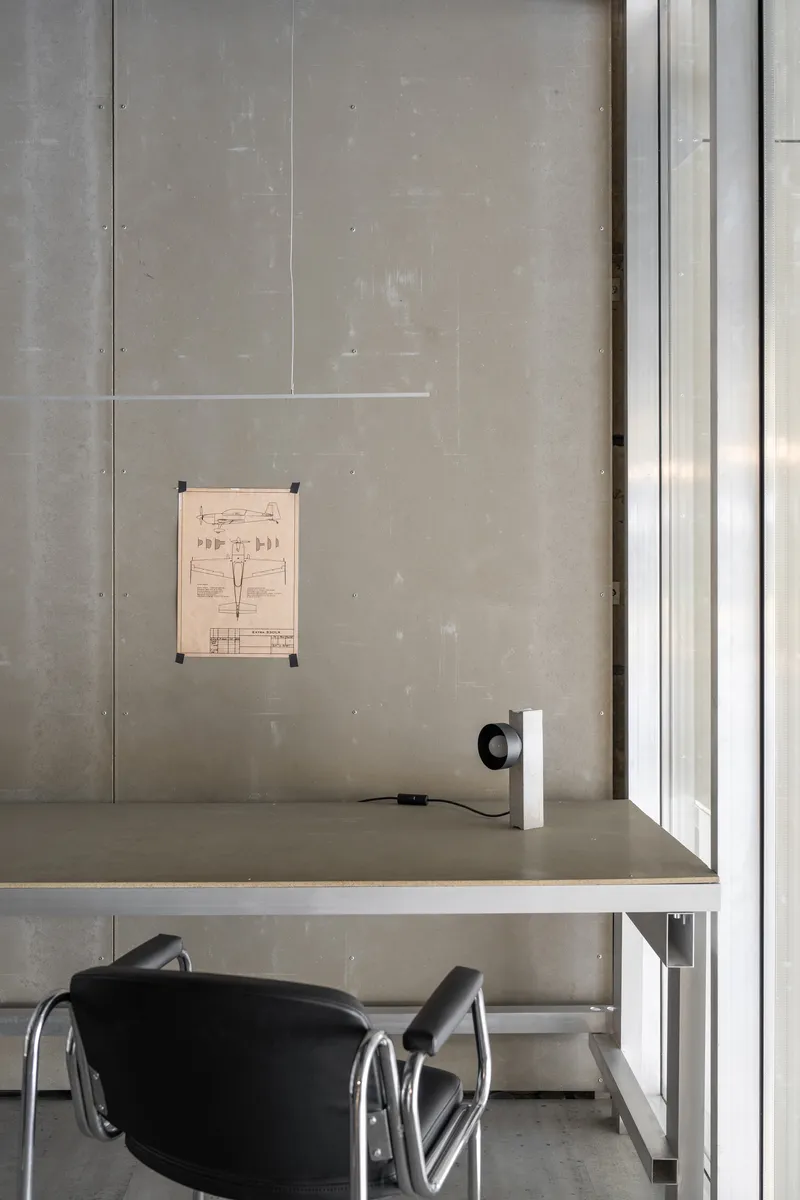
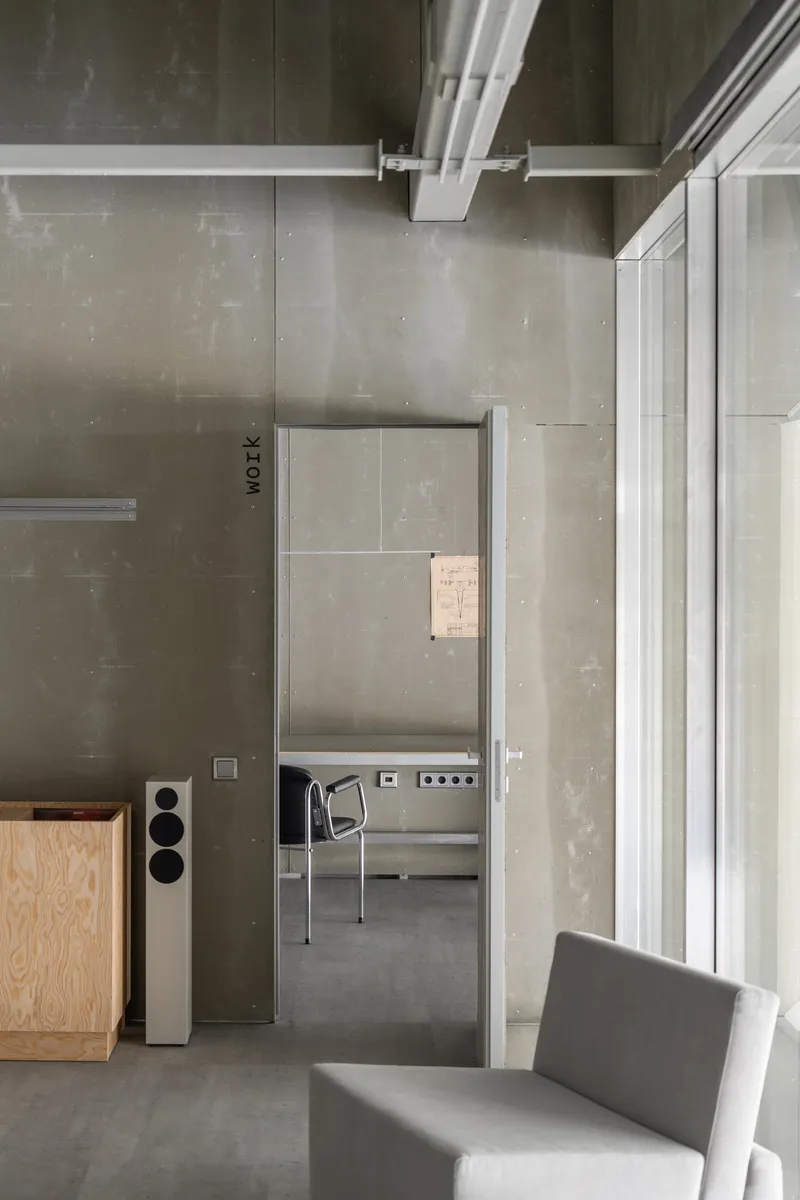
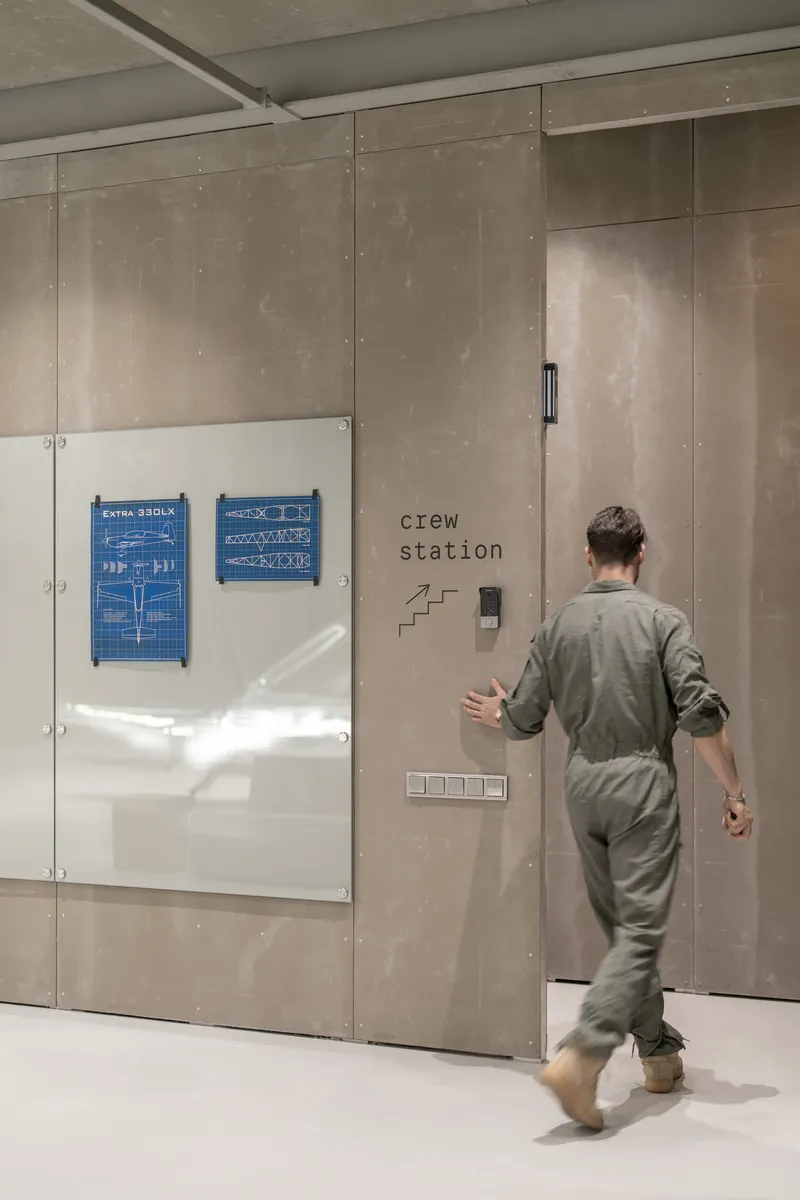
Individual workstations are carved out of the concrete panel walls with minimal intervention: a desk, a suspended technical drawing, a black chair, a window. The doorway views through multiple layers of CBPB partition reveal the depth of the floor plan, and the repetition of flush panel faces with recessed doors creates a rhythm that orients movement without signage. A tubular steel chair visible through one doorway and a floor speaker at another suggest that these spaces are occupied, lived in, not staged.
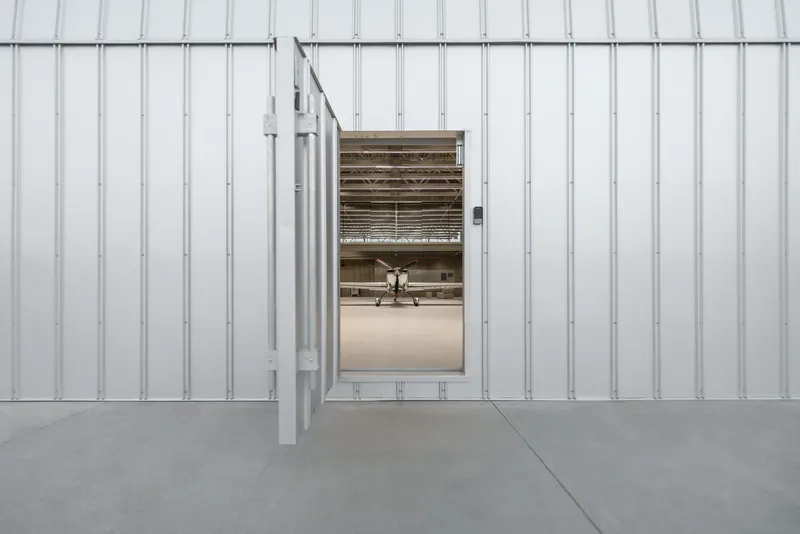
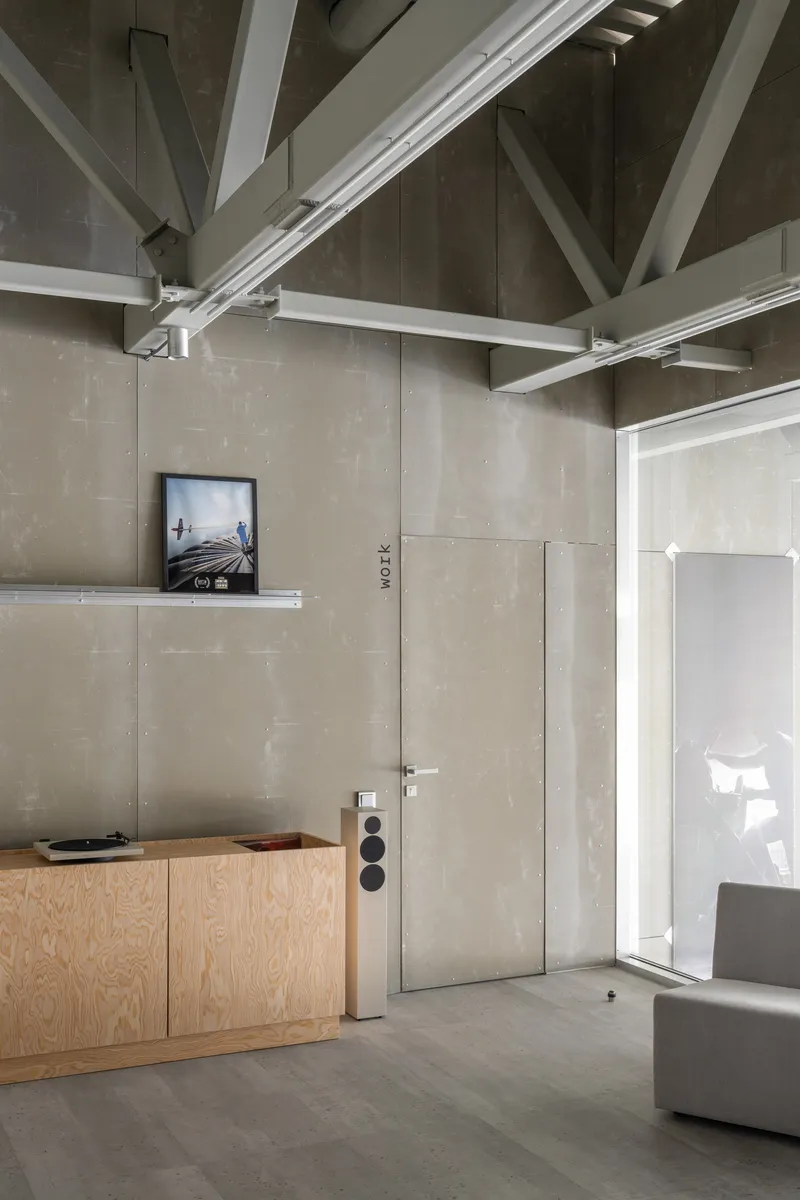
From the exterior, the sliding hangar door reveals the aircraft bay in section, corrugated metal wall meeting polished concrete floor. Inside, the flush CBPB wall panels with their recessed door and pale wood credenza demonstrate how kouple maintained a consistent surface language whether the room is storage or lounge. The same panel, the same joint, the same logic, deployed across every condition.
Plans and Drawings
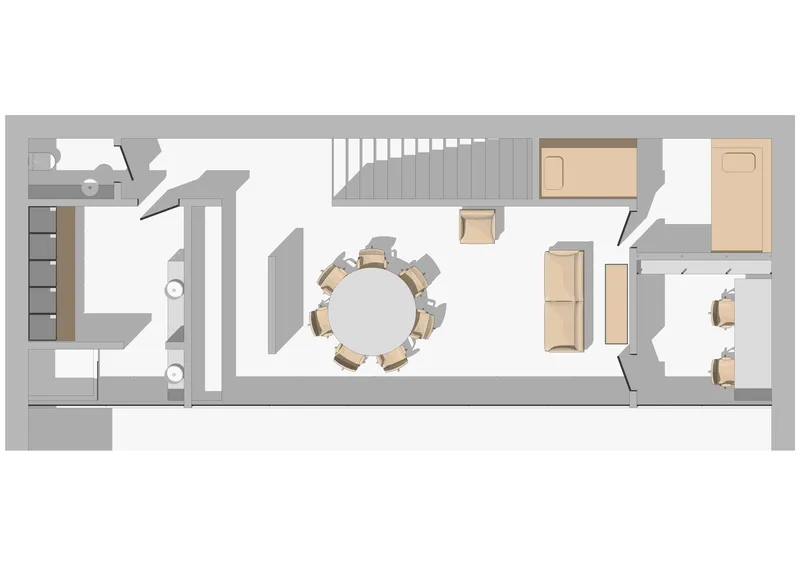
The floor plan of the crew level reveals a compact arrangement: bathroom and staircase at one end, conference room at the center, and two office spaces with furniture layouts that confirm the tight, purposeful planning visible in the photographs. The staircase connects directly to the hangar floor below, keeping vertical circulation short and the relationship between aircraft and crew immediate.
Why This Project Matters
The Aerotim Hangar matters because it demonstrates that utilitarian programs do not require utilitarian design, and that ambitious interiors do not require expensive materials. CBPB, corrugated metal, polycarbonate, off-cut aluminum: kouple's palette is deliberately modest, but the consistency and precision with which it is applied produce spaces that feel resolved, not cheap. The aviation references in the panel jointing are earned rather than applied, because the building actually houses aircraft.
There is also the question of context. A project completed in Ukraine in 2025, at an undisclosed location, for a team of extreme athletes carries implications that the architecture does not need to spell out. The hangar is a working base, not a monument, and its stripped-back material honesty reflects a culture that values readiness over spectacle. kouple understood this and designed accordingly: nothing extraneous, nothing missing, every surface doing at least two jobs.
Aerotim Hangar by kouple, Ukraine, 400 m², 2025. Photography by Andriy Bezuglov.
About the Studio
Share Your Own Work on uni.xyz
If projects like this are the kind of work you want to make, uni.xyz is a place to publish your own, find collaborators, and enter design competitions.


Popular Articles
Popular articles from the community


Opera on the Sea: Driftwood Logic Shapes a Timber Opera House on Estonia's Coast
Trevor Orgill's opera house translates the entangled drift of floating timber into a civic building where wood, water, and music converge.

Manzana Morphosis: Stretching Barcelona's Grid into a Living Landscape for 2050
A radical reworking of the Eixample manzana turns density into a tool for generous public space, vertical ecology, and environmental performance.

Faces of the Soviet Avant-Garde: Turning Moscow's Street Names into an Open-Air Museum
A network of sculptural installations across a Moscow residential district transforms forgotten architect names into spatial encounters with cultural memor

The Amber Palace Opera: A Geological Fiction Surfaces on Tallinn's Baltic Waterfront
Pierre Brillard reimagines a Baltic legend as a public landscape, opera house, and waterfront promenade rooted in Tallinn's coastal identity.

Similar Reads
You might also enjoy these articles

Pixel Gardens: One Repeated Module Stacked Into a Terraced Social Housing Tower for Famagusta
Salem Bader's shortlisted housing tower builds a vertical neighbourhood from one repeated module, offsetting units to carve terraces, light and air.

Bao Huynh Watercolor Atelier: A Serene Art Retreat in Hội An
Bao Huynh Watercolor Atelier in Hội An blends multifunctional art spaces, sustainable design, local materials, and family-friendly living in a serene environment.

Atelier Macri Concept Store Interior Design by CASE-REAL
Atelier Macri store features a "ko" counter, walnut wood details, cork displays, blending retail, gallery, and seamless customer experiences.

Manuel Vargas Izquierdo Stadium and High-Performance Sports Center: Architectural Excellence in Jalpa de Méndez
The Manuel Vargas Izquierdo Stadium blends sustainable design, inclusive sports facilities, and cultural-inspired architecture, revitalizing Jalpa de Méndez’s public spaces.


Comments (0)
Please login or sign up to add comments
No comments yet. Be the first to comment!