
KUMIHIMO: Japanese Silk Braiding by DOMYO by Rei Mitsui Architects
Exhibition by Rei Mitsui Architects showcases delicate Japanese silk braiding, blending sacred spatial boundaries, traditional materials, and contemporary cultural design.


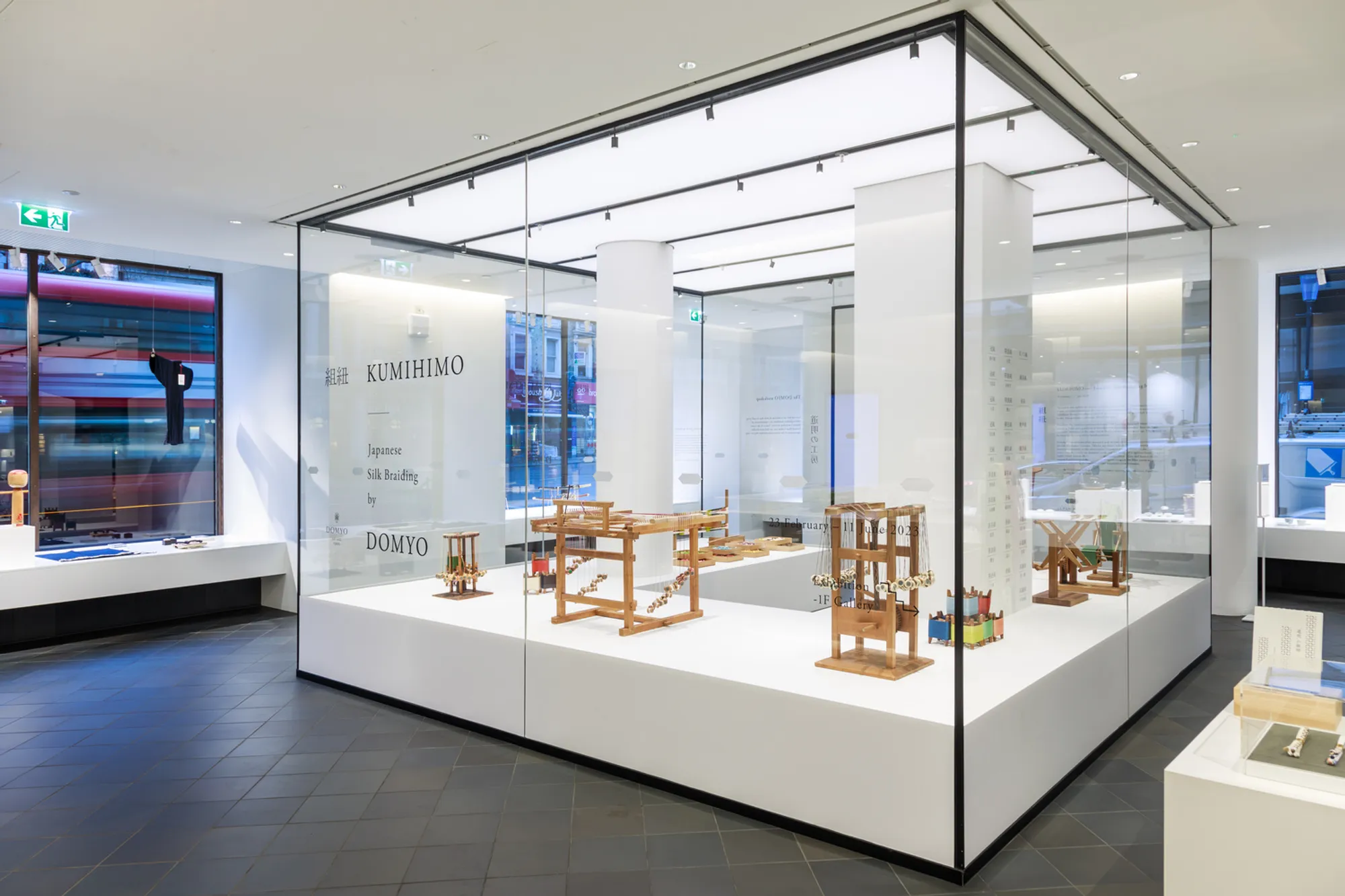
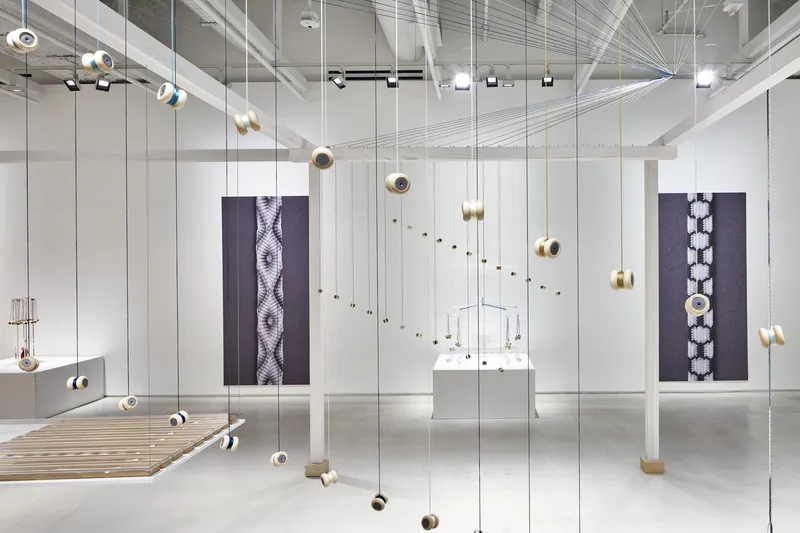
Rei Mitsui Architects has designed a refined and contemplative exhibition space for “Yushoku Kumihimo Domyo”, a traveling showcase at Japan House London, São Paulo, and Los Angeles. The project explores how to honor the delicate artistry of kumihimo, the traditional Japanese silk braiding craft, within large contemporary gallery environments.
A Space for Subtle Beauty
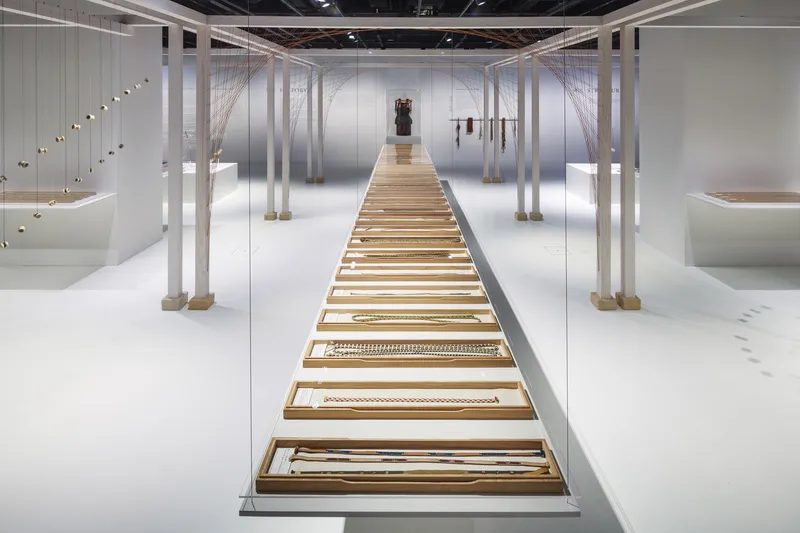
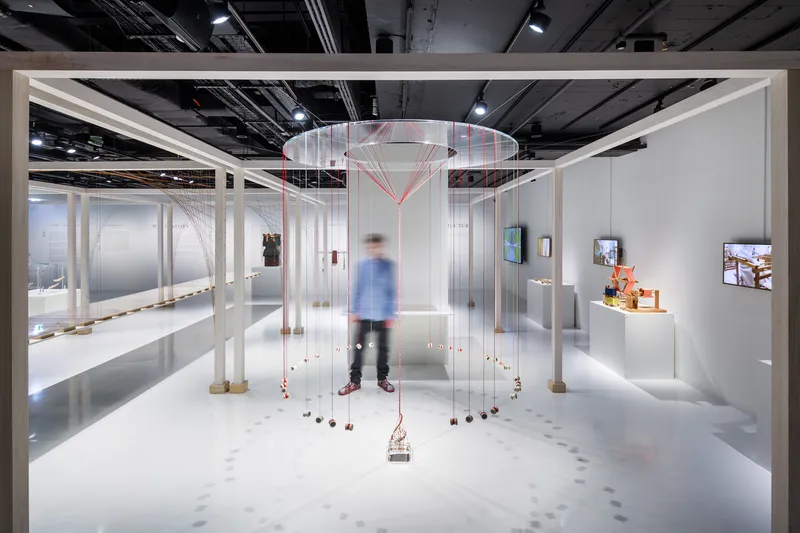
The curatorial challenge lay in creating an atmosphere where the intricacy of small, hand-braided silk works could be appreciated without distraction. Instead of opting for the sterile neutrality of a white cube, Rei Mitsui Architects envisioned a setting that feels alive yet restrained — a space akin to water: transparent, calm, and full of vitality.
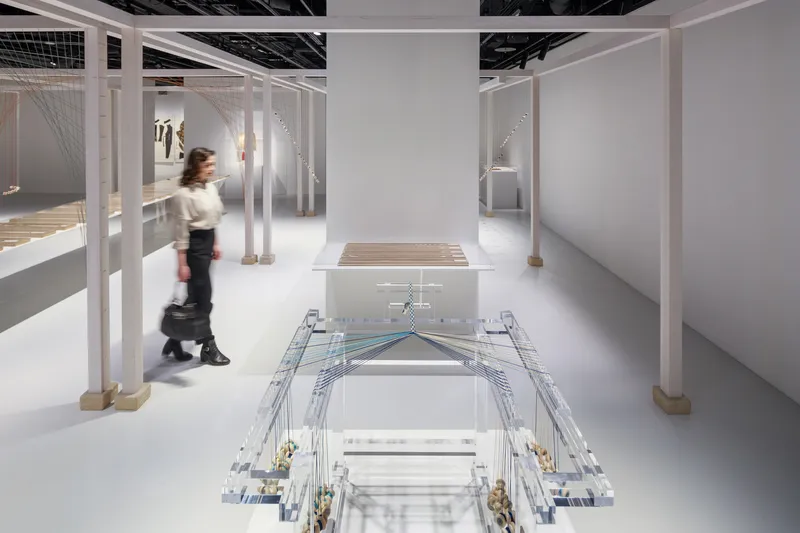
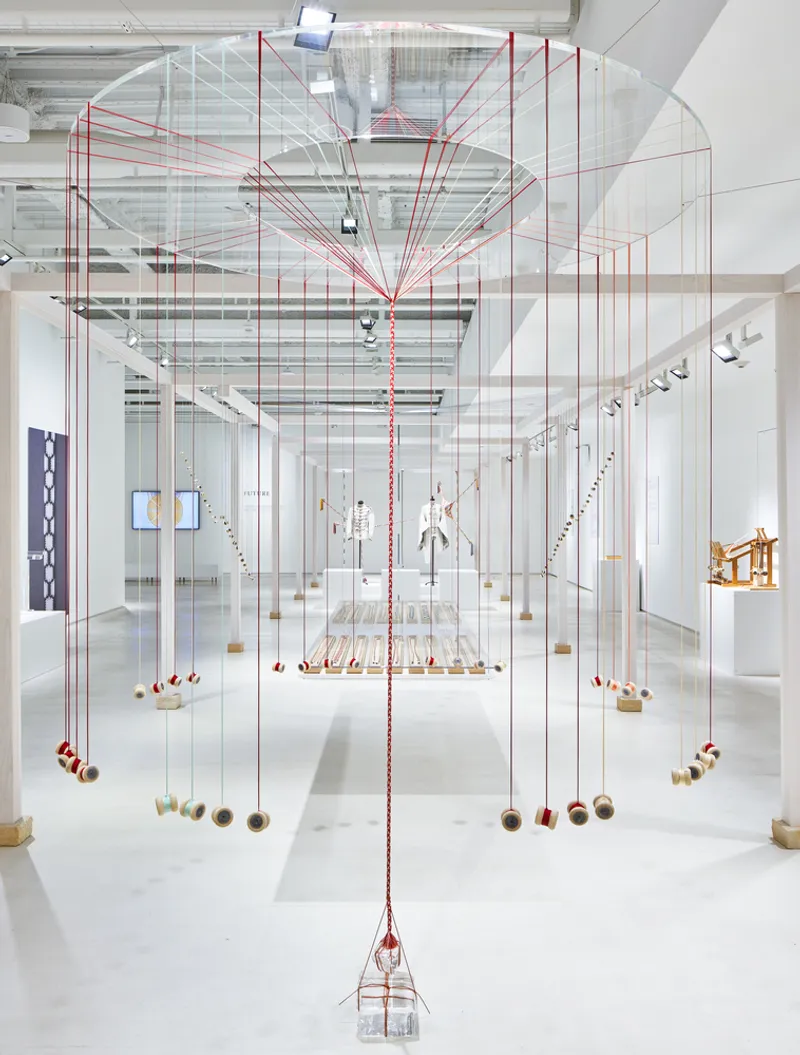
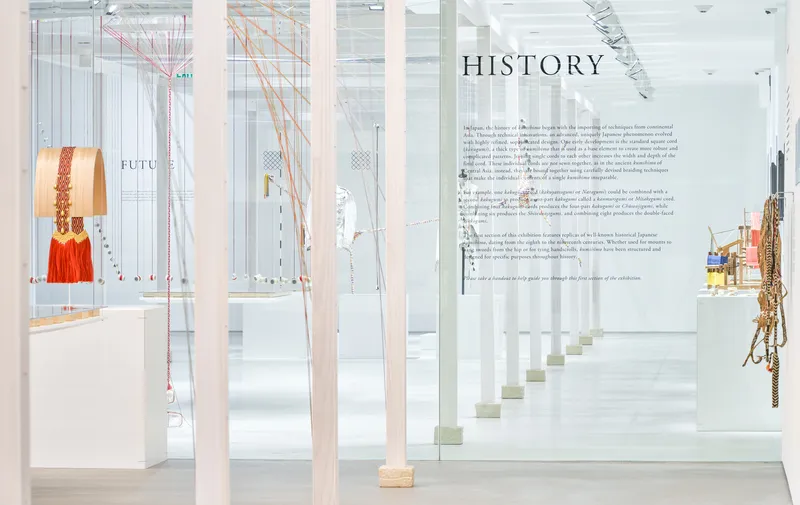
The design draws inspiration from the concept of himorogi — a sacred Shintō boundary that welcomes the kami deities. Within this architectural boundary, the kumihimo braids stand as the sole focus, while supporting elements such as texts and panels remain outside. This gesture transforms the exhibition into a spiritual encounter, elevating the craft beyond ornament into cultural heritage.
Spatial Structure and Symbolism
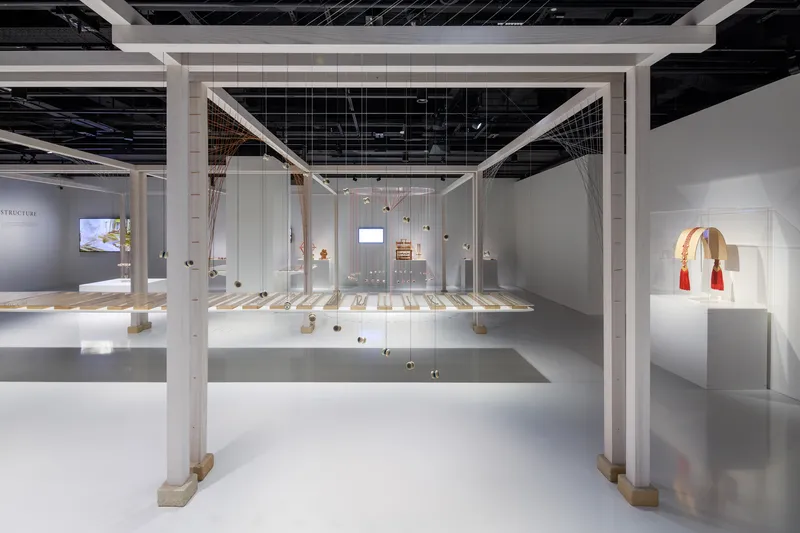
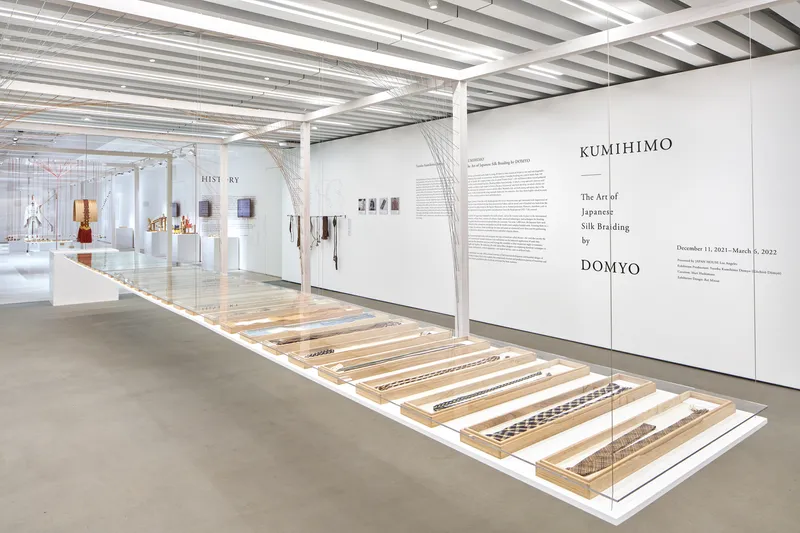
The display frames are arranged in a grid of nine, referencing mandalas and the cyclical flow of time toward a sacred center. Each frame appears minimal, painted white, but carries layers of craftsmanship and meaning. Constructed in cedar wood and coated with gofun — a traditional powdered seashell finish — the surfaces achieve a grainy, translucent texture that resonates with the fine threads of silk braiding. Like o-shiroi, the white foundation used in Japanese makeup, the finish adds depth while allowing the warm cedar tones to subtly emerge beneath.
Earth, Pillars, and Continuity with Tradition
The frames are anchored by ceramic plinths, connecting the industrial white gallery with the strength and tactility of the earth. This design decision recalls the ancient hottate-bashira method of erecting pillars by embedding them directly into the soil. While the gallery setting does not allow literal excavation, the fired earthen blocks metaphorically root the exhibition in the history of Japanese architecture and craftsmanship.
An Architectural Tribute to Kumihimo
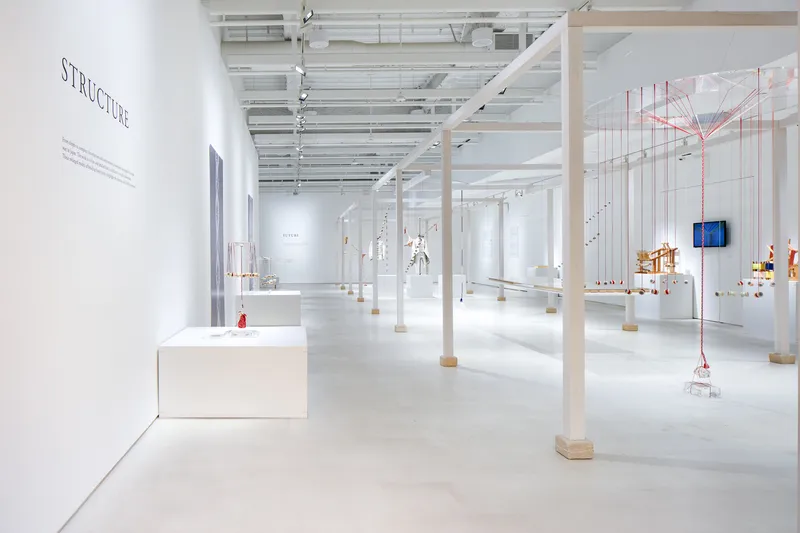
Through these thoughtful choices, Rei Mitsui Architects transforms the gallery into a space of quiet reverence, where tradition, spirituality, and materiality converge. The exhibition not only preserves the fragile beauty of kumihimo but also interprets it in an architectural language that bridges the ancient and contemporary, the ephemeral and enduring.
All Photographs are works of Jérémie Souteyrat




Popular Articles
Popular articles from the community


Lunar Spiral: Space Architecture Shaped by the Mathematics of the Universe
Lunar Spiral reimagines space architecture through Fibonacci geometry, lunar regolith, levitating habitats, and self-sustaining Moon living.

The Earth Pod: 3D Printed Homes for Resilient Refugee Communities
The Earth Pod reimagines refugee housing through 3D printed homes made from clay, combining resilience, self-sufficiency, and rapid shelter.

Conexión: Biophilic Design Reimagines High-Rise Living in Hong Kong
Conexión reimagines high-rise living in Hong Kong through biophilic design, green facades, shared spaces, daylight, water and nature within.

Play: Fragments of Their World
Familiar architecture becomes modular playground design, creating safe spaces where displaced children can learn, connect, imagine and play.


Similar Reads
You might also enjoy these articles


Hodi-Mandai Geram
Project Function: Preservation and revitalization of the Intangible heritage and socio-spatial identity of the Hodi by Housing, Cultural Memory Center, Sacred Grove, landscape, local tourism economy


Olio Towers: A Mid-Rise for Performers That Fuses Housing, Rehearsal, and Stage
Located blocks from Houston's Theater District, this modular tower stacks living units around a central performance atrium.

Oasis: Modular Green Housing Carved into Dhaka's Urban Fabric
A shortlisted Plugin Housing entry reclaims unauthorized settlements in Dhaka with stepped concrete volumes, green roofs, and ventilation-driven design.

Black Hole: A Floating Megastructure for the Post-Physical Era
Emiliano Mazzarotto envisions a spherical, self-scaling arena where e-sports, digital hotels, and holographic stadiums replace traditional public space.


Explore Cultural Architecture Competitions
Discover active competitions in this discipline



Challenge to reimagine the Iron Throne


Photograph architecture without architects


Illustrate the lost glory of Angkor Wat - Render Challenge


Bring back Drive In's
Comments (0)
Please login or sign up to add comments
No comments yet. Be the first to comment!