
Kyoto Machiya Renovation: House Mokusei by Atelier Yoo
A century-old Kyoto machiya transformed into a guesthouse by Atelier Yoo, blending historical typology with modern comfort and hospitality.


Reviving a Century-Old Kyo-Machiya
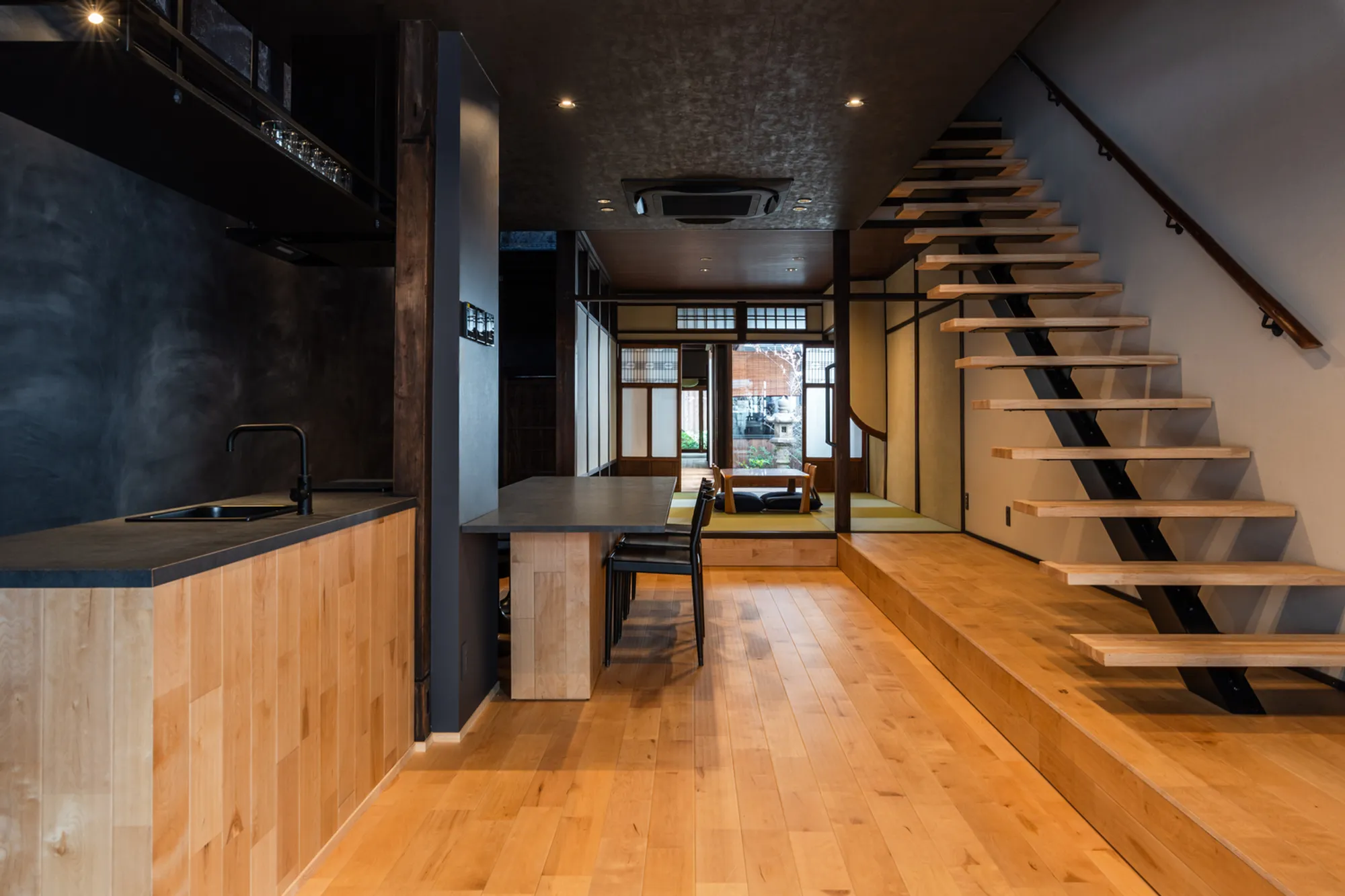
House Mokusei by Atelier Yoo is a striking example of Kyoto machiya renovation, breathing new life into a century-old townhouse in Kyoto’s Shimogyo Ward. Once a fragmented and altered space, the project restores the architectural integrity of the traditional Kyo-machiya while adapting it for modern hospitality use.
Historical Roots of the Kyo-Machiya
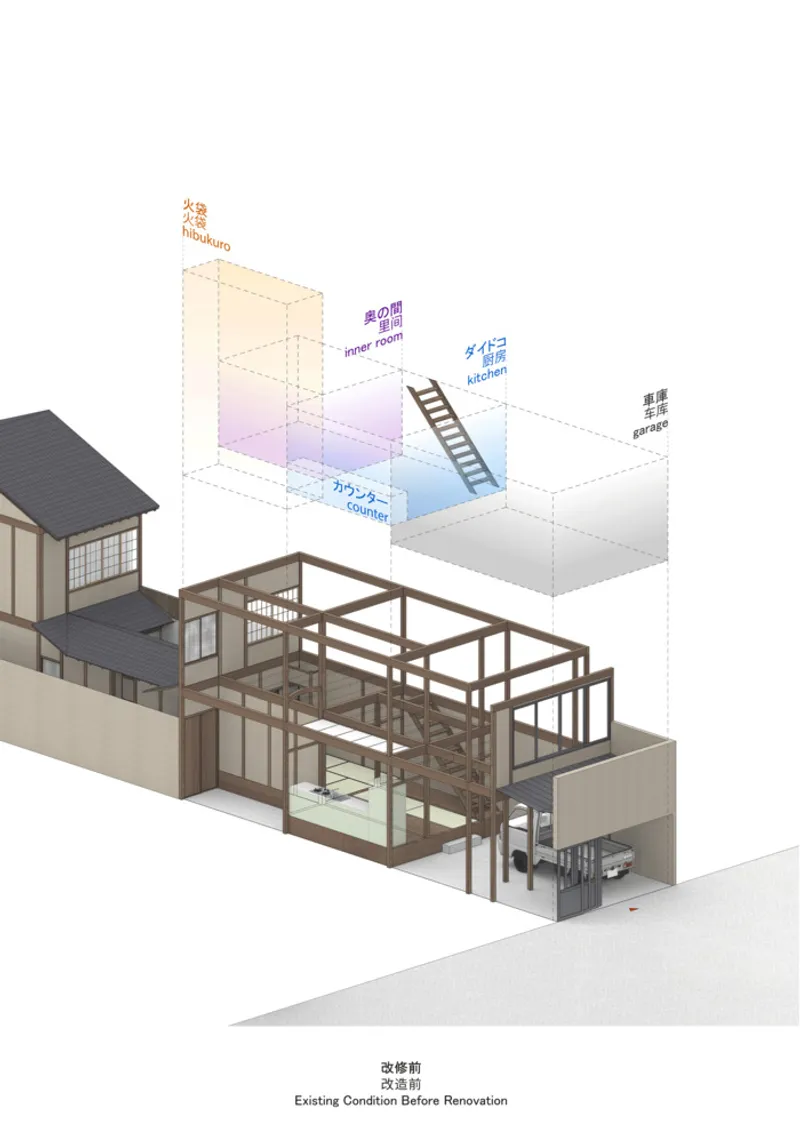
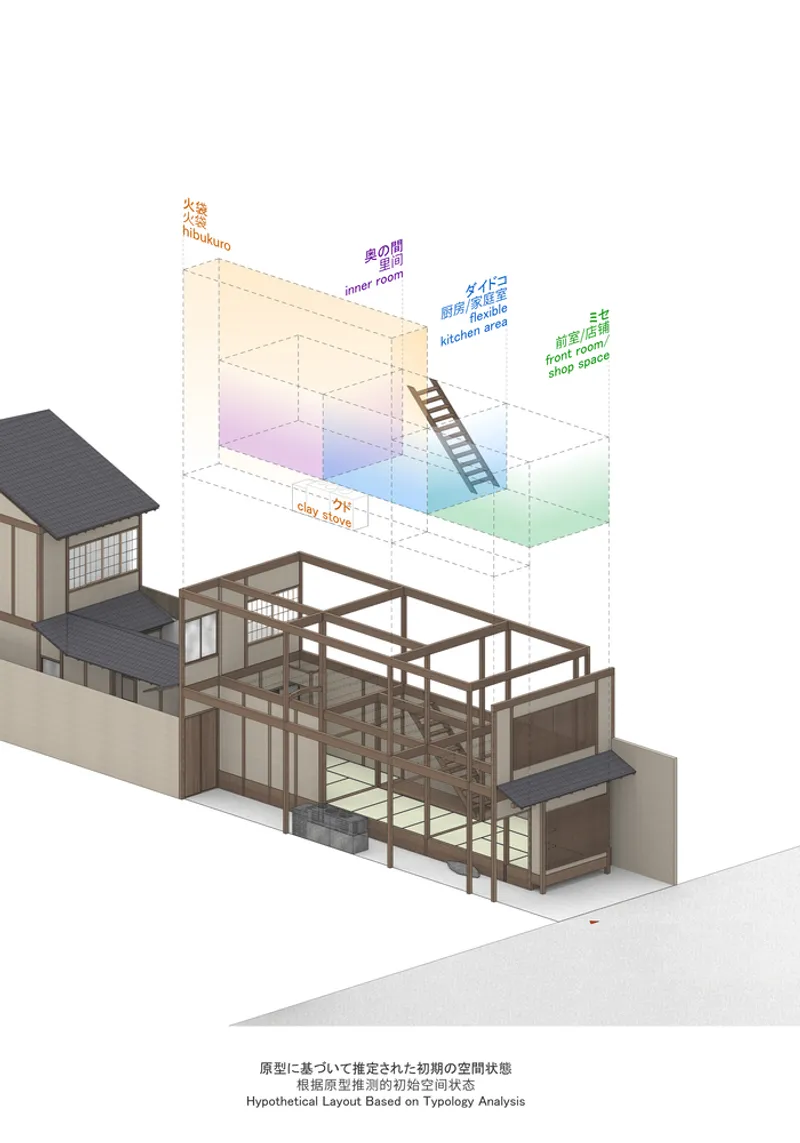
Kyoto’s machiya heritage dates back over 1,200 years, shaped by the jōbō grid system imported from Tang dynasty China. By the Edo period, the machiya—defined by narrow street frontage and elongated interiors—had become the city’s signature housing type. Known as “eel’s beds” (unagi no nedoko) for their slim proportions, these townhouses followed a distinctive spatial flow from public to private, with the doma (earthen passage), hibukuro (smoke chimney void), and sequential tatami rooms defining daily life.
Restoring Order and Flow
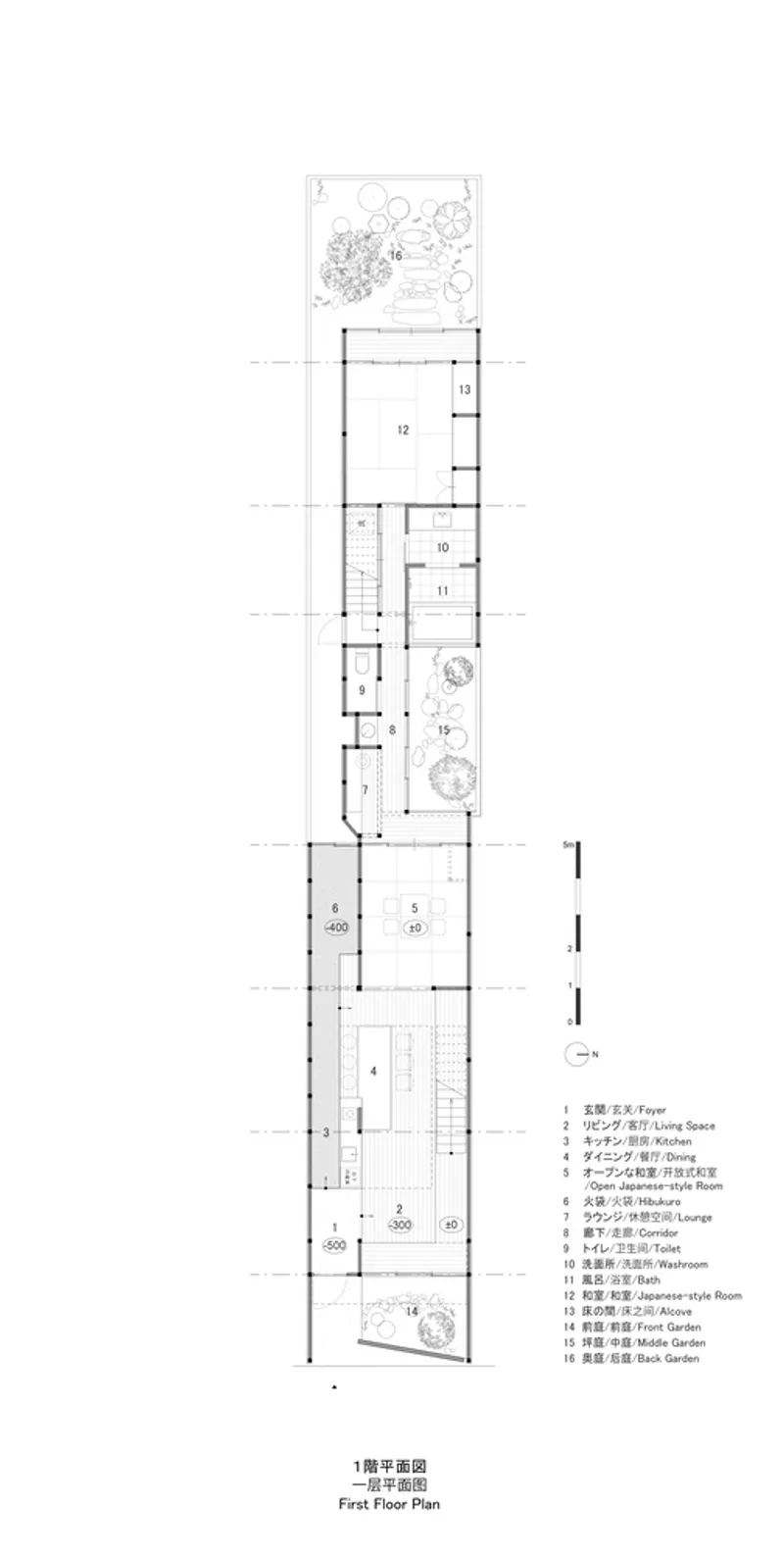
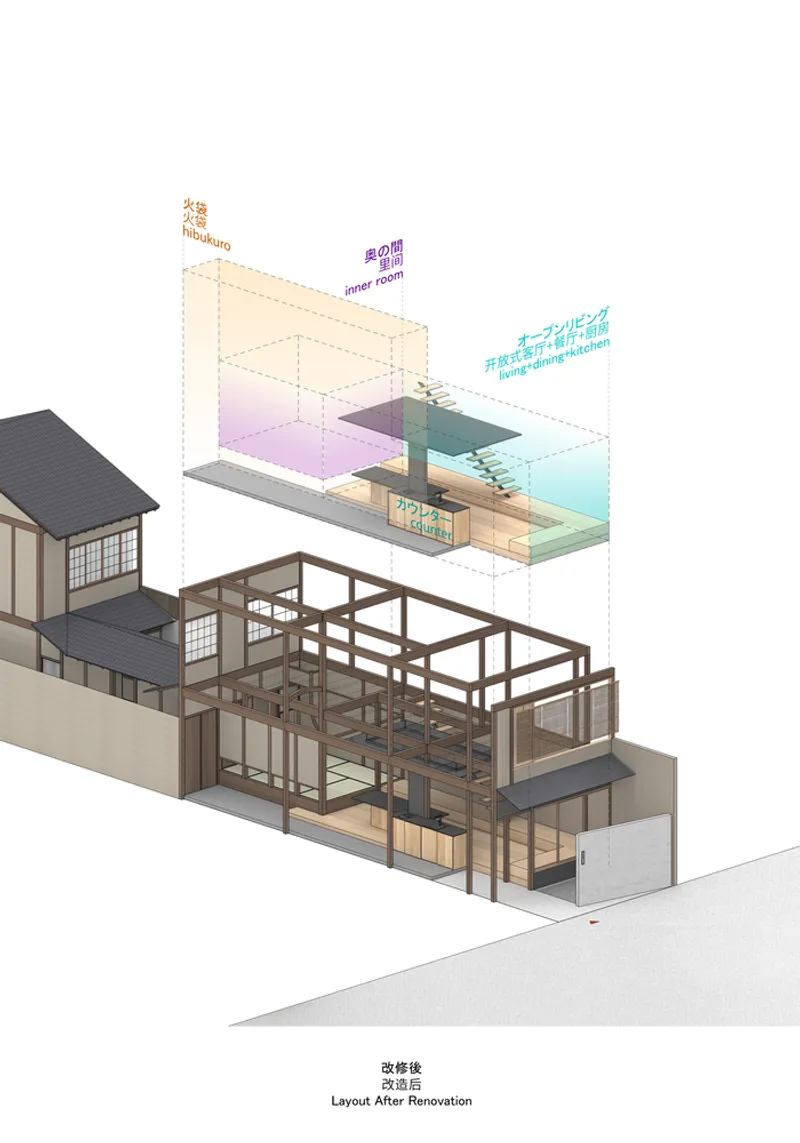
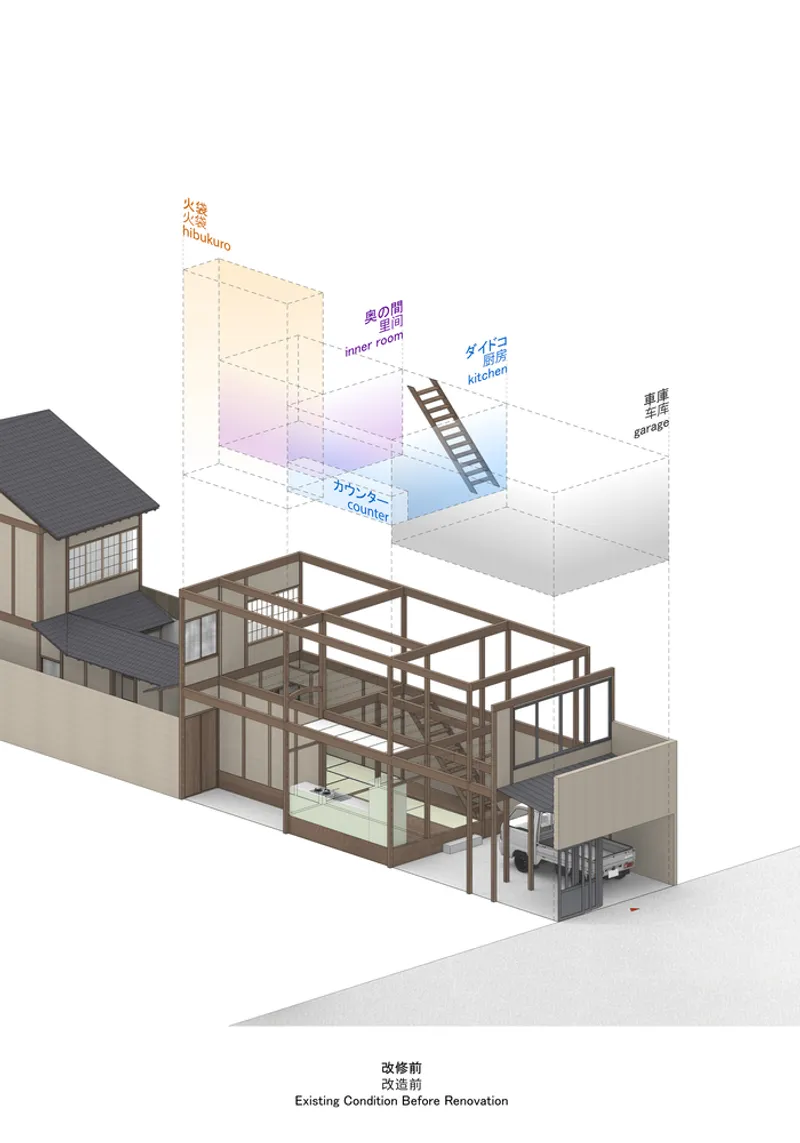
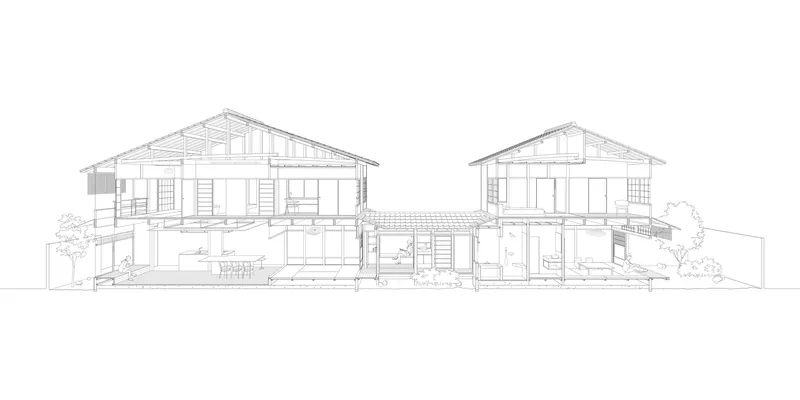
Before renovation, House Mokusei had lost much of its original spatial logic. The façade and street-facing mise space were gone, the doma was disrupted by a raised kitchen platform, and the hibukuro void was closed off. Atelier Yoo’s design unfolded in two stages: reestablishing the typology’s spatial order and integrating modern functions for a lodging facility.
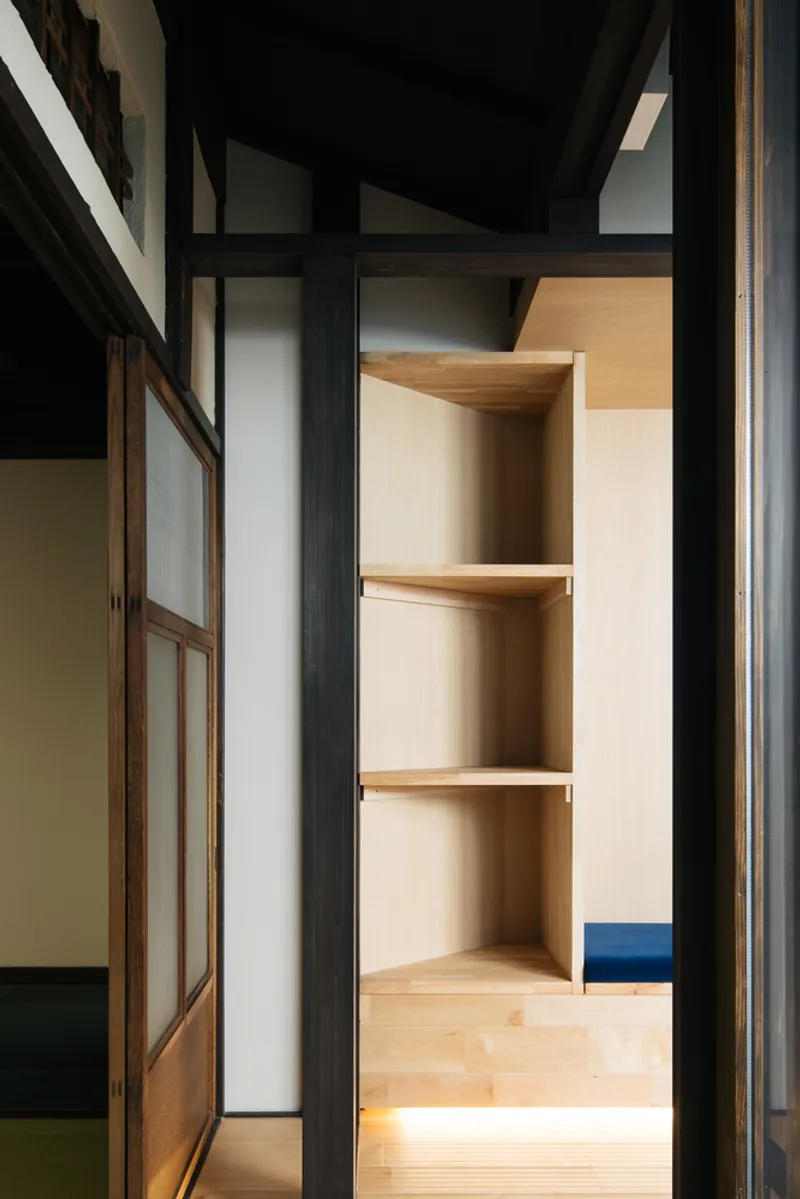
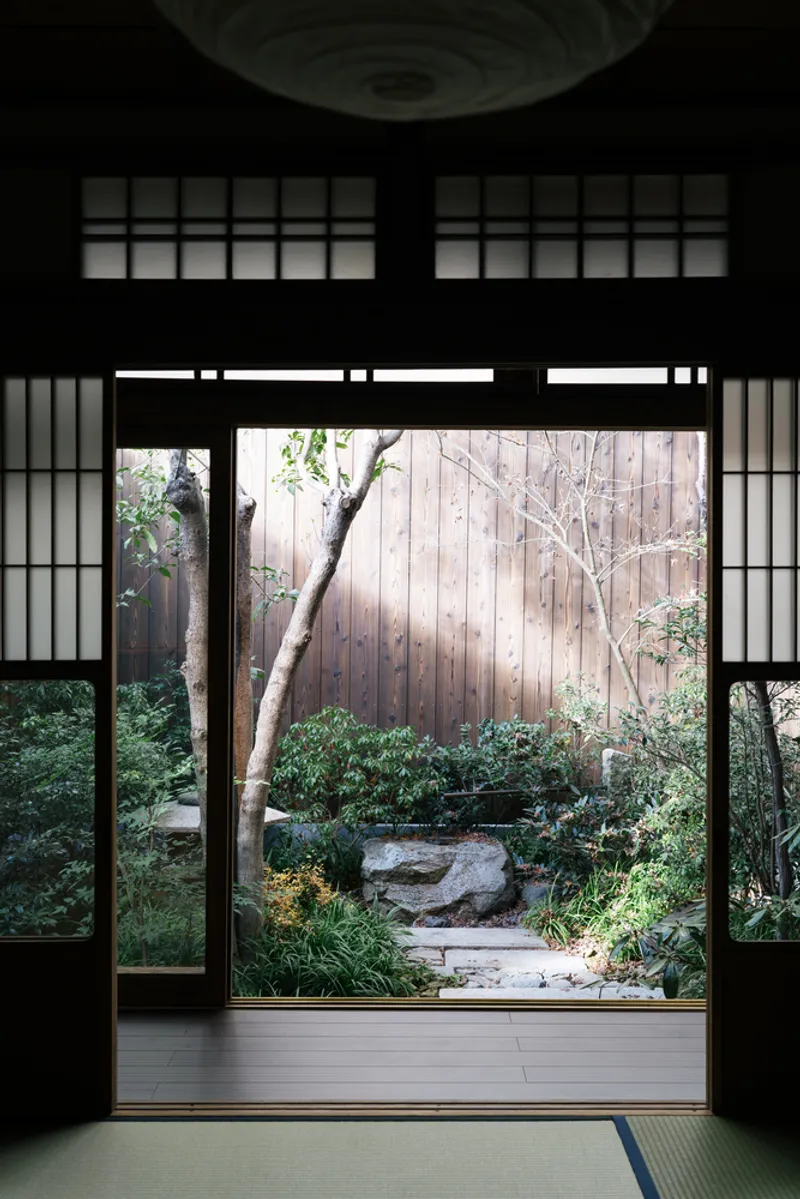
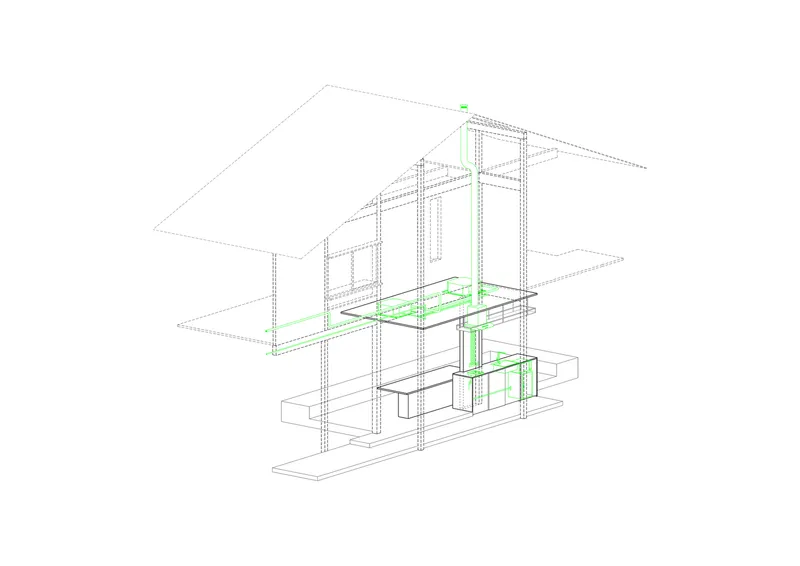
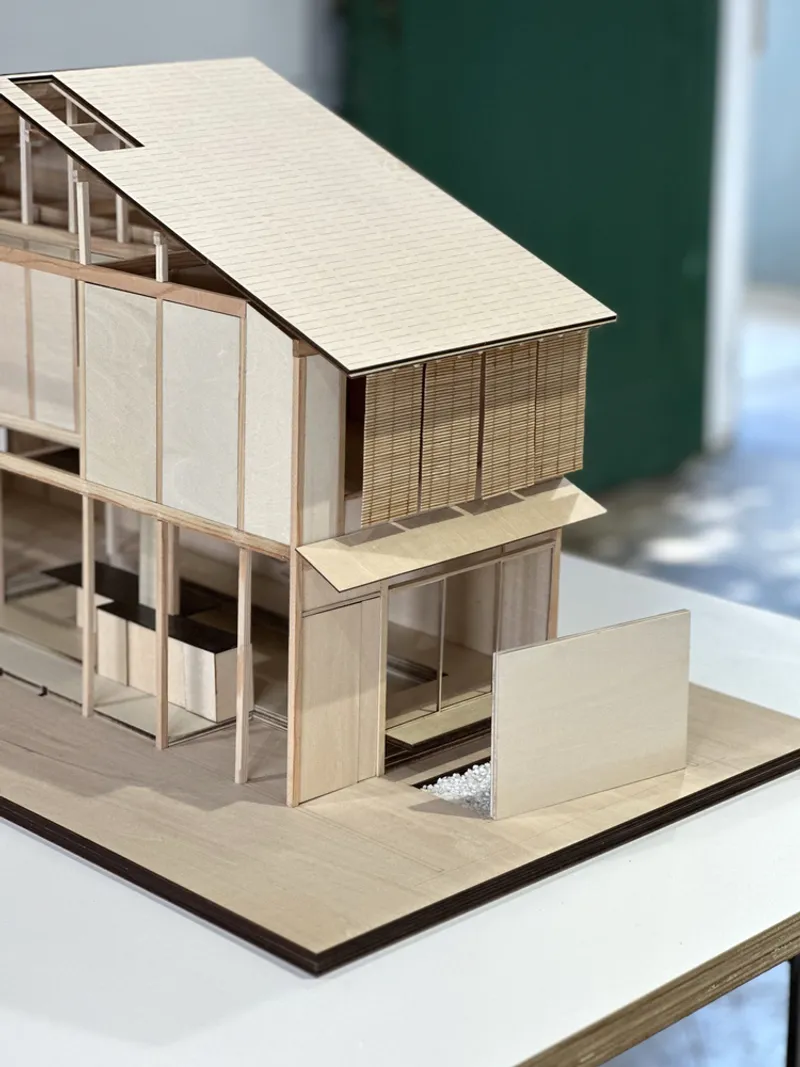
Key moves included pulling the façade back to its original position to create a front garden, removing the raised doma platform to restore a longitudinal flow, and combining the mise and daidoko into an open-plan living space with adjusted floor heights. A central “device” incorporating the kitchen stove, dining table, and utilities was positioned between the doma and living area, enhancing the spatial transition.
Bringing Light, Air, and Continuity
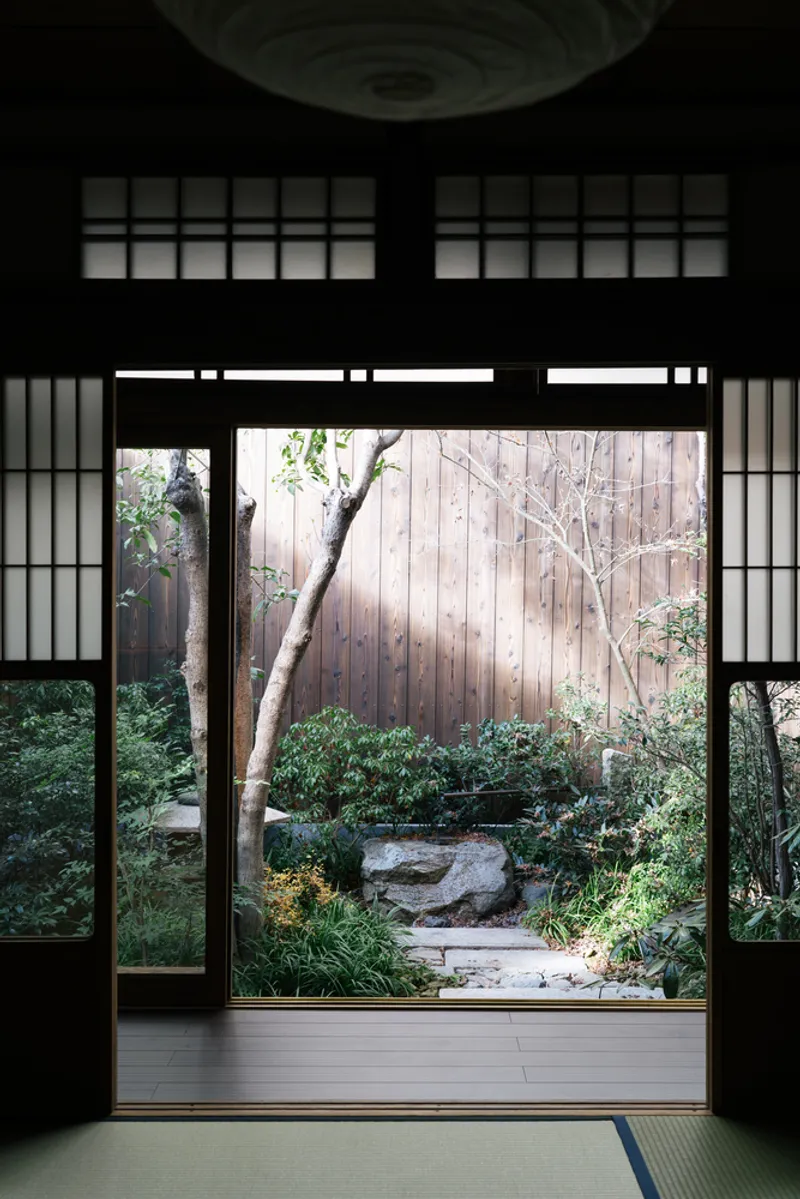
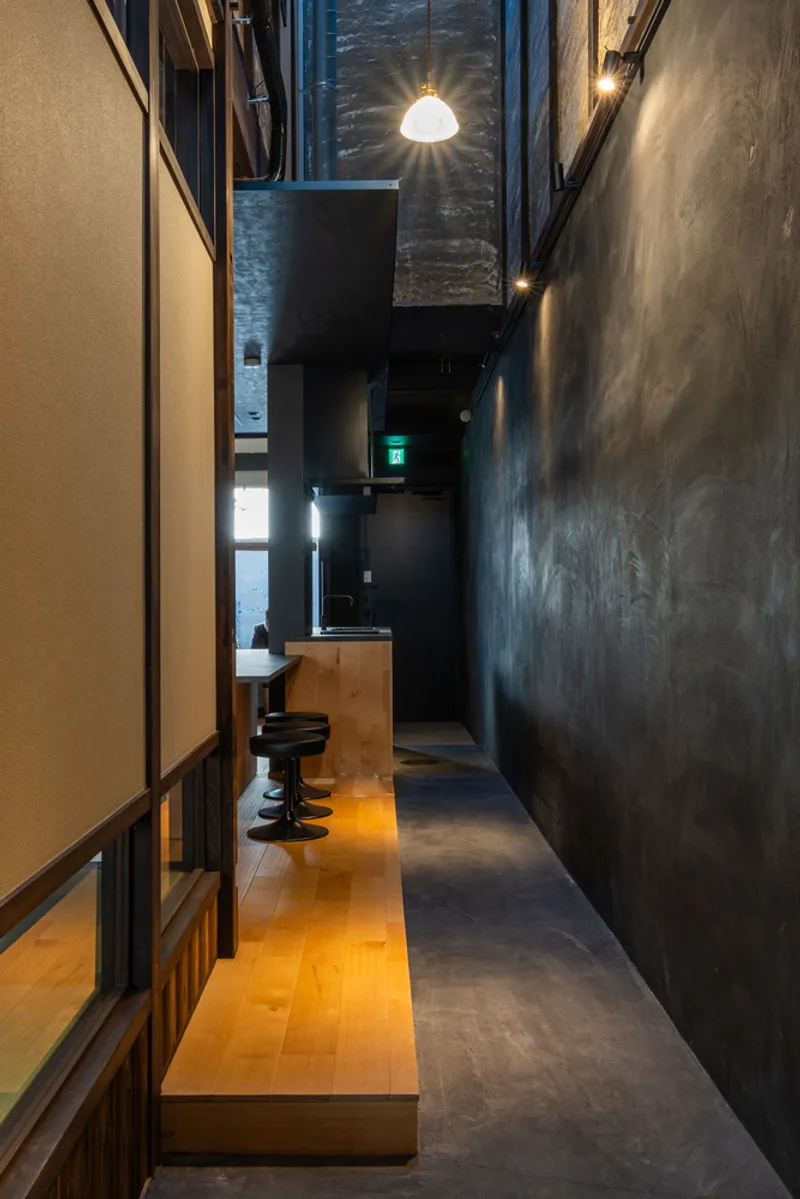
The restoration of the hibukuro as a light and ventilation source was central to the renovation’s success. All wiring, ducts, and exhausts were intentionally exposed within this vertical shaft, honoring the functional honesty of the traditional structure. The result is a renewed permeability, connecting nature and architecture, past and present.
Blending Tradition with Modern Hospitality
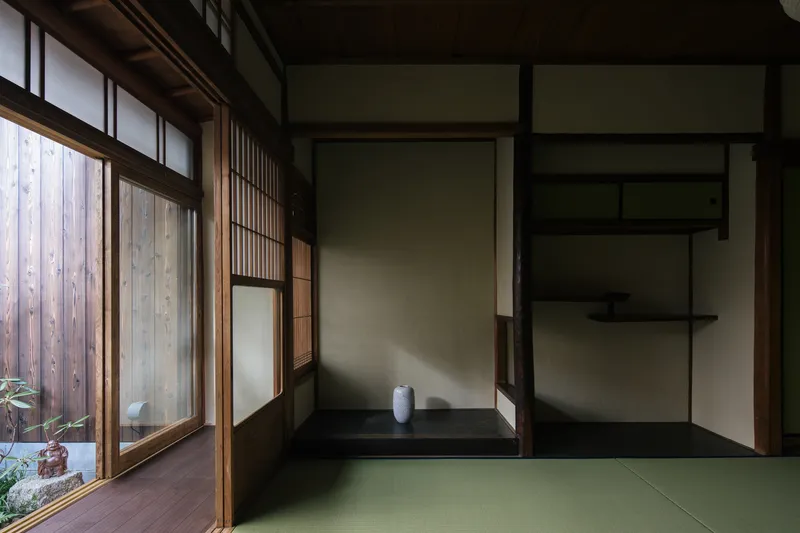
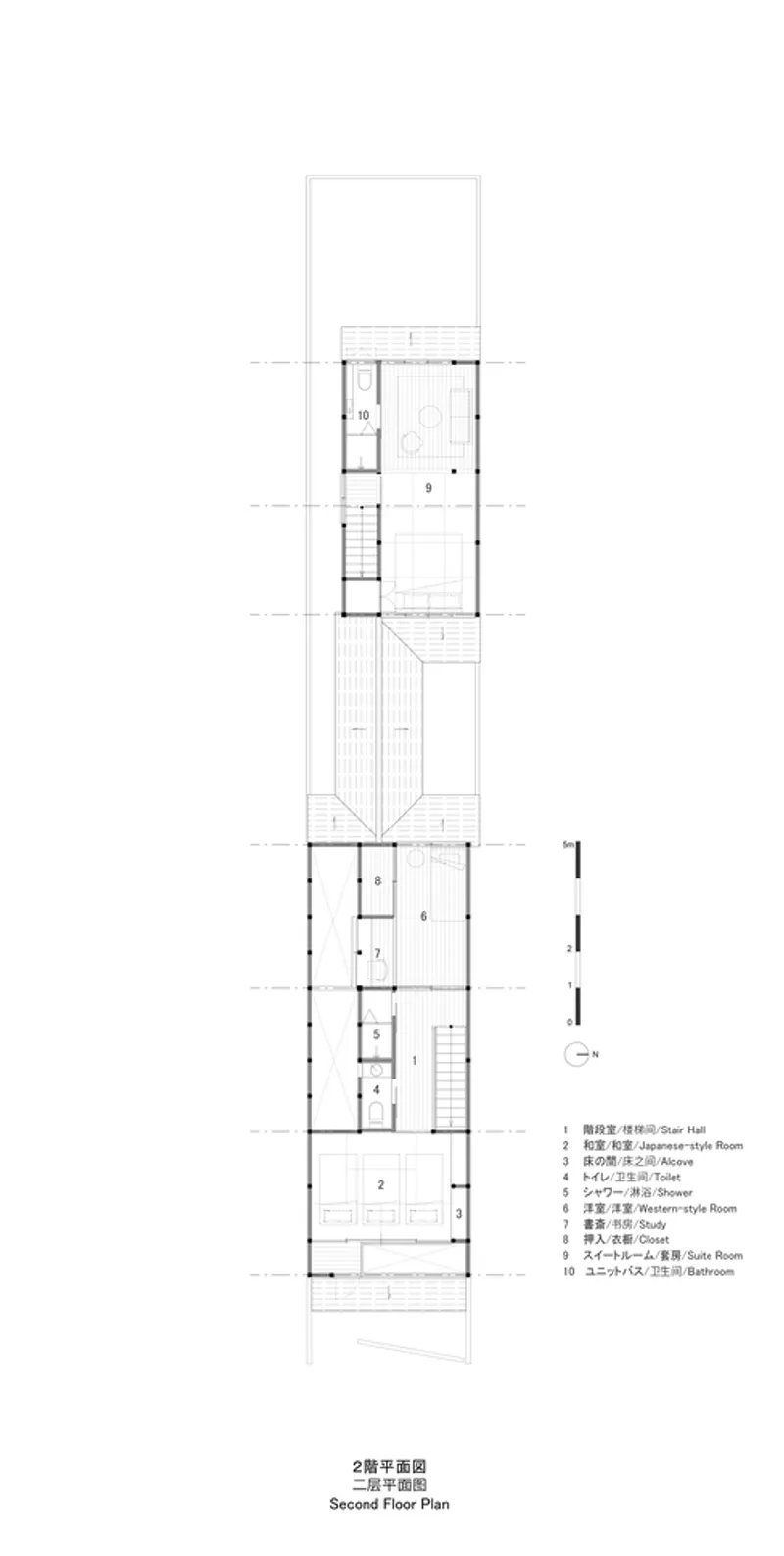
House Mokusei now serves as a lodging space, offering four distinct room types: traditional washitsu, modern washitsu, Western-style, and suite. The washitsu rooms retain tatami flooring for flexible sleeping arrangements, while the Western and suite rooms cater to guests preferring beds and contemporary furniture.
A Lesson in Typology and Cultural Value
The renovation is a testament to how typological study can guide sensitive design. By understanding the original Kyo-machiya logic, Atelier Yoo balanced preservation with adaptation, creating a space that resonates with Kyoto’s cultural identity while meeting modern needs. As Aldo Rossi observed, the city’s physical form expresses enduring values—House Mokusei embodies this principle in architectural form.
All photographs are works of Kazuoki Yasugi, Song Gao




Popular Articles
Popular articles from the community


Hill & Cross Opera: Sculptural Opera House Architecture Shaped by Tallinn’s Landscape and Identity
Hill & Cross Opera reimagines opera house architecture in Tallinn through its sculptural hill, civic plaza, glass wave and a luminous cross.

Lunar Spiral: Space Architecture Shaped by the Mathematics of the Universe
Lunar Spiral reimagines space architecture through Fibonacci geometry, lunar regolith, levitating habitats, and self-sustaining Moon living.

The Ocean Hive: Sustainable Architecture for a Self-Sufficient Civilization at Sea
The Ocean Hive imagines sustainable architecture at sea, where modular habitats, algae, wave power and ocean waste sustain a growing colony.

Co-life: Sustainable Architecture for Age-Friendly Community Living
Co-life reimagines sustainable architecture for seniors through courtyards, rammed earth, shared gardens, and spaces designed for belonging.


Similar Reads
You might also enjoy these articles


FAMM Arquitectura Organizes Ten Villas Around Courtyards and Jungle in Nosara, Costa Rica
El Molino pairs two elongated volumes with deep overhangs and timber louvers to build a compact coastal community five minutes from the beach.

Oscar Niemeyer's Ibirapuera Park Pavilions Define São Paulo's Cultural Identity in Concrete and Curve
A constellation of modernist volumes set within São Paulo's most important urban park, conceived for the city's 400th anniversary in 1954.
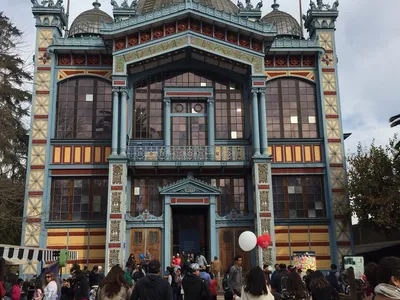
How Henri Picq's 1889 Paris Pavilion Traveled 11,000 Kilometers to Become Santiago's Artequín Museum
A prefabricated iron and glass pavilion built for the Paris Universal Exposition found a second life as a children's art museum in Chile.

Sanjay Puri Architects Wraps a Jaipur Office Tower in Capsule-Shaped Green Buffers
A nine-level climate-responsive workplace near Jaipur Airport uses stacked planter terraces and aluminium screens to fight 40°C heat.


Explore Architecture Competitions
Discover active competitions in this discipline



Challenge to reimagine the Iron Throne


Photograph architecture without architects


Illustrate the lost glory of Angkor Wat - Render Challenge


Design challenge to reuse E-waste
Comments (0)
Please login or sign up to add comments
No comments yet. Be the first to comment!