

La esquina del arte
Space around the art

The first thing that is seen while visiting a new place is the location of accommodation. It is a gateway to the city, the first contact with the new place. Therefore, it is very important to give a taste of the culture in the accommodation facilities so that the guest can feel the atmosphere of the area. One of the carriers of culture is art. It shows the history of a place, its key aspects, its ups and downs.
Culture and art are part of community life. Getting to know the city and its character is crucial to understand the place. You cannot design without that. That’s why all design considerations were based on our experiences during the trip to Barcelona and Spain. The observations and conclusions that emerged after the trip allowed us to transfer our feelings and the characteristic elements of the city to the project.
The first and most important factor in shaping development was the way quarters were formed in Barcelona. The main points of the project from the XIX century, as quarter buildings and truncated corners, were implemented into designed space. Another thing was to connect the neighboring development, which consists of residential quarters and a hangar which is the heart of the artists' life in this part of the city. The space given back to artists is a place of research and artistic soul-searching. You can receive support in the different phases of creation in various fields there. The goal of the project was to extend this space and connect artists with the local community and visitors.
Tearing down the barriers between the viewer and the artist was also a key aspect of the project. There are many ways to bring them together. However, the main one was to invite the audience into the design process. Guests create art while moving and going through spaces in the building. In the gallery, which is located on the ground floor, artists create alongside viewers who watch their work. They can see their reaction to the art, perform experiments and talk to them.
Art and creation have a main voice in the space. Architecture has been just a background and forms a coherent whole with art while blending with it. Cubes, consisting of small coloured glasses, were placed at the entrances to the building. This solution gets the user of the space into the artistic atmosphere, at the same time being an artistic expression and an architectural element. Another thing that has been placed in the main square, workshop spaces and galleries are walls. They allow the space to change over time - walls will change their places and new art will appear. Thanks to that the place will look differently depending on the time when you visit it. Movable walls, which are both inside and outside, allow the space to be transformed according to needs. Because of that it is attractive to the viewer regardless of the number of visits.
The ground floor of the building has been divided into three parts by paths leading to the square from living, artistic and park areas. In the most representative corner there is a gallery with an experimental room, sliding walls and workstations for artists right next to the audience. Another part of the building contains a second part of the gallery, a cafe and workshops, where the arrangement of walls allows it to change according to current needs e.g. adjust a place for lecture halls. In the last part there is a main hall, hotel reception, restaurant and hotel workshops, where guests will be able to take part in various events. The windows in most of the rooms on the ground floor are extendable so that they can be opened and extend into the courtyard of the building and the workshops inside become external.
The entire first floor of the building is covered with private hotel rooms and common hotel spaces which are kitchen, library, working space and living room. Additionally from shared rooms there is an access to the roof terrace where some further facilities are placed. Guests can find yoga, barbecue and other resting areas among plants there.
Different types of spaces have been introduced in the building, from public to semi-public, semi-private and private. According to the needs of individuals people can choose which type of space is the most suitable for them. The square in the center of the facility is at the same time an open-air art gallery, workshops and a place of relaxation and inspiration. It was observed that one of the common elements on the street were chairs. That’s why they were implemented into the designed square.
The hotel was designed mainly with its audience in mind. In order for the art they create to come to the fore, the colors of the hotel are kept in bright tones, without strong, distinctive elements.
The aim of the designed space was to attract people and at the same time fit into the surrounding buildings and refer to the characteristic elements of Barcelona streets.


Popular Articles
Popular articles from the community


Co-Life: Senior Housing Design That Reconnects Older Adults With the City
Co-Life reimagines senior housing design through healing gardens, shared streets, workshops, and a sustainable community across generations.

Hill & Cross Opera: Sculptural Opera House Architecture Shaped by Tallinn’s Landscape and Identity
Hill & Cross Opera reimagines opera house architecture in Tallinn through its sculptural hill, civic plaza, glass wave and a luminous cross.

The Musturak Paradise: Senior Living Architecture for a Connected Future in Temara, Morocco
The Musturak Paradise reimagines senior living architecture in Temara via private homes, social spaces, culture, community, and shared care.

The Earth Pod: 3D Printed Homes for Resilient Refugee Communities
The Earth Pod reimagines refugee housing through 3D printed homes made from clay, combining resilience, self-sufficiency, and rapid shelter.

Similar Reads
You might also enjoy these articles

Day and Night Park: A Time-Based Urban Newsstand in Beijing
A temporary urban newsstand in Beijing blending travel, light, and reading through poetic colors, compact form, and community-focused design.

Modernist Patio Renovation in El Masnou, Barcelona by Oliver Segura Arquitectura + Cebrià Arquitectura
Modernist patio renovation blending tradition and innovation with a movable pool, leveled floors, and Catalan materials in El Masnou.

Alto Residencial Coop: Cooperative Housing Development in Santiago de Compostela by Carbajo Barrios Arquitectos
A linear cooperative housing complex blending white volumes and perforated metal façades, enhancing community living, natural light, privacy, and urban integration.
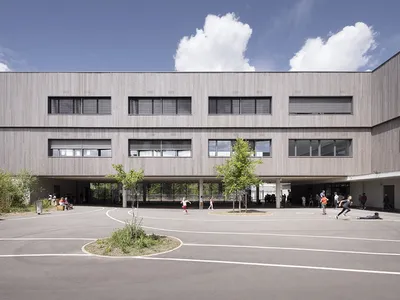
Vil Genis School by BPA ARCHITECTURE – Massy, France
Vil Genis School in Massy, France, features sustainable design, south-facing classrooms, community integration, accessible spaces, and modern educational architecture.


Explore Art Gallery Competitions
Discover active competitions in this discipline



Challenge to design locus for the upliftment of human rights


Challenge to reimagine the Iron Throne


Photograph architecture without architects


Illustrate the lost glory of Angkor Wat - Render Challenge
Comments (0)
Please login or sign up to add comments
No comments yet. Be the first to comment!