
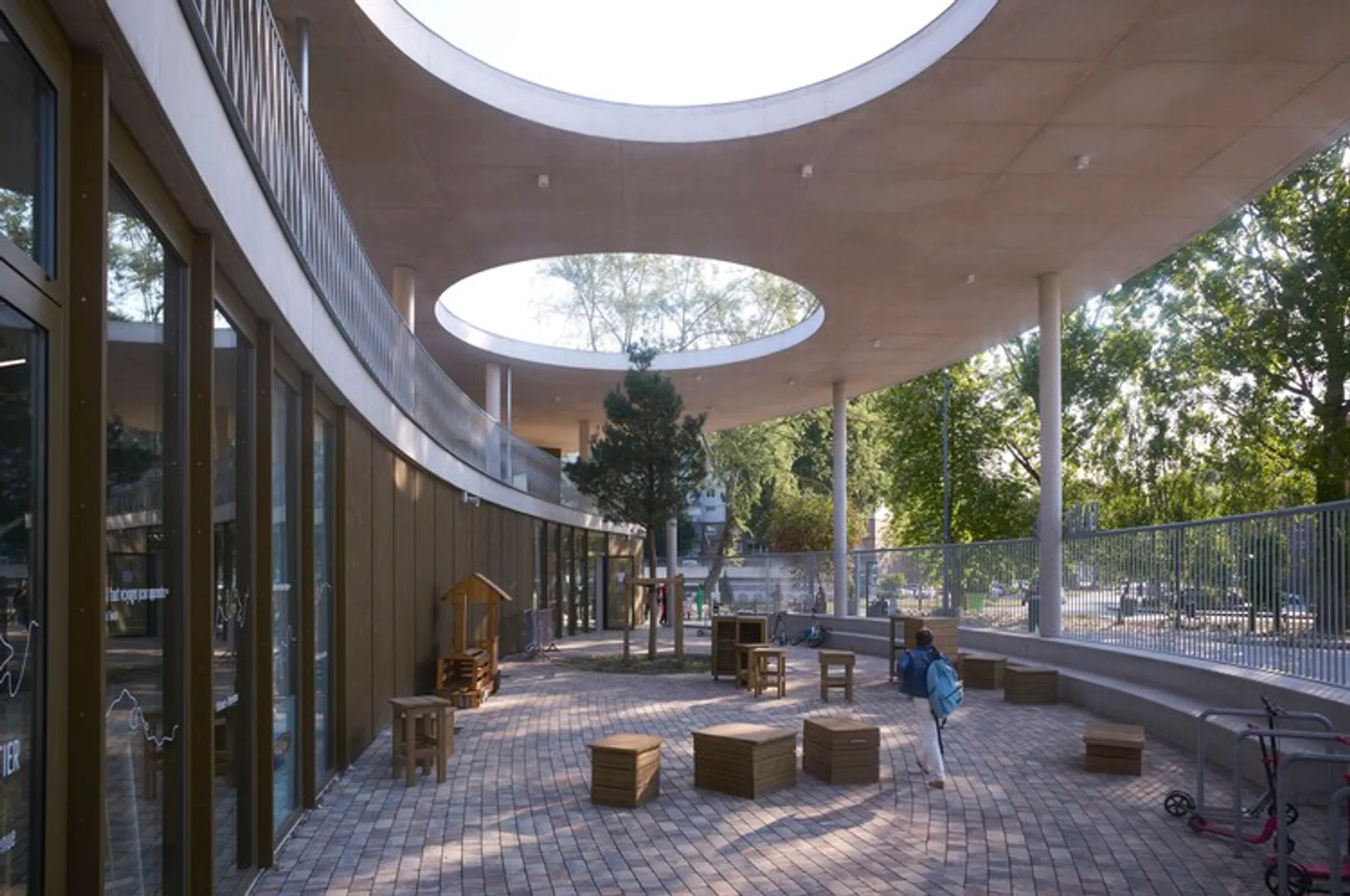
L’Alliance School: A Fluid Educational Campus Integrating Community, Landscape, and Learning
Modular school with courtyard and park integrates education, community, and landscape, creating flexible, sustainable spaces for learning and social interaction.


Located in Dunkerque, France, L’Alliance School by TANK Architectes is a contemporary educational complex that extends beyond the traditional notion of a school, positioning itself as a civic and social anchor within its neighborhood. Designed as a modular and multifunctional environment, the project accommodates a wide range of programs, including a nursery, elementary school, cafeteria, community center, multipurpose hall, cybercenter, and civic spaces. Together, these elements form a cohesive ecosystem that supports both education and community life.
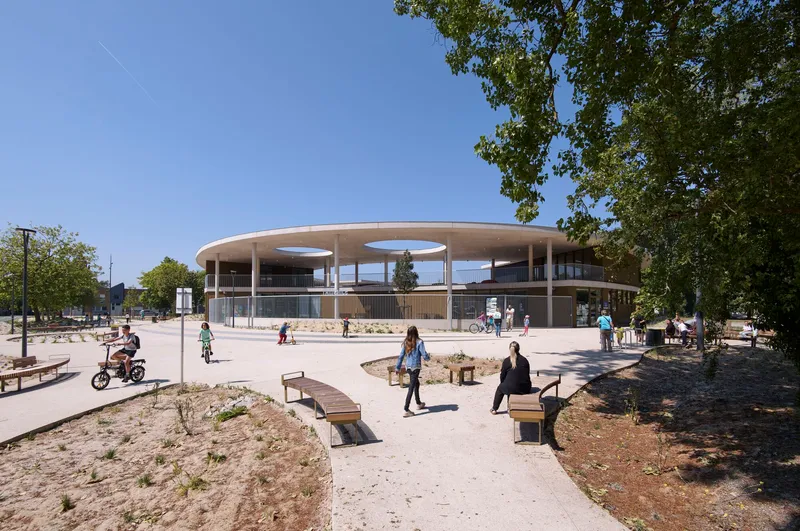
The project is strategically situated to mediate between surrounding neighborhoods, acting as a connective urban element. Rather than functioning as an isolated institution, the school engages actively with its context, enhancing public space and fostering social interaction. This ambition extends beyond the building itself through the creation of a one-hectare park that transforms the site into a shared landscape for both students and residents.
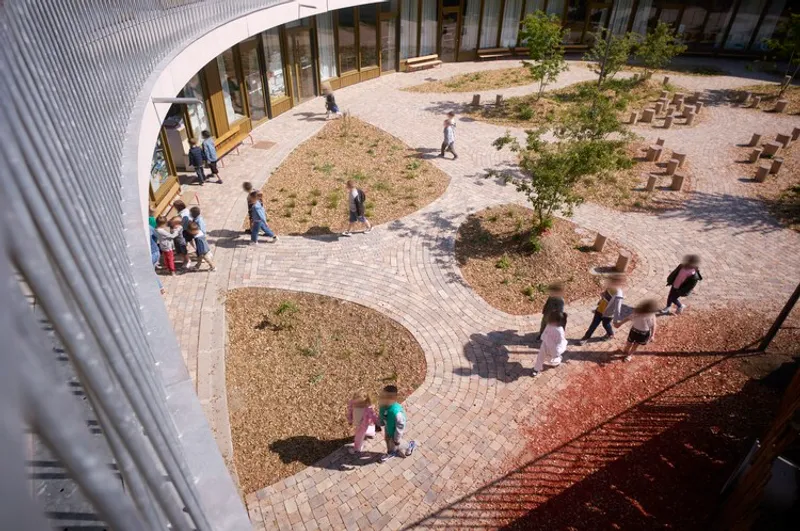
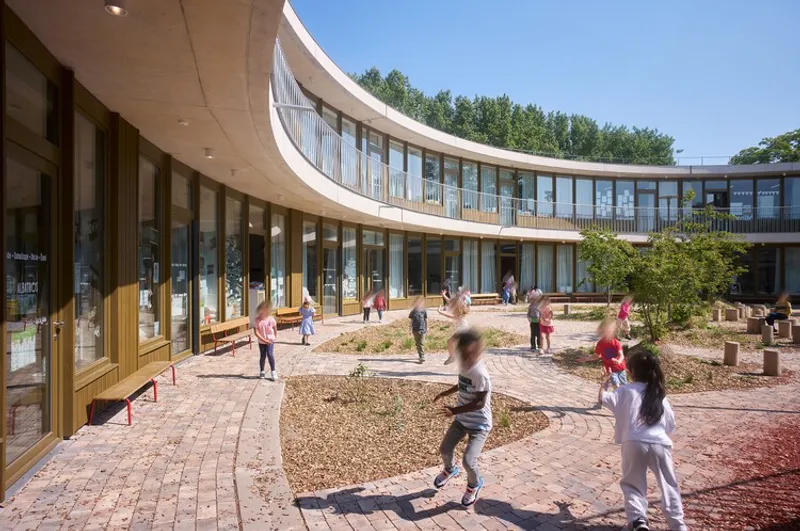
At the heart of the design lies a gently curved central courtyard around which the various functions are organized. This courtyard acts as a spatial and social core, structuring circulation while providing a protected environment for younger children. The architecture unfolds fluidly around this central space, with classrooms and communal areas wrapping, opening, and shifting in response to orientation, light, and use.
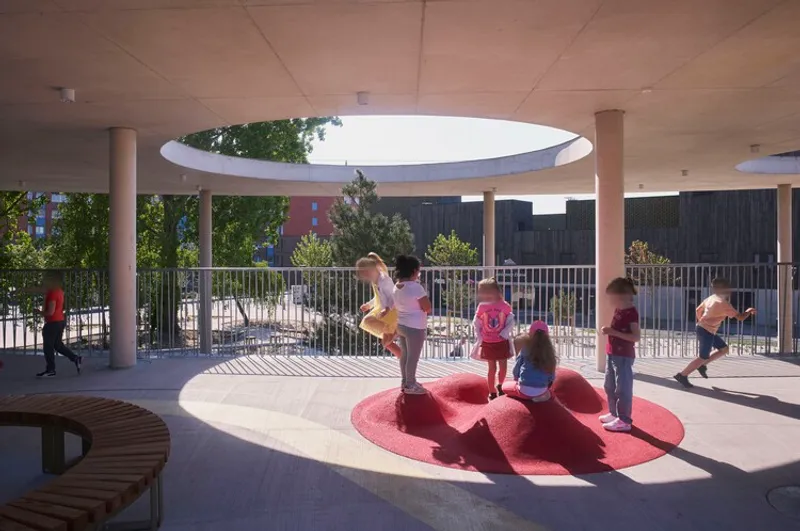
Access to the complex is defined by a landscaped agora, a shared urban forecourt that connects the school with the community center. This sheltered yet open space serves as a threshold between the city and the institution, welcoming users while maintaining visual permeability. Bathed in southern light, the agora becomes a vibrant gathering place, reinforcing the project’s civic character.
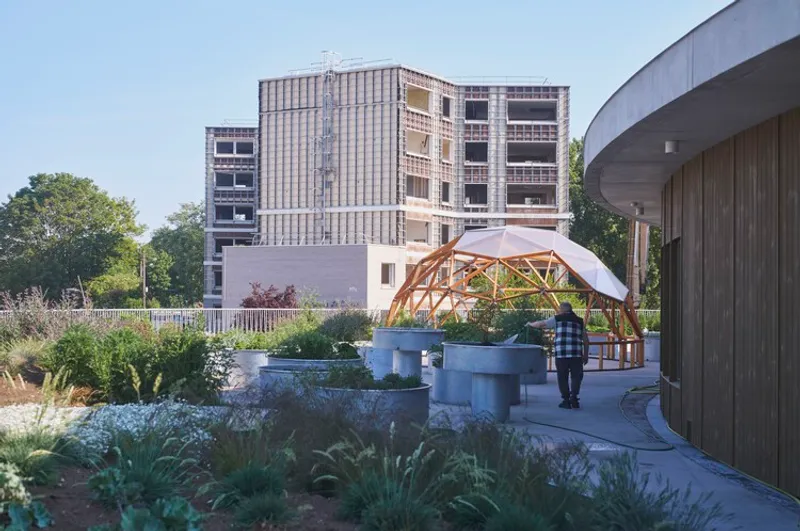
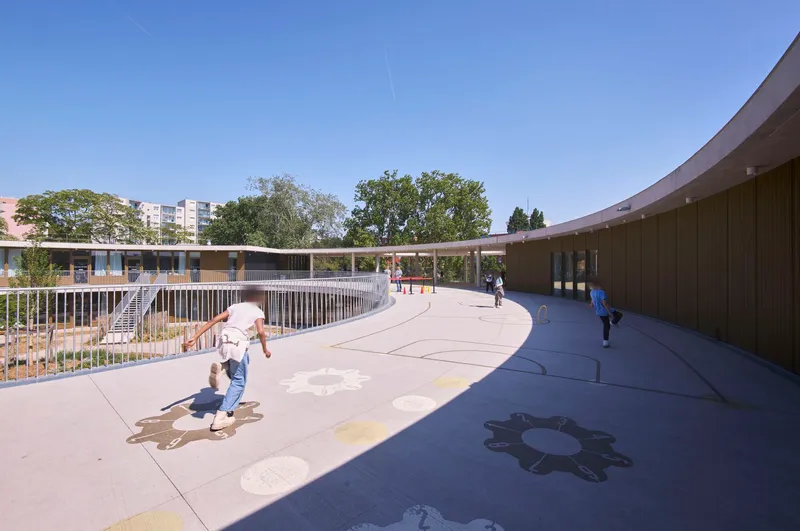
The distribution of functions reflects a careful balance between openness and privacy. At ground level, the multipurpose hall and dining areas are directly connected to the public realm, allowing them to serve both the school and the wider community. This civic hall acts as the energetic core of the development, hosting events and activities that extend beyond school hours.
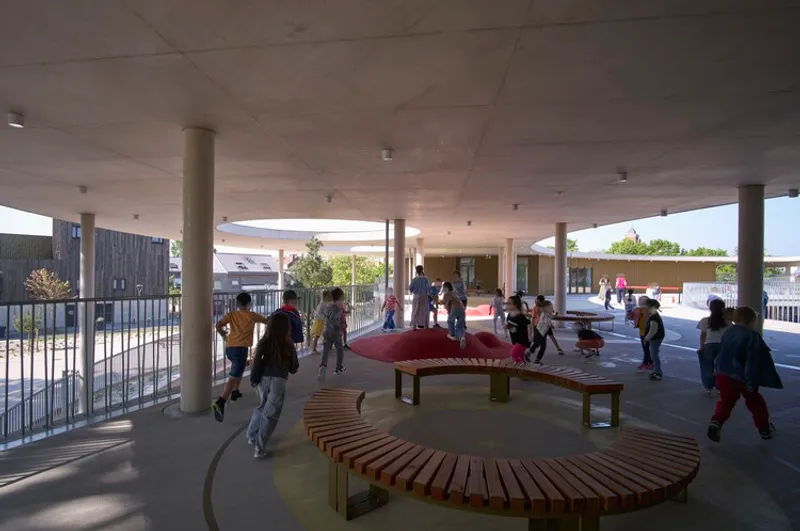
In contrast, the nursery is positioned within the more intimate setting of the courtyard, offering a safe and peaceful environment for younger children. The upper level accommodates the elementary school and community center, which open outward toward elevated outdoor spaces. These include a communal garden and an upper courtyard, providing opportunities for interaction, learning, and engagement with nature.
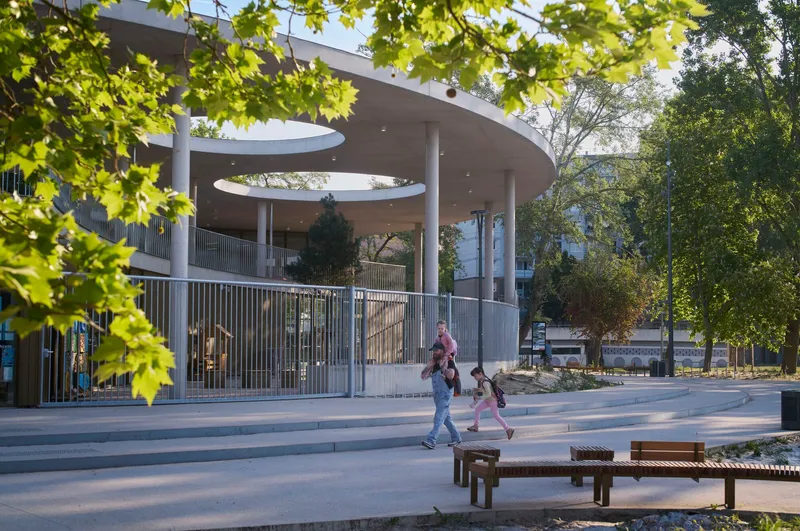
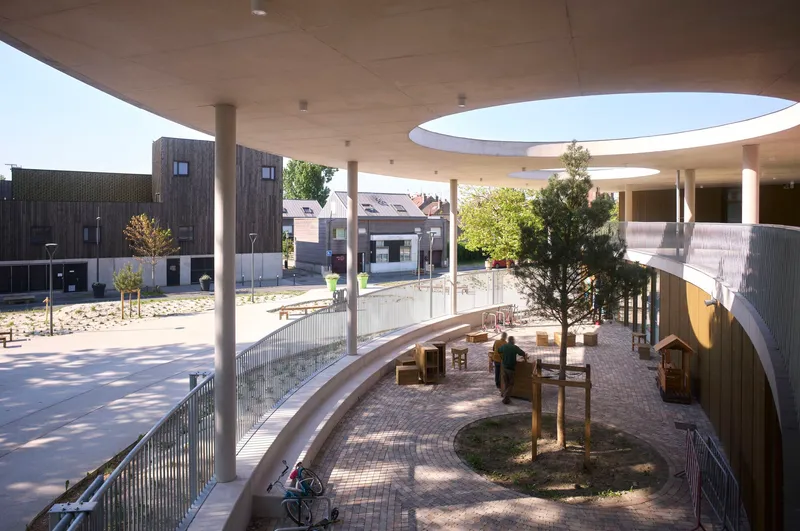
The surrounding landscape is integral to the project’s identity. Paths weave through the site, connecting different zones while encouraging movement and exploration. Denser planted areas create moments of separation and calm, balancing openness with privacy. The landscape design reinforces ecological continuity, ensuring that green spaces extend seamlessly from the building into the broader urban fabric.
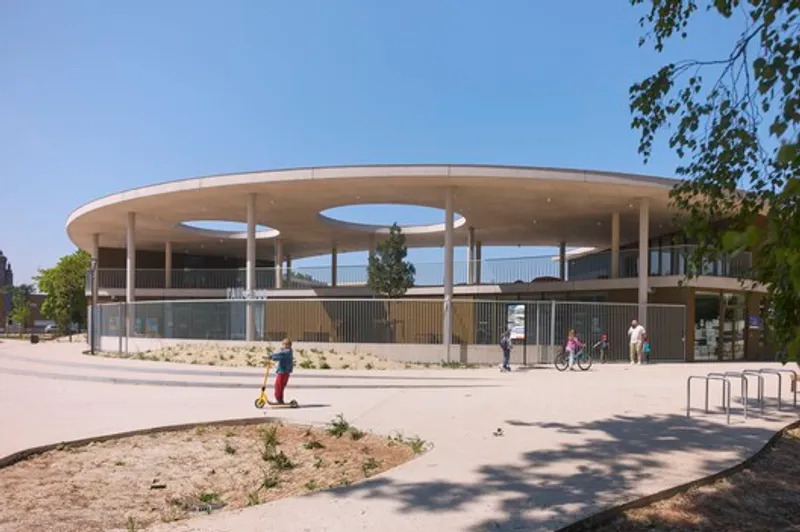
Architecturally, the building is characterized by a calm and fluid form that responds sensitively to its environment. Transparent façades foster openness and visibility, inviting families and visitors into the community spaces while maintaining a sense of protection for the school areas. This duality allows the project to function as both a public hub and a dedicated educational environment.
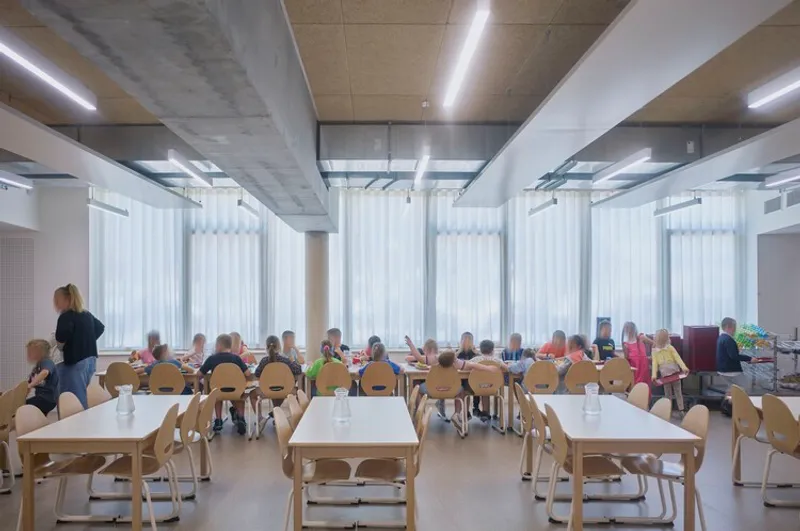
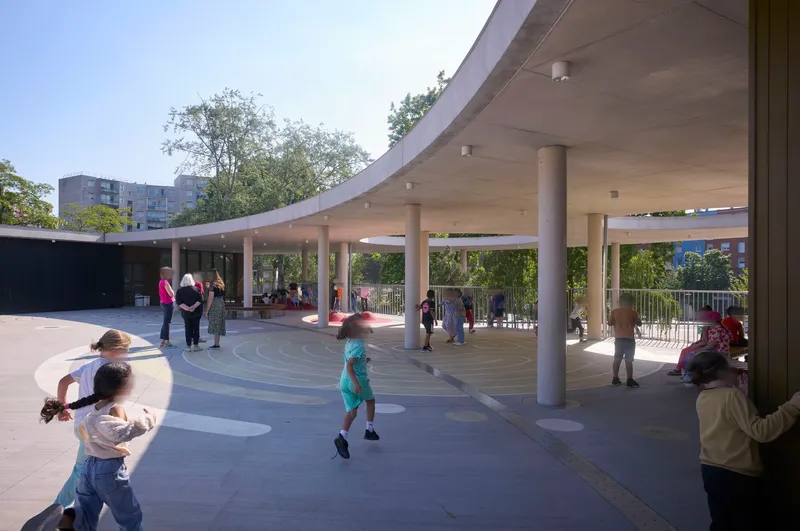
Materiality and scale are carefully considered to create a welcoming and approachable atmosphere. The use of wood cladding, treated with linseed oil paint, gives the building a warm and natural presence that aligns with its landscape setting. The restrained material palette emphasizes texture and proportion, reinforcing the project’s commitment to simplicity and durability.
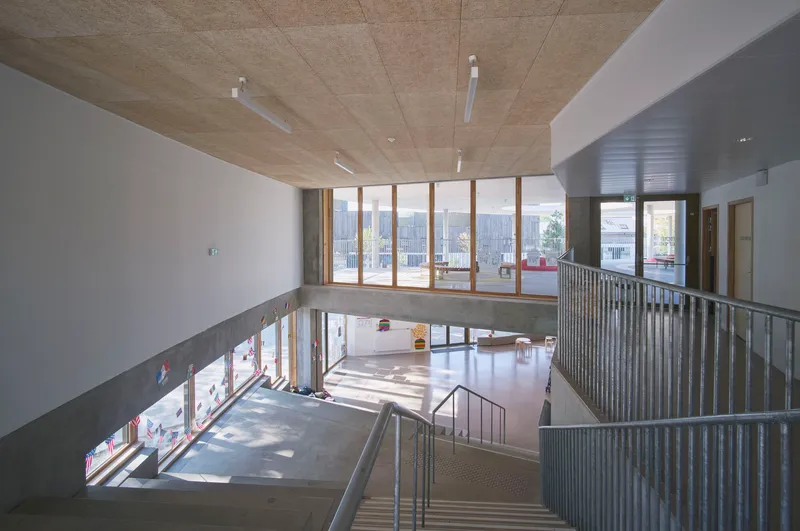
Sustainability is a fundamental aspect of the design. The exclusive use of bio-based materials ensures a healthy indoor environment, free from harmful substances. Passive design strategies, combined with thoughtful material selection, reduce environmental impact while enhancing comfort for users. The project demonstrates how ecological responsibility can be seamlessly integrated into educational architecture.
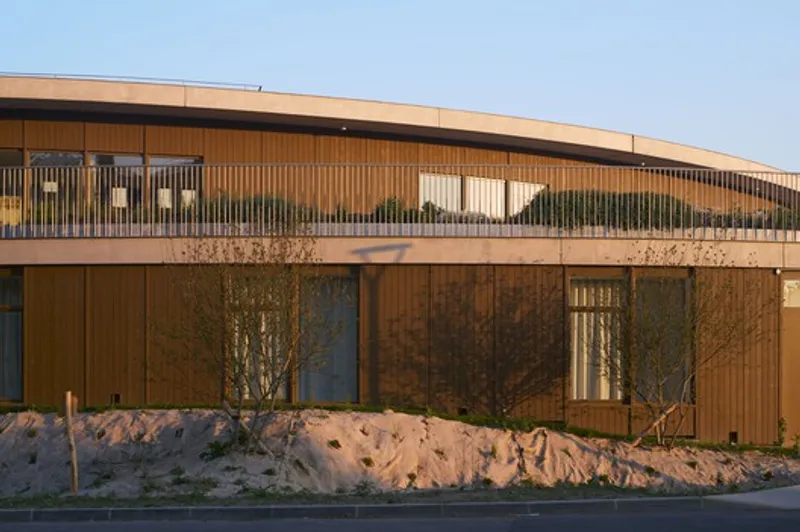
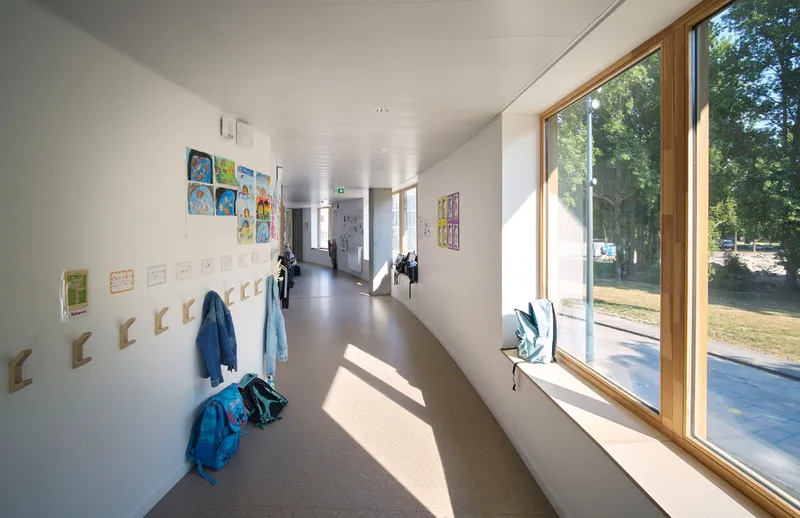
Ultimately, L’Alliance School is more than a place of learning, it is a framework for community life. By integrating education, public space, and ecological design, the project creates a dynamic and inclusive environment that supports both individual development and collective experience. It stands as a model for how architecture can foster connection, adaptability, and sustainability within an evolving urban context.
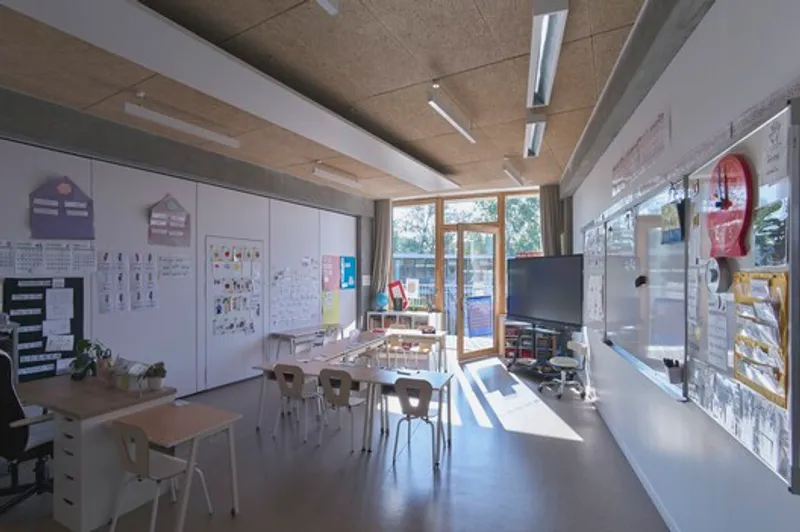
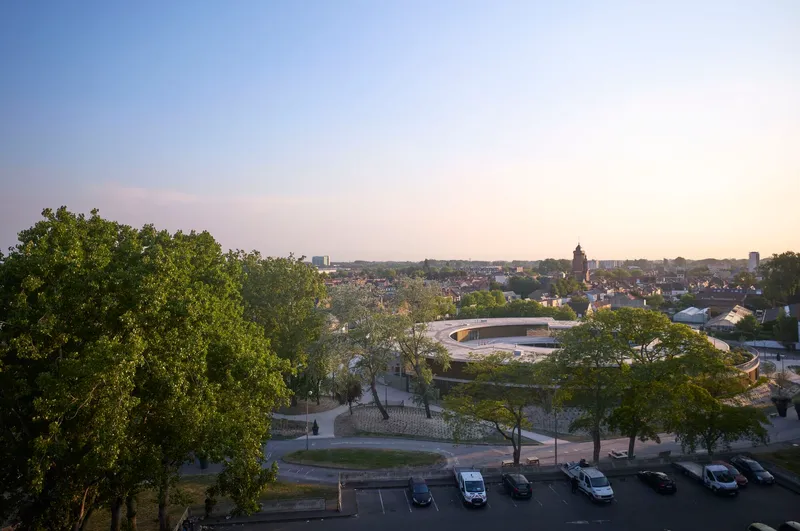
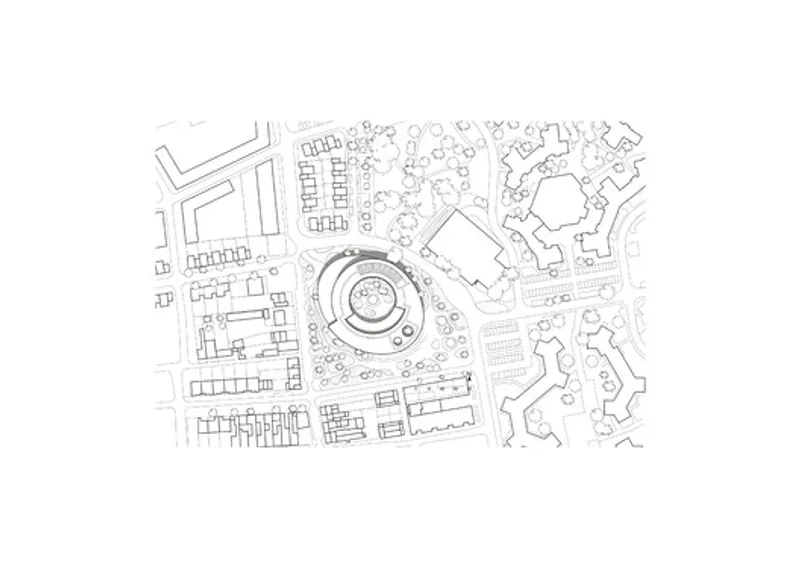
All the Photographs are works of Julien Lanoo



Popular Articles
Popular articles from the community


The Earth Pod: 3D Printed Homes for Resilient Refugee Communities
The Earth Pod reimagines refugee housing through 3D printed homes made from clay, combining resilience, self-sufficiency, and rapid shelter.

Riyadh For All: Intergenerational Urban Design for Active Aging in Rabat
Riyadh For All reimagines urban design in Rabat with intergenerational co-living, adaptive courtyards, and Moroccan cultural exchange today.

Lunar Spiral: Space Architecture Shaped by the Mathematics of the Universe
Lunar Spiral reimagines space architecture through Fibonacci geometry, lunar regolith, levitating habitats, and self-sustaining Moon living.

Hill & Cross Opera: Sculptural Opera House Architecture Shaped by Tallinn’s Landscape and Identity
Hill & Cross Opera reimagines opera house architecture in Tallinn through its sculptural hill, civic plaza, glass wave and a luminous cross.


Similar Reads
You might also enjoy these articles

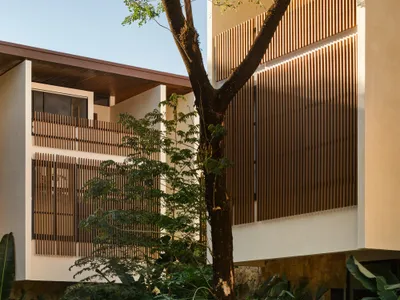
FAMM Arquitectura Organizes Ten Villas Around Courtyards and Jungle in Nosara, Costa Rica
El Molino pairs two elongated volumes with deep overhangs and timber louvers to build a compact coastal community five minutes from the beach.
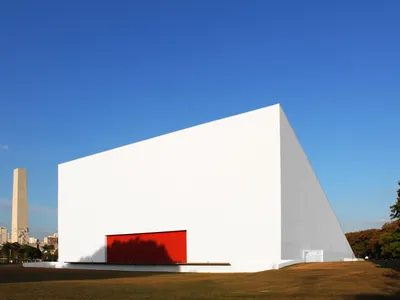
Oscar Niemeyer's Ibirapuera Park Pavilions Define São Paulo's Cultural Identity in Concrete and Curve
A constellation of modernist volumes set within São Paulo's most important urban park, conceived for the city's 400th anniversary in 1954.
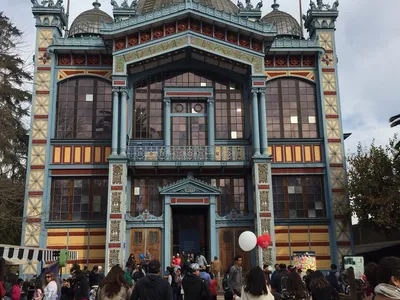
How Henri Picq's 1889 Paris Pavilion Traveled 11,000 Kilometers to Become Santiago's Artequín Museum
A prefabricated iron and glass pavilion built for the Paris Universal Exposition found a second life as a children's art museum in Chile.
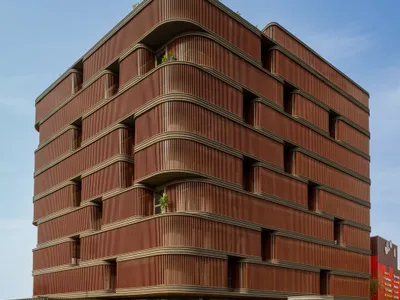
Sanjay Puri Architects Wraps a Jaipur Office Tower in Capsule-Shaped Green Buffers
A nine-level climate-responsive workplace near Jaipur Airport uses stacked planter terraces and aluminium screens to fight 40°C heat.

Explore Architecture Competitions
Discover active competitions in this discipline



Challenge to design public laboratory


Challenge to reimagine the Iron Throne


Photograph architecture without architects


Illustrate the lost glory of Angkor Wat - Render Challenge
Comments (0)
Please login or sign up to add comments
No comments yet. Be the first to comment!