

Latypi Residence by A31 Architecture
Latypi Residence by A31 Architecture blends subterranean design with Cycladic heritage, integrating modern living, landscape harmony, and sustainable Mediterranean architecture.


A Subterranean Dialogue Between Architecture and Landscape
Nestled on a sloping, south-facing plot in Choulakia, Mykonos, overlooking the sacred islands of Delos and Rineia, the Latypi Residence by A31 Architecture redefines contemporary Cycladic living. Conceived as part of a holistic 4000 m² master plan, the 340 m² residence is partly subterranean—melding discreetly into the rocky terrain and becoming one with the Mykonian topography.
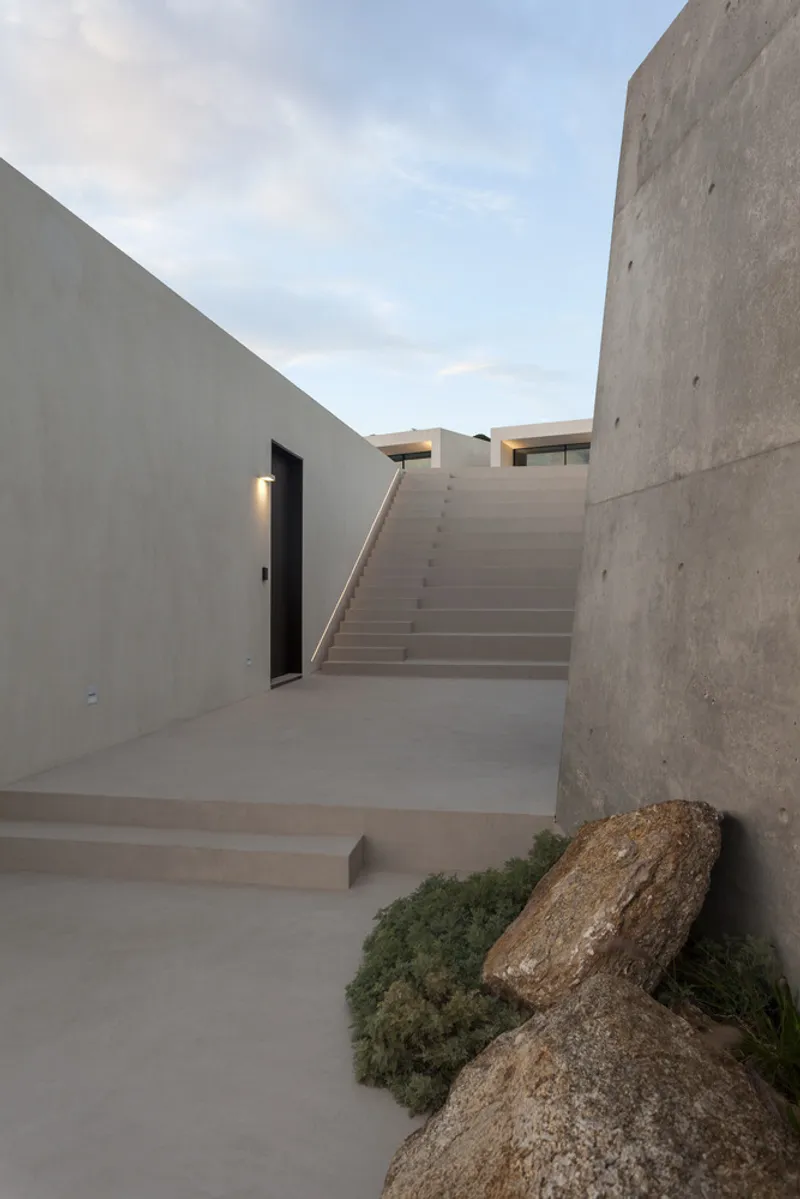
The design intent was clear from the beginning: to craft a dwelling that blends into the natural landscape, respecting both the geological and cultural essence of the site. The result is an architectural composition invisible from the street, seamlessly integrated into its environment.
Architectural Concept and Design
The residence is divided into two levels, each responding sensitively to the site’s slope and orientation. The above-ground level (120 m²) houses the main living spaces, while the subterranean section (130 m²) remains immersed within the earth, maintaining thermal comfort and a sense of calm.
Inspired by the sculptural heritage of Cycladic art, the project embodies the timeless dialogue between built form and landscape. Curved walls, textured surfaces, and minimalist white volumes recall local vernacular traditions, while contemporary detailing and material refinement position it as a modern architectural intervention rooted in history.
Spatial Composition and Interior Design
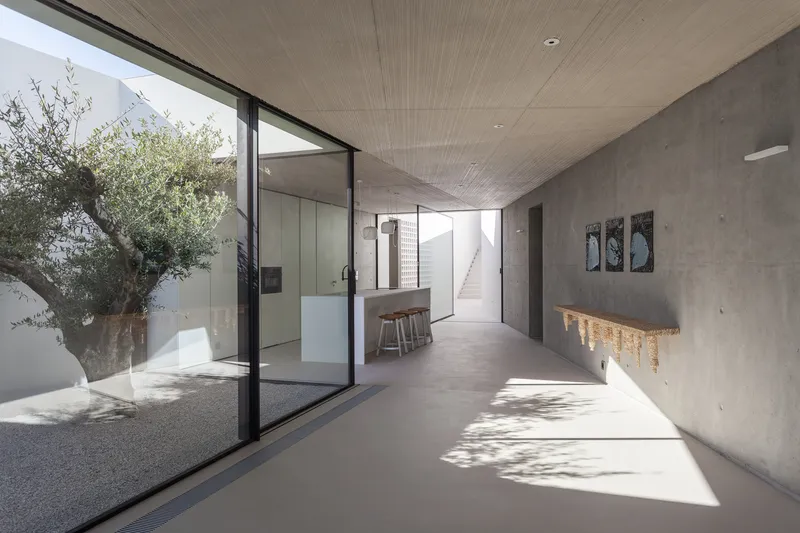
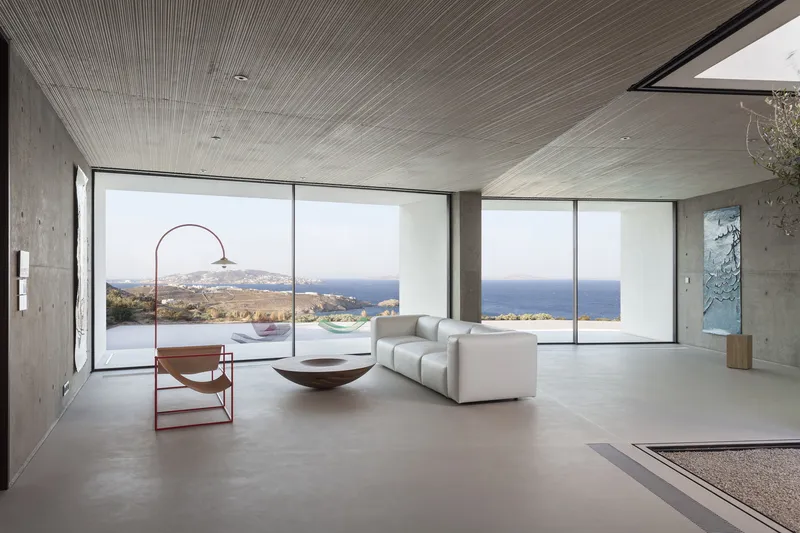
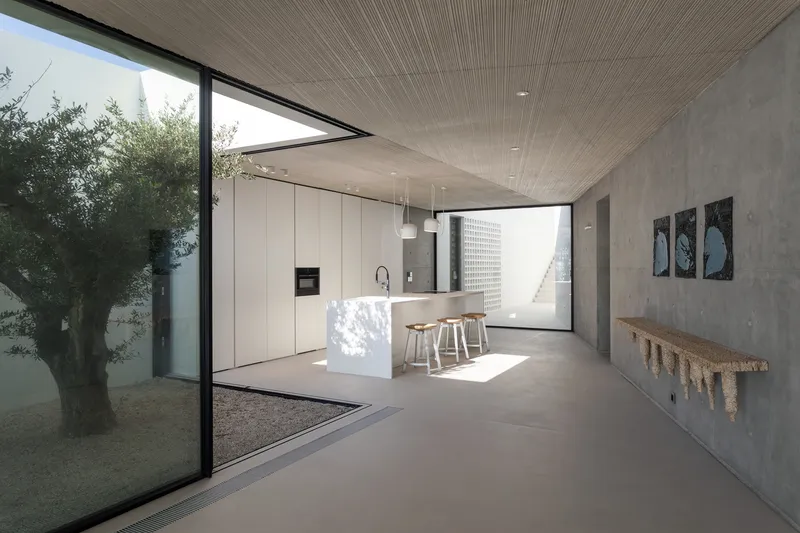
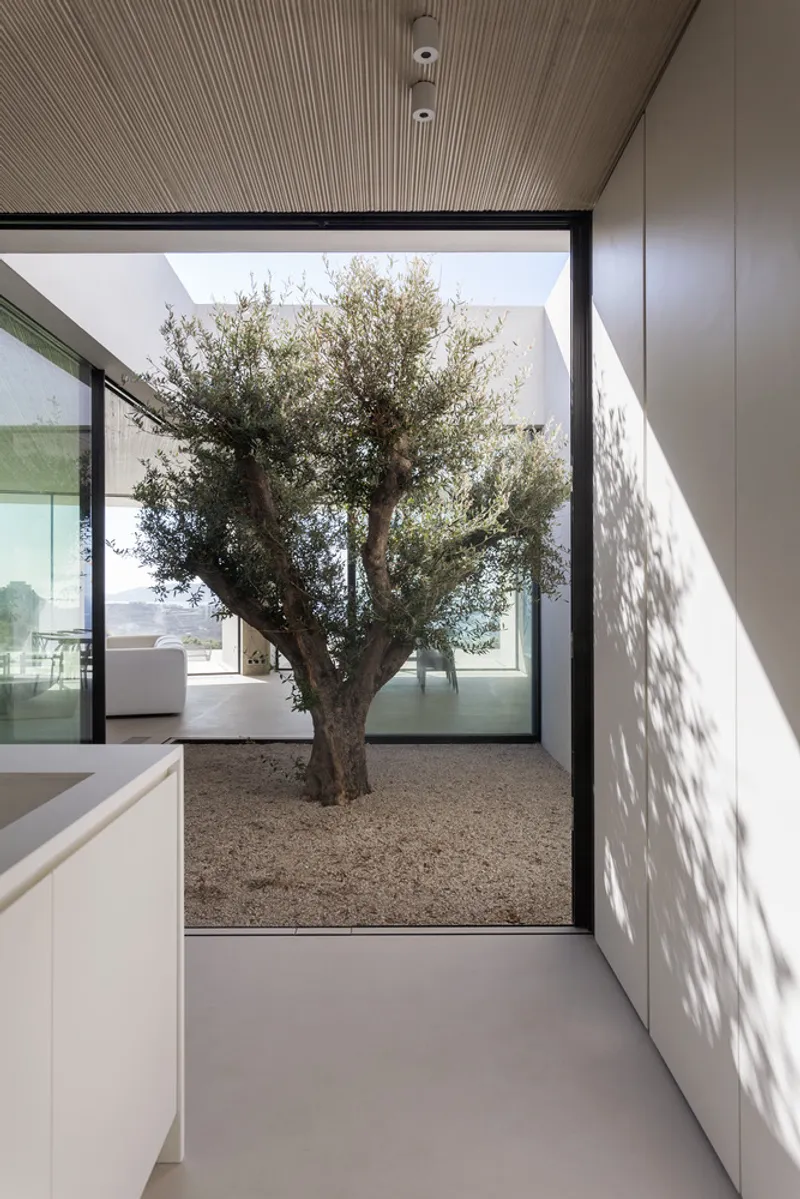
At level +0.00 (64m above sea level), the residence unfolds around a central atrium, where a solitary olive tree—a symbol of memory and continuity—anchors the spatial narrative. Surrounding this open courtyard are the living room, kitchen, and dining area, connected through seamless transitions between indoor and outdoor zones.
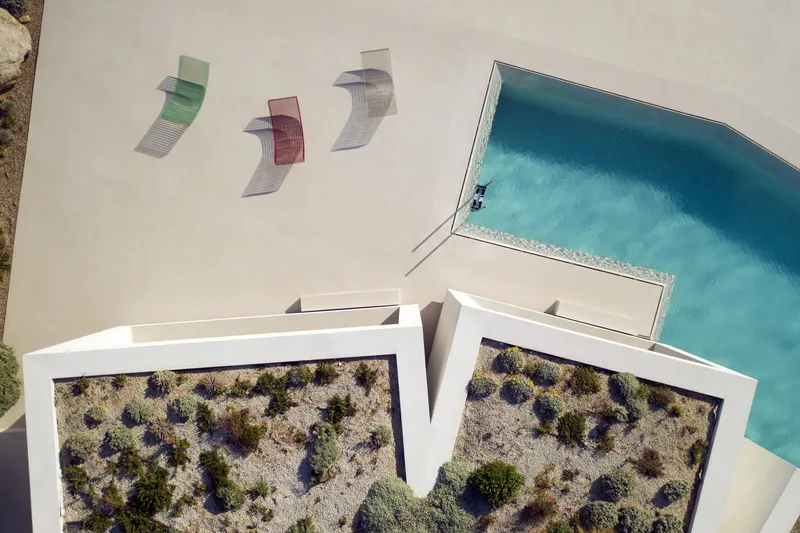
Two bedrooms occupy this level—one with direct access to the courtyard and swimming pool, and another illuminated by a light well, ensuring natural brightness within the subterranean zone.
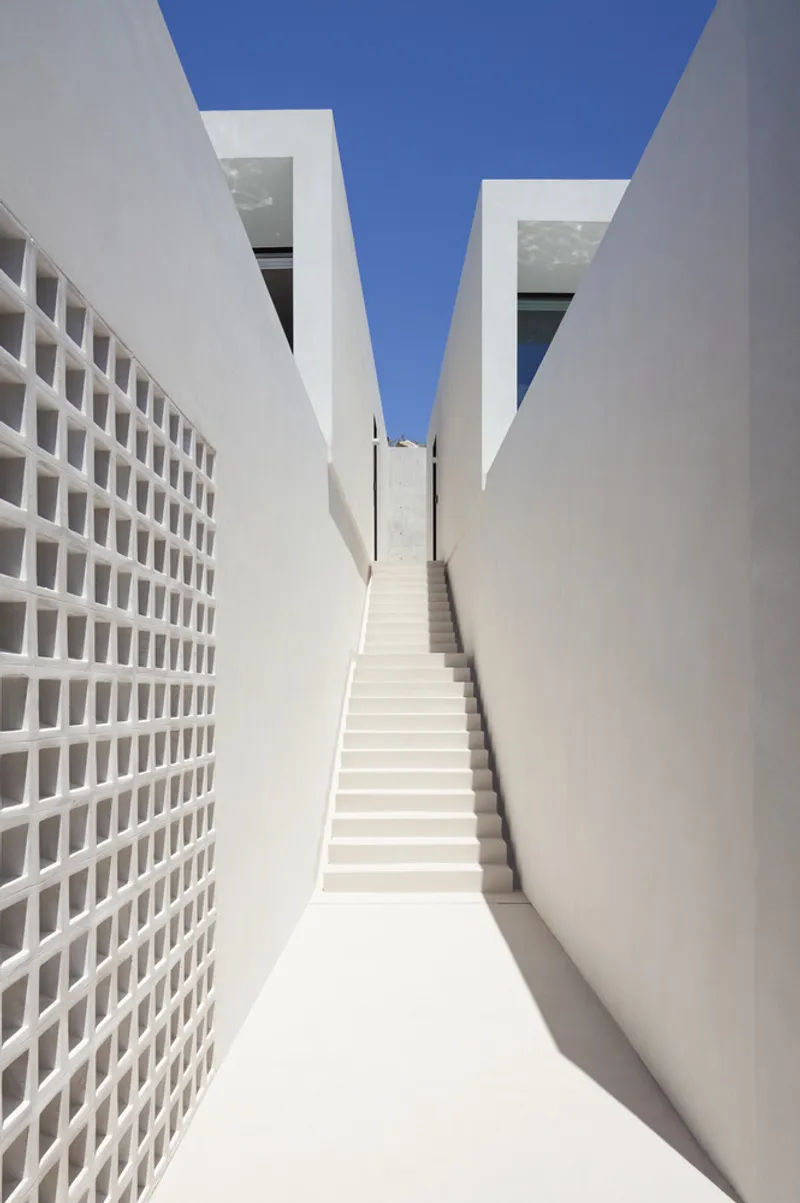
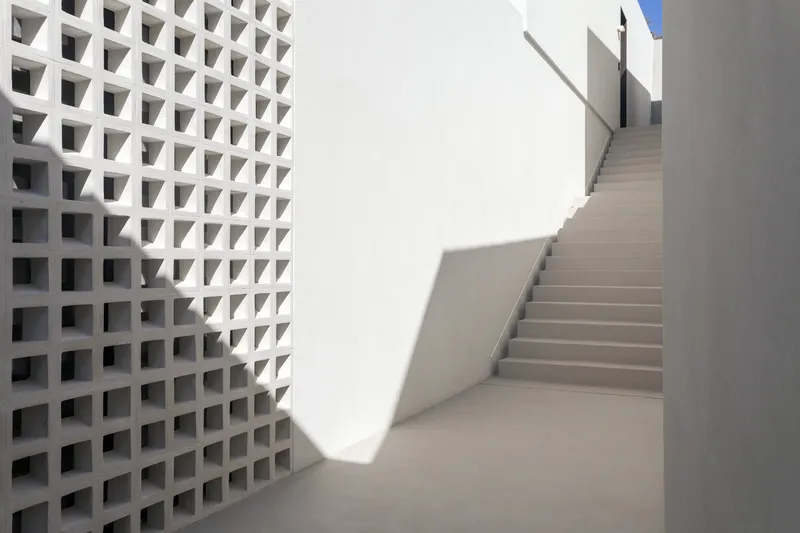
The Amphitheater and Upper-Level Retreat
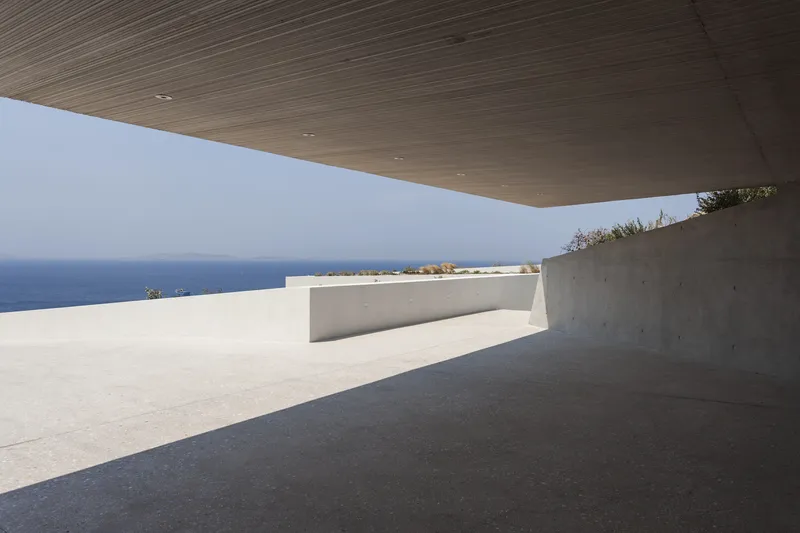
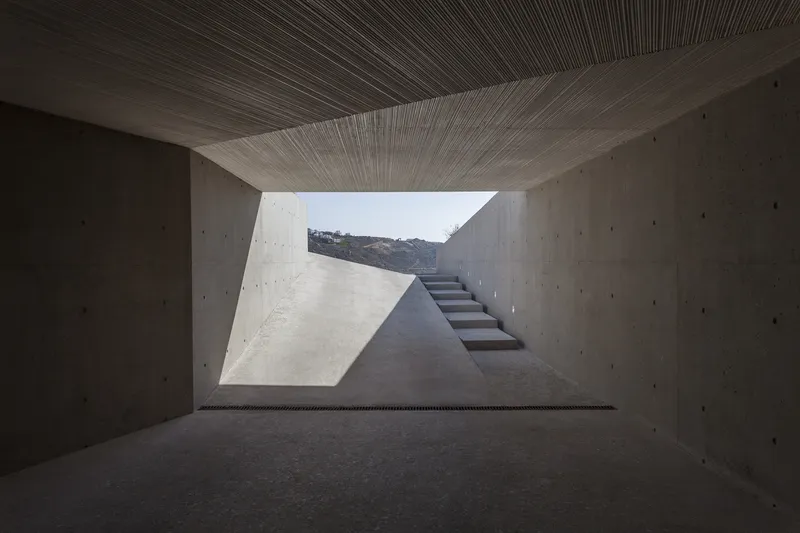
An outdoor amphitheater with approximately 60 seats is oriented toward Delos Island, evoking the spiritual and cultural symbolism of ancient Greek gathering spaces. At level +4.00 (68m above sea level), the second, more private section of the residence is developed—almost entirely underground. This area includes two ensuite bedrooms, connected to the main house by a 2-meter-wide open-air promenade that frames the Aegean horizon.
Both the roof and parking areas are covered with native vegetation, minimizing the project’s visual footprint and maintaining the continuity of the natural terrain.
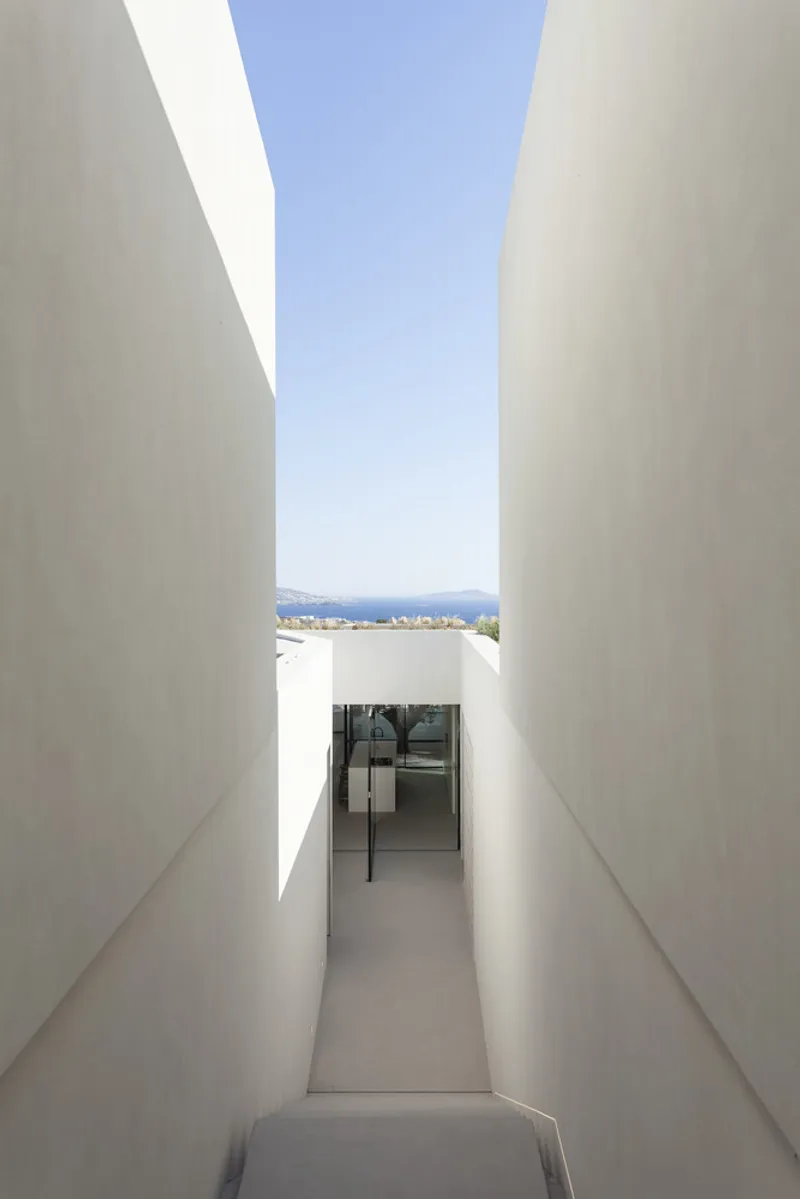
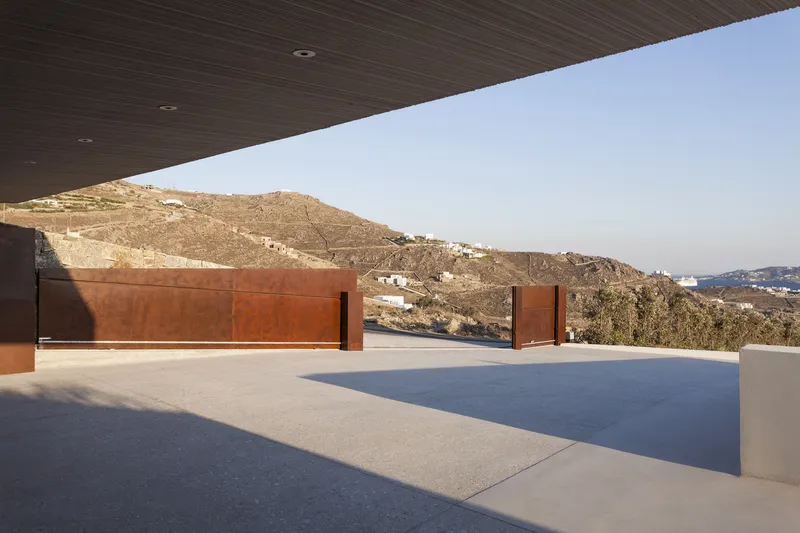
Materiality and Landscape Integration
The landscape design by ARCHETOPO draws from the site’s existing ecosystem, reinterpreting native textures, colors, and forms to create a sustainable, low-maintenance palette. Xeromorphic plantings resilient to Mykonos’ dry, windy climate ensure the reassimilation of local flora into the design. The result is an evolving landscape that blurs boundaries between architecture and nature.
Externally, materials such as Lapitec surfaces, local stone, lime plaster, and aluminum elements emphasize durability and subtlety. The interior maintains a refined balance between minimalist geometry and Mediterranean warmth, allowing natural light, texture, and shadow to define the atmosphere.
A Symbiosis of Light, Earth, and Heritage
The Latypi Residence exemplifies A31 Architecture’s commitment to contextual, environmentally conscious design. Through its partly subterranean structure, contextual material palette, and sensitive landscape integration, the residence becomes an ode to Cycladic heritage, reinterpreted for the 21st century.
Invisible from the street yet deeply rooted in its setting, this home redefines luxury through humility, architecture through terrain, and modern living through ancestral wisdom.
All Photographs are works of Yiannis Hadjiaslanis, George Fakaros


Popular Articles
Popular articles from the community


Juan García Correa, John González and Claudia Rueda Sink a Circular Amphitheater into a Manizales Engineering Building
On the La Nubia campus in Manizales, Colombia, the S1 Building folds labs and offices into a hillside of ramped lawns that double as a campus route.

LT2A and OPEN Architectes Thread a Brick and Glass High School Through a Wooded Belgian Campus
In Braine-l'Alleud, a 3,000 m² wing for Collège Cardinal Mercier pairs pale brick with a glazed colonnade, deferring to a small chapel and a dense wood.

David Ortega Stacks a Two-Story Mexico City Penthouse Around a Steel Stair and a Pergola-Shaded Roof Terrace
In Colonia Roma, a 300 m² penthouse uses oak joinery, a planted steel stair and a slatted roof pergola to make a new-build apartment feel like a house.

Jaramillo Van Sluys Arquitectura and Urbanismo Turn a Demolished Registry Lot in Quito into an Orchard Plaza
In Quito's Centro Histórico, a 2,800 m² plaza exposes the San Agustín convent wall and redraws its lost Augustinian orchard in volcanic stone.

Similar Reads
You might also enjoy these articles


Hodi-Mandai Geram
Project Function: Preservation and revitalization of the Intangible heritage and socio-spatial identity of the Hodi by Housing, Cultural Memory Center, Sacred Grove, landscape, local tourism economy


Olio Towers: A Mid-Rise for Performers That Fuses Housing, Rehearsal, and Stage
Located blocks from Houston's Theater District, this modular tower stacks living units around a central performance atrium.

Oasis: Modular Green Housing Carved into Dhaka's Urban Fabric
A shortlisted Plugin Housing entry reclaims unauthorized settlements in Dhaka with stepped concrete volumes, green roofs, and ventilation-driven design.

Black Hole: A Floating Megastructure for the Post-Physical Era
Emiliano Mazzarotto envisions a spherical, self-scaling arena where e-sports, digital hotels, and holographic stadiums replace traditional public space.

Explore Attica Landscape Competitions
Discover active competitions in this discipline

Challenge to reimagine the Iron Throne

Photograph architecture without architects

Illustrate the lost glory of Angkor Wat - Render Challenge

Design challenge to reuse E-waste
Comments (0)
Please login or sign up to add comments
No comments yet. Be the first to comment!