

LEED Platinum Federal Building Design: Inside the John A. Volpe National Transportation Systems Center by SOM
The article explores the sustainable LEED Platinum design of the John A. Volpe Center, blending innovation, security, and public engagemen


The John A. Volpe National Transportation Systems Center in Cambridge, Massachusetts, is a groundbreaking example of sustainable and innovative architecture. Designed by Skidmore, Owings & Merrill (SOM), the 410,000-square-foot facility reflects the future of high-performance federal buildings while fostering collaboration, security, and public engagement. Achieving a LEED Platinum certification, the structure sets a new benchmark for federal infrastructure.

A Vertical Campus for Transportation Innovation
From a Fenced Campus to a Public Realm
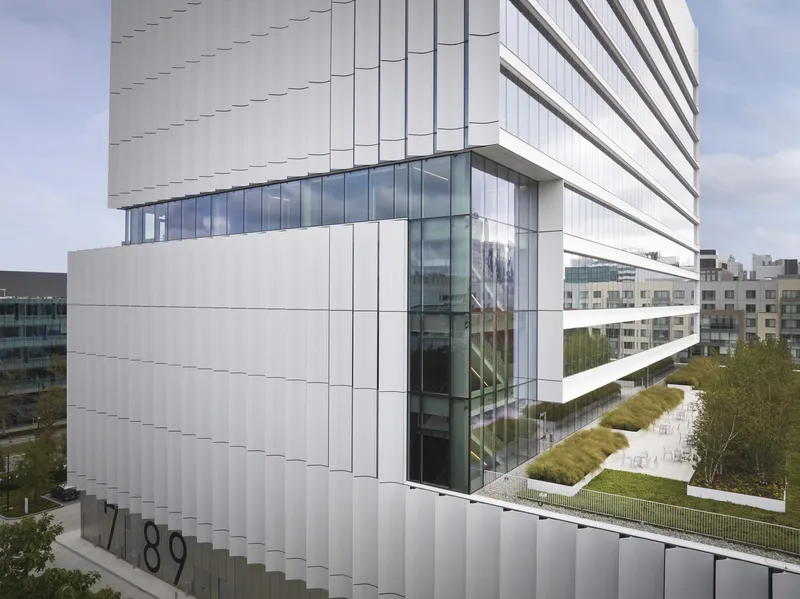
Originally established in 1970 to advance transportation innovation, the Volpe Center operated within a gated campus in Kendall Square. In collaboration with the Massachusetts Institute of Technology’s Investment Management Company, SOM reimagined the facility as a public and transparent space, transforming four acres into an inviting hub for the Department of Transportation (DOT).
This shift was not just spatial but symbolic. By integrating the Volpe Center into the urban fabric, the architecture underscores the mission of public service and research visibility.
Vertical Campus Design
The building adopts a two-tiered structure: a three-story base and a setback tower above. This configuration creates a vertical campus, blending functional spaces with amenities. The base houses laboratories, conference rooms, and a childcare center, while upper levels feature data science facilities, offices, and terraces for recreation and collaboration.
Key Features of the Vertical Campus:
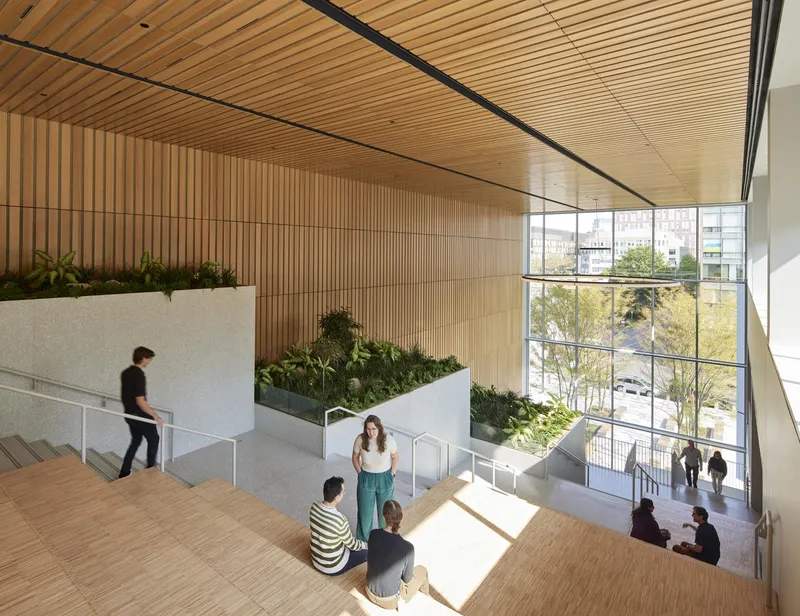
- Main Staircase: Finished in terrazzo and white oak, connecting primary meeting areas and offering a tactile, natural element.
- Outdoor Play and Fitness Spaces: A childcare playground and sixth-floor fitness terrace promote well-being.
- Efficient Labs and Data Centers: Dedicated spaces for cutting-edge research, including human factors labs and data science tracking systems.
Calibrated Facades for Performance
Facade Orientation and Design
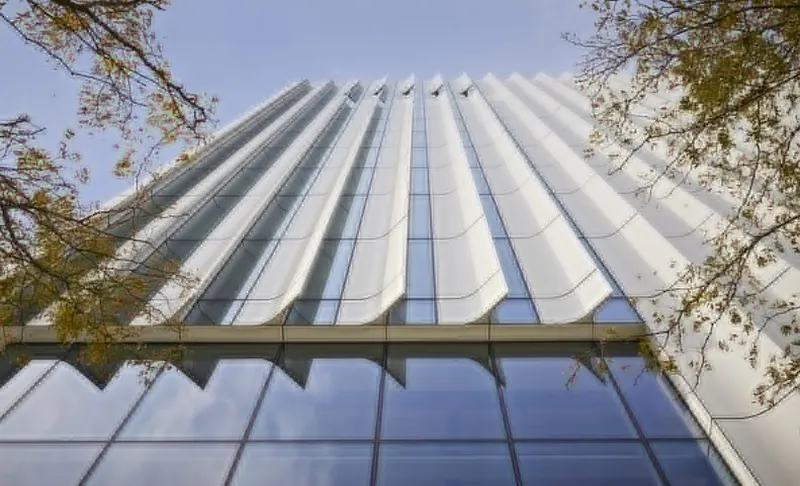
The building’s glass and aluminum facade is meticulously engineered to optimize light, reduce glare, and manage energy efficiency.
- South Facade: Features horizontal plates and interior shades to mitigate afternoon sun.
- East and West Facades: Vertical aluminum fins block intense morning and evening light.
- North Facade: A curtain wall of simple glass maximizes natural lighting with minimal solar heat gain.
Sustainable Innovations
Cambridge's cooler climate influenced the building’s energy-efficient strategies, ensuring daylighting and solar control are seamlessly integrated into the design.

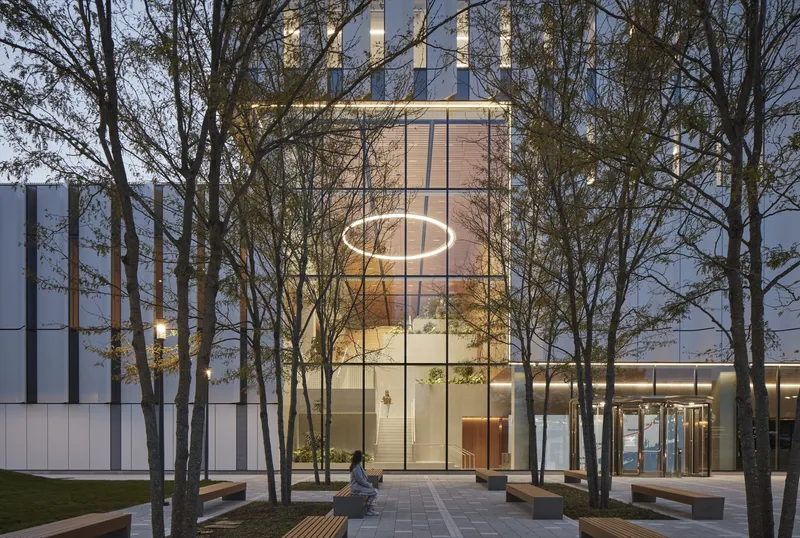
Landscape Design: Public Engagement Through Greenspaces
The surrounding landscape, designed by Reed Hilderbrand Landscape Architecture, bridges the building’s secure nature with public access. Undulating mounds and curated greenspaces enhance the urban environment, offering outdoor areas for the community and glimpses into the facility’s activities.
Sustainable Features Driving LEED Platinum Certification
Energy Efficiency
The Volpe Center employs a triple-glazed facade and a balanced window-wall ratio to ensure high thermal performance. Advanced HVAC systems, powered by air-source heat pumps, further optimize energy use.
Renewable Energy Integration
A photovoltaic roof generates renewable energy, reducing reliance on external sources.
Water Management
Innovative stormwater capture systems reduce runoff, supporting irrigation needs and bolstering the building’s environmental resilience.
Materials and Blast Resistance
As a federal facility, the structure incorporates blast-resistant materials and strategically placed mechanical systems to ensure security without compromising design aesthetics.

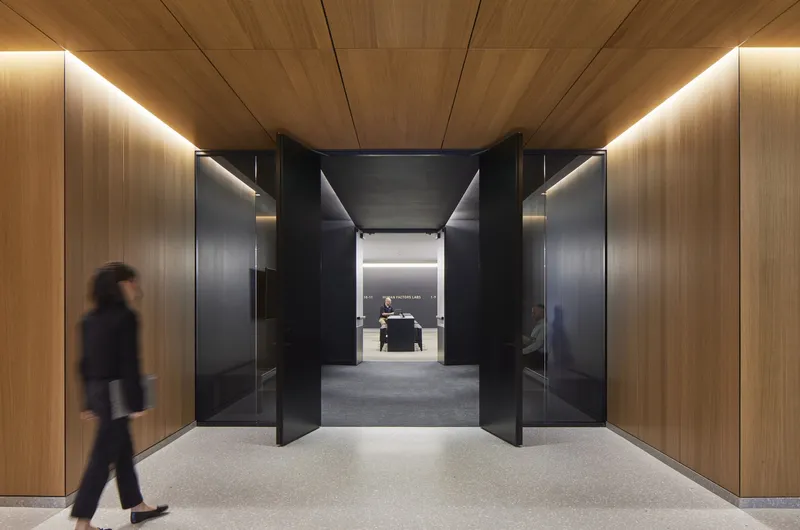
Graphics and Branding: A Dynamic Identity
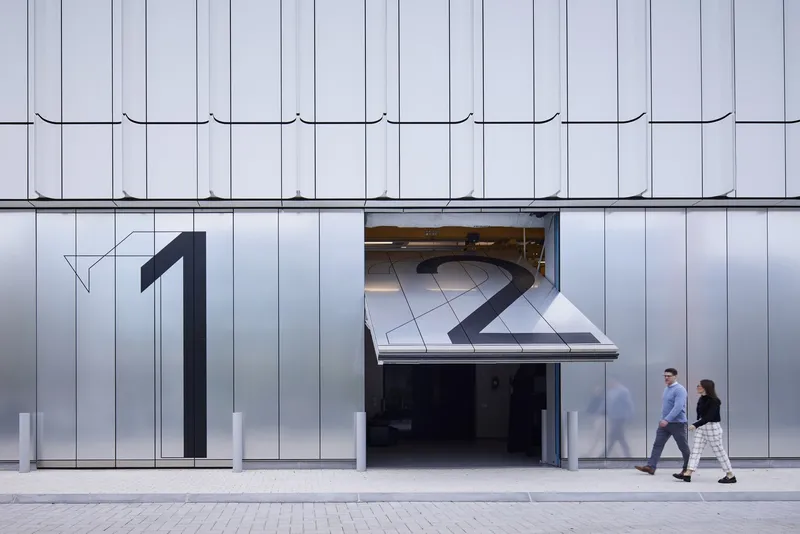
SOM’s branding team enhanced the center’s identity with motion-inspired signage. From horizontal, train-like lettering to vertically stretched stairwell numbers, the graphics reinforce the themes of mobility and progress.
The LEED Platinum federal building design of the John A. Volpe National Transportation Systems Center exemplifies how architecture can harmonize sustainability, security, and functionality. SOM’s visionary approach not only supports the center’s mission of transportation innovation but also redefines the role of federal buildings in fostering public engagement and urban sustainability.
This achievement in sustainable federal design highlights how thoughtful architecture can lead the way in energy efficiency and social connectivity, setting a standard for future government facilities.

All photographs are work of Dave Burk




Popular Articles
Popular articles from the community


Hill & Cross Opera: Sculptural Opera House Architecture Shaped by Tallinn’s Landscape and Identity
Hill & Cross Opera reimagines opera house architecture in Tallinn through its sculptural hill, civic plaza, glass wave and a luminous cross.

Conexión: Biophilic Design Reimagines High-Rise Living in Hong Kong
Conexión reimagines high-rise living in Hong Kong through biophilic design, green facades, shared spaces, daylight, water and nature within.

Co-life: Sustainable Architecture for Age-Friendly Community Living
Co-life reimagines sustainable architecture for seniors through courtyards, rammed earth, shared gardens, and spaces designed for belonging.

The Earth Pod: 3D Printed Homes for Resilient Refugee Communities
The Earth Pod reimagines refugee housing through 3D printed homes made from clay, combining resilience, self-sufficiency, and rapid shelter.


Similar Reads
You might also enjoy these articles


Hodi-Mandai Geram
Project Function: Preservation and revitalization of the Intangible heritage and socio-spatial identity of the Hodi by Housing, Cultural Memory Center, Sacred Grove, landscape, local tourism economy


Olio Towers: A Mid-Rise for Performers That Fuses Housing, Rehearsal, and Stage
Located blocks from Houston's Theater District, this modular tower stacks living units around a central performance atrium.

Oasis: Modular Green Housing Carved into Dhaka's Urban Fabric
A shortlisted Plugin Housing entry reclaims unauthorized settlements in Dhaka with stepped concrete volumes, green roofs, and ventilation-driven design.

Black Hole: A Floating Megastructure for the Post-Physical Era
Emiliano Mazzarotto envisions a spherical, self-scaling arena where e-sports, digital hotels, and holographic stadiums replace traditional public space.


Explore Office Building Competitions
Discover active competitions in this discipline



Challenge to reimagine the Iron Throne


Photograph architecture without architects


Illustrate the lost glory of Angkor Wat - Render Challenge


Design challenge to reuse E-waste
Comments (0)
Please login or sign up to add comments
No comments yet. Be the first to comment!