
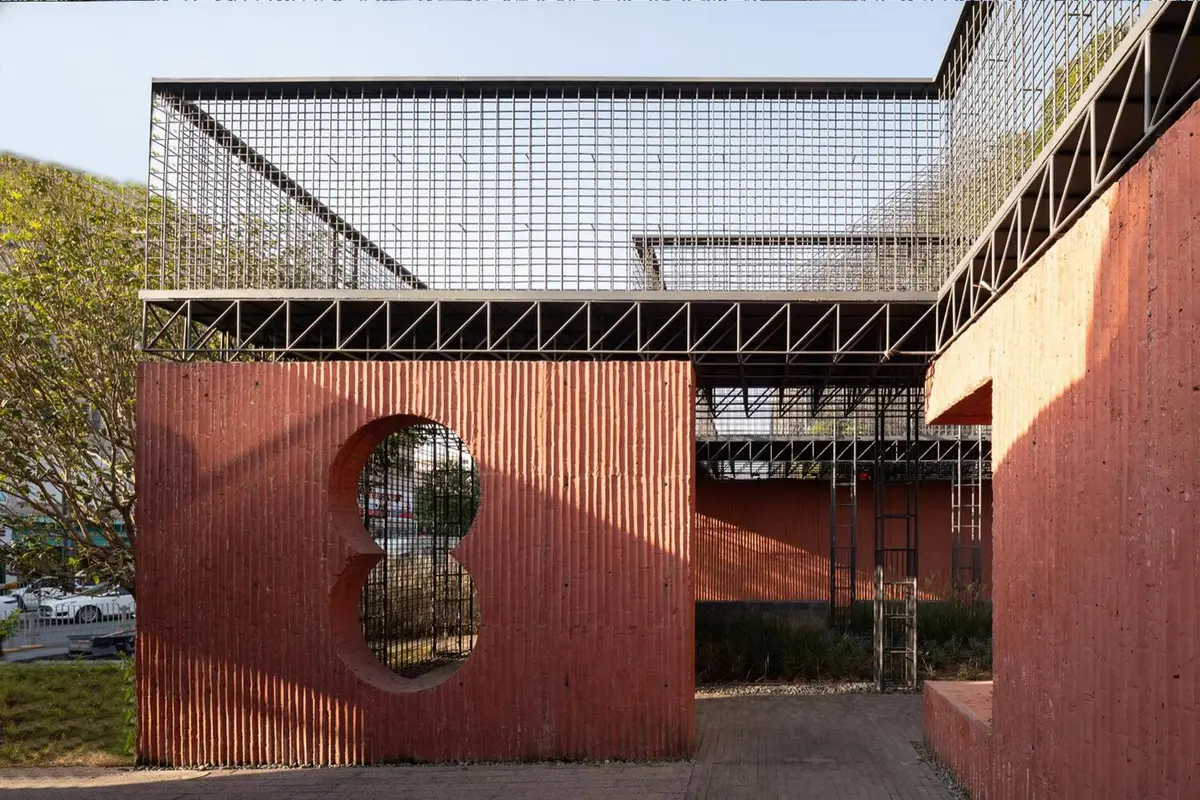
Liangmao Village Renovation by NODE Architecture & Urbanism – Revitalizing an Urban Village Through Public Space, Cultural Memory, and Landscape Integration
A vibrant urban village renewal blending public spaces, cultural heritage, bamboo craftsmanship, and multi-level parks to reconnect communities and revive Liangmao’s identity.


The Liangmao Village Renovation in Shenzhen represents a transformative urban renewal project led by NODE Architecture & Urbanism. Completed in 2024, the 30,000 m² revitalization reimagines a once-homogenized urban village as a dynamic, culturally rooted public realm. Positioned within the Longgang Urban Village Initiative, the project responds to the widespread challenge of disappearing village identities across rapidly urbanizing Chinese cities.
Curated under the guidance of Chief Planner Zhou Hongmei and Chief Curator Meng Yan, NODE served as co-curator and lead design coordinator, overseeing the comprehensive renovation of Liangmao Village — one of six villages included in the regional renewal strategy.
Understanding the Context: The Homogenization of Urban Villages
Shenzhen’s accelerated urbanization has resulted in the widespread condition often described as “a thousand villages with one face.” Liangmao Village embodies this transformation. Once an agrarian settlement, the village’s natural topography was leveled in the 1990s to create standardized housing grids supporting factory workers. Surrounded by industrial complexes, the village gradually lost its distinct identity.
Spanning just 3.15 hectares, Liangmao Village underwent dramatic spatial and social shifts as homogenized planning replaced its rich cultural fabric.

Design Vision: From a Thousand Faces to a Thousand Possibilities
NODE’s strategy sought to reverse homogeneity with a new spatial narrative — “one village with a thousand faces.” Through detailed site research, cultural mapping, and extensive community dialogues, the design team developed a multifaceted framework using points, lines, and planes to reorganize public space, elevate daily infrastructure, and reconnect fragmented village areas.
Central to the approach were:
1. The T-Shaped Street Cluster
A new T-shaped street network integrates Liangmao Village both horizontally and vertically, linking various public amenities through:
- Pocket parks
- Elevated platforms
- Multi-level connections
- Layered natural and urban landscapes
The streetscape creates a continuous public realm enriched with diverse micro-experiences for all age groups.

2. Two Infrastructure Clusters: Heritage Park and Community Park
These clusters work with the site’s natural terrain to heal fragmentation caused by decades of piecemeal development.
- Heritage Park reconnects past and present through elevated walkways and courtyard landscapes.
- Community Park reinvents recreational space with vertical programming, maximizing limited land resources.
The integrated system restores vibrancy to Liangmao Village, creating meaningful interactions between local residents, nature, and architecture.
Heritage Park: Reconstructing Fabric and Recalling Memory
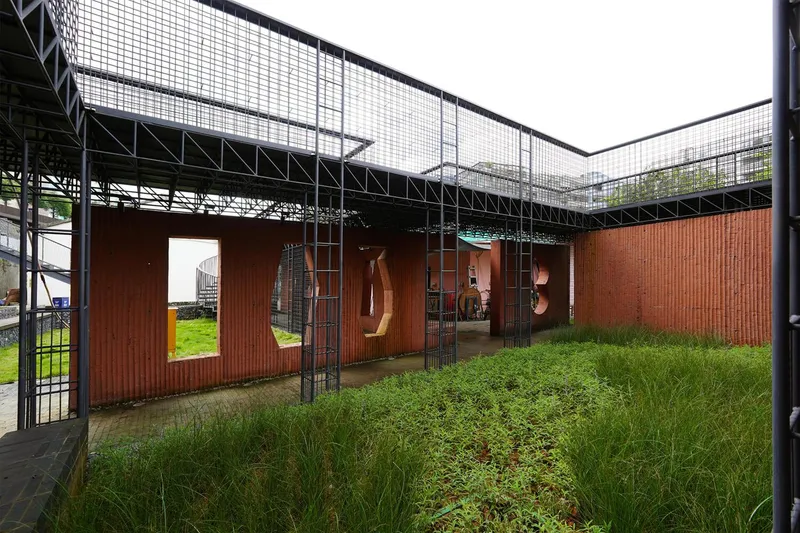
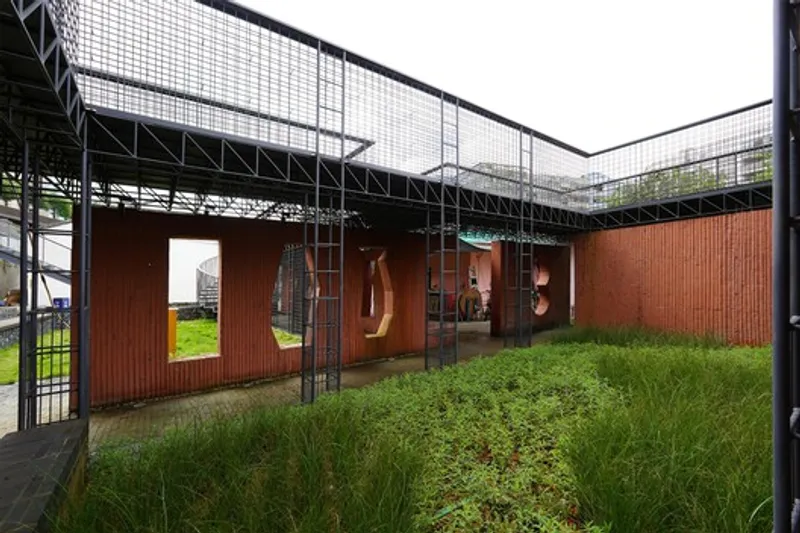
Located at the foot of Liangmao Hill, the old village lies 12 meters below the new settlement, long disconnected and overgrown. The renovation reweaves this relationship by:
- Reinverting the figure-ground relationship
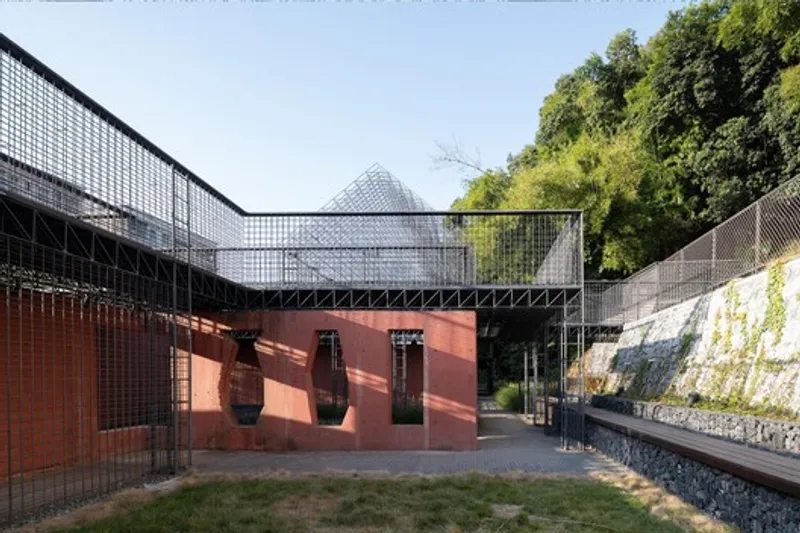
- Reconstructing the old village’s spatial fabric as landscaped courtyards
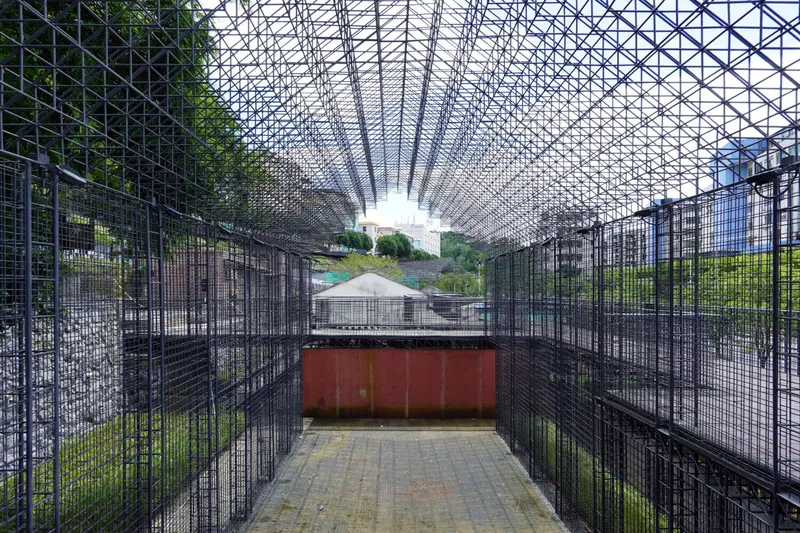
- Introducing a lightweight steel lattice structure inspired by traditional garden windows
- Creating a looped elevated walkway linking old village, new village, and hill trails
Regulatory constraints inspired the use of permeable steel structures, transforming what were once solid walls into voids of light and shadow. This reinterpretation creates a “ruin garden”—a shared public space that merges nostalgia with contemporary community life.
Community Park: Vertical Public Life
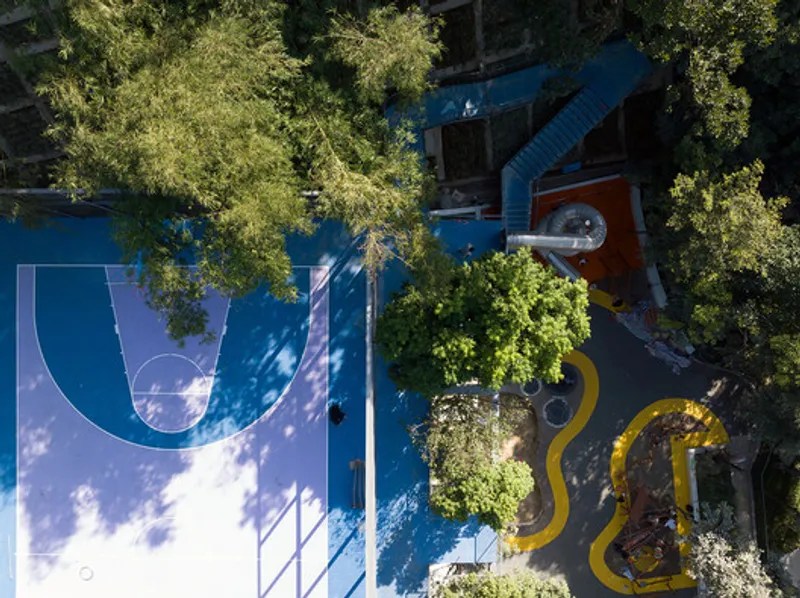
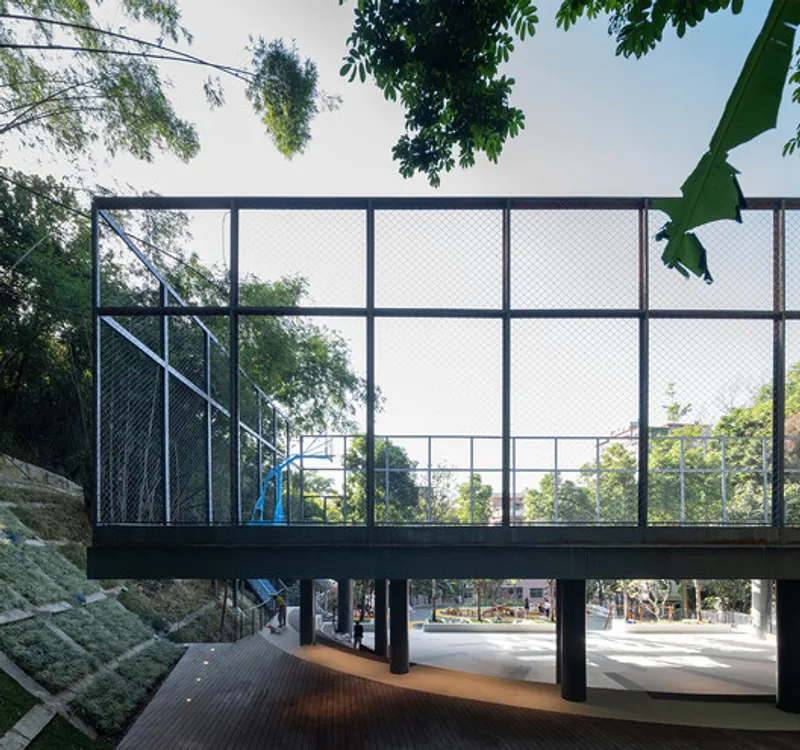
Previously limited to a narrow terrace with a single basketball court, the new Community Park amplifies program and spatial experience through:
Ground Level
- An open amphitheater with a column-free stage featuring a large-span semi-circular structure
- Flexible community space for performances, gatherings, and cultural events
Second Level
- A lifted basketball court engineered to balance structural loads
- Openings that preserve mature trees by integrating nature into the architectural system
This vertically layered approach provides recreational, social, and play spaces for all age groups, creating a child-friendly environment that merges natural terrain with built forms.
Cultural Integration: Bamboo Weaving as Identity
Liangmao Village has a 200-year-old bamboo weaving tradition, deeply embedded in the community’s cultural memory. NODE elevates this heritage by:
- Integrating bamboo weaving patterns into facade art
- Designing a village entrance canopy and kiosk using modern interpretations of bamboo craftsmanship
- Collaborating with artist Xue Feng to create murals celebrating the local craft
- Introducing a cohesive village identity system developed by SURE Design
These cultural layers reinforce local identity while projecting tradition into the future as a potential cultural industry.
Landscape & Street Upgrades
ATELIER XI contributed landscape strategies including:
- Terraced gardens
- Viewing decks
- Widened cantilevered sidewalks
- A signature “village balcony” offering green, open communal space
These interventions reclaim public life in an urban village long constrained by narrow streets and dense housing.

Looking Ahead: A Model for Future Urban Villages
The Liangmao Village Renovation is an ongoing effort, setting a model for holistic urban village renewal in China. Beyond physical upgrades, the next stage focuses on:
- Strengthening community-based management
- Encouraging cultural industries rooted in traditional crafts
- Balancing spatial, social, and economic sustainability
All photographs are works of Right Angle Image, NODE Architecture & Urbanism:, Urban Management Bureau


Popular Articles
Popular articles from the community


Tsunami Convergenics: Turning Catastrophic Ocean Forces into Underwater Housing Infrastructure
A speculative underwater settlement off the coast of Onagawa, Japan, treats tsunamis and typhoons as energy sources rather than threats.

Extended Shell: Retrofitting Kolkata's Balconies as Living Urban Thresholds
A modular retrofit system recovers the social and environmental intelligence of Kolkata's historic verandas for contemporary Park Street residents.

Cloaked Colonization: A Mobile Underwater Habitat That Moves Like a Fish
Micah Abaya's shortlisted EHC Pacific entry reimagines ocean settlement as a dispersed network of self-sustaining architectural organisms.
Opera on the Sea: Driftwood Logic Shapes a Timber Opera House on Estonia's Coast
Trevor Orgill's opera house translates the entangled drift of floating timber into a civic building where wood, water, and music converge.

Similar Reads
You might also enjoy these articles


Hodi-Mandai Geram
Project Function: Preservation and revitalization of the Intangible heritage and socio-spatial identity of the Hodi by Housing, Cultural Memory Center, Sacred Grove, landscape, local tourism economy


Olio Towers: A Mid-Rise for Performers That Fuses Housing, Rehearsal, and Stage
Located blocks from Houston's Theater District, this modular tower stacks living units around a central performance atrium.

Oasis: Modular Green Housing Carved into Dhaka's Urban Fabric
A shortlisted Plugin Housing entry reclaims unauthorized settlements in Dhaka with stepped concrete volumes, green roofs, and ventilation-driven design.

Black Hole: A Floating Megastructure for the Post-Physical Era
Emiliano Mazzarotto envisions a spherical, self-scaling arena where e-sports, digital hotels, and holographic stadiums replace traditional public space.

Explore Village Competitions
Discover active competitions in this discipline

Challenge to reimagine the Iron Throne

Photograph architecture without architects

Illustrate the lost glory of Angkor Wat - Render Challenge

Design challenge to reuse E-waste
Comments (0)
Please login or sign up to add comments
No comments yet. Be the first to comment!