
Listening to the Rain Stop: Atelier Wen’Arch’s Rural Sound Installation in Quzhou, China
“Listening to the Rain Stop” by Atelier Wen’Arch is a 40 m² rural installation blending water, sound, and reflective architectural design.


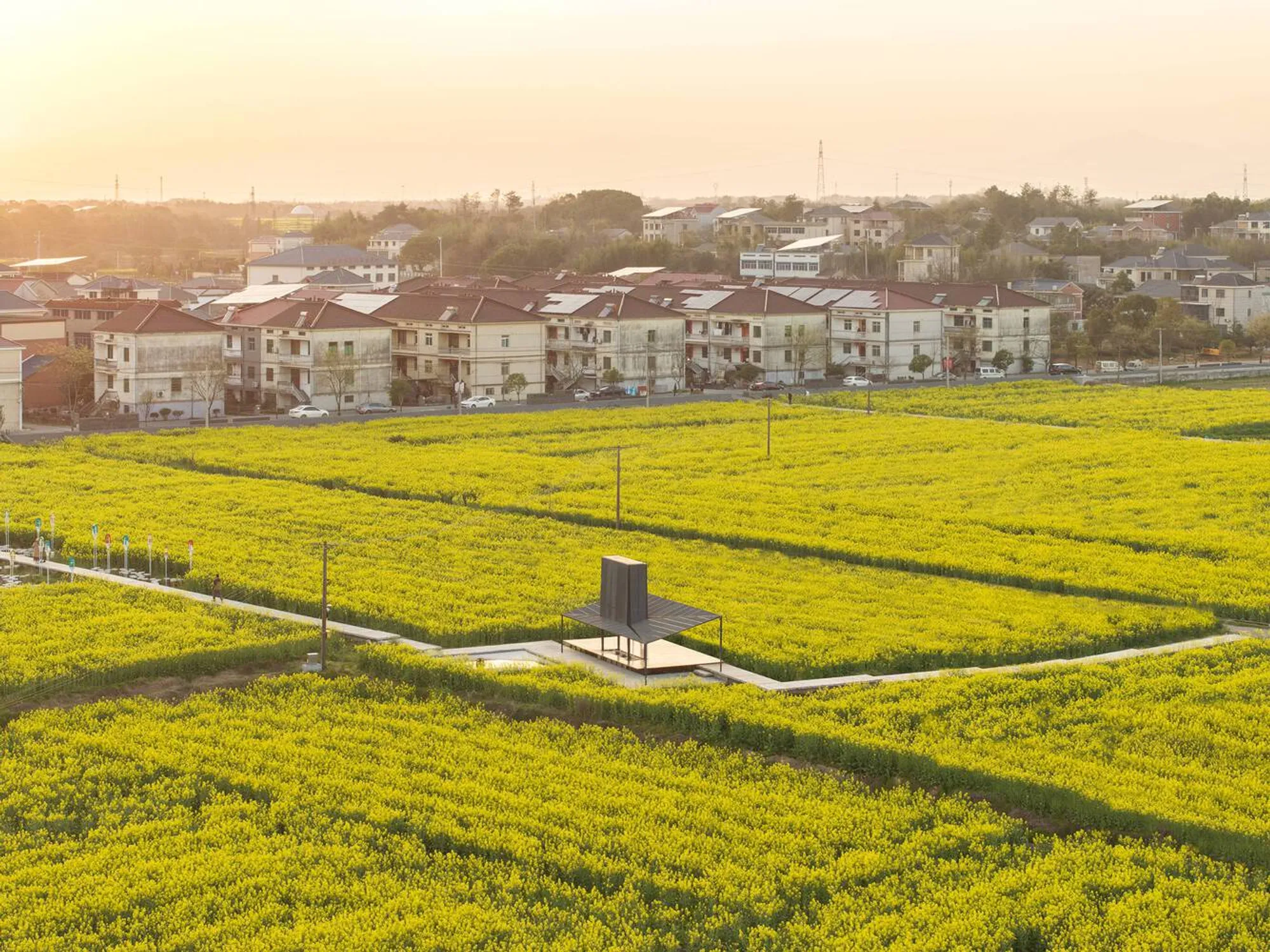
Nestled within the rhythmic landscapes of Qujiang Village along the Qujiang River, Listening-to-the-Rain Stop by Atelier Wen’Archis an architectural installation that merges rural life, sound, and contemporary design. The 40 m² lightweight structure houses an ancient acoustic device, “Dripping into Buried Jar”, which transforms rainwater into a dynamic auditory experience, blending nature and human craftsmanship into a contemplative space.
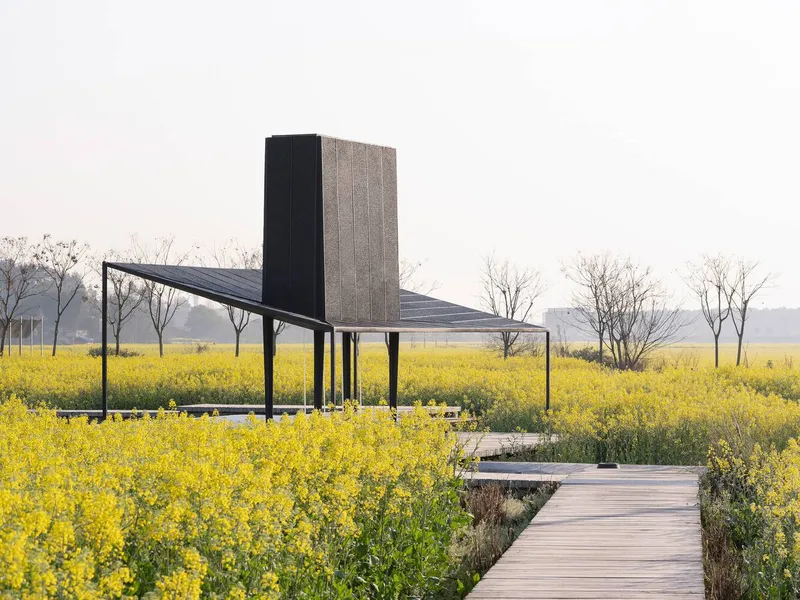
The installation explores sonorous landscapes, rural everyday life, and artistic spirituality, creating a meditative retreat amidst seasonal crop rotations and flowing irrigation canals. Here, architecture becomes a lens through which visitors perceive the subtle sounds and textures of the countryside.
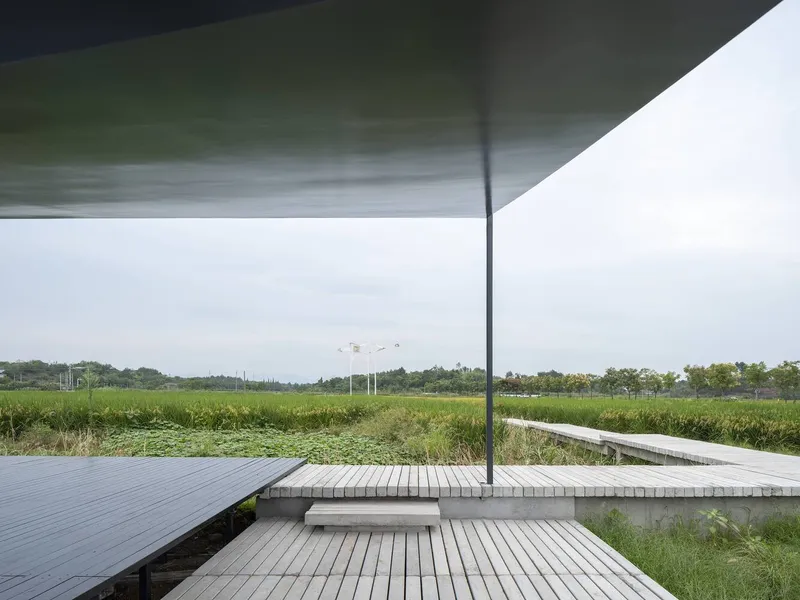
Concept and Spatial Experience
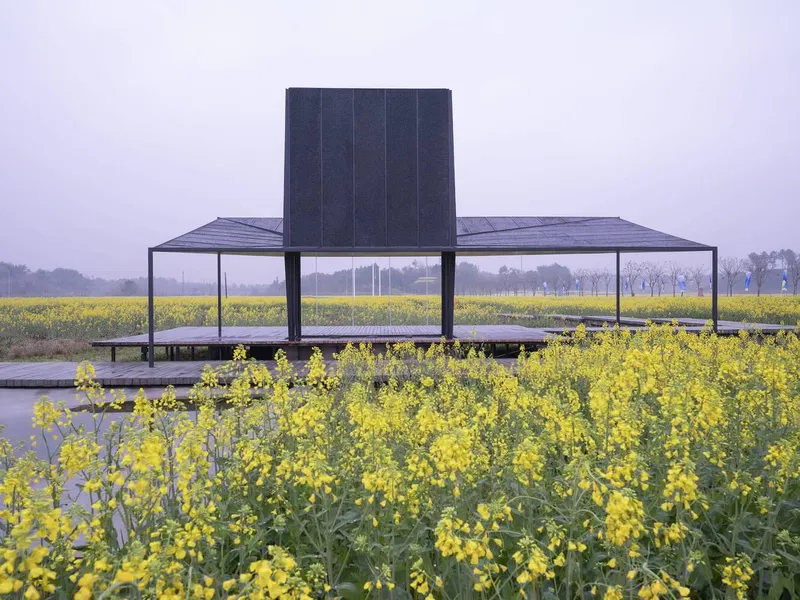
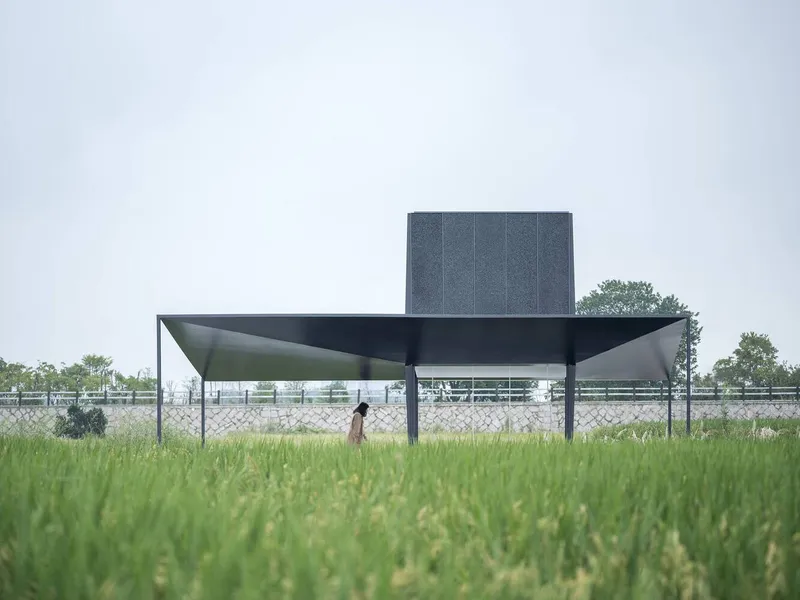
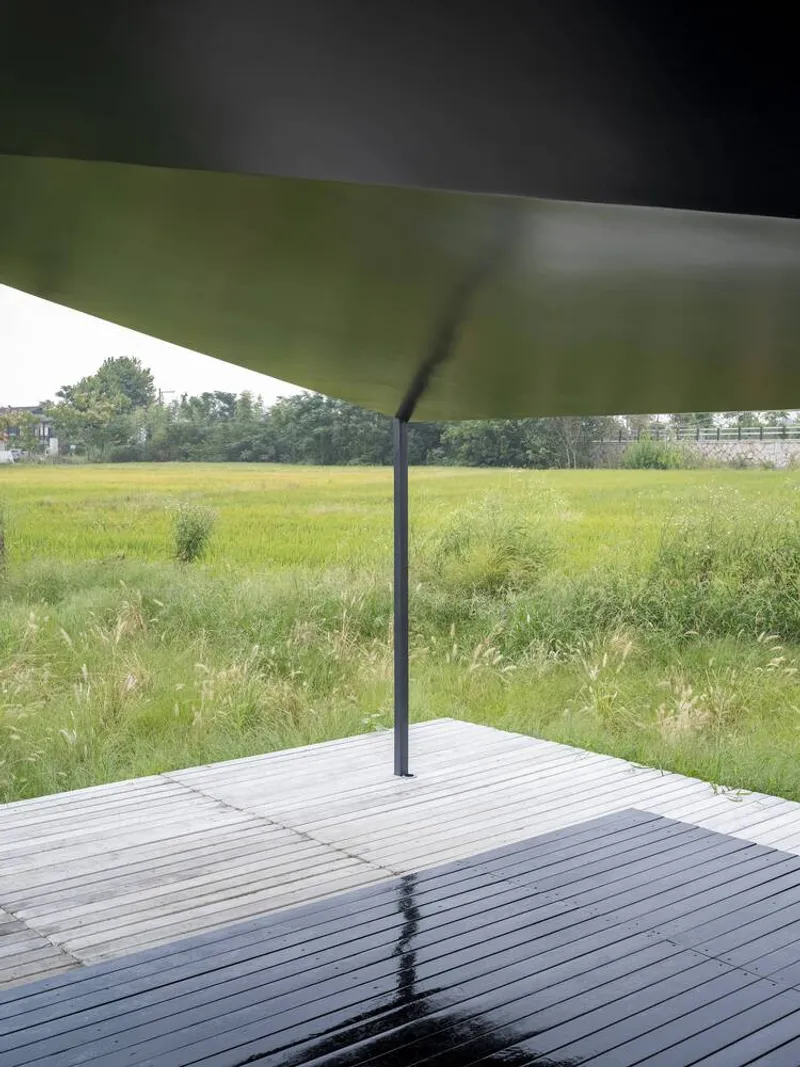
Walking along a narrow path atop the irrigation canal, visitors encounter a distinctive black roof gently resting on the ground. Amidst the vibrant, multi-colored fields, this dark form emerges as a quiet counterpoint, offering a sense of pause and reflection.
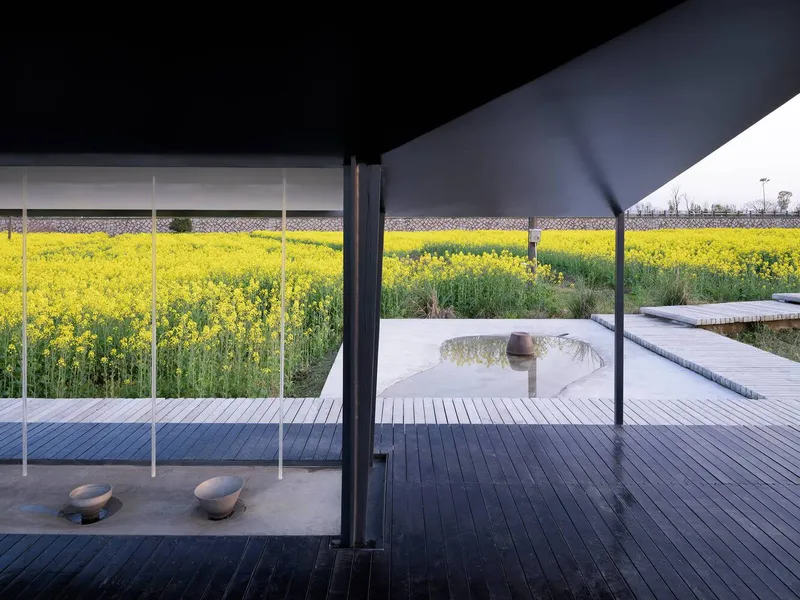
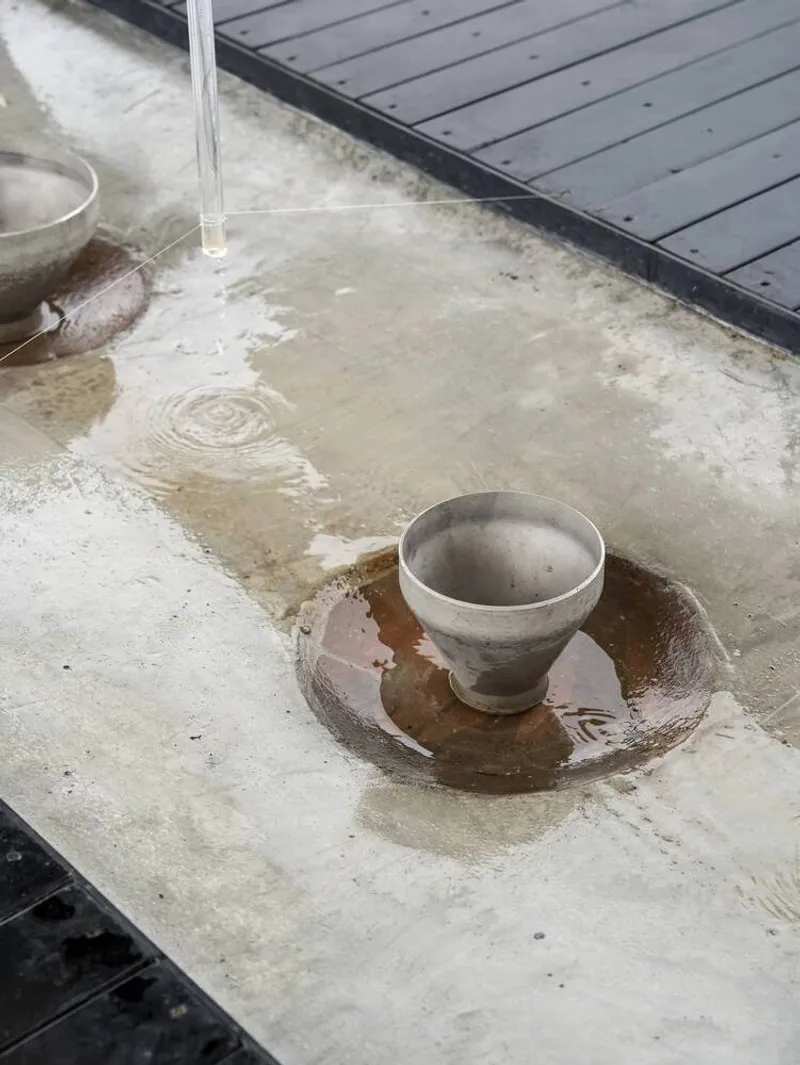
The design captures the essence of rural soundscapes. Embedded in the concrete base are relic-like objects, evoking the memory of traditional village life. Water jars, pebbles, and other materials sourced locally tie the structure to its environment. The installation allows visitors to hear the invisible echo of dripping water rising from beneath the ground, expanding the perception of space and connecting the sensory experience to nature itself.
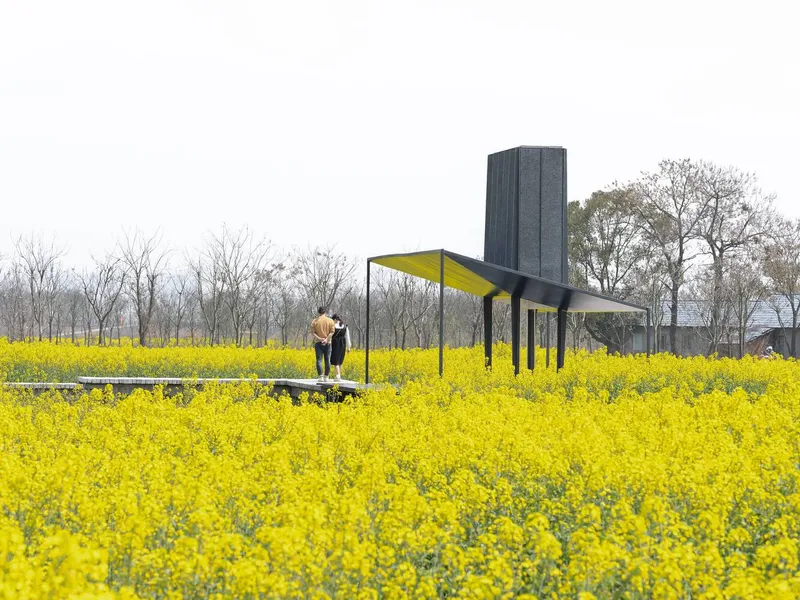
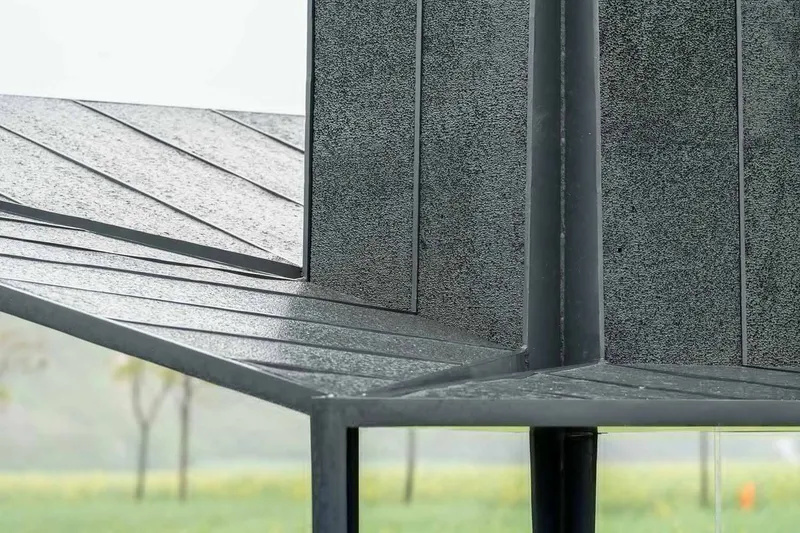
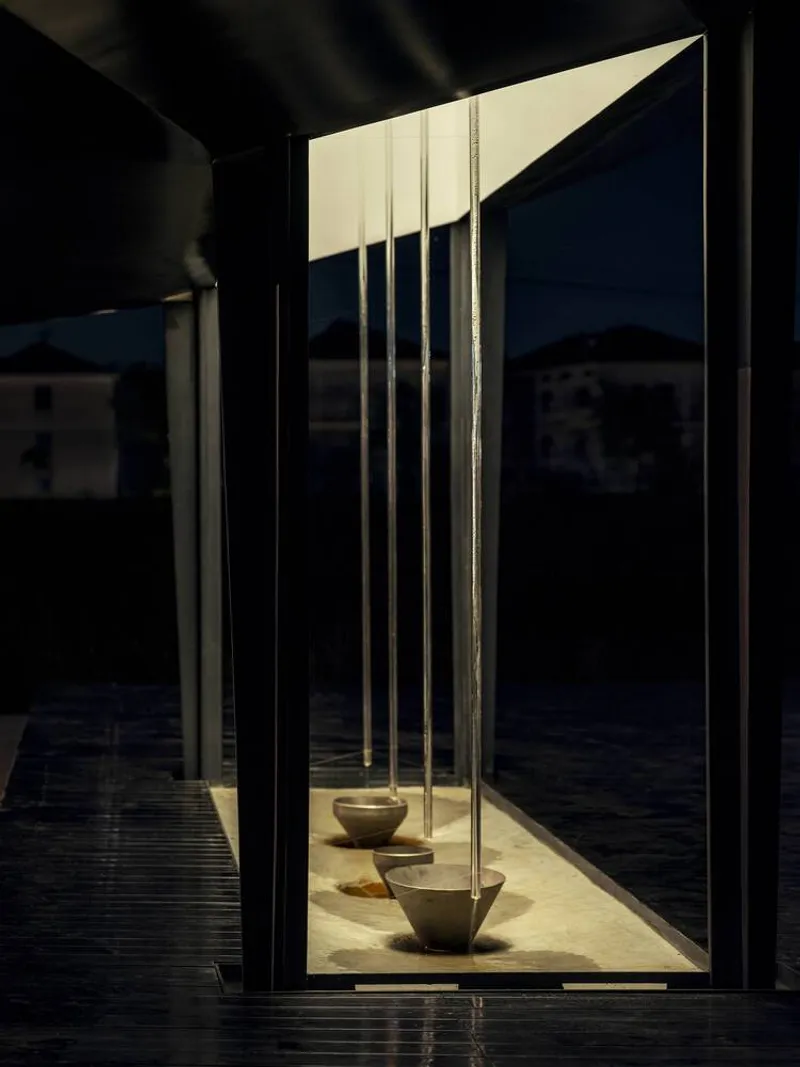
Architectural Design and Structure
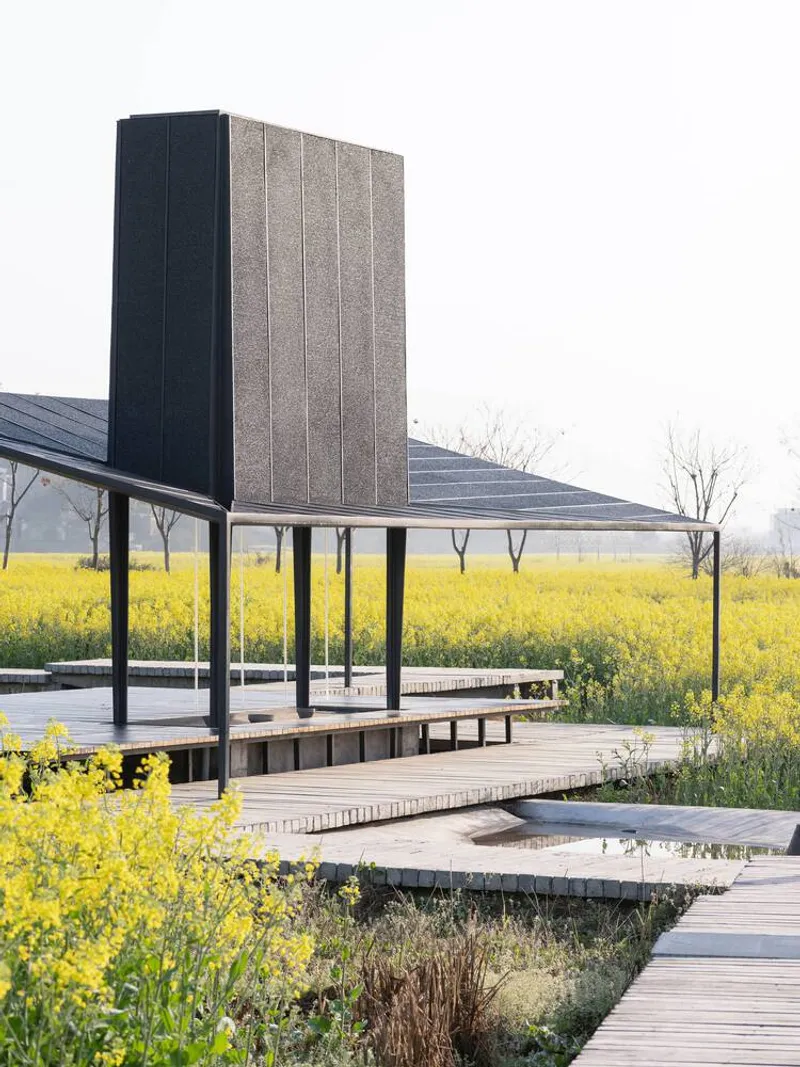
The roof of Listening-to-the-Rain Stop serves as both a structural and sculptural element, balancing lightness and solidity, horizontality and verticality. Key features include:
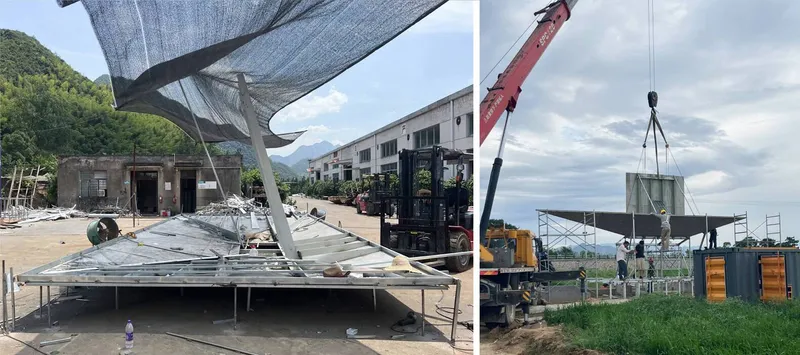
- Cantilevered steel ribs with repeated L-shaped cross-sections form the roof perimeter.
- Cruciform steel columns provide core mechanical support, while slender 5 cm square columns hold up horizontally extended roof edges.
- Black semi-mirrored steel plates reflect the colors of the surrounding fields, integrating the structure into its landscape.
- Spaces between the ribs are filled with dark aluminum foam panels, lightweight, insulating, and soundproof, resembling traditional thatched roofs with contemporary industrial materials.
The prefabricated steel structure ensures construction precision and efficiency, while handcrafted elements, such as curved concrete surfaces and pool bases, involve collaboration with local craftsmen. Prefabricated concrete strips, reminiscent of grape trellises, define elevated walkway platforms, seamlessly merging tradition and modernity.
Rainwater Sound Device Integration
At the heart of the installation lies the “Dripping into Buried Jar” device. This water-driven acoustic system interacts with the architectural structure:
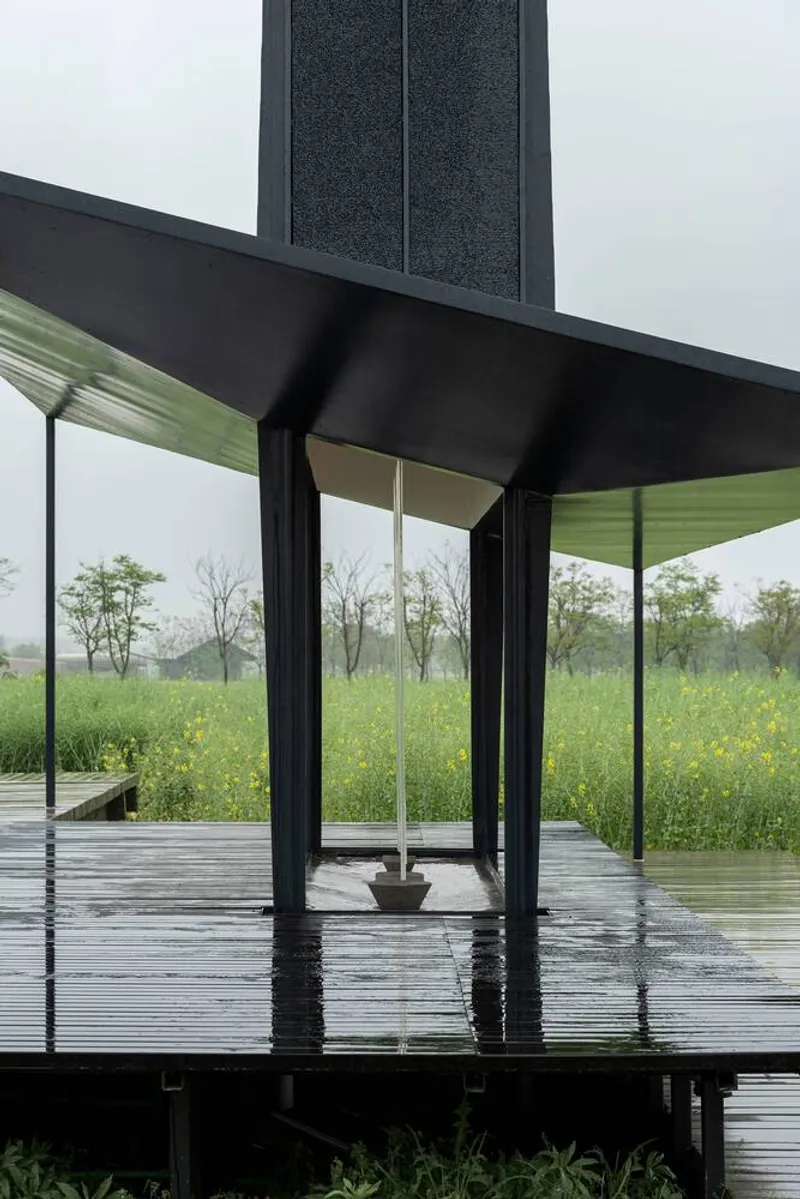
- Rainwater seeps through small holes in the aluminum panels and collects in roof ridge gutters.
- Water flows down cruciform columns into three buried antique water jars, each tuned for its unique resonant frequency.
- During dry seasons, water from local wells drips through transparent acrylic tubes into the jars, maintaining the auditory experience.
- The reflective, flowing water surface mirrors the surrounding rice fields and the hidden Qujiang River, connecting natural and human-crafted rhythms.
Every element, from pebbles to fishing lines securing the acrylic tubes, was sourced locally, creating a sensory and ecological connection to the site. Even repurposed hardware elements, like pressure caps for acoustic “trumpets,” emphasize sustainability and local resourcefulness.
Poetic Resonance
Listening-to-the-Rain Stop is more than a structure; it is a meditative intervention in the landscape, a site where architecture, sound, and nature merge. As Rainer Maria Rilke wrote:
"And if the world has ceased to hear you, say to the silent earth: I flow. To the rushing water, speak: I am."
This installation anchors the rural land of Qujiang Village, revealing the value of the fields through auditory perception, craftsmanship, and environmental awareness.
All photographs are works STUDIO FANG, Zhang Zhun, Yang Min




Popular Articles
Popular articles from the community


The Ocean Hive: Sustainable Architecture for a Self-Sufficient Civilization at Sea
The Ocean Hive imagines sustainable architecture at sea, where modular habitats, algae, wave power and ocean waste sustain a growing colony.

Hill & Cross Opera: Sculptural Opera House Architecture Shaped by Tallinn’s Landscape and Identity
Hill & Cross Opera reimagines opera house architecture in Tallinn through its sculptural hill, civic plaza, glass wave and a luminous cross.

The Musturak Paradise: Senior Living Architecture for a Connected Future in Temara, Morocco
The Musturak Paradise reimagines senior living architecture in Temara via private homes, social spaces, culture, community, and shared care.

Play: Fragments of Their World
Familiar architecture becomes modular playground design, creating safe spaces where displaced children can learn, connect, imagine and play.


Similar Reads
You might also enjoy these articles

Bamboo Housing Challenge 2026: Design Affordable, Sustainable Homes Using Bamboo
An international design competition by Bamboo U and IBUKU inviting architects and designers to reimagine affordable housing using bamboo — with the winning design built full-scale in Bali.

Computational Design & Education: Beegraphy Design Awards Introduces 7th Category (Featuring Jiyun's Innovative Approach)
Dive into Beegraphy’s 7th Design Awards category, where computational design meets education to create immersive, interactive learning tools, inspired by Jiyun’s work.

From Parametric Lighting to Urban Furniture: Join the 2nd Workshop in Beegraphy’s Computational Design Series
Dive into Cutting-Edge Design Techniques and Practical Applications with Industry Experts

Last Call: Unleash Your Architectural Genius in SHAK's Kindergarten Design Competition
Urgent call for architects to join SHAK's kindergarten design competition before the looming deadline


Explore Architecture Competitions
Discover active competitions in this discipline



Challenge to reimagine the Iron Throne


Photograph architecture without architects


Illustrate the lost glory of Angkor Wat - Render Challenge


Design challenge to reuse E-waste
Comments (0)
Please login or sign up to add comments
No comments yet. Be the first to comment!