

LIVING - HUB
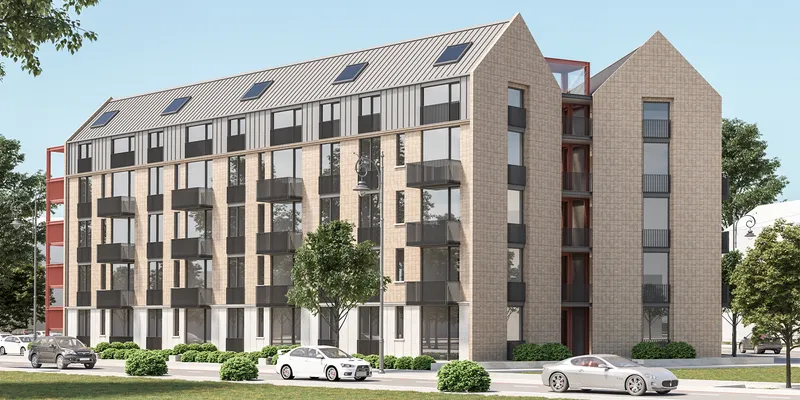
Project is located in London city, UK. The site is triangle in shape, holds direct connection from two main roads and is surrounded by the industrial and four to five floor-storey residential buildings. The concept behind the project was to understand and fulfill the basic needs of the people who are searching for a home on a survival level. I concidered socio-cultural, economic, environmental settings and created multiplicable housing units for 2 user groups: - For Young Adults: 18-25 Years: full-time or part-time workers or students, families with 1-2 family members - 30 small-sized housing units, with the space of 38 sq.m. each. Space includes: great room (open concept kitchen, dinning and living areas), bedroom, wc and balcony (Front terrace for ground floor units) - For Working Professionals: 25-40 years(creative freelancers, healthcare, software developers, etc). Families with 3-4 family members - 10 medium sized housing units with the space of 55 sq.m. each. Space includes: great room (open concept kitchen, dinning and living areas), bedroom, wc and balcony (Front terrace for ground floor units). Despite the small living space, units fulfills basic living needs. The building itself is divided into two parts and outlines the site perimeter. This division helps me to better accommodate the building in the urban context, also creates small triangle-shaped, courtyard in the middle (550 sq.m) covered with green space. The building includes two staircases at the ends of both sides and one elevator in the middle. Project includes 16 open and 22 underground parking lots. The main building materials used in the project are: concrete and steel for structure and brick granite and goffered steel for the exterior cladding.

Popular Articles
Popular articles from the community


Cloaked Colonization: A Mobile Underwater Habitat That Moves Like a Fish
Micah Abaya's shortlisted EHC Pacific entry reimagines ocean settlement as a dispersed network of self-sustaining architectural organisms.
Extended Shell: Retrofitting Kolkata's Balconies as Living Urban Thresholds
A modular retrofit system recovers the social and environmental intelligence of Kolkata's historic verandas for contemporary Park Street residents.

Opera on the Sea: Driftwood Logic Shapes a Timber Opera House on Estonia's Coast
Trevor Orgill's opera house translates the entangled drift of floating timber into a civic building where wood, water, and music converge.

Tsunami Convergenics: Turning Catastrophic Ocean Forces into Underwater Housing Infrastructure
A speculative underwater settlement off the coast of Onagawa, Japan, treats tsunamis and typhoons as energy sources rather than threats.

Similar Reads
You might also enjoy these articles

Open letter to community of UNI
A set of important news for our existing participants and community of UNI worldwide.

The Amber Palace Opera: A Geological Fiction Surfaces on Tallinn's Baltic Waterfront
Pierre Brillard reimagines a Baltic legend as a public landscape, opera house, and waterfront promenade rooted in Tallinn's coastal identity.
Dynamic Modules Shelter: A Telescopic Ring for Mountain Pilgrimage
A circular modular framework of steel, bamboo, and fabric grows vertically with demand, wrapping communal ground in adaptable shelter.

Singing Woman: Contemporary Architecture Inspired by Estonia’s Voice and the Sea
Singing Woman turns Estonia’s song culture into flowing opera house architecture, blending public life, landscape, sea, and national memory.

Explore Co-Living Competitions
Discover active competitions in this discipline


Challenge to reimagine the Iron Throne

Photograph architecture without architects

Illustrate the lost glory of Angkor Wat - Render Challenge

Design challenge to reuse E-waste
Comments (0)
Please login or sign up to add comments
No comments yet. Be the first to comment!