
locallll Replaces the Gas Station with a Timber Forest Canopy on the Norwegian Coast
A pilot charging station in Straume, Norway, uses modular wooden canopies, green roofs, and battery storage to rethink roadside infrastructure.


The gas station is one of the most universal pieces of infrastructure in the modern landscape, and one of the least loved. It is a flat concrete pad under a flat metal roof, designed to dispense fossil fuel as fast as possible. As electric vehicles upend the economics of refueling, requiring drivers to stay for minutes rather than seconds, the brief changes entirely. The canopy becomes a place of pause, not just protection. locallll, a Norwegian design studio, took this insight seriously when they were tapped by Greenstation to build a pilot EV charging station on the outskirts of Bergen. The result, completed in 2022 in Straume, is a 500 square meter forecourt sheltered by three overlapping circular timber canopies that look less like a service station and more like a cluster of giant parasol pines.
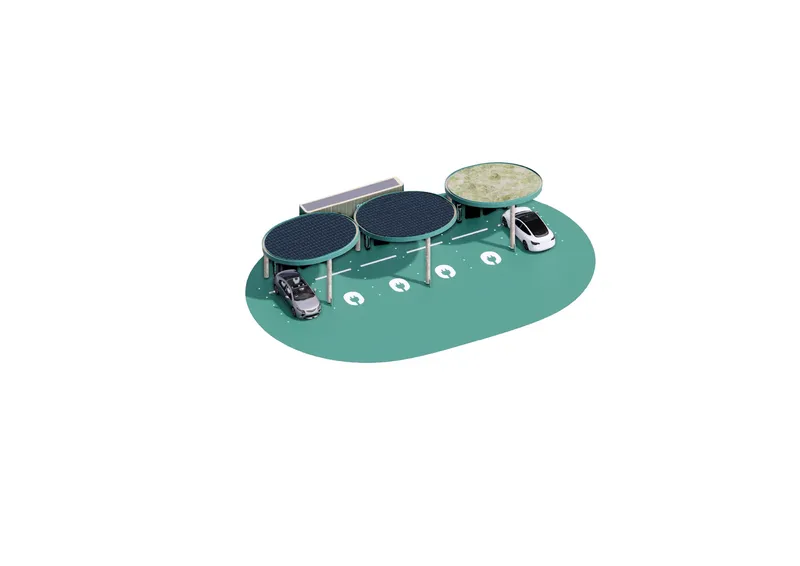
What makes the project genuinely interesting is not the fact that it is made of wood, though that matters. It is the modular logic behind the form. Each circular canopy is a self-contained unit that can be deployed in multiples, from a two-point charger to a 24-point hub. The circles overlap, creating sheltered zones between them while allowing light and air to pass through. Roofs are planted with sedum or wild local vegetation, or fitted with photovoltaic panels, and batteries embedded in the station store solar energy to boost output without overloading the local grid. The design was the product of a multi-year process that began with support from DOGA, Design and Architecture Norway, in 2019. It is both a prototype and a provocation: what if the most visible piece of energy infrastructure in a neighborhood were also the most generous?
Three Circles on a Coastal Road
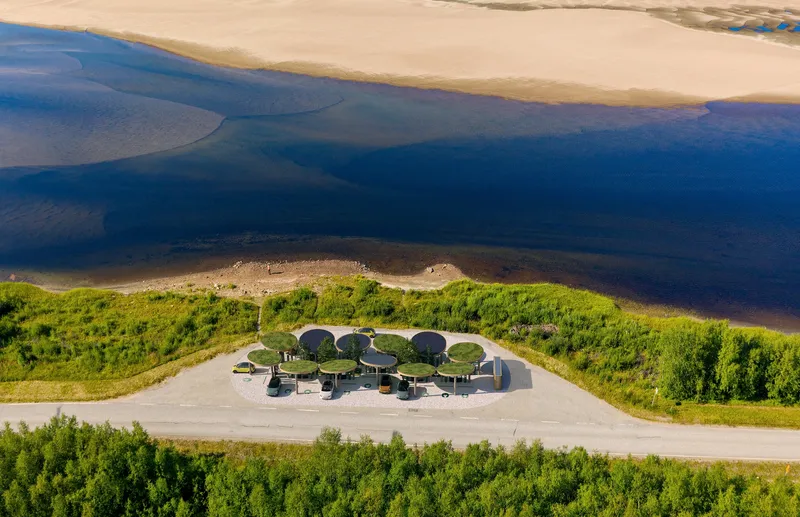
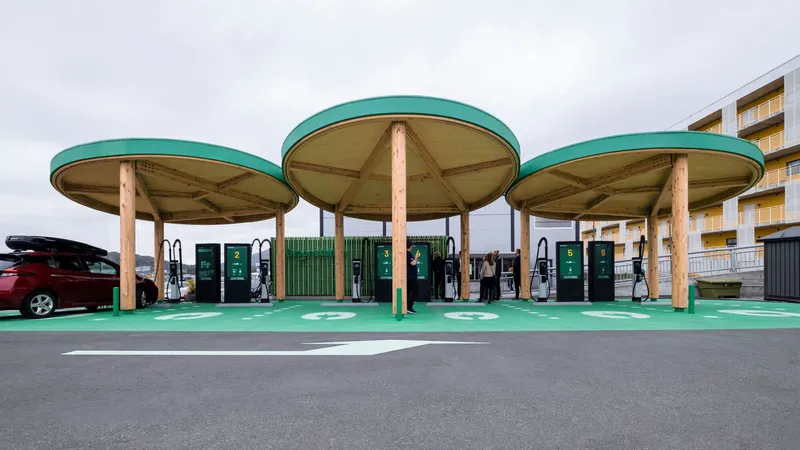
The station sits between a coastal road and the waterfront in Straume, a suburban context that could hardly be more typical of the Norwegian charging landscape. Three circular canopies cluster together on a painted green forecourt, their teal metal fascias reading as a single graphic element from the road. The geometry is deliberate: circles have no front or back, so the station reads equally well from every approach. A tall price mast, also circular, displays real-time charging rates and is visible well before drivers turn in.
The siting is strategic. Rather than hiding the infrastructure behind a building, locallll puts it on display. The canopies are low enough to feel domestic in scale but distinctive enough to register as a landmark. The green floor surface extends beyond the canopy footprints, acting as what the designers call an "urban carpet" that blurs the boundary between functional mobility space and landscape.
Timber Structure as Identity
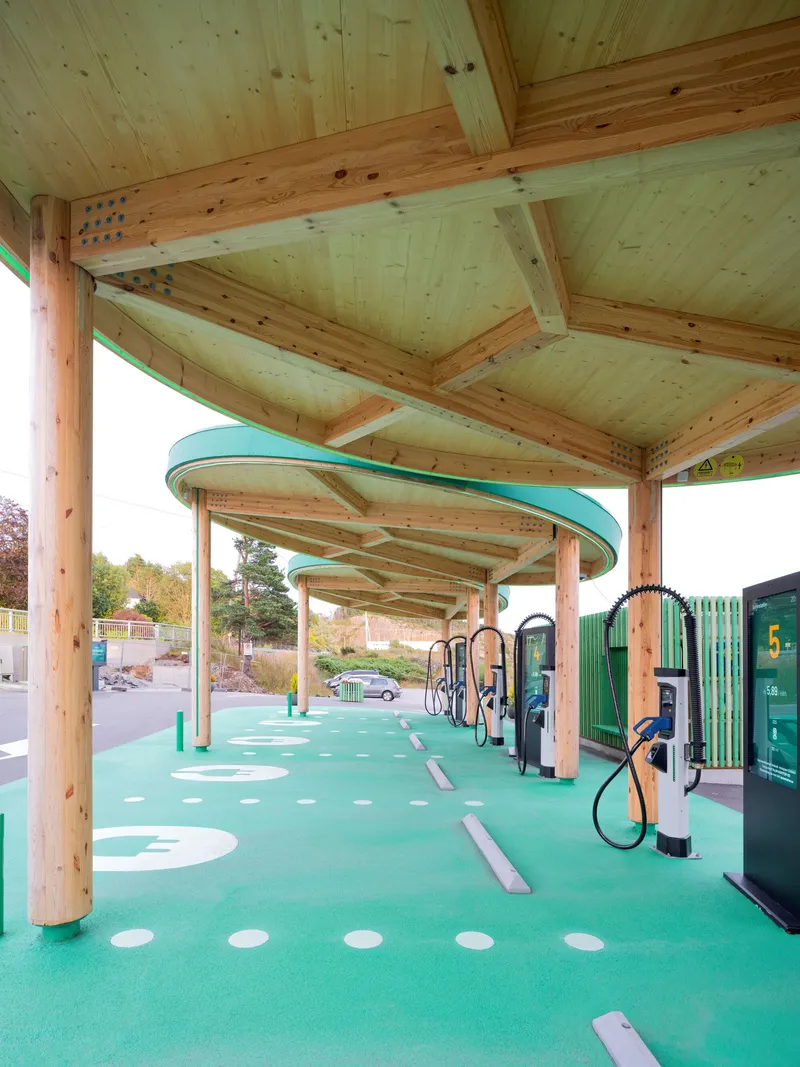
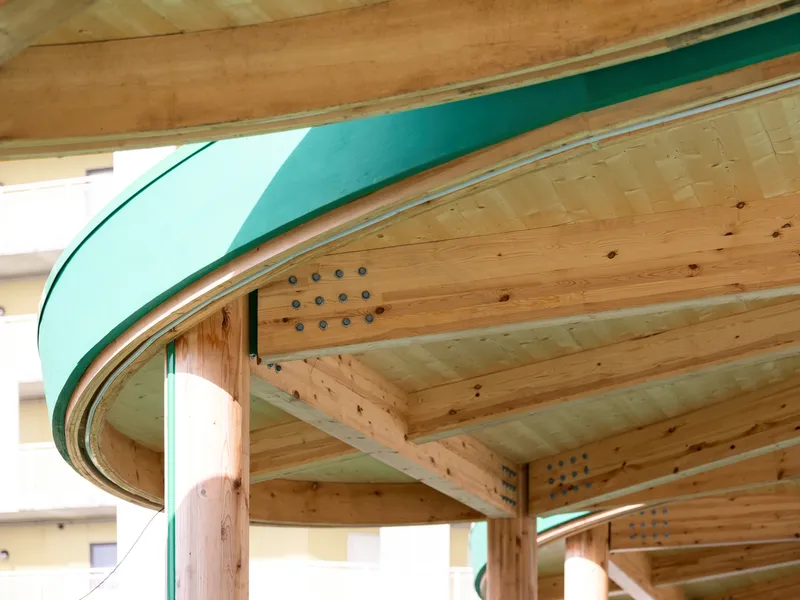
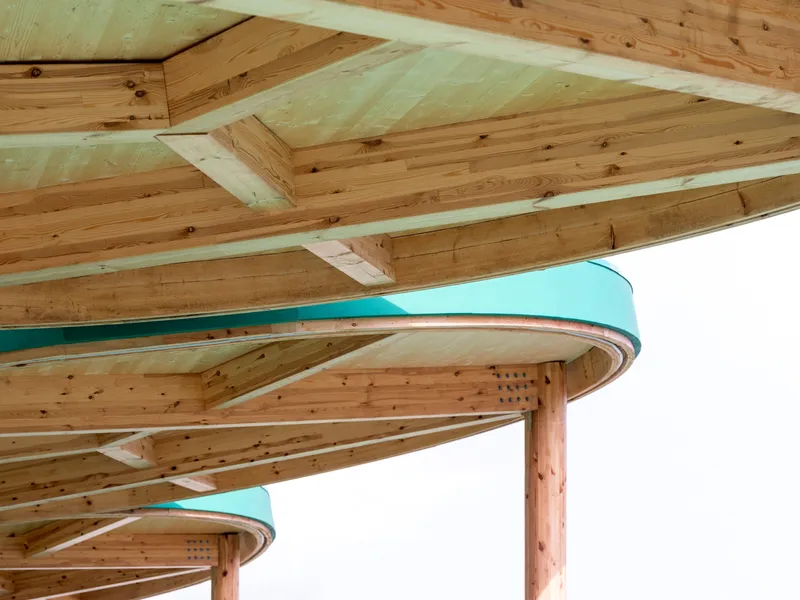
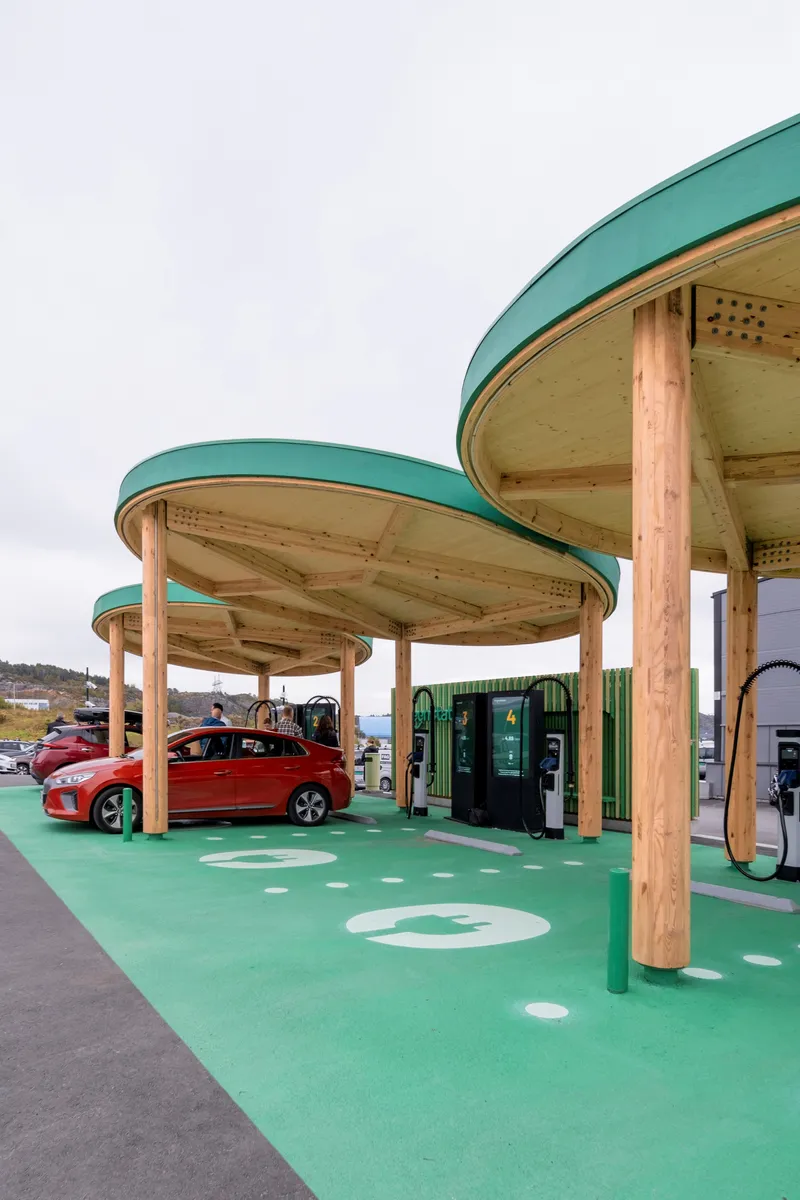
The canopies are 100 percent wooden construction, and the structure is left fully exposed on the underside. Radial timber beams fan outward from central columns like the ribs of an umbrella, their joinery clearly legible from below. The visual effect is striking: you look up and see a warm, rhythmic pattern of wood grain rather than the corrugated metal ceiling of a typical fuel station. The material choice is not decorative. Wood is lighter than steel for this span, stores carbon, and ages well in the wet Norwegian climate when properly detailed.
The column connections deserve a close look. The teal metal fascia wraps around the canopy edge and meets the timber beams at a clean junction, giving each circle a crisp, graphic outline while the interior remains warm and tactile. It is a smart division of labor: metal handles the weather-exposed edge, wood handles everything else.
Charging as a Consumer Experience
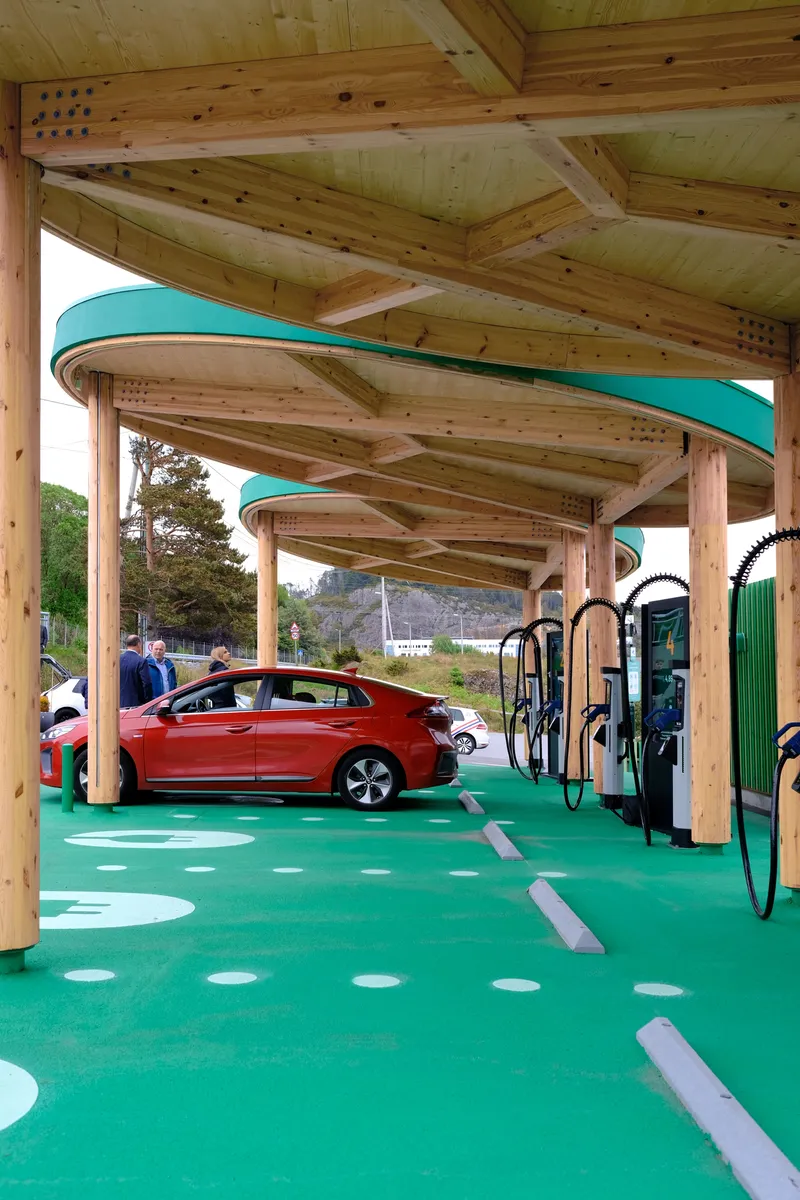
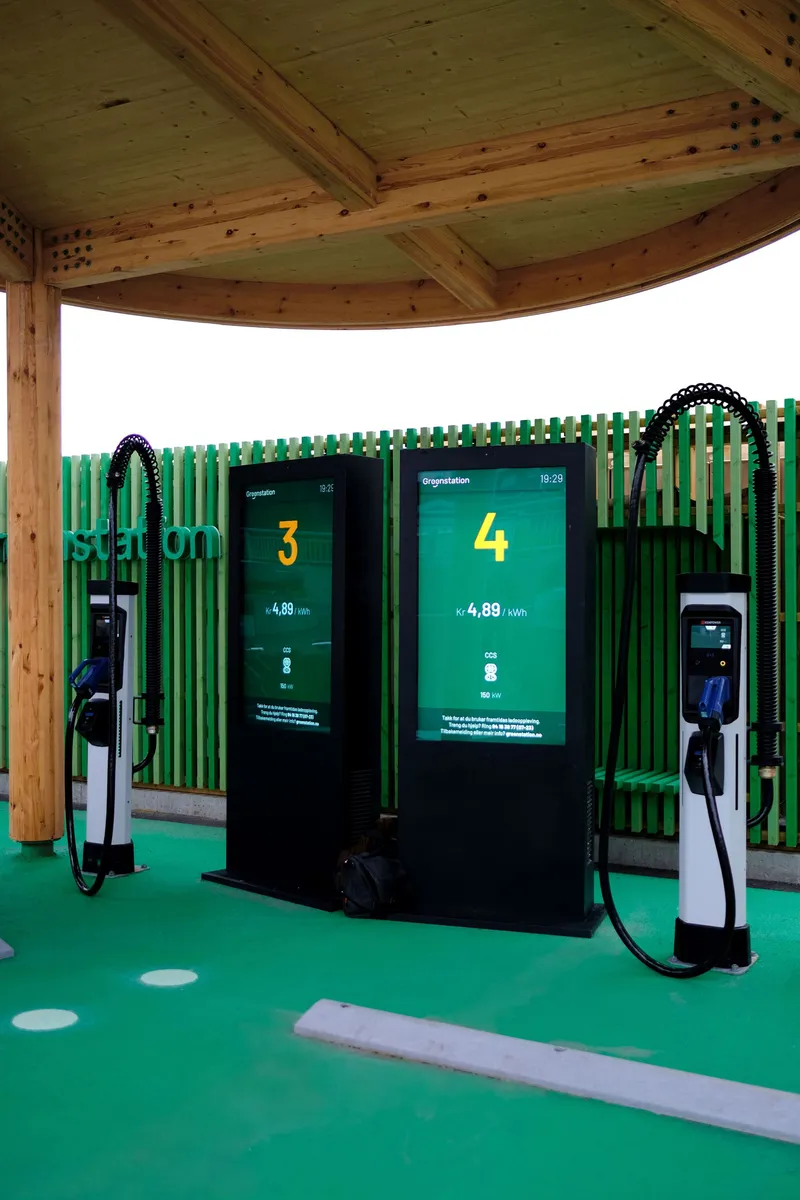
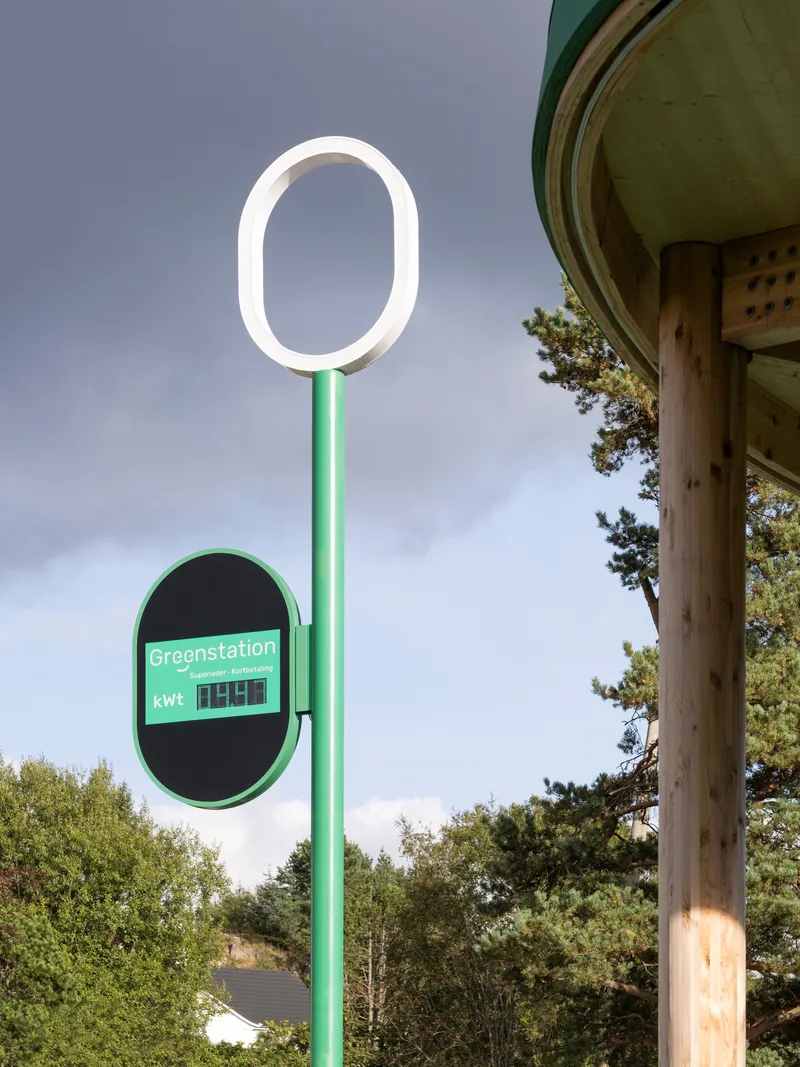
Six Kempower charging systems serve the Straume pilot, delivering up to 600 kilowatts of total output across a mix of CCS and CHAdeMO connectors. The hardware is real and serious, but the design wraps it in a consumer-facing experience that owes more to retail than to industrial engineering. Charging cables are fitted with supporting springs so they're easy to handle. Green metal screening panels provide a visual buffer between bays. Rubber flooring softens the ground plane.
A food truck serving Asian takeaway, drinks, and coffee occupies the site alongside the chargers, acknowledging the simple truth that people who charge for 15 to 30 minutes need something to do. The signage pole, a slender green steel column topped with a circular ring light, functions as both wayfinding and brand marker. It is a small detail, but it signals that someone actually thought about this place as a destination, however brief.
Living Roofs and Embedded Energy
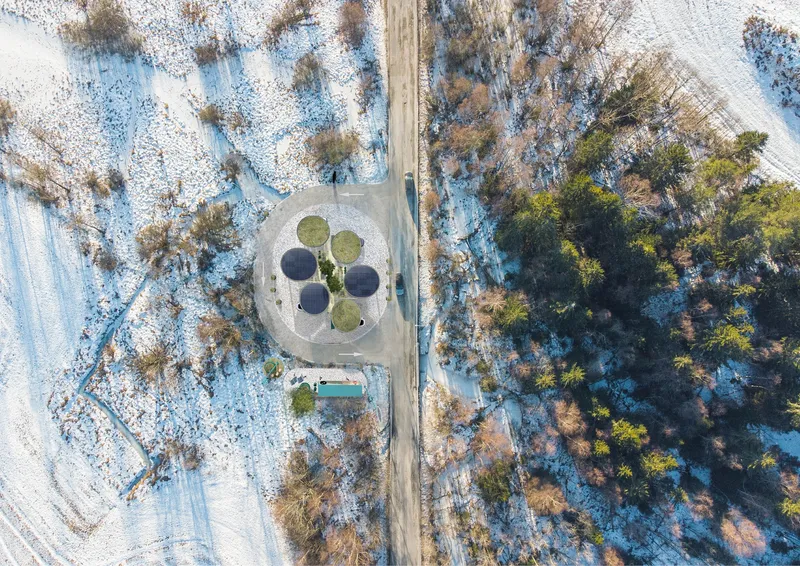
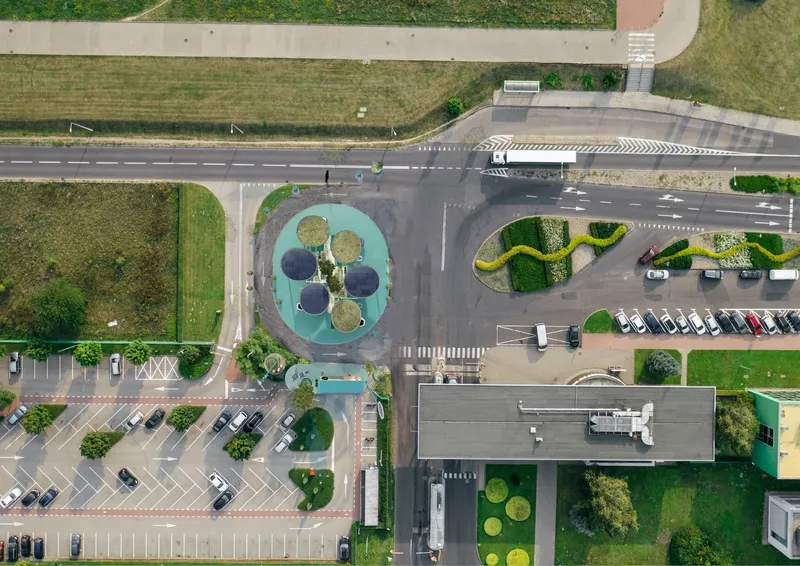
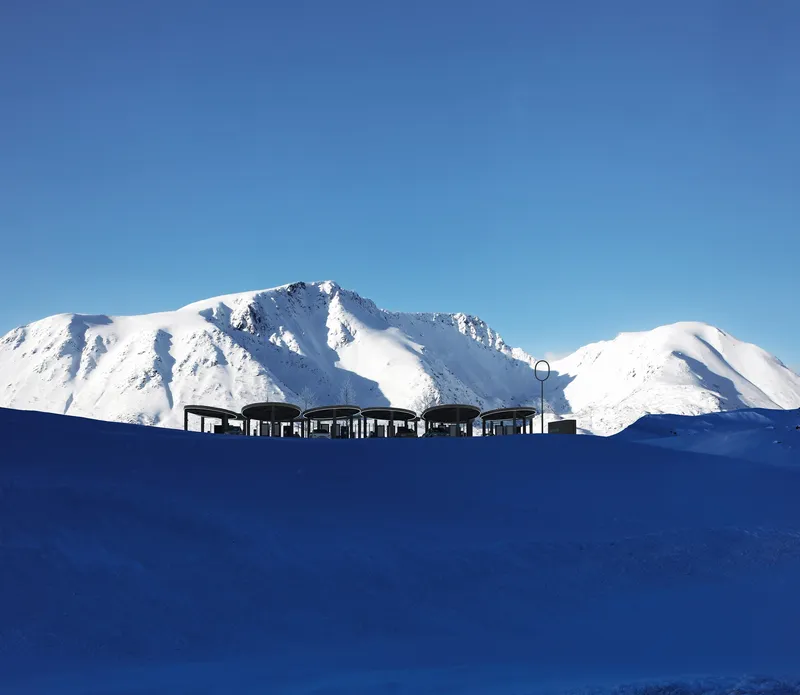
Seen from above, the canopies reveal their second function. The rooftops are planted with sedum or wild local vegetation, turning each circle into a small patch of habitat. Some configurations substitute solar panels for planting, or combine both. The aerial views make the point clearly: these are not roofs but landscapes elevated above the ground plane. The concept, as locallll describes it, is "not building a roof but a landscape."
Batteries integrated into the station store energy generated by the photovoltaic panels, allowing the system to boost peak output without increasing its draw on the local grid. In a country where hydroelectric power is abundant but grid capacity is finite, especially in suburban and rural areas, this distributed storage model is pragmatic. The 900 kilowatt installed capacity versus 600 kilowatt delivered output reflects a deliberate buffering strategy.
After Dark
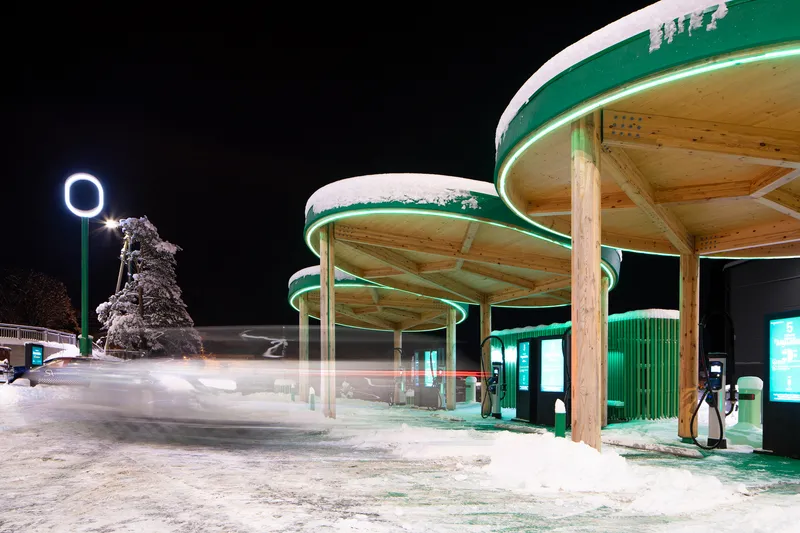
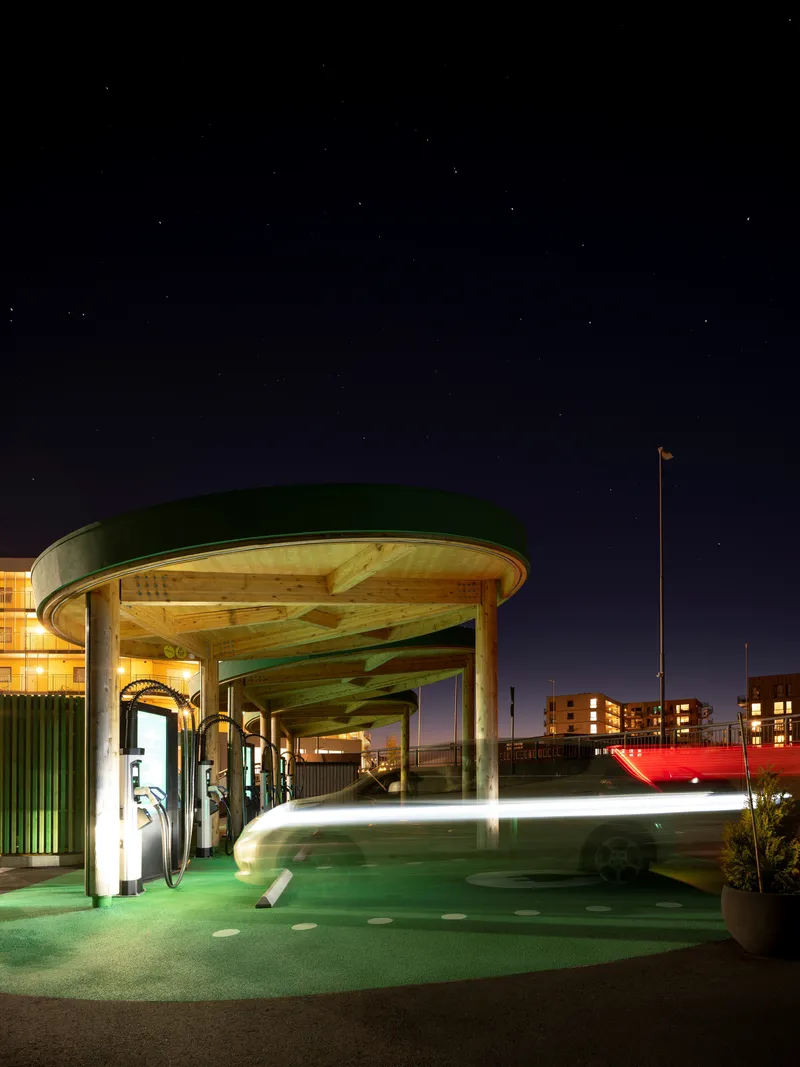
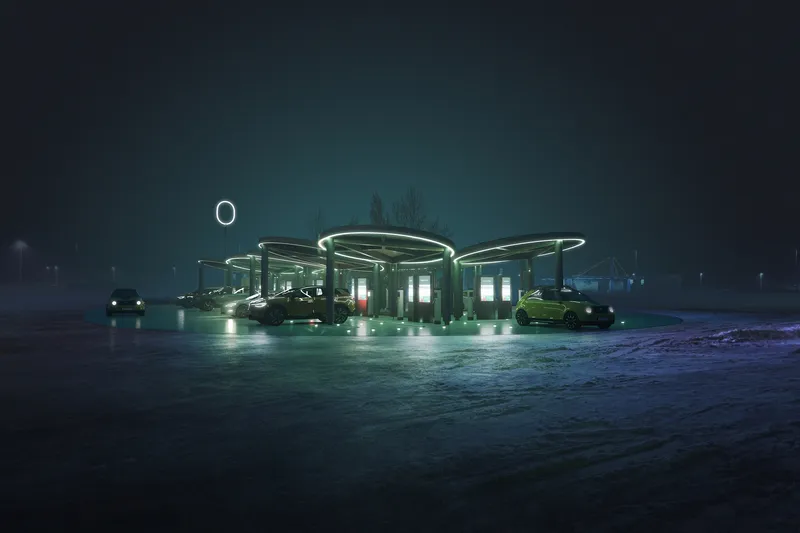
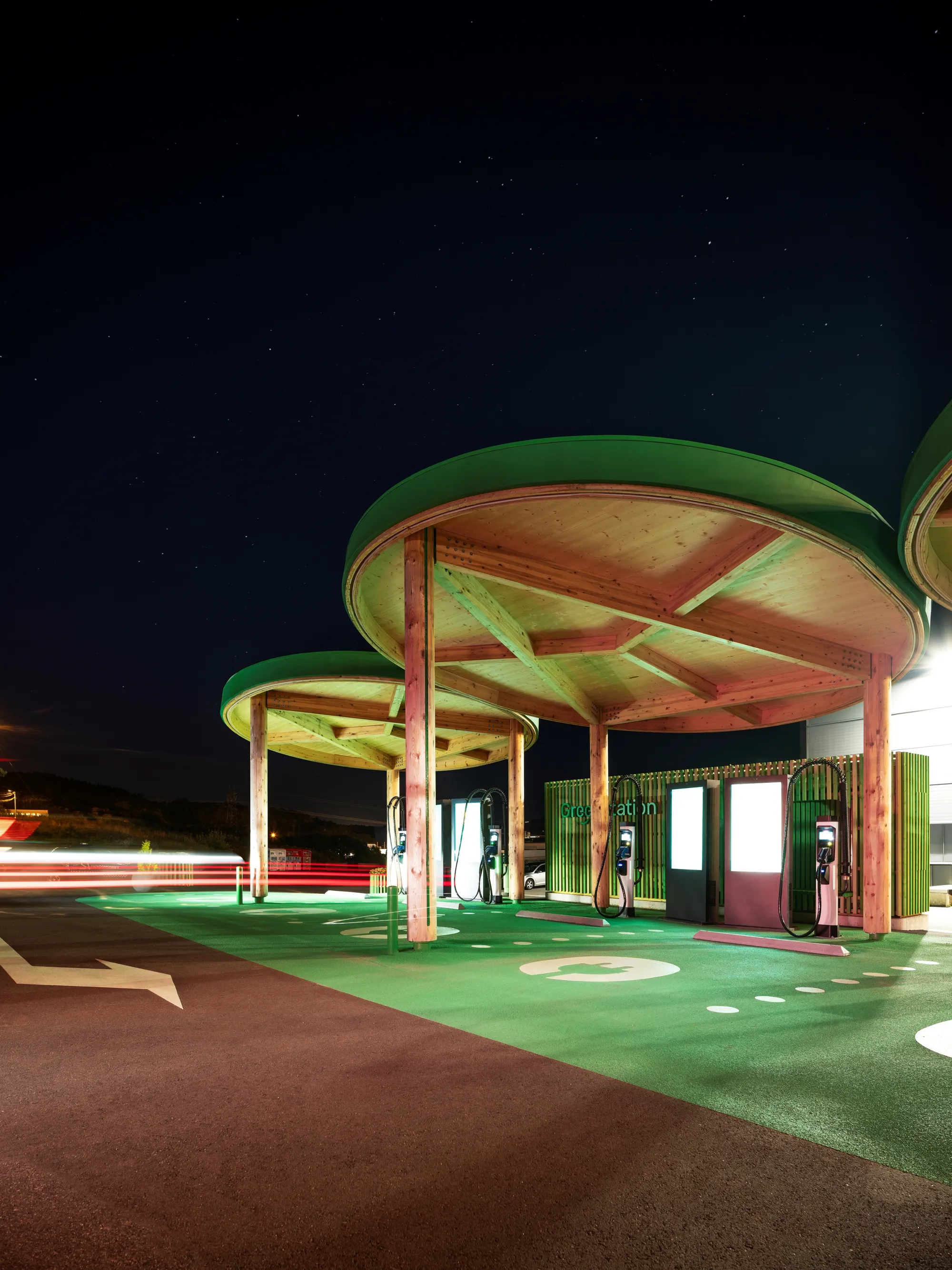
Norwegian winters are dark, and any piece of roadside infrastructure that doesn't account for that is failing half the year. The canopies are equipped with LED lighting integrated into the fascia rim, washing the timber beams in warm light from below. At night, the station transforms into a glowing cluster on an otherwise dim coastal road, visible from a distance without being aggressive. The fog shots from Straume are particularly telling: the overlapping circles read as soft halos rather than harsh commercial signage.
The long exposure image with vehicle light trails and a starry sky above captures the duality of the project. It is infrastructure, performing a technical function at the edge of a road, but it also has the presence of a small pavilion or shelter. In a country where charging stations are proliferating rapidly, that atmospheric quality is a competitive advantage, not a luxury.
Modular Logic and Scalability
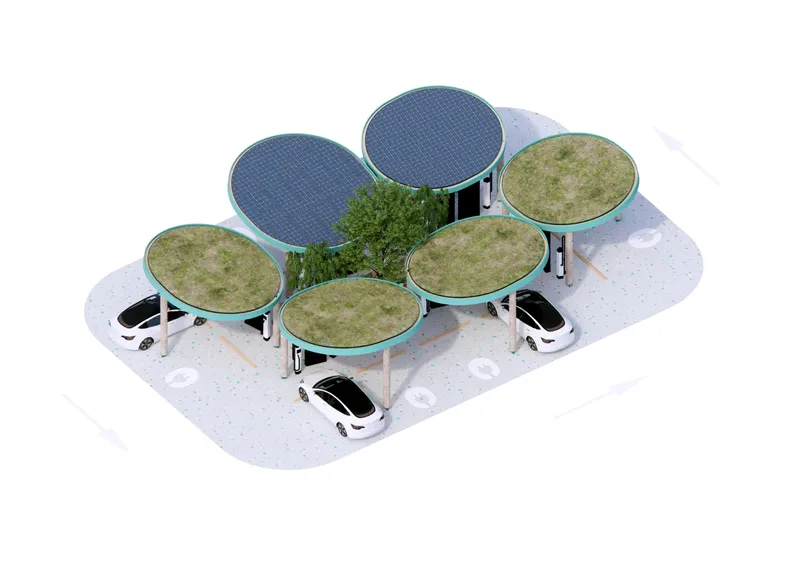
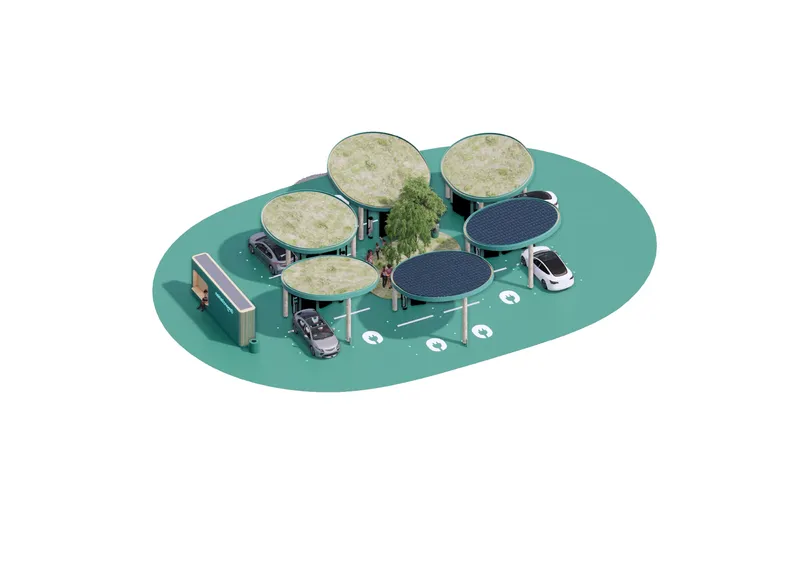
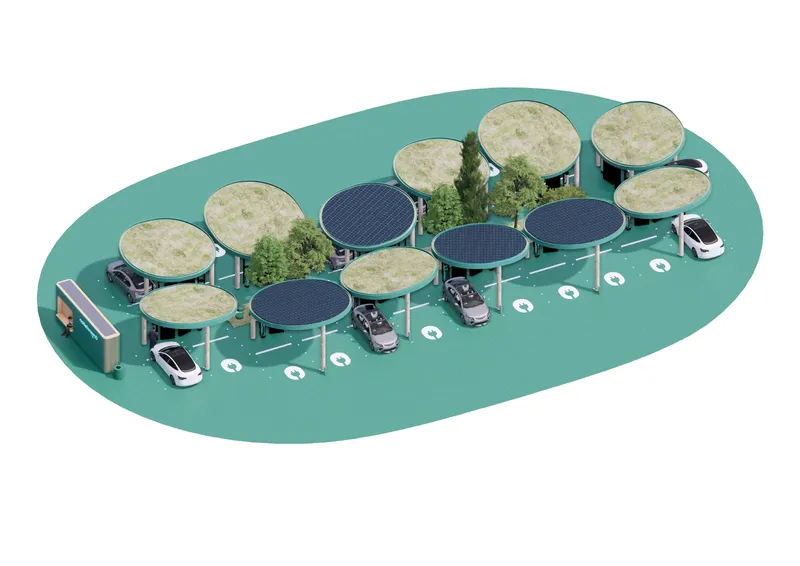
The real ambition of Greenstation is not one beautiful pilot project but a scalable system. The axonometric renderings reveal the kit-of-parts logic: each circular canopy is a discrete module, and configurations range from a single parasol covering two bays to dense clusters of six or more canopies with alternating solar and planted roofs. The rendering of a larger hub shows how the same formal language holds together at a scale closer to a conventional motorway service area.
This modularity is the project's strongest architectural argument. The circle, because it is directionless and self-similar, aggregates without requiring a master plan. You add another canopy as demand grows. The identity stays legible whether there are two or twelve. It is a rare case of a branding strategy and a spatial strategy being genuinely the same thing.
Plans and Drawings
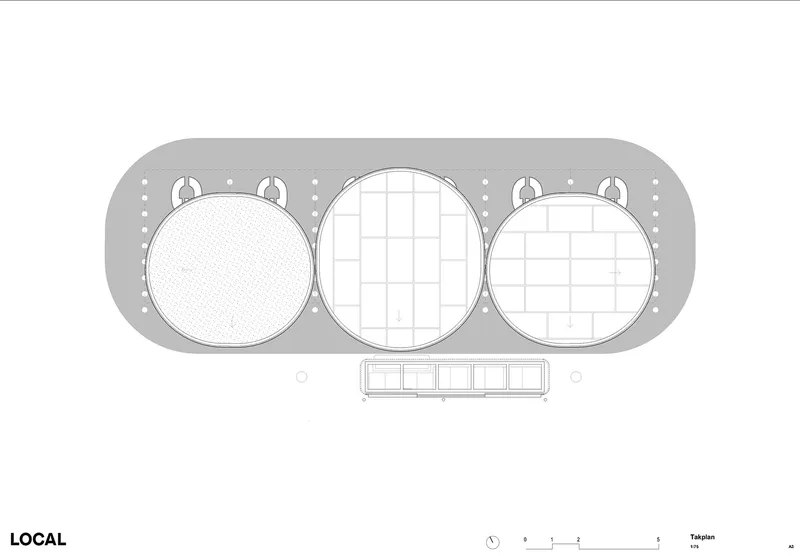
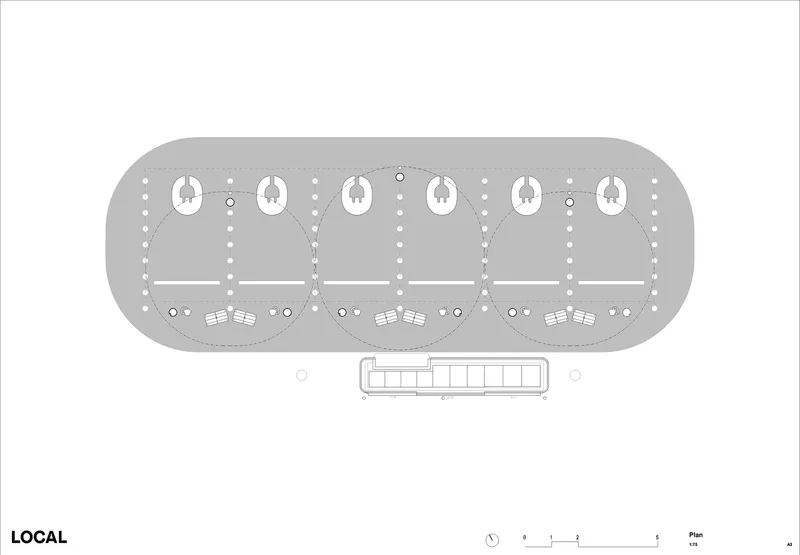
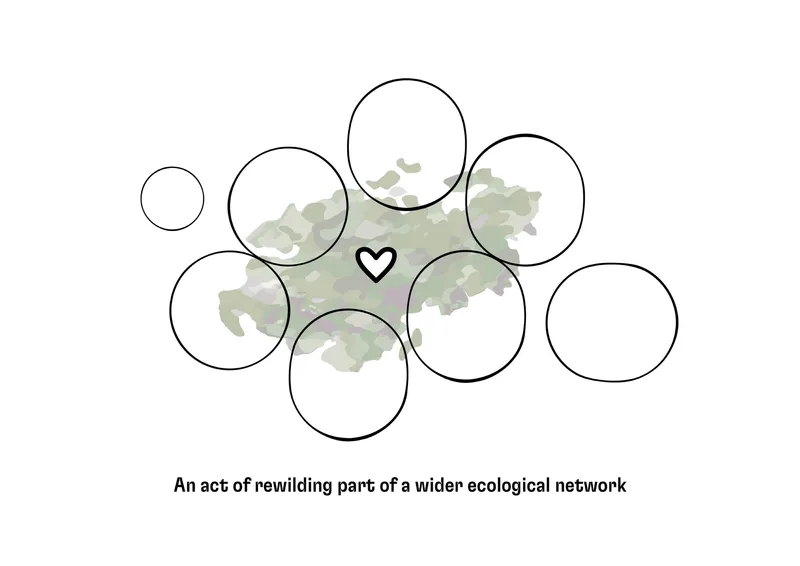
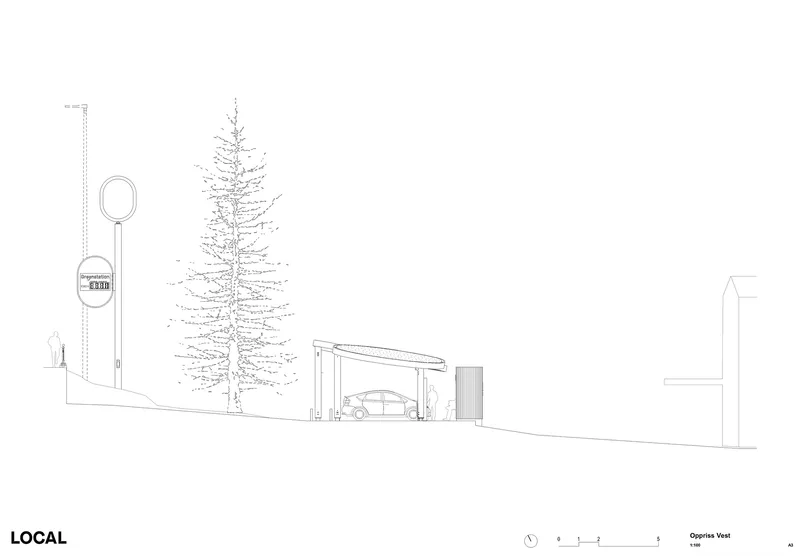
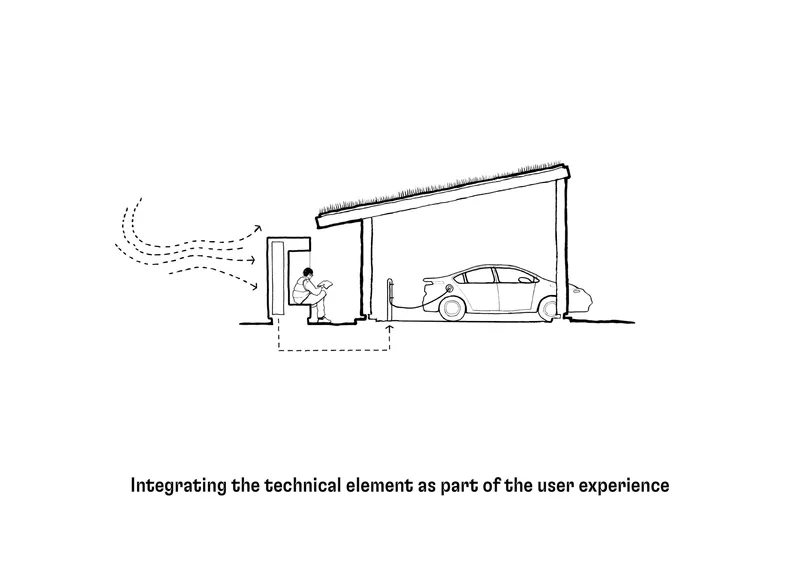
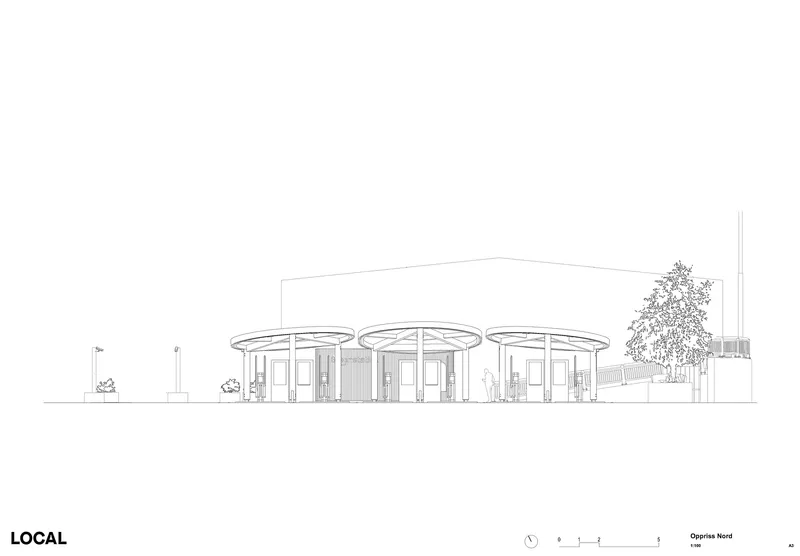
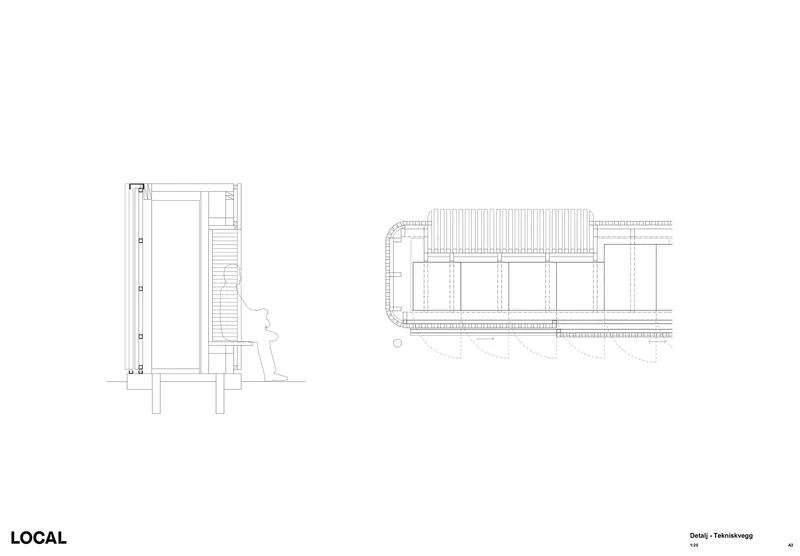
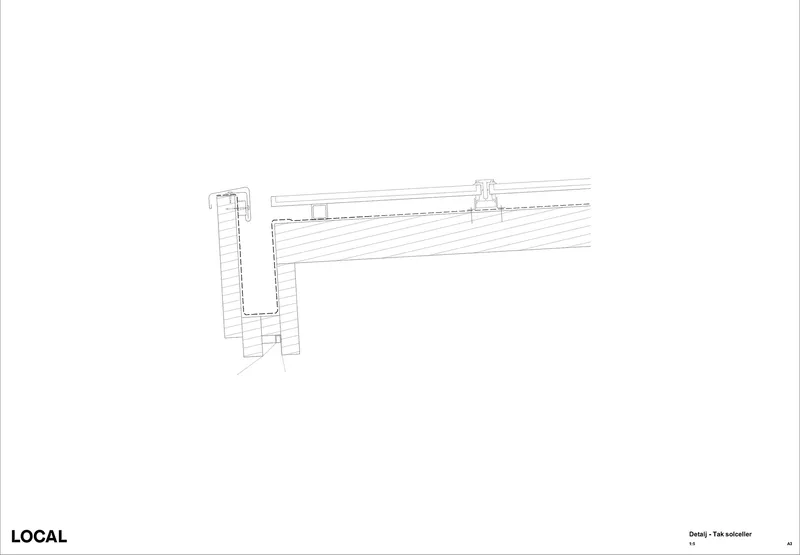
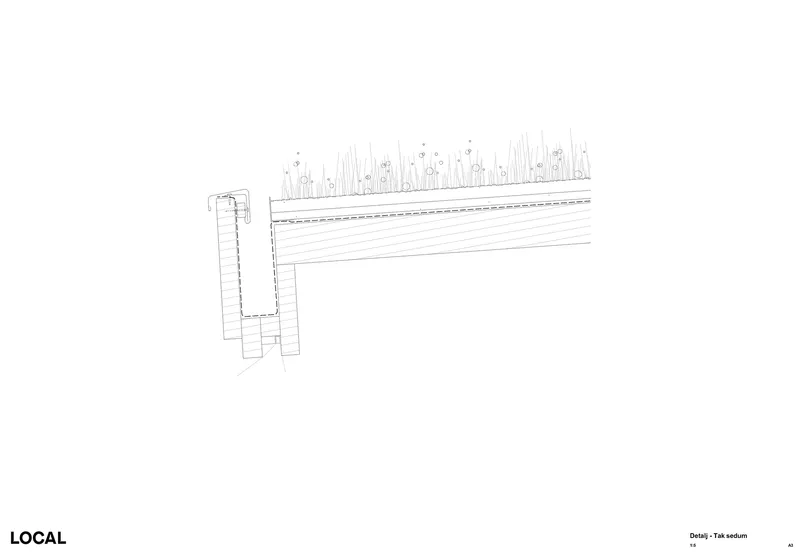
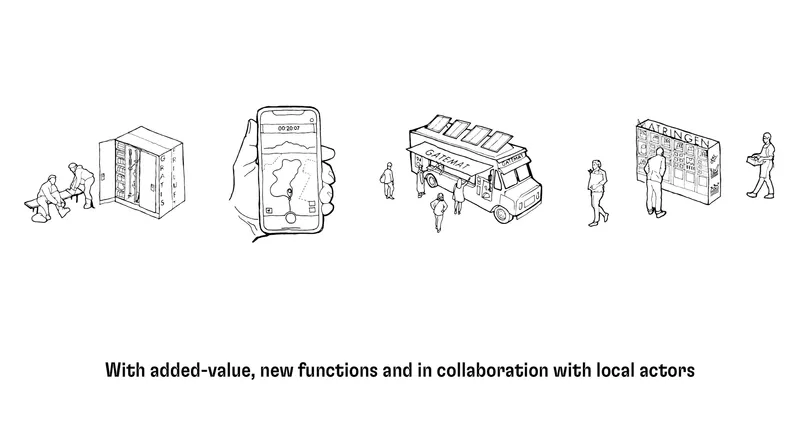
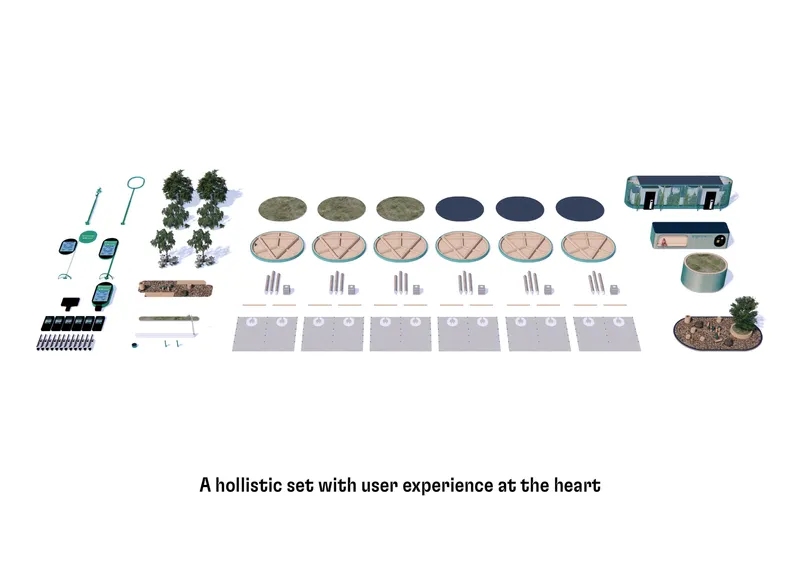
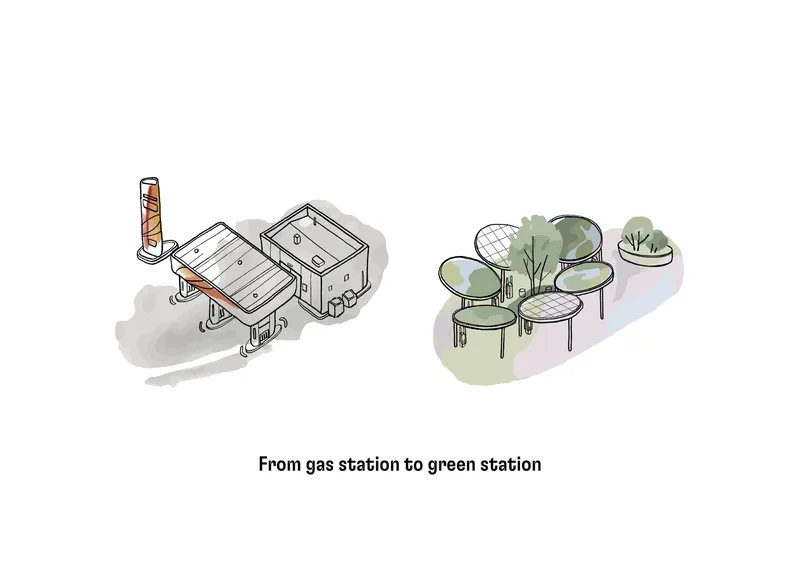
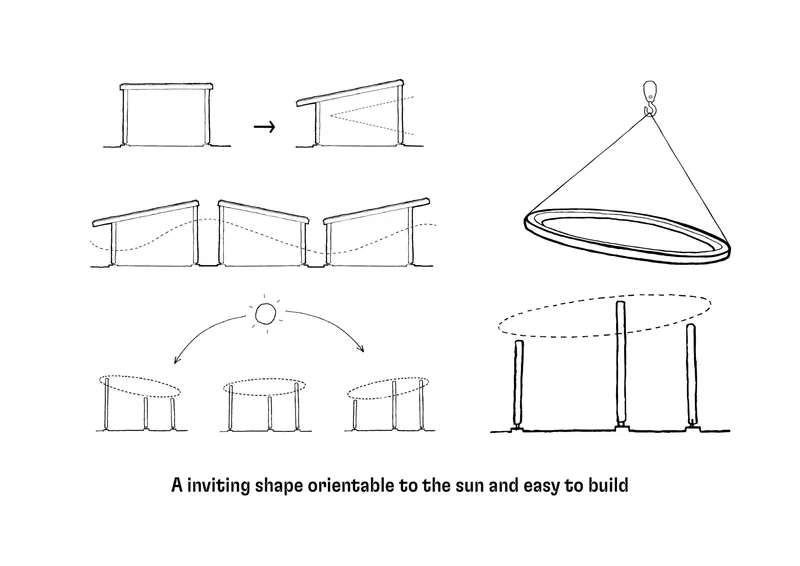
The drawings lay bare the full ambition of the system. Floor plans show how the circular volumes accommodate different interior configurations, from open charging bays to enclosed amenity spaces with central seating clusters. Sections detail the masonry column supporting timber decking with planted sedum above, a surprisingly simple assembly that makes the green roof legible as construction rather than aspiration. The exploded axonometric is the key diagram: it catalogs every element of the kit-of-parts, from planters and seating elements to modular pavement panels, showing that locallll conceived the project not as a building but as a landscape system with furniture, signage, and vegetation all drawn from the same palette.
The sketch showing the conversion of a conventional fuel station canopy into a green pavilion with circular planted canopies is perhaps the most provocative drawing in the set. It names the real opportunity: not building new stations on greenfield sites, but retrofitting the thousands of existing petrol stations that will lose their purpose over the next two decades. The modular construction sequence diagram, showing a ring-shaped canopy suspended by crane, suggests that deployment could be fast enough to make that retrofit economically viable.
Why This Project Matters
Norway has the highest per capita EV ownership in the world, and the infrastructure to support it is being built at speed. Most of it is ugly. Greenstation matters because it demonstrates that the transition from fossil fuel to electricity does not have to mean a transition from one flavour of generic shed to another. By starting with materials, atmosphere, and user experience rather than with hardware specifications, locallll produced a prototype that feels genuinely new rather than merely updated.
The deeper lesson is about modularity and authorship. Greenstation is not a one-off pavilion for a design festival. It is a system designed to be replicated, and its formal consistency under different configurations is the proof. If it succeeds as a network, it will be one of the first cases in which serious architectural thinking shaped the standard template for a new piece of everyday infrastructure. That is a rare opportunity, and locallll seems to understand the stakes.
Greenstation by locallll. Located in Straume, Norway. 500 m². Completed in 2022. Photography by Artishot.
About the Studio
Share Your Own Work on uni.xyz
If projects like this are the kind of work you want to make, uni.xyz is a place to publish your own, find collaborators, and enter design competitions.




Popular Articles
Popular articles from the community


Co-Life: Senior Housing Design That Reconnects Older Adults With the City
Co-Life reimagines senior housing design through healing gardens, shared streets, workshops, and a sustainable community across generations.

Conexión: Biophilic Design Reimagines High-Rise Living in Hong Kong
Conexión reimagines high-rise living in Hong Kong through biophilic design, green facades, shared spaces, daylight, water and nature within.

Co-life: Sustainable Architecture for Age-Friendly Community Living
Co-life reimagines sustainable architecture for seniors through courtyards, rammed earth, shared gardens, and spaces designed for belonging.

Hill & Cross Opera: Sculptural Opera House Architecture Shaped by Tallinn’s Landscape and Identity
Hill & Cross Opera reimagines opera house architecture in Tallinn through its sculptural hill, civic plaza, glass wave and a luminous cross.


Similar Reads
You might also enjoy these articles

Bao Huynh Watercolor Atelier: A Serene Art Retreat in Hội An
Bao Huynh Watercolor Atelier in Hội An blends multifunctional art spaces, sustainable design, local materials, and family-friendly living in a serene environment.

Atelier Macri Concept Store Interior Design by CASE-REAL
Atelier Macri store features a "ko" counter, walnut wood details, cork displays, blending retail, gallery, and seamless customer experiences.

Manuel Vargas Izquierdo Stadium and High-Performance Sports Center: Architectural Excellence in Jalpa de Méndez
The Manuel Vargas Izquierdo Stadium blends sustainable design, inclusive sports facilities, and cultural-inspired architecture, revitalizing Jalpa de Méndez’s public spaces.

KAKR Buluh Awar Hall: Revitalizing Community and Ecology Through Bamboo Architecture
Community built bamboo hall revitalizes Buluh Awar village, empowering youth, restoring ecology, celebrating vernacular craftsmanship through sustainable architecture and culture.

Explore Power Station Competitions
Discover active competitions in this discipline



Challenge to reimagine the Iron Throne


Photograph architecture without architects


Illustrate the lost glory of Angkor Wat - Render Challenge


Design challenge to reuse E-waste
Comments (0)
Please login or sign up to add comments
No comments yet. Be the first to comment!