

Locomotive Workshop Revitalization by Sissons Architecture: A Fusion of Heritage and Innovation
The Locomotive Workshop revitalization by Sissons Architecture blends industrial heritage with modern functionality, fostering innovation and community engagement.


Located in Eveleigh, Australia, the Locomotive Workshop by Sissons Architecture is a groundbreaking project that revitalizes a historical site, seamlessly blending industrial heritage with modern functionality. Completed in 2023, the redevelopment honors the site's rich history while transforming it into a thriving hub for innovation, culture, and community engagement. This renovation ensures the long-term economic viability of the site, while preserving the architectural and cultural significance of the Locomotive Workshops.
Historical Significance and Site Context:
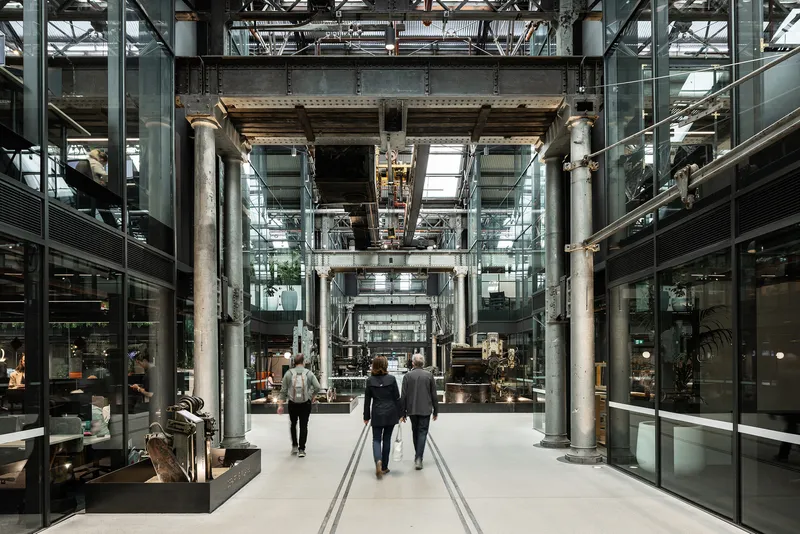
The original Eveleigh Locomotive Workshops were inaugurated in 1871 to service and manufacture locomotives, supporting the rapid expansion of Australia's railway network. At its peak in 1952, the site was a bustling industrial epicenter, employing over 10,000 people. However, following its closure in 1988, the site transformed into the Australian Technology Park (ATP)—an attempt to create a technology-focused business park. Unfortunately, this development left the area disconnected from the local community, resulting in a lack of engagement with its surroundings.
Revitalization Vision:
Mirvac’s revitalization of the Locomotive Workshop precinct sought to reverse this trend by reintroducing the site to its community. The design intent was clear: remove barriers, open doors, and reintegrate the space into the surrounding neighborhood. By shedding the unsympathetic elements, the architects were able to preserve and highlight the building’s industrial heritage, showcasing the original fabric alongside contemporary interventions.
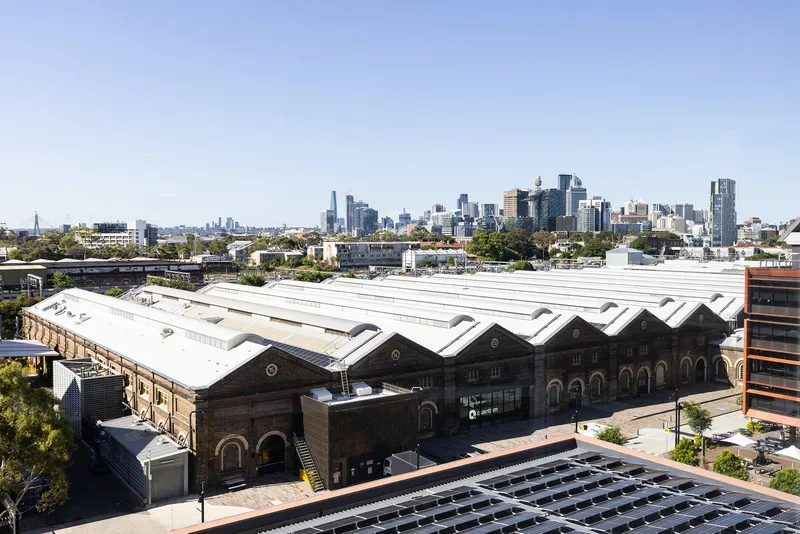
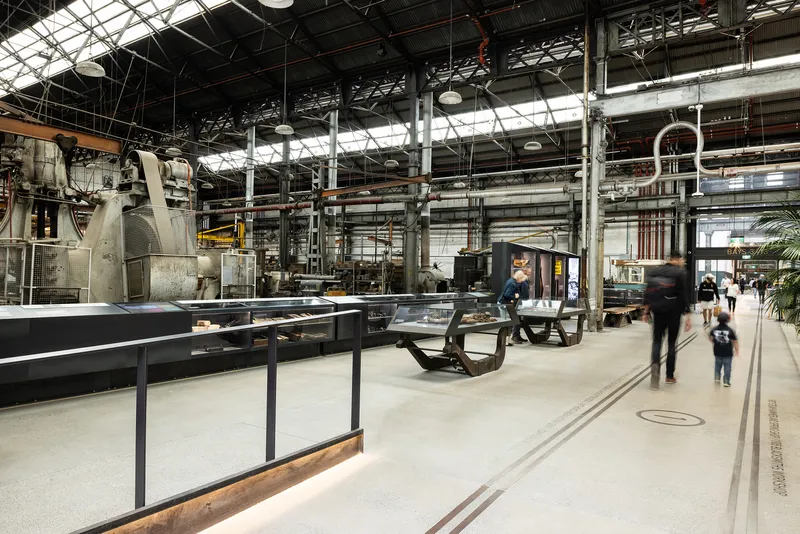
Key Design Features and Heritage Integration:
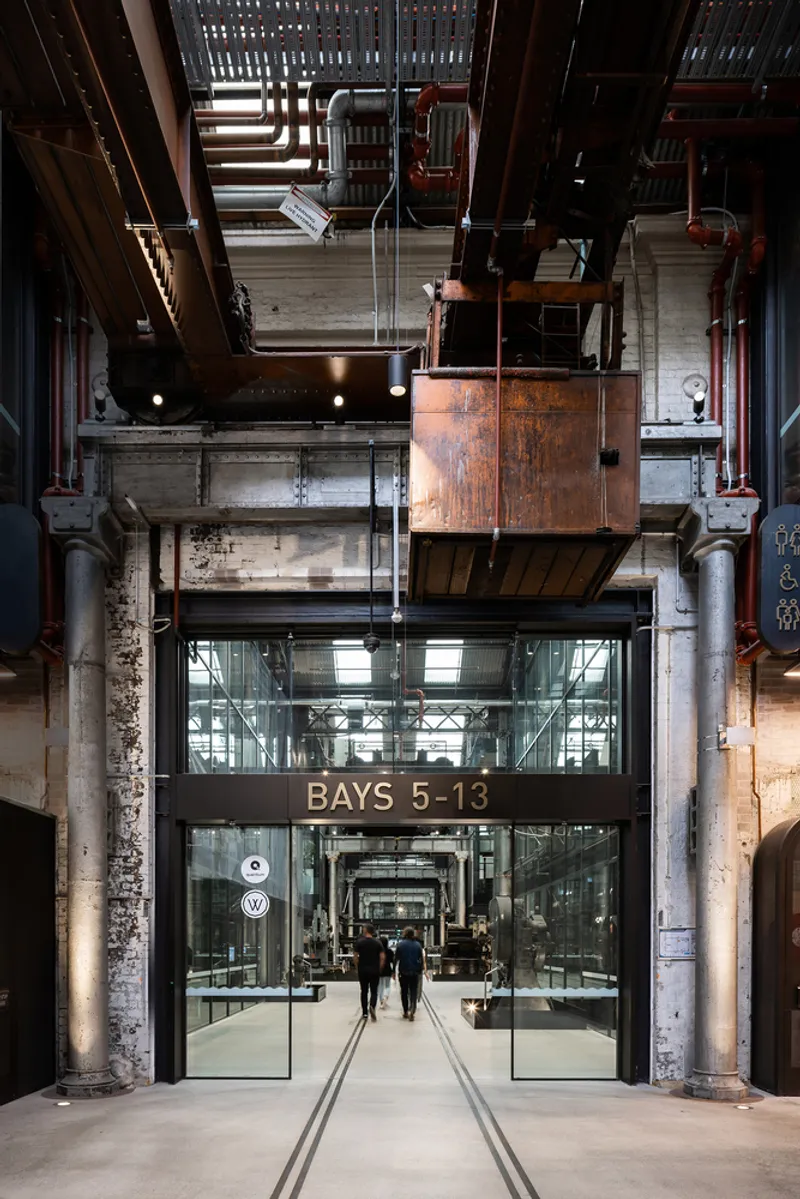
The project maintains the site's industrial aesthetic while creating functional spaces that meet modern needs. Heritage elements such as cast iron columns, roof trusses, steel girders, and overhead cranes remain prominent throughout the design. A key feature of the project is the careful preservation of the original structure, ensuring that its patina—etched by over a century of history—remains visible.
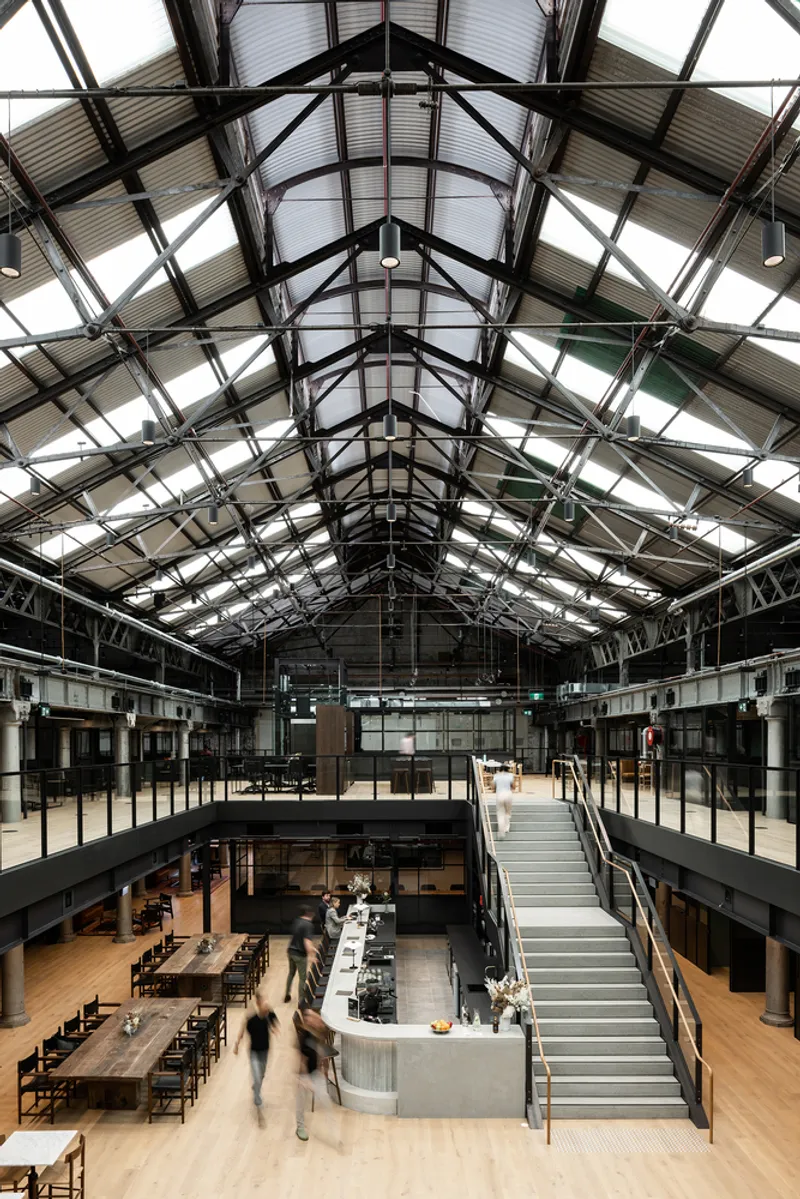
New additions are designed with a light touch, utilizing steel frames to ensure reversibility and differentiation between the heritage fabric and modern interventions. These new elements are predominantly finished in black, allowing them to distinguish from the original structure, while complementing its industrial essence. The new mezzanine level, open to the heritage roof structure, maintains the building’s original volume and spatial relationships.
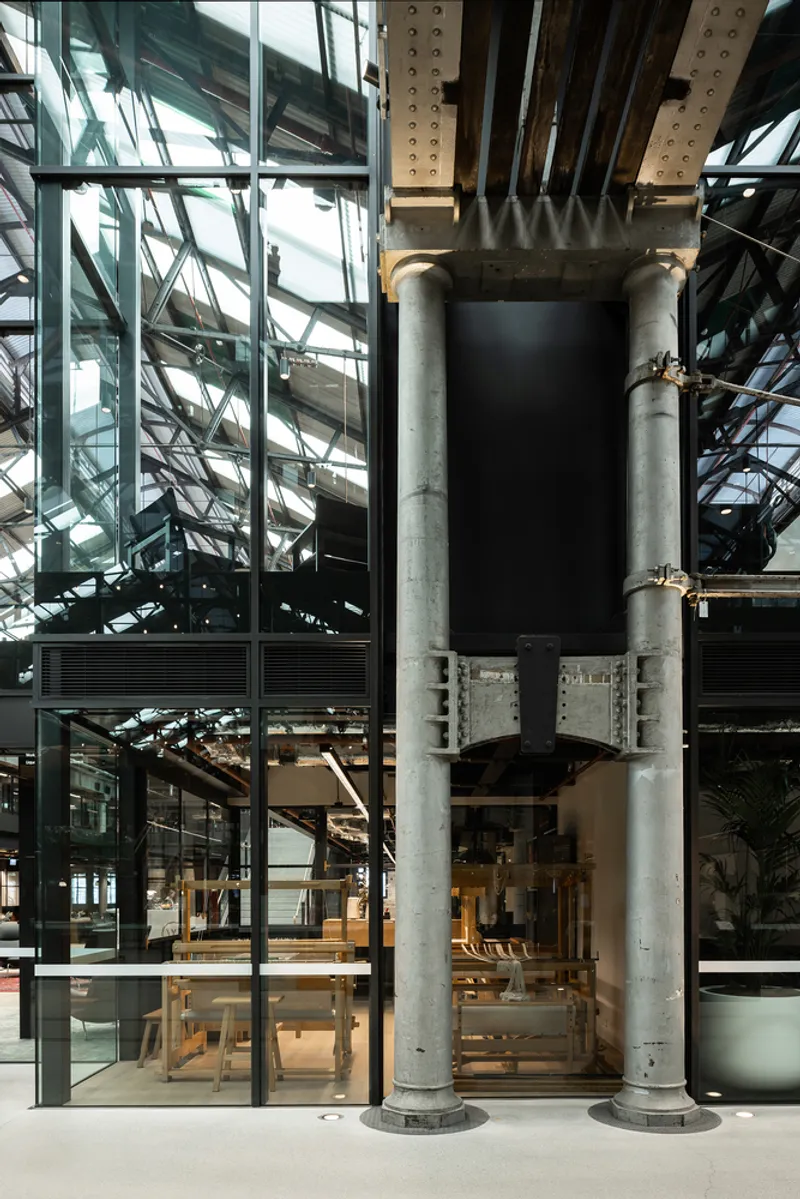
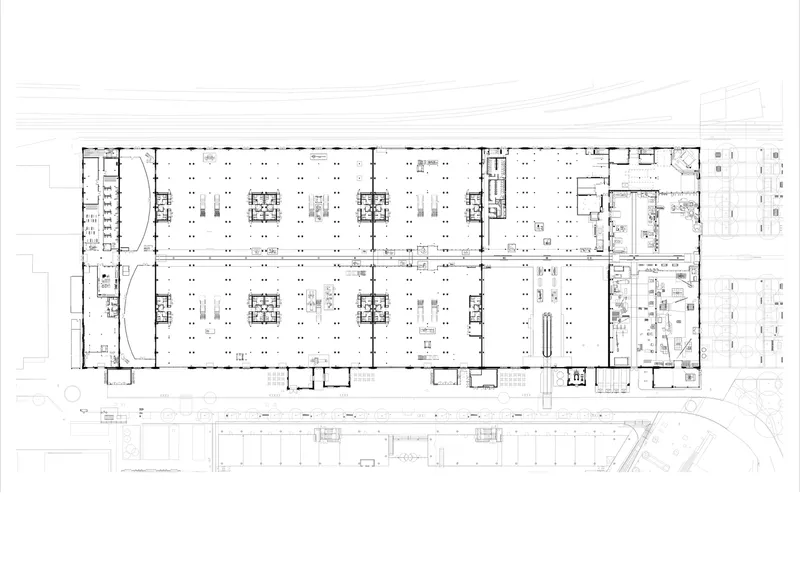
Functional and Cultural Spaces: The redevelopment includes a variety of new spaces that support the site's activation and long-term sustainability:
- Blacksmith Workshop and Heritage Interpretation: The continuation of the Blacksmith Workshop preserves the area’s 130-year-old blacksmithing tradition, while a Heritage Interpretation restaurant provides visitors with a deeper understanding of the site's history and origins.
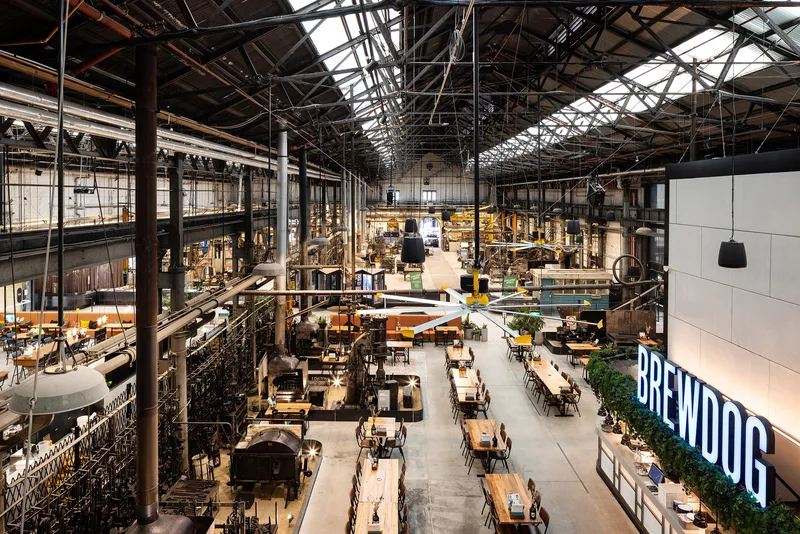
- Retail and Commercial Spaces: Bays 3-4a have been repurposed into vibrant retail spaces, including an event space, coffee roastery, and food market, all contributing to the dynamic atmosphere of the precinct.
- Grade-A Workspaces: Bays 4-15 now house modern office spaces, catering to the needs of businesses in a creative and flexible environment.
- End-of-trip Facilities: The final bay includes much-needed end-of-trip facilities, promoting sustainability and active transportation.
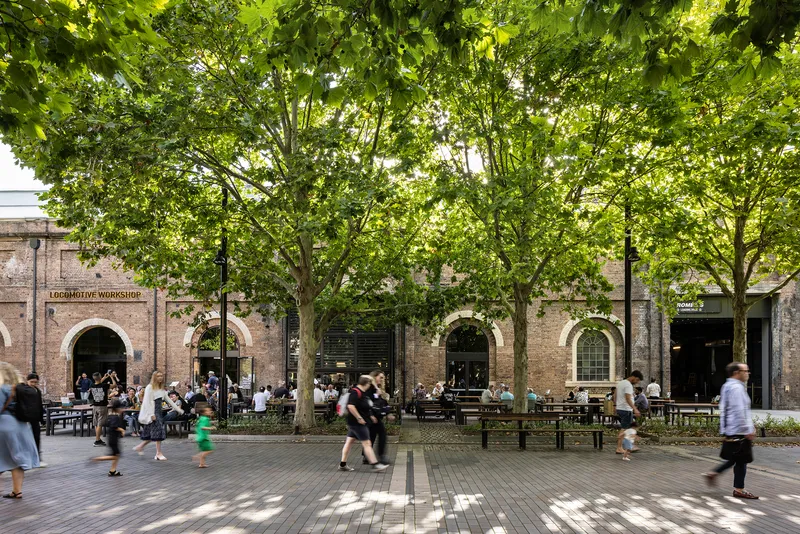
Preserving Industrial Heritage in a Modern Context:
The design philosophy of Sessions Architecture emphasizes a light, structural approach to intervention within the building’s envelope. The modern additions are carefully integrated with the heritage elements, maintaining the integrity of the space. By preserving, accentuating, and interpreting the building's exceptional heritage, this redevelopment bridges the past and present, creating a dynamic cultural and commercial precinct.
The project successfully brings new life to the Eveleigh Locomotive Workshops, ensuring that it remains an important part of Sydney's urban fabric, all while celebrating its industrial heritage. The Locomotive Workshop is now a place where history and innovation coexist, providing a versatile and vibrant space for both work and leisure.
All Photographs are works of Simon Whitbread


Popular Articles
Popular articles from the community


GROUP A Strips a 1969 Rotterdam Harbor Headquarters to Its Frame and Wraps It in Timber Louvers
In Rotterdam's M4H harbor district, Ferro Offices reuses a 1969 frame, adds one timber storey and reaches BREEAM-NL Outstanding.

Architekt Andreas Gruber Scatters 23 Dark Timber Chalets Across a South Tyrolean Forest Edge
In Molini di Tures, Amonti Chalets breaks a resort into a hamlet of gabled timber houses, with parking, storage and services pushed into the slope.

Jaramillo Van Sluys Arquitectura and Urbanismo Turn a Demolished Registry Lot in Quito into an Orchard Plaza
In Quito's Centro Histórico, a 2,800 m² plaza exposes the San Agustín convent wall and redraws its lost Augustinian orchard in volcanic stone.

Cube Design Draws an Ecological Corridor Between Two Shenzhen Hills with the Nankai Building
Beside Shenzhen's container docks, the Nankai Building pairs stacked balconies with a climbing green screen to connect two hillsides across its height.

Similar Reads
You might also enjoy these articles


Hodi-Mandai Geram
Project Function: Preservation and revitalization of the Intangible heritage and socio-spatial identity of the Hodi by Housing, Cultural Memory Center, Sacred Grove, landscape, local tourism economy


Olio Towers: A Mid-Rise for Performers That Fuses Housing, Rehearsal, and Stage
Located blocks from Houston's Theater District, this modular tower stacks living units around a central performance atrium.

Oasis: Modular Green Housing Carved into Dhaka's Urban Fabric
A shortlisted Plugin Housing entry reclaims unauthorized settlements in Dhaka with stepped concrete volumes, green roofs, and ventilation-driven design.

Black Hole: A Floating Megastructure for the Post-Physical Era
Emiliano Mazzarotto envisions a spherical, self-scaling arena where e-sports, digital hotels, and holographic stadiums replace traditional public space.

Explore Office Building Competitions
Discover active competitions in this discipline

Challenge to reimagine the Iron Throne

Photograph architecture without architects

Illustrate the lost glory of Angkor Wat - Render Challenge

Design challenge to reuse E-waste
Comments (0)
Please login or sign up to add comments
No comments yet. Be the first to comment!