

Luce and Pablo’s House – A Contemporary Paraguayan Home Rooted in Tradition and Sustainable Innovation
Sustainable earthen home in Paraguay blending Guarani tradition, modern design, and poured soil technique for climate comfort, affordability, and cultural identity.


Architects: Mínimo Común Arquitectura
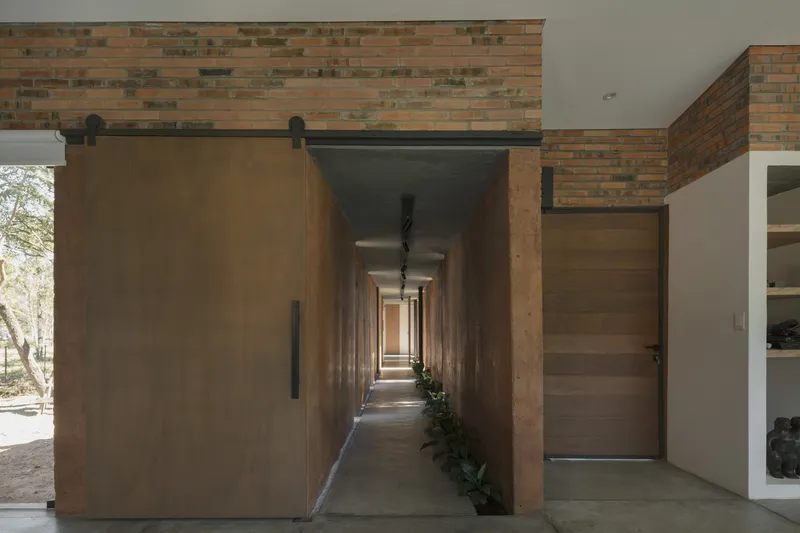
A Story of Friendship, Vision, and Place
On a sweltering January morning in Asunción, Paraguay, a phone call between friends sparked the beginning of an architectural journey. Pablo, originally from Uruguay, and Luce, a Paraguayan with strong ties to Uruguay, had recently married and were ready to create their first home. Both are graphic designers working remotely for international clients, giving them the freedom to live beyond the city limits.
They chose a plot in Surubi’i, Limpio — just 45 minutes from Asunción — a location that balances accessibility with the calm of suburban life. Here, lush vegetation, generous lot sizes, and the slower pace of life create the perfect backdrop for a new beginning.
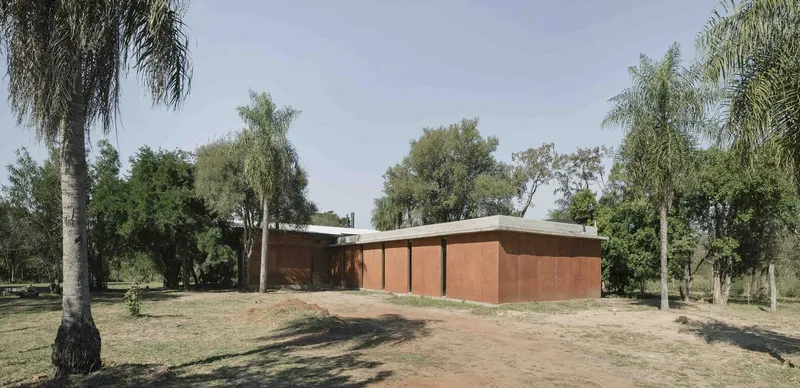
The Design Approach: Sustainability Meets Local Craft
Mínimo Común Arquitectura entered the project with an ongoing dialogue about ecological construction techniques in Paraguay, particularly the use of earth as a primary building material. While rammed earth construction had proven effective for the country’s climate, budget constraints and technical challenges made it impractical for this build.
Determined not to abandon the qualities of earth-based architecture, the architects devised a “poured soil” construction method — an innovative adaptation of traditional techniques, using modular wooden formwork to shape earthen walls. This approach allowed the team to preserve thermal comfort, reduce environmental impact, and work within a modest budget.
Building with Hands, Heart, and Heritage
Construction became a deeply artisanal process led by master craftsman Eusebio and his team. Hollow prismatic wooden molds, measuring 2.40 x 2.40 meters, were used to cast thick earthen walls, creating a rhythm of solid modules across the home’s L-shaped plan.
The design prioritizes climate-responsive architecture:
- The western facade is solid to shield against the harsh afternoon sun.
- Morning light floods the open-plan living, kitchen, and dining area.
- Bedrooms remain cool and shaded for restful sleep.
- A future orchard, supported by slender metal columns, will provide fresh produce for the growing family.
Through trial and refinement, the team reduced cement content in the soil mix from 10% to just 5%, preserving the natural character of the walls while ensuring strength comparable to brick.


Cultural Roots in Red Soil
The home’s identity draws inspiration from Paraguay’s Guarani pottery traditions — particularly the kambuchi, a clay pitcher once carried by women to deliver cool spring water to men working in the fields. This act of care became a metaphor for the house itself: a vessel shaped by local hands, holding comfort, freshness, and life for its inhabitants.
Just as the kambuchi preserves water, Luce and Pablo’s House preserves heritage through materiality. The walls retain the scent of earth after rain, grounding the home in its cultural and environmental context.
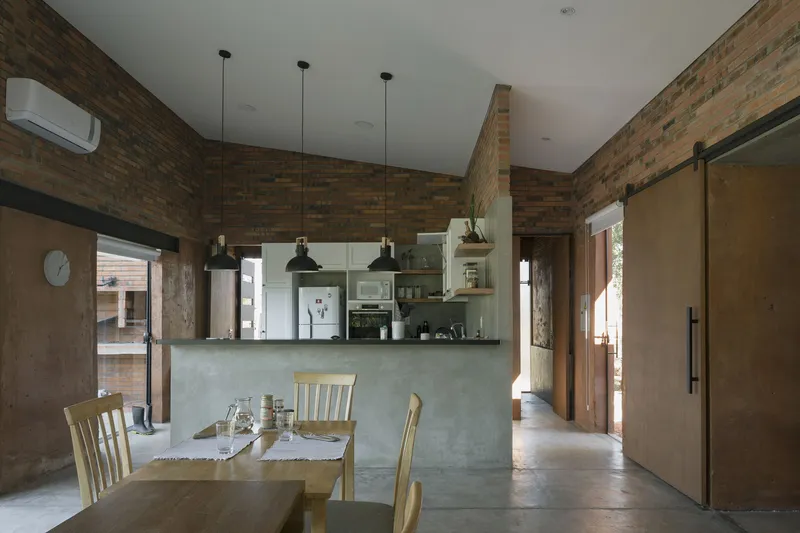

A Home for a Lifetime
Vivienda L&P is more than an architectural project — it is the physical expression of a couple’s shared dream. It balances modern design with traditional materials, functionality with artistry, and innovation with affordability.


Popular Articles
Popular articles from the community


Jaramillo Van Sluys Arquitectura and Urbanismo Turn a Demolished Registry Lot in Quito into an Orchard Plaza
In Quito's Centro Histórico, a 2,800 m² plaza exposes the San Agustín convent wall and redraws its lost Augustinian orchard in volcanic stone.

LT2A and OPEN Architectes Thread a Brick and Glass High School Through a Wooded Belgian Campus
In Braine-l'Alleud, a 3,000 m² wing for Collège Cardinal Mercier pairs pale brick with a glazed colonnade, deferring to a small chapel and a dense wood.

David Ortega Stacks a Two-Story Mexico City Penthouse Around a Steel Stair and a Pergola-Shaded Roof Terrace
In Colonia Roma, a 300 m² penthouse uses oak joinery, a planted steel stair and a slatted roof pergola to make a new-build apartment feel like a house.

U.GA Architects Wraps an Oval Rooftop Pool in Curved Board-Formed Concrete on Busan's Jeollidan-gil
In Busan's Jeonpo-dong, a 454 m² mixed-use block stacks a neighborhood facility, guest rooms and an oval rooftop pool inside spiraling concrete walls.

Similar Reads
You might also enjoy these articles


Hodi-Mandai Geram
Project Function: Preservation and revitalization of the Intangible heritage and socio-spatial identity of the Hodi by Housing, Cultural Memory Center, Sacred Grove, landscape, local tourism economy


Olio Towers: A Mid-Rise for Performers That Fuses Housing, Rehearsal, and Stage
Located blocks from Houston's Theater District, this modular tower stacks living units around a central performance atrium.

Oasis: Modular Green Housing Carved into Dhaka's Urban Fabric
A shortlisted Plugin Housing entry reclaims unauthorized settlements in Dhaka with stepped concrete volumes, green roofs, and ventilation-driven design.

Black Hole: A Floating Megastructure for the Post-Physical Era
Emiliano Mazzarotto envisions a spherical, self-scaling arena where e-sports, digital hotels, and holographic stadiums replace traditional public space.

Explore Latin American Houses Competitions
Discover active competitions in this discipline

Challenge to reimagine the Iron Throne

Photograph architecture without architects

Illustrate the lost glory of Angkor Wat - Render Challenge

Design challenge to reuse E-waste
Comments (0)
Please login or sign up to add comments
No comments yet. Be the first to comment!