

M+ Museum Designed by Herzog & de Meuron Opens in Hong Kong
The long-awaited cultural institution showcases contemporary art, design, and architecture from Asia and beyond

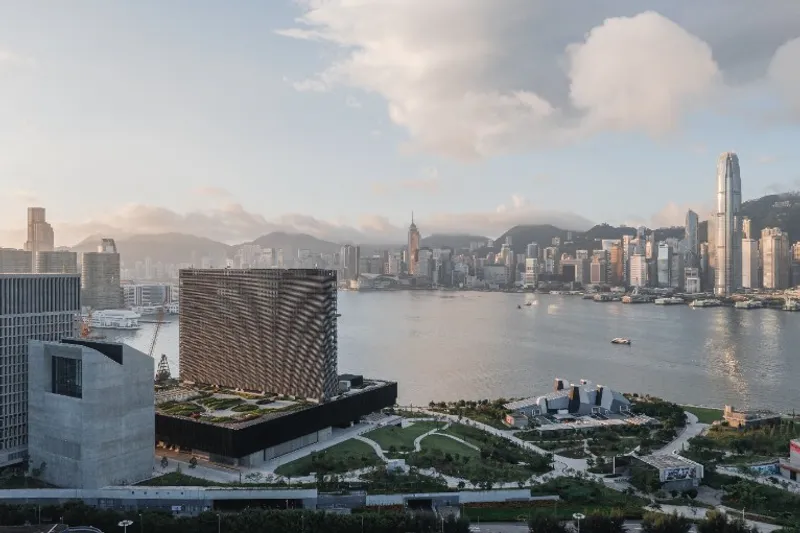
Asia's first global museum of contemporary visual culture, M+, has opened its doors to the public in Hong Kong's West Kowloon Cultural District. Designed by Swiss architecture firm Herzog & de Meuron, in partnership with TFP Farrells and ARUP, the 65,000-square-metre M+ building is among Hong Kong's most iconic landmarks, both monumental in its architectural form and radically open in its position in the urban landscape.
 © Virgile Simon Bertrand - Courtesy of Herzog & de Meuron
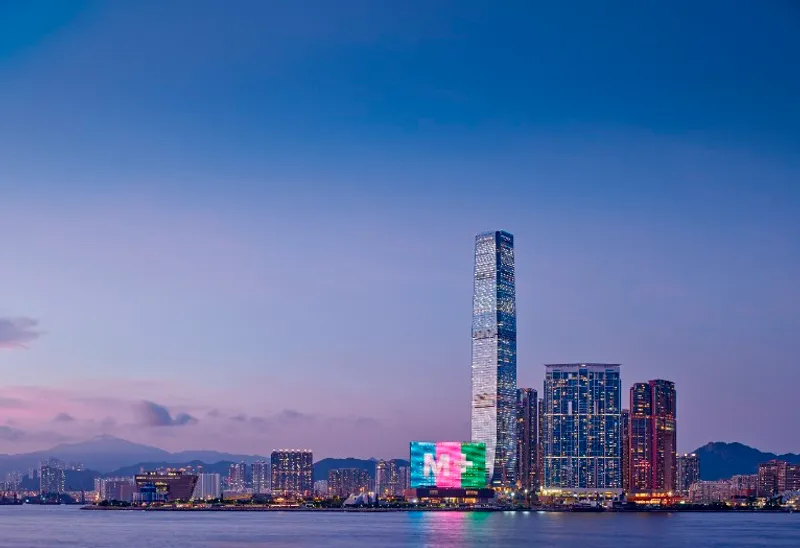
The building consists of a striking terracotta tile-clad tower, featuring a dynamic LED media system on the south facade for the display of M+ content, defining the museum's place within the urban landscape and contributing to the city's vibrant night-time environment. The horizontal building hovering above an "industrial" landscape houses the more conventional display spaces.
 ©Edman Choy, Courtesy of Herzog & de Meuron
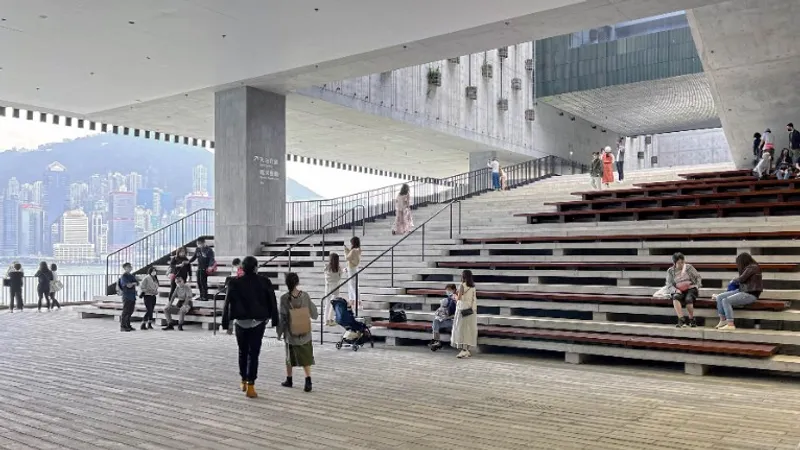
As in a city, the arrangement of all the galleries is based on an orthogonal grid. A central plaza provides direct access to the entire exhibition area. A tall "Focus Gallery," with two lateral bands of daylight just below the ceiling, rises out of the horizontal exhibition building and plugs into the lower part of the vertical staff and education building.
The galleries themselves may be illuminated from above or from the sides; they may be introverted or extroverted. A variety of precise openings in the facade frame views of the Artist Square, the Art Park and the skyline of Hong Kong Island across the harbour.
 ©Kevin Mak - Courtesy of M+, Hong Kong
Built to the height specified in the master plan, this thin and long vertical structure provides research facilities and a curatorial centre where naturally filtered daylight and expansive city views make researching, learning and working a special experience. A members' lounge and public restaurants with panoramic views are housed on its top floors. Integrated into the sun-shading horizontal louvres of the facade facing the harbour, an LED lighting system activates the building as a coarse-grained, oversized display screen for selected or specially commissioned works of art and establishes M+ as part of the Victoria Harbour skyline.
 ©Kevin Mak - Courtesy of M+, Hong Kong
The resulting structure is not simply anchored in its surroundings; it is also formed by them. The precise and urban, almost archaic shape reiterates the iconic character of Kowloon's skyline on one hand, yet on the other hand, this convention is subverted by the transmitted message of the art, visible from afar, which will consequently make M+ a site of constant renewal, rather than being locked into a predefined form.M+ is a public forum, a built platform for the exchange, encounter and activity of people and art.
 ©Kevin Mak - Courtesy of M+, Hong Kong
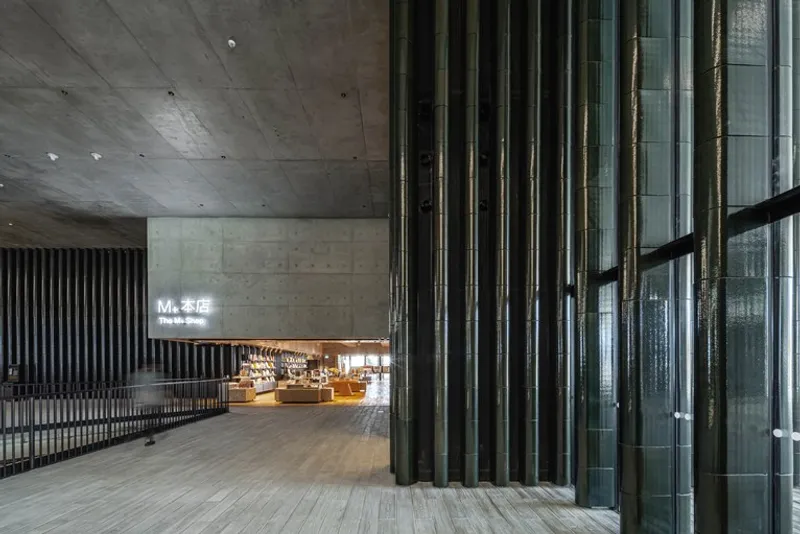
It is a universal place with an inner organization whose openness and transparency make it possible to link the complexities of the content and the space in many different ways. Through its specificity, it becomes a distinctive, singular and unmistakable piece of Hong Kong.
 ©Kevin Mak - Courtesy of M+, Hong Kong
***
Cover photo ©Kevin Mak - Courtesy of M+, Hong Kong

Popular Articles
Popular articles from the community


Opera on the Sea: Driftwood Logic Shapes a Timber Opera House on Estonia's Coast
Trevor Orgill's opera house translates the entangled drift of floating timber into a civic building where wood, water, and music converge.

Extended Shell: Retrofitting Kolkata's Balconies as Living Urban Thresholds
A modular retrofit system recovers the social and environmental intelligence of Kolkata's historic verandas for contemporary Park Street residents.

Singing Woman: Contemporary Architecture Inspired by Estonia’s Voice and the Sea
Singing Woman turns Estonia’s song culture into flowing opera house architecture, blending public life, landscape, sea, and national memory.

Opera by the Sea Estonia: Three Shells Dissolving Architecture into Tallinn's Coastline
A winning opera house proposal replaces monumental form with interconnected shells that blur the boundary between building, park and Baltic Sea.

Similar Reads
You might also enjoy these articles
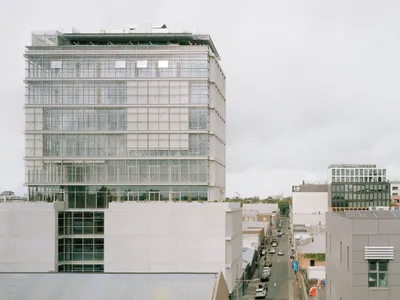
116 Rokeby Building, Collingwood
Sustainable Collingwood office building featuring double-skin façade, natural ventilation, rooftop amenities, and carbon-neutral design focused on wellbeing and longevity.
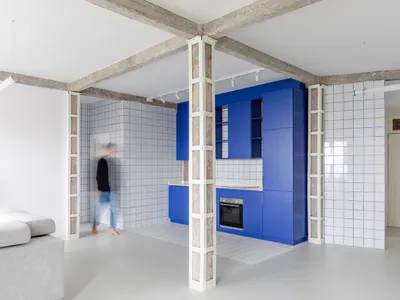
Contemporary Apartment Renovation in Spain: RV House by BIAN Opens Up to the Sea
A minimalist 1930s apartment in Santander is transformed into a flexible, sea-facing home through contemporary Spanish renovation.
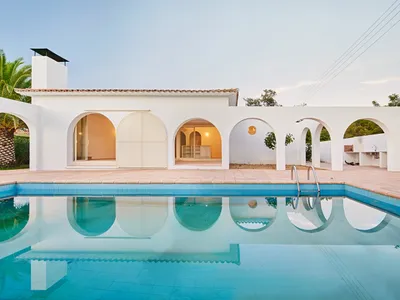
3 Marías House: A Contemporary Mediterranean Courtyard Retreat by Bajet Giramé + Burckhardt
Mediterranean courtyard home blending traditional architecture with modern design, terracotta flooring, flexible interiors, sustainable climate strategies, and garden integration.
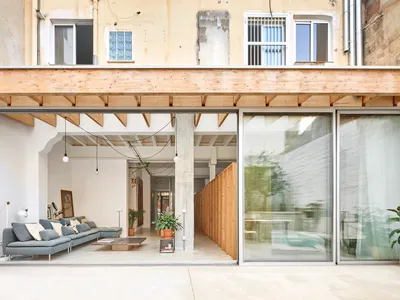
NZ10 Apartment by auba studio: Adaptive Reuse in Palma de Mallorca
Adaptive reuse apartment transforms bakery into light-filled home with patios, privacy layers, and wood interiors enhancing urban living experience.

Explore Cultural Architecture Competitions
Discover active competitions in this discipline


Challenge to reimagine the Iron Throne

Photograph architecture without architects

Illustrate the lost glory of Angkor Wat - Render Challenge

Bring back Drive In's
Comments (0)
Please login or sign up to add comments
No comments yet. Be the first to comment!