

Machado House by BTE-ARQ
A contemporary courtyard house in Argentina combining exposed concrete, warm wood, and passive climate strategies to create a light-filled, connected home.


Located in the residential neighborhood of Castelar, near Buenos Aires, Machado House is a contemporary private residence that explores the relationship between architecture, climate, and landscape through a system of internal courtyards and carefully articulated volumes. Completed in 2024, the 4,628 ft² house demonstrates how compact urban plots can be transformed into spacious, light-filled, and environmentally responsive homes.
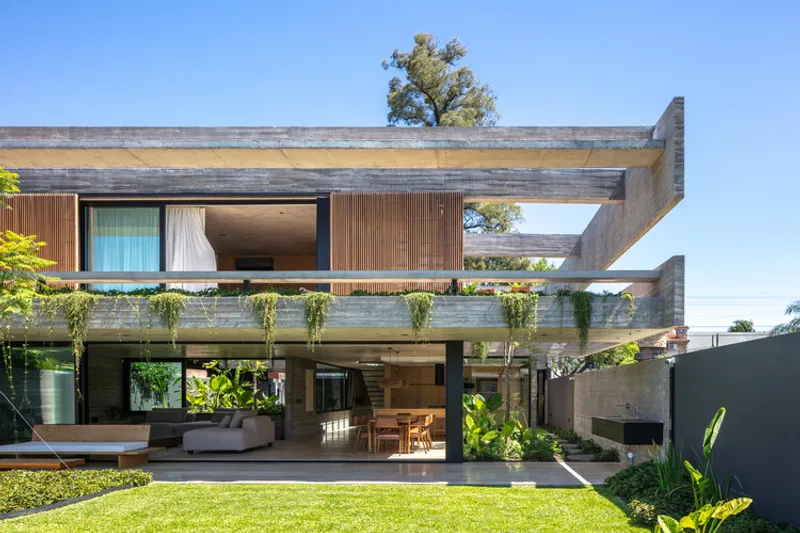
Designed by BTE-ARQ under the leadership of Germán Bustamante, the project reflects a commitment to sensitive habitation, where comfort, spatial continuity, and environmental awareness shape everyday living.
Context and Site Conditions
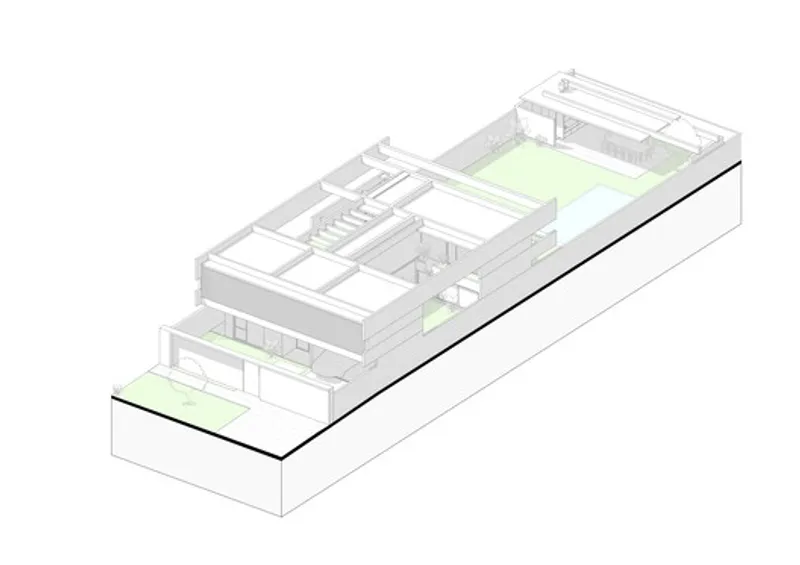
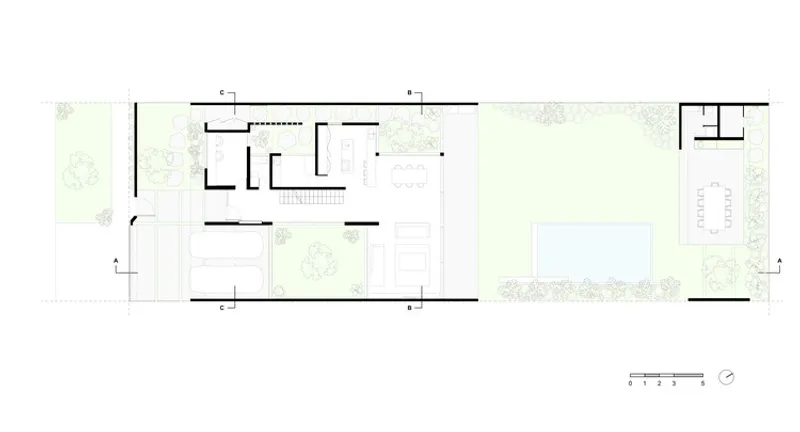
Machado House is built on a narrow plot measuring 13 meters in width and 44 meters in depth. The site originated from the subdivision of the garden of a former large residence, a condition that is increasingly common in traditional neighborhoods undergoing densification.
Surrounded by low-rise houses and mature vegetation, the plot presented both constraints and opportunities. While its elongated proportions limited frontage and natural cross-ventilation, its depth allowed the architects to introduce internal voids and green spaces.
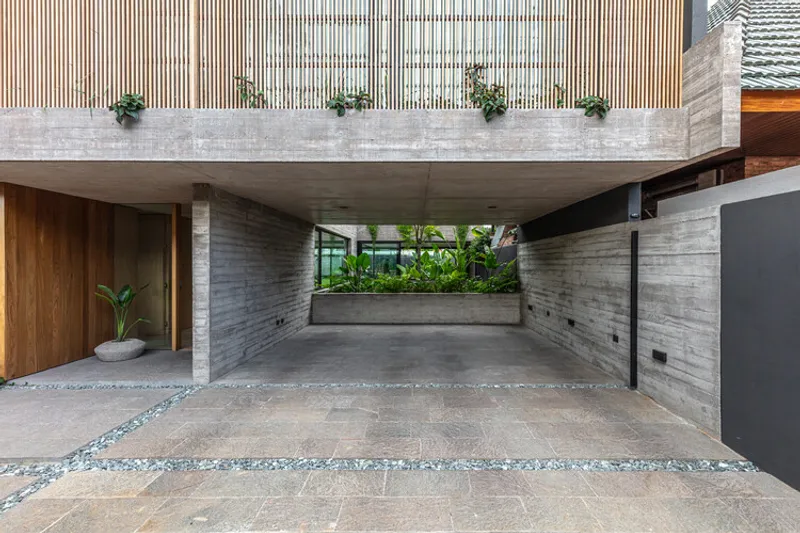
Rather than filling the site with a continuous built mass, BTE-ARQ chose to fragment the volume, creating a sequence of courtyards that mediate between interior spaces and the surrounding environment.
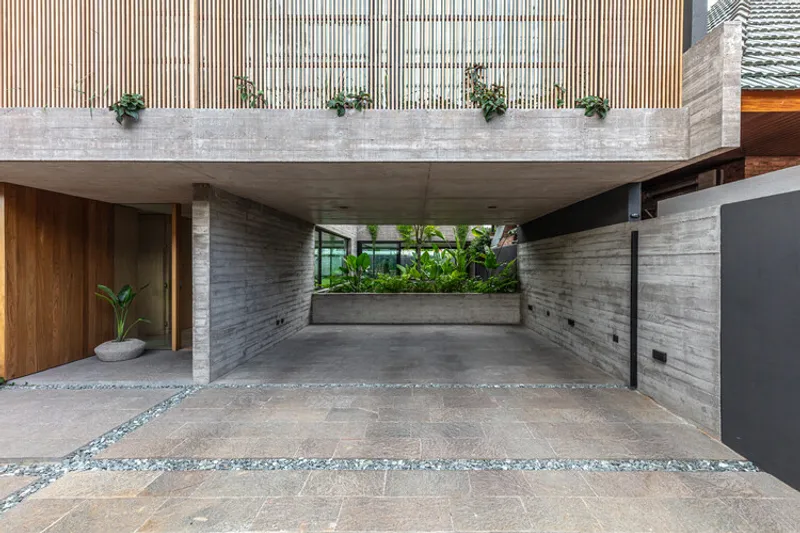
Design Concept: Fragmentation and Courtyards
The central architectural strategy of Machado House lies in breaking down a compact volume into smaller segments organized around internal patios.
These courtyards serve multiple purposes:
- Introducing natural light
- Enhancing cross-ventilation
- Creating visual connections with vegetation
- Structuring circulation
- Providing moments of pause and privacy
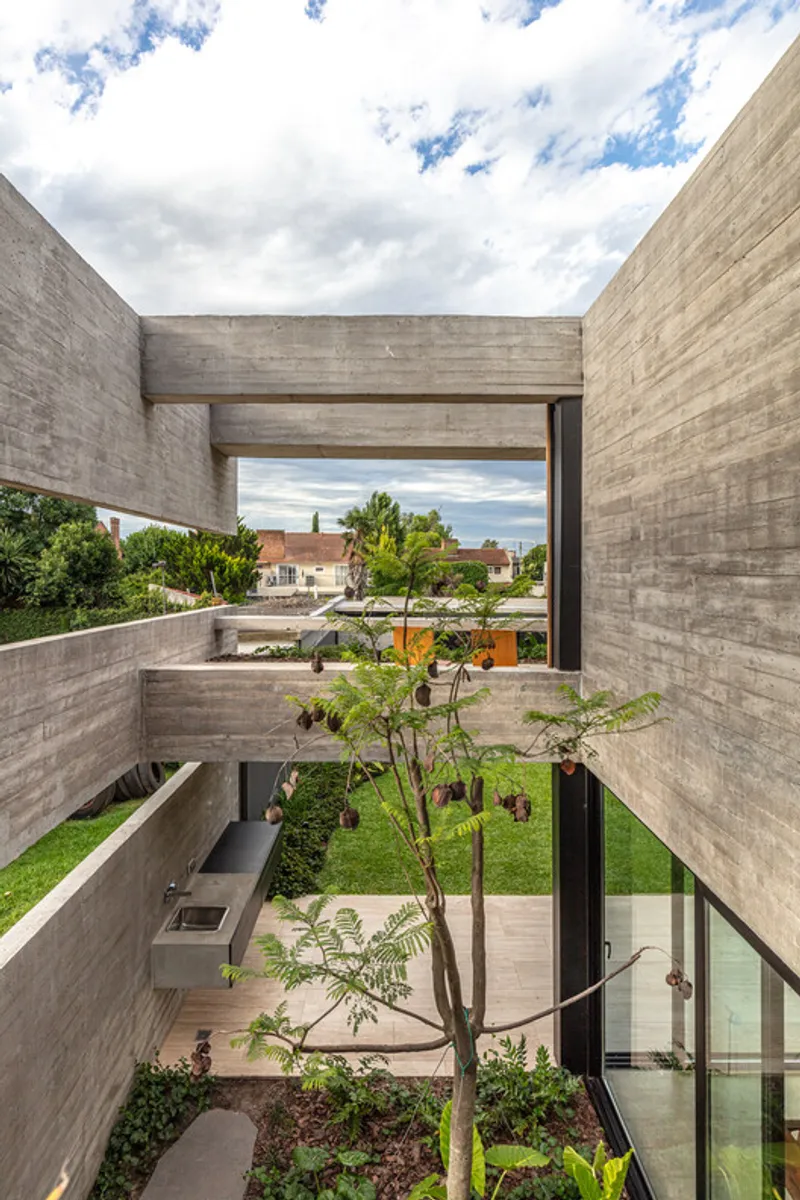
Instead of treating outdoor areas as residual spaces, the design positions them as integral components of daily life. Each courtyard becomes a spatial anchor, reinforcing the relationship between built form and nature.
This fragmentation allows the house to feel open and expansive despite its constrained urban footprint.
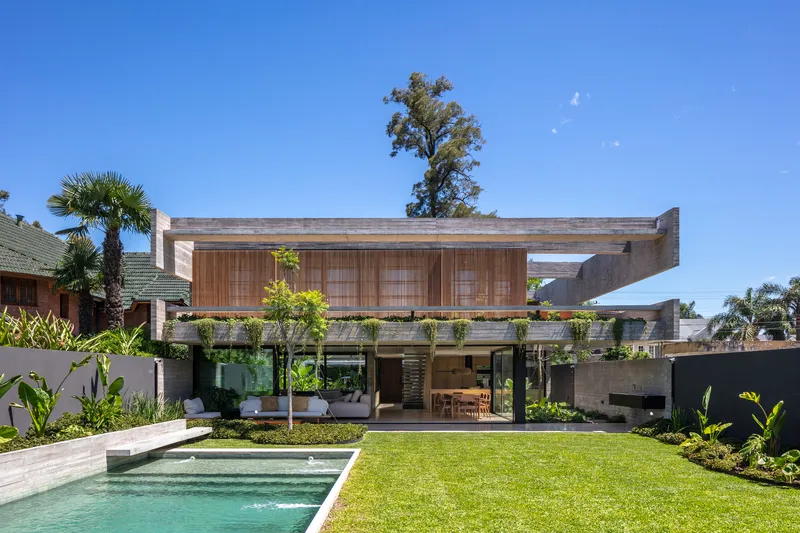
Orientation and Climate Responsiveness
A detailed solar orientation study revealed that the rear façade faces north, an advantageous condition in the Southern Hemisphere. This orientation guided the project’s passive environmental strategies.
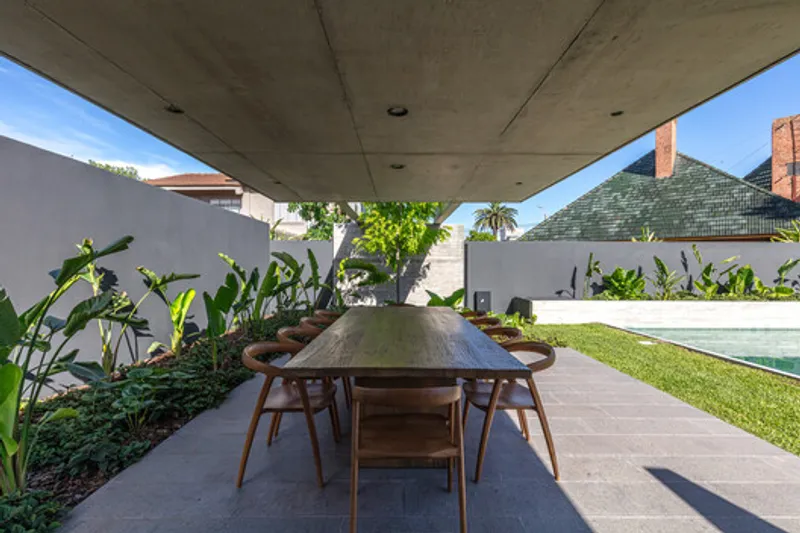
On the ground floor, deep horizontal eaves were introduced to:
- Block direct summer sunlight
- Allow winter sun penetration
- Reduce overheating
- Create shaded transitional zones
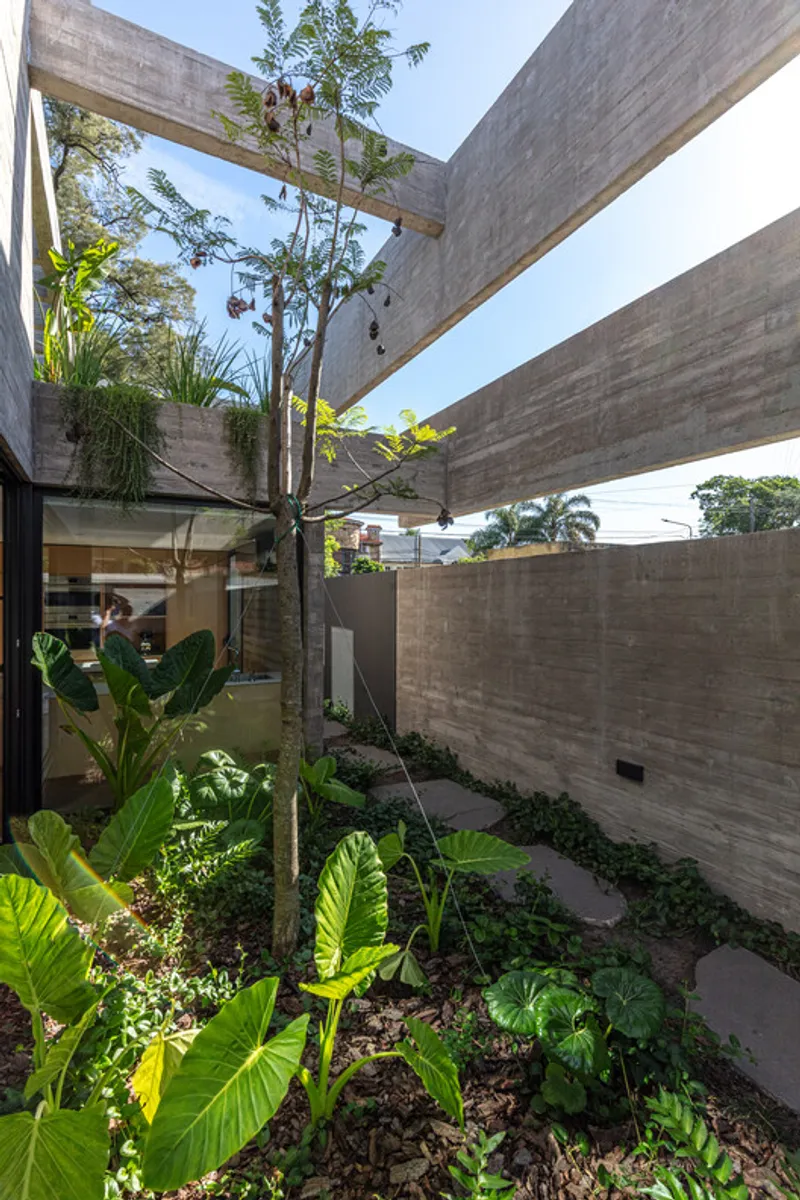
These overhangs act as climatic buffers, improving thermal comfort while extending usable outdoor space.
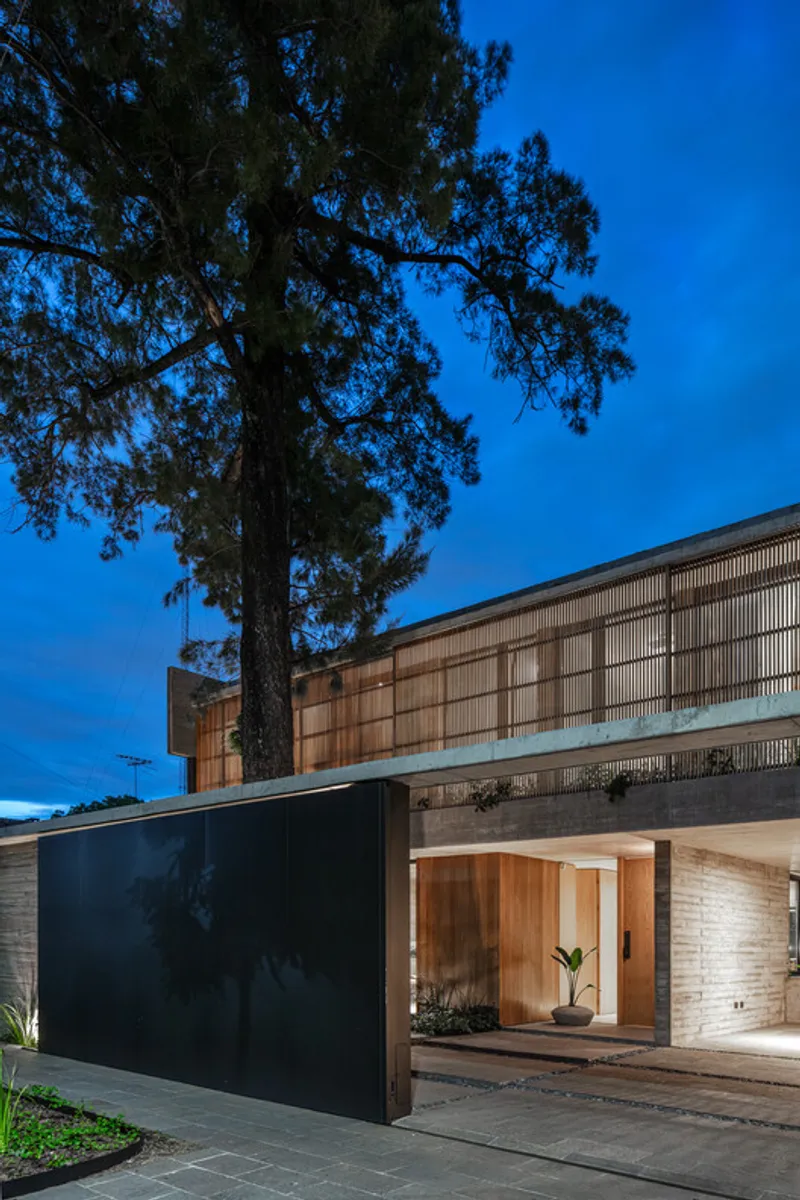
On the upper floor, sliding wooden screens were installed to regulate light and privacy. Residents can adjust these elements according to seasonal changes, personal comfort, and visual requirements.
Through these measures, the house achieves environmental control without heavy reliance on mechanical systems.
Spatial Organization and Circulation
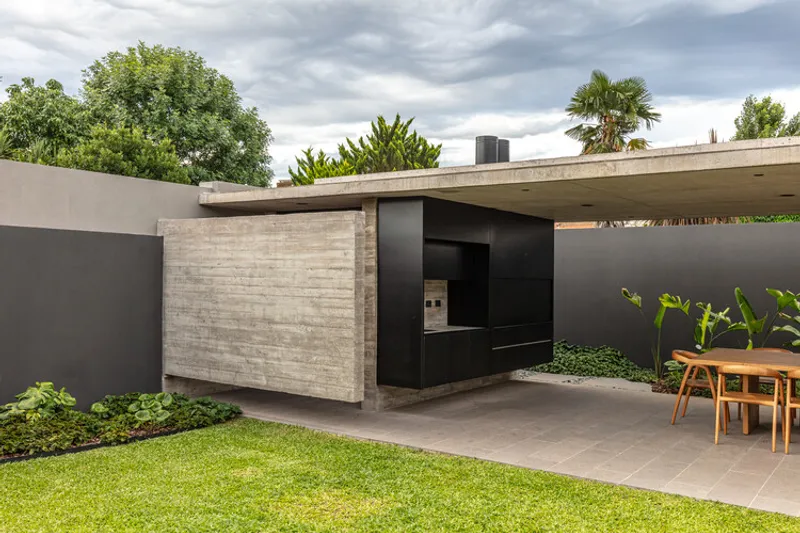
Both the ground and upper floors are structured around a central hall that functions as the main circulation spine. This hall connects living areas, bedrooms, service spaces, and courtyards in a fluid and intuitive manner.
Rather than relying on enclosed corridors, movement occurs through open and semi-open spaces, allowing continuous visual contact with gardens and patios.
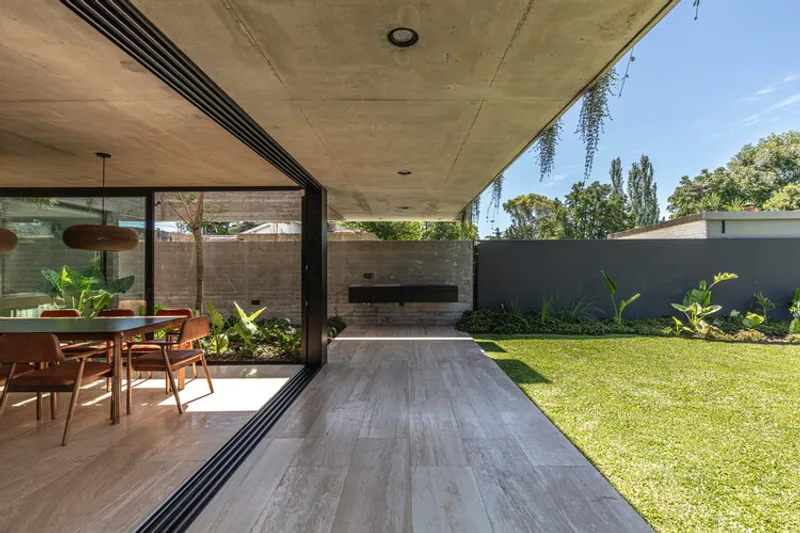
This configuration fosters:
- Clear spatial orientation
- Natural daylight penetration
- Cross-ventilation
- Strong indoor–outdoor connections
Circulation becomes an experiential sequence rather than a purely functional necessity.
Living, Dining, and Kitchen Spaces
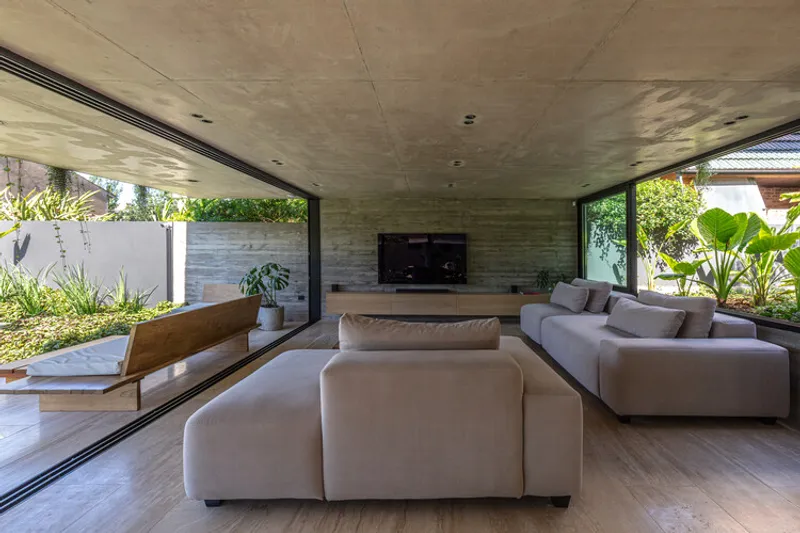
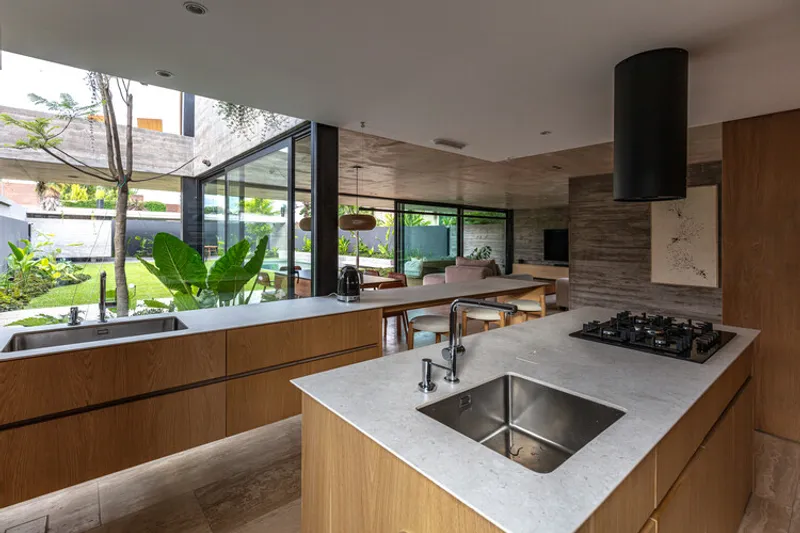
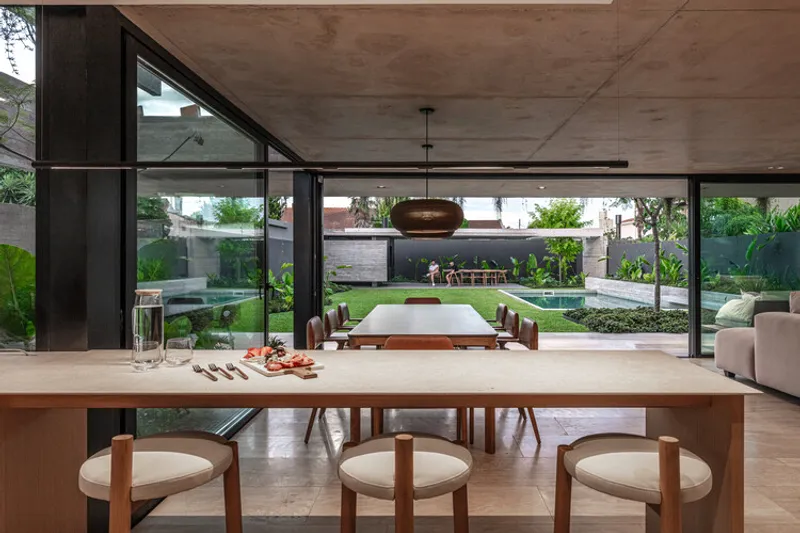
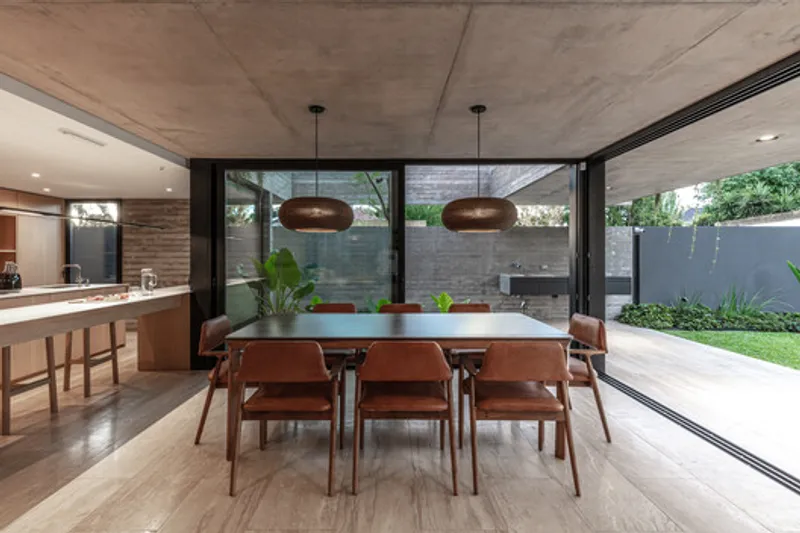
The social core of the house is formed by the integrated living, dining, and kitchen areas. These spaces are oriented toward both the rear façade and the central courtyard.
Floor-to-ceiling glazing establishes a strong visual and physical connection with outdoor areas, allowing vegetation and natural light to permeate the interior.
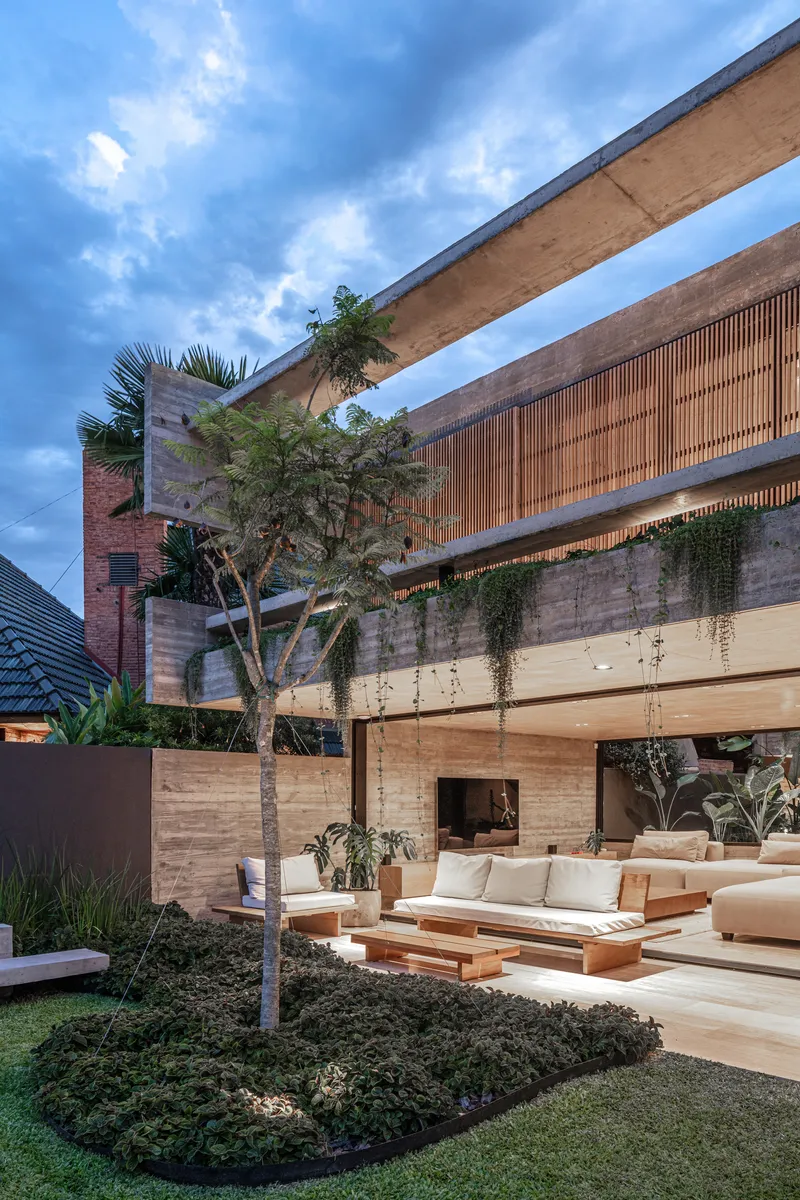
The living-dining space functions as a flexible zone for daily activities, gatherings, and relaxation, benefiting from changing light conditions throughout the day.
The kitchen follows a minimalist and functional design approach. It is organized around a central island that serves as both a working surface and social hub. A vertical storage unit and extended countertop enhance efficiency while maintaining visual continuity with adjacent spaces.
This open arrangement reinforces the sense of spatial unity within the house.
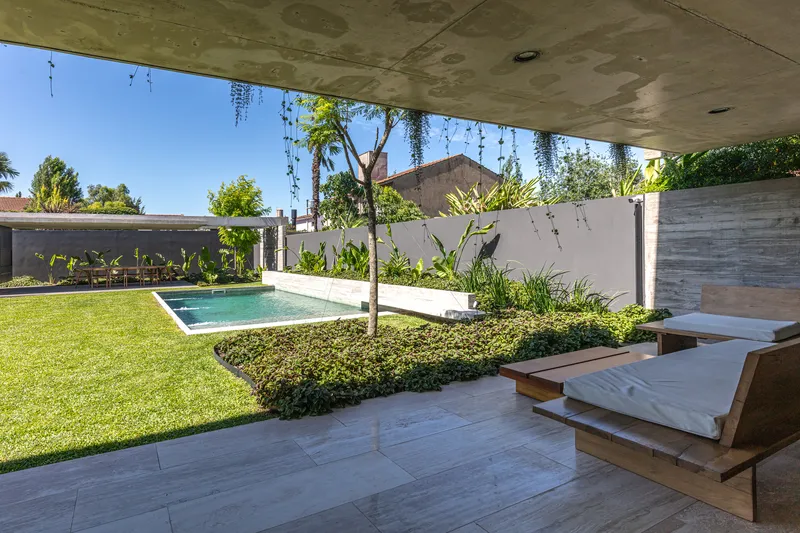
Private Areas and Upper Floor Layout
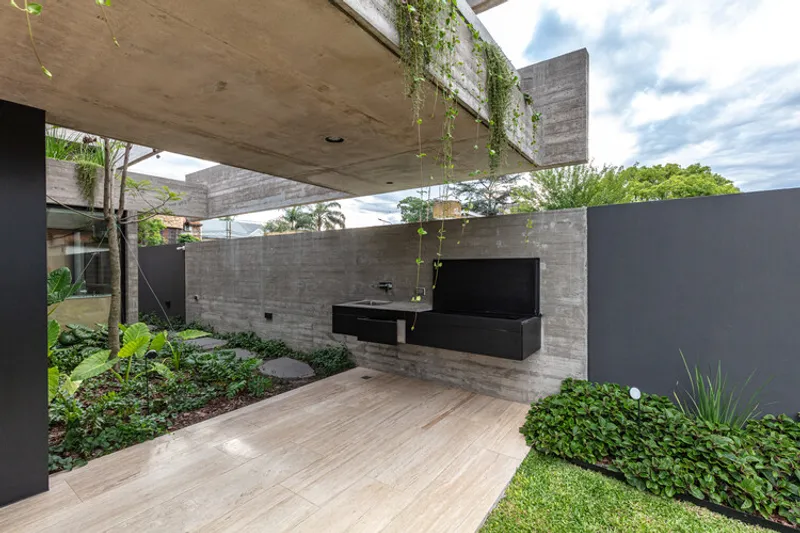
Private rooms are located primarily on the upper floor, where greater control over privacy and light is required.
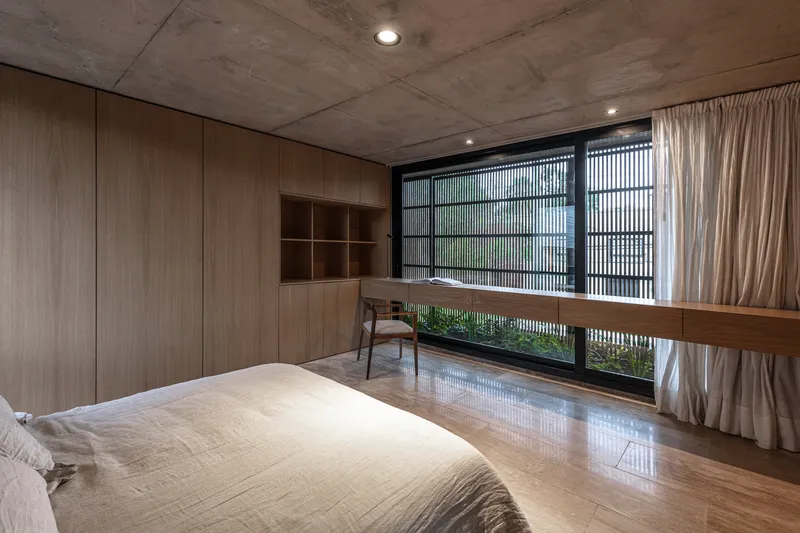
Sliding wooden screens and recessed openings provide filtered views and soft daylight while protecting residents from direct exposure to neighboring properties.
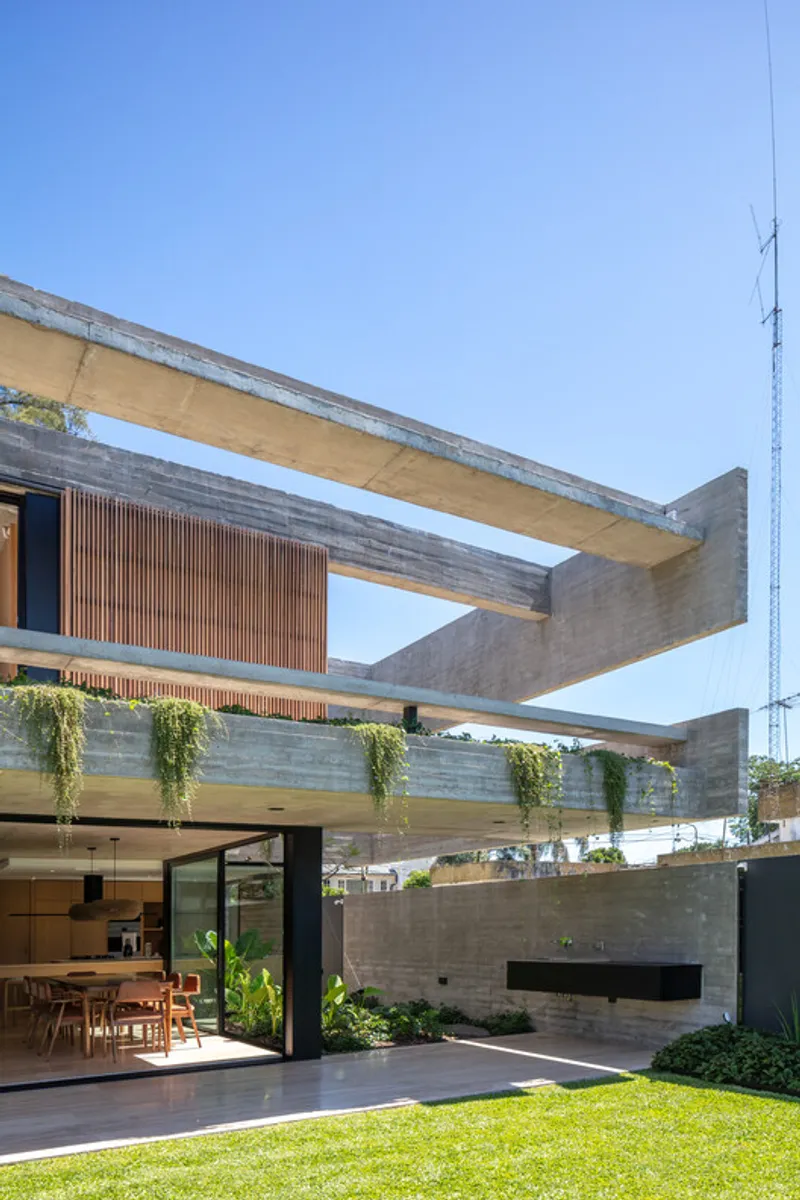
Bedrooms and bathrooms are arranged to maintain visual connections with internal courtyards, ensuring that even private spaces benefit from greenery and natural ventilation.
This layout balances openness and retreat, supporting both social interaction and personal comfort.
Materiality and Architectural Expression
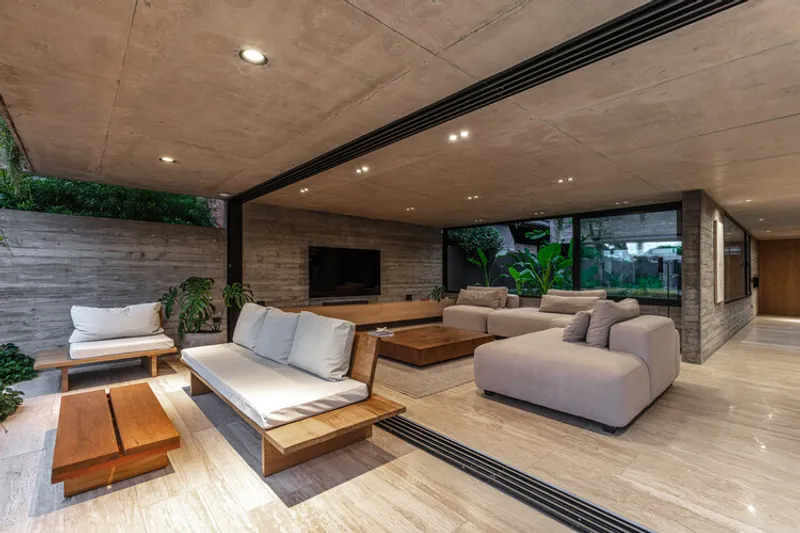
The architectural identity of Machado House is defined by the combination of exposed reinforced concrete and natural wood.
Concrete serves as the primary structural and expressive material. Its robust texture conveys permanence, clarity, and craftsmanship, forming the backbone of the building’s aesthetic language.
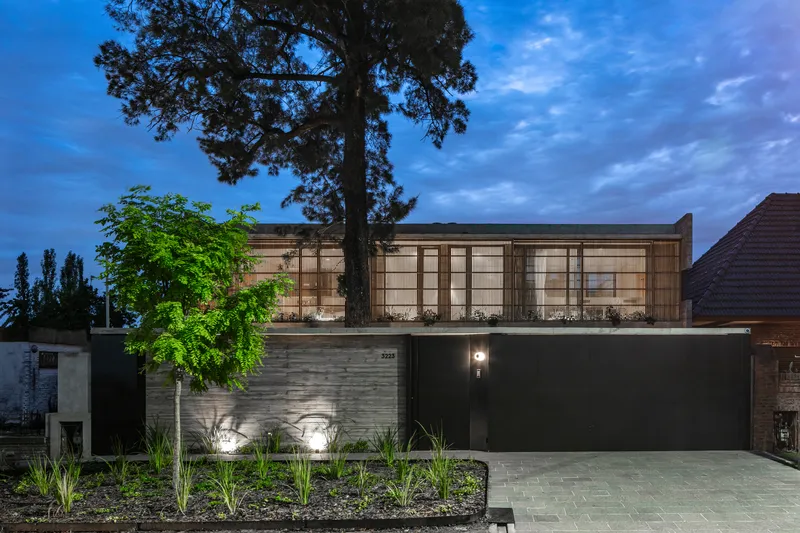
Wood is used in ceilings, screens, furniture, and selected wall surfaces. Its warmth softens the austerity of concrete, creating a balanced and inviting atmosphere.
This material dialogue reflects BTE-ARQ’s design philosophy: honest construction paired with sensory comfort.
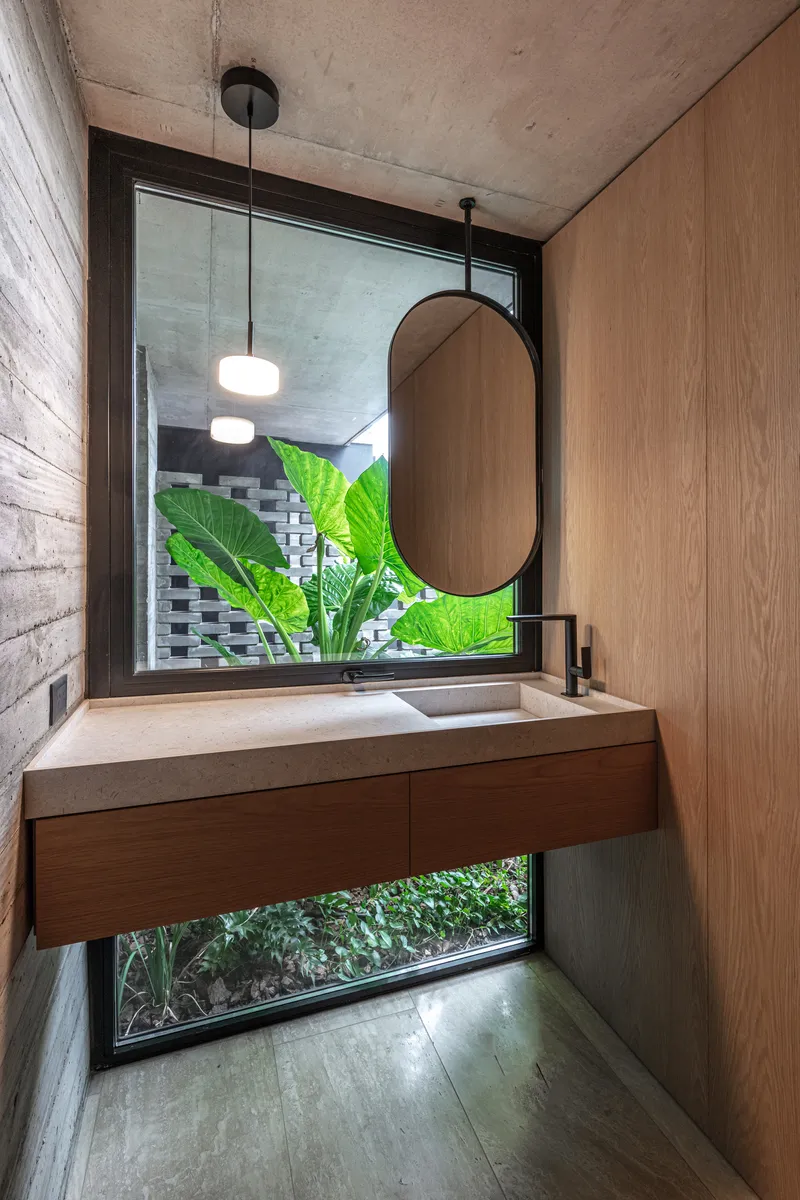
Vegetation further enriches this palette, introducing color, texture, and seasonal variation.
Light, Shadow, and Atmosphere
Daylight is carefully modulated through courtyards, glazing, and shading devices. Sunlight enters the house from multiple directions, generating layered lighting conditions.
Throughout the day, shifting shadows animate concrete walls, wooden surfaces, and planted patios. These subtle changes reinforce the perception of time and deepen the spatial experience.
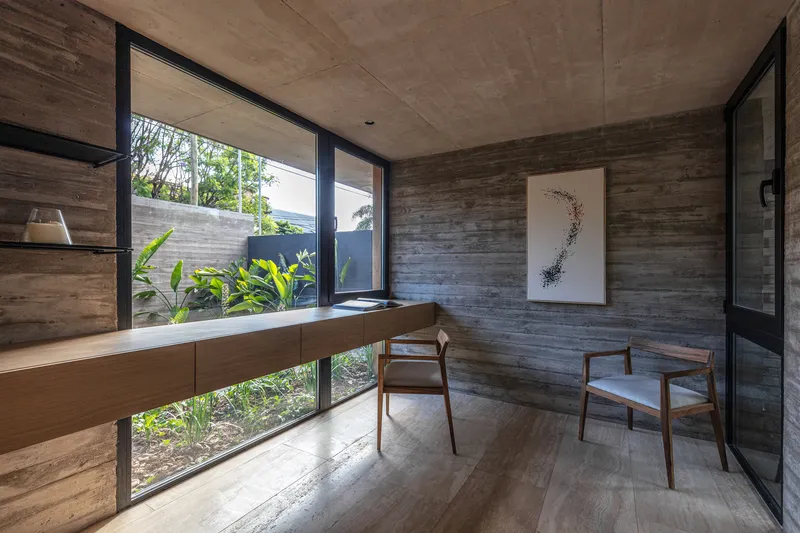
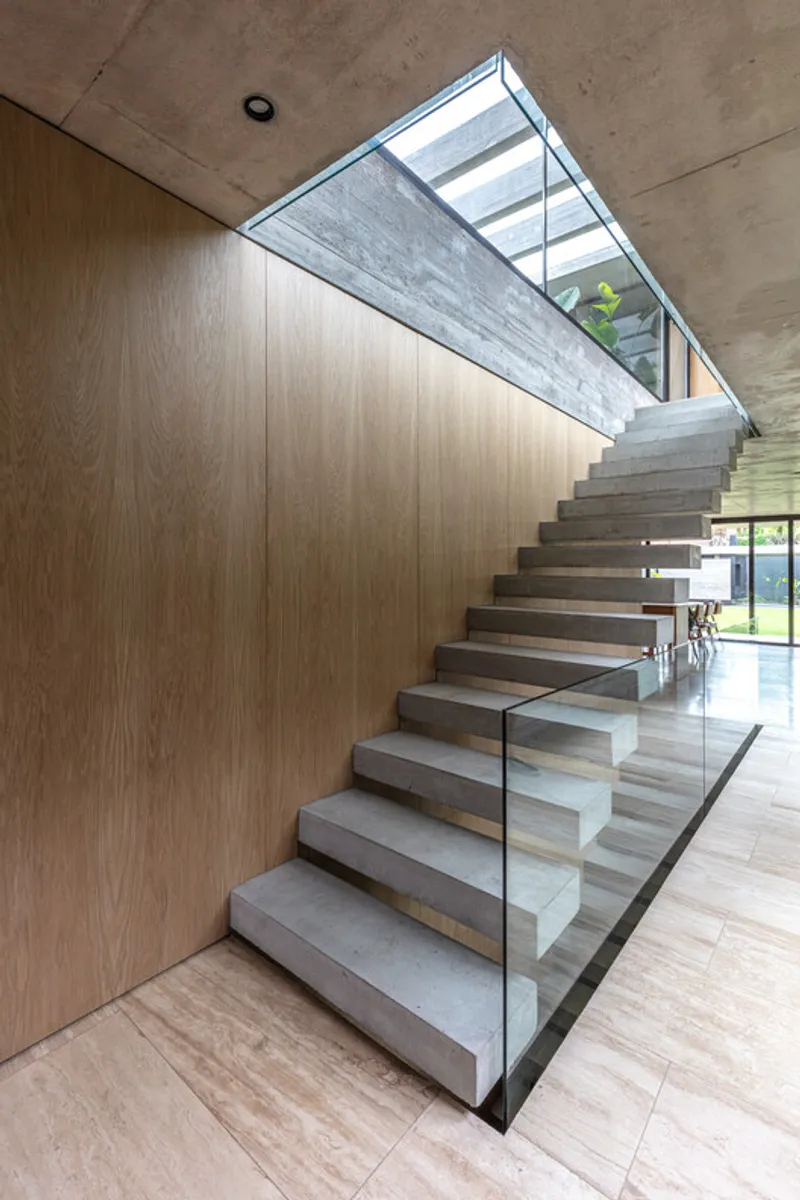
Artificial lighting is used primarily to complement natural light, maintaining a calm and domestic ambiance in the evening.
The result is an interior environment that feels dynamic yet serene.
Landscape as Spatial Infrastructure
Landscape design plays a structural role in Machado House. Courtyards, rear gardens, and planted terraces are not decorative additions but fundamental spatial components.
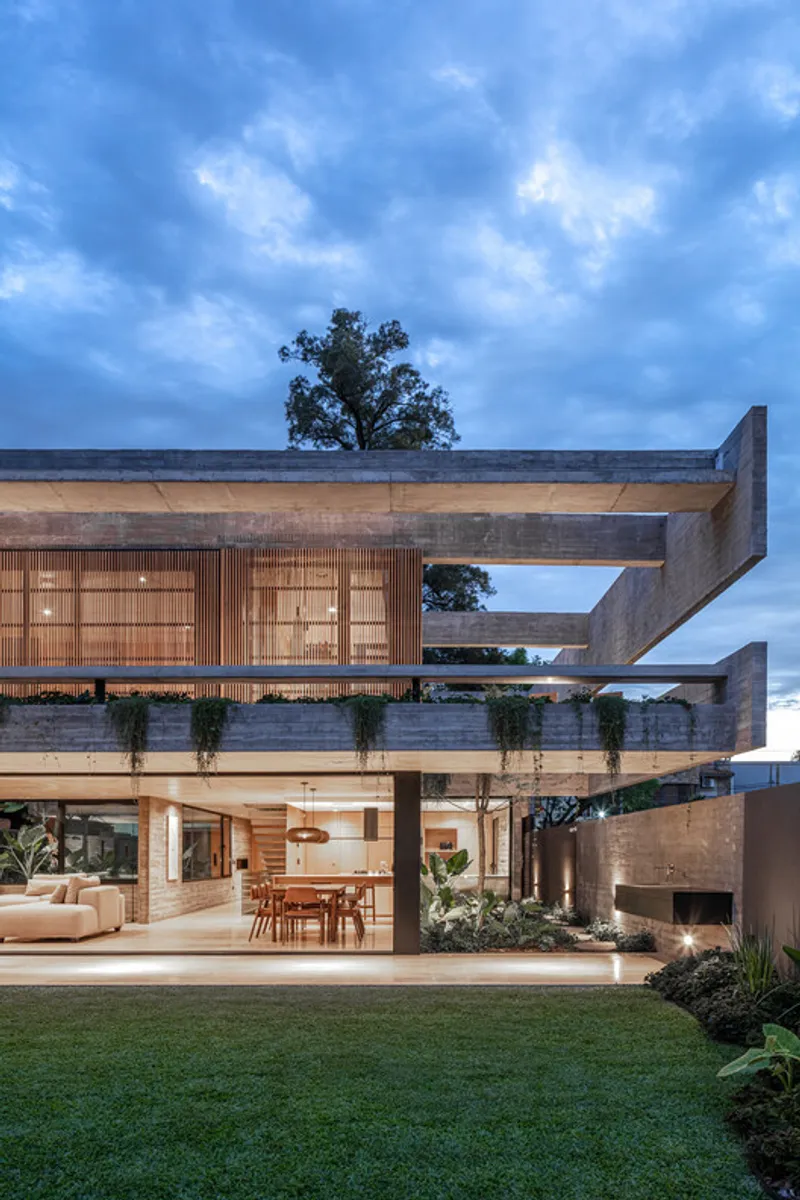
Vegetation contributes to:
- Thermal regulation
- Visual comfort
- Acoustic buffering
- Privacy
- Psychological wellbeing
By integrating greenery into circulation paths and living spaces, the house establishes a continuous dialogue between architecture and nature.
This strategy enhances both environmental performance and emotional quality.
Sustainability Through Passive Design
Environmental responsibility is embedded in the project through passive design principles rather than technological excess.
Key sustainable features include:
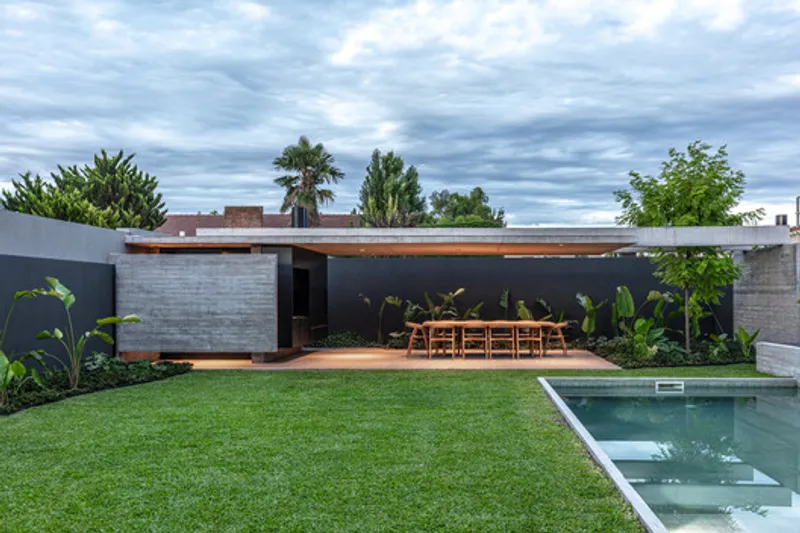
- Solar-oriented massing
- Deep eaves and shading devices
- Cross-ventilation via courtyards
- High thermal mass of concrete
- Reduced reliance on air conditioning
- Durable, low-maintenance materials
These strategies lower operational energy demand and ensure long-term resilience.
Sustainability is understood here as a combination of environmental efficiency, durability, and adaptability.
Sensitive Habitation and Everyday Comfort
At its core, Machado House is an exploration of “sensitive habitation”: a mode of living that prioritizes comfort, awareness, and connection to surroundings.
The house encourages residents to engage with light, air, vegetation, and spatial transitions in their daily routines. Indoor and outdoor boundaries remain fluid, fostering a lifestyle closely linked to natural rhythms.
This sensitivity transforms routine domestic activities into meaningful spatial experiences.
A Contemporary Model for Urban Housing
Machado House offers a compelling response to the challenges of building on subdivided urban plots. It demonstrates how limited land can support high-quality living through careful planning and spatial intelligence.
By fragmenting volume, integrating courtyards, and emphasizing passive climate strategies, BTE-ARQ creates a home that is both efficient and generous.
The project serves as a reference for future residential developments in similar contexts across Latin America.
All the Photographs are works of Federico Kulekdjian


Popular Articles
Popular articles from the community


The Amber Palace Opera: A Geological Fiction Surfaces on Tallinn's Baltic Waterfront
Pierre Brillard reimagines a Baltic legend as a public landscape, opera house, and waterfront promenade rooted in Tallinn's coastal identity.

Cloaked Colonization: A Mobile Underwater Habitat That Moves Like a Fish
Micah Abaya's shortlisted EHC Pacific entry reimagines ocean settlement as a dispersed network of self-sustaining architectural organisms.
Faces of the Soviet Avant-Garde: Turning Moscow's Street Names into an Open-Air Museum
A network of sculptural installations across a Moscow residential district transforms forgotten architect names into spatial encounters with cultural memor

Singing Woman: An Opera House That Performs Before the Curtain Rises
Ovidiu Cristian Pavel's conceptual opera house translates Estonia's choral identity into a sculpted waterfront landmark facing the Baltic Sea.

Similar Reads
You might also enjoy these articles


Hodi-Mandai Geram
Project Function: Preservation and revitalization of the Intangible heritage and socio-spatial identity of the Hodi by Housing, Cultural Memory Center, Sacred Grove, landscape, local tourism economy


Olio Towers: A Mid-Rise for Performers That Fuses Housing, Rehearsal, and Stage
Located blocks from Houston's Theater District, this modular tower stacks living units around a central performance atrium.

Oasis: Modular Green Housing Carved into Dhaka's Urban Fabric
A shortlisted Plugin Housing entry reclaims unauthorized settlements in Dhaka with stepped concrete volumes, green roofs, and ventilation-driven design.

Black Hole: A Floating Megastructure for the Post-Physical Era
Emiliano Mazzarotto envisions a spherical, self-scaling arena where e-sports, digital hotels, and holographic stadiums replace traditional public space.

Explore Latin American Houses Competitions
Discover active competitions in this discipline

Challenge to reimagine the Iron Throne

Photograph architecture without architects

Illustrate the lost glory of Angkor Wat - Render Challenge

Design challenge to reuse E-waste
Comments (0)
Please login or sign up to add comments
No comments yet. Be the first to comment!