

Maison du Département des solidarités by ABF - LAB
A bioclimatic public building in Langon built from wood, earth, and straw, combining passive comfort, renewable energy, and social care.


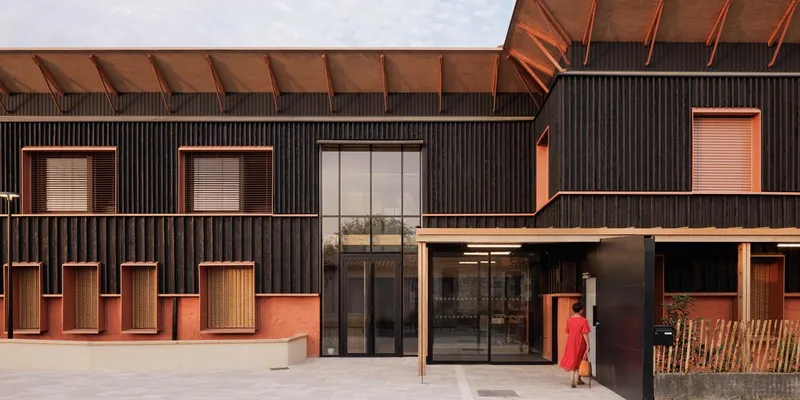
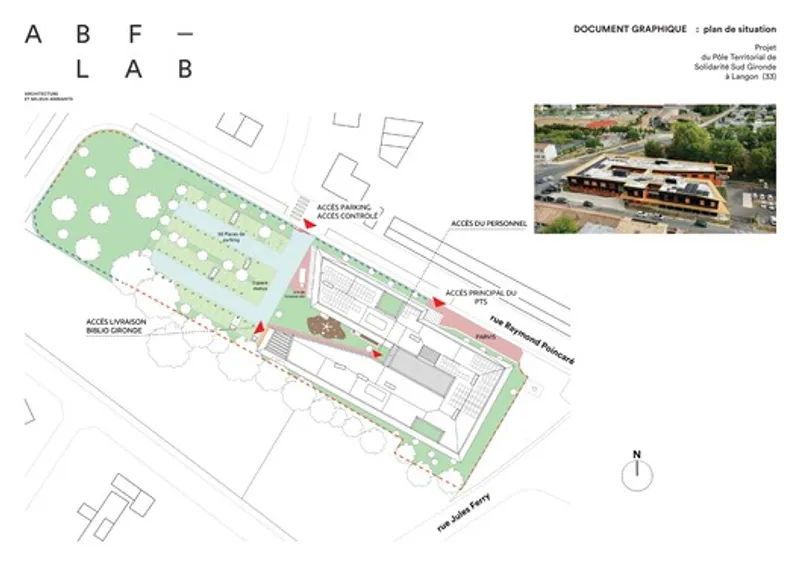
Located in Langon, in southwestern France, the Maison du Département des solidarités is a pioneering example of low-impact public architecture that places environmental responsibility, human well-being, and social purpose at the center of design. Completed in 2025 by ABF-LAB under the direction of Paul Azzopardi and Étienne Feher, the 2,450-square-metre facility redefines how public service buildings can respond to climate, health, and energy challenges through radical material and bioclimatic strategies.
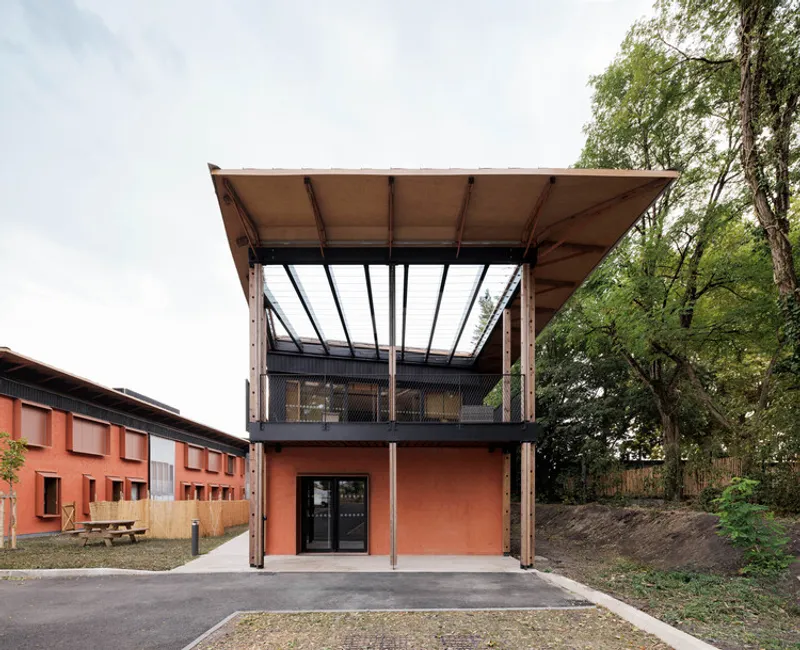
Conceived as both a social support hub and an ecological prototype, the building demonstrates how architecture can become an active agent in the transition toward regenerative construction.
Architecture for Care and Climate
The Maison des solidarités provides essential social services for the Département of Gironde, supporting vulnerable populations through counseling, assistance, and community programs. From the outset, ABF-LAB sought to align this social mission with environmental ethics.
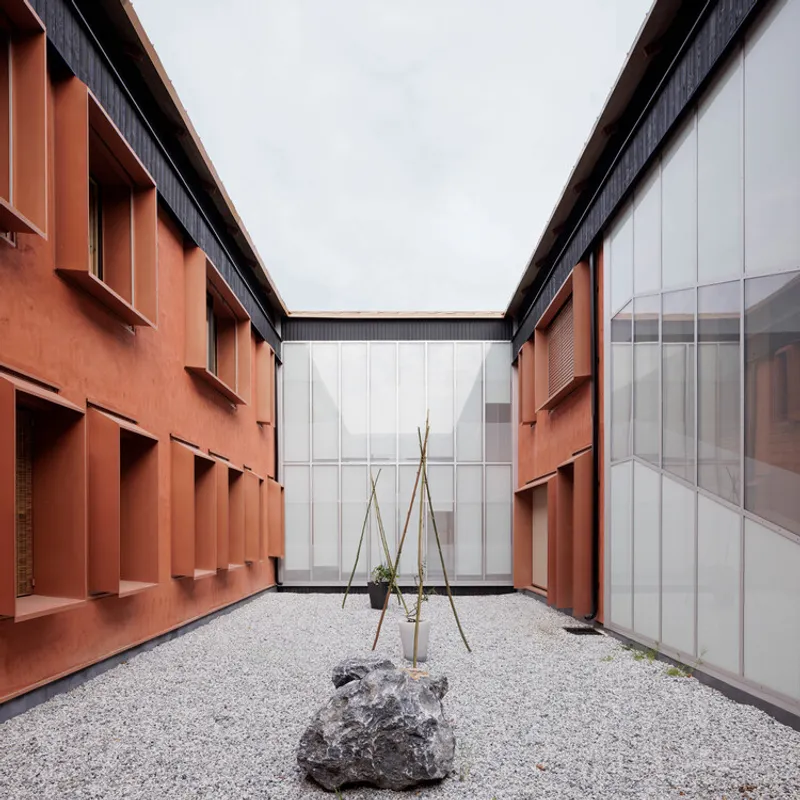
Rather than relying on conventional industrial construction systems, the architects proposed a “radical environmental scenario” based on three principles:
- Bioclimatic design
- Passive environmental systems
- Exclusive use of natural materials
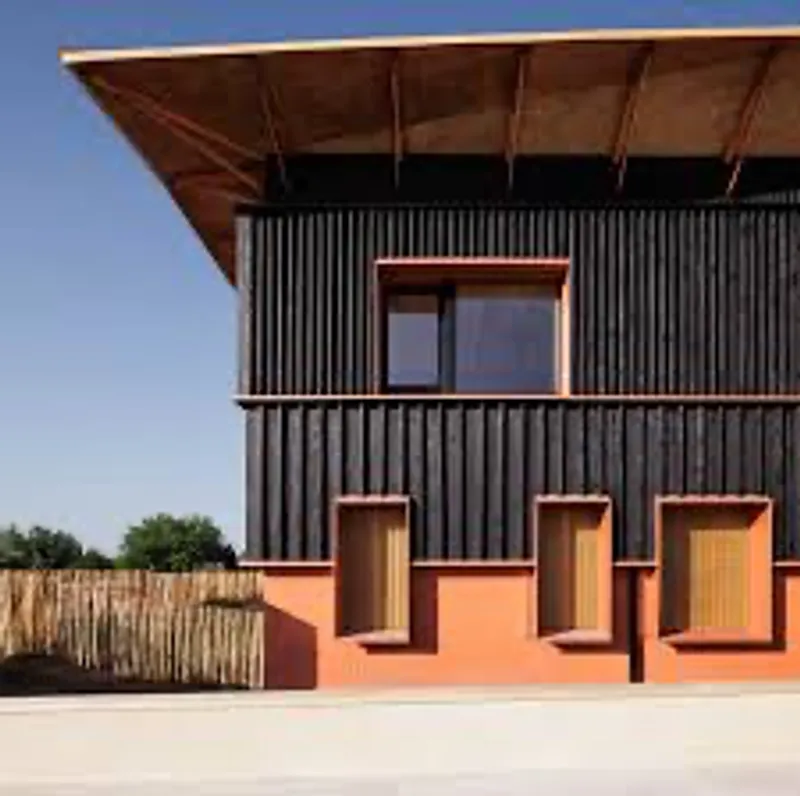
This approach transforms the building into both a place of care for people and a place of care for the planet.
A Welcoming Public Interior
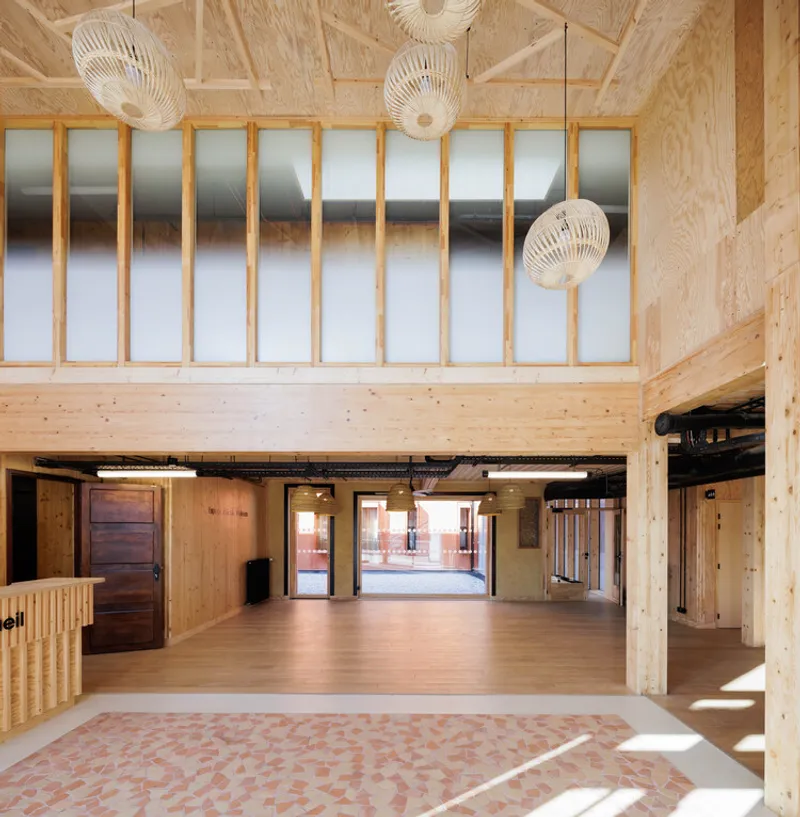
Public social facilities often suffer from institutional coldness. In response, the architects prioritized warmth, comfort, and dignity through materiality and spatial organization.
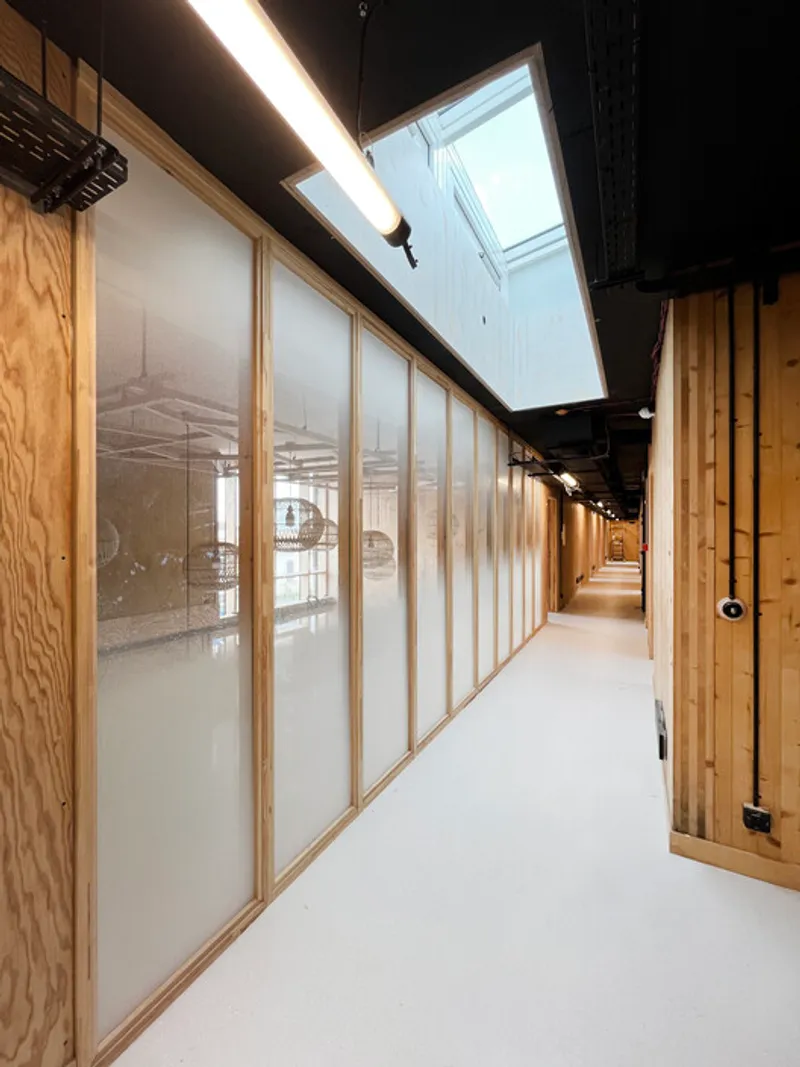
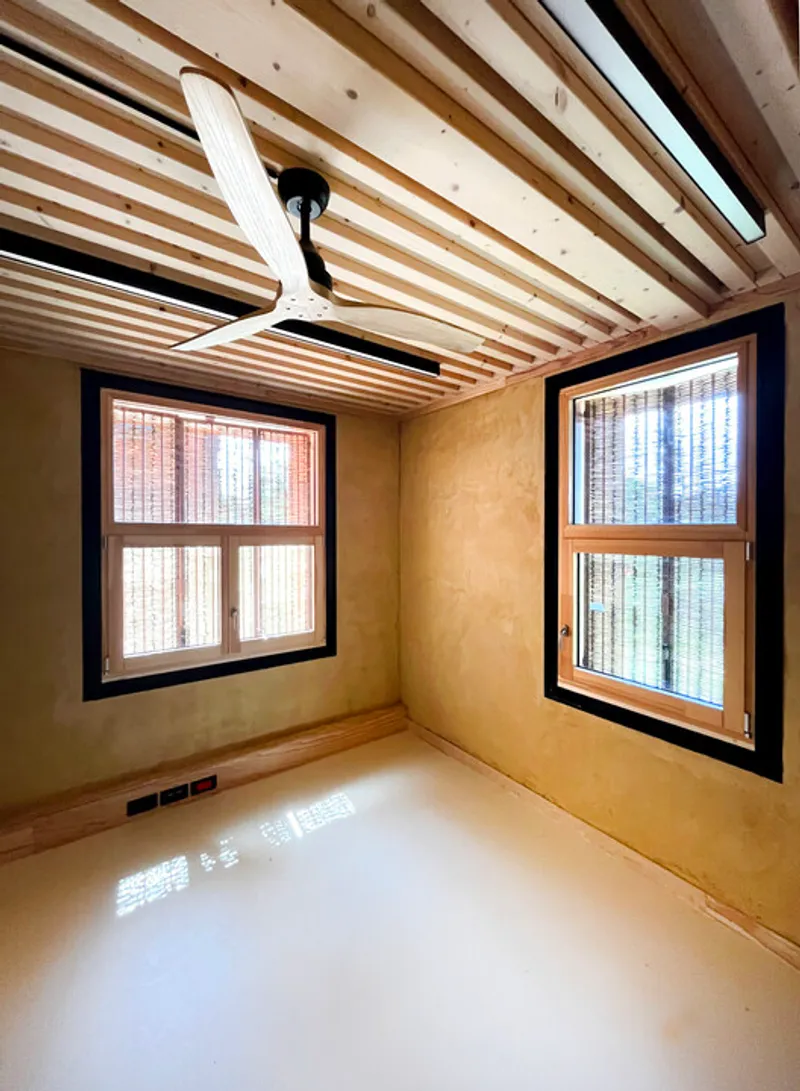
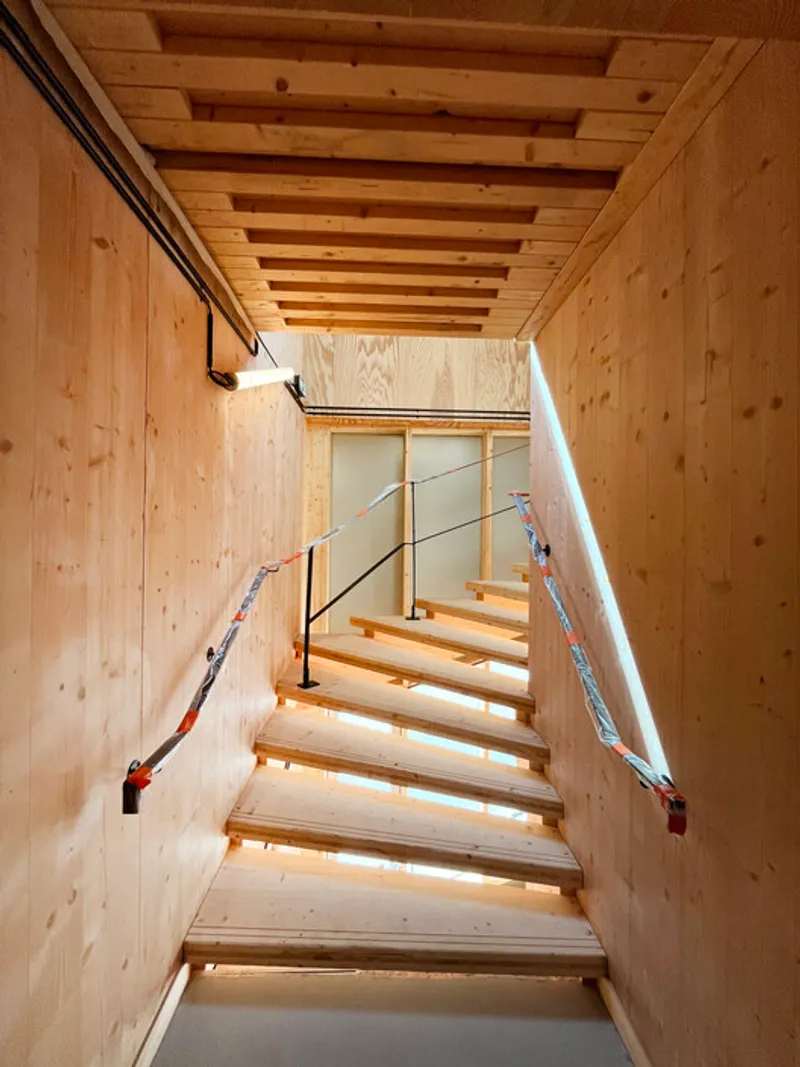
All interior walls are finished with natural surfaces: solid wood, earth plaster, and lime plaster, creating a tactile and breathable environment. These materials regulate humidity, improve indoor air quality, and produce a calm, reassuring atmosphere.
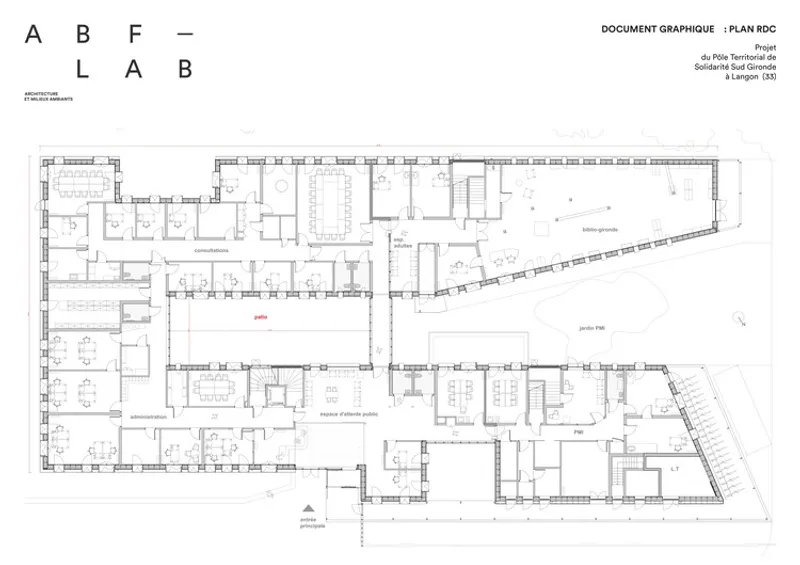
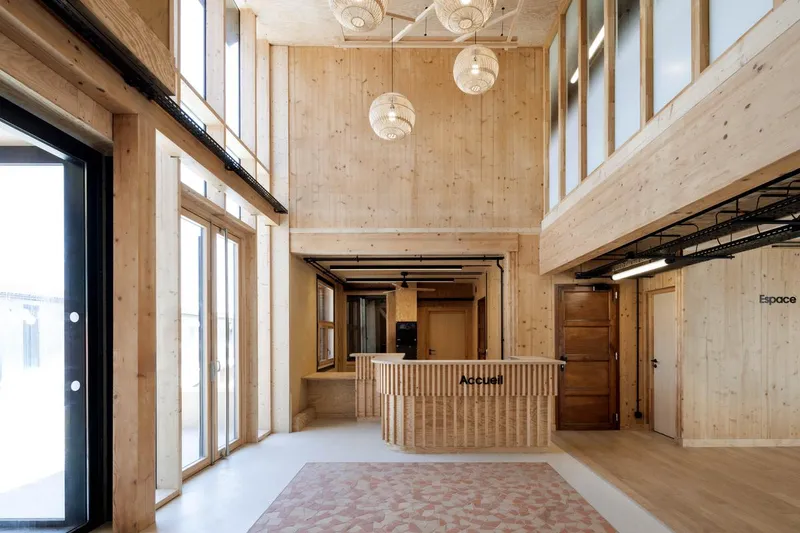
The spatial layout is organized around a luminous central core that distributes daylight deep into the building. This central space acts as an orienting device and social heart, connecting offices, consultation rooms, and waiting areas.
Transparency and legibility reduce stress for users, many of whom arrive in vulnerable situations.
Radical Low-Carbon Construction
One of the project’s most remarkable aspects is its construction system. The building avoids conventional high-carbon materials and toxic products entirely.
Key principles include:
- No petrochemical-based materials
- No VOC-emitting finishes
- No harmful adhesives
- No disposable construction systems
- No fragile metal substructures
Instead, the entire structure and envelope are built from:
- Solid timber
- Earth and lime plasters
- Over 1,000 straw bales
These bio-sourced and geo-sourced materials, all sourced in France, drastically reduce embodied carbon while improving thermal and acoustic performance.
Straw bale insulation, in particular, provides exceptional thermal resistance and moisture regulation, making it a cornerstone of the building’s passive performance.
Circular Economy and Reuse
Beyond material sourcing, the project embraces circular economy principles. Components from the former police station previously occupying the site were salvaged and reintegrated.
Reused elements include:
- Wooden doors
- Radiators
- Selected fixtures
This strategy reduces waste, preserves material memory, and embeds continuity within the new building.
Rather than treating demolition as erasure, ABF-LAB transformed it into a resource.
Passive Comfort Without Air Conditioning
In response to increasingly hot summers in southwestern France, the architects developed a sophisticated passive cooling strategy that eliminates the need for air conditioning.
Key systems include:
Natural Ventilation
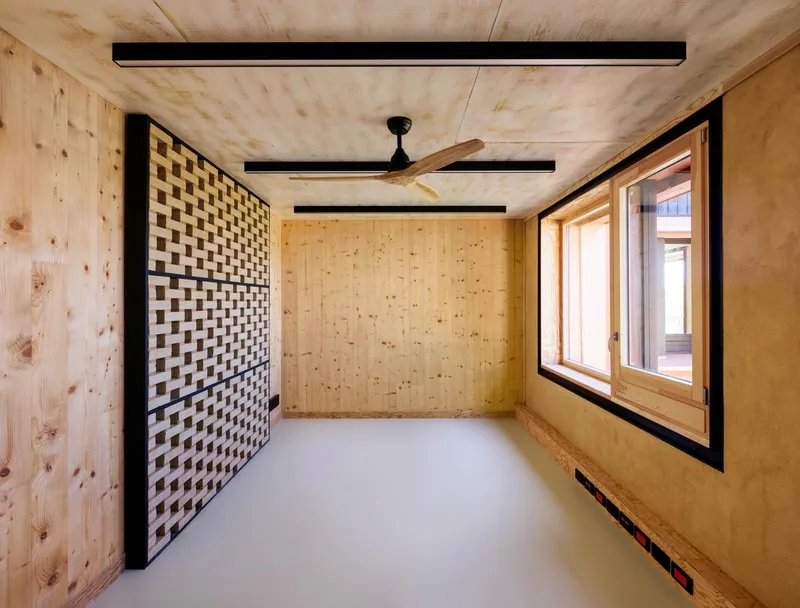
Skylights and ventilation shafts generate thermal draught, allowing warm air to rise and escape. Fans assist this process when needed, maintaining airflow without heavy energy use.
Thermal Inertia
Interior earthen plasters provide thermal mass, absorbing heat during the day and releasing it slowly at night, stabilizing indoor temperatures.
Mashrabiya Cooling System
A mud-brick mashrabiya functions as a porous climatic filter, cooling incoming air and creating a localized microclimate reminiscent of traditional Mediterranean and North African architecture.
Solar Protection
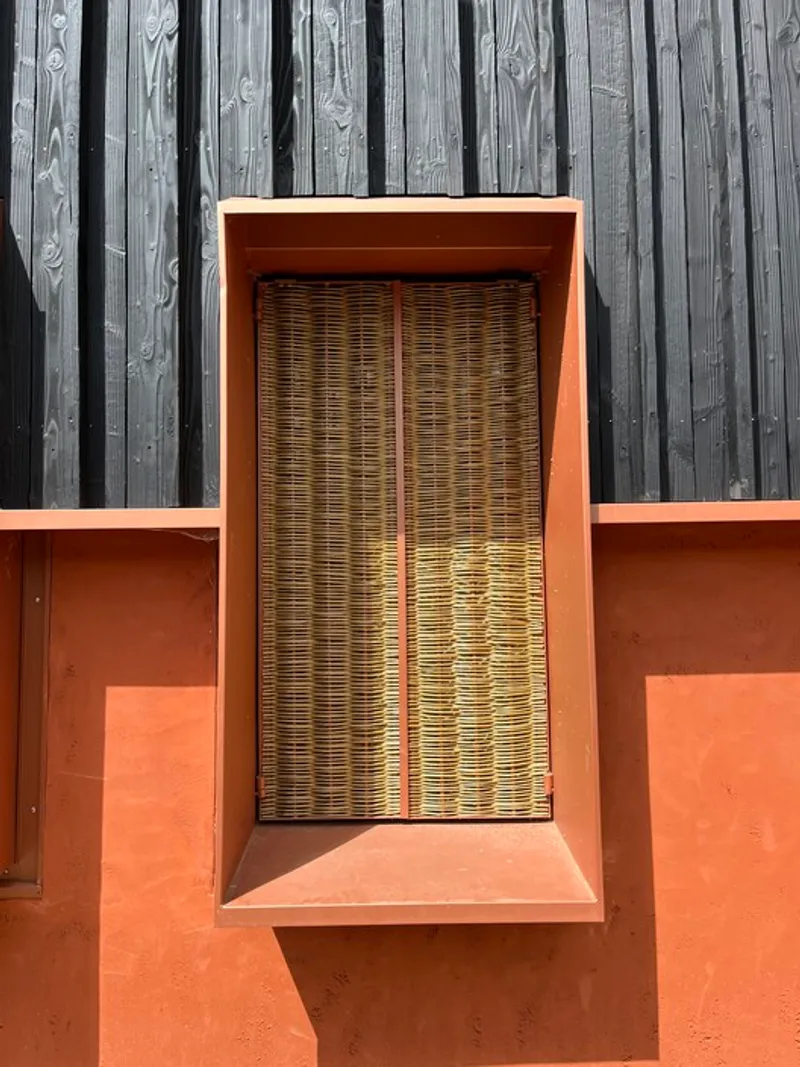
External shading devices: peripheral awnings, Venetian blinds, and woven wicker shutters, prevent overheating while maintaining daylight access.
Together, these strategies ensure summer comfort even during heatwaves.
Renewable Heating and Energy Autonomy
Winter heating is generated through a hybrid renewable system:
- Biomass-fuelled furnace
- Solar photovoltaic-powered heating network
This combination supplies more than 50% of the building’s energy needs, significantly reducing dependence on fossil fuels.
The integration of energy production into architectural design reinforces the building’s role as an environmental infrastructure rather than a passive consumer.
Empowered Users and Bioclimatic Literacy
A distinctive aspect of the project is its emphasis on user participation. Staff and occupants are trained in the building’s “bioclimatic operating instructions,” learning how to:
- Manage ventilation
- Optimize shading
- Adapt usage to seasonal conditions
- Monitor comfort systems
This educational component recognizes that sustainable buildings require informed users. Performance is not imposed through automation alone but co-produced through daily practice.
Architecture thus becomes a pedagogical tool for ecological transition.
Structural Expression and Architectural Language
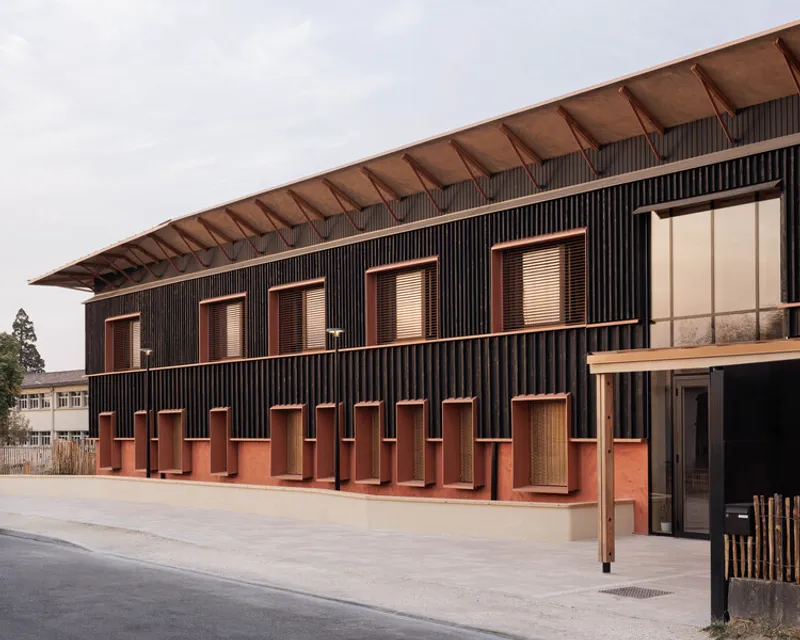
Visually, the building expresses its construction logic openly. Timber beams, structural frames, and straw-filled walls remain visible, reinforcing honesty and legibility.
The architectural language is calm and restrained, avoiding technological exhibitionism. Sustainability is not aestheticized as spectacle but embedded quietly in every detail.
This understated approach enhances credibility and long-term relevance.
A New Model for Public Architecture
The Maison du Département des solidarités stands as a prototype for future public buildings in France and beyond. It demonstrates that large-scale social facilities can be:
- Carbon-responsible
- Healthy for occupants
- Economically viable
- Architecturally dignified
By aligning environmental innovation with social care, the project reframes sustainability as a matter of public justice.
All the Photographs are works of ABF - LAB, Ivan Mathie


Popular Articles
Popular articles from the community


David Ortega Stacks a Two-Story Mexico City Penthouse Around a Steel Stair and a Pergola-Shaded Roof Terrace
In Colonia Roma, a 300 m² penthouse uses oak joinery, a planted steel stair and a slatted roof pergola to make a new-build apartment feel like a house.

longwave studio Reorganizes a 112 m² Tainan Apartment Around the Daily Routines of a Family and Two Cats
In Tainan, Taiwan, birch plywood, rust-red furniture and a freestanding plaster wall link arrival, storage, work and family life in one apartment.

GROUP A Strips a 1969 Rotterdam Harbor Headquarters to Its Frame and Wraps It in Timber Louvers
In Rotterdam's M4H harbor district, Ferro Offices reuses a 1969 frame, adds one timber storey and reaches BREEAM-NL Outstanding.

U.GA Architects Wraps an Oval Rooftop Pool in Curved Board-Formed Concrete on Busan's Jeollidan-gil
In Busan's Jeonpo-dong, a 454 m² mixed-use block stacks a neighborhood facility, guest rooms and an oval rooftop pool inside spiraling concrete walls.

Similar Reads
You might also enjoy these articles


Hodi-Mandai Geram
Project Function: Preservation and revitalization of the Intangible heritage and socio-spatial identity of the Hodi by Housing, Cultural Memory Center, Sacred Grove, landscape, local tourism economy


Olio Towers: A Mid-Rise for Performers That Fuses Housing, Rehearsal, and Stage
Located blocks from Houston's Theater District, this modular tower stacks living units around a central performance atrium.

Oasis: Modular Green Housing Carved into Dhaka's Urban Fabric
A shortlisted Plugin Housing entry reclaims unauthorized settlements in Dhaka with stepped concrete volumes, green roofs, and ventilation-driven design.

Black Hole: A Floating Megastructure for the Post-Physical Era
Emiliano Mazzarotto envisions a spherical, self-scaling arena where e-sports, digital hotels, and holographic stadiums replace traditional public space.

Explore Public Architecture Competitions
Discover active competitions in this discipline

Challenge to design locus for the upliftment of human rights

Challenge to reimagine the Iron Throne

Photograph architecture without architects

Illustrate the lost glory of Angkor Wat - Render Challenge
Comments (0)
Please login or sign up to add comments
No comments yet. Be the first to comment!