
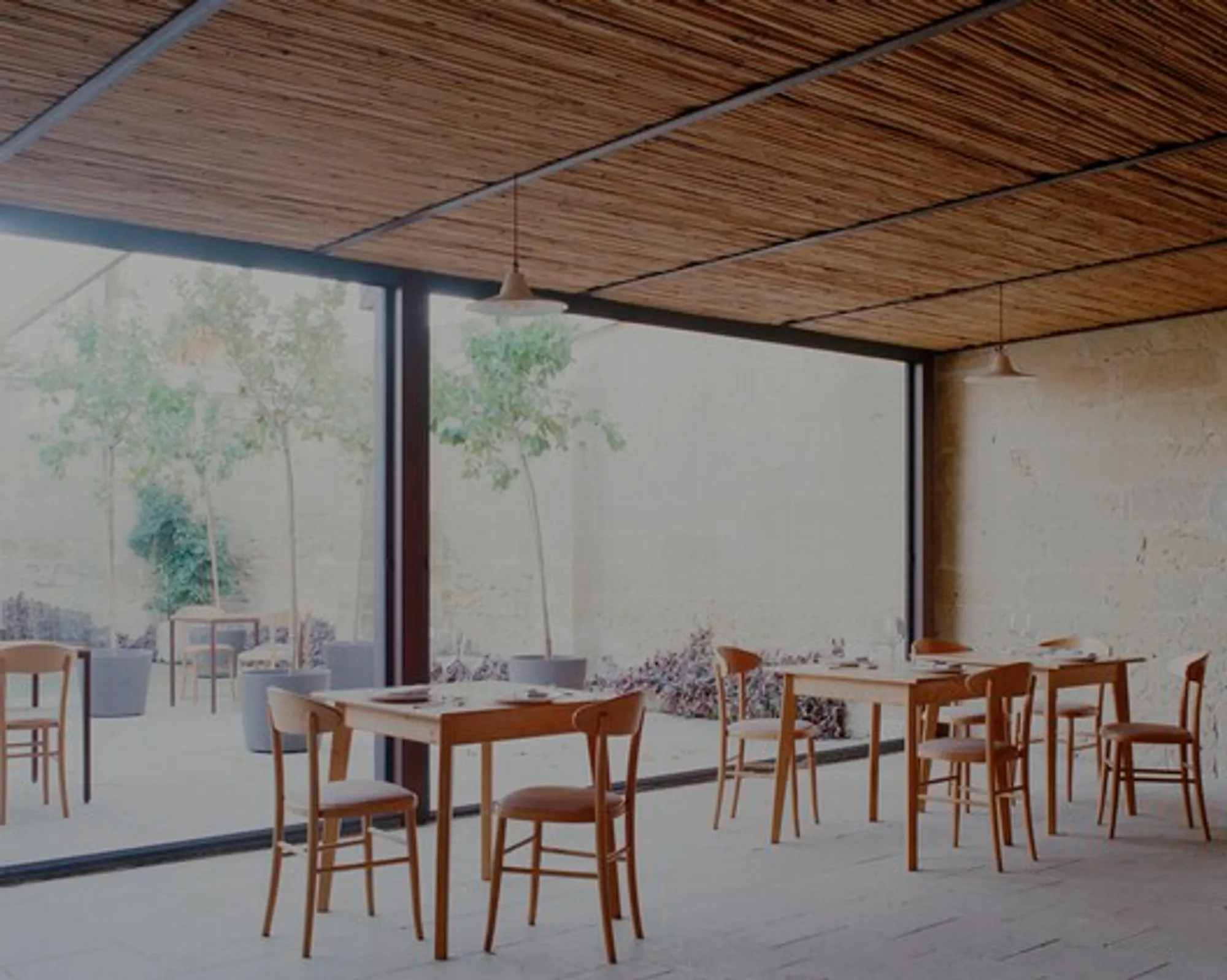
Masseria Caronte By Margine
Masseria Caronte transforms a historic farmhouse into a contemporary restaurant, using minimal interventions, local materials, and courtyard-centered design rooted in heritage.


Masseria Caronte in Vernole, Italy, is a remarkable example of adaptive reuse and architectural restoration, where a historic rural farmhouse has been transformed into a contemporary restaurant while preserving its authentic identity. Designed by Margine and completed in 2025, the project celebrates the essence of Salento architecture, blending heritage, materiality, and minimal intervention.
Reviving a Historic Farmhouse in Salento
Located in the picturesque countryside between Lecce and Vernole, surrounded by olive groves and close to the Adriatic coast, Masseria Caronte once functioned as a rural production hub for sheep farming and wool processing. Over decades, the structure underwent multiple unsympathetic additions and alterations, gradually losing its architectural clarity.
The renovation aimed to reverse this fragmentation by restoring the building’s original spatial logic and material authenticity. Commissioned by a group of young local entrepreneurs, the project reimagines the masseria as a contemporary dining destination rooted in tradition.
Architecture of Subtraction
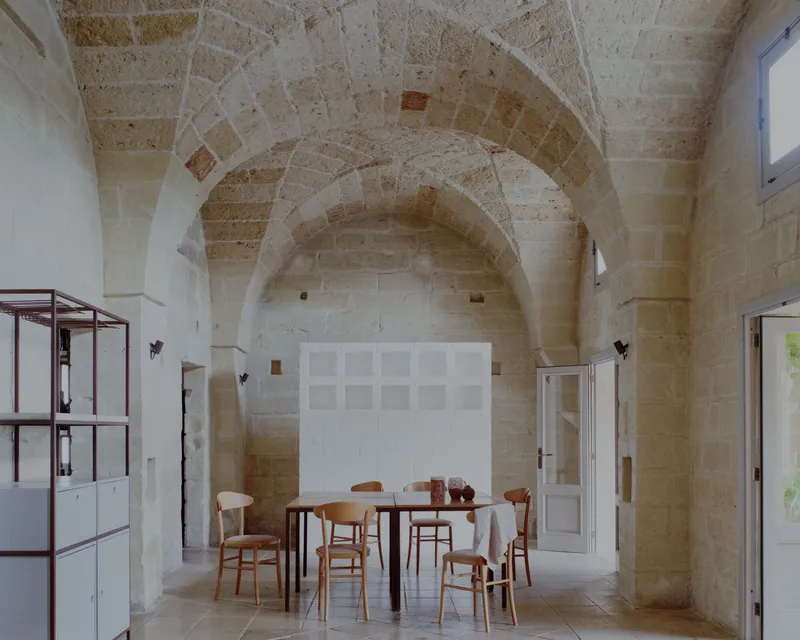
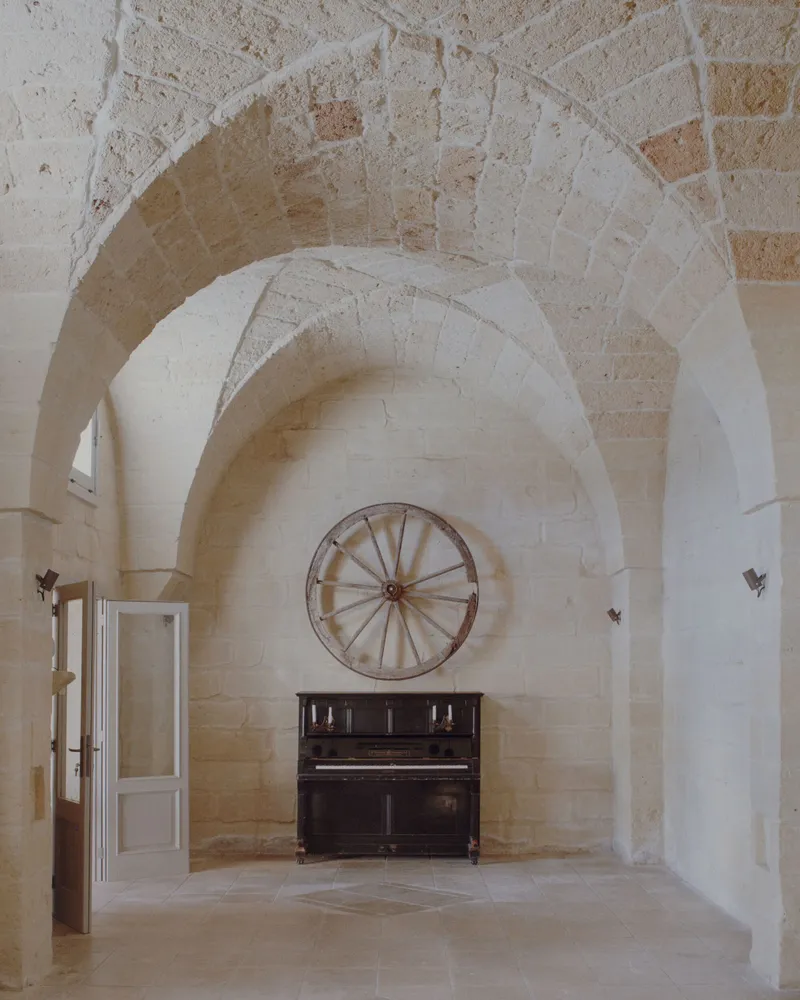
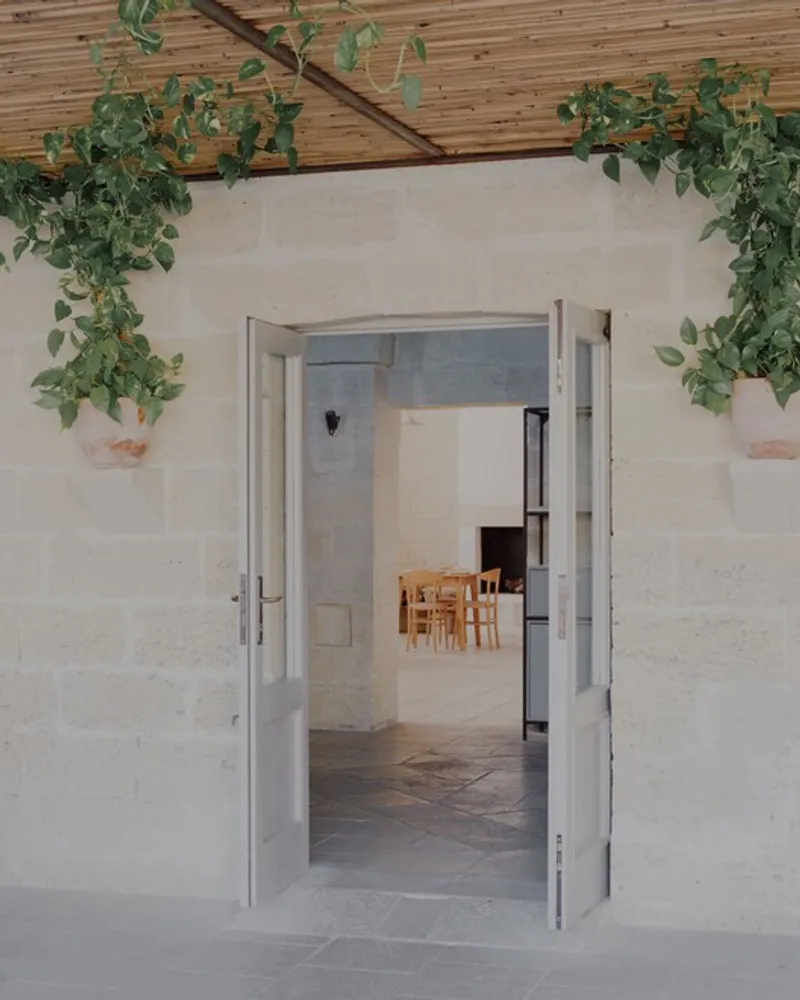
The core design strategy can be defined as an “architecture of subtraction”. Rather than adding new layers, the architects removed unnecessary extensions, false ceilings, and inconsistent materials that had accumulated over time. This process revealed the original beauty of the Lecce stone structure, characterized by its warmth, texture, and timeless appeal.
By eliminating visual noise, the project restores a sense of coherence and simplicity, allowing the historic fabric to take center stage. The intervention highlights how minimal design approaches can create powerful spatial transformations.
Spatial Organization and Courtyard Experience
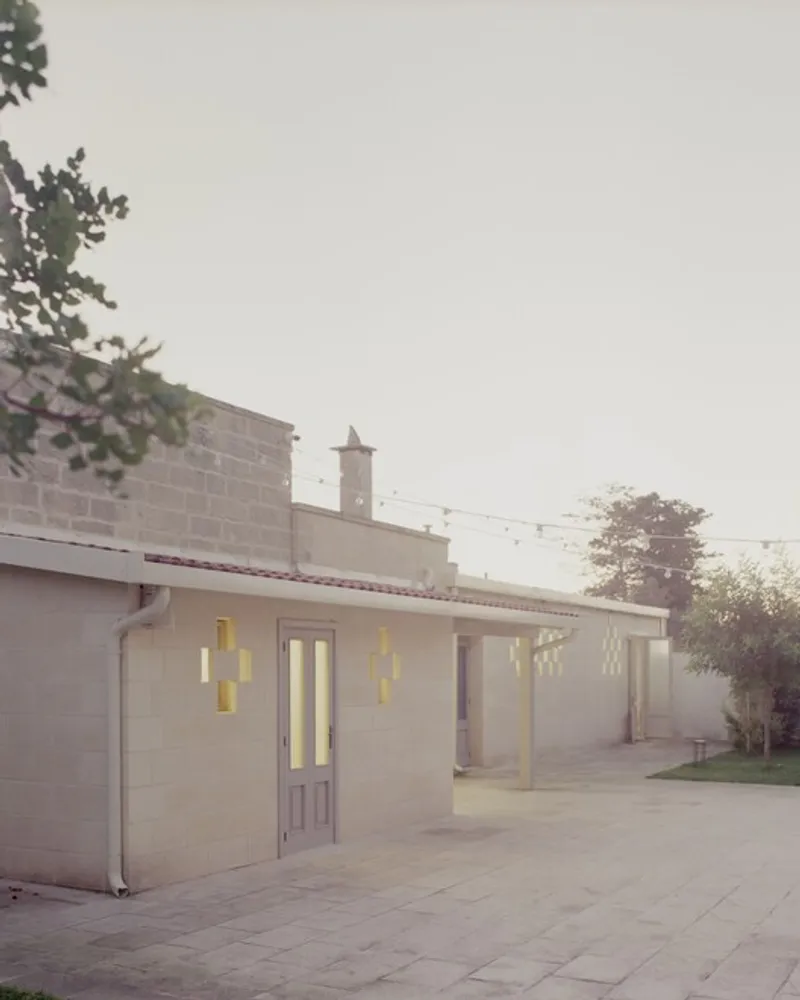
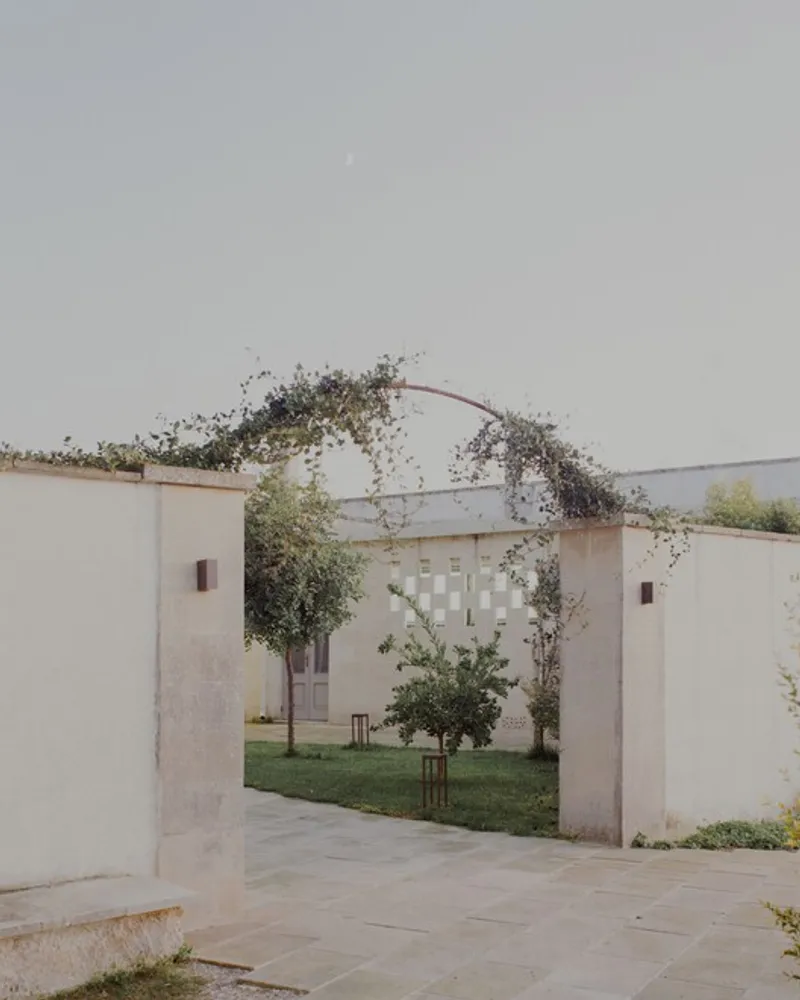
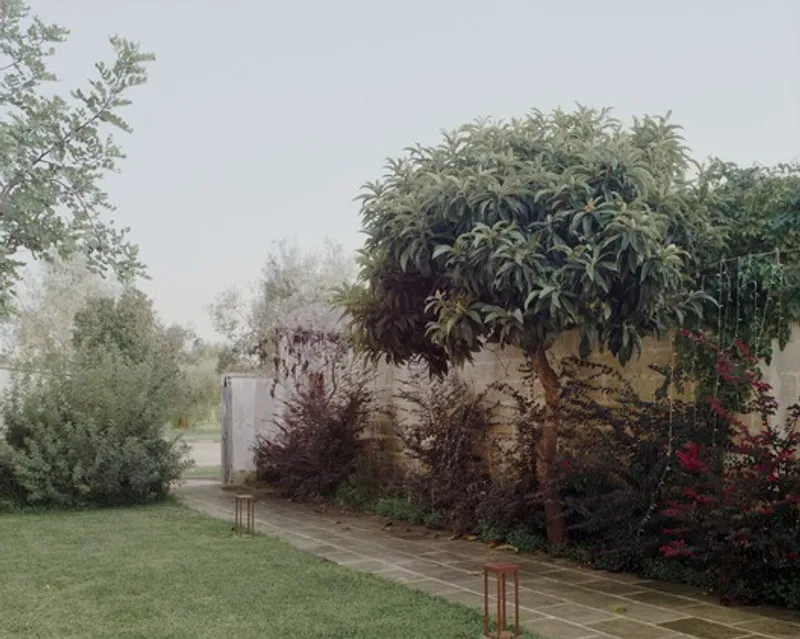
At the heart of Masseria Caronte lies a traditional enclosed courtyard (hortus conclusus), framed by stone walls and historic volumes. Originally used for livestock protection and work activities, this courtyard now functions as a vibrant social and dining space.
The removal of the later-added wooden roof reopens the courtyard to the sky, reconnecting it with nature and enhancing natural light and ventilation. A lightweight outdoor structure made of Corten steel and natural reeds provides partial shading, creating a comfortable yet atmospheric environment.
The courtyard becomes a central gathering space where architecture, landscape, and social interaction seamlessly merge.
Minimal Interventions, Maximum Impact
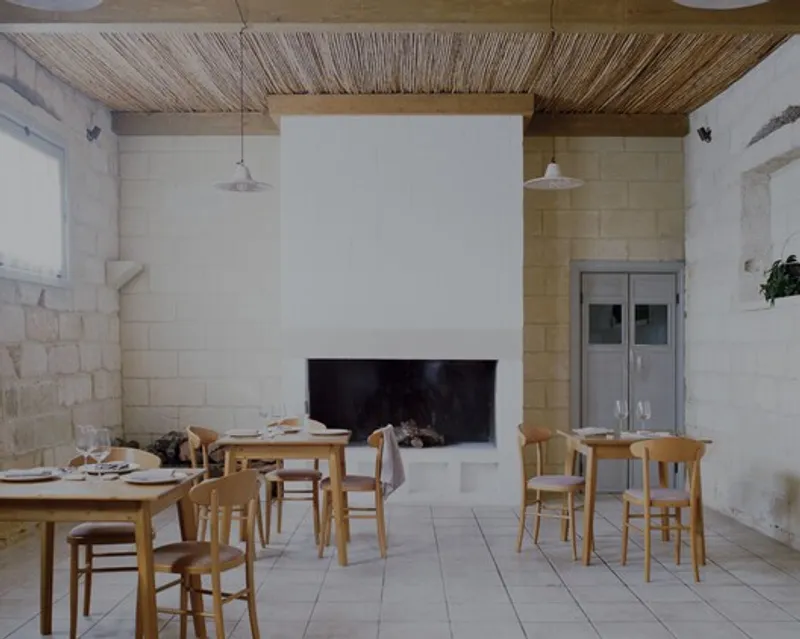
The interior transformation is defined by three essential architectural elements:
- A stone bench,
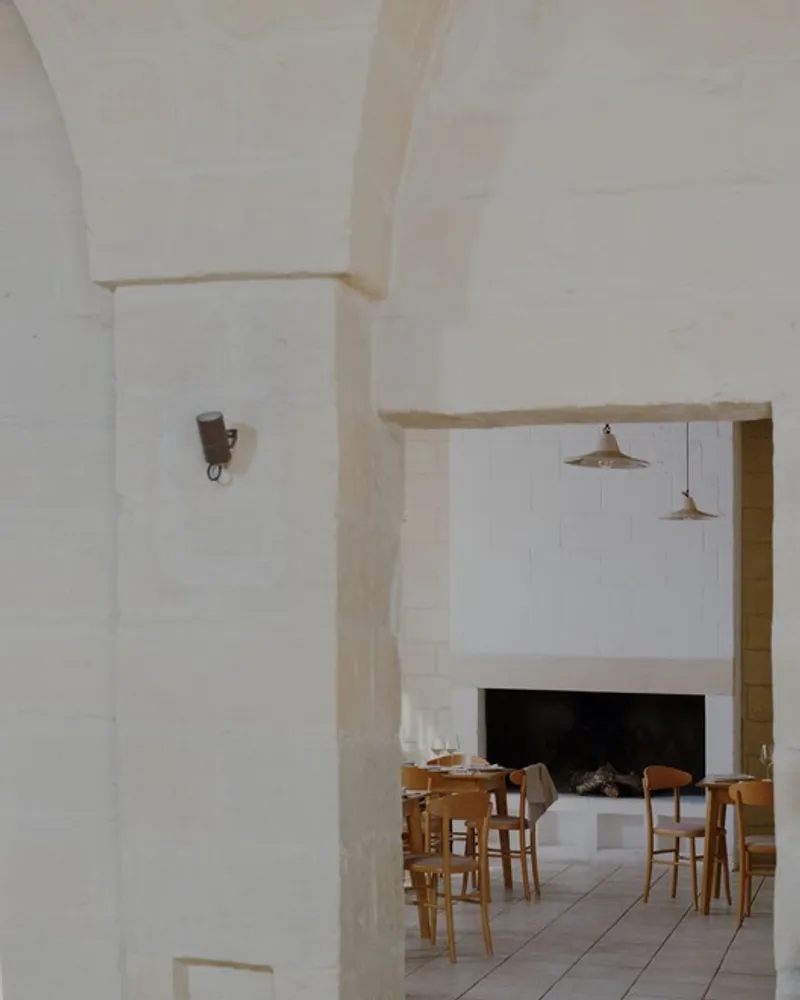
- A fireplace,
- And a partition wall.
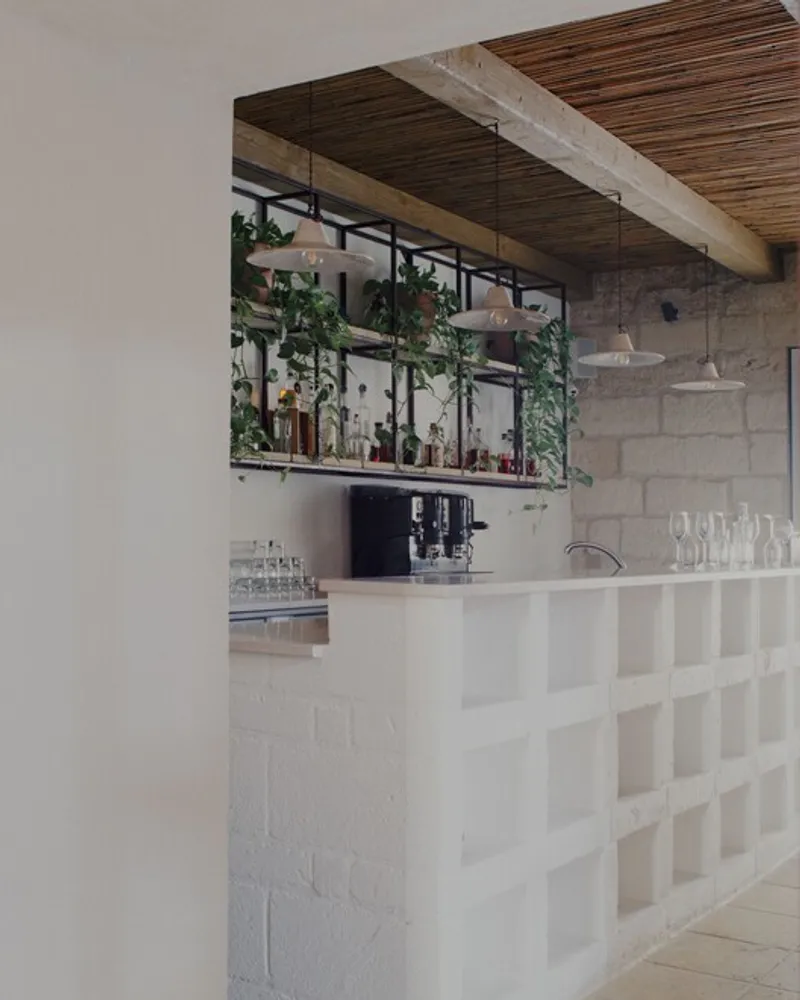
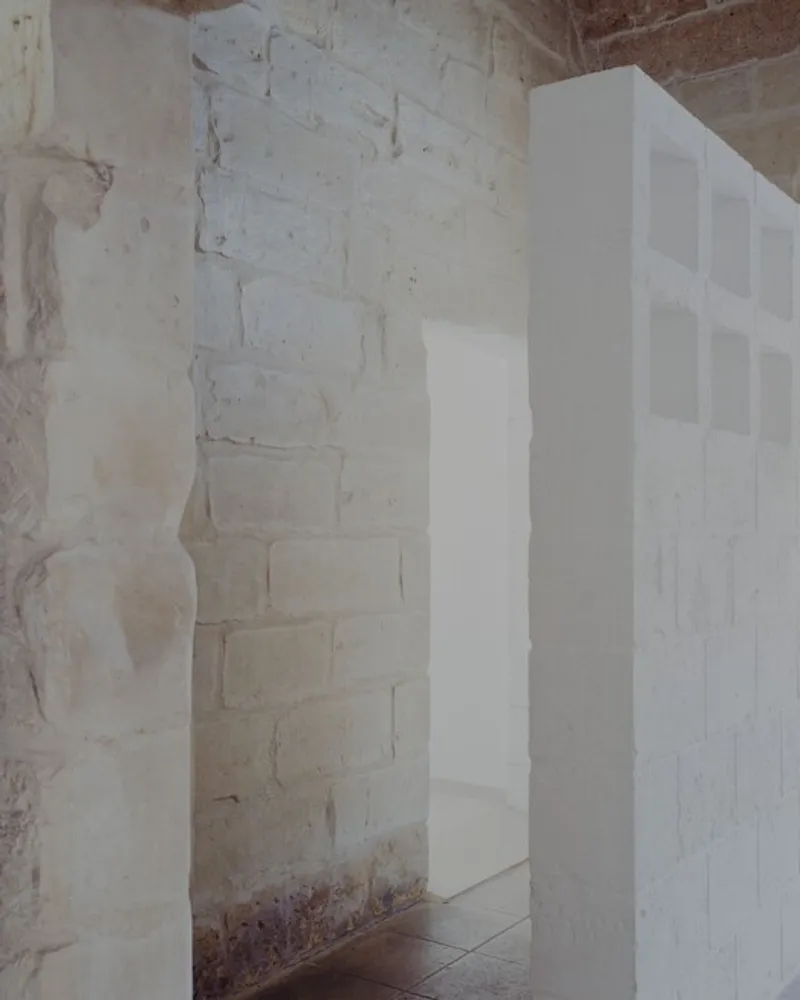
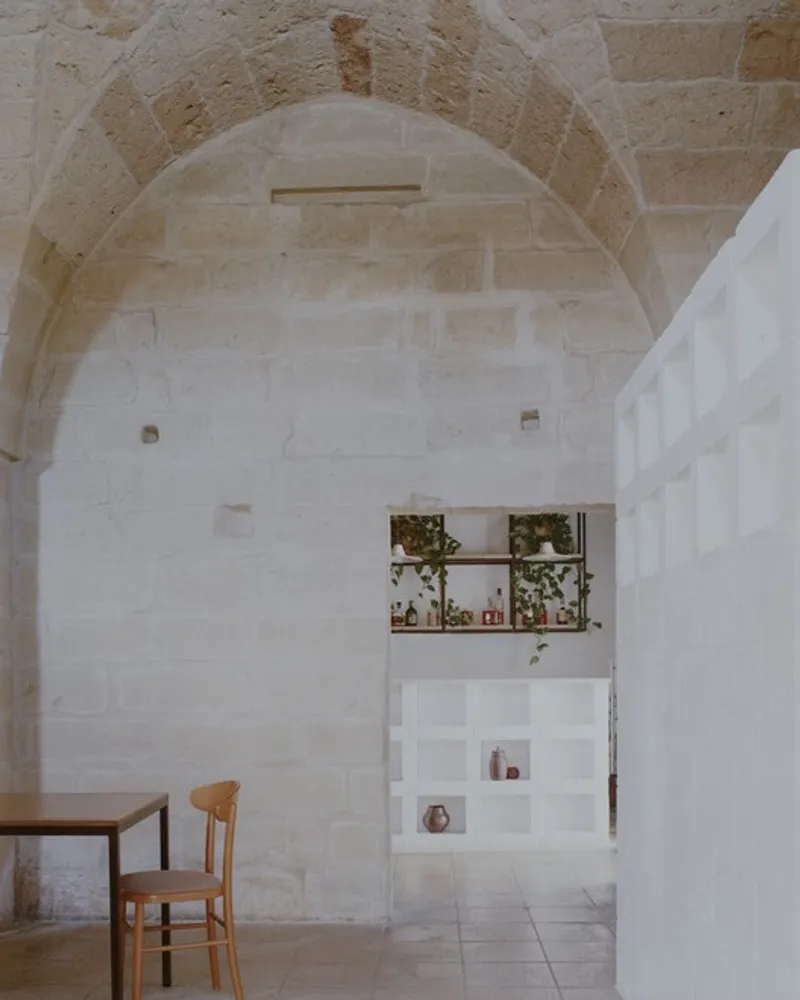
Constructed using tuff stone and finished with limewash, these elements subtly contrast with the original masonry while maintaining material harmony. Their design follows a cohesive coffered motif, visually linking the interventions across the space.
These additions serve both functional and spatial purposes—defining circulation, enhancing usability, and reinforcing the identity of the restaurant without overpowering the historic structure.
Materiality and Craftsmanship
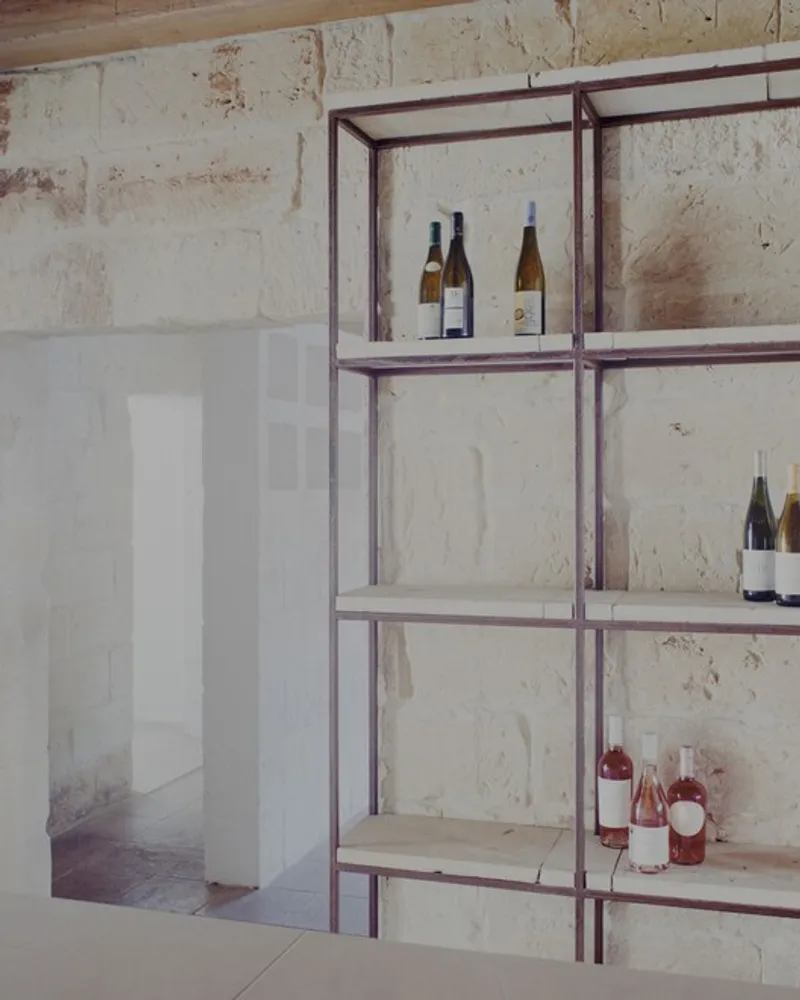
Material selection plays a crucial role in reinforcing the project’s authenticity. The palette includes local stone, wood, terracotta, and Corten steel, all chosen for their durability and connection to the regional context.
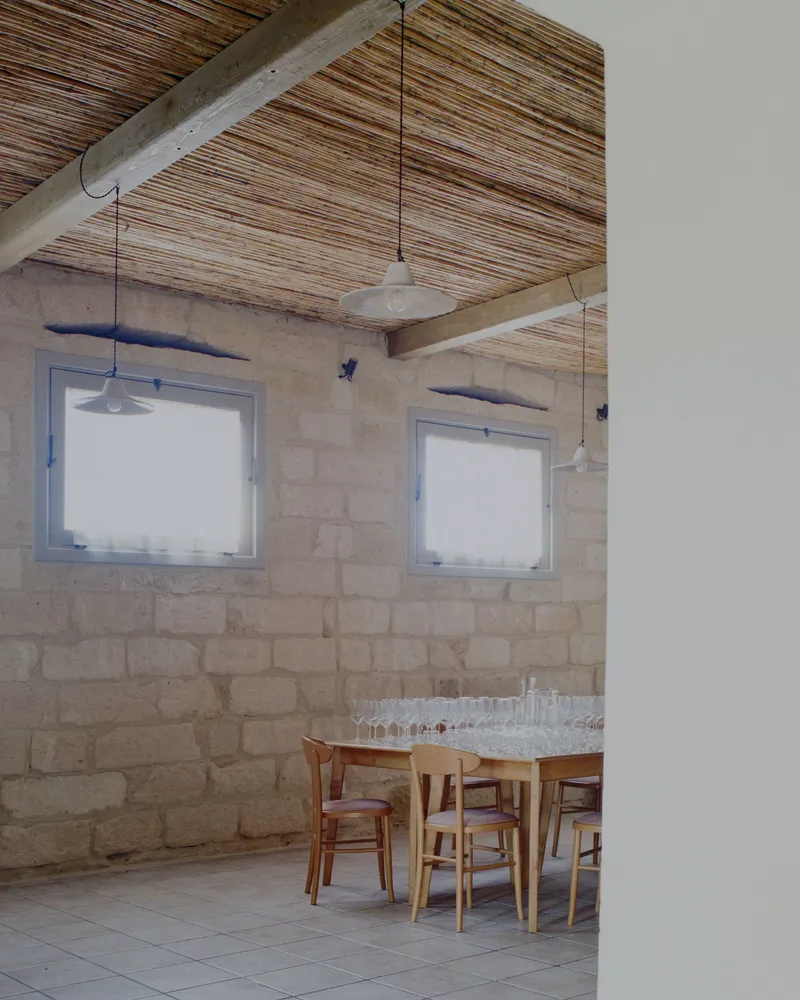
Custom-designed furniture—tables, counters, and fixtures—continues this language of simplicity and craftsmanship. The use of natural materials and restrained detailing creates a warm, tactile, and timeless dining atmosphere.
Contemporary Restaurant in a Historic Setting
Today, Masseria Caronte operates as a restaurant that bridges past and present, offering visitors an immersive experience rooted in history, architecture, and local culture. The design respects the building’s agricultural origins while adapting it to modern hospitality needs.
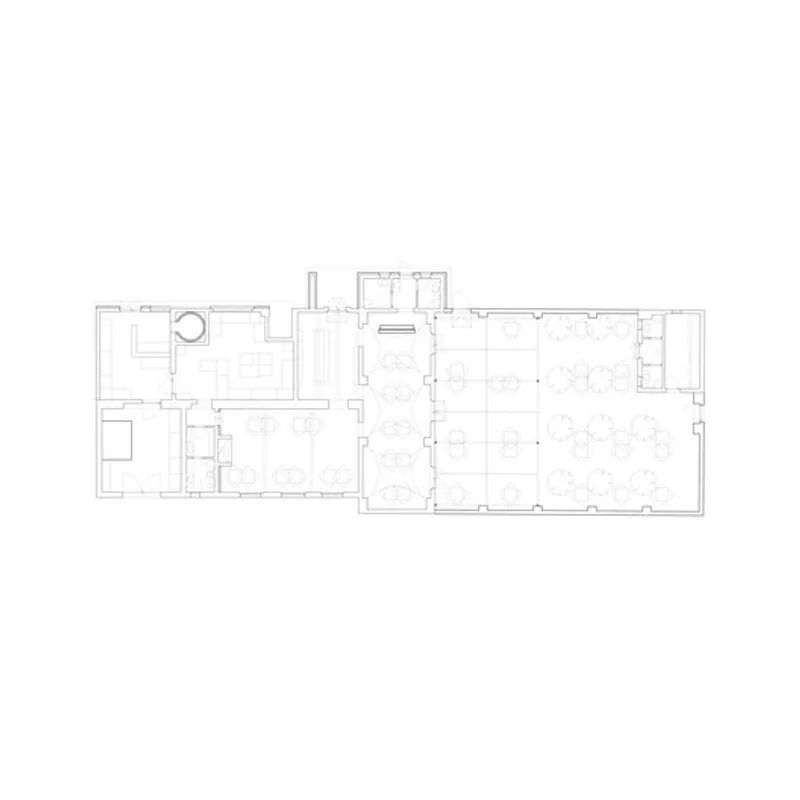
The integration of bar, reception, and dining functions is handled with clarity and efficiency, ensuring that the space remains intuitive and welcoming.
A Model for Sustainable Restoration
The project demonstrates how adaptive reuse and heritage conservation can be achieved through thoughtful design rather than excessive intervention. By preserving existing structures, reusing materials, and minimizing new construction, the renovation reduces environmental impact while extending the life of the building.
This approach positions Masseria Caronte as a model for sustainable architecture in rural contexts, where cultural preservation and contemporary use coexist harmoniously.
All the photographs are works of
Marcello Mariana



Popular Articles
Popular articles from the community


The Musturak Paradise: Senior Living Architecture for a Connected Future in Temara, Morocco
The Musturak Paradise reimagines senior living architecture in Temara via private homes, social spaces, culture, community, and shared care.

The Earth Pod: 3D Printed Homes for Resilient Refugee Communities
The Earth Pod reimagines refugee housing through 3D printed homes made from clay, combining resilience, self-sufficiency, and rapid shelter.

Hill & Cross Opera: Sculptural Opera House Architecture Shaped by Tallinn’s Landscape and Identity
Hill & Cross Opera reimagines opera house architecture in Tallinn through its sculptural hill, civic plaza, glass wave and a luminous cross.

The Ocean Hive: Sustainable Architecture for a Self-Sufficient Civilization at Sea
The Ocean Hive imagines sustainable architecture at sea, where modular habitats, algae, wave power and ocean waste sustain a growing colony.


Similar Reads
You might also enjoy these articles

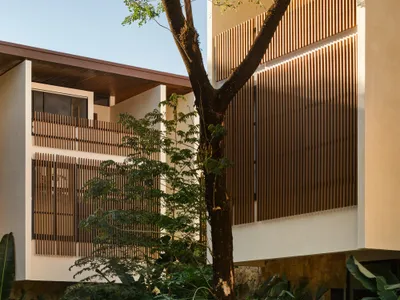
FAMM Arquitectura Organizes Ten Villas Around Courtyards and Jungle in Nosara, Costa Rica
El Molino pairs two elongated volumes with deep overhangs and timber louvers to build a compact coastal community five minutes from the beach.
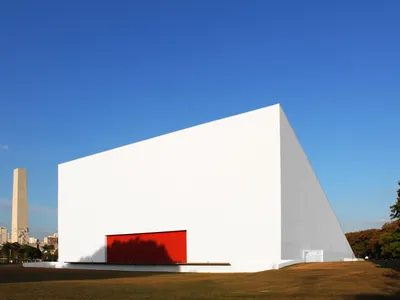
Oscar Niemeyer's Ibirapuera Park Pavilions Define São Paulo's Cultural Identity in Concrete and Curve
A constellation of modernist volumes set within São Paulo's most important urban park, conceived for the city's 400th anniversary in 1954.
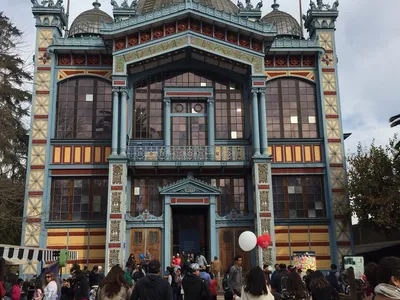
How Henri Picq's 1889 Paris Pavilion Traveled 11,000 Kilometers to Become Santiago's Artequín Museum
A prefabricated iron and glass pavilion built for the Paris Universal Exposition found a second life as a children's art museum in Chile.
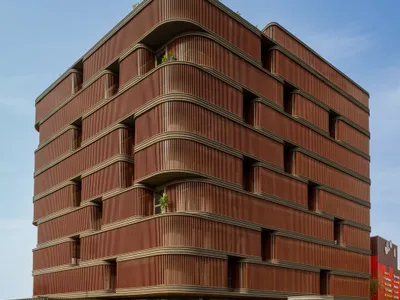
Sanjay Puri Architects Wraps a Jaipur Office Tower in Capsule-Shaped Green Buffers
A nine-level climate-responsive workplace near Jaipur Airport uses stacked planter terraces and aluminium screens to fight 40°C heat.

Explore Architecture Competitions
Discover active competitions in this discipline



Challenge to reimagine the Iron Throne


Photograph architecture without architects


Illustrate the lost glory of Angkor Wat - Render Challenge


Design challenge to reuse E-waste
Comments (0)
Please login or sign up to add comments
No comments yet. Be the first to comment!