

Matière Première Architecture Perches a Timber Residence Among the Maple Canopy in Québec
In North Hatley's river valley, an elevated house dissolves into the forest while asserting a precise structural logic.


A house that lifts itself off the ground is either fleeing from nature or reaching toward it. In North Hatley, Québec, Matière Première Architecture has clearly chosen the latter. The Perchée Residence sits on a gently sloping site dense with maples, its primary living volumes raised on structure so the forest floor below can continue doing what it has always done: receive leaves, channel water, and remain undisturbed. The name is apt. "Perchée" means perched, and the house inhabits the canopy the way a treehouse might, except with polished concrete floors, a wine cellar, and a freestanding soaking tub.
What makes this project worth studying is not the fact that it's a timber cabin in the woods. Québec has plenty of those. It's the degree of spatial calibration: every window is sized and placed to frame a specific layer of the landscape, from the immediate trunk line to the distant valley. The structural expression, timber ceilings and diagonal bracing left visible, reads as honest rather than decorative. And the material palette, standing seam metal, natural wood cladding, pale oak interiors, manages to feel warm without ever becoming sentimental.
A Building That Belongs to the Canopy
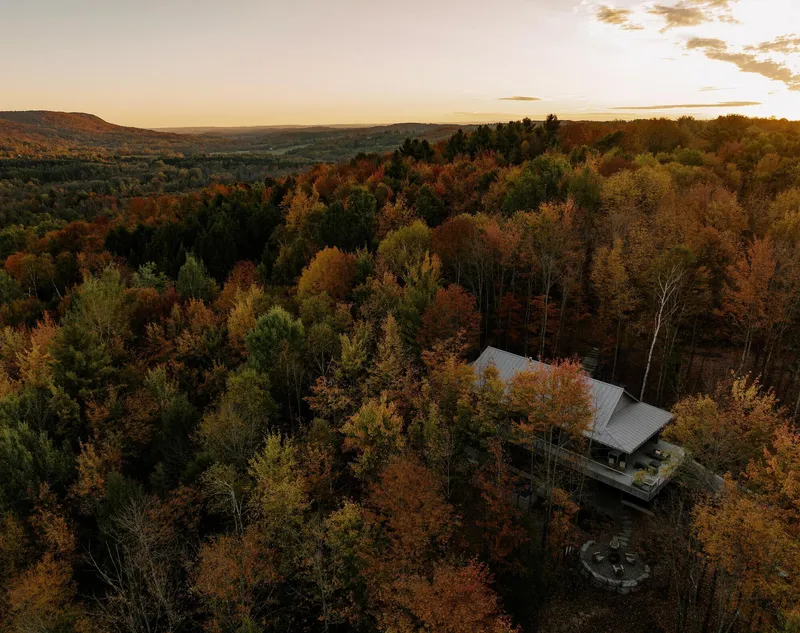
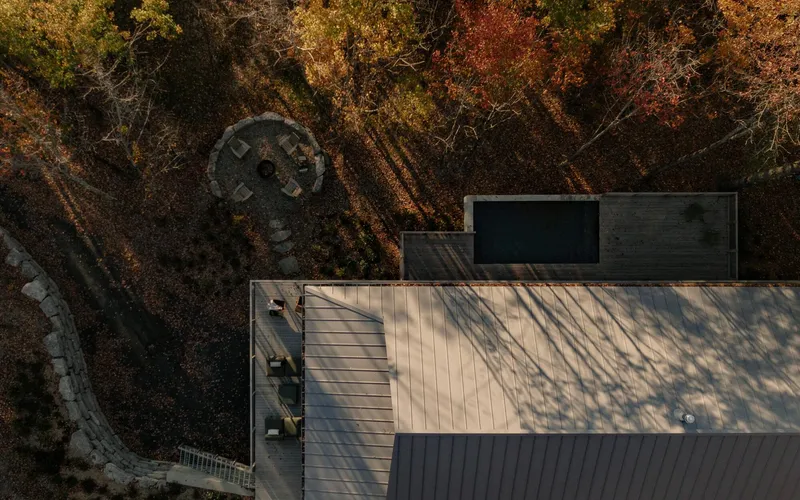
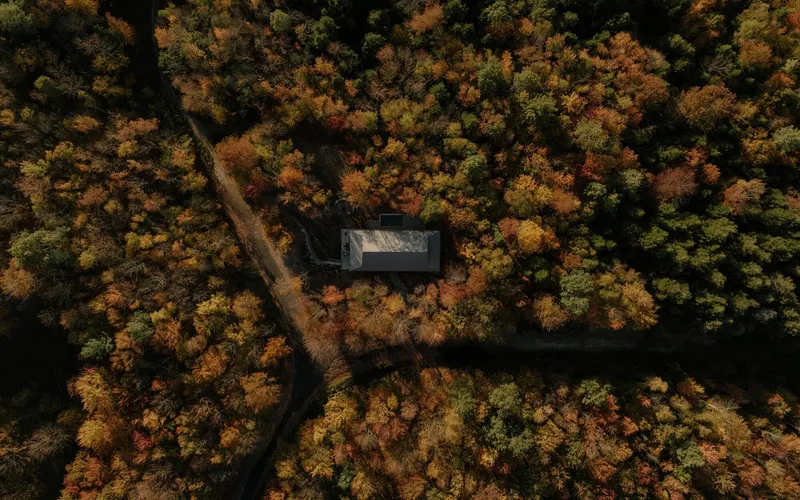
Seen from the air, the Perchée Residence barely registers. Its standing seam metal roofs, broken into discrete volumes, mirror the silvery bark of the surrounding deciduous trees in autumn. The massing strategy is deliberately fragmented: rather than one monolithic footprint cutting a clearing, the house reads as a cluster of smaller elements nested within the canopy. A dirt access road is the only real interruption to an otherwise continuous blanket of foliage.
This aerial restraint is not accidental. By keeping the roofline low and splitting the program into separate volumes, the architects minimize the perceived scale of a residence that, at ground level, is generous in its accommodation. The fall palette of oranges, yellows, and russets surrounding the house does the rest, absorbing the built form into a landscape that changes character with every season.
Elevation as Strategy
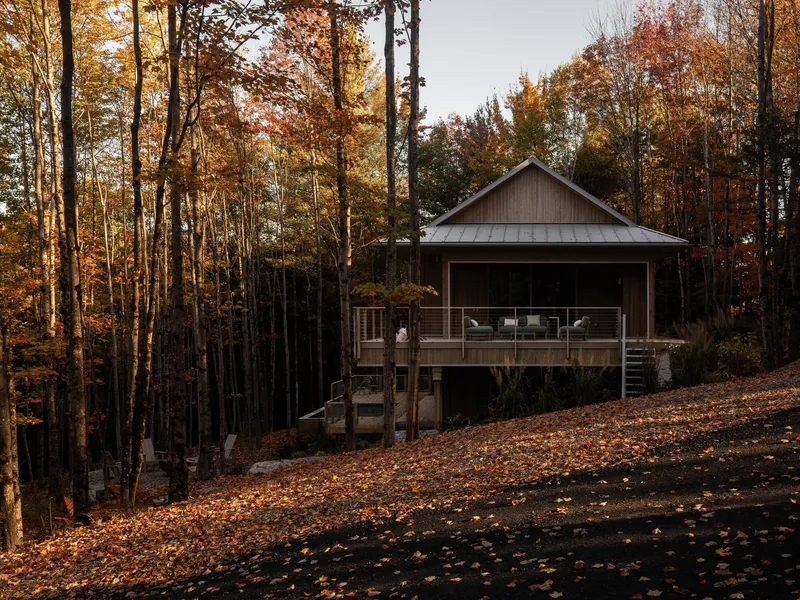
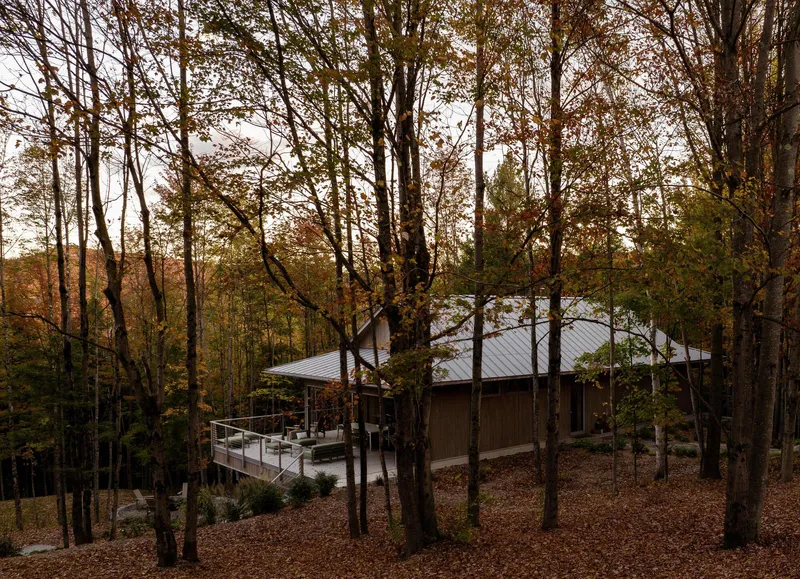
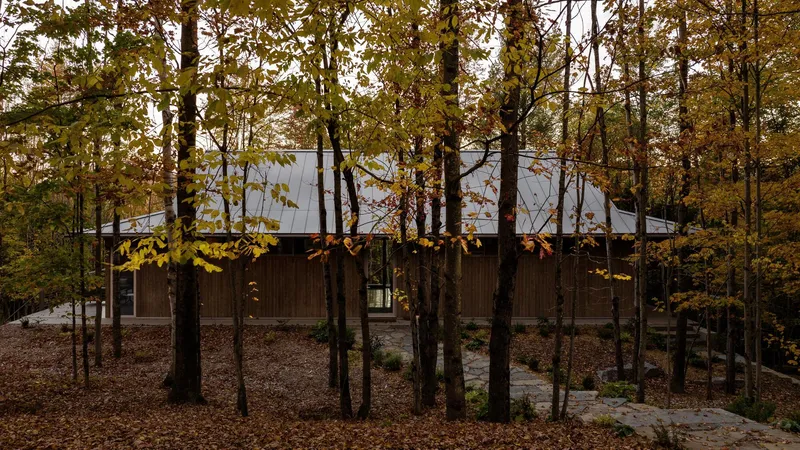
The decision to elevate the residence is both ecological and experiential. On a slope that channels rainwater toward a river at the base of the valley, keeping the building above grade protects the natural drainage pattern and reduces the need for heavy site excavation. It also places the primary living spaces at treetop height, where light is more abundant and views extend further through the bare winter branches.
From the side, the cantilever of the main deck becomes the defining gesture. The timber cladding wraps the elevated volume cleanly, while the metal roof floats above with a shallow pitch. Slender structural members and cable railings keep the visual mass low, so the house appears to hover rather than loom. It is a difficult trick to pull off at this scale without looking flimsy, and here the proportions hold.
Decks as Inhabited Thresholds
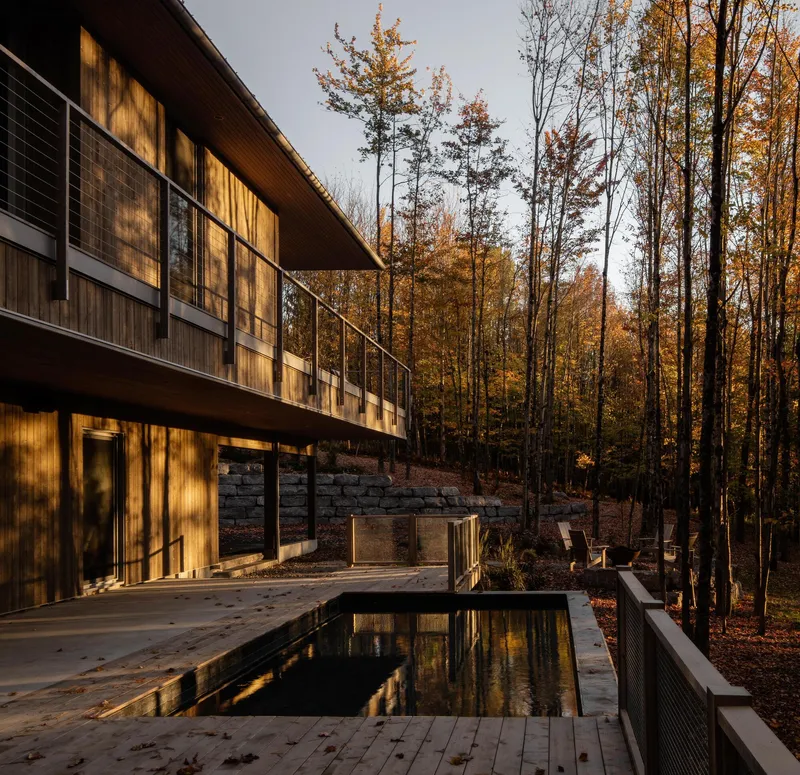
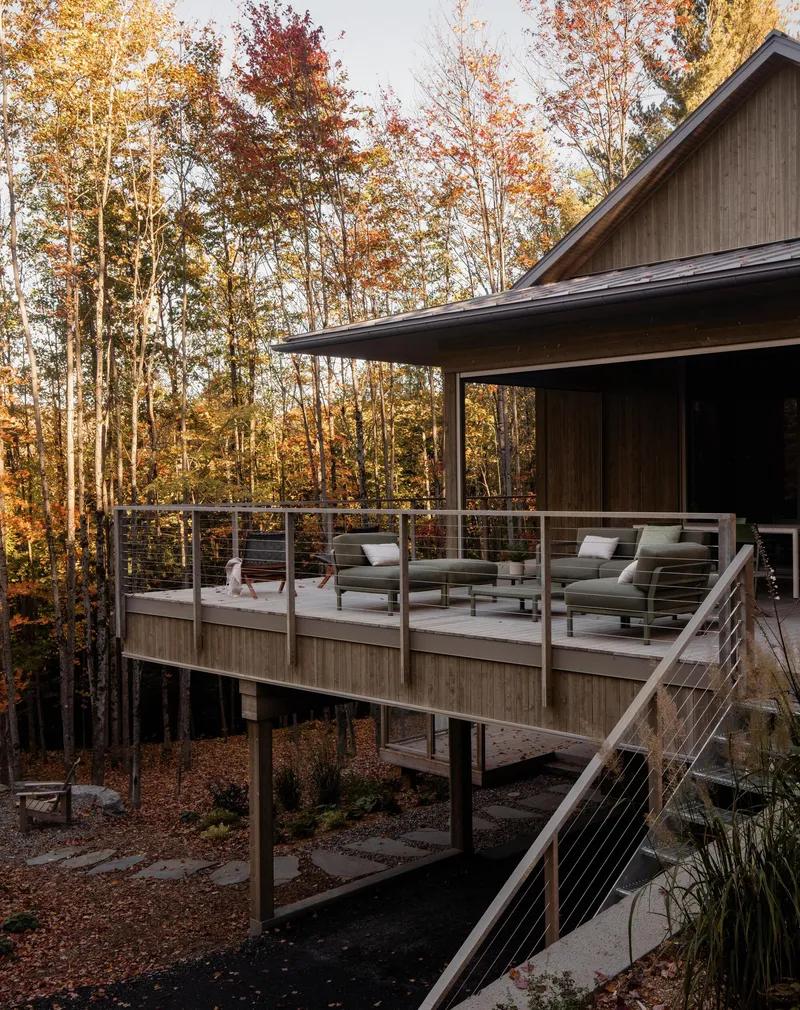
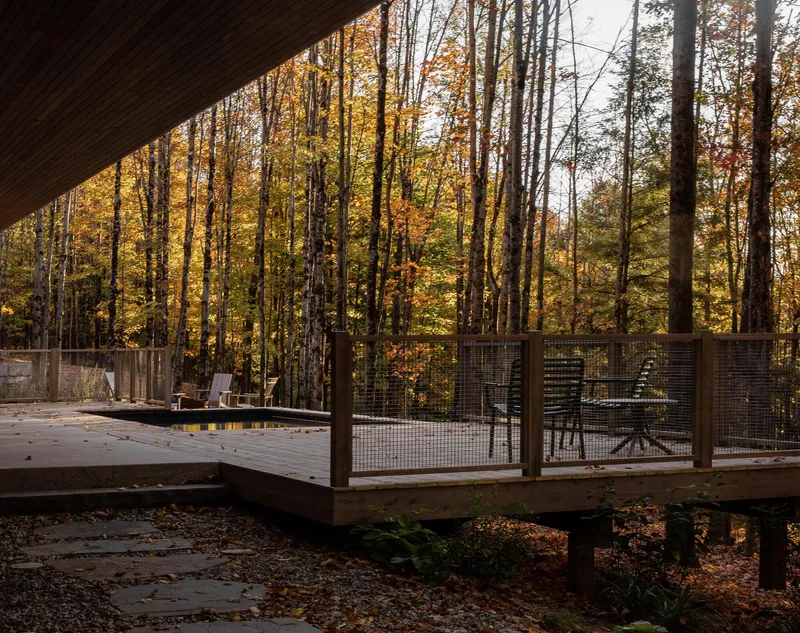
The outdoor spaces are not afterthoughts bolted onto the house; they are integral rooms. The main deck, with its shallow reflecting pool set against the glazed facade, creates a mirror that doubles the canopy overhead and pulls sky color into the floor plane. In late afternoon light, the water catches the warm tones of the timber and throws them back, collapsing the distinction between inside and out.
A second covered deck extends into the forest clearing with mesh railings that nearly vanish. Outdoor seating occupies a position that would feel exposed without the overhead roof plane providing a sense of enclosure. These decks are where the house actually lives for much of the year. The architects understood that a forest residence in Québec's Eastern Townships earns its value not through square footage but through the quality of its relationship to the open air.
Timber Ceilings and Structural Honesty
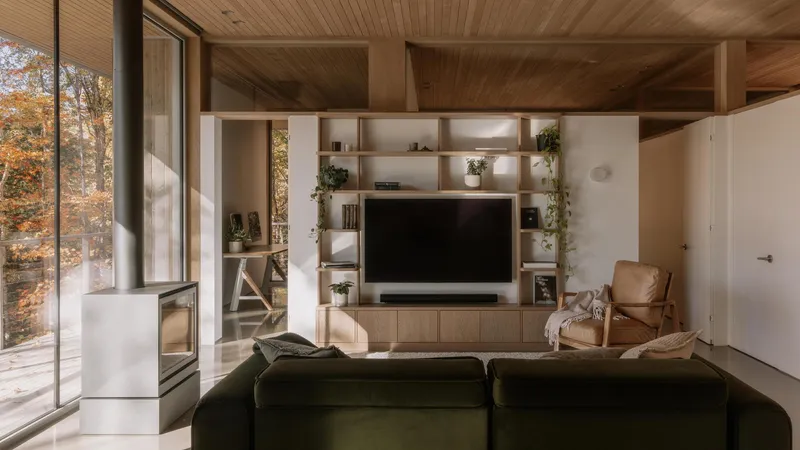
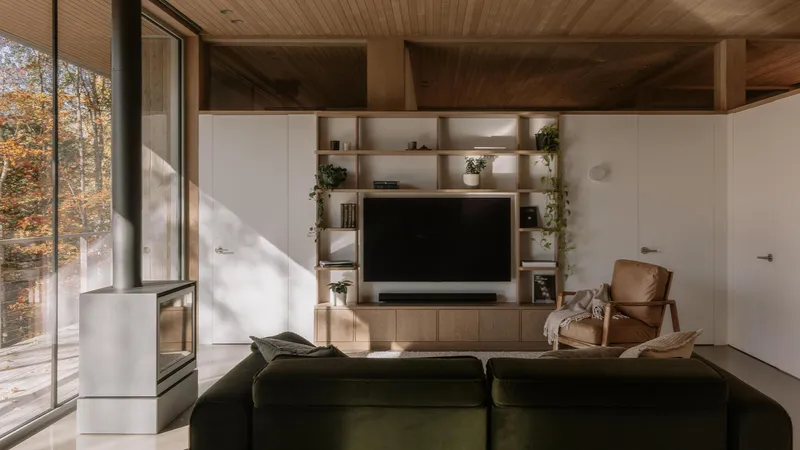
Inside, the ceiling is the main event. Tongue-and-groove and slatted timber planes run continuously through the primary living spaces, their rhythm broken only where clerestory glazing introduces bands of light. In the living room, built-in shelving sits beneath an exposed timber ceiling that communicates the structural logic of the roof directly to the occupant. Nothing is hidden; you can read the load path.
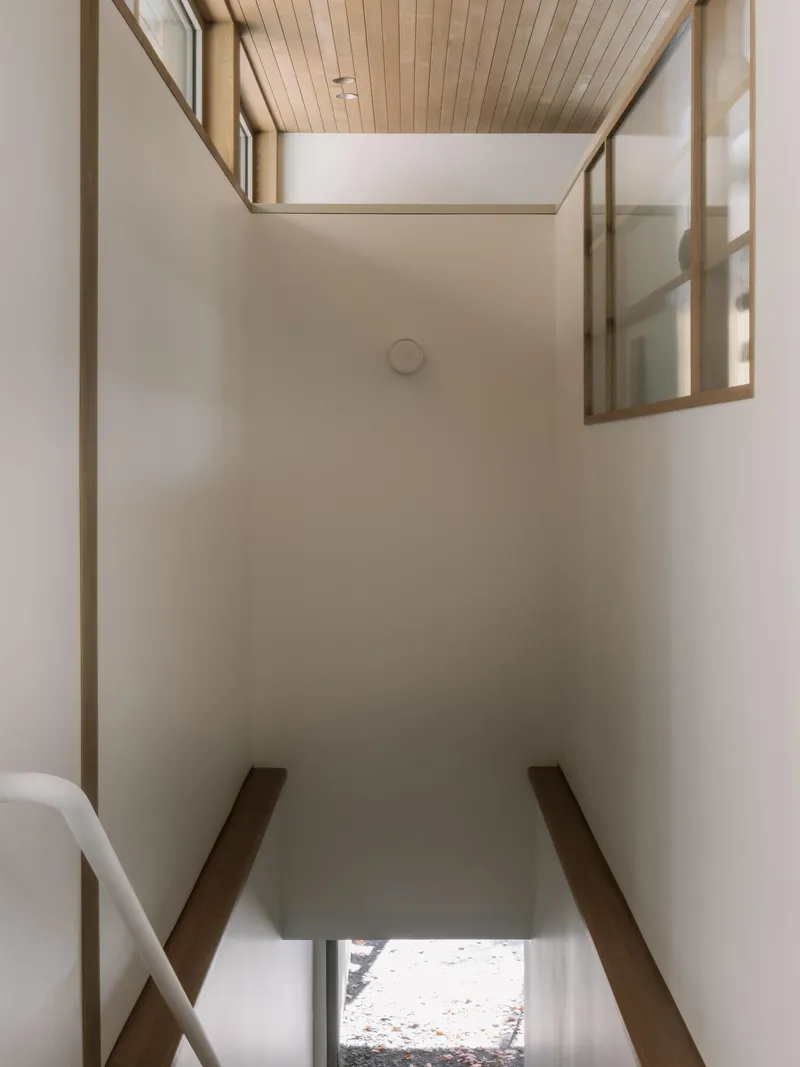
The double-height stairwell is the most architecturally assertive moment in the house. Diagonal bracing members flank the white stair walls, exposed and unapologetic, while a timber-clad ceiling soars above and clerestory windows wash the volume with diffused light. It is a space that belongs in a building twice this size, and its vertical generosity gives the rest of the floor plan permission to stay compact and efficient.
Kitchen and Living: Restrained Material Warmth
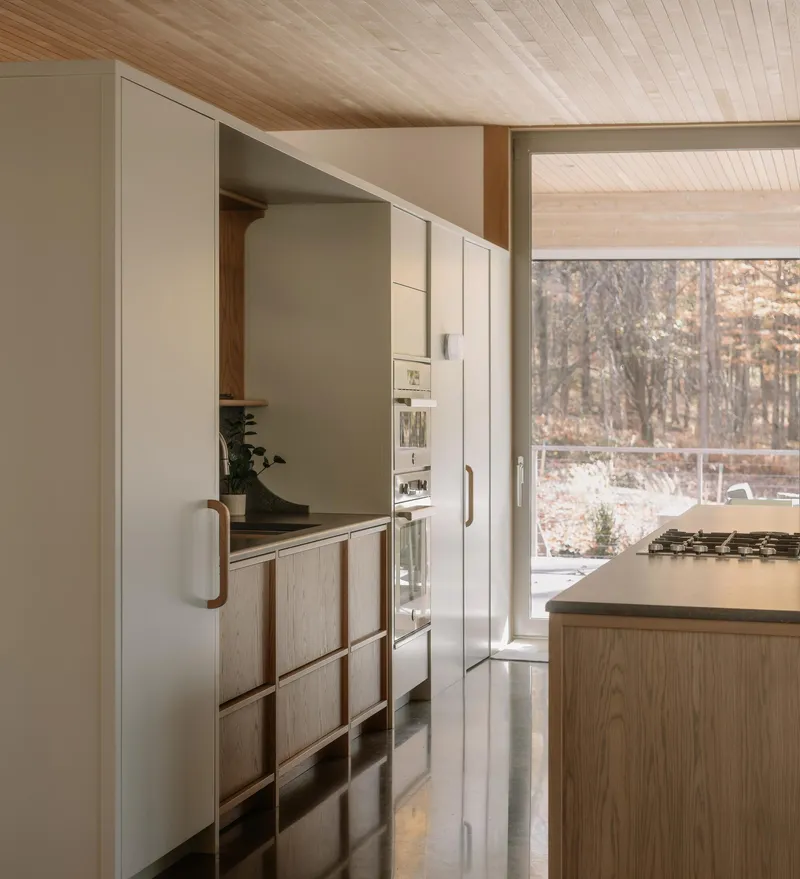
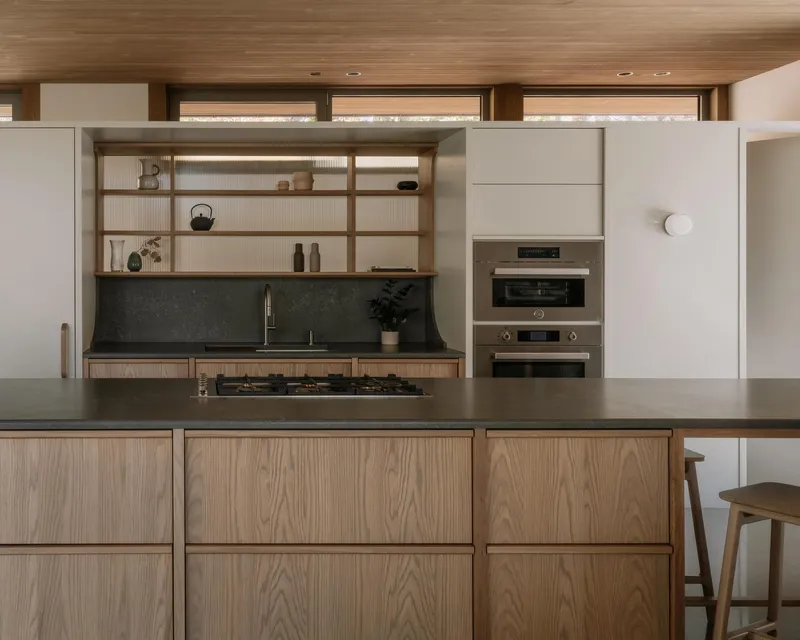
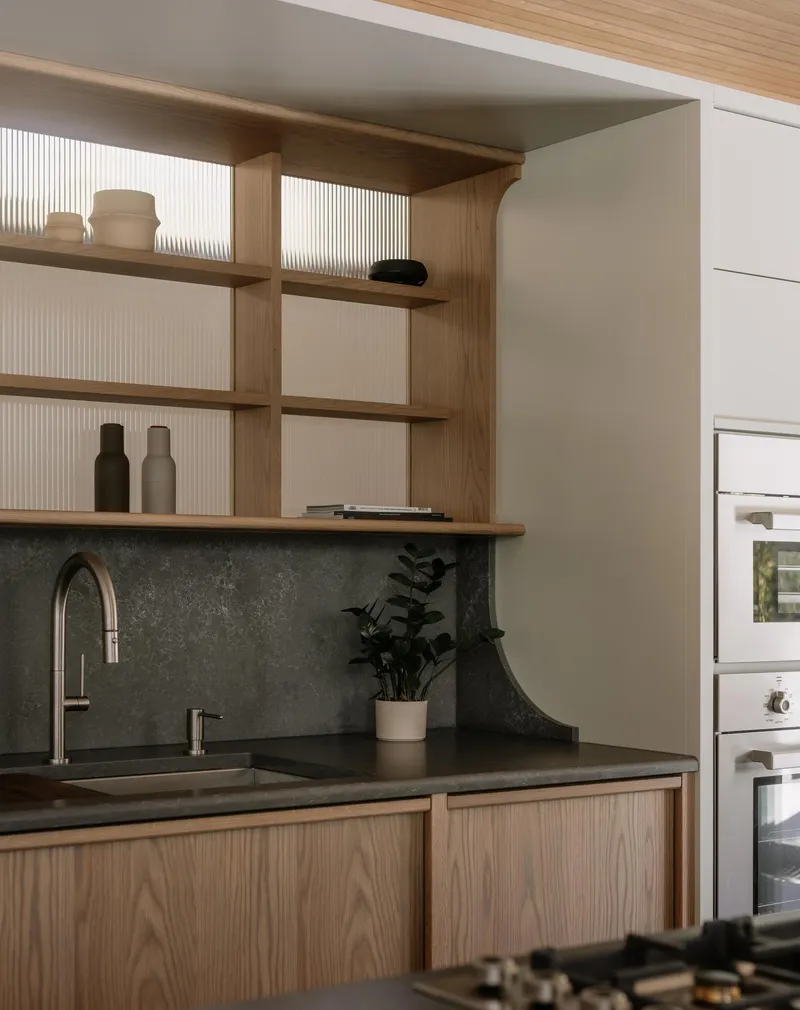
The kitchen anchors the domestic center of the house with a palette of oak-grain cabinetry, dark stone counters, and timber-framed open shelving. Fluted glass panels introduce a subtle texture that filters light without blocking it, a detail that elevates what could have been a straightforward millwork composition into something more considered. The material choices stay within a narrow band: warm wood, cool stone, and white surfaces that keep the spaces from feeling heavy.
There is no moment where the interiors reach for drama. The pendant lights over the dining table are simple. The built-in shelving is functional. The stone backsplash is dark enough to recede. Every decision reinforces the idea that the real spectacle is outside the window, not on the wall. For a residential project, this level of restraint is harder to achieve than it looks.
Private Rooms and Careful Details
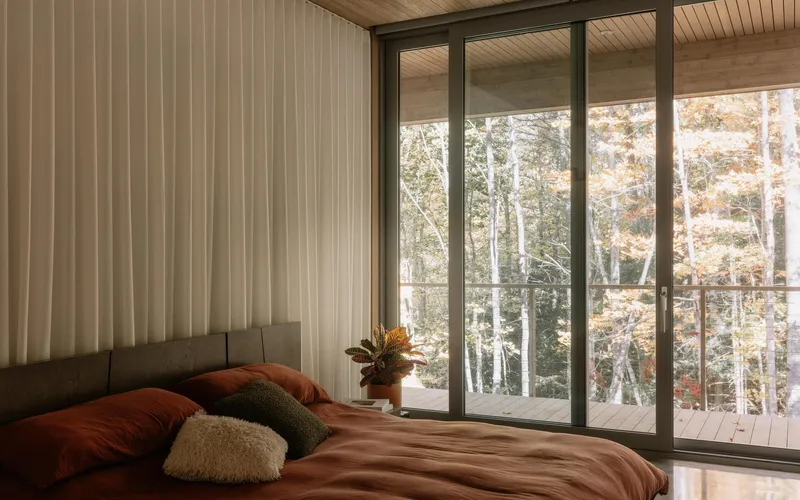
The bedroom opens through floor-to-ceiling glazing onto a balcony that floats above the autumn canopy. In soft morning light, the room feels less like an interior and more like a sheltered clearing. The architects resisted the temptation to overdesign: a simple bed, a continuous glass wall, and the forest does the rest.
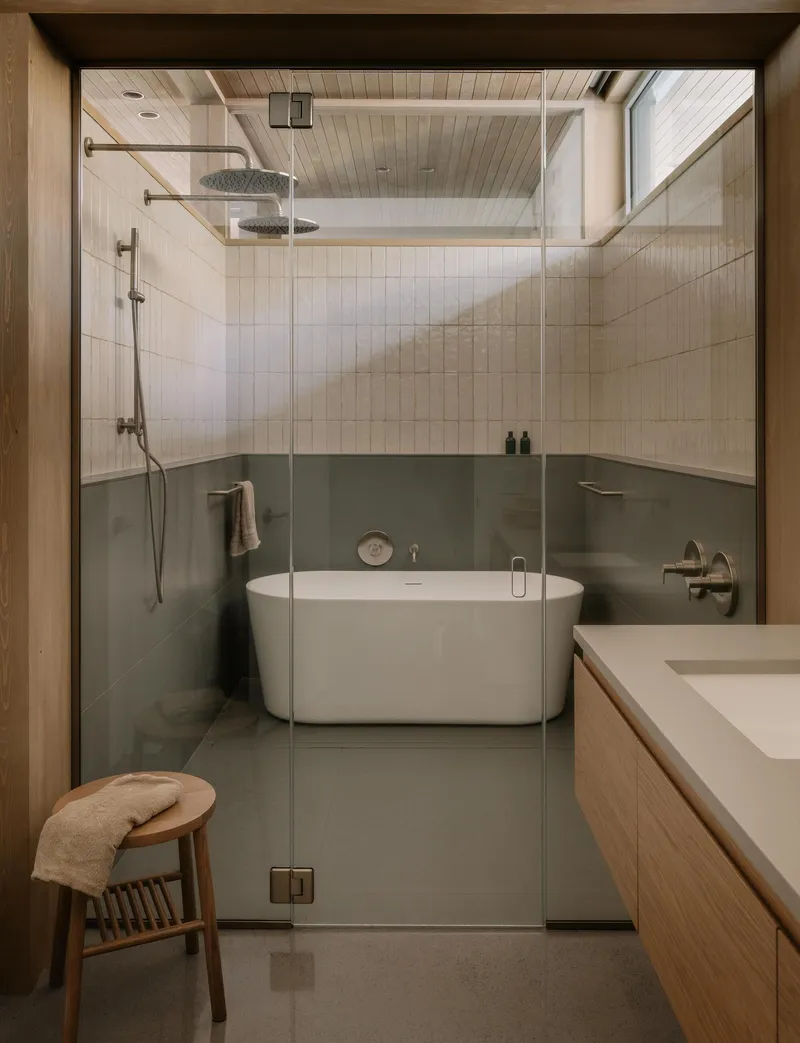
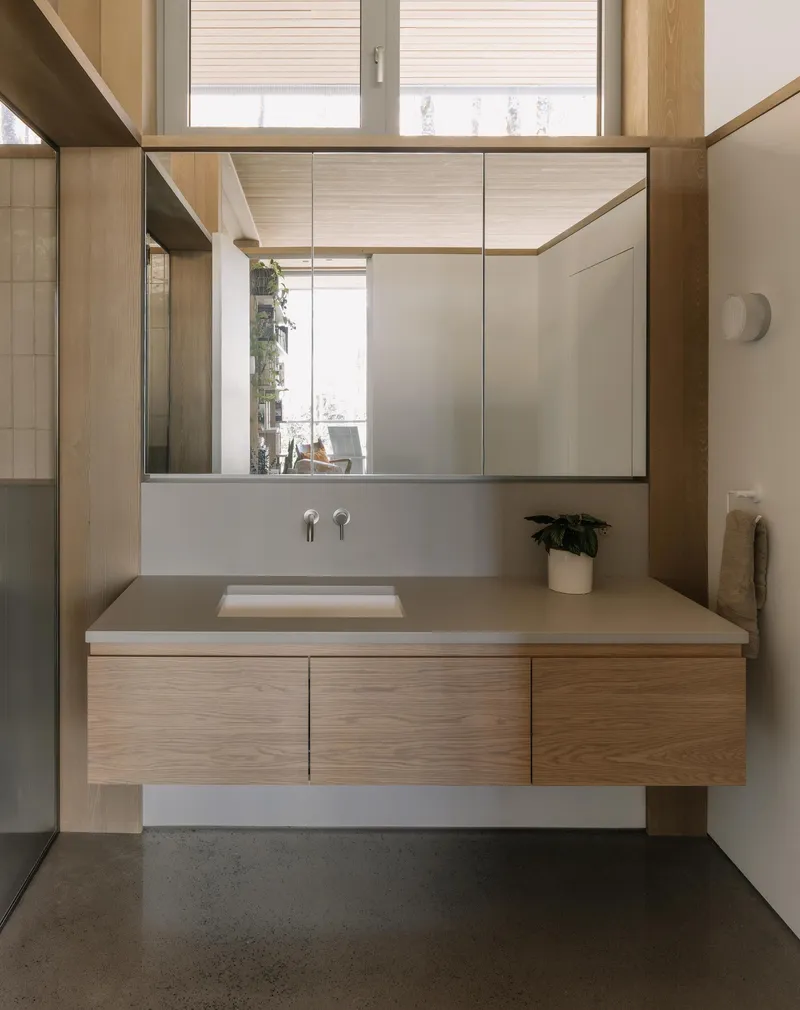
In the bathroom, an olive-green tile wainscoting introduces the only strong color in the house. A freestanding white tub sits against this backdrop with a glass-enclosed rainfall shower nearby, and the effect is spa-like without the pretension that usually accompanies that word. The floating vanity with its timber base and mirrored medicine cabinet reflects a window and a potted plant beyond, a small composition that captures the house's larger ambition: frame nature, don't compete with it.
Corridors, Cellars, and the In-Between
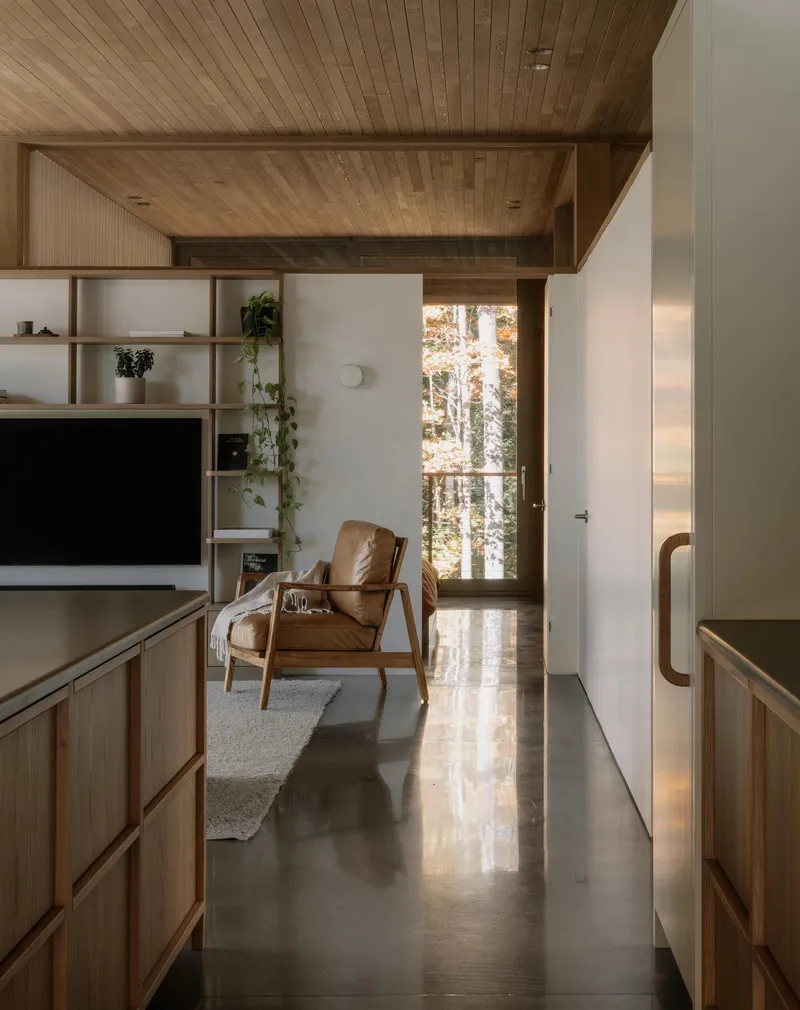
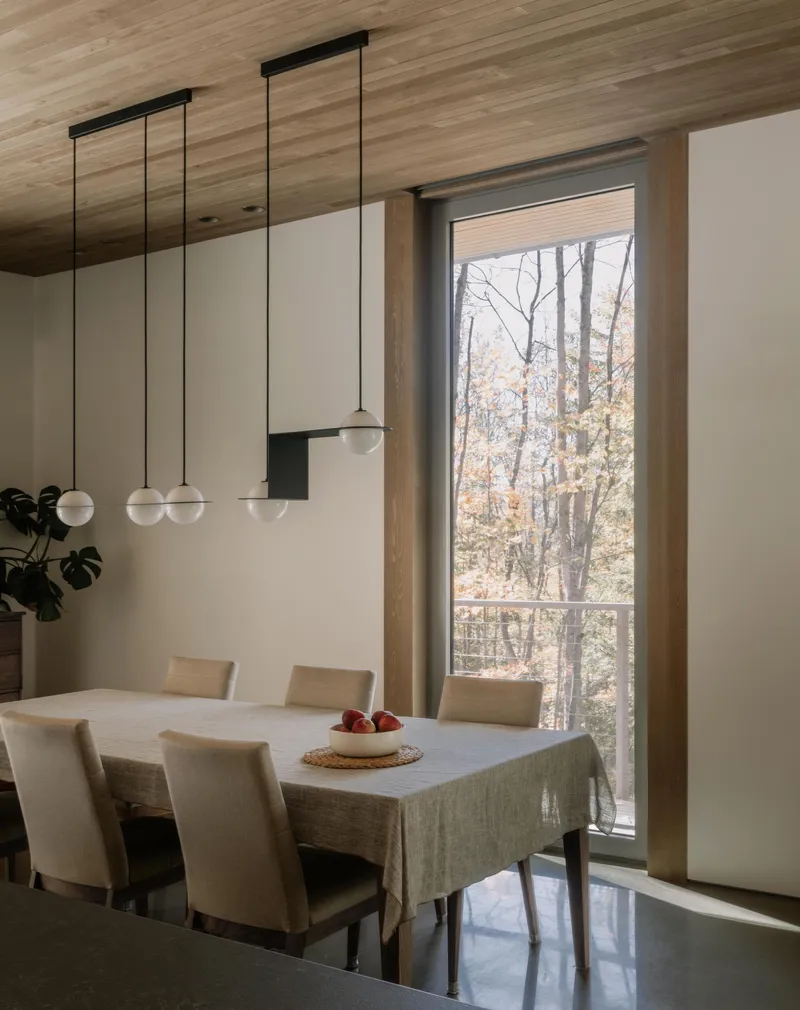
The hallway, with its polished concrete floor leading to a seating area under a coffered ceiling, reveals a secondary spatial register. Not every room in this house is a heroic timber volume. Some are deliberately quieter: lower ceilings, harder floors, cooler materials. The contrast makes the tall living spaces feel even more expansive by comparison.
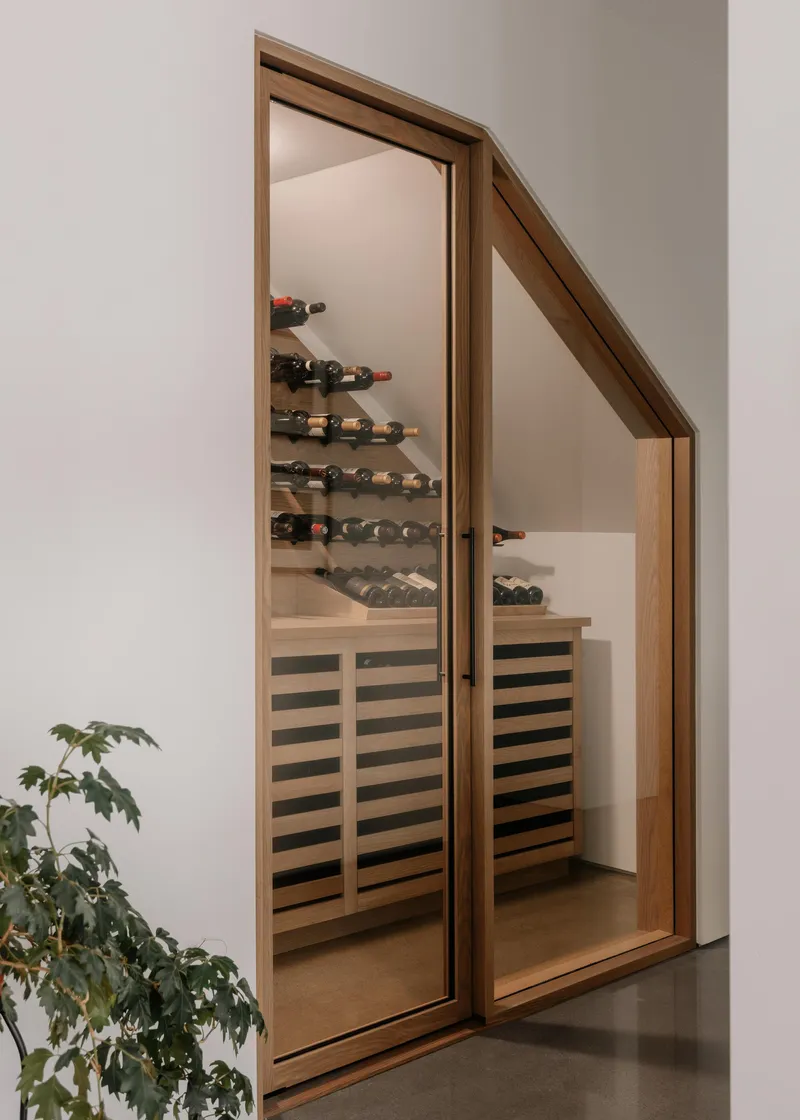
A wine cellar, visible through an angled glass door, occupies one of the ground-level volumes with horizontal slat cabinetry and bottle racks. It is a small program element, but it signals something about the house's ambition: this is not a weekend cabin. It is a permanent residence designed for people who want to live deliberately inside a forest, with all the domestic infrastructure that implies.
Landscape and Context
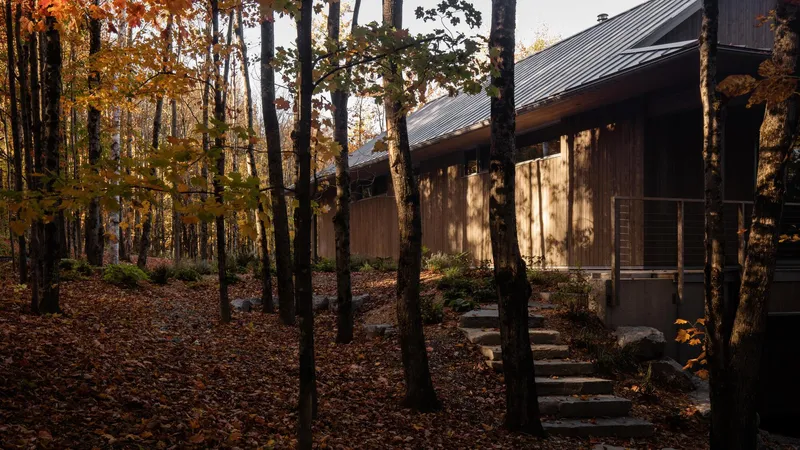
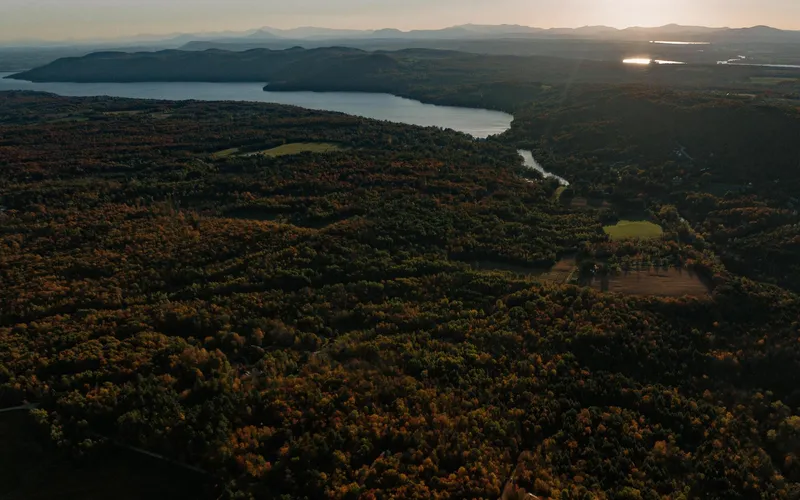
The approach to the house is through a stepping stone path across the forest floor, dappled sunlight filtering through the trees. It is a journey that prepares you for the building before you arrive. The timber facade and metal roof appear gradually through the trunks, never announcing themselves all at once. The wider landscape, visible from the aerial dusk image, reveals a region of forested hills, lakes, and scattered clearings. North Hatley sits within this context as a small settlement, and the house takes its cues from the terrain rather than from any urban condition.
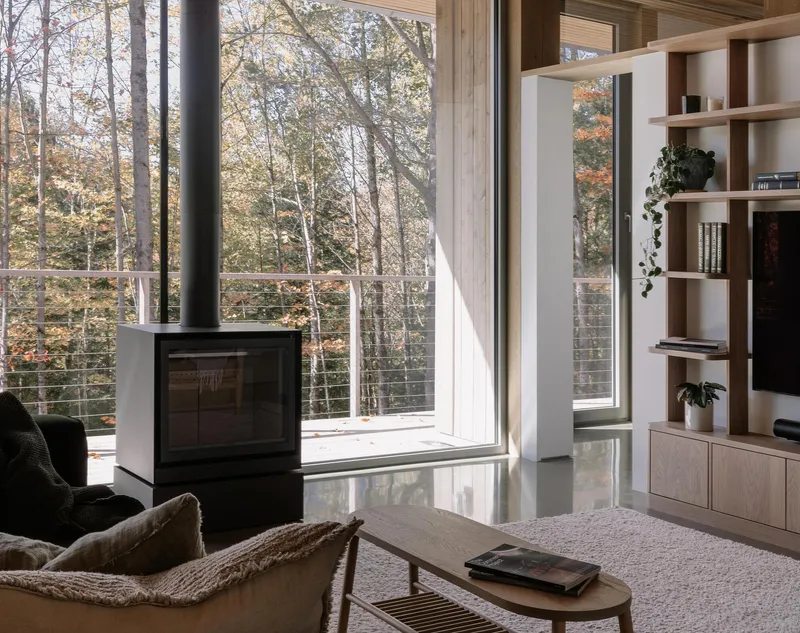
A wood stove near glazed doors opening to the wooded deck completes the picture. When the temperature drops, the house turns inward, the fire becomes the focal point, and the glazing transforms from a threshold into a screen. The forest in winter, stripped of leaves, will deliver entirely different views: longer sightlines, sharper contrasts, and a silence that the house is clearly designed to amplify rather than fill.
Why This Project Matters
The Perchée Residence succeeds because it resolves a tension that most forest houses never confront honestly. It wants to be embedded in nature, but it also wants to be a serious piece of architecture with structural ambition, material precision, and spatial variety. Too often, one goal undermines the other: the timber cabin that feels like a kit of parts, or the architect's showpiece that ignores its surroundings. Here, the two impulses reinforce each other. The elevation strategy protects the site while creating the defining spatial experience. The restrained palette defers to the landscape while maintaining a clear design identity.
For architects working on sloped, wooded sites, this project offers a practical lesson in calibration. Not every tree needs to be preserved for a project to be ecologically responsible. Not every ceiling needs to be double height for a space to feel generous. And not every window needs to be a floor-to-ceiling curtain wall for a view to land. Matière Première Architecture demonstrates that knowing when to hold back is as much an architectural skill as knowing when to push forward.
Perchée Residence by Matière Première Architecture. Located in North Hatley, Canada. Completed in 2026. Photography by Ian Balmorel.
About the Studio
Share Your Own Work on uni.xyz
If projects like this are the kind of work you want to make, uni.xyz is a place to publish your own, find collaborators, and enter design competitions.


Popular Articles
Popular articles from the community


Singing Woman: An Opera House That Performs Before the Curtain Rises
Ovidiu Cristian Pavel's conceptual opera house translates Estonia's choral identity into a sculpted waterfront landmark facing the Baltic Sea.
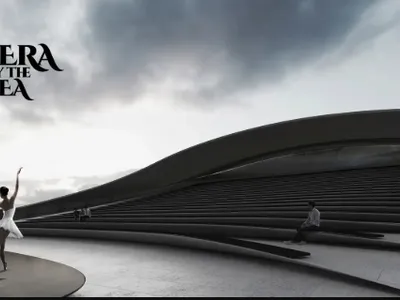
Opera by the Sea Estonia: Three Shells Dissolving Architecture into Tallinn's Coastline
A winning opera house proposal replaces monumental form with interconnected shells that blur the boundary between building, park and Baltic Sea.
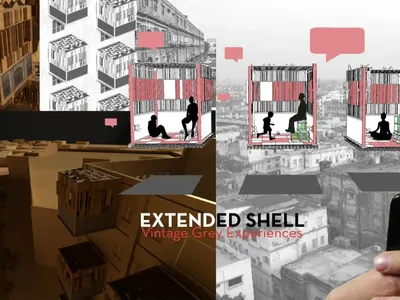
Extended Shell: Retrofitting Kolkata's Balconies as Living Urban Thresholds
A modular retrofit system recovers the social and environmental intelligence of Kolkata's historic verandas for contemporary Park Street residents.
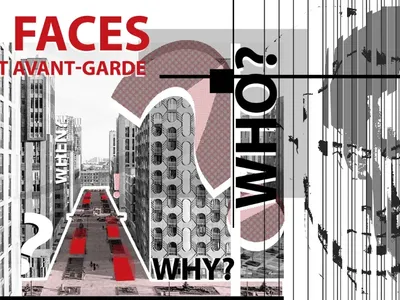
Faces of the Soviet Avant-Garde: Turning Moscow's Street Names into an Open-Air Museum
A network of sculptural installations across a Moscow residential district transforms forgotten architect names into spatial encounters with cultural memor

Similar Reads
You might also enjoy these articles

Pixel Gardens: One Repeated Module Stacked Into a Terraced Social Housing Tower for Famagusta
Salem Bader's shortlisted housing tower builds a vertical neighbourhood from one repeated module, offsetting units to carve terraces, light and air.

Bao Huynh Watercolor Atelier: A Serene Art Retreat in Hội An
Bao Huynh Watercolor Atelier in Hội An blends multifunctional art spaces, sustainable design, local materials, and family-friendly living in a serene environment.

Atelier Macri Concept Store Interior Design by CASE-REAL
Atelier Macri store features a "ko" counter, walnut wood details, cork displays, blending retail, gallery, and seamless customer experiences.

Manuel Vargas Izquierdo Stadium and High-Performance Sports Center: Architectural Excellence in Jalpa de Méndez
The Manuel Vargas Izquierdo Stadium blends sustainable design, inclusive sports facilities, and cultural-inspired architecture, revitalizing Jalpa de Méndez’s public spaces.


Comments (0)
Please login or sign up to add comments
No comments yet. Be the first to comment!