
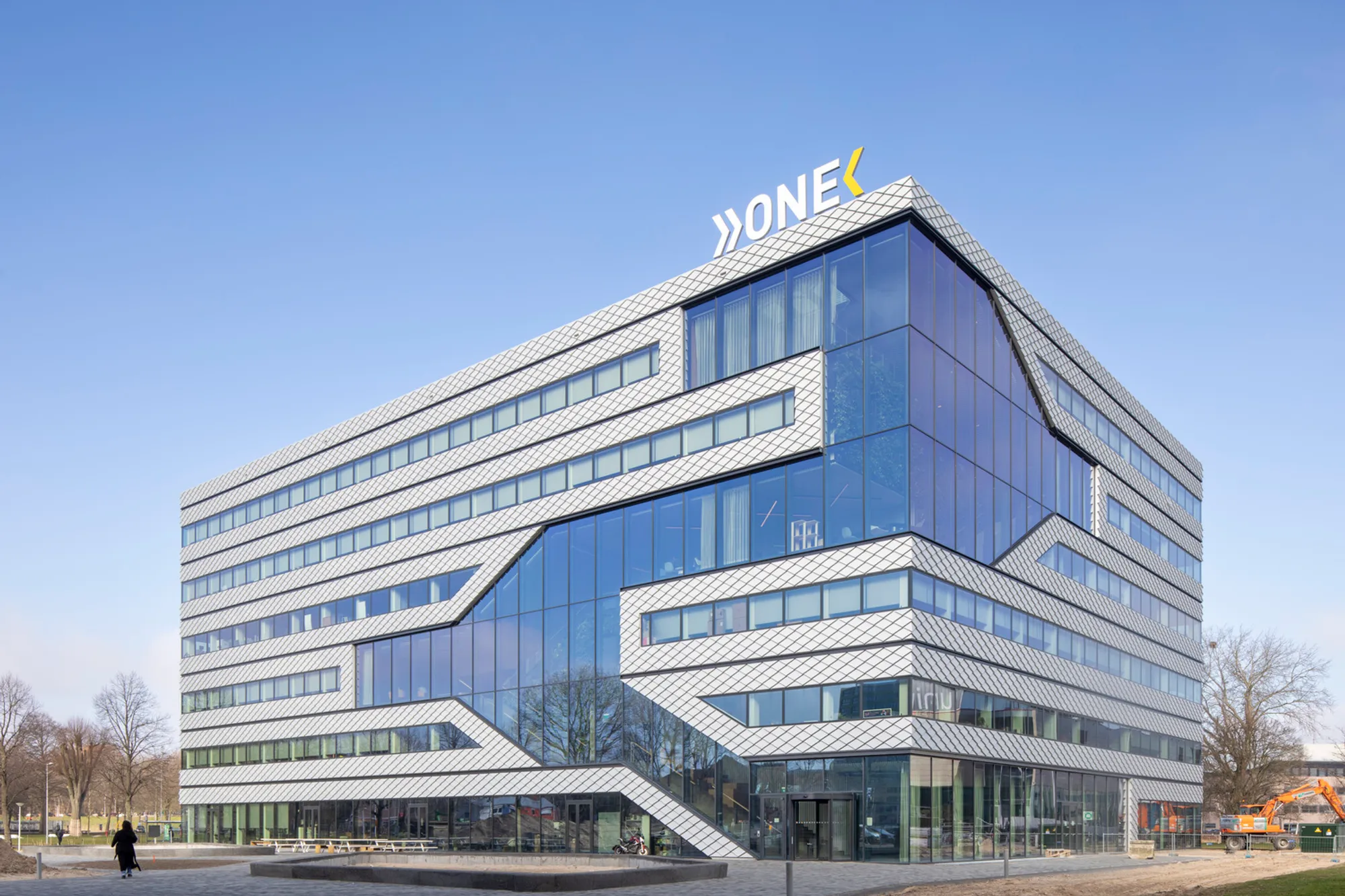
Matrix ONE by MVRDV – A Sustainable Innovation Hub at Amsterdam Science Park
Matrix ONE by MVRDV is a sustainable, flexible 13,000 m² office and lab hub in Amsterdam, featuring social spaces, green design, and innovation.


Matrix ONE, designed by the acclaimed architecture firm MVRDV, is the flagship laboratory and office building within the Matrix Innovation Center at Amsterdam Science Park. Completed in 2023, this six-story, 13,000-square-metre building embodies the future of sustainable architecture while serving as the central hub for collaboration, innovation, and social interaction on campus.
Innovative Design and Sustainable Architecture
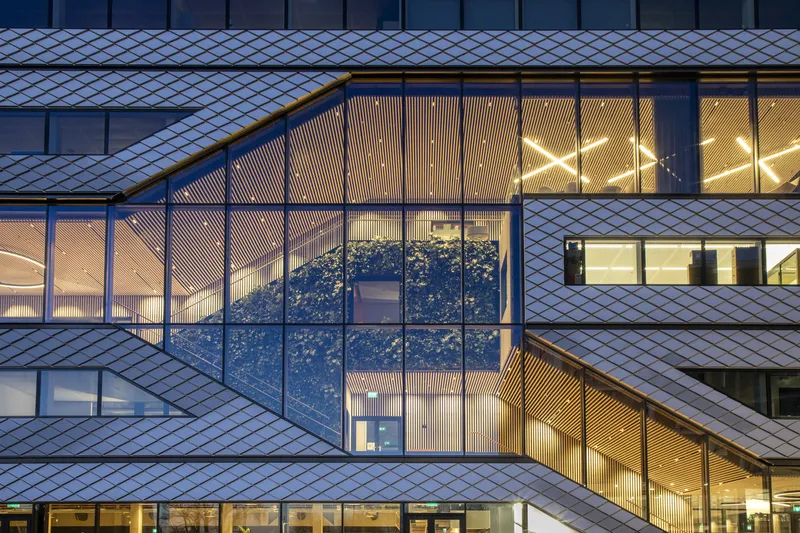
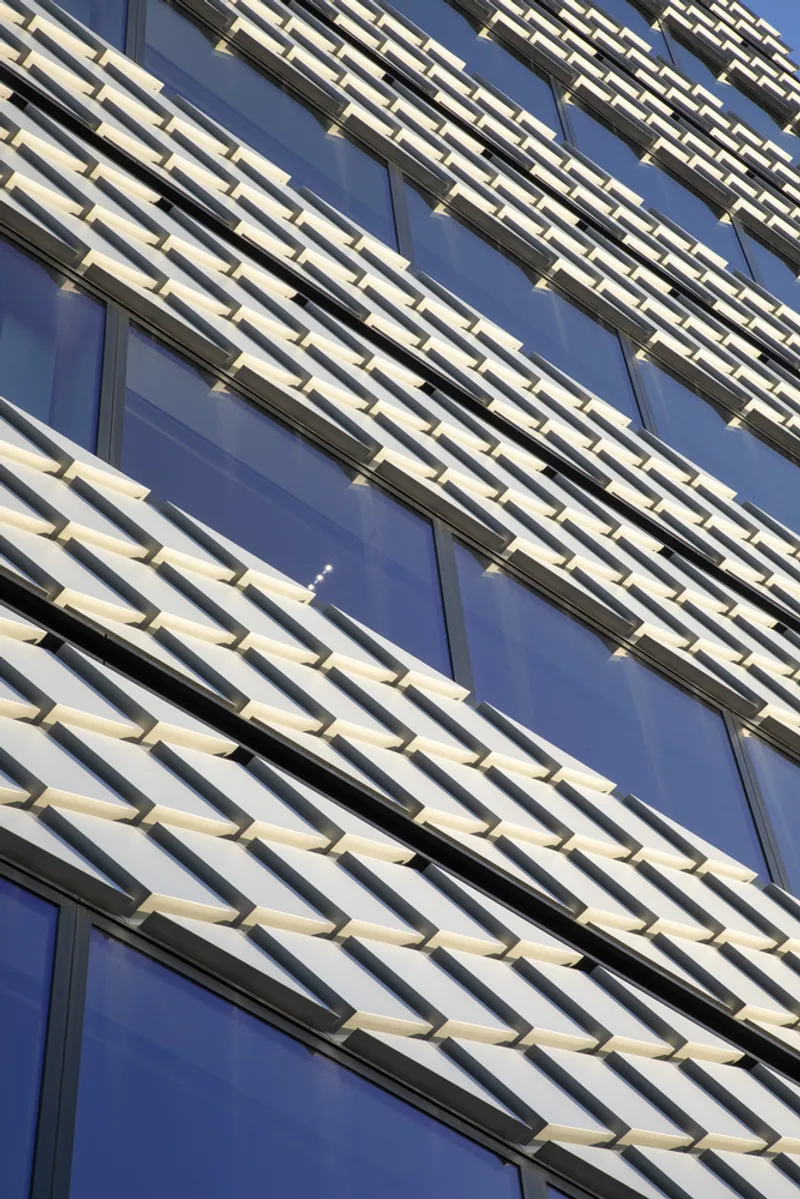
Matrix ONE is more than just an office building; it is a benchmark for sustainable construction. The building is designed to meet ambitious Amsterdam energy efficiency standards and has achieved BREEAM-Excellent certification. Key sustainable strategies include:
- Demountable Construction: Screws and bolts enable easy disassembly and reuse of building components. Over 90% of materials are reusable, and prefabricated concrete floors are designed for future adaptability.
- Energy Efficiency: A 1,000 m² solar panel array generates a portion of the building’s energy, while smart lighting and heating systems reduce consumption. Critical lab equipment runs on dedicated circuits for optimized energy use.
- Material Transparency: A comprehensive material passport from Madaster tracks over 120,000 components, including CO₂ storage, ensuring circularity in future construction.
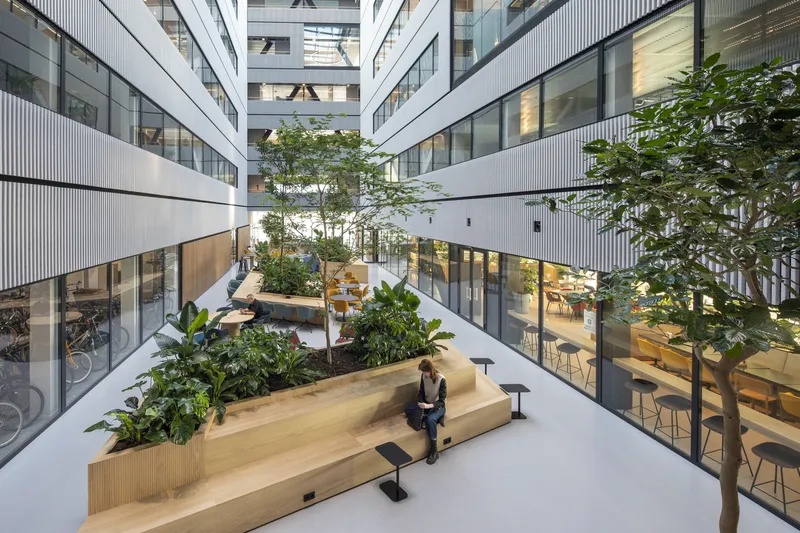
- Sustainable Mobility: Visible, accessible bicycle parking encourages eco-friendly commuting, while stair placement promotes physical activity over elevator use.


A Collaborative Hub for Science and Technology
Matrix ONE is the largest of seven buildings forming the Matrix Innovation Center, home to research labs and offices for global tech and sustainability companies, including Qualcomm, Photanol, Skytree, and FUL Foods. The building fosters interdisciplinary collaboration and innovation in sustainable technologies through flexible, adaptable spaces.
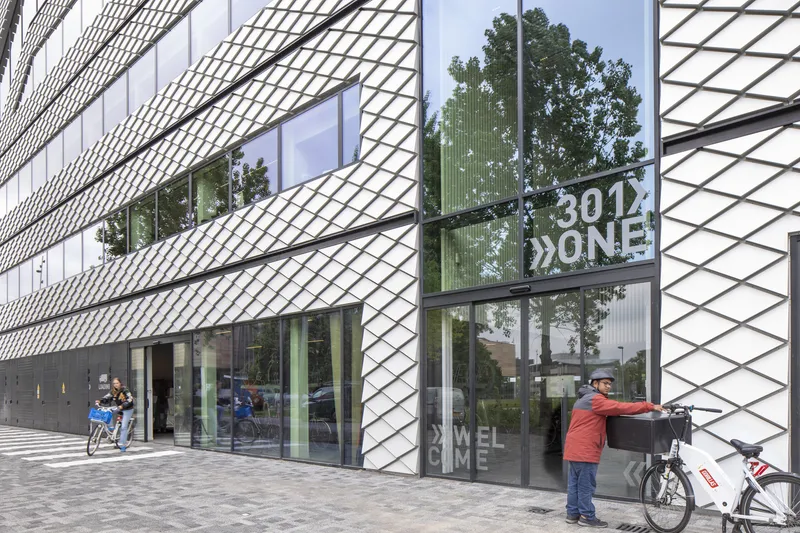
Social and Collaborative Spaces
Central to the building’s design is the “social staircase”, a large, terraced seating area connecting multiple floors. Conceptually, it extends the zig-zagging pathways across the campus, creating a dynamic social environment. Features include:
- Tribune-style seating for presentations and discussions.
- Informal meeting tables and coffee stations for spontaneous collaboration.
- Lush green walls and acoustic finishes providing a calm, intimate environment.
The staircase integrates seamlessly with Club Matrix, the building’s communal amenity space, featuring a ground-floor restaurant, bar, and a 100-seat auditorium for presentations, lectures, and knowledge sharing.

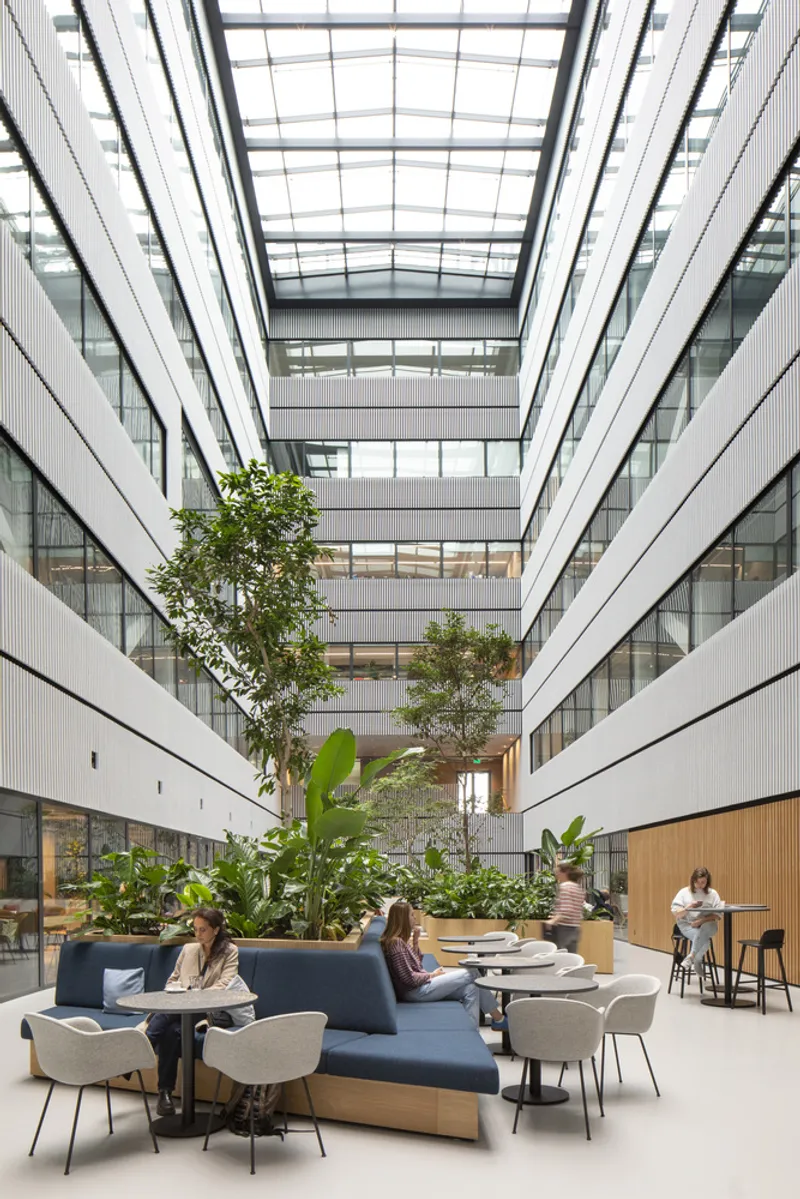
Flexible and Future-Proof Interiors
Matrix ONE embodies flexibility in design. Offices can be converted into laboratories and vice versa, while technical installations can be upgraded to meet evolving standards. This ensures the building remains cutting-edge, while its components remain reusable for future projects.
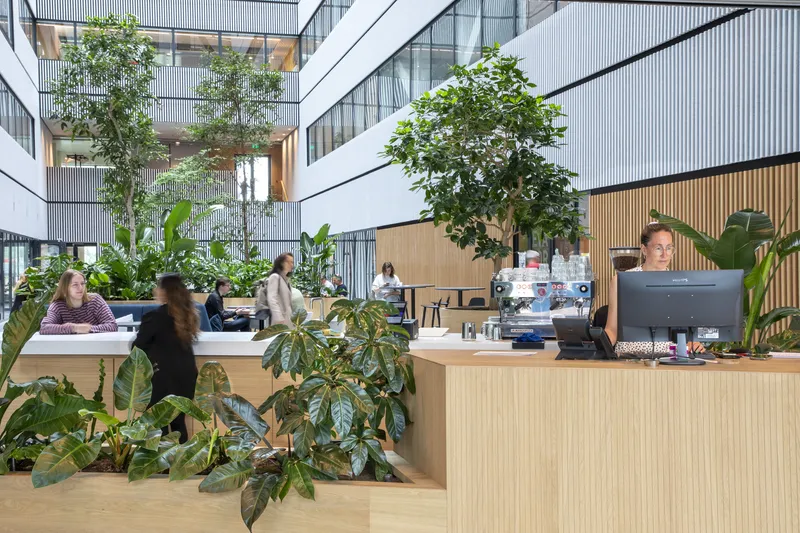
A Model for Healthy and Sustainable Work Life
In addition to energy-efficient systems, the building promotes wellbeing and healthy lifestyles:
- The social staircase encourages active circulation, reducing reliance on elevators.
- The accessible bicycle parking supports sustainable commuting.
- Green interior features and sound-dampening finishes create a productive, healthy indoor environment.
As MVRDV partner Frans de Witte notes, Matrix ONE is both state-of-the-art and adaptable, exemplifying how future buildings can merge high performance, sustainability, and social interaction.
Matrix ONE / MVRDV stands as a landmark of sustainable, flexible, and collaborative office design, setting new standards for innovation hubs worldwide.
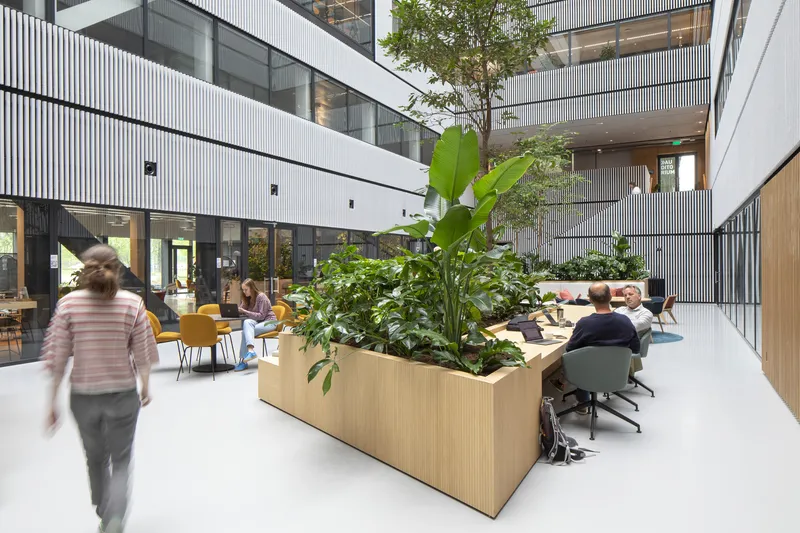
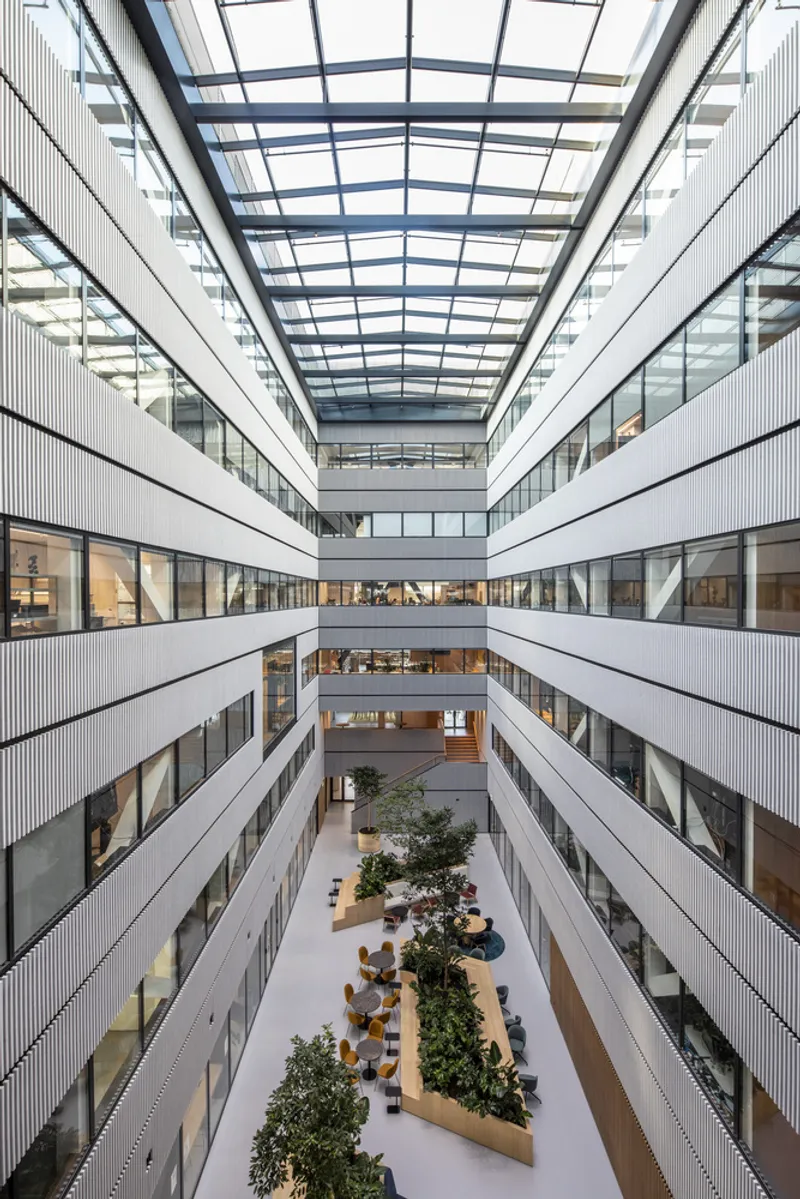
All Photographs are works of Daria Scagliola




Popular Articles
Popular articles from the community

AL-JANNAH: Sustainable Architecture and Permaculture for Afghan Widows
AL-JANNAH uses sustainable architecture and permaculture to create resilient oasis of housing, learning, work and renewal for Afghan widows.

The Earth Pod: 3D Printed Homes for Resilient Refugee Communities
The Earth Pod reimagines refugee housing through 3D printed homes made from clay, combining resilience, self-sufficiency, and rapid shelter.
EW PARK: Sustainable Architecture Reimagines the Future of Urban Parking
EW PARK reimagines city parking as a modular wooden tower combining automation, solar energy, electric mobility, and adaptable urban design.

Co-life: Sustainable Architecture for Age-Friendly Community Living
Co-life reimagines sustainable architecture for seniors through courtyards, rammed earth, shared gardens, and spaces designed for belonging.

Similar Reads
You might also enjoy these articles


Hodi-Mandai Geram
Project Function: Preservation and revitalization of the Intangible heritage and socio-spatial identity of the Hodi by Housing, Cultural Memory Center, Sacred Grove, landscape, local tourism economy


Olio Towers: A Mid-Rise for Performers That Fuses Housing, Rehearsal, and Stage
Located blocks from Houston's Theater District, this modular tower stacks living units around a central performance atrium.

Oasis: Modular Green Housing Carved into Dhaka's Urban Fabric
A shortlisted Plugin Housing entry reclaims unauthorized settlements in Dhaka with stepped concrete volumes, green roofs, and ventilation-driven design.

Black Hole: A Floating Megastructure for the Post-Physical Era
Emiliano Mazzarotto envisions a spherical, self-scaling arena where e-sports, digital hotels, and holographic stadiums replace traditional public space.
Explore Office Building Competitions
Discover active competitions in this discipline



Challenge to reimagine the Iron Throne


Photograph architecture without architects


Illustrate the lost glory of Angkor Wat - Render Challenge


Design challenge to reuse E-waste
Comments (0)
Please login or sign up to add comments
No comments yet. Be the first to comment!