

M.Casa By Hinzstudio
M.Casa by Hinzstudio is a serene urban home blending Vietnamese tradition, natural ventilation, warm materials, and family-focused living within dense Ho Chi Minh City.


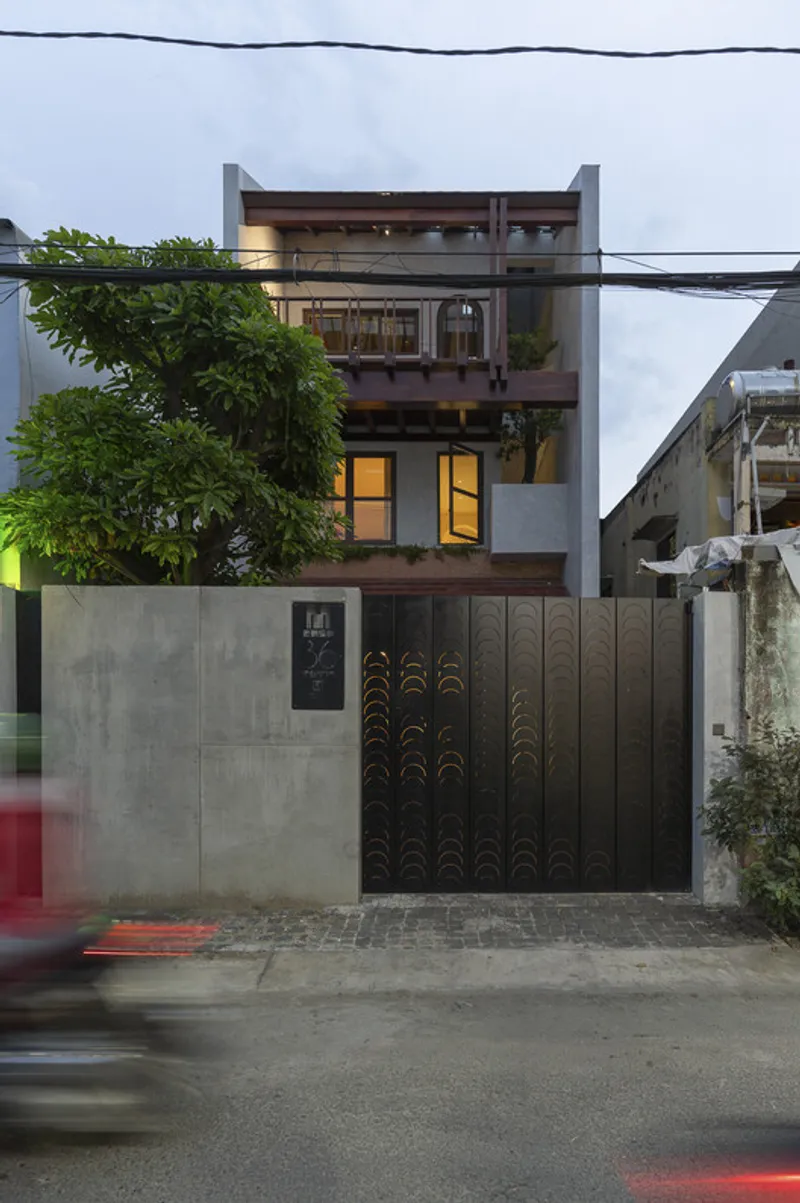
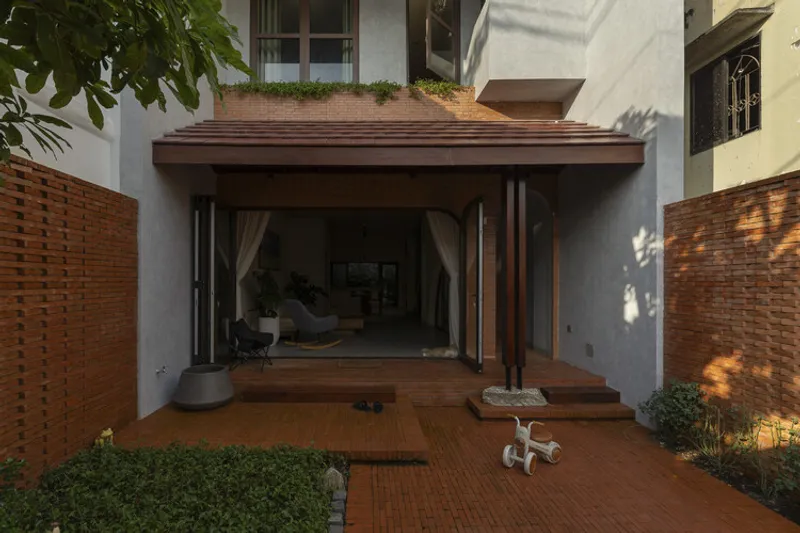
Located in a narrow alley of Ho Chi Minh City, Vietnam, M.Casa, designed by Hinzstudio, is a thoughtful reinterpretation of the traditional Vietnamese house within the constraints of dense urban living. Built on a compact 6 × 20-meter plot, the residence offers a calm, nature-oriented retreat for a young family seeking intimacy, simplicity, and emotional warmth amid the city’s fast pace.
Urban Constraints, Human-Centered Vision
Surrounded by tightly packed concrete buildings and sharing party walls on both sides, the site posed significant challenges related to natural ventilation, daylight access, and privacy. Rather than resisting these constraints, the architects embraced them as an opportunity to create a quiet, inward-looking home that prioritizes human comfort and emotional well-being.
The homeowners envisioned a nurturing environment—one that could grow with their family while quietly passing down values of balance, humility, and connection to nature. M.Casa responds with an architecture that is modest in scale yet rich in atmosphere.
Reinterpreting Traditional Vietnamese Architecture
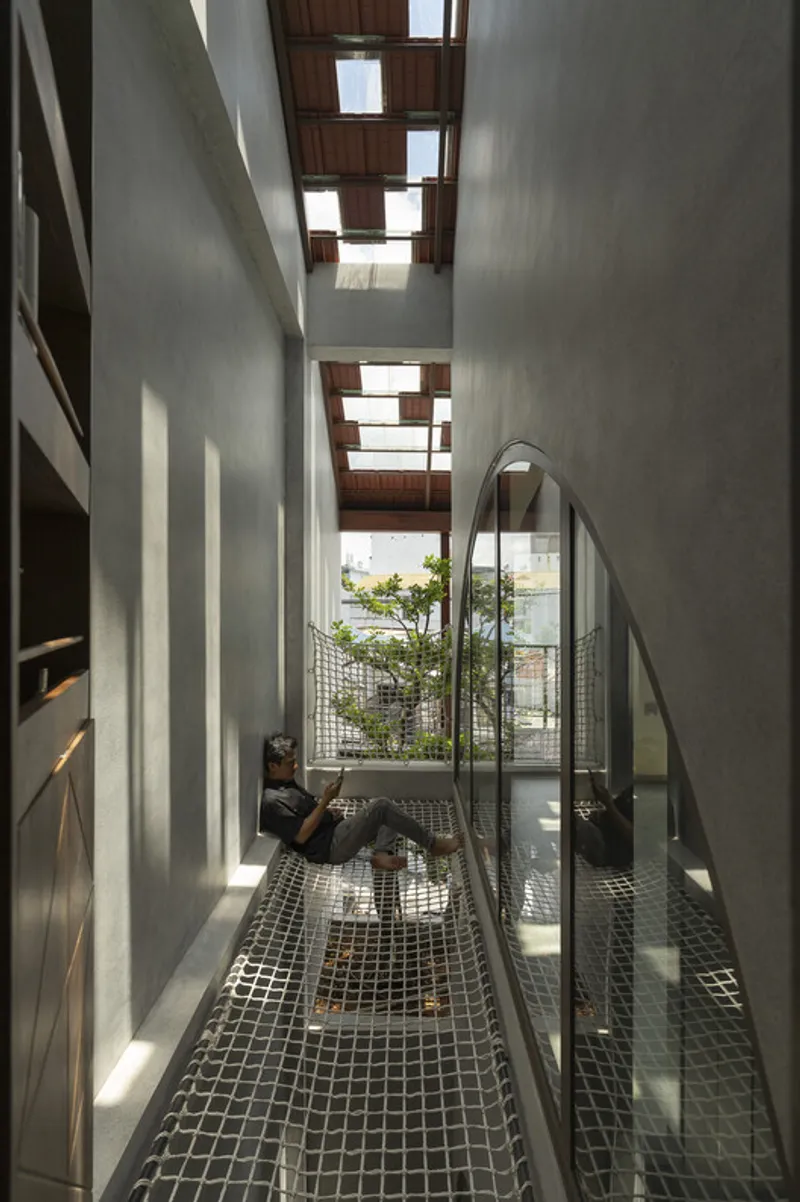
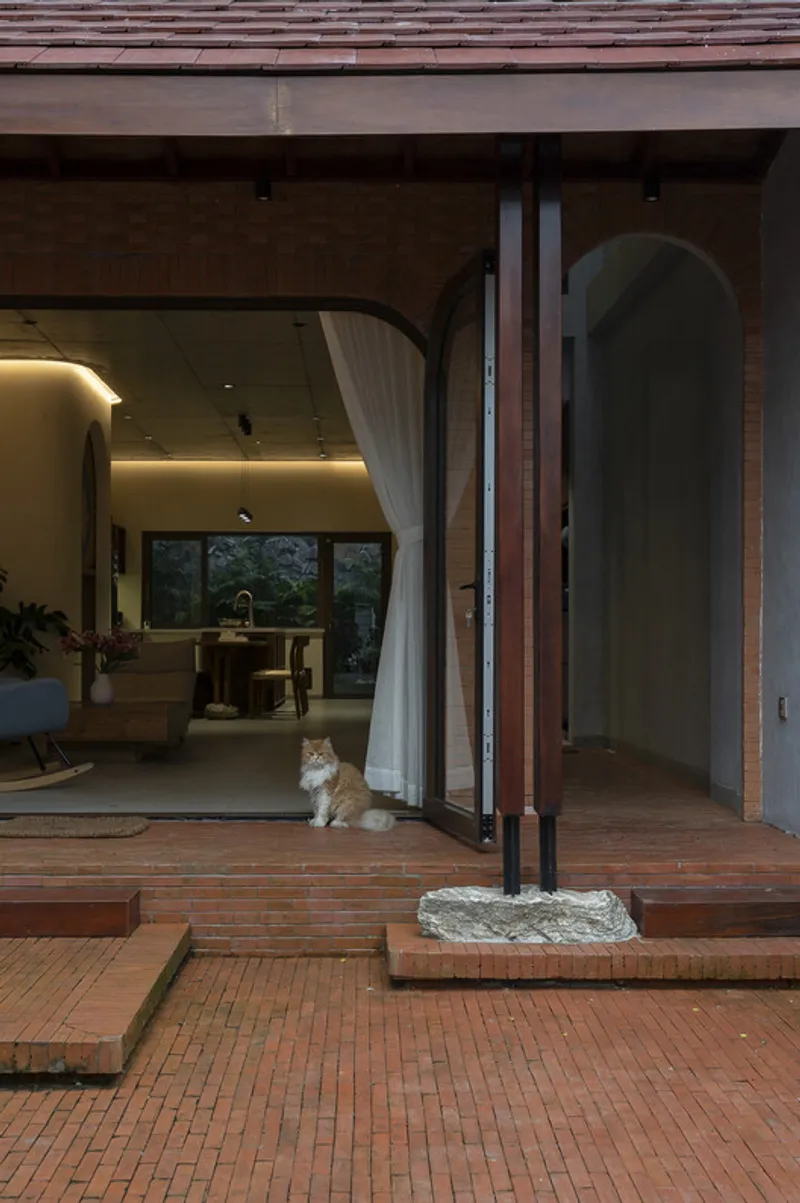
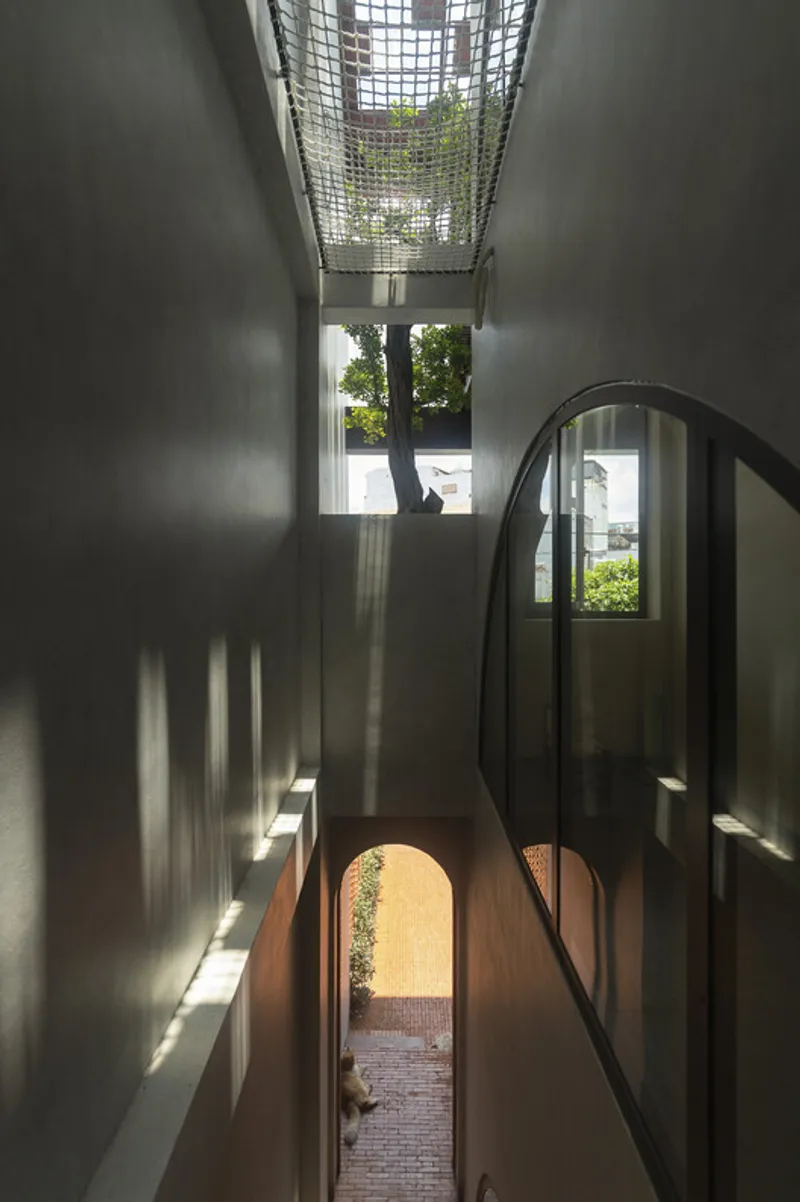
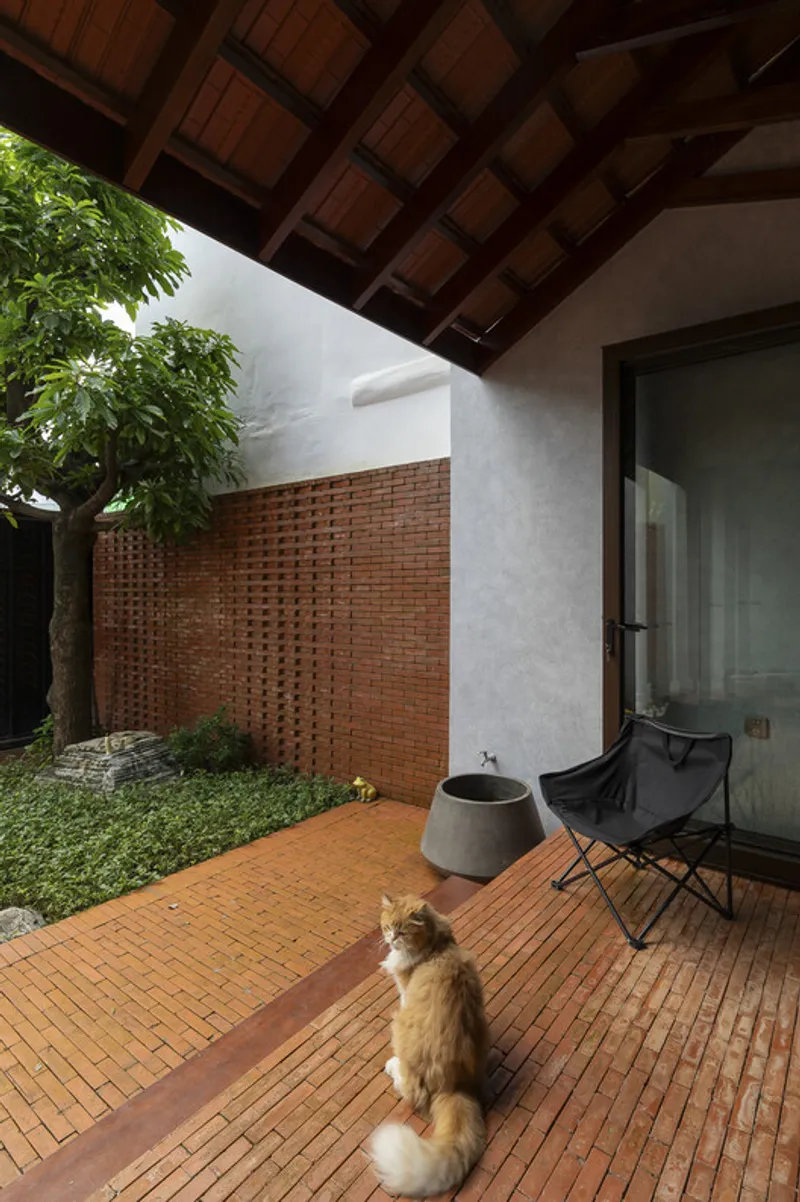
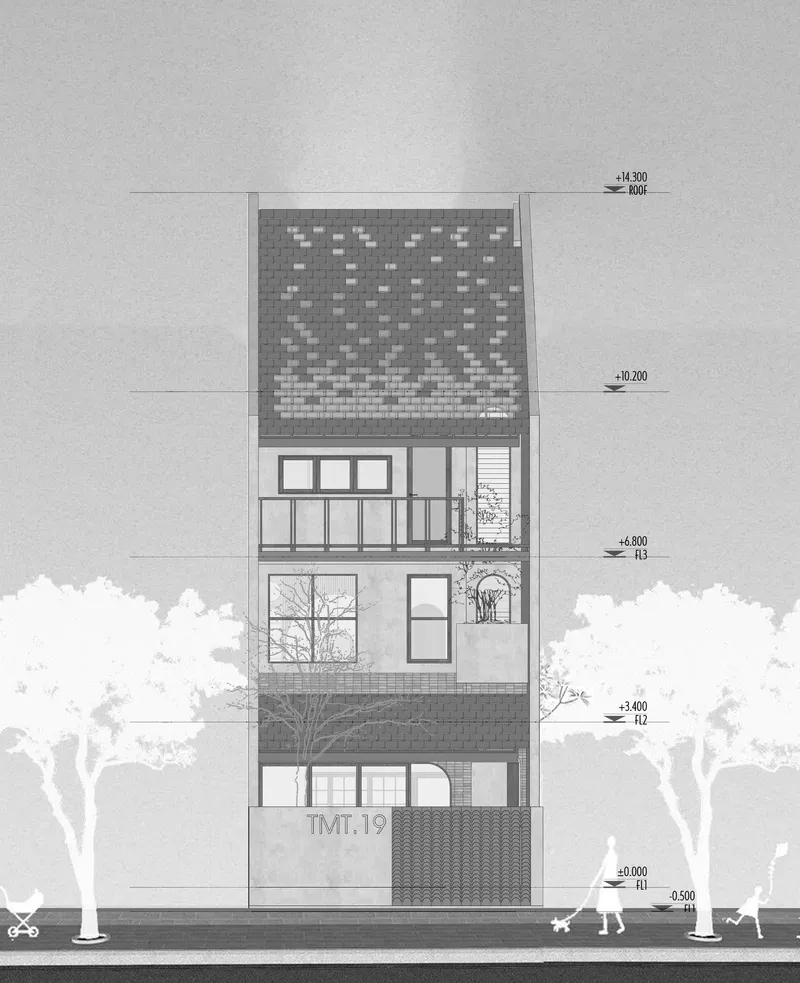
The design draws inspiration from essential elements of traditional Vietnamese houses, including the courtyard, veranda, sloped roof, and side passageways. These features are reimagined through a contemporary architectural language, resulting in a fluid spatial sequence that allows air, light, and greenery to permeate every level of the home.
Strategic setbacks at both the front and rear create natural ventilation paths and visual breathing space—an uncommon luxury in dense urban neighborhoods. This configuration allows the house to remain open and airy while maintaining privacy and tranquility.
Spatial Organization for Family Life
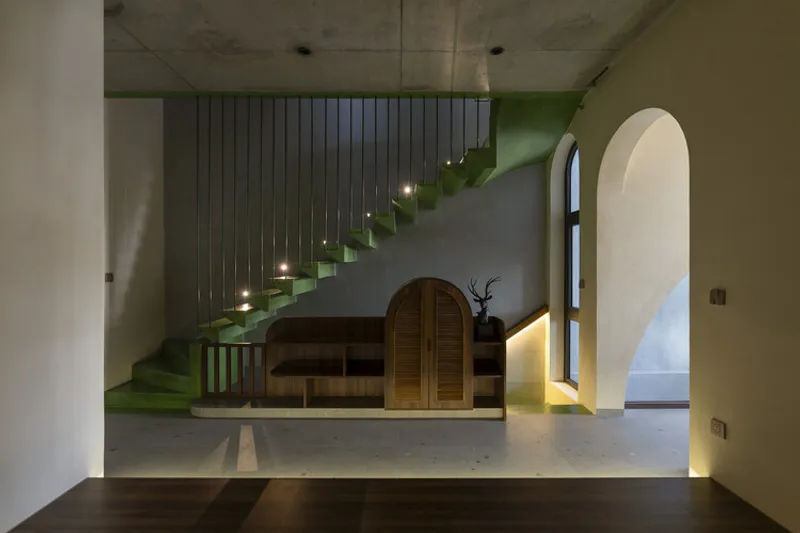
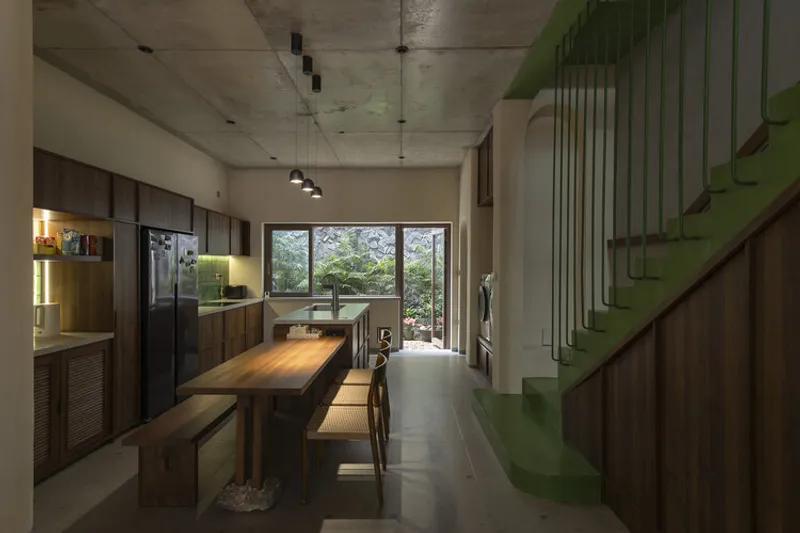
The ground floor is conceived as a continuous open-plan space where the living room and kitchen merge seamlessly, encouraging daily interaction and togetherness. At its heart sits a compact family altar, thoughtfully integrated into the layout. Rather than isolating this sacred element, the design harmonizes it with everyday life, reinforcing cultural continuity.
The second floor accommodates two bedrooms at opposite ends, connected by a shared family zone that functions as a children’s play and learning area. This central space fosters interaction while maintaining acoustic and visual separation between rooms.
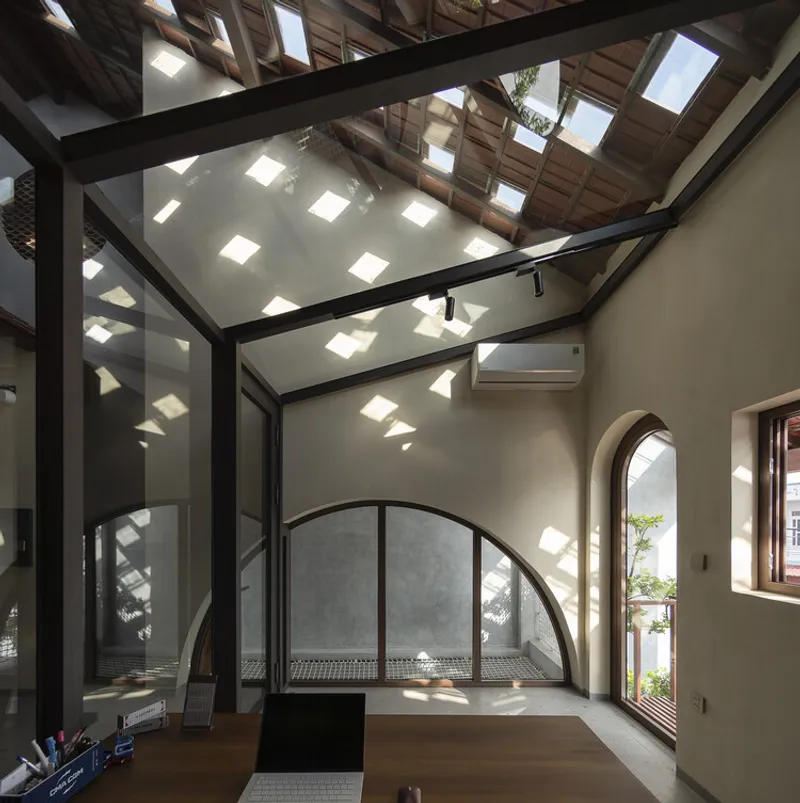
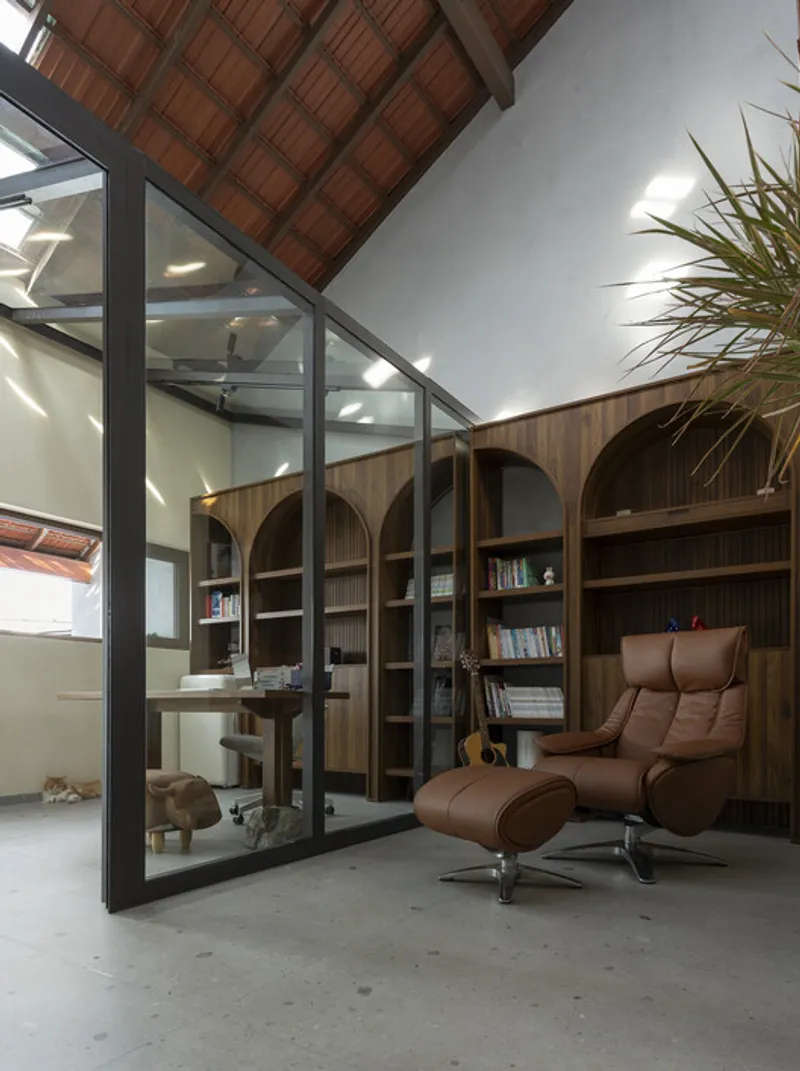
The top floor is reserved for the master bedroom, a quiet work corner, and a private relaxation area—offering retreat and reflection above the bustling city below.
Materiality and Atmosphere
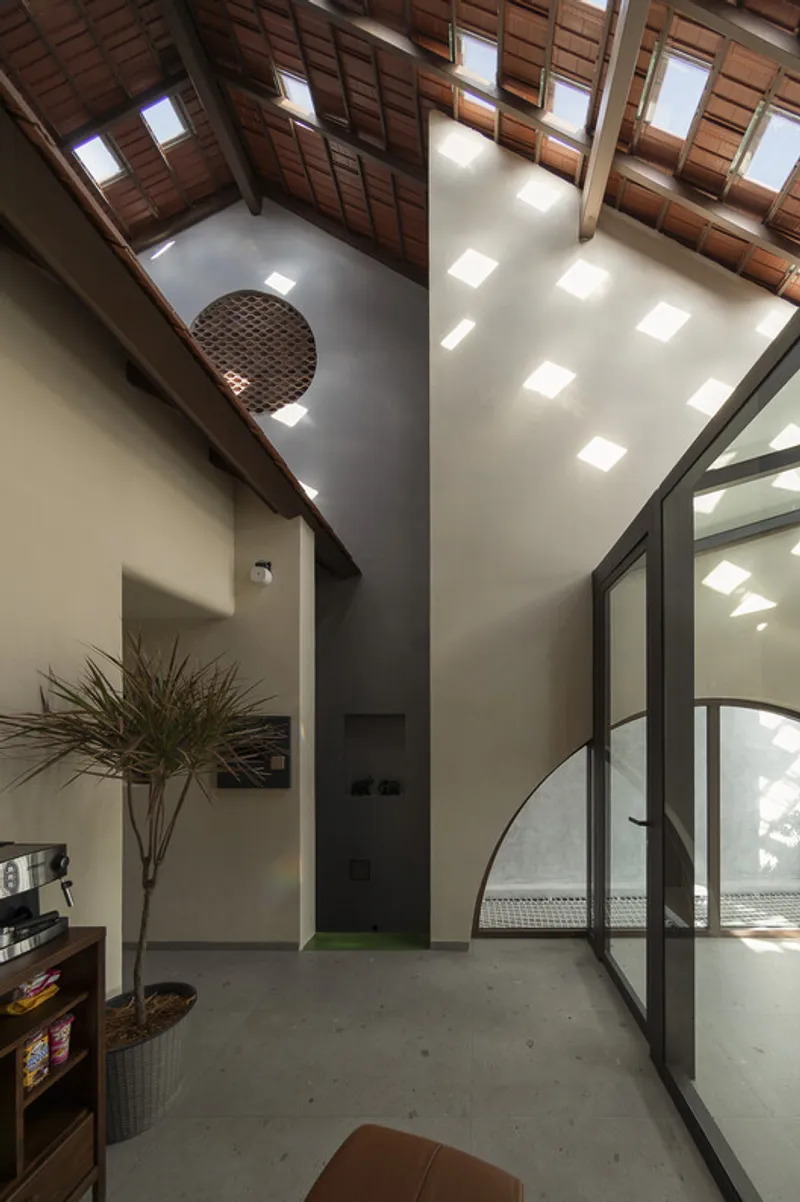
Material choices are intentionally honest, tactile, and enduring. Exposed concrete, bare brick, clay roof tiles, and dark-stained wood define the home’s character, evoking warmth, familiarity, and a sense of permanence. These materials age gracefully, reinforcing the idea of the house as a long-term family home.
Filtered daylight enters through brick screens, courtyards, and roof openings, creating soft shadows and gentle transitions throughout the interior. This play of light recalls memories of rural verandas and village homes, subtly bridging urban life with collective cultural memory.
A Home Beyond Shelter
More than a functional dwelling, M.Casa is an emotional landscape—one that balances modern urban living with spiritual depth and tradition. It embodies restraint, connection, and timelessness, proving that simplicity can be a profound form of elegance.
In a rapidly transforming city, M.Casa stands as a quiet architectural statement: a home that does not shout, but listens; that does not compete, but calms; and that gently carries the essence of Vietnamese heritage into contemporary life.
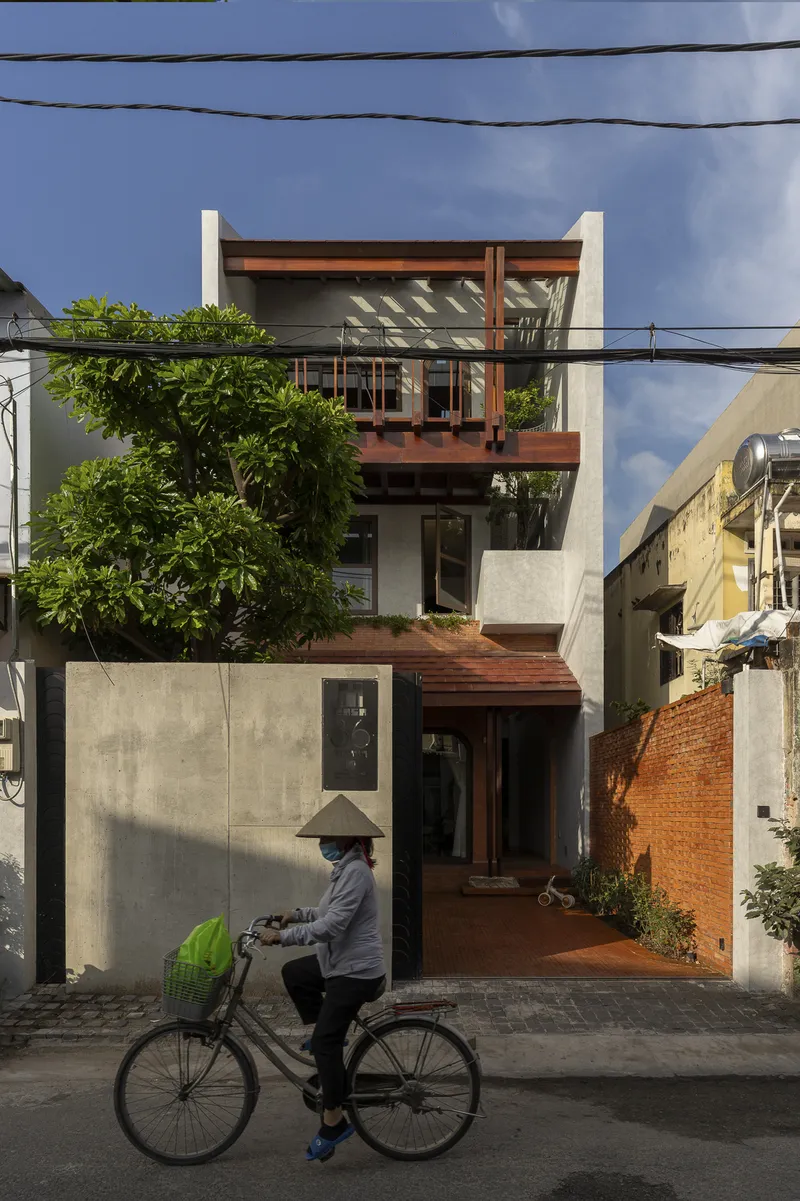
All the photographs are works of Quang Trần


Popular Articles
Popular articles from the community


Opera on the Sea: Driftwood Logic Shapes a Timber Opera House on Estonia's Coast
Trevor Orgill's opera house translates the entangled drift of floating timber into a civic building where wood, water, and music converge.

Extended Shell: Retrofitting Kolkata's Balconies as Living Urban Thresholds
A modular retrofit system recovers the social and environmental intelligence of Kolkata's historic verandas for contemporary Park Street residents.

Manzana Morphosis: Stretching Barcelona's Grid into a Living Landscape for 2050
A radical reworking of the Eixample manzana turns density into a tool for generous public space, vertical ecology, and environmental performance.

Faces of the Soviet Avant-Garde: Turning Moscow's Street Names into an Open-Air Museum
A network of sculptural installations across a Moscow residential district transforms forgotten architect names into spatial encounters with cultural memor

Similar Reads
You might also enjoy these articles


Hodi-Mandai Geram
Project Function: Preservation and revitalization of the Intangible heritage and socio-spatial identity of the Hodi by Housing, Cultural Memory Center, Sacred Grove, landscape, local tourism economy


Olio Towers: A Mid-Rise for Performers That Fuses Housing, Rehearsal, and Stage
Located blocks from Houston's Theater District, this modular tower stacks living units around a central performance atrium.

Oasis: Modular Green Housing Carved into Dhaka's Urban Fabric
A shortlisted Plugin Housing entry reclaims unauthorized settlements in Dhaka with stepped concrete volumes, green roofs, and ventilation-driven design.

Black Hole: A Floating Megastructure for the Post-Physical Era
Emiliano Mazzarotto envisions a spherical, self-scaling arena where e-sports, digital hotels, and holographic stadiums replace traditional public space.

Explore Ho Chi Minh City Competitions
Discover active competitions in this discipline

Challenge to reimagine the Iron Throne

Photograph architecture without architects

Illustrate the lost glory of Angkor Wat - Render Challenge

Design challenge to reuse E-waste
Comments (0)
Please login or sign up to add comments
No comments yet. Be the first to comment!