
Meier Unger Shapes a Village Courtyard Ensemble from Brick in Rural Germany
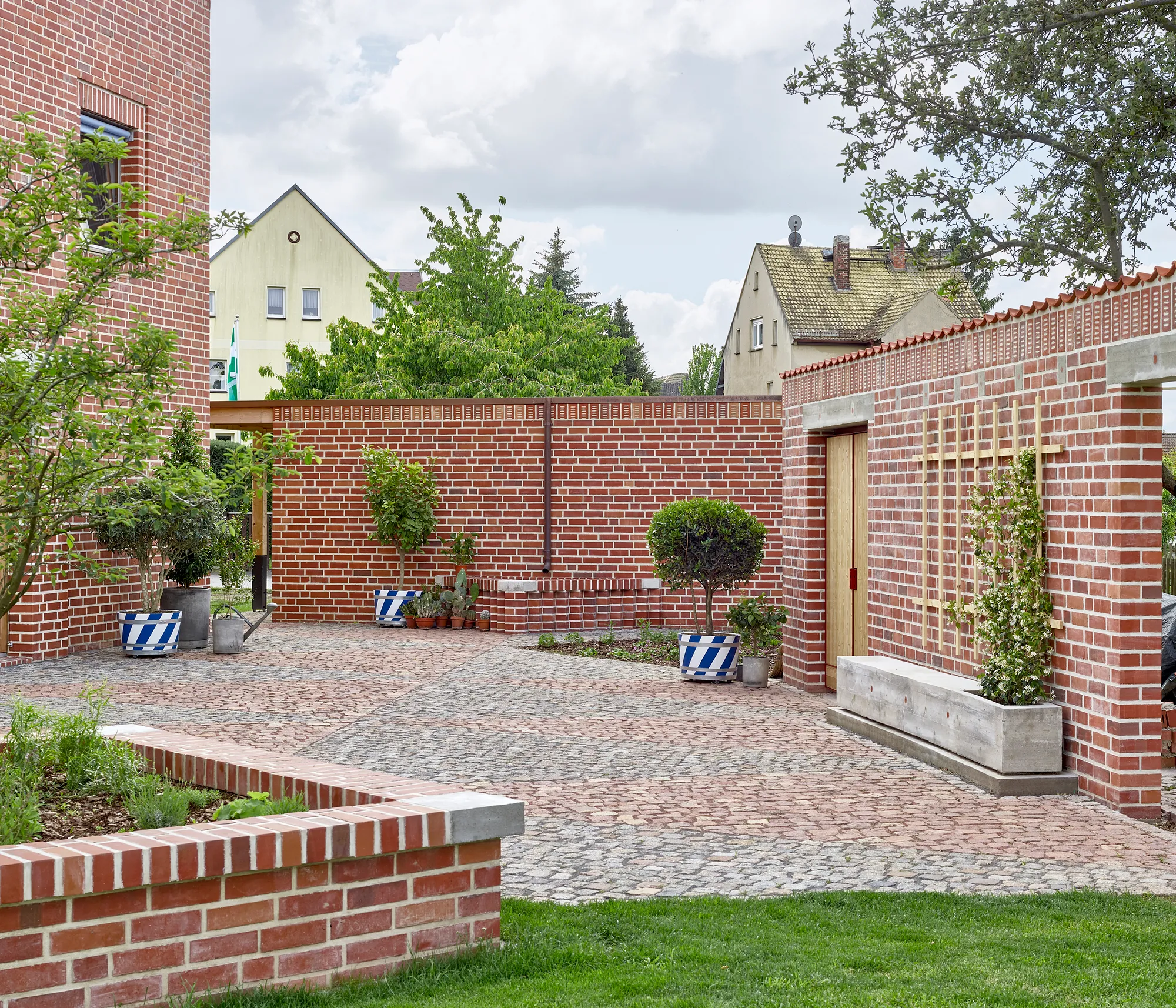
In Fockendorf, a 150-square-meter single-family house, outbuilding, and carport compose themselves around a cobblestone courtyard.


The professional house-building industry completes single-family homes by the hundred, yet the results rarely contribute anything to the places they occupy. Erler House, designed by Meier Unger in the centuries-old village of Fockendorf, Germany, is a quiet rebuke to that pattern. Rather than dropping a sealed object onto a plot, architects Jan Meier and Lena Unger composed three elements, a main house, an outbuilding, and a carport, around a central courtyard that functions as an analogue to the informal village square.
What makes the project compelling is its refusal to treat rural domesticity as either nostalgic pastiche or minimalist intrusion. The brick volumes absorb the cadence of neighboring gabled roofs while deploying symmetry, relief, and abstracted columns with enough discipline to feel genuinely architectural. At 150 square meters, nothing is oversized. The courtyard does the heavy lifting, binding the ensemble together and anchoring the house within a village fabric that predates it by generations.
An Ensemble, Not an Object
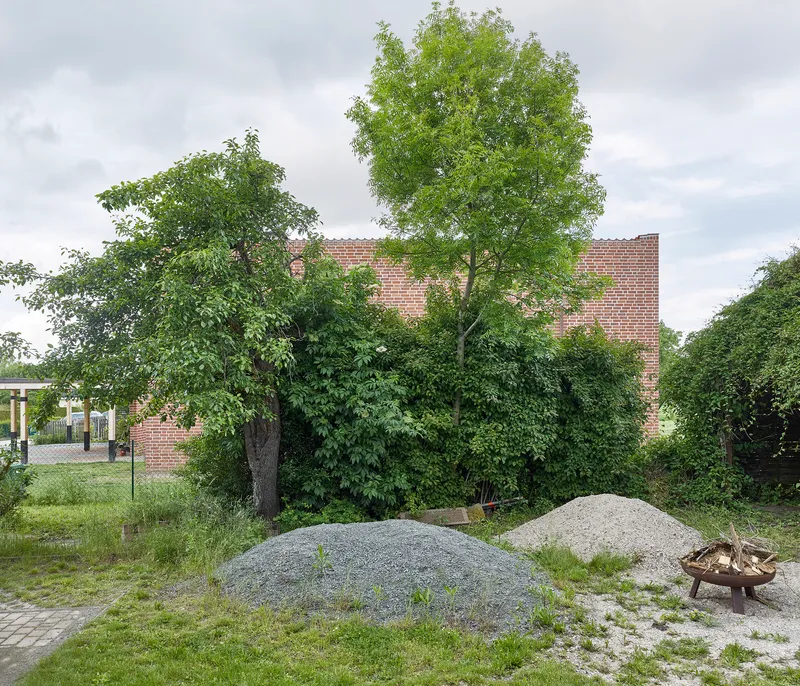
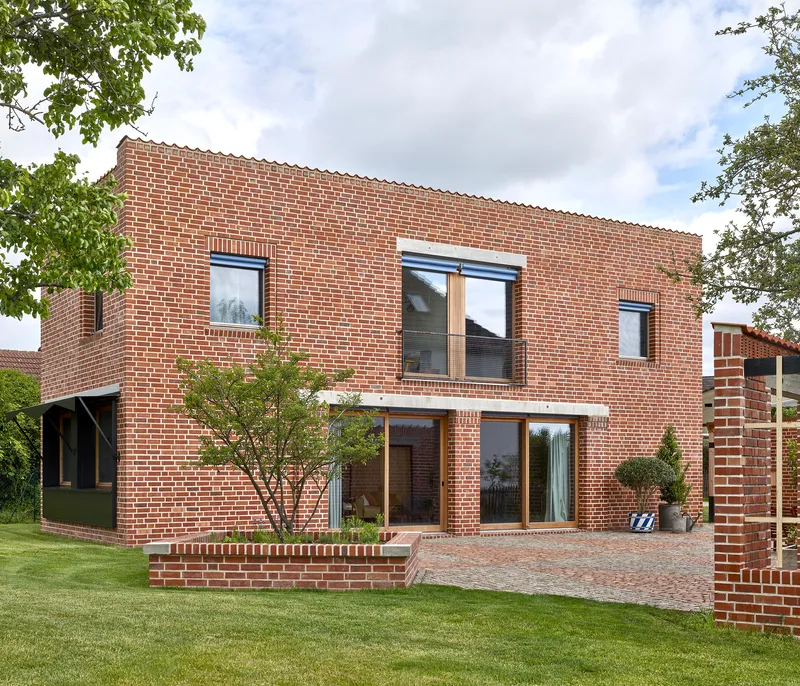
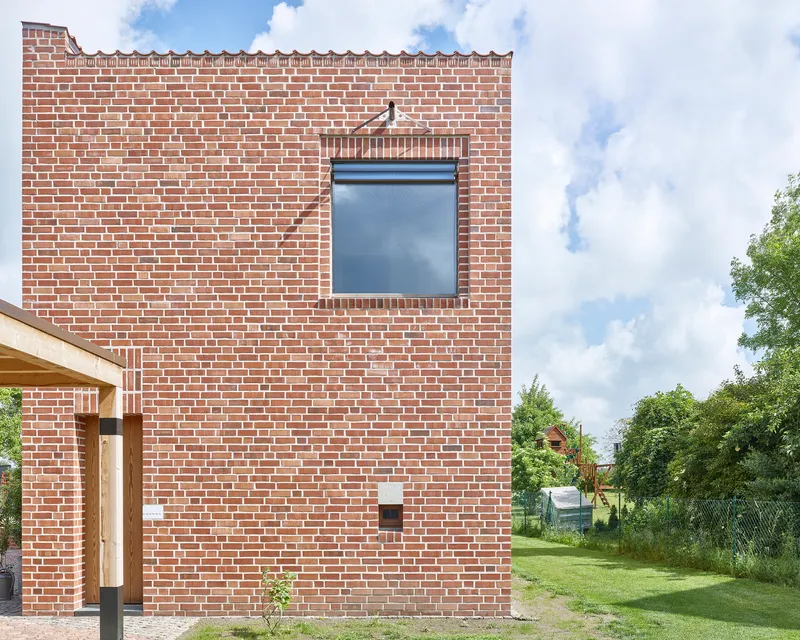
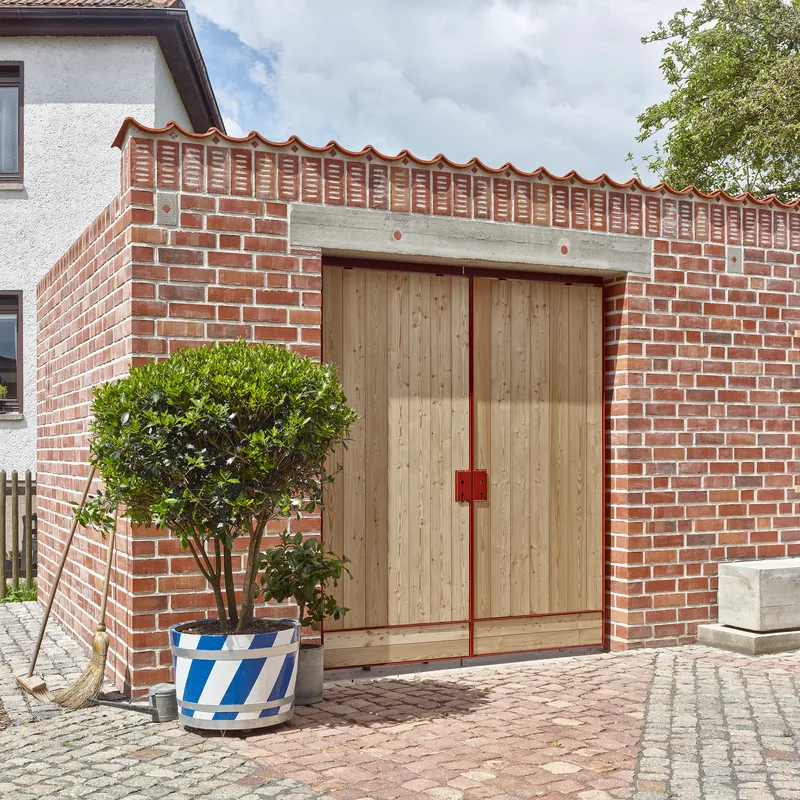
From a distance, the house reads as a modest red brick volume settling among mature deciduous trees, no taller or louder than its neighbors. Move closer and the composition reveals itself: a two-story main house with a symmetrical street facade, a secondary wing, and a carport structure, each articulated distinctly yet unified by a shared material palette of brick, timber, and cobblestone. The street facade presents double timber doors beneath a wavy terracotta coping, a detail that signals care without drawing excess attention.
The decision to distribute the program across several volumes rather than consolidating it into one is the project's foundational move. It allows the house to participate in the grain of Fockendorf, where clusters of farm buildings and outbuildings have always defined property lines more than fences or hedges. Meier Unger exploit the architectural potential latent in this village structure rather than ignoring it.
The Courtyard as Village Square
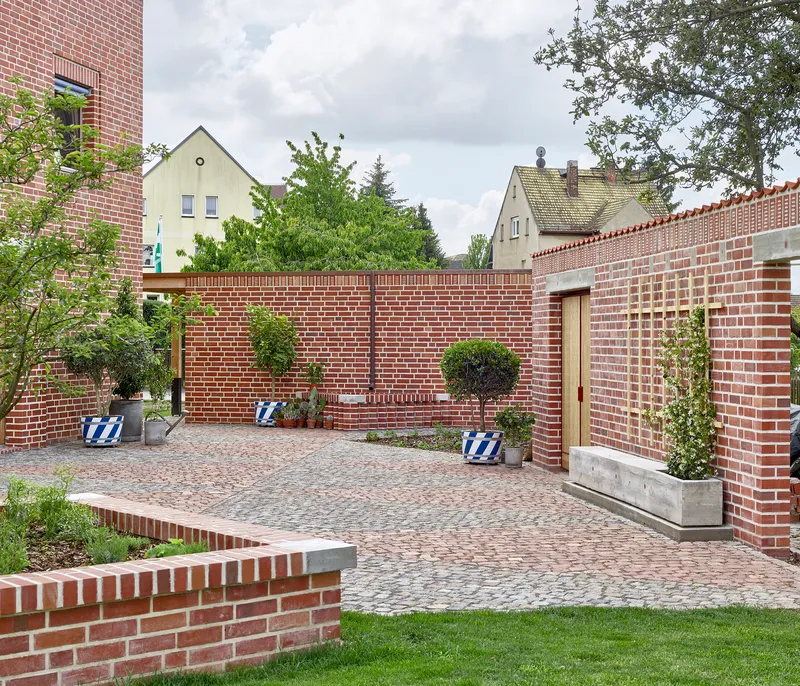
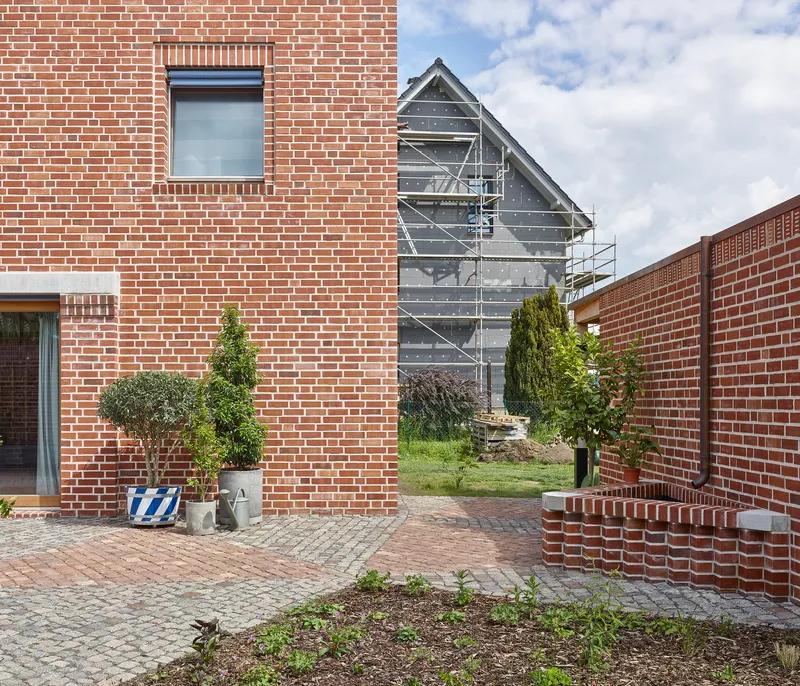
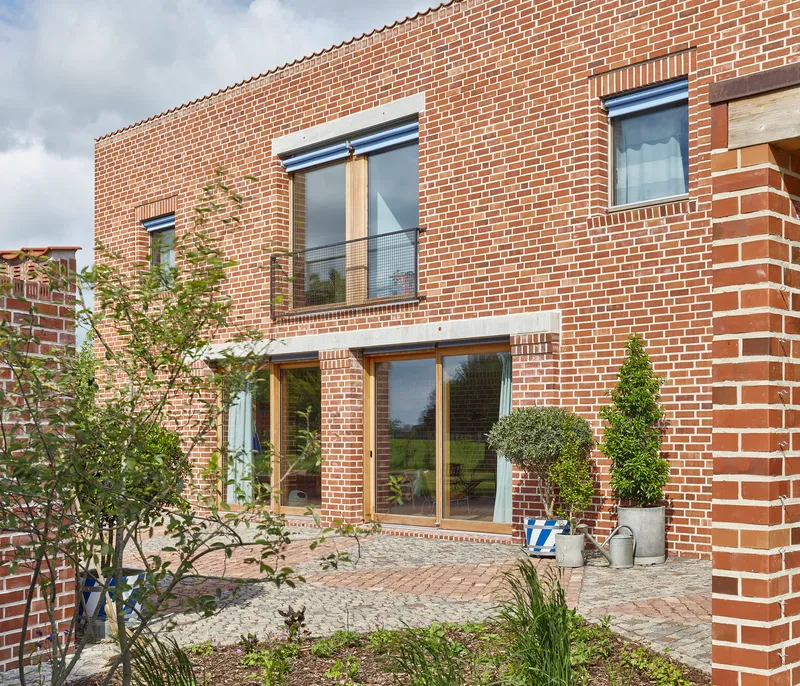
The cobblestone courtyard at the center of the ensemble is the project's most generous gesture. Enclosed on three sides by brick walls of varying height and on the fourth by neighboring gabled roofs, the space has the character of a small square rather than a backyard. Concrete planters punctuate the ground plane, and the paving pattern extends continuously underfoot, tying the carport, entry threshold, and garden portal into one legible surface.
By treating the courtyard as the primary organizing element, the architects invert the usual hierarchy of a single-family house. The interior rooms are arranged to frame and overlook the court, not the street. Sliding glass doors and upper-level balconies on the rear elevation dissolve the boundary between domestic life and this semi-public outdoor room, making the courtyard the space where the house truly lives.
Brick as Syntax
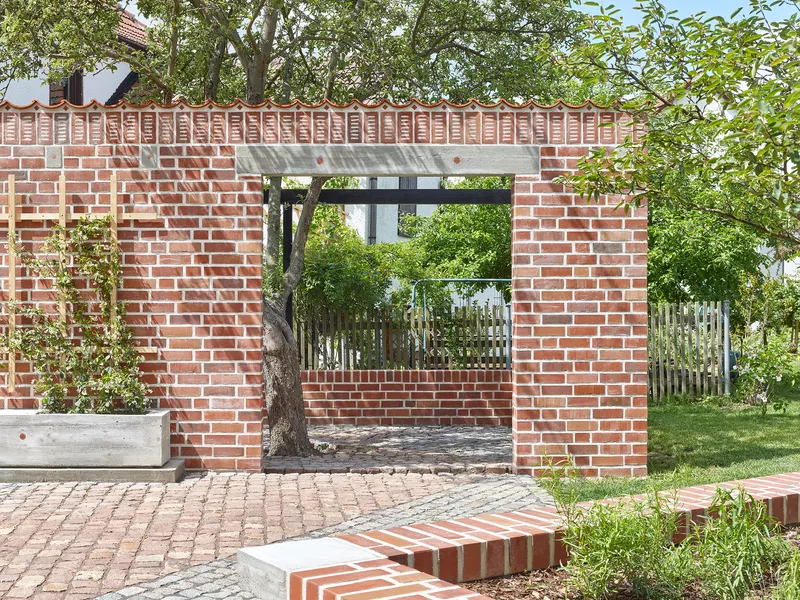
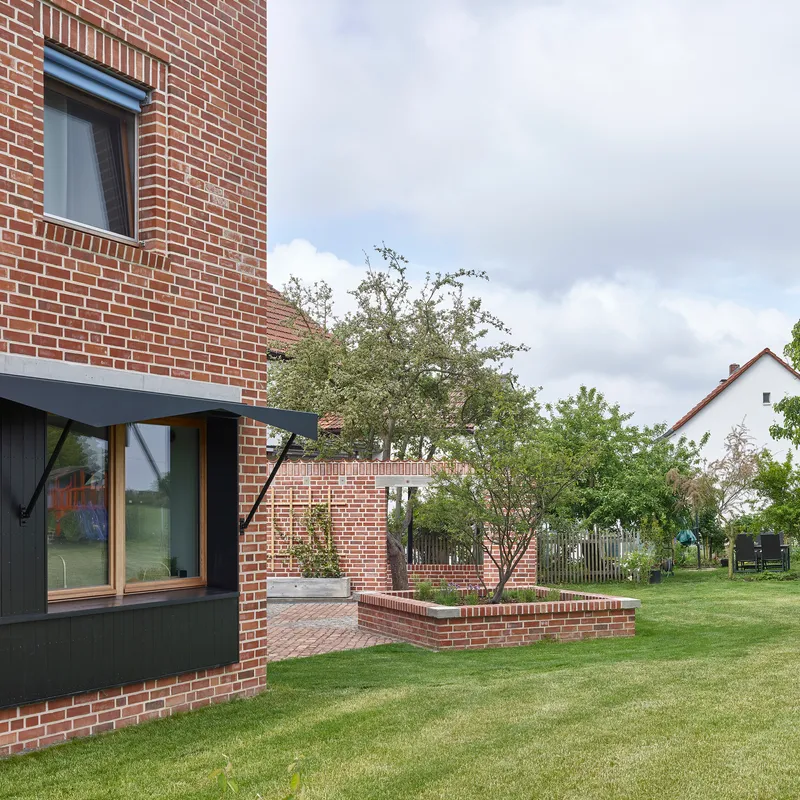
Red brick does all the talking here. A garden portal frames an existing tree with a concrete lintel overhead, its proportions borrowing from classical gates without quoting any specific precedent. Elsewhere, cantilevered metal awnings and planted brick planters add secondary rhythms to the facades. The architects use the brick not just as cladding but as a syntactical system: courses stack, lintels span, openings are recessed, and each surface carries enough relief to cast shadows throughout the day.
The wavy terracotta coping visible on the street facade is a small flourish, just irregular enough to break the formality of the composition. It signals that the project is not pursuing perfection but rather the kind of textured, lived-in quality that characterizes the best village buildings.
Threshold and Transition
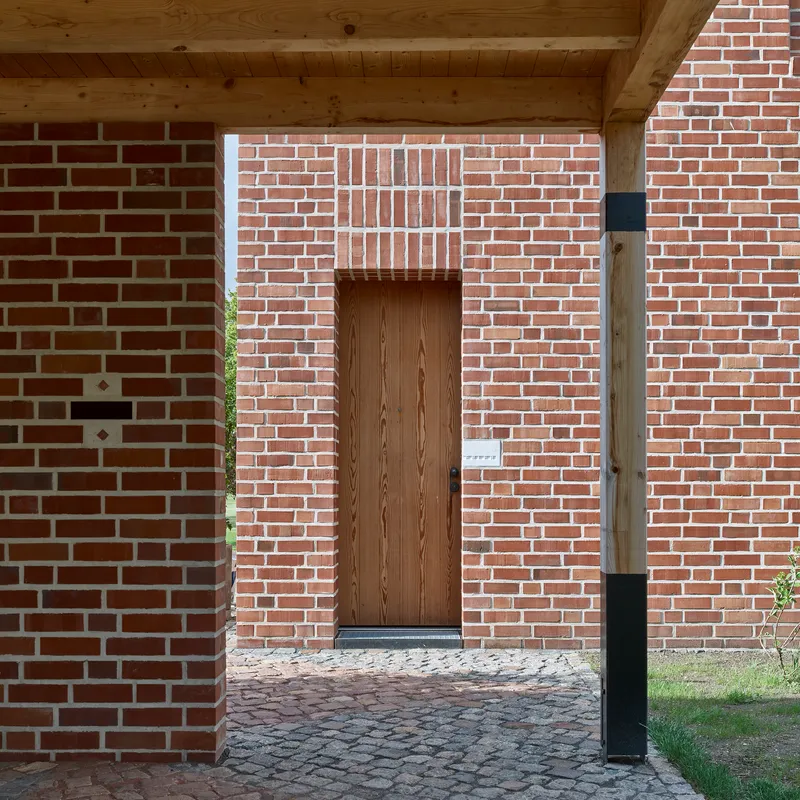
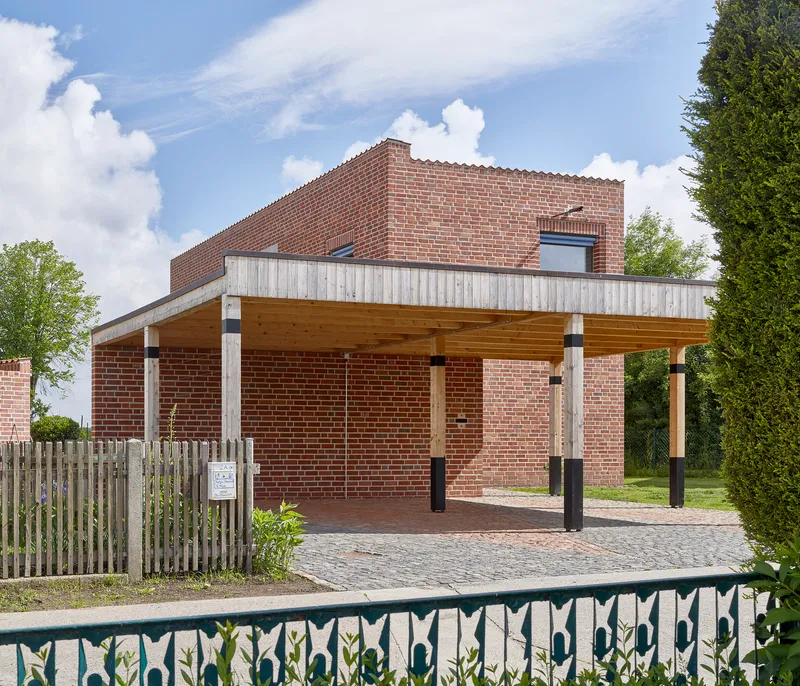
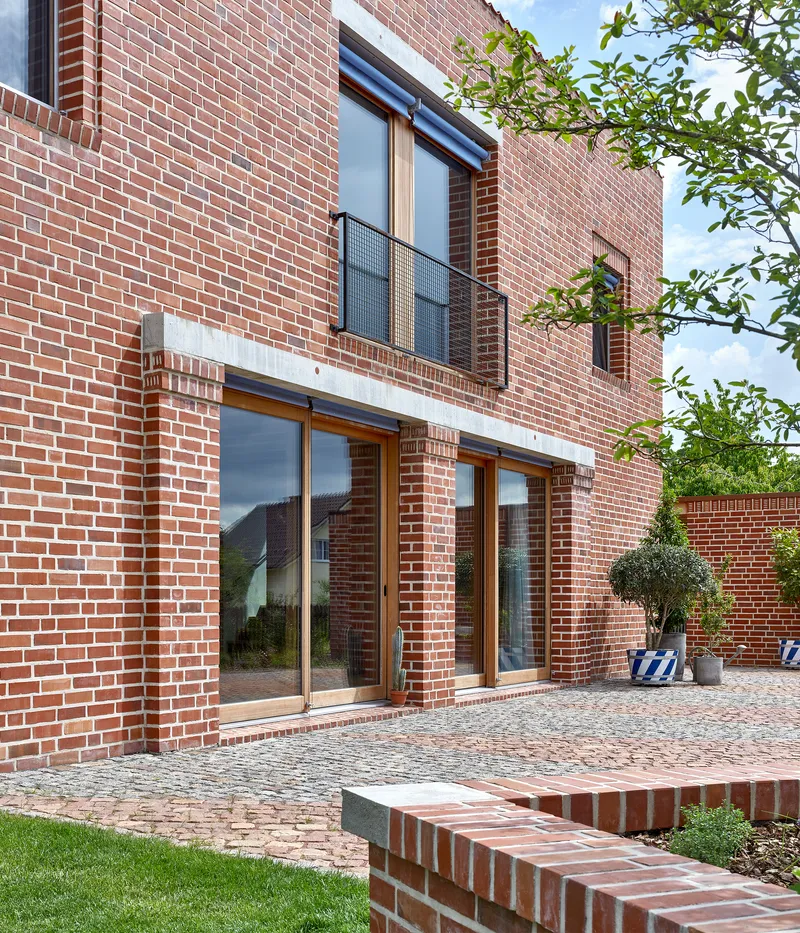
Abstracted columns and a concrete lintel mark the transition between inside and outside at the main entry, where a timber door sits recessed within a deep brick reveal beneath exposed wood rafters. The effect is processional: you pass through layers of structure rather than simply opening a door. The carport follows the same logic, its exposed timber beams and columns creating a covered threshold between the street and the courtyard.
On the rear elevation, sliding glass doors and a balcony framed by brick walls compose a second, more informal threshold to the courtyard. The layering of these moments, from the formal street entry through the house and out into the court, gives a 150-square-meter dwelling the spatial depth of something considerably larger.
Interior: Brick and Timber in Dialogue
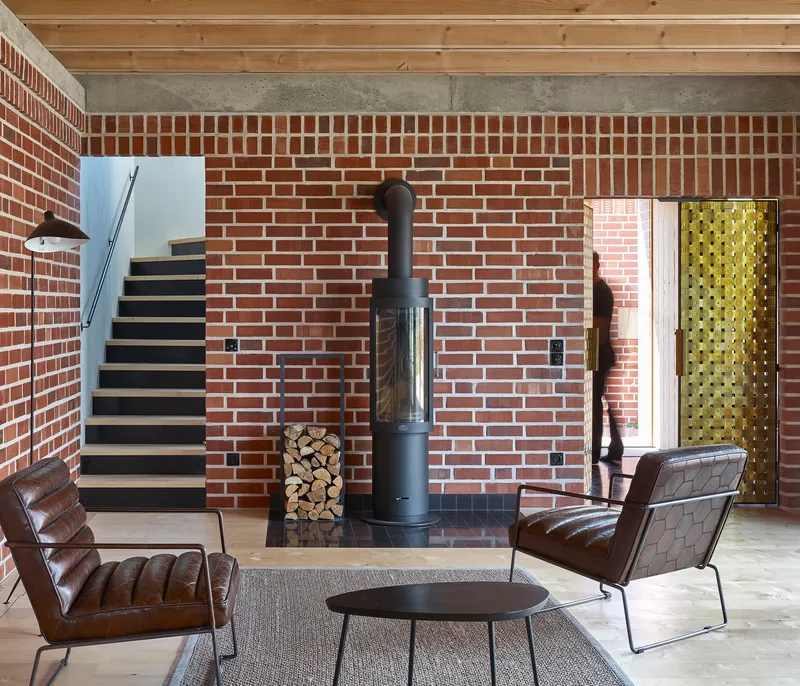
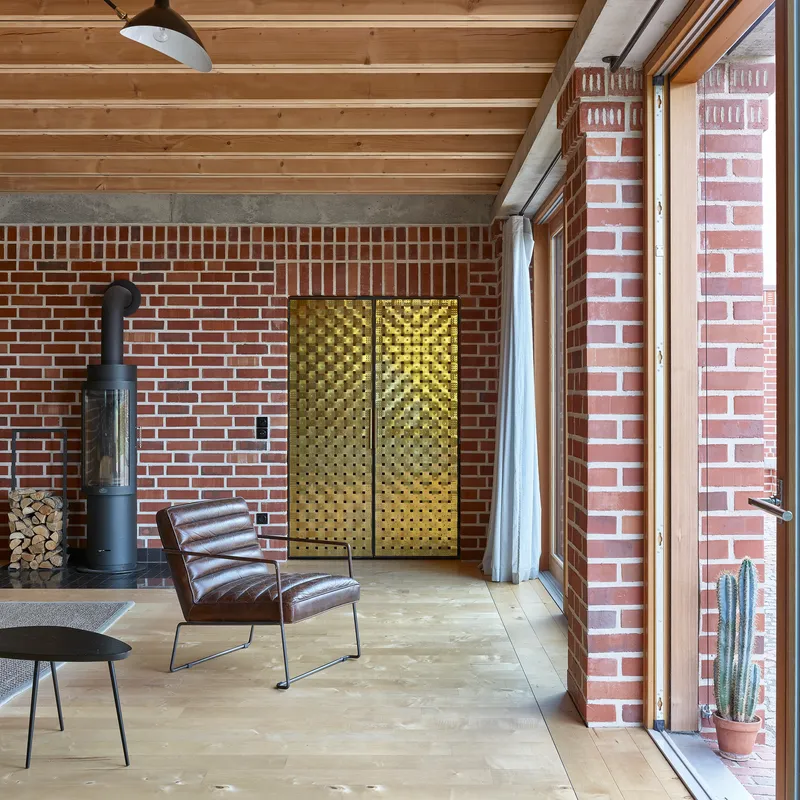
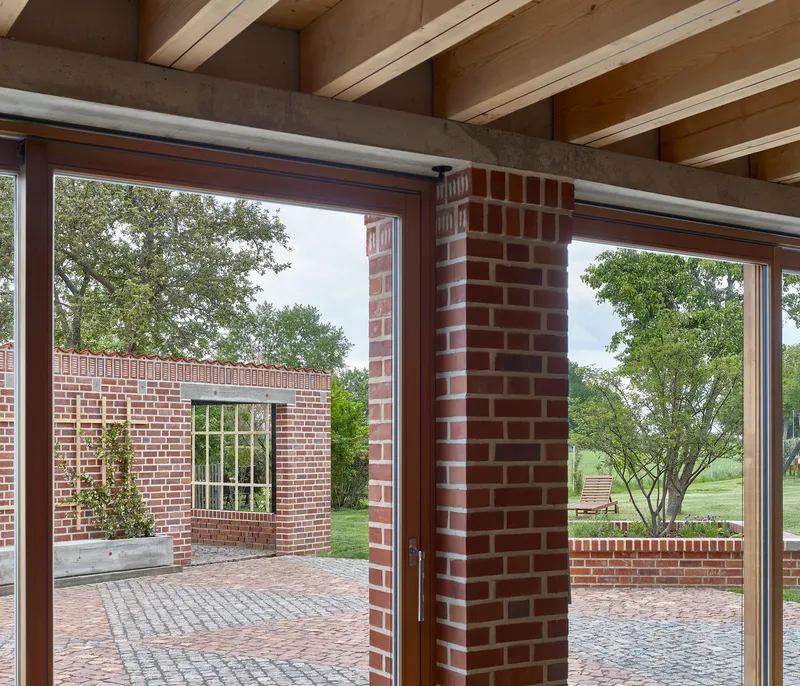
Inside, the brick walls continue as the dominant surface, establishing a material continuity between exterior and interior that reinforces the project's ensemble logic. A freestanding wood stove anchors the main living space, while a floating timber staircase rises against an exposed brick wall. The timber ceiling structure, with its visible joists and warm tone, counterpoints the masonry with a lighter, directional grain.
Brass textured panels and a leather chair visible in one interior view introduce a restrained material richness that stops well short of luxury. The corner glazing at ground level frames a direct view of the courtyard through brick columns, collapsing the distinction between room and yard. These interiors are not decorated spaces; they are constructed ones, where every surface participates in the structural and spatial logic of the whole.
Plans and Drawings
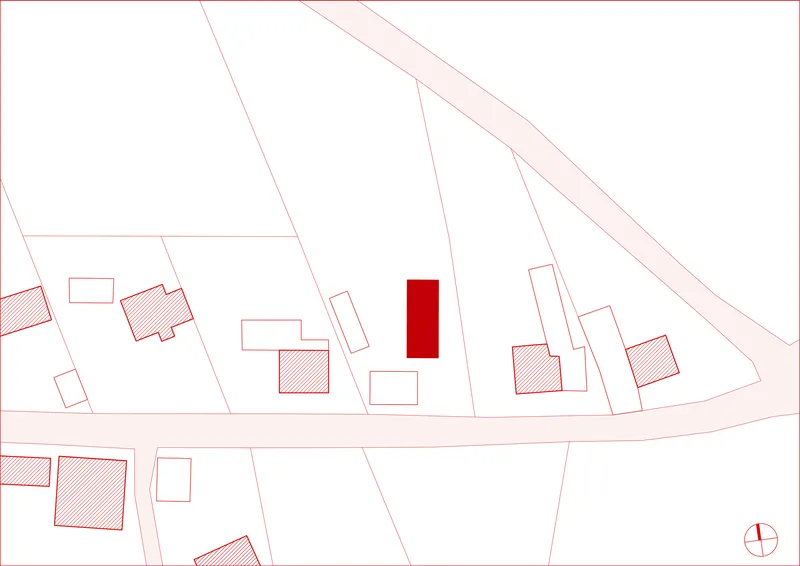
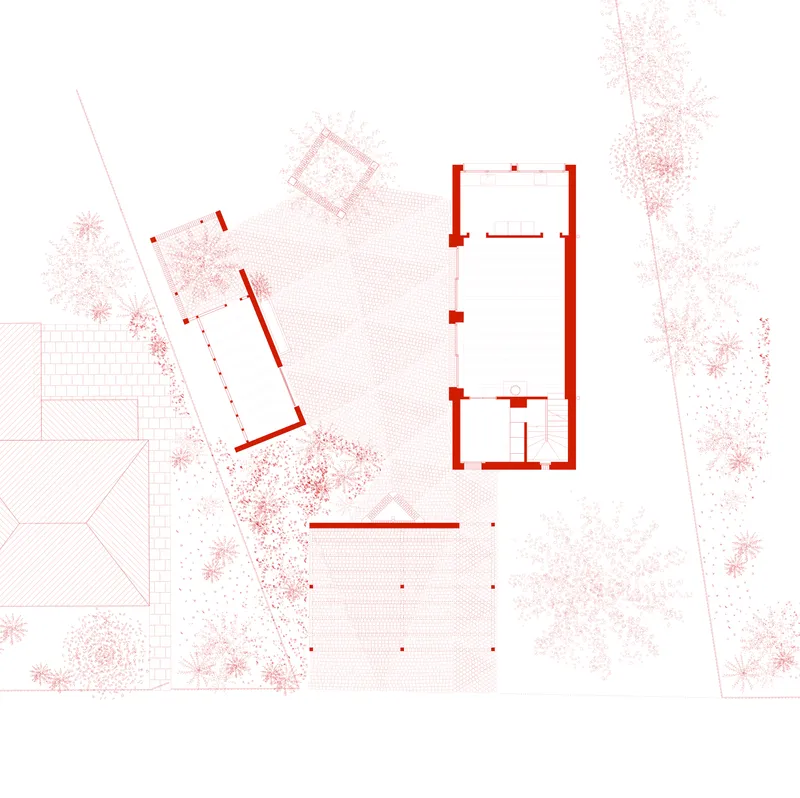
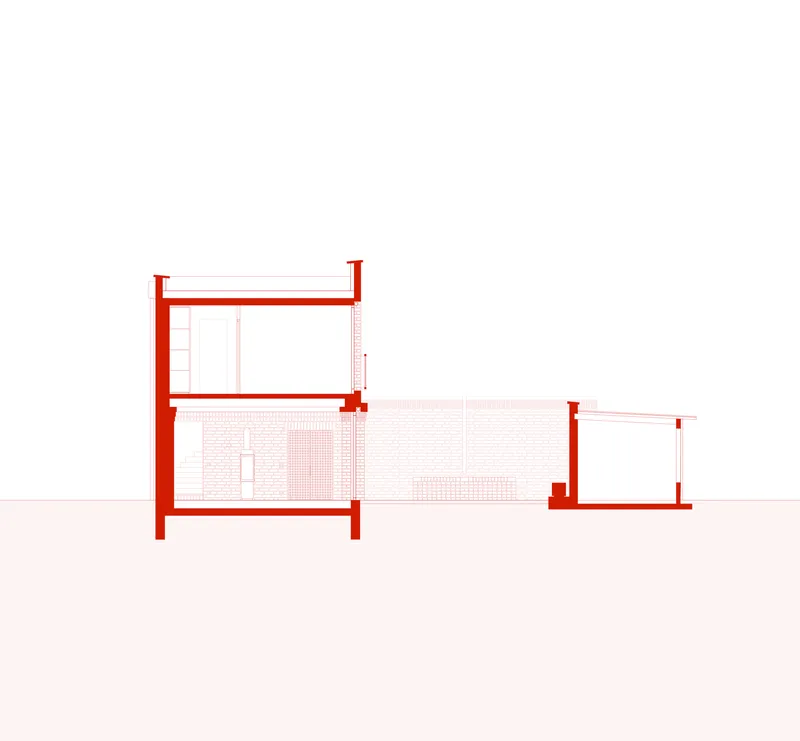
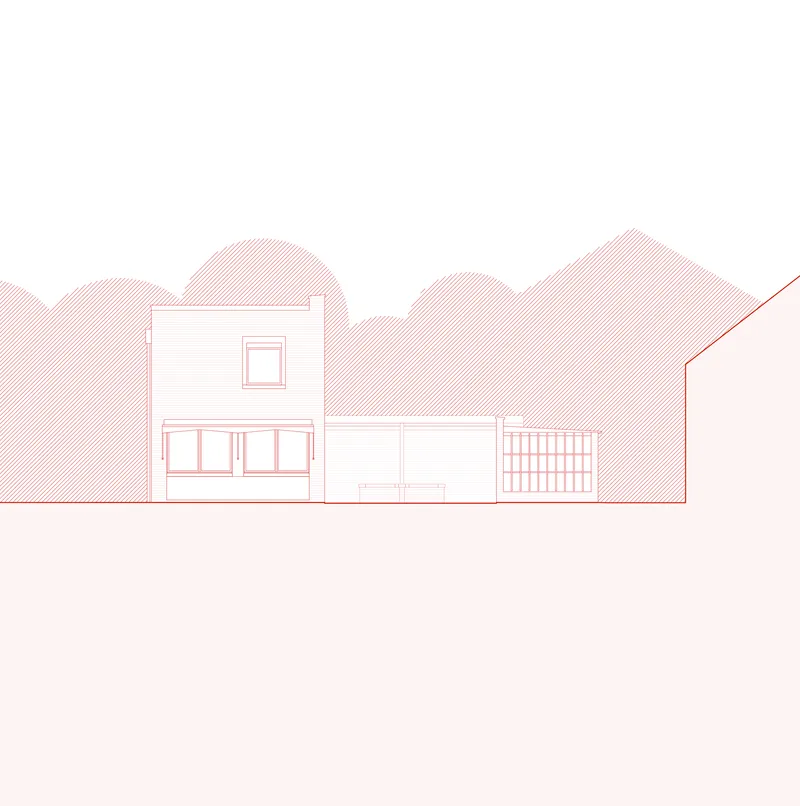
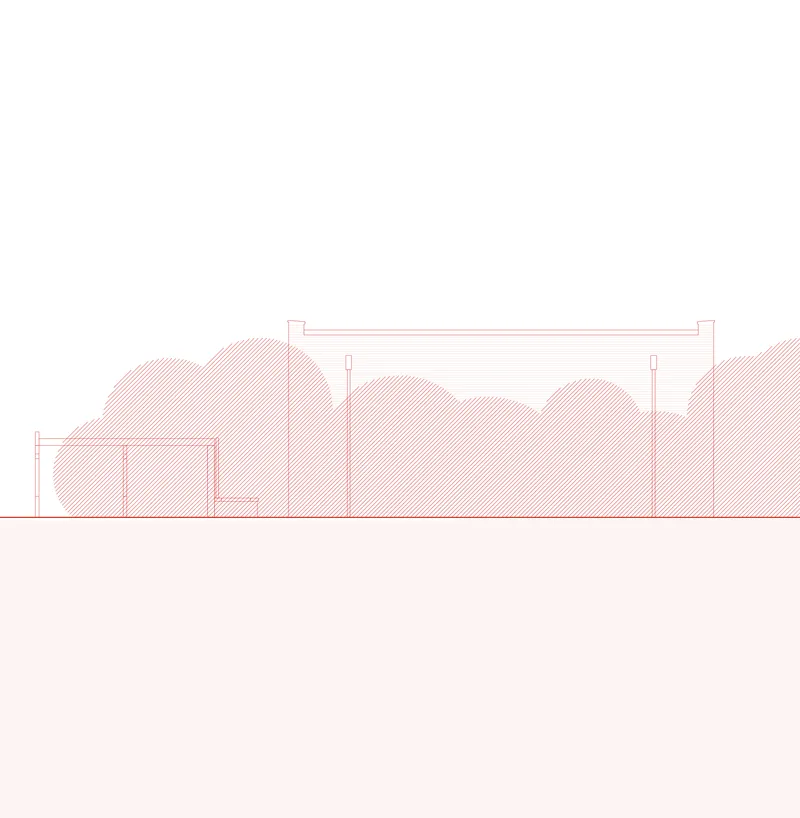
The site plans confirm what the photographs suggest: two distinct volumes sit within a landscape of trees and paved surfaces, oriented to create the courtyard as a void between them. The sections reveal the structural clarity of the approach, a two-story brick volume connected to a single-story wing, with exposed structural elements rendered in red to distinguish new work. The elevation drawings show the careful calibration of window placement and massing against the canopy of surrounding trees.
What the drawings make legible is the project's scale relative to its neighbors. Erler House does not try to dominate or disappear. It holds its ground, matching the ridge heights and footprint rhythms of adjacent structures while introducing a formal precision that is unmistakably contemporary.
Why This Project Matters
Erler House matters because it demonstrates that a single-family home in a rural village can be both architecturally ambitious and contextually generous. Meier Unger have not imported an alien formal language or retreated into vernacular mimicry. They have read the village structure, identified the courtyard as its latent organizing principle, and built an ensemble that amplifies that principle. The result is a house that improves the place it occupies.
At a moment when much of the discourse around rural housing oscillates between prefabricated efficiency and Instagram-ready cabins, Erler House insists on something more patient. It argues that the single-family house is still a genuine architectural problem, one that deserves the same spatial intelligence and material discipline as any public building. That argument, made in brick and timber on a cobblestone courtyard in Fockendorf, is persuasive.
Erler House, designed by Meier Unger (Jan Meier, Lena Unger). Fockendorf, Germany. 150 m². Completed 2020. Photography by Philip Heckhausen.
About the Studio
Share Your Own Work on uni.xyz
If projects like this are the kind of work you want to make, uni.xyz is a place to publish your own, find collaborators, and enter design competitions.




Popular Articles
Popular articles from the community


Co-Life: Senior Housing Design That Reconnects Older Adults With the City
Co-Life reimagines senior housing design through healing gardens, shared streets, workshops, and a sustainable community across generations.

The Ocean Hive: Sustainable Architecture for a Self-Sufficient Civilization at Sea
The Ocean Hive imagines sustainable architecture at sea, where modular habitats, algae, wave power and ocean waste sustain a growing colony.

Conexión: Biophilic Design Reimagines High-Rise Living in Hong Kong
Conexión reimagines high-rise living in Hong Kong through biophilic design, green facades, shared spaces, daylight, water and nature within.

Hill & Cross Opera: Sculptural Opera House Architecture Shaped by Tallinn’s Landscape and Identity
Hill & Cross Opera reimagines opera house architecture in Tallinn through its sculptural hill, civic plaza, glass wave and a luminous cross.


Similar Reads
You might also enjoy these articles

Bao Huynh Watercolor Atelier: A Serene Art Retreat in Hội An
Bao Huynh Watercolor Atelier in Hội An blends multifunctional art spaces, sustainable design, local materials, and family-friendly living in a serene environment.

Atelier Macri Concept Store Interior Design by CASE-REAL
Atelier Macri store features a "ko" counter, walnut wood details, cork displays, blending retail, gallery, and seamless customer experiences.

Manuel Vargas Izquierdo Stadium and High-Performance Sports Center: Architectural Excellence in Jalpa de Méndez
The Manuel Vargas Izquierdo Stadium blends sustainable design, inclusive sports facilities, and cultural-inspired architecture, revitalizing Jalpa de Méndez’s public spaces.

KAKR Buluh Awar Hall: Revitalizing Community and Ecology Through Bamboo Architecture
Community built bamboo hall revitalizes Buluh Awar village, empowering youth, restoring ecology, celebrating vernacular craftsmanship through sustainable architecture and culture.




Comments (0)
Please login or sign up to add comments
No comments yet. Be the first to comment!