

Melbourne Indigenous Transition School Boarding House by McIldowie Partners: A Culturally Grounded Student Residence
The Melbourne Indigenous Transition School Boarding House blends cultural storytelling, Indigenous art, and thoughtful design, fostering safe, connected, and supportive student living.


Located on Wurundjeri Country in Richmond, Australia, the Melbourne Indigenous Transition School (MITS) Boarding House by McIldowie Partners is a landmark educational residence designed to support students from remote regions of Victoria and the Northern Territory. Completed in 2023, this purpose-built facility embodies cultural safety, community connection, and innovative architectural design, fostering a supportive environment where Indigenous students can thrive academically and socially.

A Culturally Sensitive Design Approach
Guided by Senior Wurundjeri Elder Uncle Colin Hunter, the boarding house design prioritizes cultural continuity and student well-being. Each design decision integrates Indigenous knowledge and storytelling, creating a home away from home that strengthens students’ connection to their ancestral lands while supporting their educational journey.
The boarding house spans three levels, thoughtfully organized to balance social interaction, study, and rest. The ground floor houses MITS administrative offices and welcoming student social spaces that flow seamlessly into landscaped courtyards. The upper floors provide spaces for study, informal gatherings, and private dormitories. Each dorm room includes a dedicated study nook, ensuring a quiet, personal space for focused learning.

Celebrating Diverse Indigenous Communities
The interiors reflect the cultural heritage of the students’ communities, including Gunaikurnai Country, Maningrida, Ramingining, Jabiru, Elcho Island, and Milingimbi. Soft furnishings, wallpapers, lighting, artwork, and wayfinding graphics narrate the stories of these regions, bridging students’ cultural identity with their residential experience.
Natural timbers, earthy tones, and accents of green, ochre, and clay evoke the Australian landscape, while curved joinery and furniture echo the flowing lines often seen in Indigenous artworks, symbolizing water and connection to Country.

Outdoor Spaces and Landscape Integration
The boarding house extends beyond its interior, with terraces and courtyards landscaped with native plants that mirror the pre-colonial environment. The expansive play area incorporates a poured paving artwork by Trawlwoolway artist Edwina Green, reflecting the colors of Wurundjeri Country and illustrating the movement of rain across the land. The rooftop terrace, complete with a campfire, offers panoramic city views and serves as a central gathering place for students.


Iconic Facade and Indigenous Storytelling
The building’s facade, co-designed with Indigenous artist Lorraine Kabbindi White, features a laser-cut perforated screen depicting the Dreamtime story of the First Bees. This striking exterior acts as a cultural billboard for MITS, delivering the powerful message: “Always was, always will be.” Operable screens provide shading for west-facing windows while animating the street frontage, blending function with cultural expression.


A Milestone for Melbourne Indigenous Transition School
According to Ed Tudor, CEO of MITS, “371 is the first building we designed and constructed from scratch, ensuring it provides opportunity, warmth, safety, and connection. It allows our students, staff, and leadership team to gather in spaces that celebrate Indigenous culture and learning.”
The Melbourne Indigenous Transition School Boarding House represents more than a residence: it is a platform for cultural celebration, student empowerment, and architectural innovation, positioning MITS as a leader in culturally responsive educational design.


All photographs are works of
Tom Ross


Popular Articles
Popular articles from the community


Architekt Andreas Gruber Scatters 23 Dark Timber Chalets Across a South Tyrolean Forest Edge
In Molini di Tures, Amonti Chalets breaks a resort into a hamlet of gabled timber houses, with parking, storage and services pushed into the slope.

Juan García Correa, John González and Claudia Rueda Sink a Circular Amphitheater into a Manizales Engineering Building
On the La Nubia campus in Manizales, Colombia, the S1 Building folds labs and offices into a hillside of ramped lawns that double as a campus route.

David Macias Steps a Doorless Stone and Plaster House Down a Tropical Colombian Hillside
In the humid hills of Colombia, Threshold House replaces the front door with an open void and terraces its 850 m² down the slope instead of fighting it.

GROUP A Strips a 1969 Rotterdam Harbor Headquarters to Its Frame and Wraps It in Timber Louvers
In Rotterdam's M4H harbor district, Ferro Offices reuses a 1969 frame, adds one timber storey and reaches BREEAM-NL Outstanding.

Similar Reads
You might also enjoy these articles

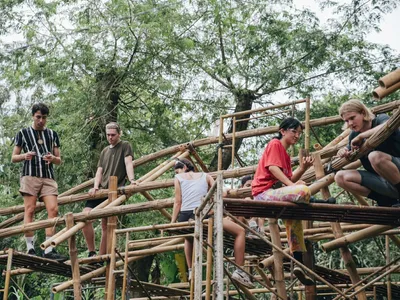
Bamboo Housing Challenge 2026: Design Affordable, Sustainable Homes Using Bamboo
An international design competition by Bamboo U and IBUKU inviting architects and designers to reimagine affordable housing using bamboo — with the winning design built full-scale in Bali.

Computational Design & Education: Beegraphy Design Awards Introduces 7th Category (Featuring Jiyun's Innovative Approach)
Dive into Beegraphy’s 7th Design Awards category, where computational design meets education to create immersive, interactive learning tools, inspired by Jiyun’s work.
From Parametric Lighting to Urban Furniture: Join the 2nd Workshop in Beegraphy’s Computational Design Series
Dive into Cutting-Edge Design Techniques and Practical Applications with Industry Experts

Last Call: Unleash Your Architectural Genius in SHAK's Kindergarten Design Competition
Urgent call for architects to join SHAK's kindergarten design competition before the looming deadline

Explore Housing Competitions
Discover active competitions in this discipline

Challenge to reimagine the Iron Throne

Photograph architecture without architects

Illustrate the lost glory of Angkor Wat - Render Challenge

Design challenge to reuse E-waste
Comments (0)
Please login or sign up to add comments
No comments yet. Be the first to comment!