

Melbourne Place Hotel – Kennedy Nolan Architects | Boutique Luxury Hotel in Melbourne CBD
Melbourne Place Hotel by Kennedy Nolan Architects blends heritage-inspired architecture, bespoke interiors, local craftsmanship, and art, creating a memorable boutique luxury experience.


Melbourne Place Hotel, designed by Kennedy Nolan Architects, is a striking new addition to Melbourne’s east end CBD. Completed in 2024, the hotel spans 11,272 m² and exemplifies a holistic design approach, seamlessly integrating architecture, interiors, and brand identity. Every aspect of the hotel reflects Melbourne’s cultural and architectural heritage while delivering a contemporary, sophisticated experience.
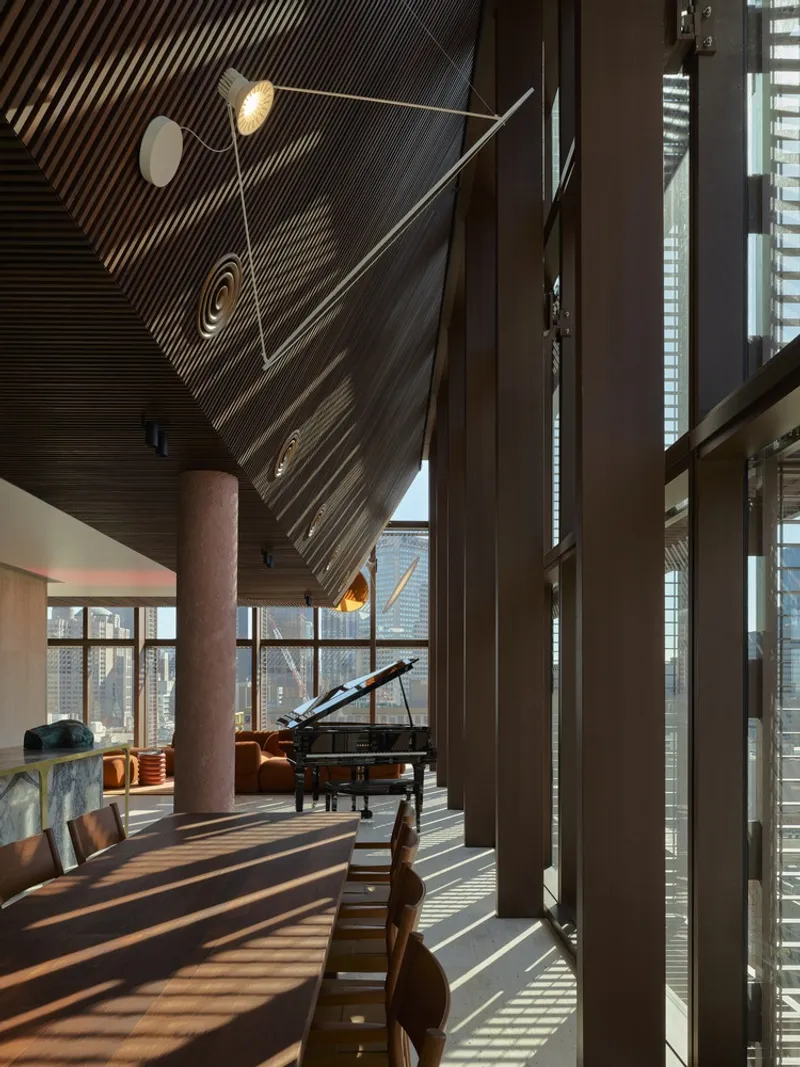

A Complete Design Approach: Architecture, Interiors, and Brand Integration
Melbourne Place Hotel was envisioned as a complete, unified project, with architecture, interior design, and brand development evolving together. The team collaborated closely with client Josh Taylor, brand agency Studio Round, and Hotel Managing Director Tracy Atherton, ensuring the hotel’s identity was embedded in every detail. From urban-scale massing to cabinet hardware, the design creates a cohesive and memorable guest experience.

Architectural Identity: Respecting Melbourne’s Heritage
The hotel’s architecture draws inspiration from Melbourne’s historic and cultural fabric. Its highly modelled tinted concrete and brick façade, operable shutters, and finely detailed massing reference significant local buildings, including The T&G Building, Cavendish House, and the neighboring Hero building. The result is a design that is both modern and deeply connected to the city’s architectural lineage.
Spanning 16 levels with two basement floors, Melbourne Place features a double-height ground plane, a projecting first-floor balcony over Russell Street, and a three-level recessed “top-knot” framed by a delicate corten steel brise-soleil. The building incorporates an abstract zoomorphic form, giving it a distinctive personality with a long brick “neck” and super-scaled “eyes,” which imbue the structure with warmth and familiarity.

Interiors: Materiality, Texture, and Color
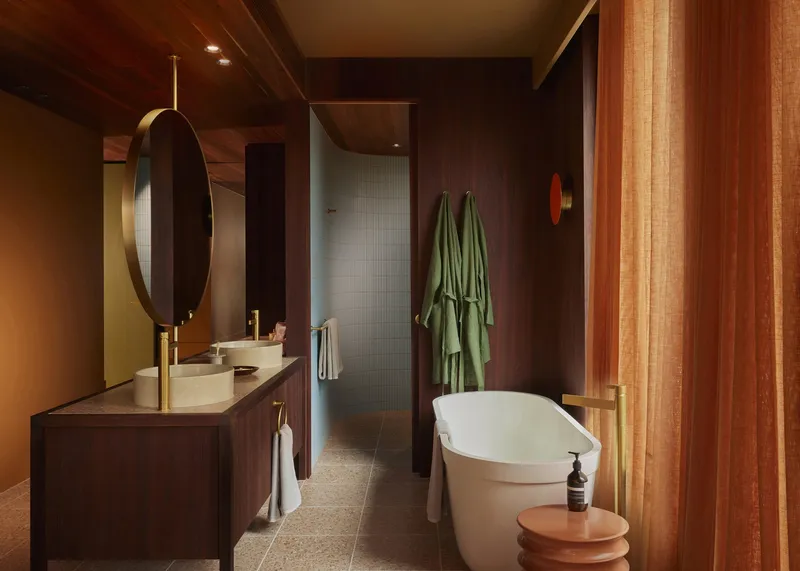
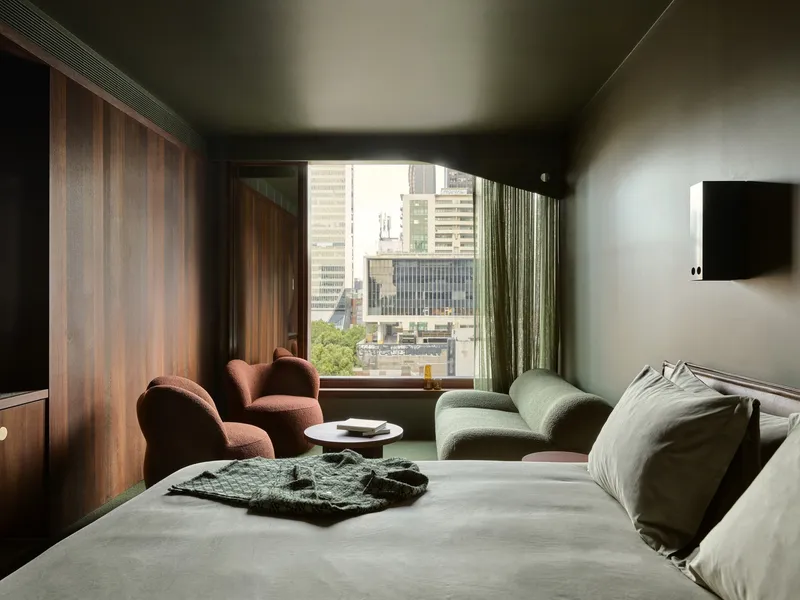
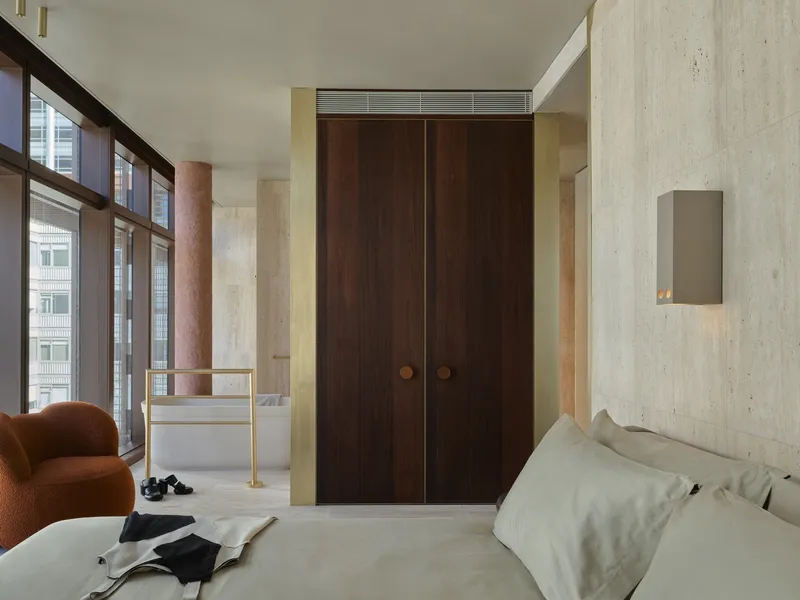
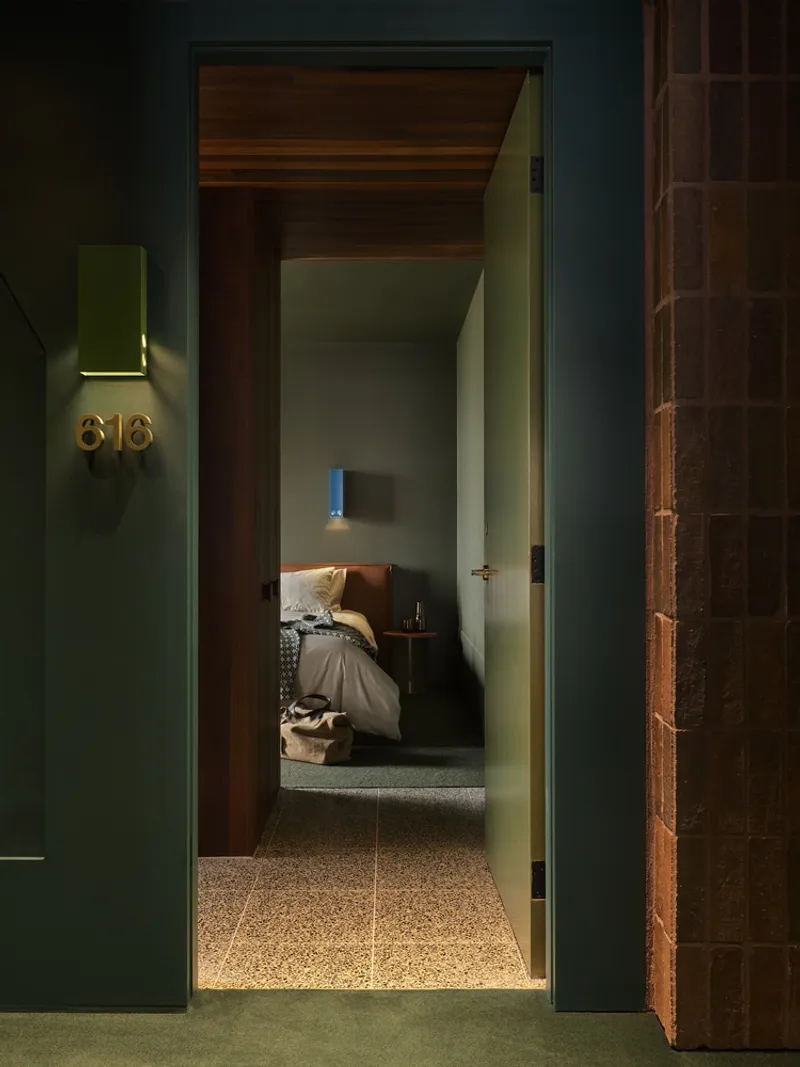
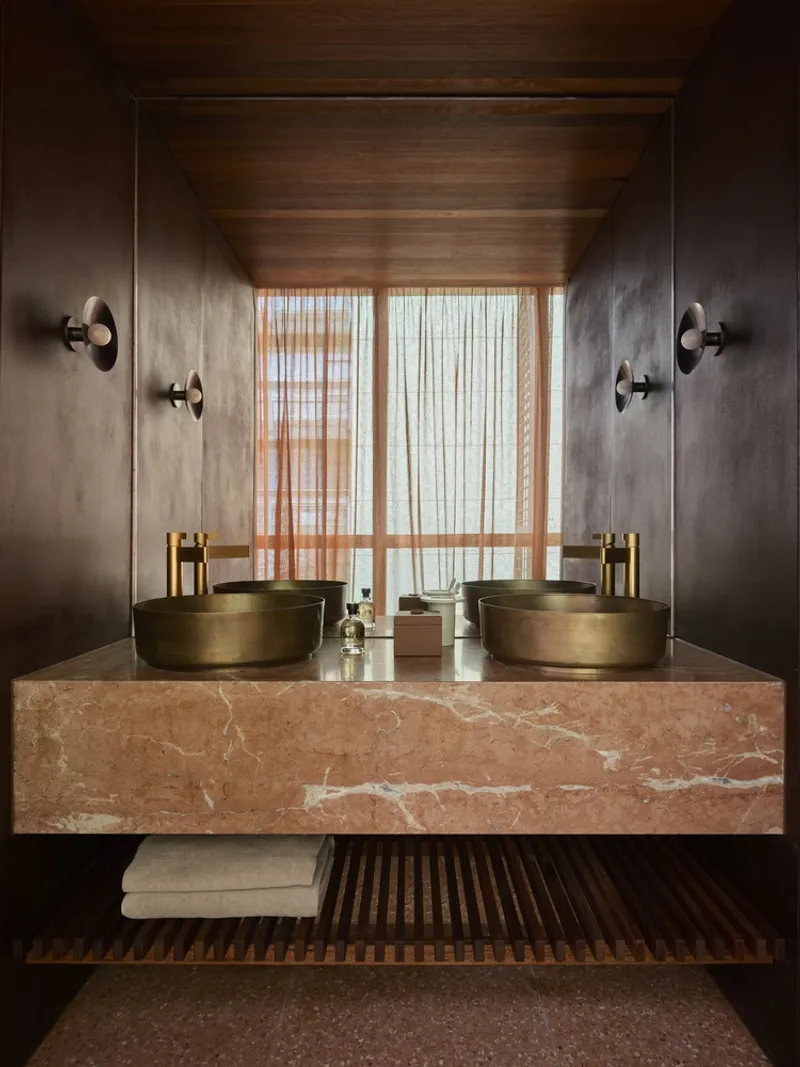
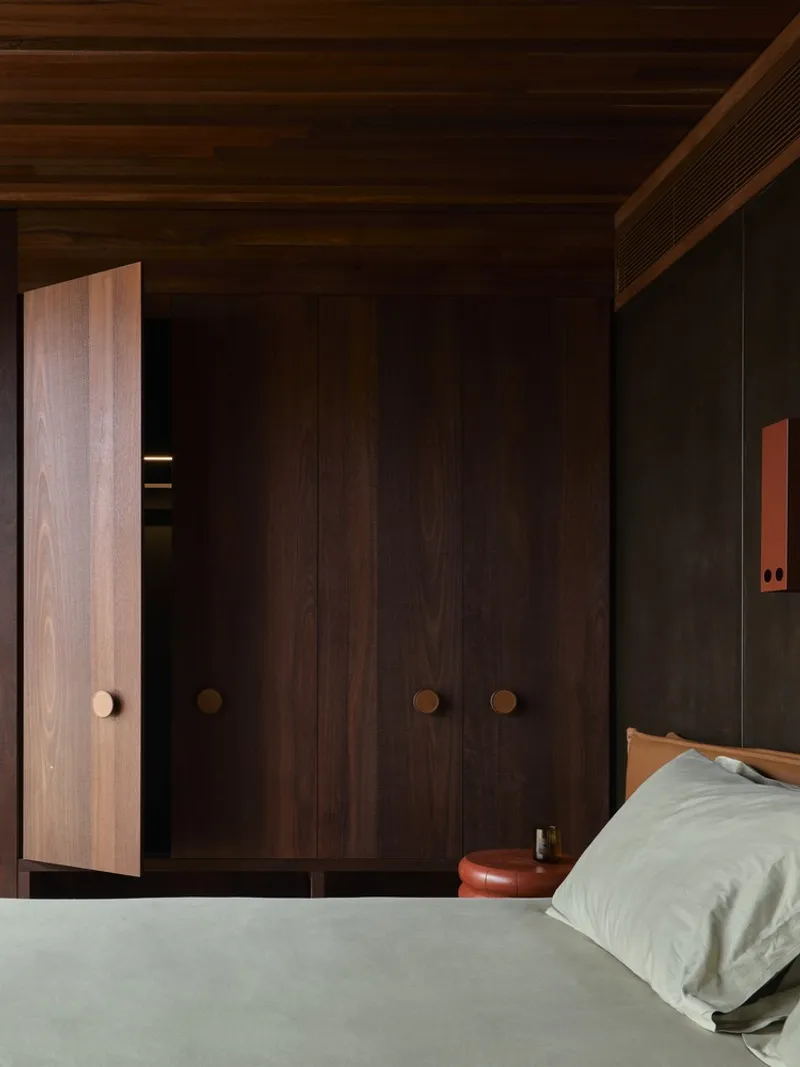
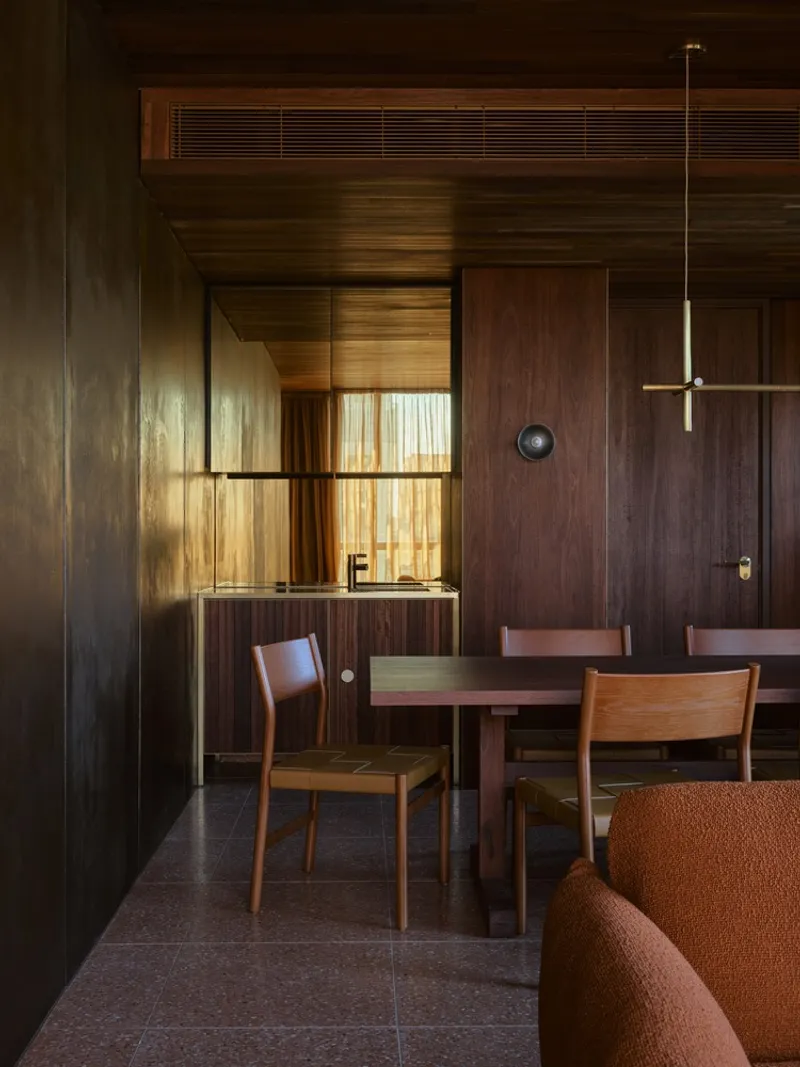
The interiors of Melbourne Place Hotel are a celebration of material authenticity and craftsmanship. The palette is tonal, muted, and natural, featuring custom Stawell bricks, warmly tinted pre-cast concrete, and deep red metal accents. Interiors are enriched with West Australian jarrah, bespoke terrazzo blends, and metallic touches in brass and corten steel.
Color is used thoughtfully, alternating between playful and intense moments to create spaces that linger in memory. Bedrooms, living areas, and communal spaces feature furniture, lighting, and fittings sourced primarily from local makers, emphasizing the hotel’s connection to Melbourne’s creative community.

Art, Culture, and Local Collaboration
Art and cultural representation are central to Melbourne Place. Local artists were commissioned to embed Melbourne’s contemporary, multicultural, and sophisticated identity into the hotel’s interior narrative. This approach ensures that every space, from guest rooms to public areas, feels authentic, vibrant, and rooted in the city’s cultural context.
A Memorable Boutique Hotel Experience
Melbourne Place Hotel is designed to be more than just a building; it is a familiar and welcoming presence in the city. Its integration of architecture, interiors, and brand identity creates a hotel that is recognizable, memorable, and distinctly Melbourne. This boutique luxury hotel exemplifies the fusion of architectural heritage, contemporary design, and hospitality excellence.
All Photographs are works of Derek Swalwell, Anson Smart, Sean Fennessy, Kristoffer Paulsen


Popular Articles
Popular articles from the community


Opera on the Sea: Driftwood Logic Shapes a Timber Opera House on Estonia's Coast
Trevor Orgill's opera house translates the entangled drift of floating timber into a civic building where wood, water, and music converge.

Manzana Morphosis: Stretching Barcelona's Grid into a Living Landscape for 2050
A radical reworking of the Eixample manzana turns density into a tool for generous public space, vertical ecology, and environmental performance.
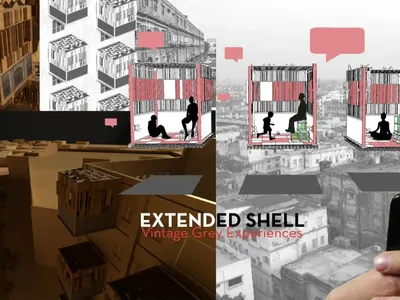
Extended Shell: Retrofitting Kolkata's Balconies as Living Urban Thresholds
A modular retrofit system recovers the social and environmental intelligence of Kolkata's historic verandas for contemporary Park Street residents.
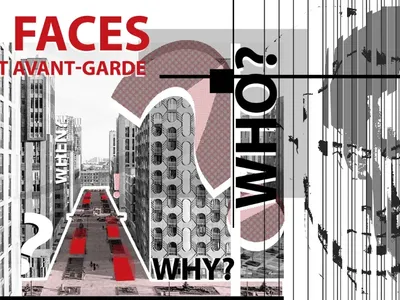
Faces of the Soviet Avant-Garde: Turning Moscow's Street Names into an Open-Air Museum
A network of sculptural installations across a Moscow residential district transforms forgotten architect names into spatial encounters with cultural memor

Similar Reads
You might also enjoy these articles


Hodi-Mandai Geram
Project Function: Preservation and revitalization of the Intangible heritage and socio-spatial identity of the Hodi by Housing, Cultural Memory Center, Sacred Grove, landscape, local tourism economy


Olio Towers: A Mid-Rise for Performers That Fuses Housing, Rehearsal, and Stage
Located blocks from Houston's Theater District, this modular tower stacks living units around a central performance atrium.

Oasis: Modular Green Housing Carved into Dhaka's Urban Fabric
A shortlisted Plugin Housing entry reclaims unauthorized settlements in Dhaka with stepped concrete volumes, green roofs, and ventilation-driven design.

Black Hole: A Floating Megastructure for the Post-Physical Era
Emiliano Mazzarotto envisions a spherical, self-scaling arena where e-sports, digital hotels, and holographic stadiums replace traditional public space.

Explore Melbourne Competitions
Discover active competitions in this discipline

Challenge to reimagine the Iron Throne

Photograph architecture without architects

Illustrate the lost glory of Angkor Wat - Render Challenge

Design challenge to reuse E-waste
Comments (0)
Please login or sign up to add comments
No comments yet. Be the first to comment!