
Memorial Architecture in Mumbai: Tranquilizing Temperaments Through Space
A powerful memorial architecture project in Mumbai transforming industrial trauma into spaces of reflection, healing, and collective memory.

Memorial Architecture has long served as a bridge between history and healing. In cities shaped by economic rise and social rupture, architecture becomes more than built form — it becomes conscience. Tranquilizing Temperaments through Architecture, a visionary project by Abhishek Thakai S, reinterprets Mumbai’s turbulent mill history through a contemporary memorial architecture intervention that transforms collective trauma into spatial reflection.
Mumbai, once the thriving textile capital of India, supported nearly nine lakh mill workers and their families. The shutdown of these mills did not merely alter the skyline; it destabilized livelihoods, fractured communities, and reshaped the social fabric of the city. This project explores how memorial architecture can calm emotional unrest, provoke awareness, and restore dignity through spatial storytelling.
The Historical Context: Mumbai’s Industrial Rise and Fall
The evolution of Mumbai’s textile mills marks one of the most defining chapters in Indian urban history. During the 1970s, mills symbolized prosperity and industrial glory. By the 1980s and 1990s, economic shifts, labor unrest, and redevelopment pressures led to widespread closures. Workers were displaced, unemployment soared, and entire neighborhoods slipped into uncertainty.
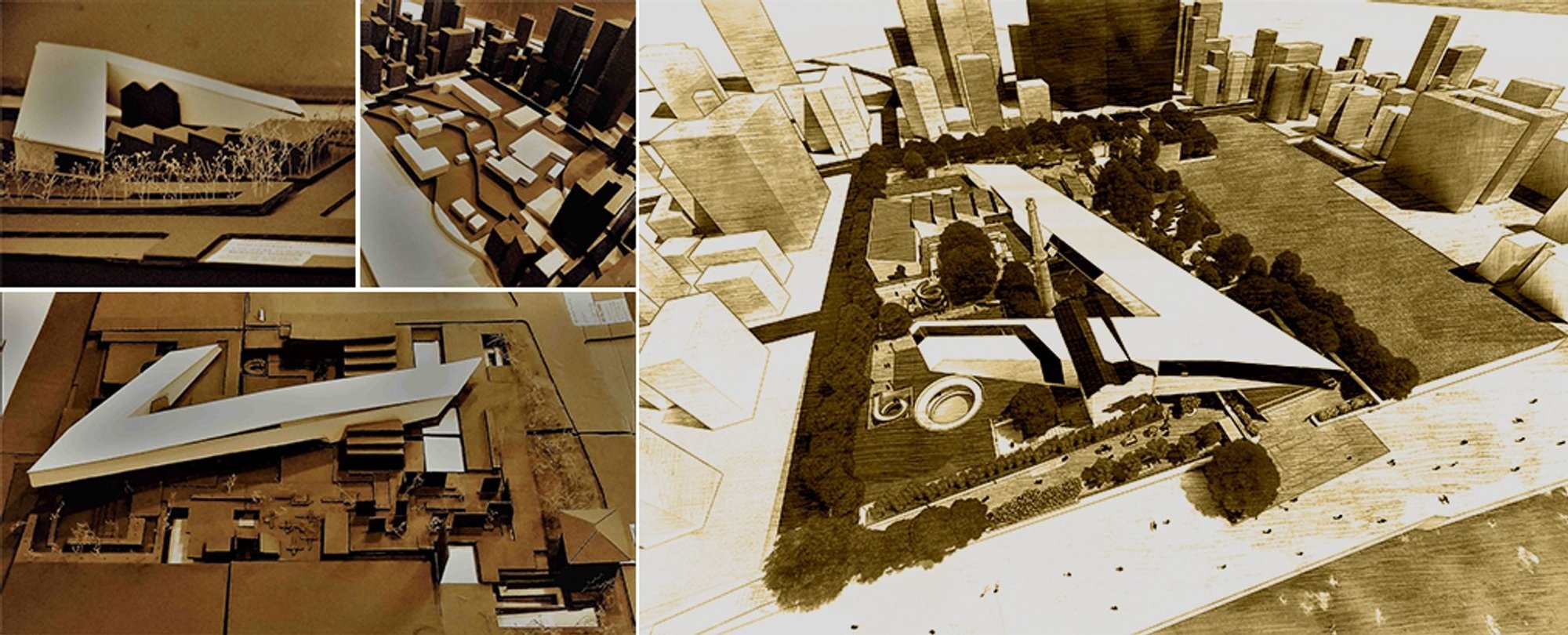
This memorial architecture proposal situates itself on former mill land in Dadar, Mumbai — a site loaded with economic memory and social pain. Rather than erasing history through commercial redevelopment, the project reclaims it as a space for reflection.
Concept: Architecture as Emotional Therapy
The core idea behind this memorial architecture project is that space can influence temperament. Built environments can disturb, provoke, silence, or heal. Abhishek Thakai S conceptualizes architecture as a psychological journey — a sequence of spatial experiences that guide visitors from chaos toward contemplation.
The design is organized into thematic experiential zones, each narrating a phase of Mumbai’s socio-economic decline and its human consequences.
Spatial Narrative: A Journey Through Memory
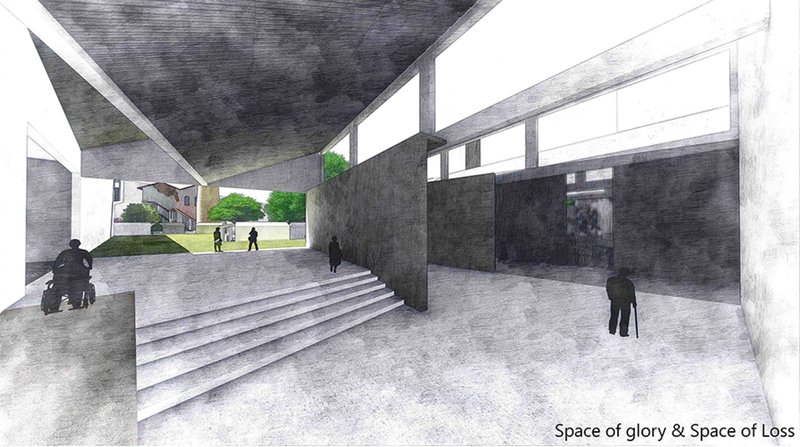
1. Space of Glory & Space of Loss
The entry sequence contrasts industrial prosperity with decline. Open courtyards, stark concrete volumes, and framed views create tension between light and shadow — symbolizing transition from stability to uncertainty.
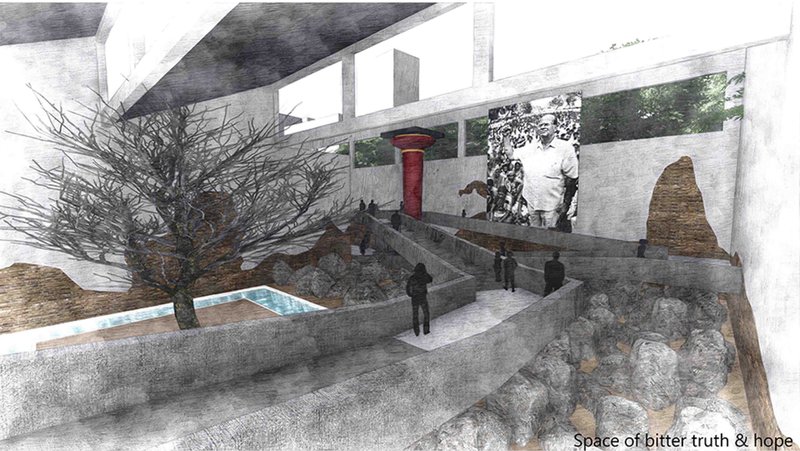
2. Space of Bitter Truth & Hope
Fragments of brick, exposed surfaces, and historical imagery confront visitors with uncomfortable realities. A central installation stands as a vertical reminder of resistance and resilience.
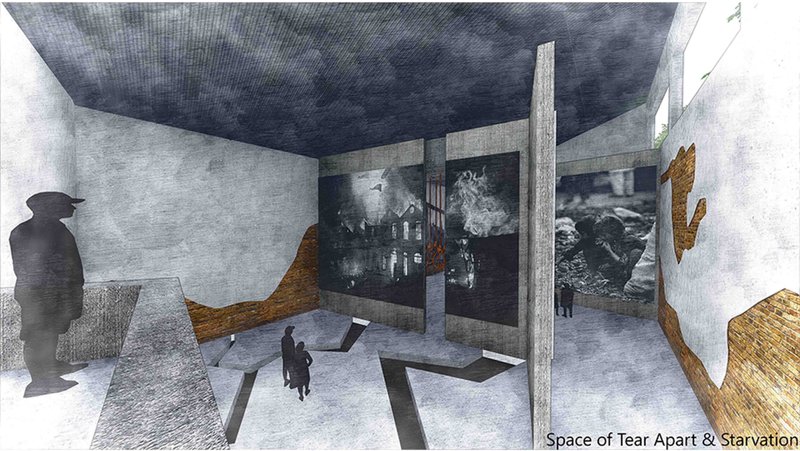
3. Space of Tear Apart & Starvation
Angular walls, compressed circulation paths, and dramatic visual storytelling immerse visitors in the psychological strain experienced by mill workers during economic collapse.
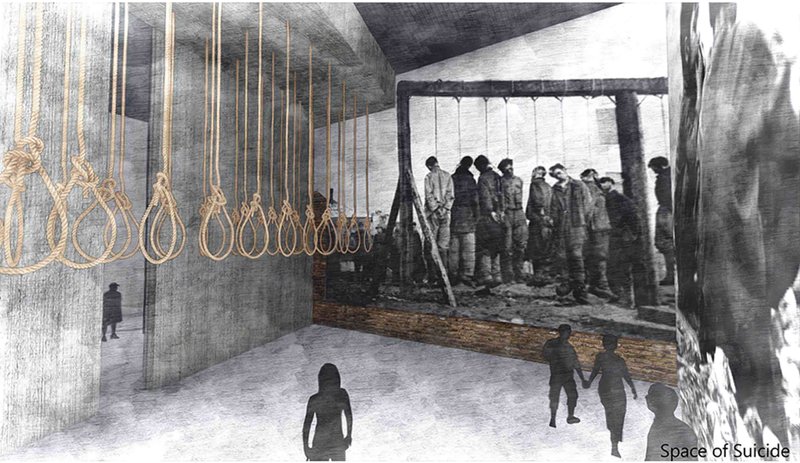
4. Space of Suicide
Perhaps the most haunting zone, this chamber incorporates suspended elements symbolizing despair. Architecture here becomes raw and confrontational, forcing acknowledgment of human cost.
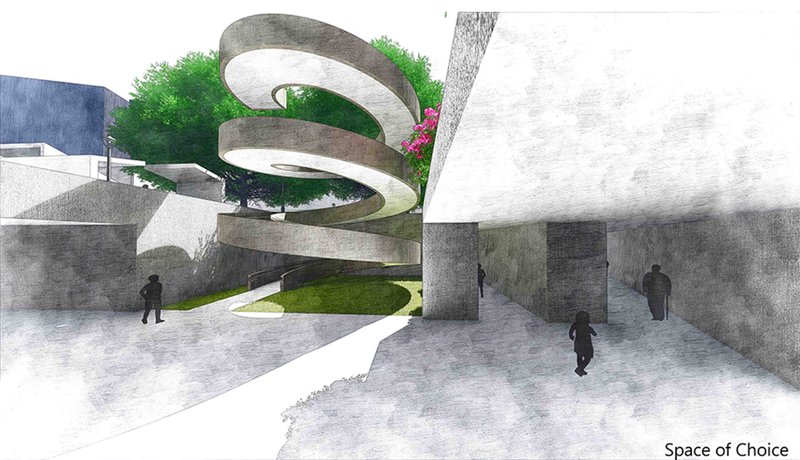
5. Space of Choice
Emerging from darkness, a spiraling sculptural element rises in an open courtyard. This upward movement represents agency, renewal, and the possibility of collective healing.
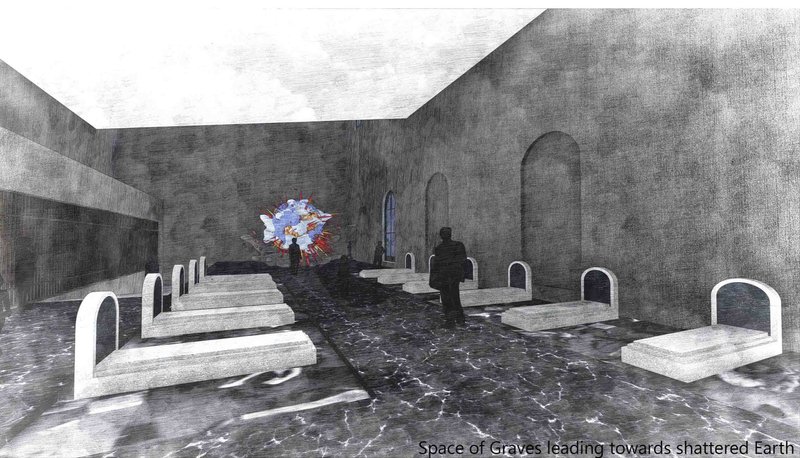
6. Space of Contemplation
Quiet corridors, grave-like installations, and reflective pools slow the body and mind. The architecture softens, inviting pause rather than reaction.
Architectural Language and Form
The formal language of this memorial architecture draws inspiration from the pitched roofs and industrial geometry of historic mills. Sharp, fragmented volumes intersect across the site, symbolizing broken systems and disrupted livelihoods.
Concrete dominates the material palette — raw, unfinished, honest. Brick fragments embedded within walls recall demolished mill structures. Water features introduce subtle sensory contrast, reflecting sky and movement while tempering the harshness of concrete surfaces.
Light becomes a primary design tool. Narrow slits, controlled apertures, and double-height voids choreograph illumination to intensify emotional transitions between spaces.
Urban Integration: Reclaiming Industrial Land
Rather than isolating the project as a monument, the design integrates with its urban surroundings. Landscaped courtyards, shaded transitional spaces, and accessible public zones reconnect the site to the city fabric. The memorial architecture does not stand apart — it becomes part of Mumbai’s ongoing narrative.
This intervention demonstrates how adaptive reuse and cultural programming can transform post-industrial land into meaningful civic space.
Architecture Beyond Structure: A Social Responsibility
Memorial architecture is not about glorifying tragedy. It is about acknowledging memory so society does not repeat mistakes. In this project, architecture functions as:
- A historical archive
- A psychological journey
- A civic platform for dialogue
- A contemplative sanctuary
By structuring emotional progression through spatial design, Abhishek Thakai S presents architecture as a medium of reconciliation.
Tranquilizing Temperaments through Architecture demonstrates the transformative power of memorial architecture in Mumbai. In a city driven by speed, capital, and constant redevelopment, this project slows time. It asks visitors to remember, to feel, and ultimately to choose empathy over indifference.
Where mills once fueled economic machinery, these memorial fuels reflection. Through deliberate spatial sequencing, material honesty, and emotional narrative, the project redefines architecture not merely as construction — but as collective conscience.




Popular Articles
Popular articles from the community

Kaffeebühnen: Coffee Shop Architecture Designed as a Civic Stage Between Vienna’s City and Park
Kaffeebühnen turns coffee shop architecture into a civic stage, linking Vienna’s park edge, urban life, warm timber yards, and coffee craft.

Milan Crossover: Sustainable Architecture for a New Fashion Culture in Milan
Milan Crossover transforms fashion culture through sustainable architecture, linking material libraries, remake studios, and public runways.

Kerry Kounnapis Packs 800 Daily Coffees into a 43-Square-Metre Melbourne Laneway Bar
Palace Coffee channels Pellegrini's and European standing bars through oxide-red steel and spotted gum timber in a Ridgway Place sliver.
Eco Chapel: A Green Architecture Pavilion Designed in Symbiosis with the Forest
Eco Chapel uses green architecture to weave prayer, learning and reuse into a forest pavilion shaped by modular hexagonal canopies for life.


Similar Reads
You might also enjoy these articles
Eco Chapel: A Green Architecture Pavilion Designed in Symbiosis with the Forest
Eco Chapel uses green architecture to weave prayer, learning and reuse into a forest pavilion shaped by modular hexagonal canopies for life.
Kaffeebühnen: Coffee Shop Architecture Designed as a Civic Stage Between Vienna’s City and Park
Kaffeebühnen turns coffee shop architecture into a civic stage, linking Vienna’s park edge, urban life, warm timber yards, and coffee craft.
Healing Façade: Sustainable Architecture for Reforestation, Community, and Sacred Ecology in Ethiopia
Healing Façade reimagines sustainable architecture as a living wall that restores soil, catches water and renews Ethiopia's forest churches.


Urban Forest: A Vertical Ecosystem for 5,000 Workers in Singapore's Changi Business Park
Radially stacked pods and layered green decks turn a 7-acre plot into 47 acres of ecological workspace projected for 2040.






Comments (0)
Please login or sign up to add comments
No comments yet. Be the first to comment!