
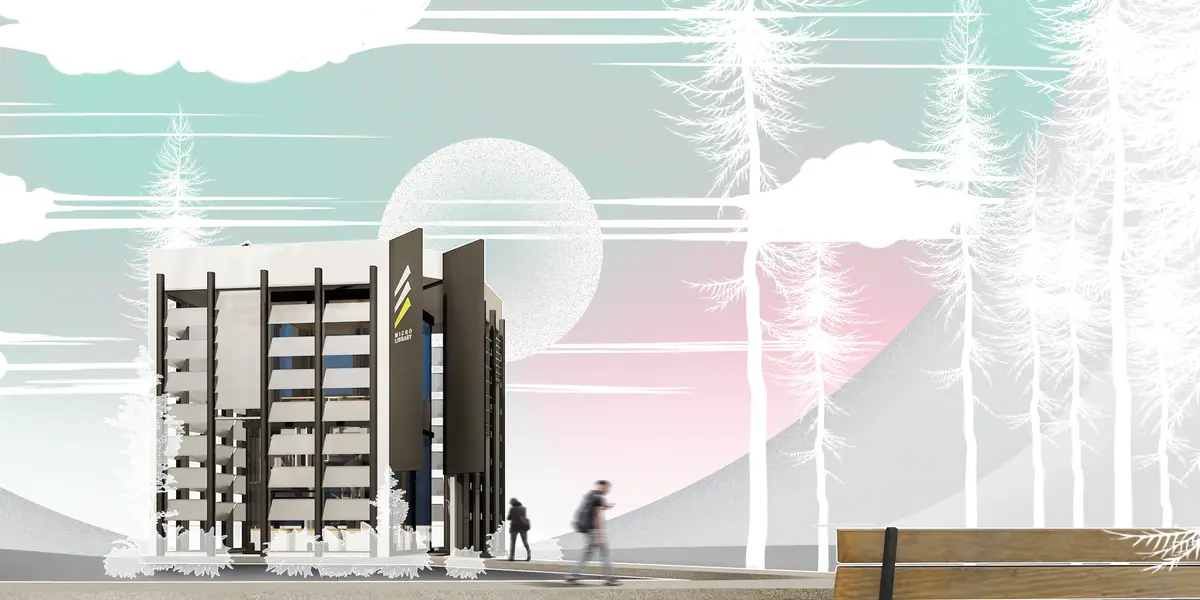
Microlibrary
Entry for compact library design.

Microlibrary stemmed from the idea of mimicking nature, where nature recycles everything and uses only the energy it needs, in the way that the building itself gives back to the environment around it as much as the library gives to its users.
We wanted to design a responsive building, one that reacts with the local atmosphere and create resources and solutions to the users of the facility or to others nearby without needing to consume energy to do so.
In that direction and inspired by living organisms, especially insects that create outer shells in order to grow and develop, we decided to create a main core space containing the library itself, encapsulated by a shell structure that holds groups of 120x65cm panels, tilted inwards or outwards depending on the characteristics of the climate in which it’s located.
These panels are made from a variety of materials, all existing locally and are sustainable to the environment it situated in. And while the iteration could be endless in terms of adaptability to said environment, we decided to showcase three examples in our proposal, humid, cold and hot climates.
The design process went through many versions, at first, we were more inclined to design a masterfully creative library in and of itself, a place where books are displayed and people come to read, learn, and collaborate surrounded by innovative solutions and hi-tech aid. However, we ultimately decided to move into a more grounded thought process after realizing that the competition's theme offers a new way to view libraries, a micro space where four people at most can occupy it, where they learn about whatever they desire or work on group projects.
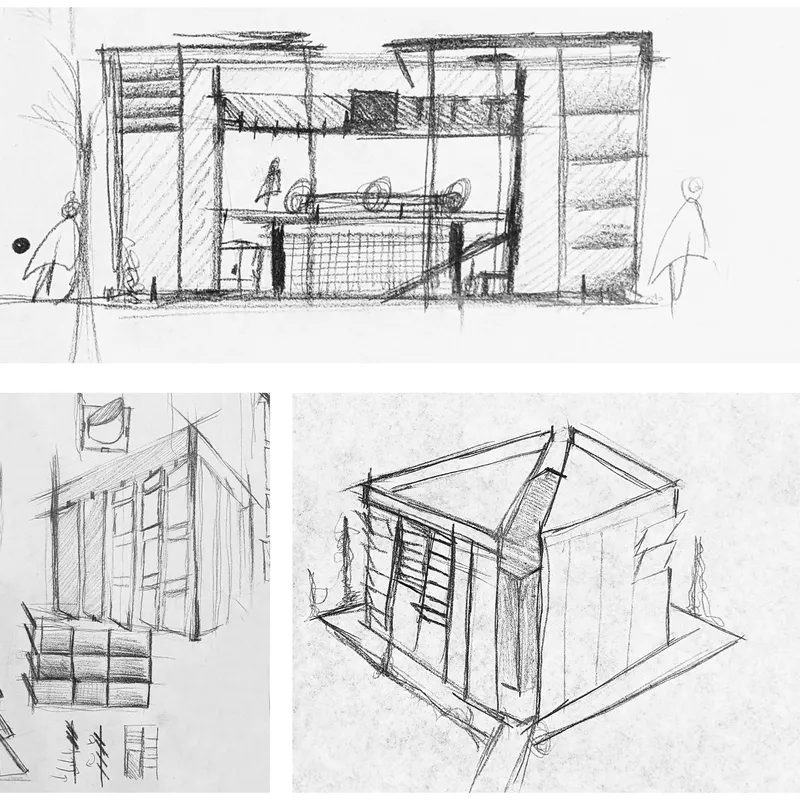
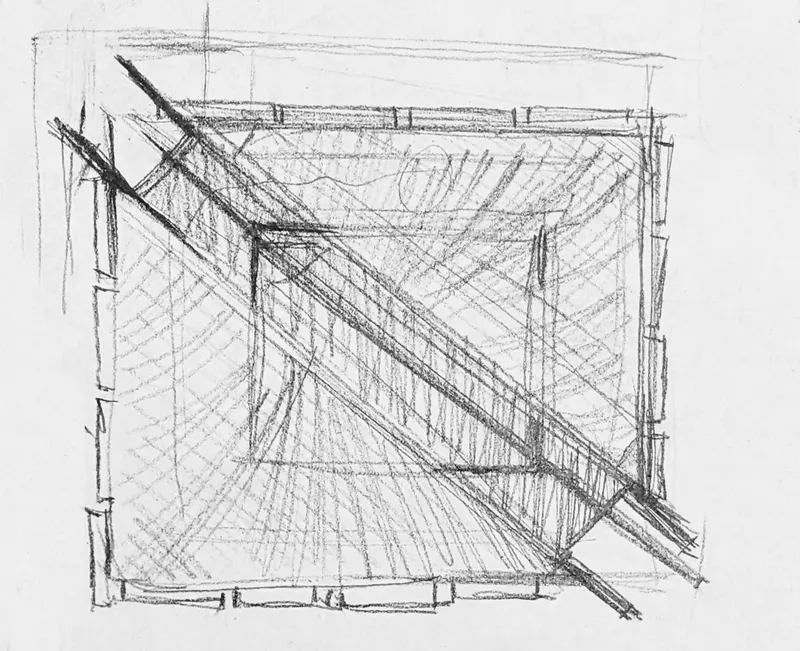
So what can we do to make this library stand out? How about making it a living structure? How about we create a simple clean space that interacts with nature the same way nature interacts with itself? Or maybe offer sustainable solutions that work on making the library a desirable place with minimum to no energy consumption?
Backed with a shape language that is simple and straight-forward for ease of installation and dismantling, and a photovoltaic system that helps generate the energy that the library needs, the answer to all of the question above led to the Microlibrary design showcased in our entry.
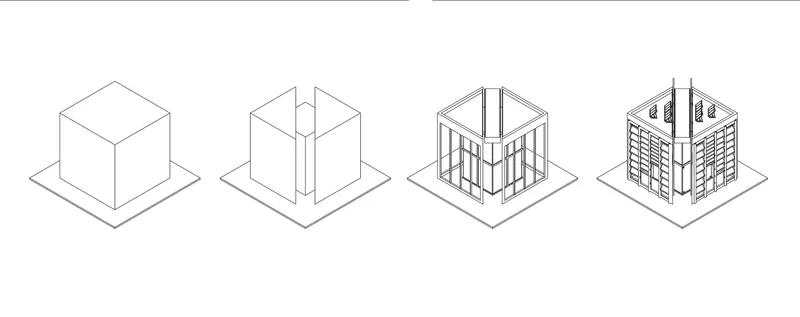
In the three examples showcased, the shell structure and its components (Panels and Water Collection Pipes) offer three different types of solutions, in humid areas microalgae is the main material used in these panels, it collects water from rain, dew and water vapor, and it then cleans it by ridding it of heavy particles and transfers it to water collection pipes.
Panels used in cold areas however are made from frosted glass that help diffuse strong light and heat.
In hot areas however, the shell consists of two types of panels, one that uses microalgae and one that has a layer of bentonite clay, both work to collect as much water possible and clean the air from smog and impurities in the micro-environment of the library.
The Library offers an online platform that offers location services, content of the library and vacancy, you can also set events and book a Microlibrary for a specific time for group projects of four.
Some microlibraries are genre-specific, a coding system using color is used throughout the app and in the design itself. Microlibraries connect and work with each other through these services giving the users a broader sense of community.
We’re introducing this design to also be an example or a starting point for future projects, whether it’s a library or a school, a goal where all buildings can give back to nature as much as it takes or even less, a node that help the environment around it to heal and thrive and start a chain process of growing that continues even after the library is dismantled.
Microlibrary is made to be moved frequently, the ease of installing and dismantling mentioned above keeps that process simple, in aim of planting this library in as many locations as possible, leaving its positive footprint wherever it goes, Microlibrary can be built in any part of this planet and it will adapt to create the perfect space for learning.

Popular Articles
Popular articles from the community

Tsunami Convergenics: Turning Catastrophic Ocean Forces into Underwater Housing Infrastructure
A speculative underwater settlement off the coast of Onagawa, Japan, treats tsunamis and typhoons as energy sources rather than threats.

Cloaked Colonization: A Mobile Underwater Habitat That Moves Like a Fish
Micah Abaya's shortlisted EHC Pacific entry reimagines ocean settlement as a dispersed network of self-sustaining architectural organisms.

Singing Woman: An Opera House That Performs Before the Curtain Rises
Ovidiu Cristian Pavel's conceptual opera house translates Estonia's choral identity into a sculpted waterfront landmark facing the Baltic Sea.

Opera by the Sea Estonia: Three Shells Dissolving Architecture into Tallinn's Coastline
A winning opera house proposal replaces monumental form with interconnected shells that blur the boundary between building, park and Baltic Sea.

Similar Reads
You might also enjoy these articles
The Rhythm of Seasons
A Farmers' Market Connecting Nature and the City

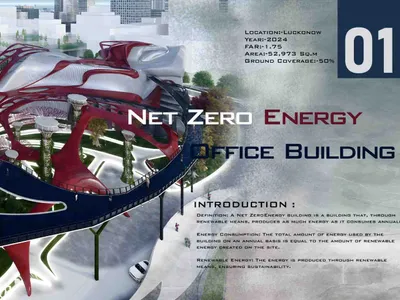
More Than a Building-Designing a Living System
More Than a Building-Designing a Living System
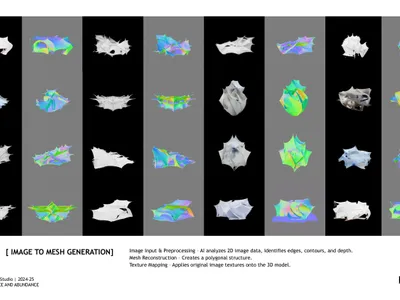
Base Beyond
DESERT COMPOUND ARID: TOURISM OF ABSENCE AND ABUNDANCE

Explore Simple Architecture Competitions
Discover active competitions in this discipline


Challenge to reimagine the Iron Throne

Photograph architecture without architects

Illustrate the lost glory of Angkor Wat - Render Challenge

Design challenge to reuse E-waste
Comments (0)
Please login or sign up to add comments
No comments yet. Be the first to comment!