
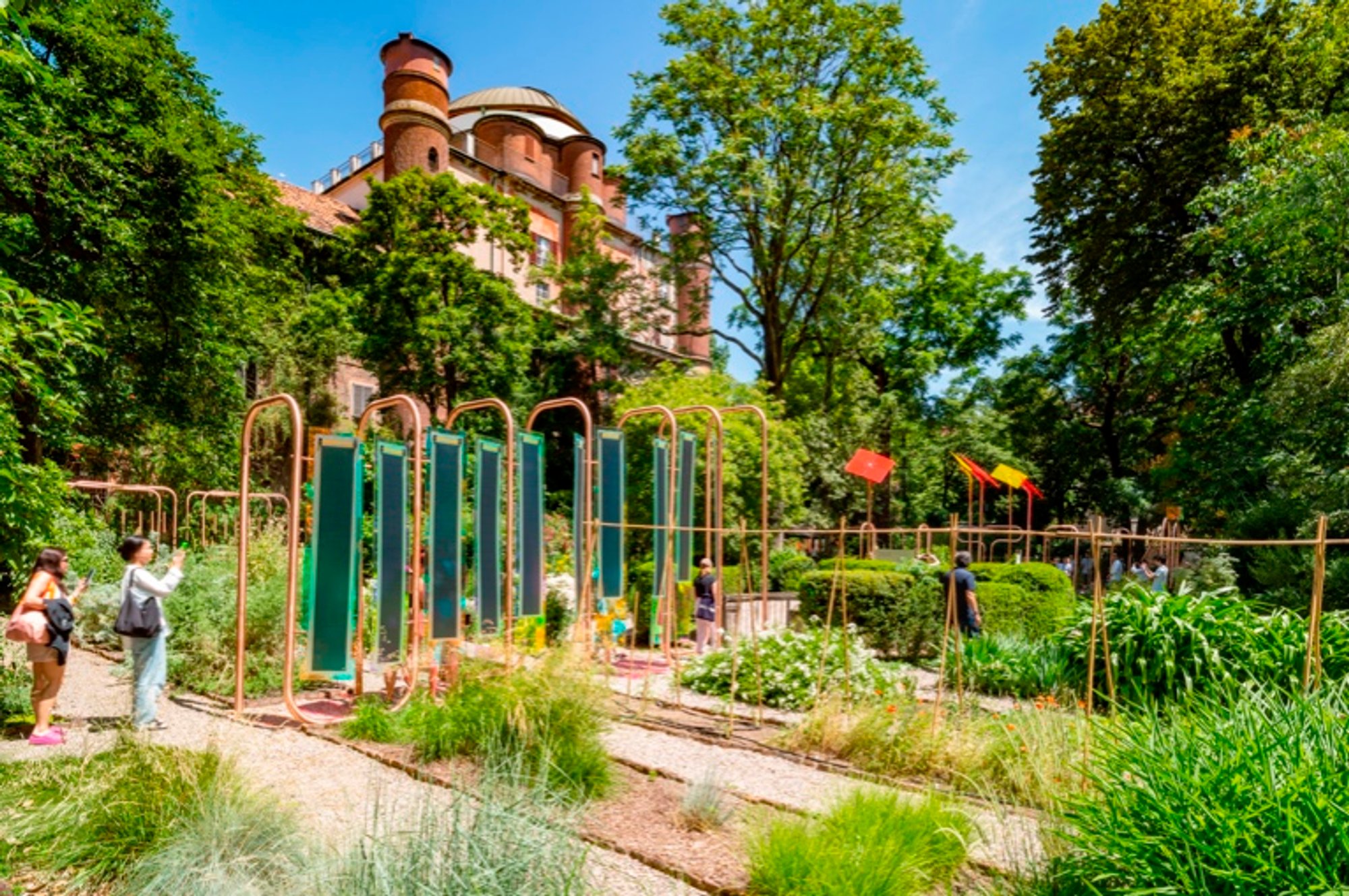
Milan's Botanical Garden transformed into Energy Park by Carlo Ratti Associati and Italo Rota
Green innovation meets sustainability: The project aims to showcase the potential of renewable energy and eco-friendly solutions

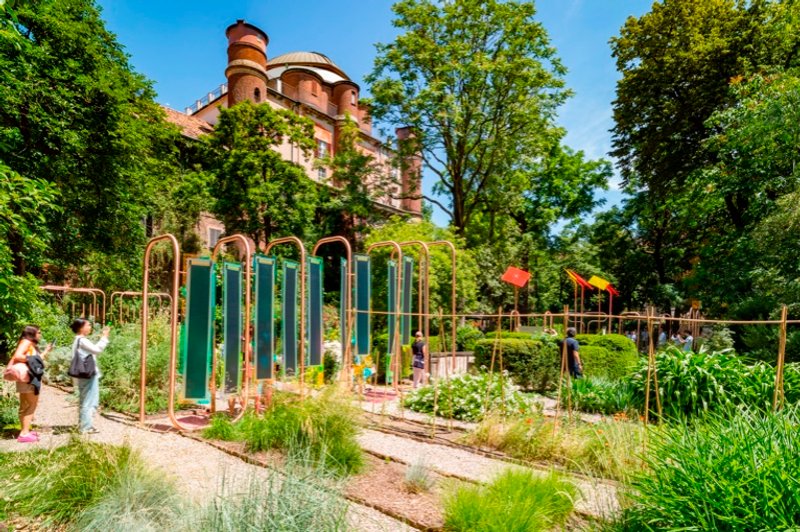
Carlo Ratti Associati and architect Italo Rota have unveiled their latest project, "Feeling the Energy," at Milan Design Week 2022. The installation is set in Milan's historic Botanical Garden and is designed to transform the site into an energy park. The project is a sensorial path that explores different forms of sustainable energy production and consumption. The path is made up of six stages, including the Energy Carousel, Garden Orchestra, The Leading Logo, Powering Vibrations, Blinds in the Sun, and Solar Garden.
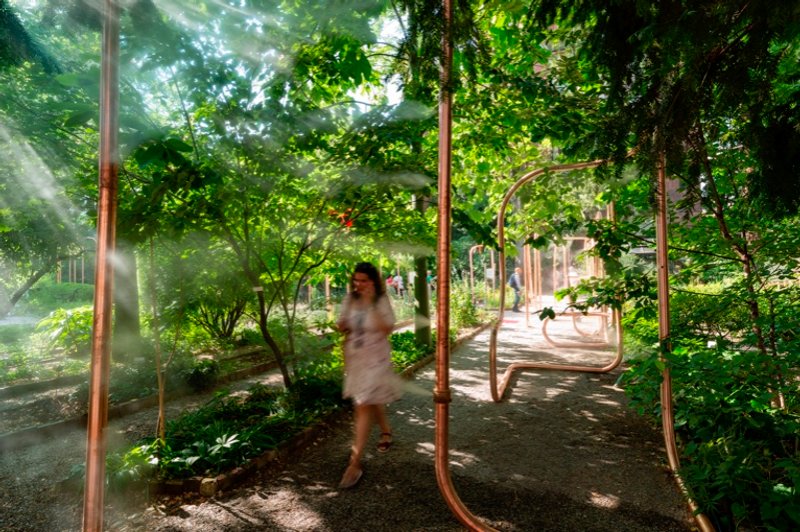
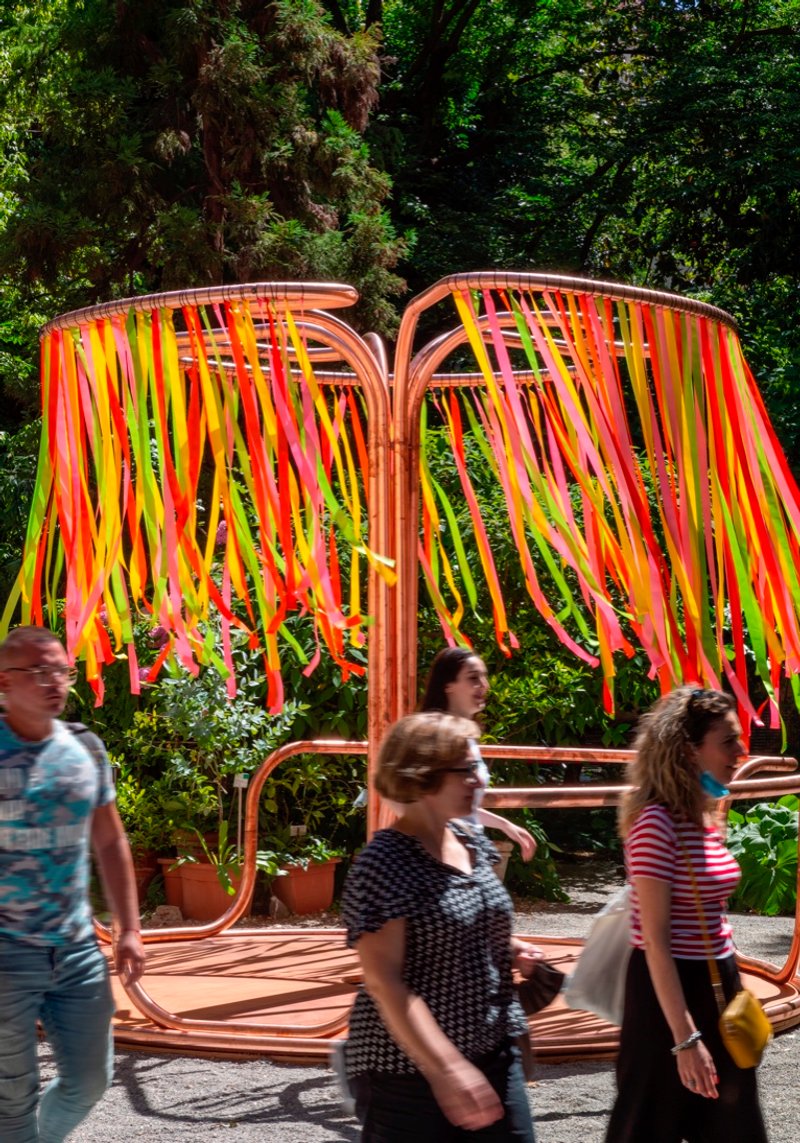
"Feeling the Energy" uses 500 meters of digitally bent copper pipe to create an energy-harvesting installation that collects and stores energy during the day, powering the Botanical Garden's illumination in the evening. The installation also powers water vaporizers that cool the garden pathways while nourishing the vegetation. The exhibition features objects made entirely of copper, and visitors can wander through the Botanical Garden, experiencing how energy can be produced from the sun, wind, and people's movements.
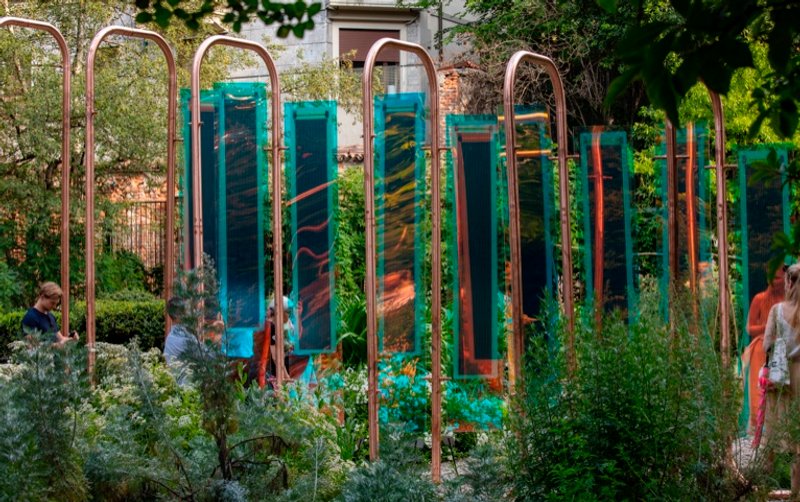
The installation begins with a majestic carousel, allowing visitors to experience energy in motion. The path also includes a tunnel with coloured diaphragms that can be opened or closed by visitors. A canopy features sensors that detect people's presence and activate a cool mist. Visitors can also play a giant vibraphone, and a series of portals play sequences from the renowned Four Seasons symphony by Italian baroque composer Antonio Vivaldi, performed by the Ensemble Strumentale la Barocca of the Symphony Orchestra of Milan.
The installation draws inspiration from plant organisms, and the long copper tube absorbs energy along its entire length and uses it in specific points of the installation path, similar to how trees in a forest draw energy from different sources and use it locally where they need it. The project also highlights efficiency, with simple gestures such as orienting photovoltaic panels allowing visitors to think practically about saving and optimizing resources.
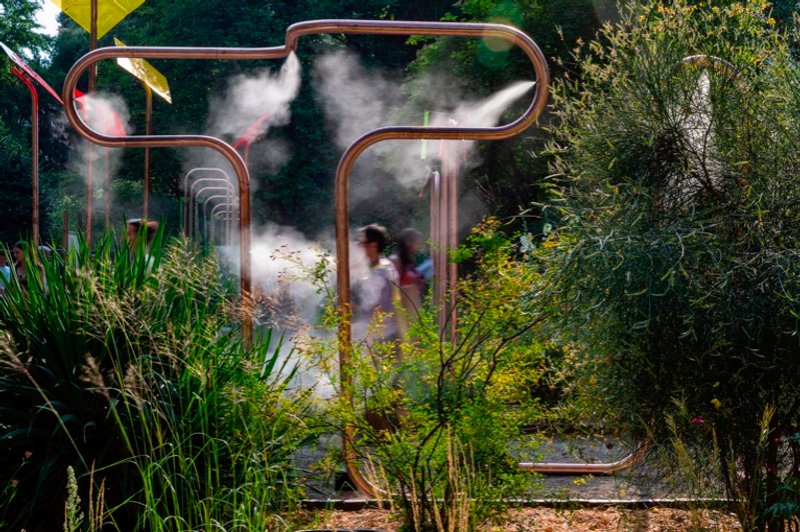
"Feeling the Energy" is a self-sufficient energy infrastructure that connects discrete points in a microgrid, similar to what happens with urban, national, and even transcontinental energy networks. The copper tube used in the project also features antimicrobial properties, allowing for safe contact between visitors joining the experience. The same material will be reused at the end of the event, following the principles of circular design.
Carlo Ratti Associati has explored natural and artificial energy production at different scales in a variety of projects, including Cloud Cast, a system that uses motion tracking and ceiling-mounted misting elements to provide localized cooling, and The Greenery, a private house built around a 10-meter-tall ficus tree in northern Italy. At previous Design Week exhibitions, the firm has developed temporary installations that use technology to devise alternative sustainable futures.
"Feeling the Energy" is developed for Plenitude as part of Design Week's INTERNI Re. Generation exhibition. Copper is provided by KME, one of the world's largest producers of this material. The installation is a perfect example of how technology and design can combine to create sustainable solutions that benefit the environment and provide unique experiences for visitors.
“Feeling the Energy” will be open to the public until 13th June 2022.
References (1)

Popular Articles
Popular articles from the community

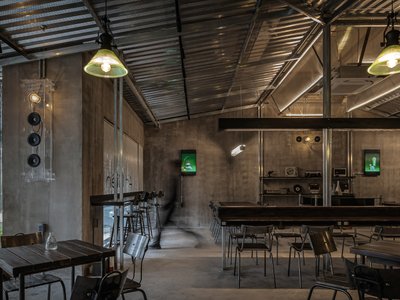
An Miên Lumière Cafe by xưởng xép, Ho Chi Minh City, Vietnam
An industrial-inspired café where layered steel and warm light create a dynamic, immersive environment shaped by reflection, depth, and perception.
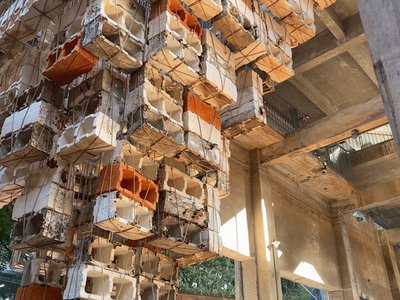
Inverted Architecture Installation by Studio Link-Arc: Exploring the Intersection of Architecture and Living Organisms
Inverted Architecture Installation by Studio Link-Arc blends mycelium, sustainability, inverted design, ecological cycles, and urban adaptive architecture in Shenzhen.
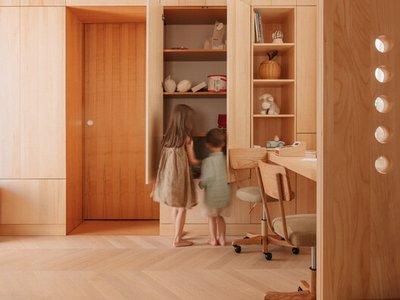
Treehouse Apartment: A Warm Timber Interior Blending Craft, Play, and Contemporary Living
Warm timber apartment with integrated treehouse, combining natural materials, craftsmanship, and playful design to create a flexible, family-oriented living environment.
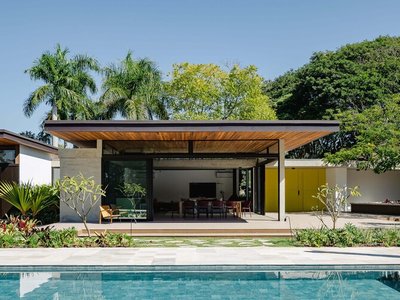
Flamboyant House by Juliana Camargo + Prumo Projetos
Modern Brazilian house integrating existing tree, pool, and volumes with glass, wood, and transitional spaces blending interior, exterior, and landscape seamlessly.

Similar Reads
You might also enjoy these articles
Zhuxi Wonderland: Reimagining Traditional Chinese Gardens by Doarchi Architects
Zhuxi Wonderland by Doarchi Architects reinterprets traditional Yangzhou gardens, integrating courtyards, pavilions, and tea houses in modern cultural design.
Doble Soga House: A Contemporary Brick Residence Rooted in Landscape in Quito, Ecuador
Brick house in Quito integrating nature, flexible living spaces, exposed materials, and rooftop terrace, creating warm contemporary architecture for modern family life.
Al Gharra Mosque in Medina Redefining Contemporary Islamic Architecture
Minimalist Medina mosque using concrete, light, and landscape to reinterpret Islamic worship spaces through symbolic spiritual transitions and contemporary architecture.
Viczonecode Villa by DDconcept – Tropical Family Living in Ho Chi Minh City
Tropical family villa in Ho Chi Minh City featuring courtyards, skylights, natural ventilation, elevated flooring, and seamless indoor–outdoor living surrounded by greenery.

Explore Architecture Competitions
Discover active competitions in this discipline




The International Standard for Design Portfolios


The Global Benchmark for Architecture Dissertation Awards


The Global Benchmark for Graduation Excellence


Challenge to reimagine the Iron Throne
Comments (0)
Please login or sign up to add comments
No comments yet. Be the first to comment!