

Minimalist Sustainable Houses in Germany: Set Houses with One Pillar by Buero Wagner
Two minimalist sustainable homes in Germany unite family living, eco-conscious design, and spatial innovation near Lake Starnberg by Buero Wagner.


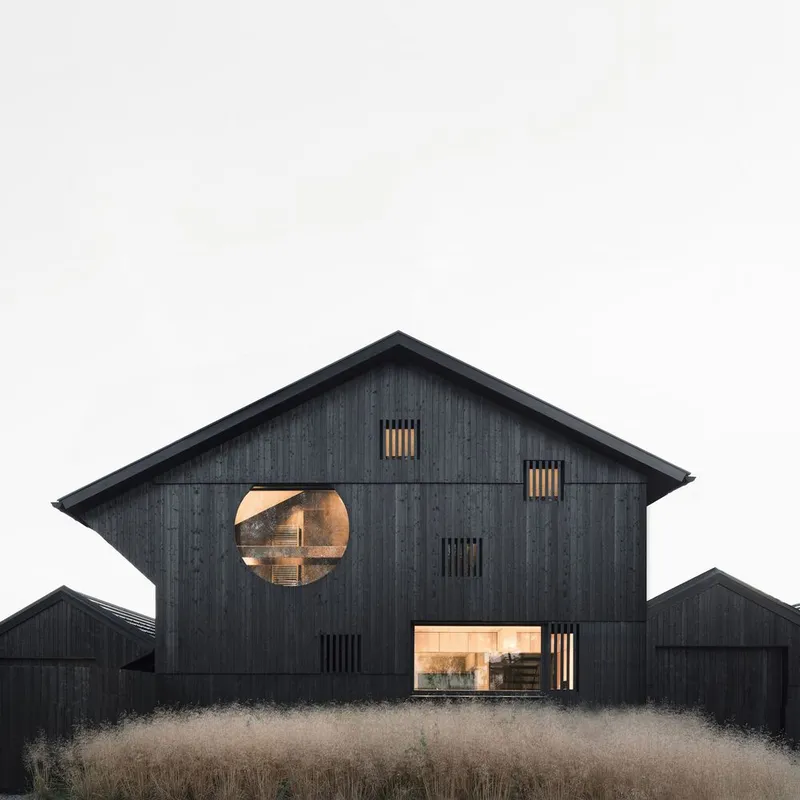
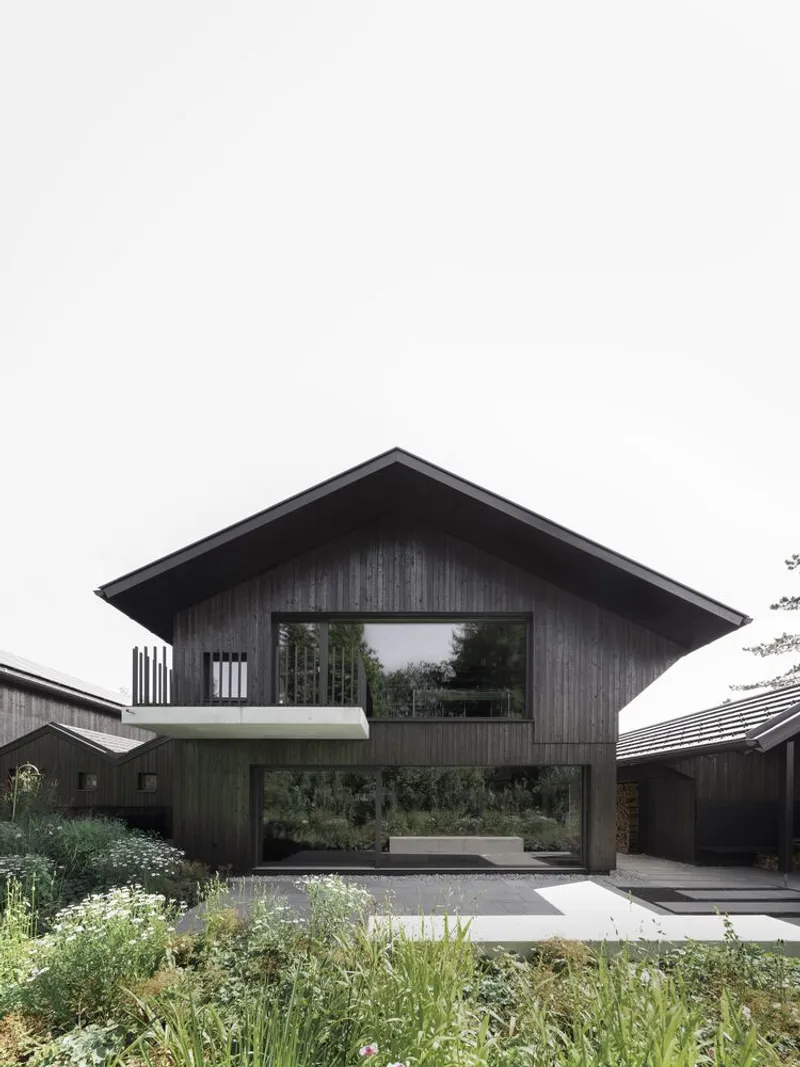
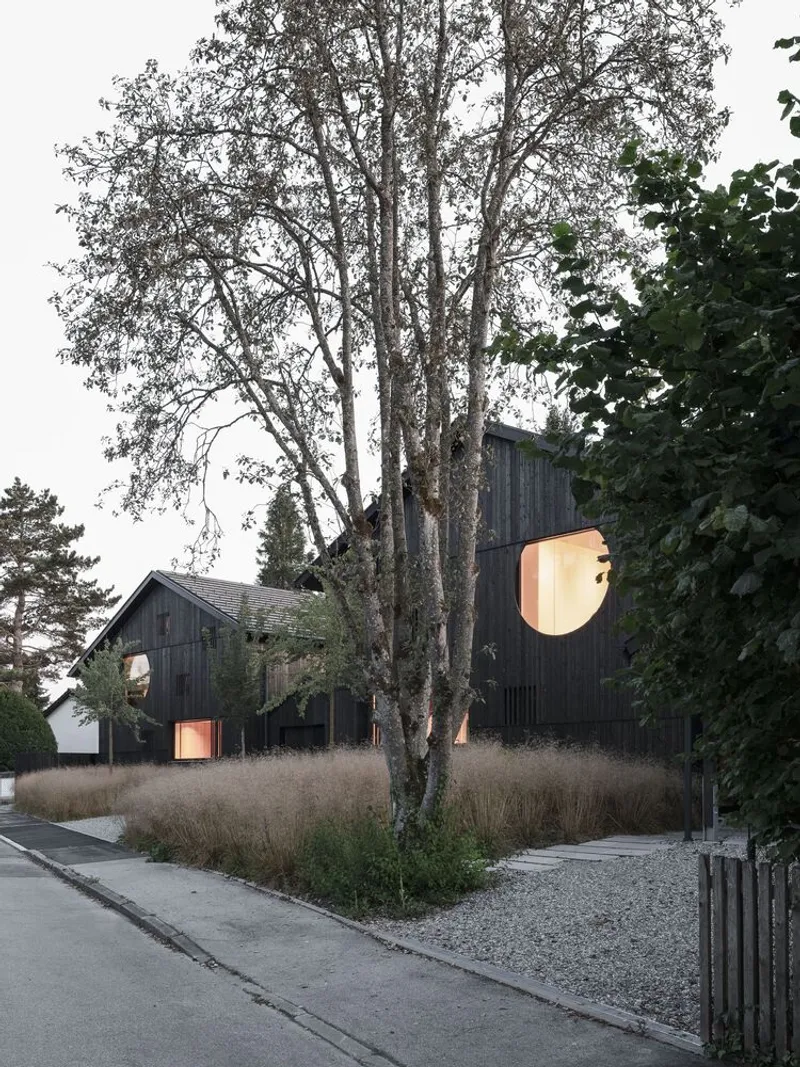
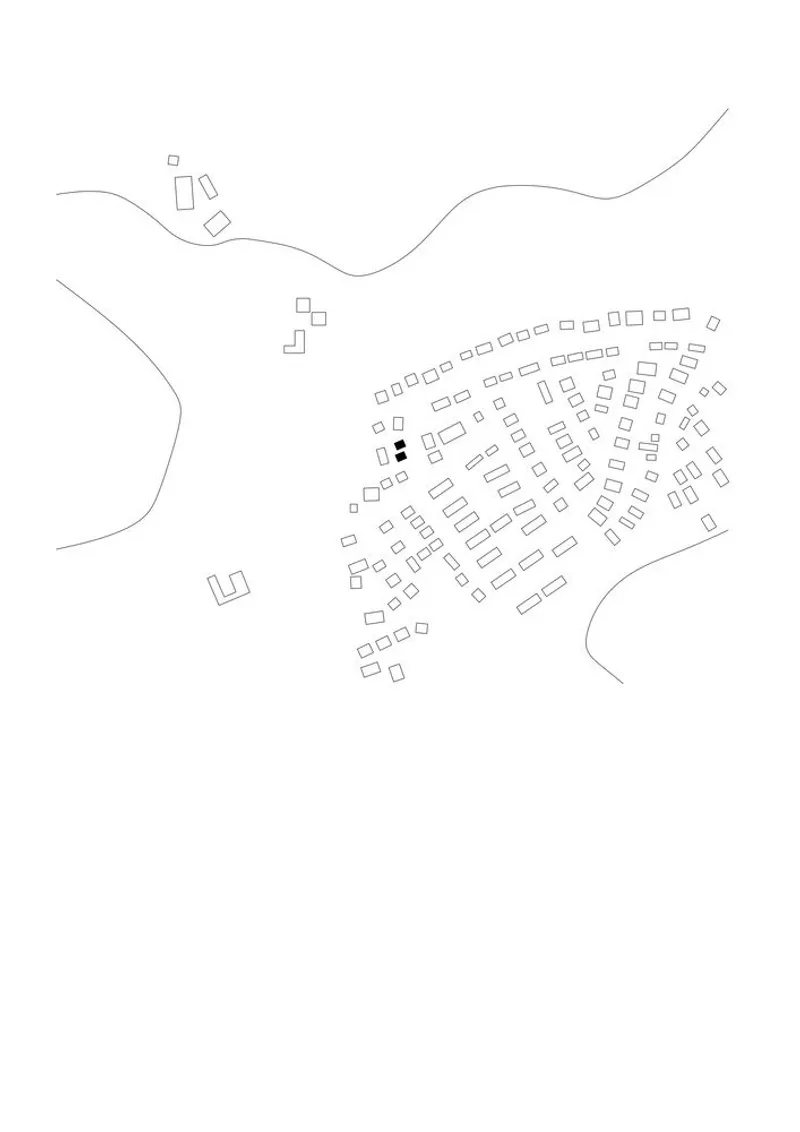
In the foothills of the Bavarian Alps, just 20 kilometers from Munich, Buero Wagner has redefined the concept of minimalist sustainable houses in Germany with the Set Houses with One Pillar. Located in Söcking, near Lake Starnberg, these two homes exemplify a bold architectural strategy that balances minimal environmental impact, smart urban densification, and aesthetic clarity.
Urban Redensification Through Thoughtful Demolition
Originally, the plot housed a single, low-quality 1950s dwelling. As part of the "Vision Starnberg 2025" initiative, the plan aimed to densify existing plots rather than expand into undeveloped land. Though the broader urban strategy was halted in 2021, the architects at Buero Wagner embraced the spirit of redensification. Instead of refurbishing the structurally and materially weak original house, they opted for demolition. The building materials were carefully processed into recyclables on-site, supporting a circular construction approach.
Dual Homes with Distinct Interiors and Shared DNA
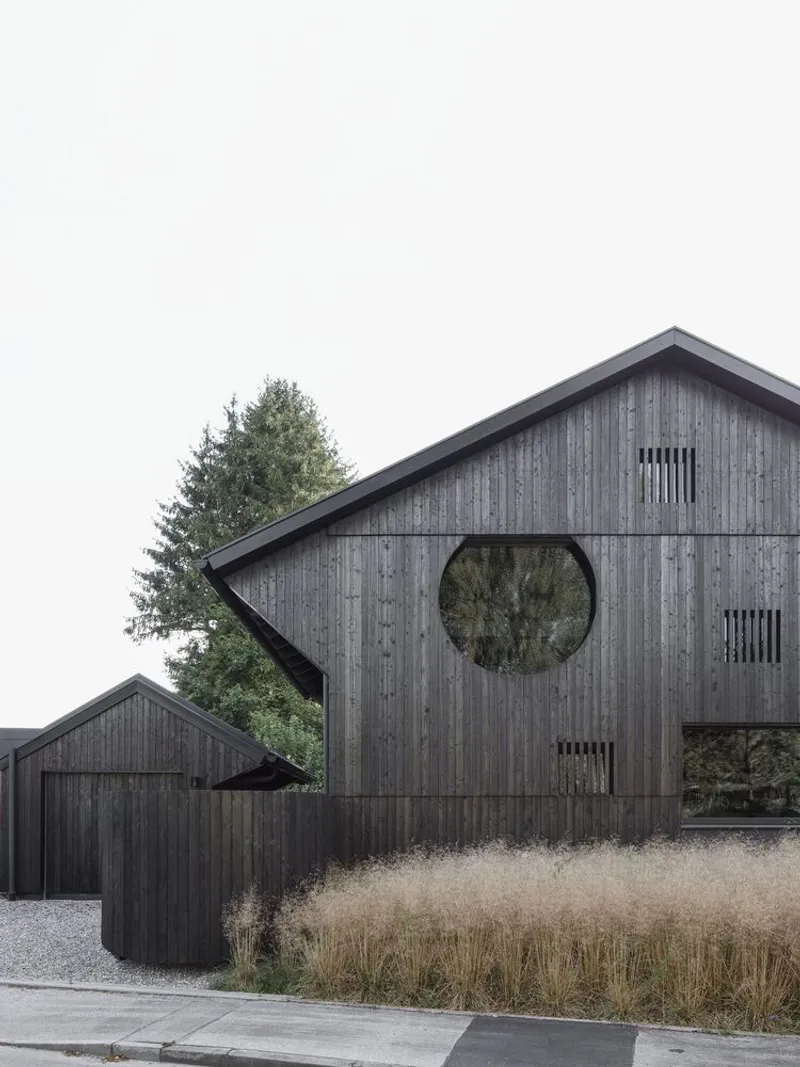
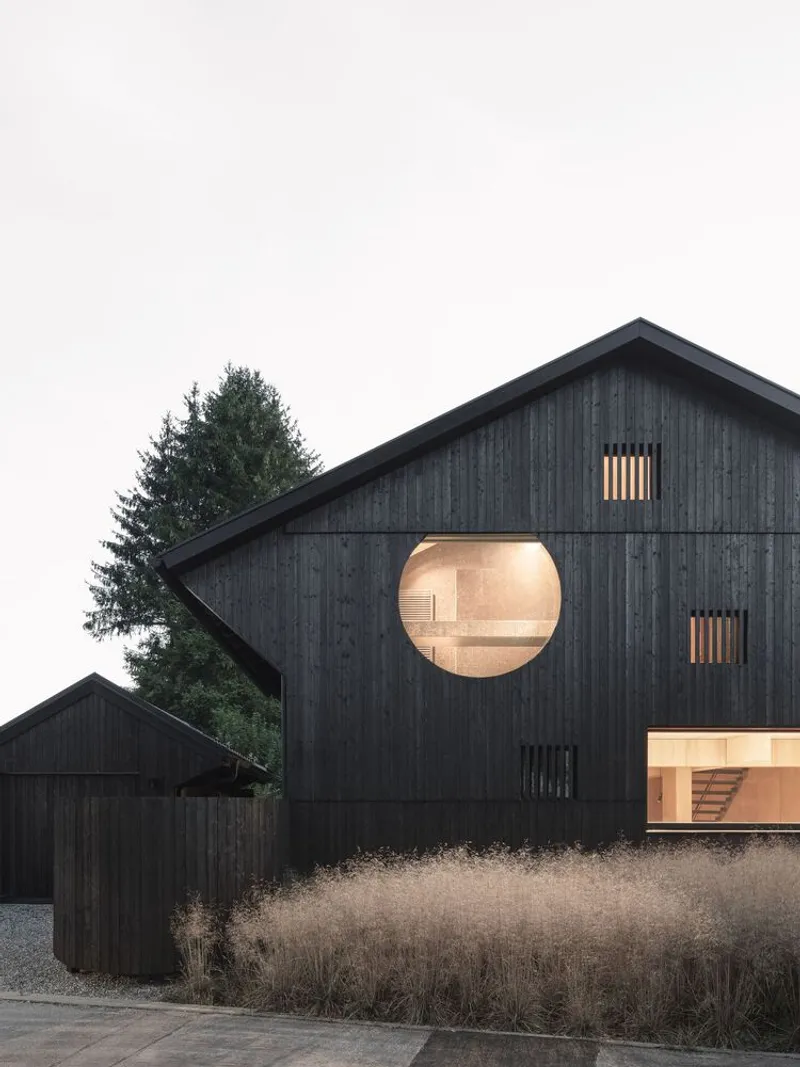
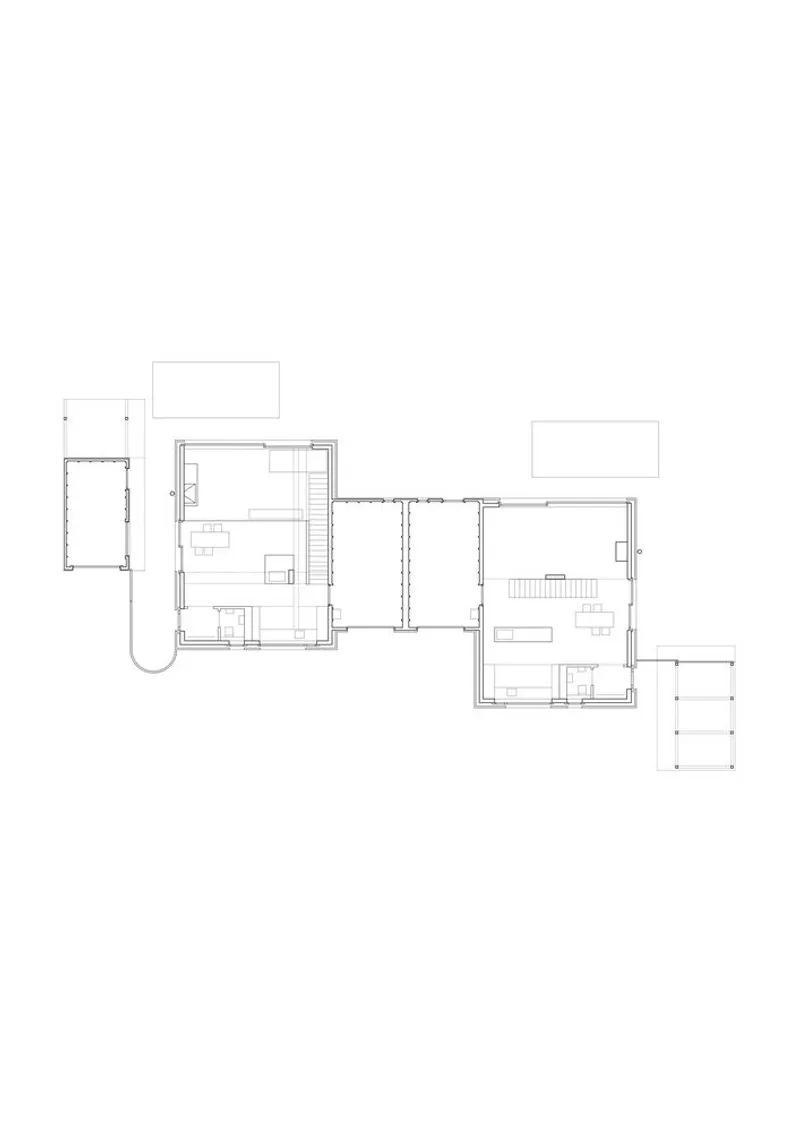
The two houses were designed for a multigenerational family: one for the father, the other for his son and family. Though visually similar from the outside, the interiors are uniquely tailored to the needs of each occupant. Aligned along the street and slightly recessed to allow for green front gardens, the houses open socially toward the street with kitchens positioned upfront, while living areas and private gardens nestle in the rear.
Designing from the Structure Inward
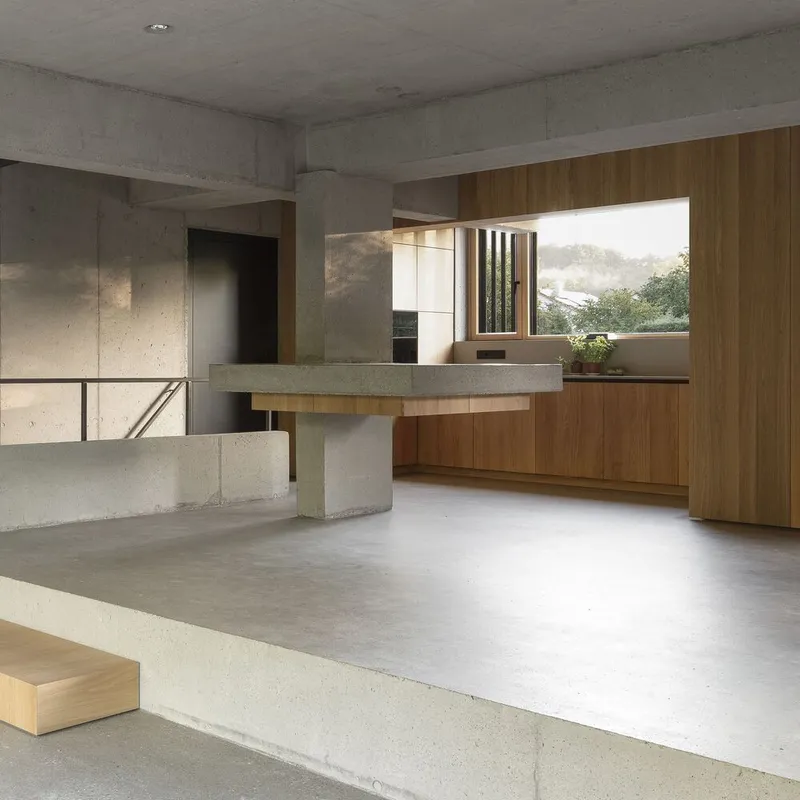
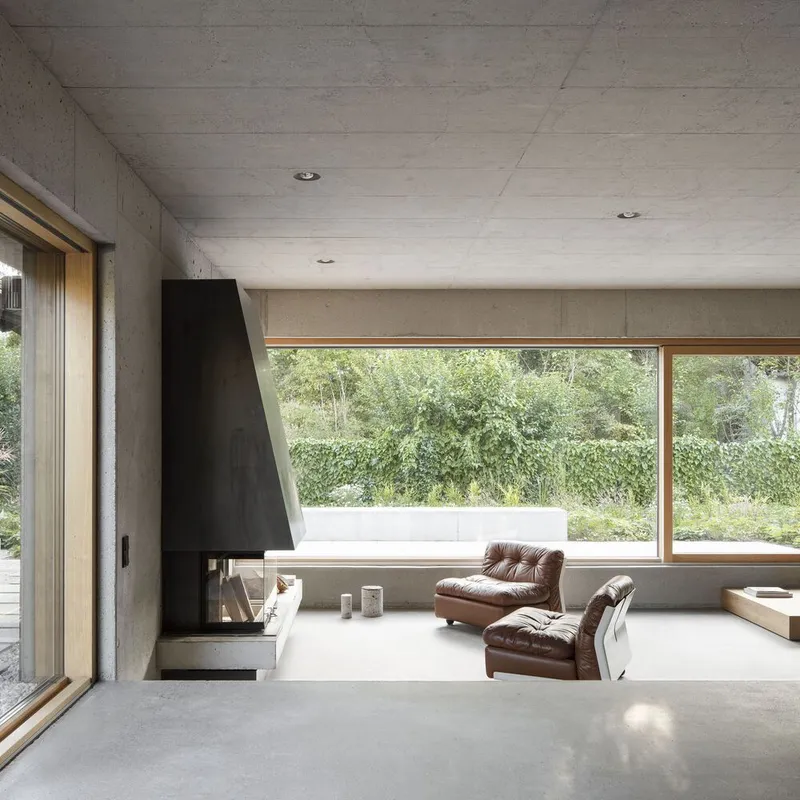
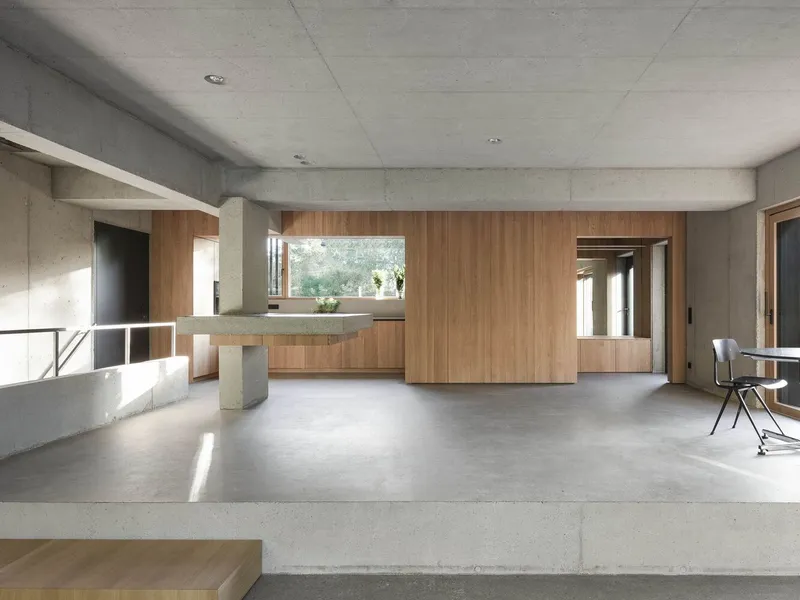
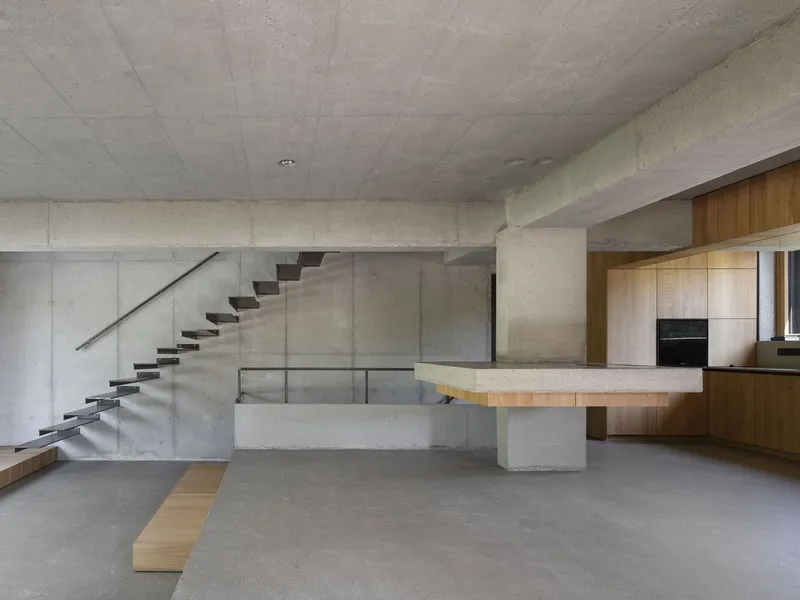
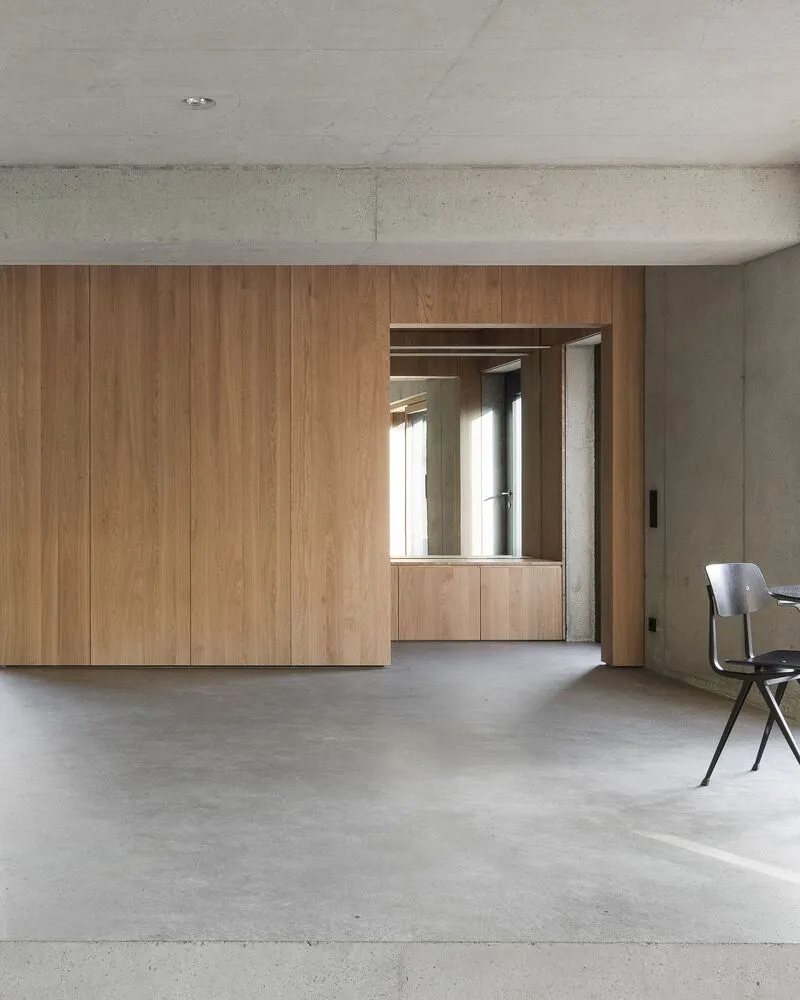
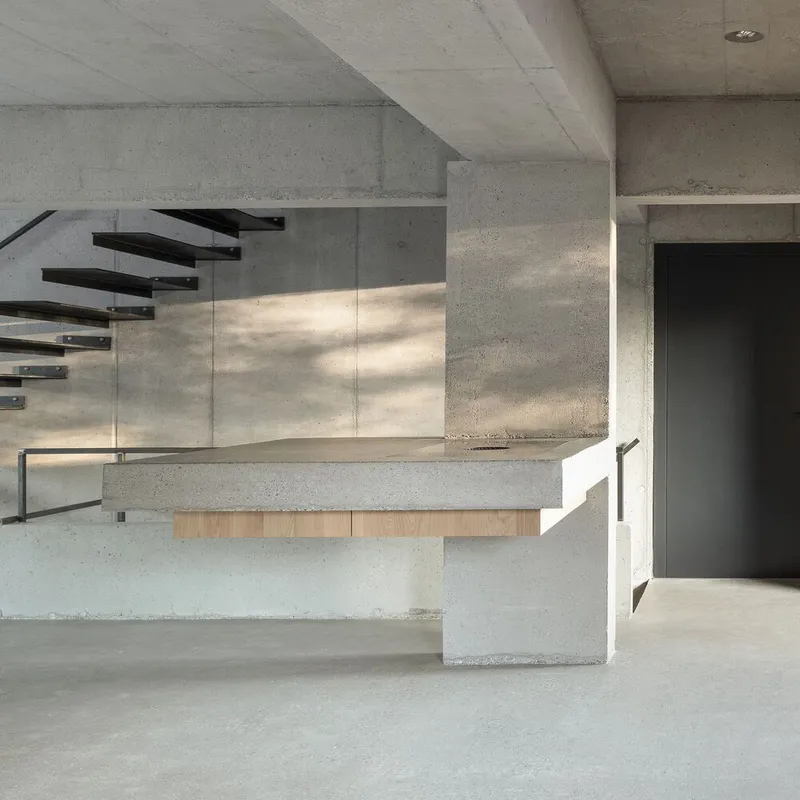
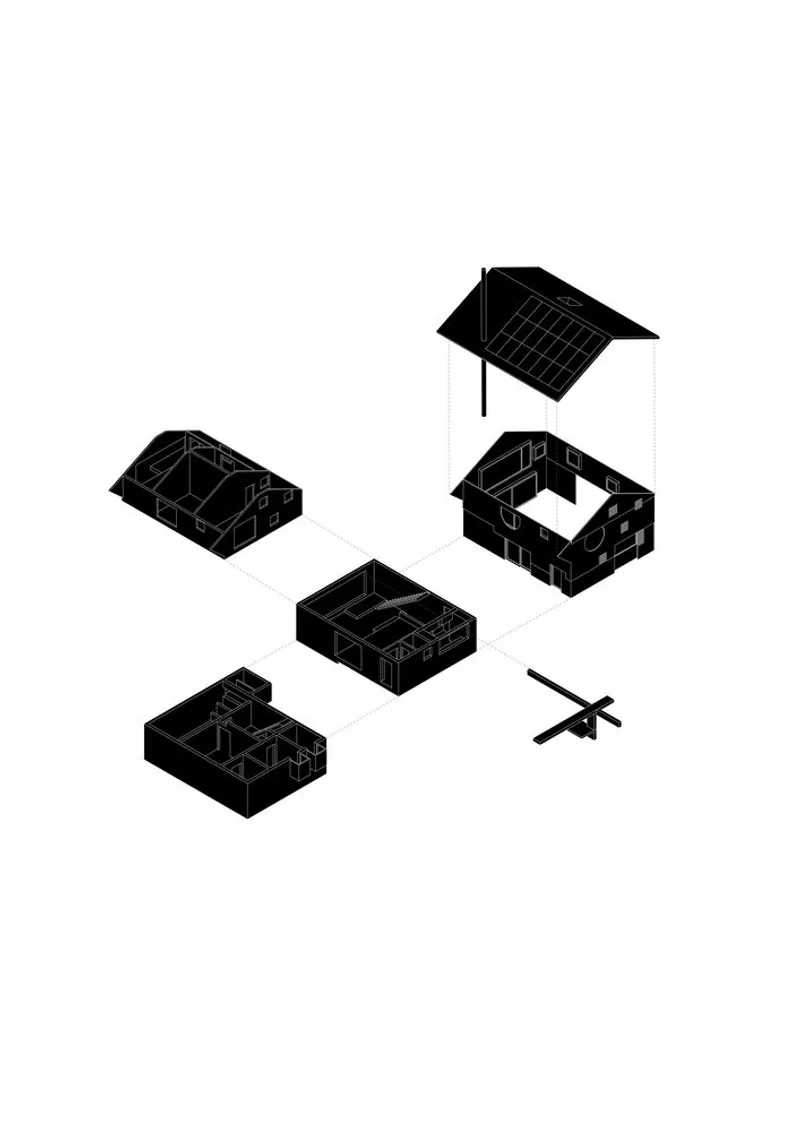
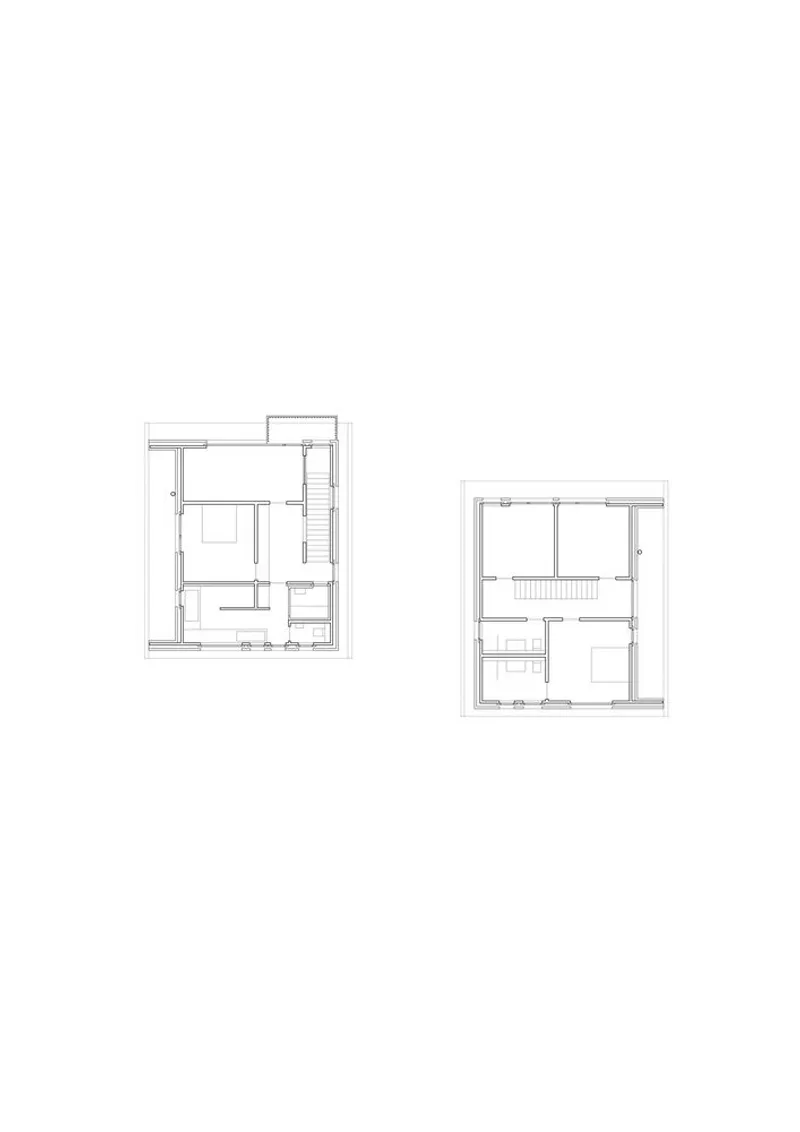
Each house measures just 90 square meters per floor, promoting compact living without compromise. The spatial heart of each home is the first floor: a singular open volume supported by one central column. There are no interior walls—only subtle level shifts in floors and ceilings that define zones for cooking, dining, and lounging. A custom oak box houses the kitchen, WC, and entry area, integrating built-in furniture like wardrobes and worktops directly into the architectural form.
Material Honesty and Structural Efficiency
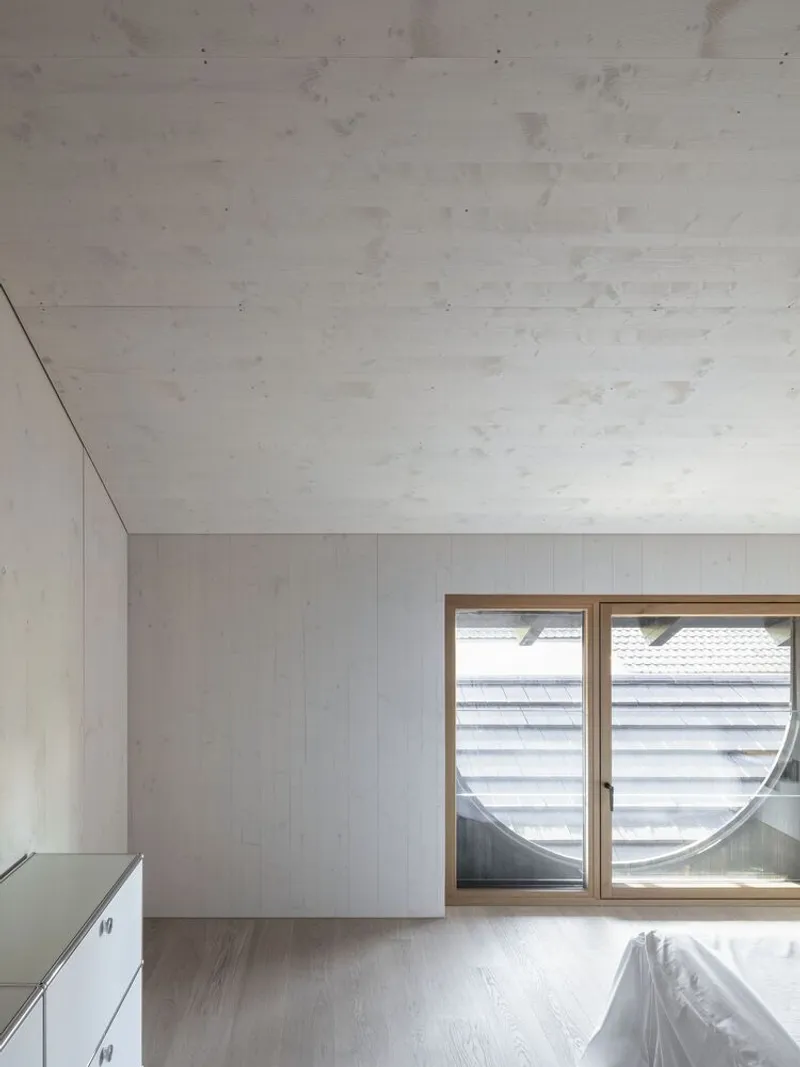
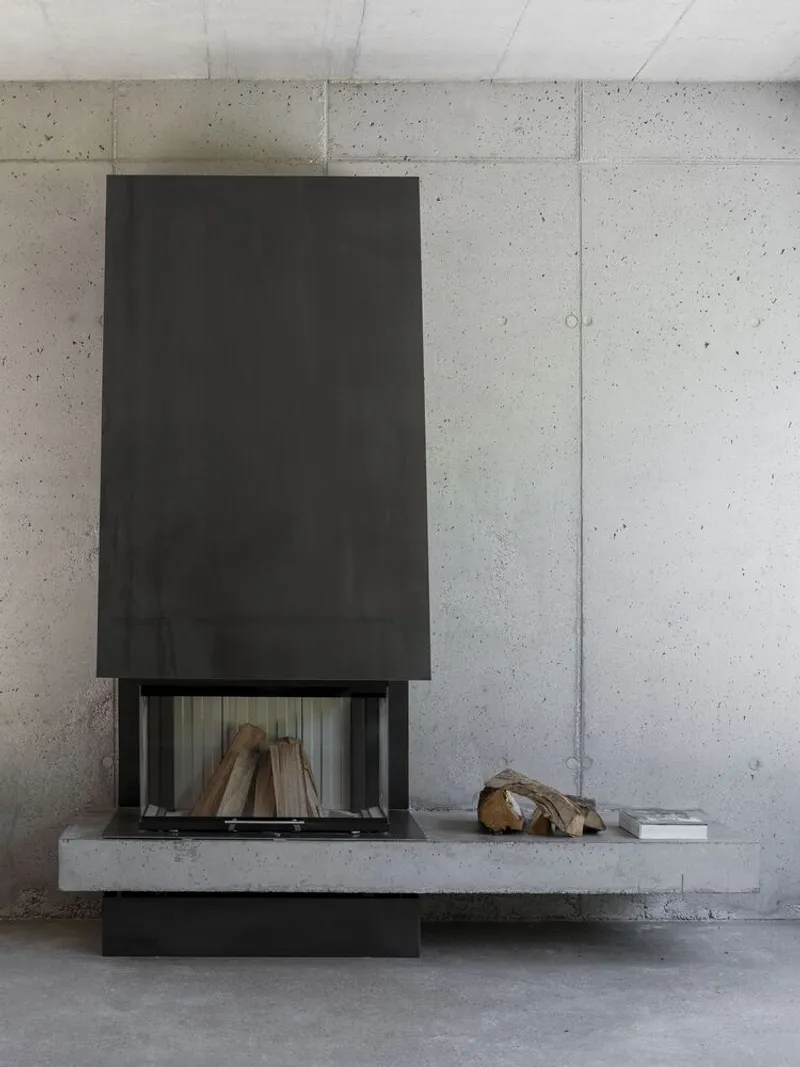
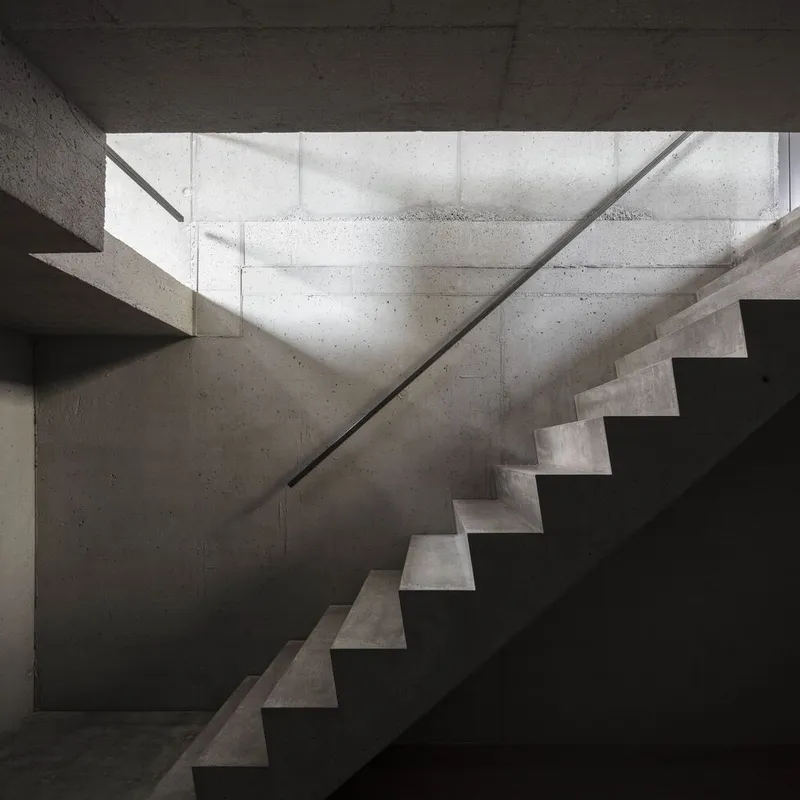
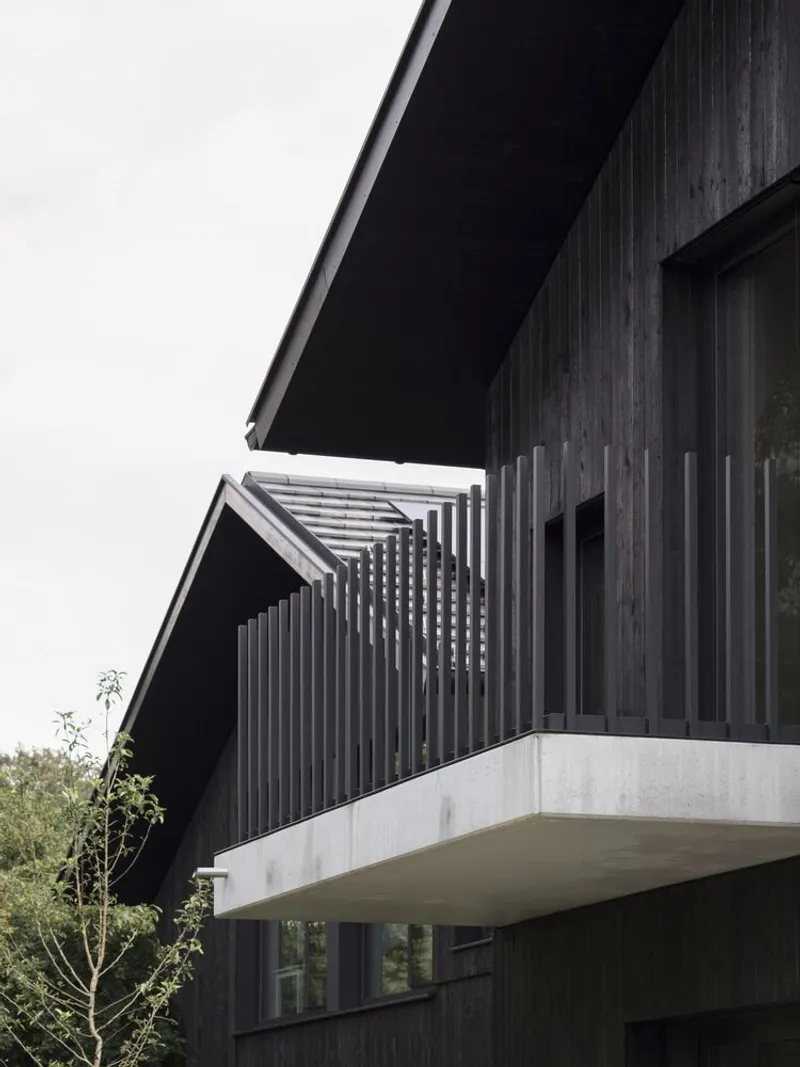
The lower floors are constructed in sandblasted concrete, offering both robustness and tactile softness. The upper floors, made of solid wood, reference traditional regional construction and generate intimate, warm atmospheres. Materials remain exposed wherever possible: concrete walls are left bare, floors are monolithic, and oak elements double as functional fixtures. Steel is used selectively, crafted into railings, stair details, and fireplaces.
Sustainability Through Simplicity and Innovation
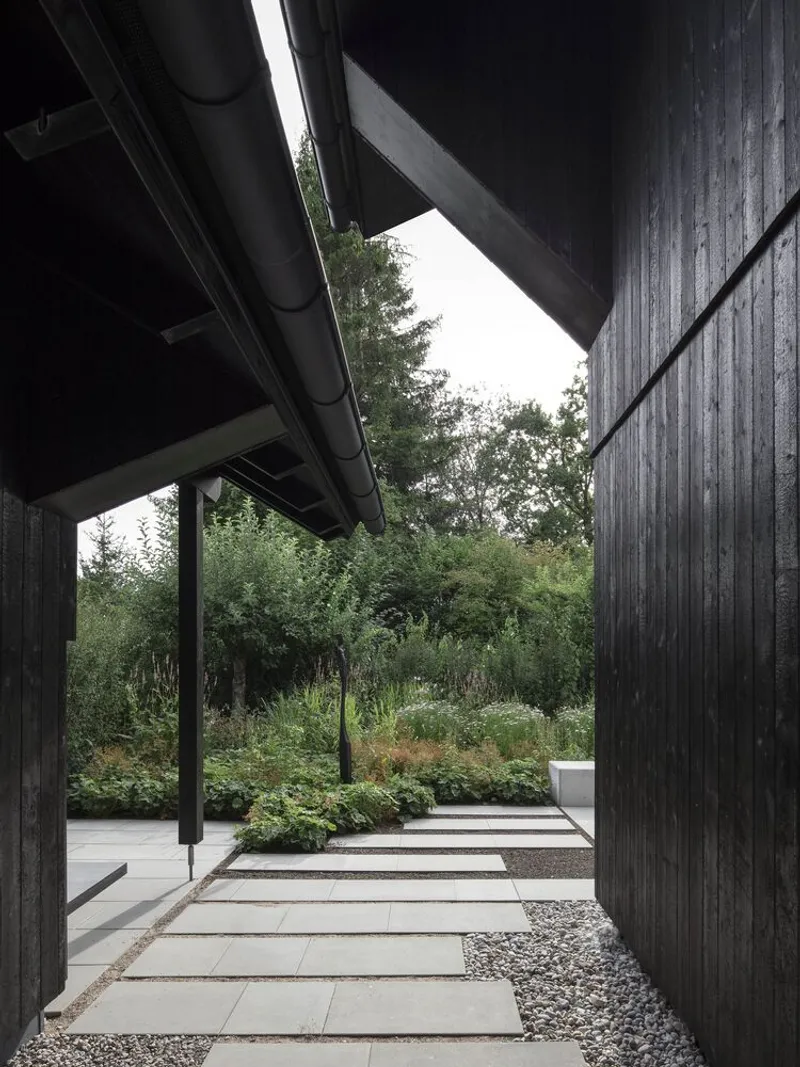
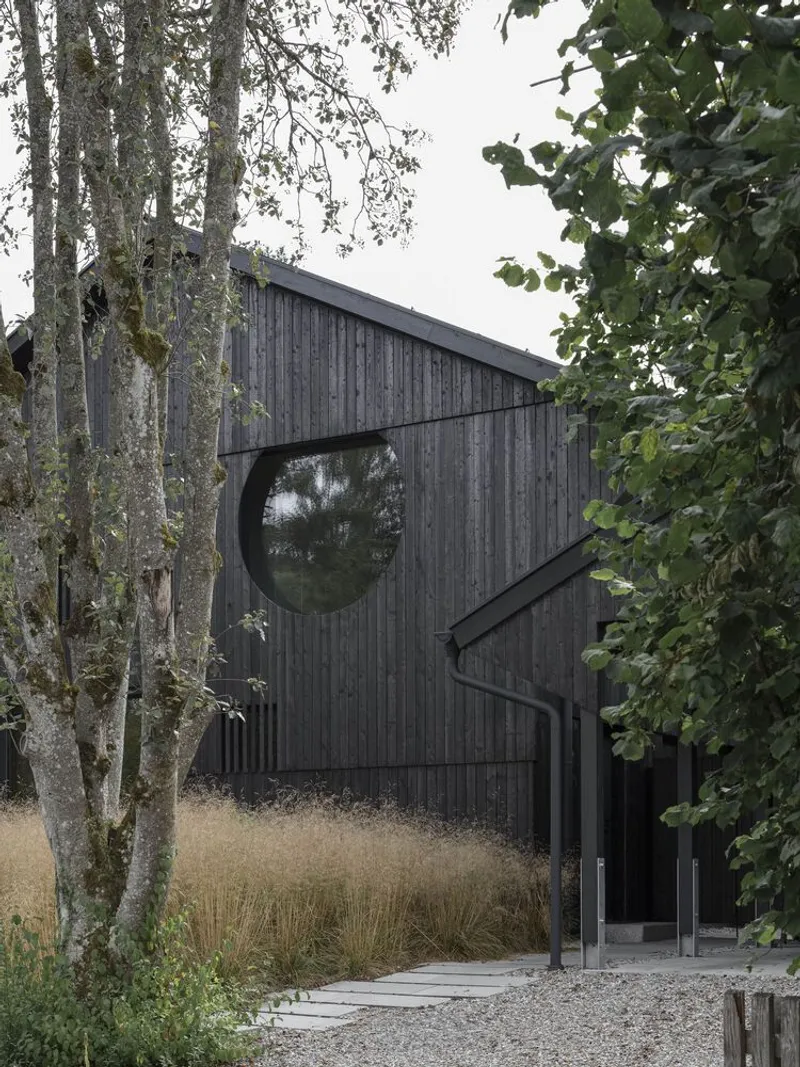
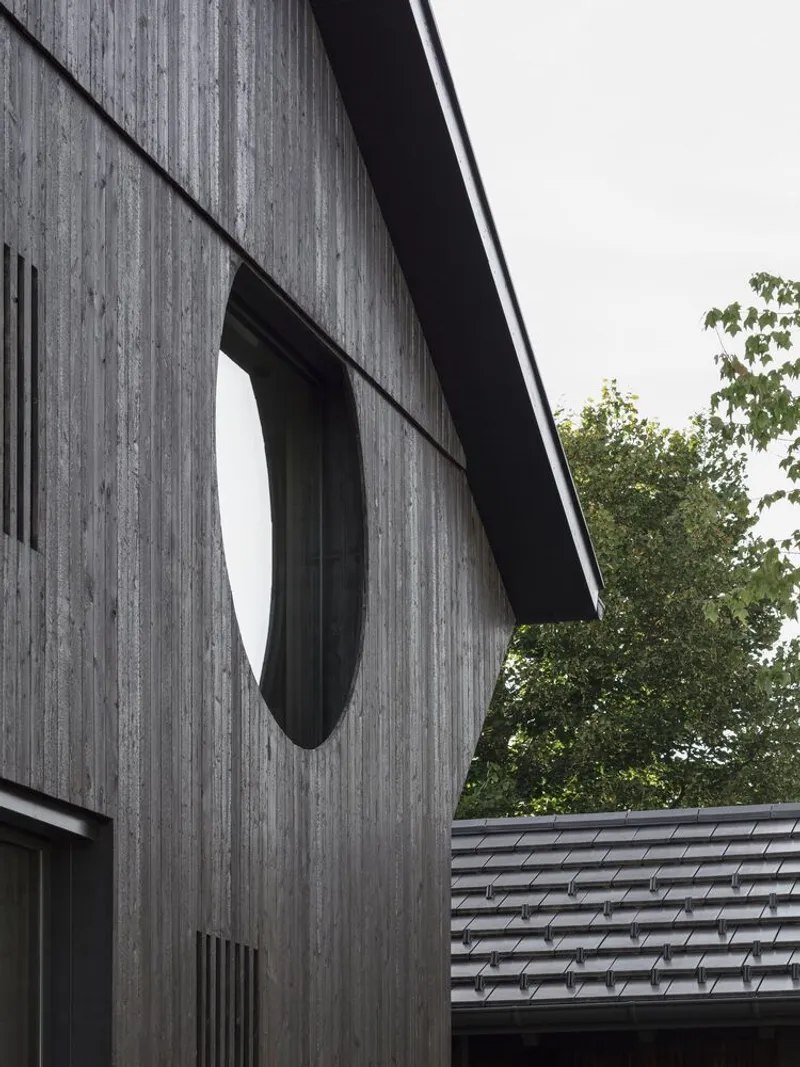
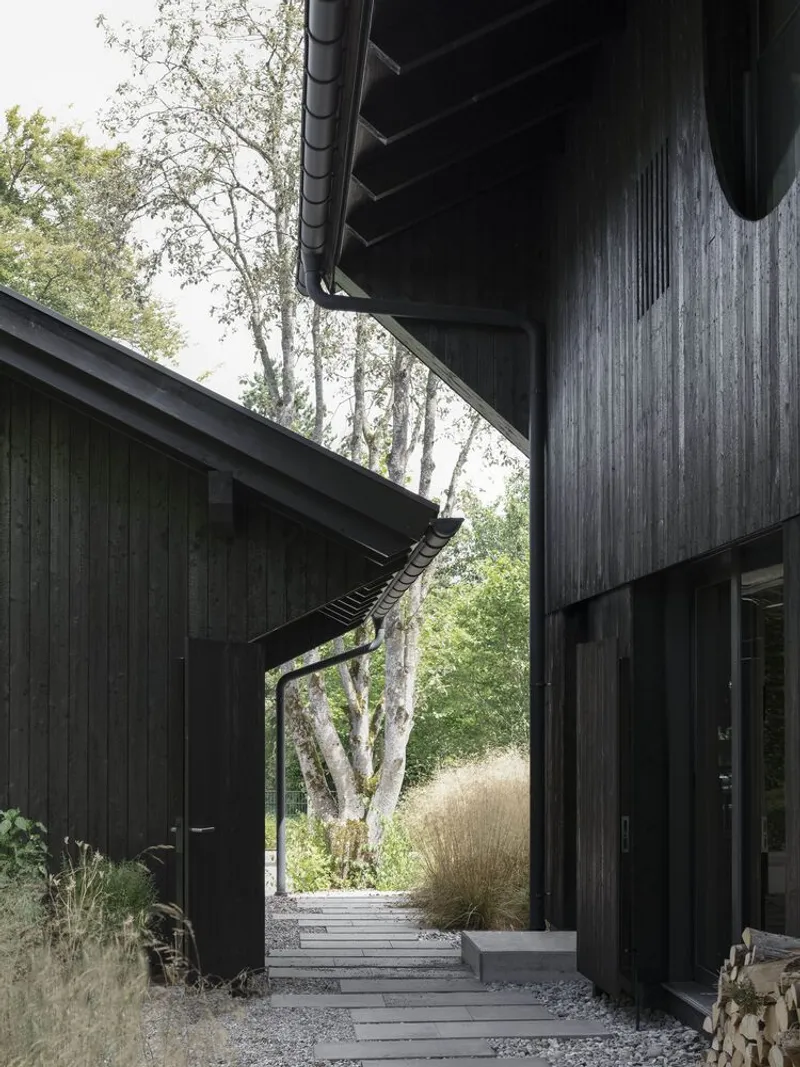
True to its ethos as a minimalist sustainable house, the project employs bio-based insulation and charred wood cladding that eliminates the need for chemical preservatives. The charred timber not only echoes the visual language of local barns but provides natural resistance to weather and pests. Energy efficiency is prioritized through air-source heat pumps, photovoltaic panels, and concrete core activation for radiant heating. With minimal cladding, no superfluous layers, and energy systems built into the structure, the architecture manifests a quiet yet powerful sustainability.
Architecture that Merges Heritage, Modernity, and Ecology
Buero Wagner’s Set Houses with One Pillar demonstrate how modern architecture in Germany can simultaneously honor tradition, push spatial boundaries, and serve future-forward ecological goals. By merging minimalist design principles with rigorous sustainability strategies and contextual sensitivity, these homes offer a blueprint for what minimalist sustainable housing in Germany can achieve—intimate, thoughtful, and resilient.
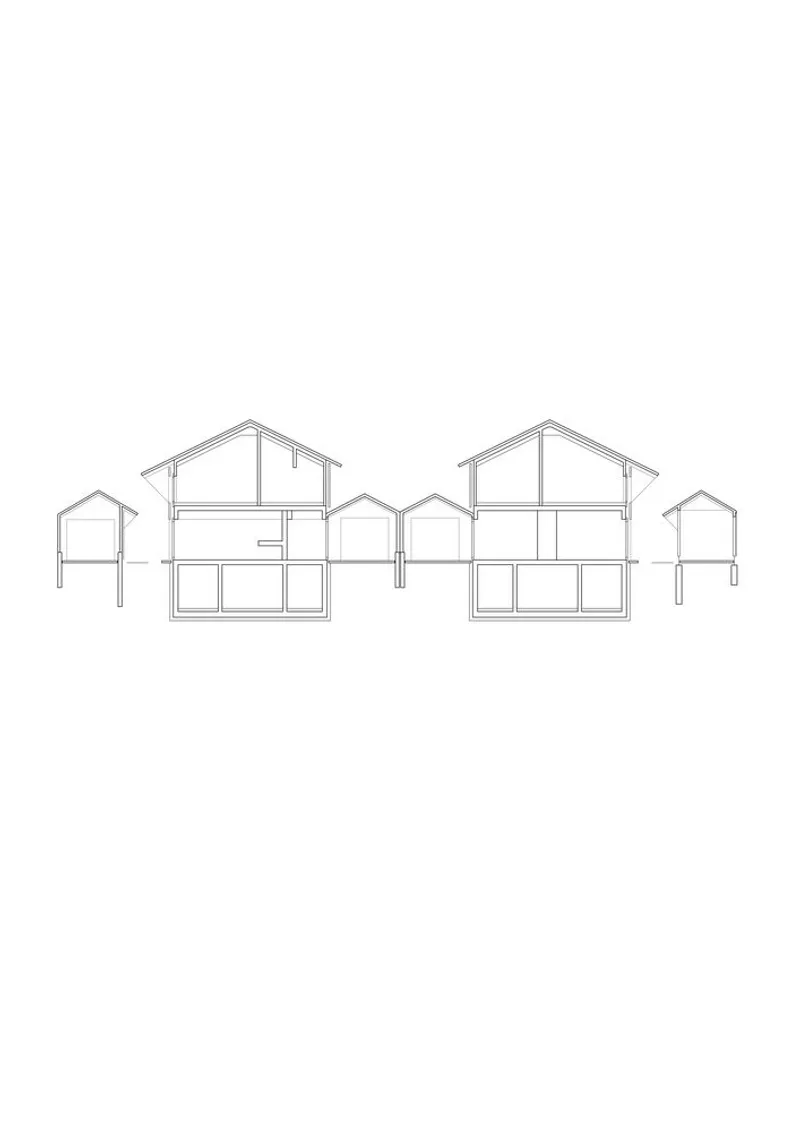

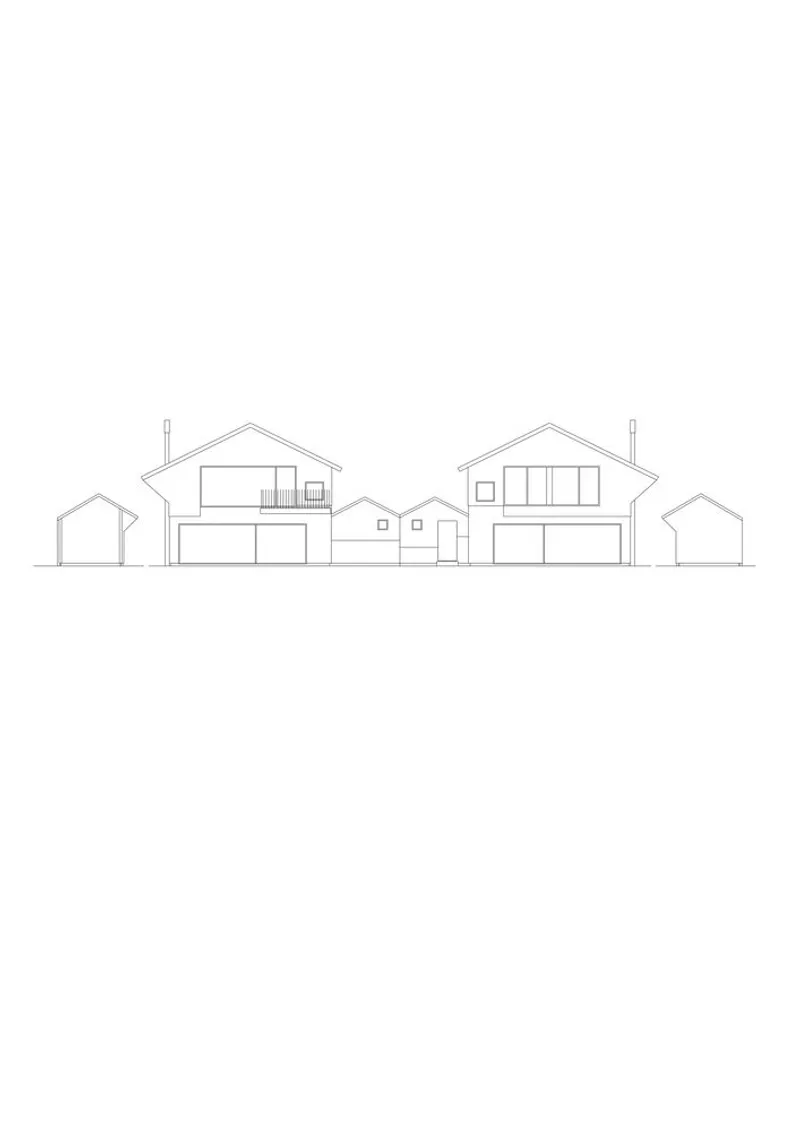
All Photographs are works of Kim Fohmann



Popular Articles
Popular articles from the community


Play: Fragments of Their World
Familiar architecture becomes modular playground design, creating safe spaces where displaced children can learn, connect, imagine and play.

The Ocean Hive: Sustainable Architecture for a Self-Sufficient Civilization at Sea
The Ocean Hive imagines sustainable architecture at sea, where modular habitats, algae, wave power and ocean waste sustain a growing colony.

Co-life: Sustainable Architecture for Age-Friendly Community Living
Co-life reimagines sustainable architecture for seniors through courtyards, rammed earth, shared gardens, and spaces designed for belonging.

Hill & Cross Opera: Sculptural Opera House Architecture Shaped by Tallinn’s Landscape and Identity
Hill & Cross Opera reimagines opera house architecture in Tallinn through its sculptural hill, civic plaza, glass wave and a luminous cross.


Similar Reads
You might also enjoy these articles

FAMM Arquitectura Organizes Ten Villas Around Courtyards and Jungle in Nosara, Costa Rica
El Molino pairs two elongated volumes with deep overhangs and timber louvers to build a compact coastal community five minutes from the beach.
Oscar Niemeyer's Ibirapuera Park Pavilions Define São Paulo's Cultural Identity in Concrete and Curve
A constellation of modernist volumes set within São Paulo's most important urban park, conceived for the city's 400th anniversary in 1954.
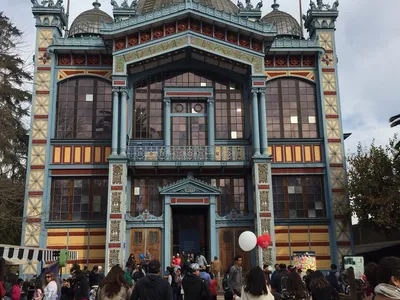
How Henri Picq's 1889 Paris Pavilion Traveled 11,000 Kilometers to Become Santiago's Artequín Museum
A prefabricated iron and glass pavilion built for the Paris Universal Exposition found a second life as a children's art museum in Chile.
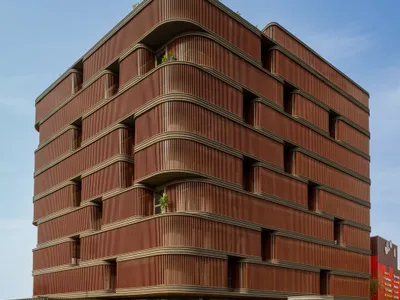
Sanjay Puri Architects Wraps a Jaipur Office Tower in Capsule-Shaped Green Buffers
A nine-level climate-responsive workplace near Jaipur Airport uses stacked planter terraces and aluminium screens to fight 40°C heat.
Explore New Bauhaus Competitions
Discover active competitions in this discipline



Challenge to reimagine the Iron Throne


Photograph architecture without architects


Illustrate the lost glory of Angkor Wat - Render Challenge


Design challenge to reuse E-waste
Comments (0)
Please login or sign up to add comments
No comments yet. Be the first to comment!