

miogui Converts a Montreuil Commercial Unit into a Layered Glass-and-Steel Loft
A former shop in a quiet Montreuil alley becomes a deep, light-filled apartment organized in transparent layers from street to back wall.


Converting a commercial unit into a residence is rarely just a matter of plumbing and partitions. When the space is deep, has only one facade, and carries the raw bones of its previous life in exposed steel beams and a metallic ceiling, the real design problem is light, privacy, and sequence. miogui took on exactly that challenge with the Beaumarchais Apartment in Montreuil, a Paris suburb where former workshops and small commercial buildings hide behind quiet, planted alleys.
The most interesting move here is disciplined restraint. Rather than gut the space and impose a new aesthetic, miogui organized the apartment in transparent layers: glass partitions, folding timber-framed doors, and sheer curtains that separate rooms by function while allowing daylight to travel from the single street-facing facade all the way to the deepest point of the plan. The 3.85-meter ceiling height gives the interior an almost gallery-like proportion, and every industrial surface, from the cinder block walls to the metal structure overhead, has been painted white but left otherwise untouched. The result is a loft that lets you read its full history while living comfortably inside a wholly contemporary arrangement.
Layers of Light and Privacy


With only one facade open to the exterior, the apartment could easily have become a dark tunnel. miogui's response is to treat every interior division as a filter rather than a barrier. Folding timber-framed glass doors stack open or closed depending on the moment, while translucent curtains provide soft privacy without blocking the light chain. The progression from public to private runs front to back: living spaces cluster near the courtyard-facing facade, and bedrooms retreat toward the rear. It is a legible gradient that never feels rigid.
The blue kitchen counter visible in the front zone introduces a single jolt of saturated color against the otherwise white palette. That restraint matters. By limiting material interventions to wood, glass, and a few deliberate color accents, miogui keeps the exposed metallic ceiling and steel beams in the foreground of your perception. You are always aware of the building's former identity as a commercial space, which gives the domestic life staged within it a certain charged quality, as if the apartment is a careful set piece inserted into a found shell.
Acting Without Altering
miogui describes the approach as "acting without altering," and the phrase holds up under scrutiny. The cinder block walls remain. The metal beams remain. What changes is the reading of these elements: a coat of white paint unifies them into a neutral canvas, and the new insertions, all glass and wood, sit against them with a deliberate lightness. Nothing is concealed or clad. The strategy recalls the best adaptive reuse instincts, where the architect's ego yields to the existing structure's character, and the design energy goes into choreographing how people move through and occupy the space rather than reshaping its surfaces.
The planted courtyard visible through the main facade is critical to the experience. In a deep, single-facade plan, that one opening becomes the lung of the apartment. The steel-framed glazed doors fold fully open, dissolving the boundary between interior and exterior and flooding the living zone with green reflected light. It is a small courtyard in a quiet alley, not a grand garden, but its intimacy suits the scale of the project perfectly.
Why This Project Matters
The Beaumarchais Apartment is a reminder that conversion projects do not need dramatic gestures to succeed. A clear spatial idea, layers of transparency organized from public to private, can do more work than any feature wall or bespoke millwork. miogui demonstrates that when you trust the existing structure and invest your effort in how light and movement flow through a deep plan, the architecture feels both inevitable and generous.
For architects working on similar commercial-to-residential conversions, the lesson is worth studying: paint can unify without erasing, glass can divide without darkening, and a 3.85-meter ceiling is a gift you should never bury behind a dropped soffit. Montreuil has become a laboratory for exactly this kind of quiet, intelligent transformation, and this project belongs squarely in that tradition.
Beaumarchais Apartment Renovation by miogui. Located in Montreuil, France. Completed in 2021. Photography by Philippe Billard.
About the Studio
Share Your Own Work on uni.xyz
If projects like this are the kind of work you want to make, uni.xyz is a place to publish your own, find collaborators, and enter design competitions.


Popular Articles
Popular articles from the community

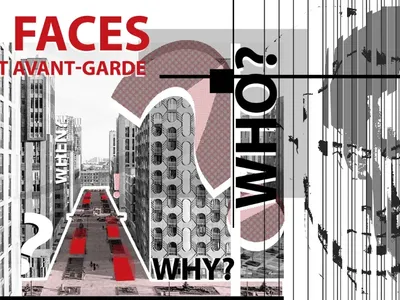
Faces of the Soviet Avant-Garde: Turning Moscow's Street Names into an Open-Air Museum
A network of sculptural installations across a Moscow residential district transforms forgotten architect names into spatial encounters with cultural memor

Opera by the Sea Estonia: Three Shells Dissolving Architecture into Tallinn's Coastline
A winning opera house proposal replaces monumental form with interconnected shells that blur the boundary between building, park and Baltic Sea.

The Amber Palace Opera: A Geological Fiction Surfaces on Tallinn's Baltic Waterfront
Pierre Brillard reimagines a Baltic legend as a public landscape, opera house, and waterfront promenade rooted in Tallinn's coastal identity.

Singing Woman: An Opera House That Performs Before the Curtain Rises
Ovidiu Cristian Pavel's conceptual opera house translates Estonia's choral identity into a sculpted waterfront landmark facing the Baltic Sea.

Similar Reads
You might also enjoy these articles

Pixel Gardens: One Repeated Module Stacked Into a Terraced Social Housing Tower for Famagusta
Salem Bader's shortlisted housing tower builds a vertical neighbourhood from one repeated module, offsetting units to carve terraces, light and air.

Bao Huynh Watercolor Atelier: A Serene Art Retreat in Hội An
Bao Huynh Watercolor Atelier in Hội An blends multifunctional art spaces, sustainable design, local materials, and family-friendly living in a serene environment.

Atelier Macri Concept Store Interior Design by CASE-REAL
Atelier Macri store features a "ko" counter, walnut wood details, cork displays, blending retail, gallery, and seamless customer experiences.

Manuel Vargas Izquierdo Stadium and High-Performance Sports Center: Architectural Excellence in Jalpa de Méndez
The Manuel Vargas Izquierdo Stadium blends sustainable design, inclusive sports facilities, and cultural-inspired architecture, revitalizing Jalpa de Méndez’s public spaces.

Explore Renovation Competitions
Discover active competitions in this discipline

Challenge to design luxury tourism on rails

VR headsets Storefront design competition

Designing a staircase for a client
Comments (0)
Please login or sign up to add comments
No comments yet. Be the first to comment!