

Mirikaroden Nakagawa Cultural Complex: Redefining Library Architecture in Japan
Mirikaroden Nakagawa Cultural Complex redefines library architecture in Japan, integrating books into every space, creating a vibrant cultural community hub.


The Mirikaroden Nakagawa Cultural Complex, designed by Furumori Koichi Architectural Design Studio, reimagines the role of libraries in contemporary society. Located in Nakagawa City, Fukuoka Prefecture, Japan, this 8,843 m² cultural hub combines a public library, multi-purpose hall, and lifelong learning center into a single integrated facility. More than a building, it serves as a dynamic urban landmark where books, culture, and community life converge.

Library Architecture Beyond Boundaries
Traditionally, libraries are confined to designated spaces, often separated from other civic functions. The design of the Mirikaroden Nakagawa Cultural Complex breaks away from this convention through the innovative concept of “Library Everywhere.” Instead of limiting books to one area, the architects distributed them across the entire building.
Books on music and performing arts are placed near the concert hall, while resources on crafts and cooking align with the lifelong learning center. Even the magazine corner was relocated to the entrance hall, encouraging casual visitors to engage with reading materials without consciously seeking them out.

This spatial strategy allows books to organically interact with the building’s diverse functions, reinforcing the relationship between cultural programs and knowledge sharing.

A Cultural Complex as a Third Place
The project positions the cultural complex as more than a library. By embracing the philosophy that “even if visitors don’t pick up a book, that’s perfectly fine,” the design emphasizes inclusivity and accessibility.


The cultural center becomes a “third place”—a communal environment outside of home, school, or work, where people can gather, pause, and feel welcomed. It embodies the democratic spirit of public architecture: open, flexible, and centered on human experience.
Architectural Atmosphere and Materiality
Photography by Kyoko Omori highlights the serene yet vibrant atmosphere of the interiors. Warm wooden finishes, natural lighting, and carefully integrated shelving create an inviting environment. Bookshelves are not just storage elements but architectural devices that frame spaces, guide circulation, and encourage discovery.

Every corner of the complex reflects a deliberate integration of materiality and function. By weaving books into unexpected spaces—entrance halls, foyers, lounges—the design redefines how knowledge inhabits architecture.

Community Engagement and Evolving Use
Initially, staff expressed concerns that the music hall and learning center would feel “absorbed” into the library. However, the outcome proved otherwise. The presence of curated books enriched programming and inspired staff to incorporate literature into performances, workshops, and educational activities.

This flexible model of library architecture in Japan continues to evolve, with new initiatives constantly proposed by operational teams. The building is no longer a static cultural institution but a living system that grows with its community.

The Mirikaroden Nakagawa Cultural Complex challenges conventional notions of libraries and cultural facilities. By making the entire building a library, it transforms civic space into a holistic cultural ecosystem. This project sets a precedent for the future of library architecture in Japan, where accessibility, inclusivity, and community life shape the design of public buildings.


All photographs are works of Kyoko Omori


Popular Articles
Popular articles from the community


Singing Woman: Contemporary Architecture Inspired by Estonia’s Voice and the Sea
Singing Woman turns Estonia’s song culture into flowing opera house architecture, blending public life, landscape, sea, and national memory.
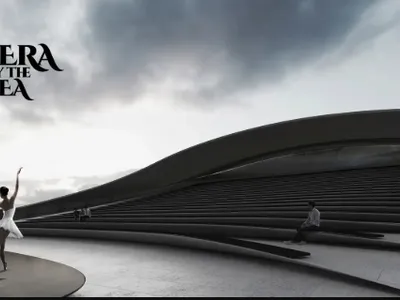
Opera by the Sea Estonia: Three Shells Dissolving Architecture into Tallinn's Coastline
A winning opera house proposal replaces monumental form with interconnected shells that blur the boundary between building, park and Baltic Sea.

Manzana Morphosis: Stretching Barcelona's Grid into a Living Landscape for 2050
A radical reworking of the Eixample manzana turns density into a tool for generous public space, vertical ecology, and environmental performance.

Cloaked Colonization: A Mobile Underwater Habitat That Moves Like a Fish
Micah Abaya's shortlisted EHC Pacific entry reimagines ocean settlement as a dispersed network of self-sustaining architectural organisms.

Similar Reads
You might also enjoy these articles

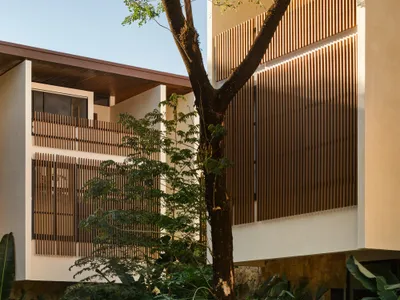
FAMM Arquitectura Organizes Ten Villas Around Courtyards and Jungle in Nosara, Costa Rica
El Molino pairs two elongated volumes with deep overhangs and timber louvers to build a compact coastal community five minutes from the beach.
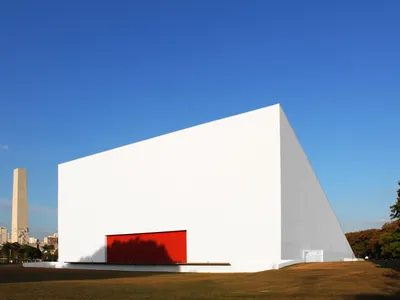
Oscar Niemeyer's Ibirapuera Park Pavilions Define São Paulo's Cultural Identity in Concrete and Curve
A constellation of modernist volumes set within São Paulo's most important urban park, conceived for the city's 400th anniversary in 1954.
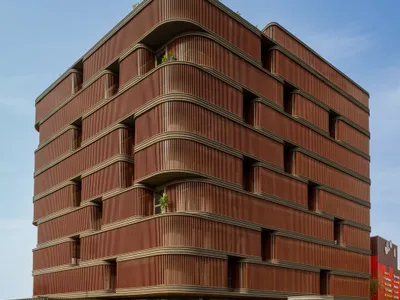
Sanjay Puri Architects Wraps a Jaipur Office Tower in Capsule-Shaped Green Buffers
A nine-level climate-responsive workplace near Jaipur Airport uses stacked planter terraces and aluminium screens to fight 40°C heat.
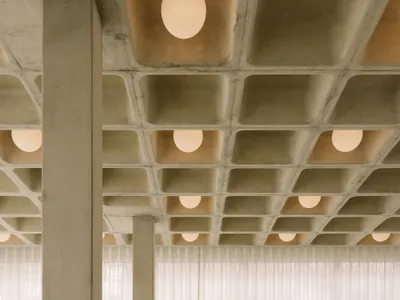
RHO Converts a Berlin Spree-Side Industrial Courtyard into Enkime's 1,000 m² Agency Headquarters
A social media agency's new home in Charlottenburg trades glossy branding for concrete waffle ceilings, glazed tile, and sheer curtains.

Explore Library Architecture Competitions
Discover active competitions in this discipline

Challenge to reimagine the Iron Throne

Photograph architecture without architects

Illustrate the lost glory of Angkor Wat - Render Challenge

Design challenge to reuse E-waste
Comments (0)
Please login or sign up to add comments
No comments yet. Be the first to comment!