
Missillac Market Hall: A Contemporary Take on Timber Market Hall Architecture in France
A timber market hall in Missillac, France, blending sustainable design, urban renewal, and community life in a modest architectural landmark.

A Modest Civic Landmark in the Heart of Missillac
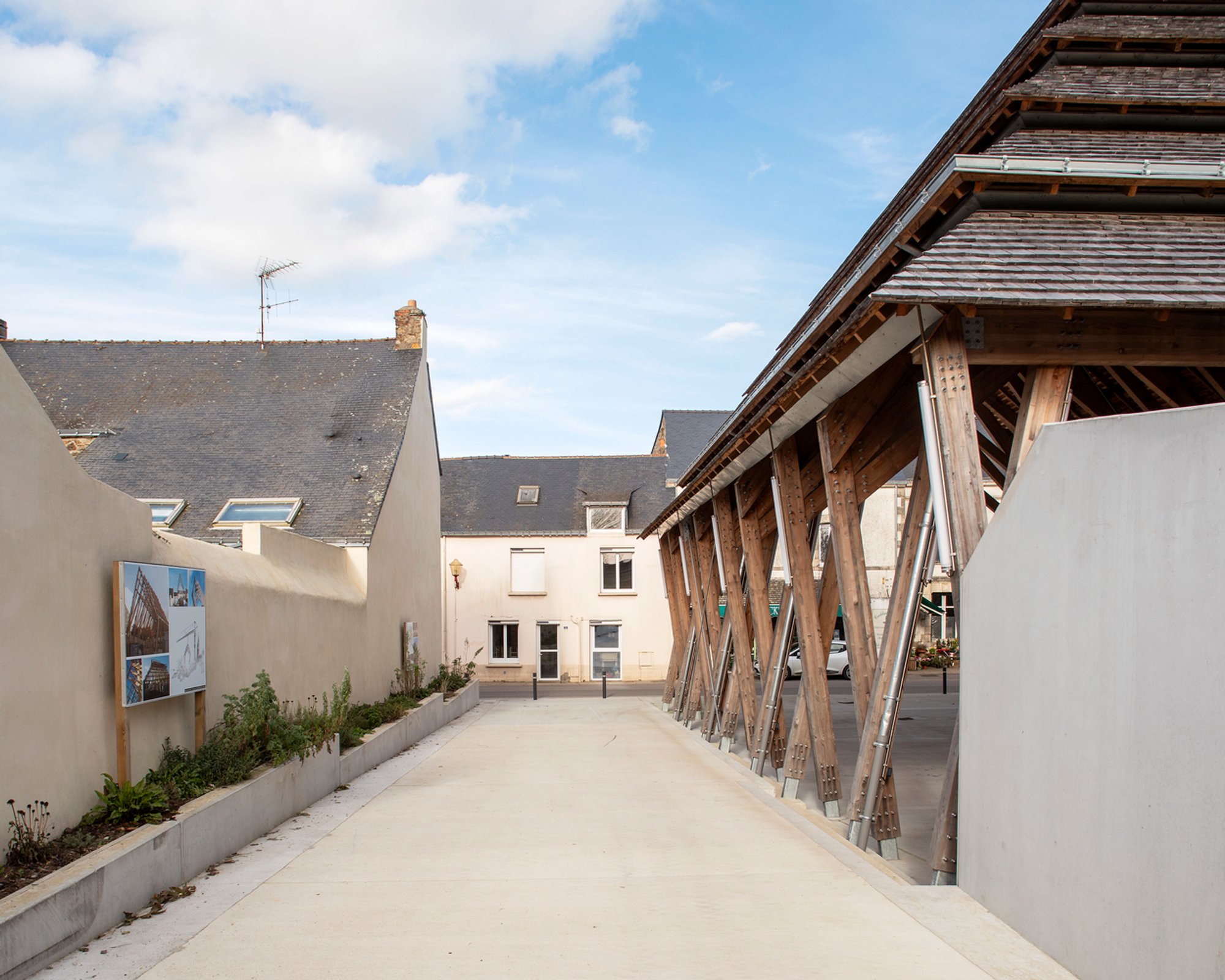
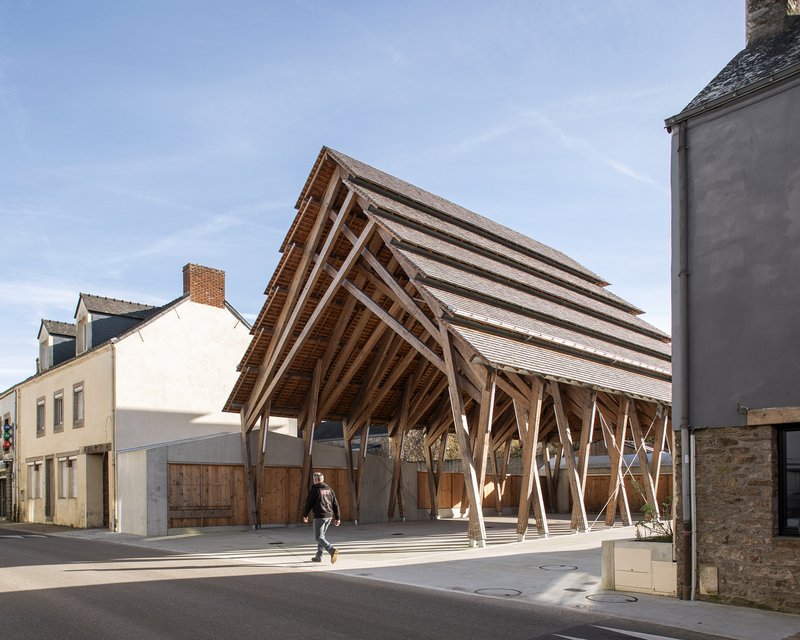
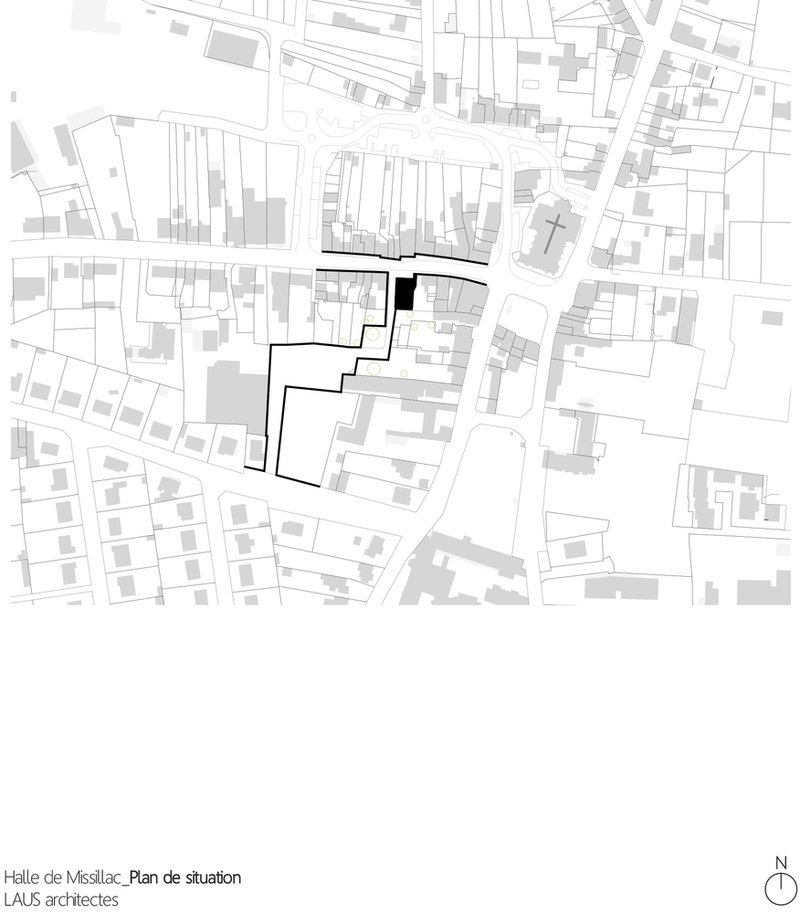
In the town center of Missillac, France, the newly completed market hall by LAUS architectes redefines the typology of public gathering spaces. Designed in 2023, this 820-square-meter structure serves not just as a commercial venue but as an architectural gesture that reweaves the urban grain. Inspired by historic civic shelters and crafted with a respect for locality, it is a refined example of timber market hall architecture in France, blending modest materials with timeless spatial generosity.
Weaving Together Context, History, and Urban Flow
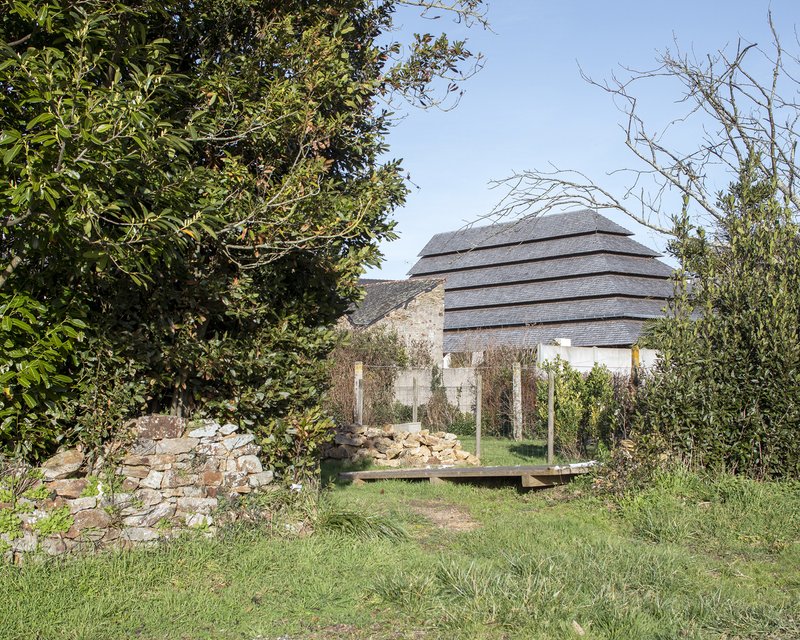
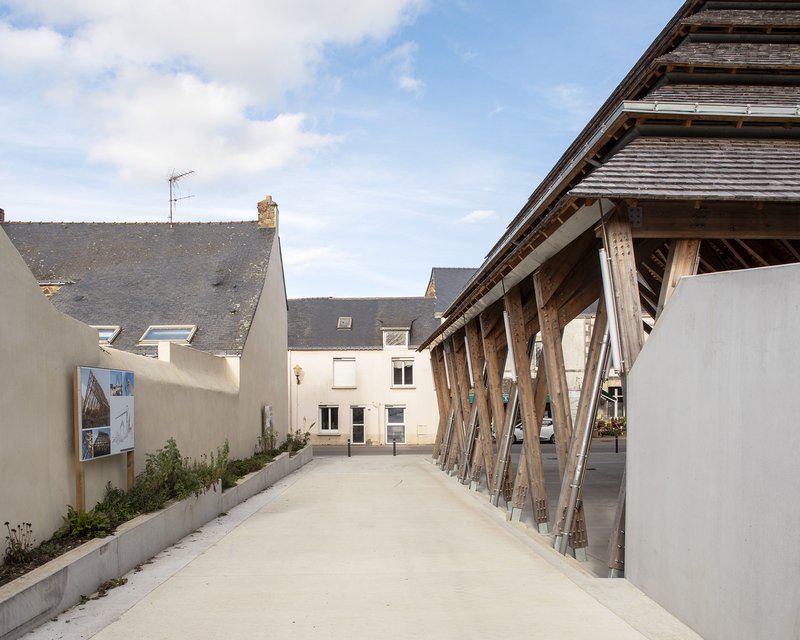
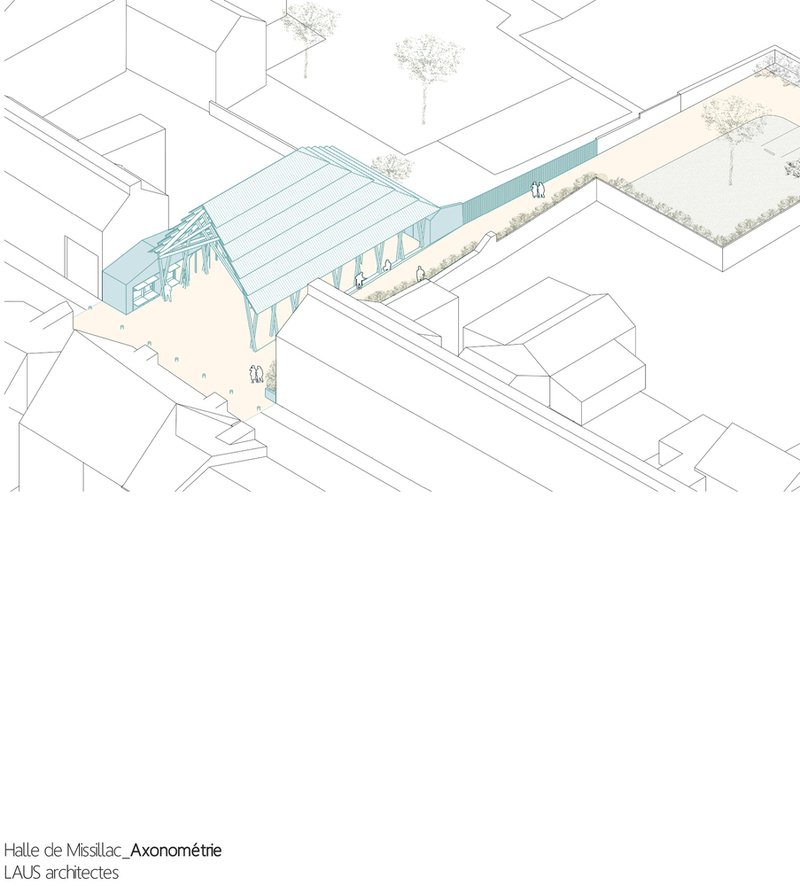
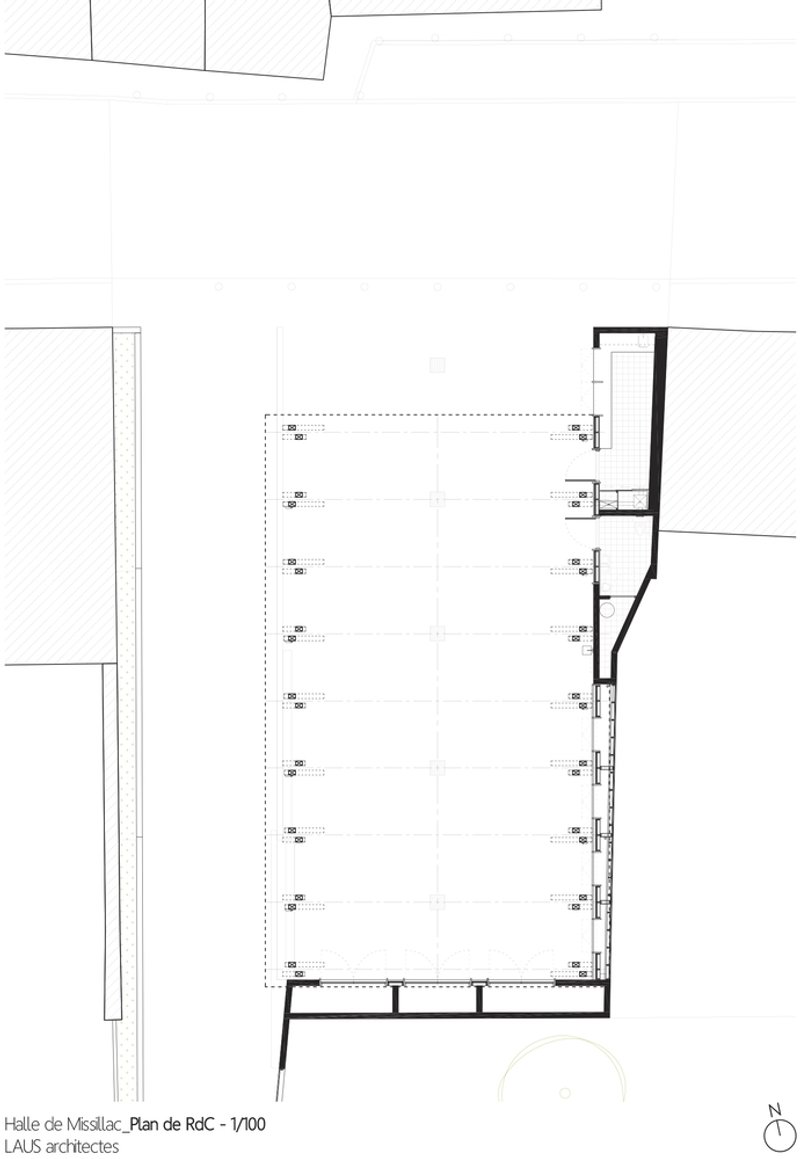
Occupying a previously empty void in the urban fabric, the market hall responds with sensitivity and spatial intelligence. Two boundaries of the site are deliberately pulled back to create a welcoming forecourt facing the main street and to open a passageway that connects with the town’s revitalized interior block. The remaining two boundaries are densified into service volumes that define the space and establish continuity with the built edge. The result is a structure that invites without dominating—a quiet yet significant insertion into the city’s rhythm.
Structural Simplicity and Expressive Craft
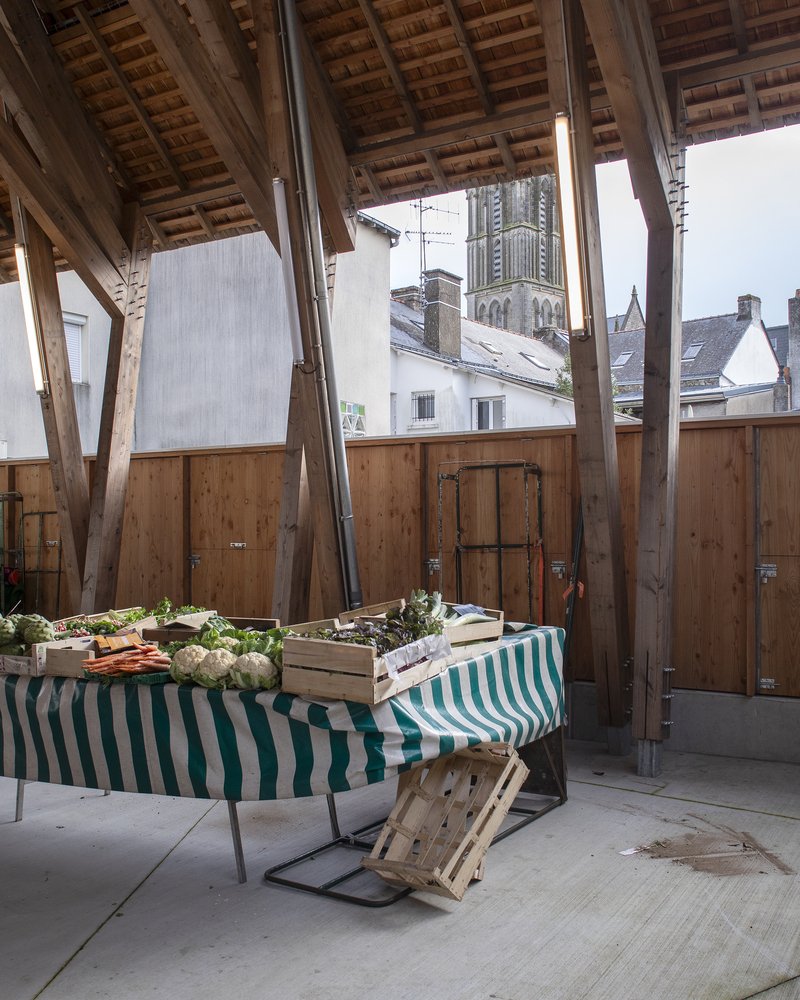
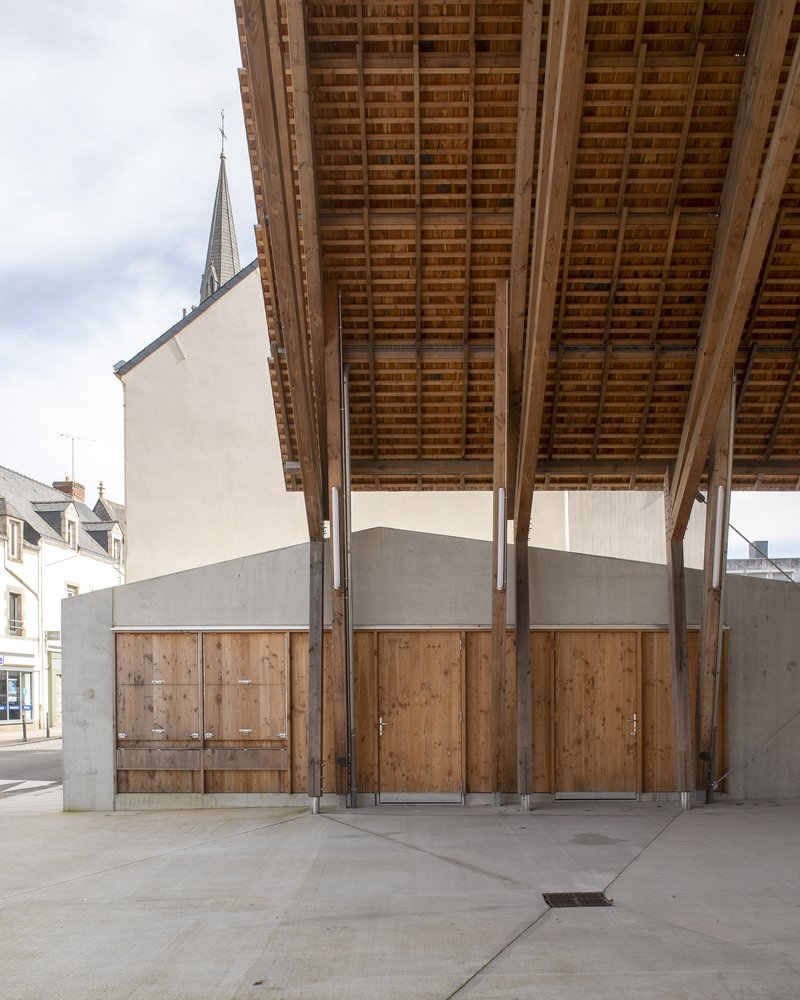
The architectural strategy celebrates the simplicity of frugal materials used with care. The primary structure is timber, locally sourced and visibly expressed, while the floor and annexes are formed in durable, unadorned concrete. The roof, composed of raw larch shingles, is both a thermal mediator and a visual landmark. It ventilates naturally during the cold months and cools the space during summer, supporting year-round use without reliance on mechanical systems.
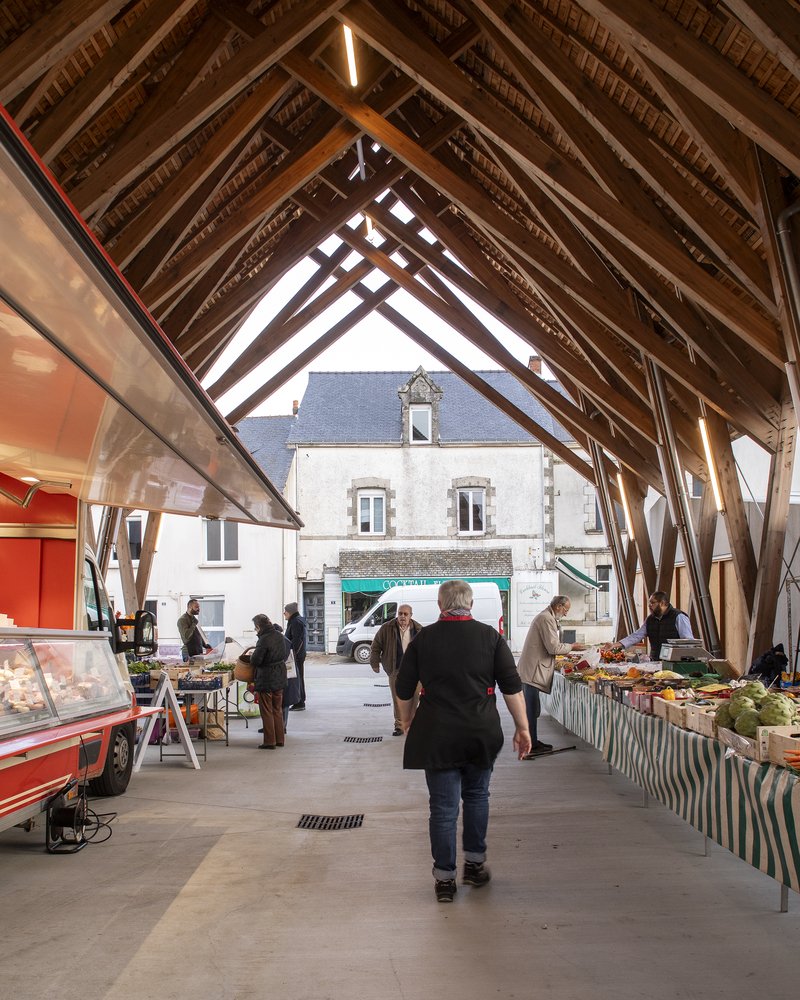
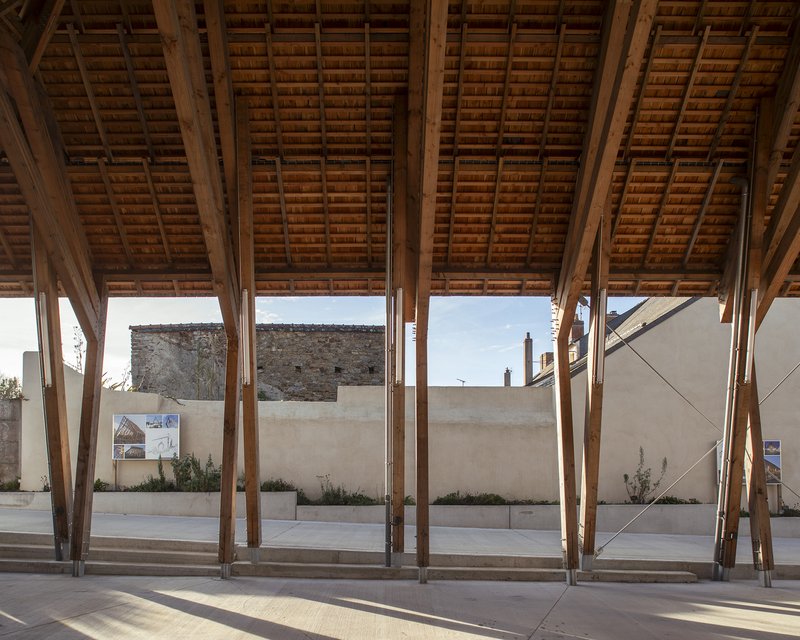
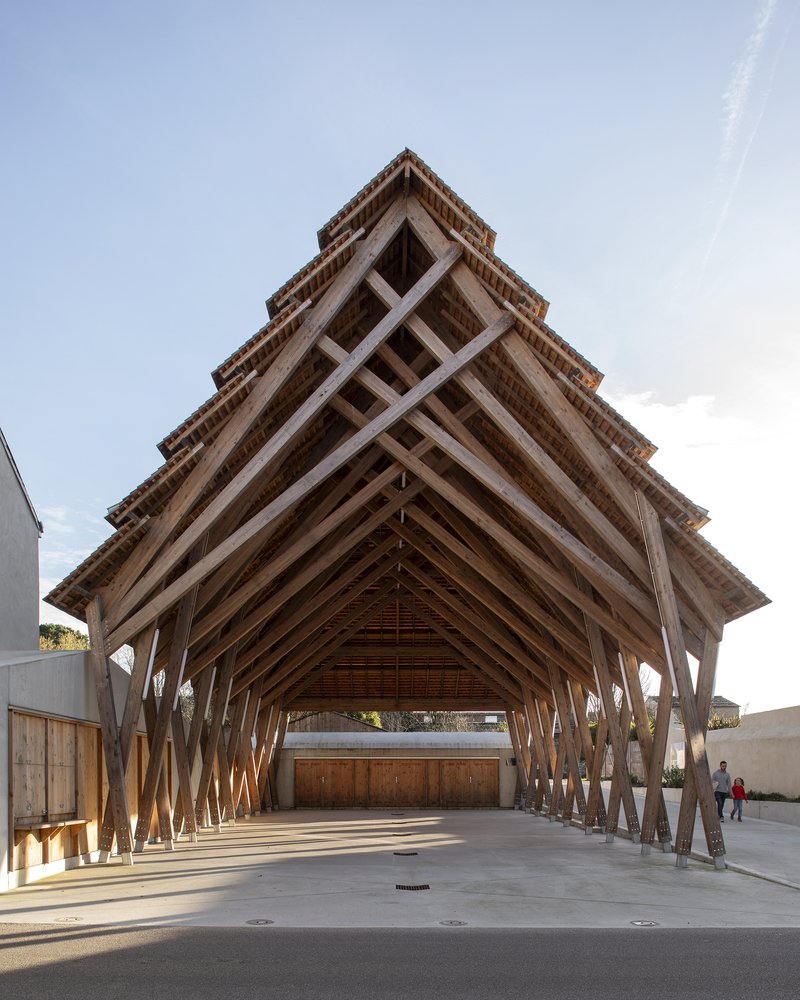
Inside, the timber framework is both efficient and poetic. Using the scissor principle in the posts and crossbeams, the load-bearing system achieves structural stability while creating a flowing visual rhythm. Every second truss is inverted to break monotony and introduce a sense of dynamic repetition. The gilled roof panels, suspended from the purlins, reinforce the structure’s lightness and tectonic clarity.
From Market Hall to Social Infrastructure
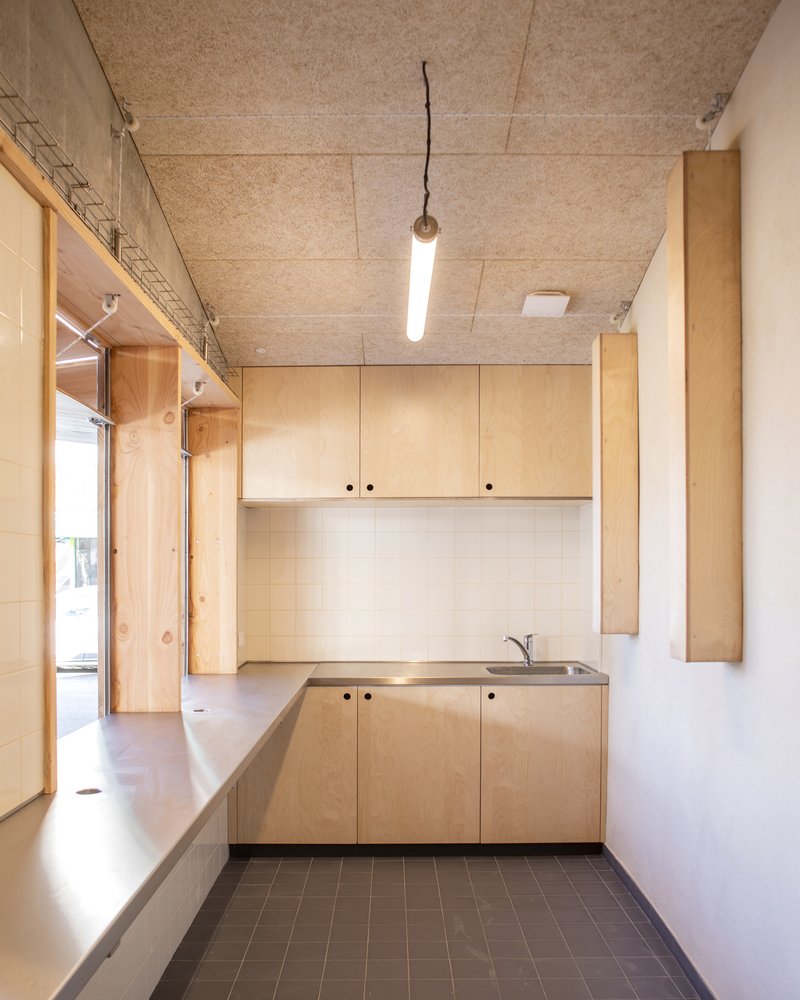
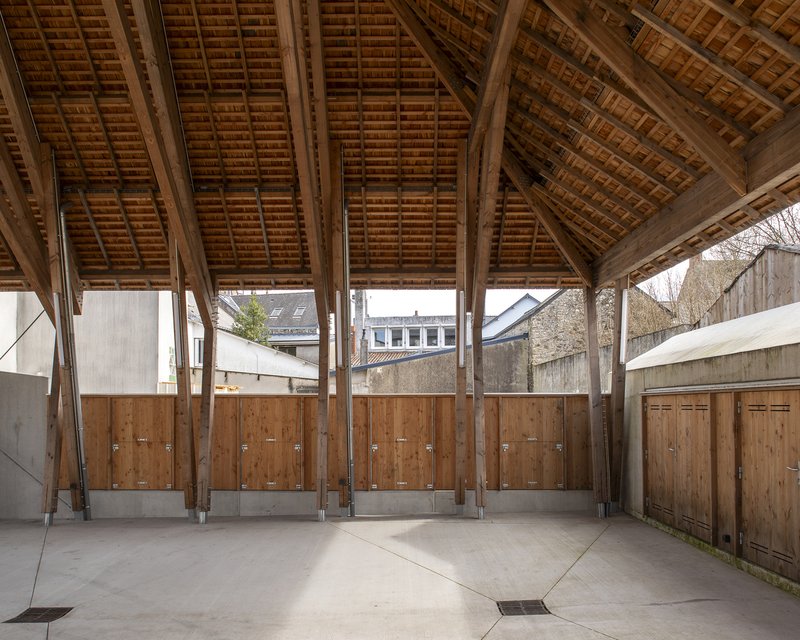
Beyond its primary function as a covered market, the Missillac Hall is a catalyst for public life. The annexes form thickened walls that house kiosks, exhibition spaces, and a bar, each accessible through oversized raw wood panels. These shutters—equipped with pulley-operated counterweights—can be adjusted by hand, making the transformation of the space intuitive and accessible.
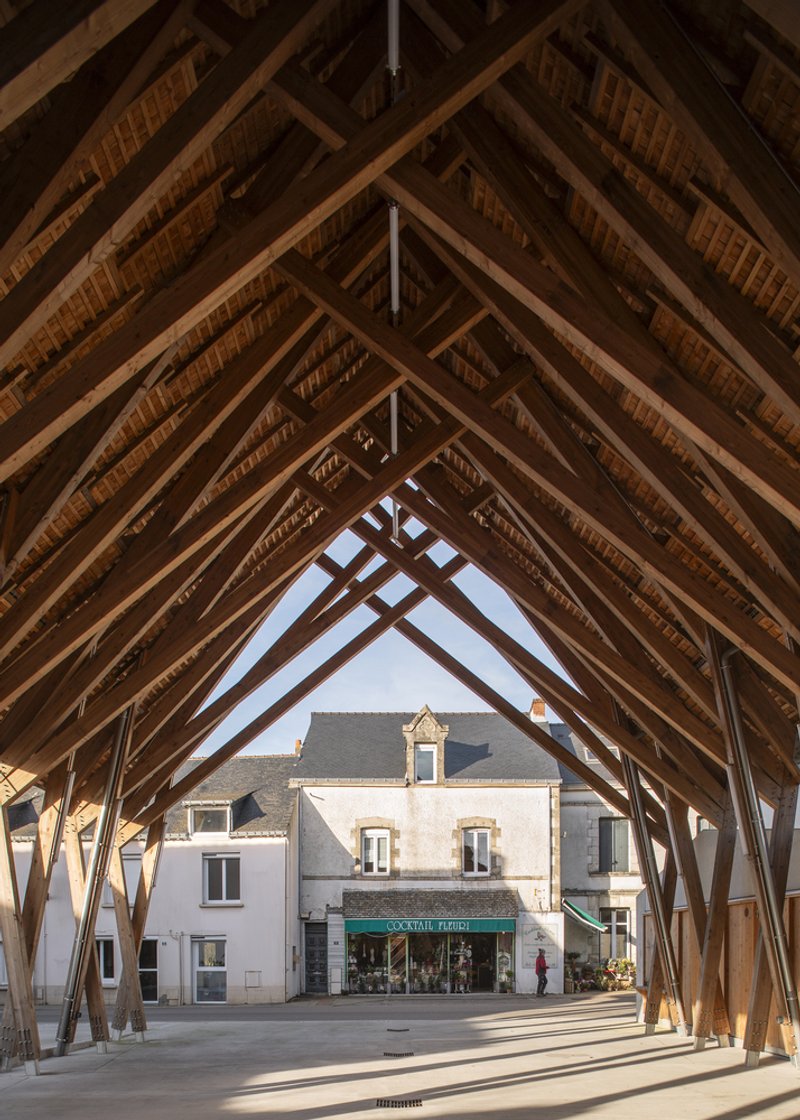
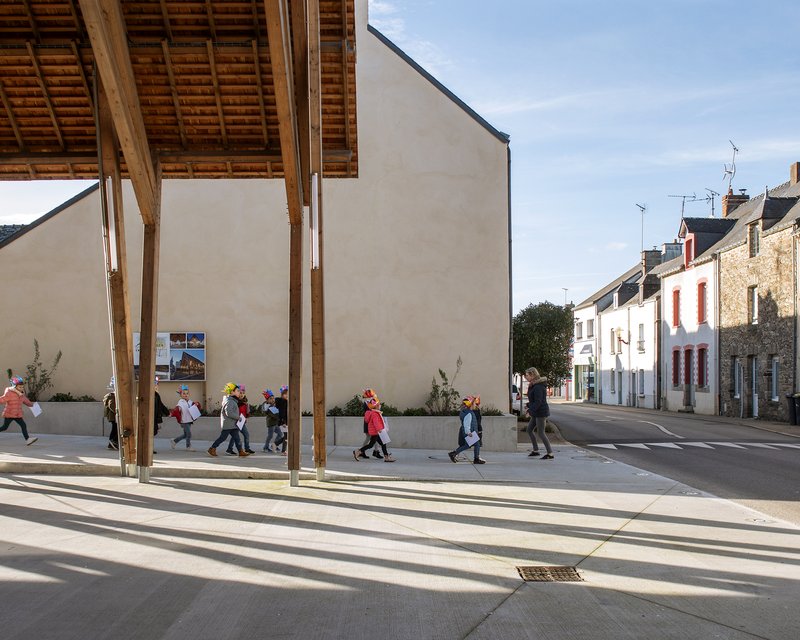
The architecture avoids unnecessary ornamentation but never feels bare. Every exposed joint, every revealed rafter, speaks of a logic that values repairability, adaptability, and human scale. Crafted by local artisans using minimal, sustainable materials, the building positions itself as a model for small-town civic architecture—elegant in simplicity and generous in spirit.
A New Archetype for Sustainable Public Design
Missillac Market Hall exemplifies a growing movement in Europe toward sustainable, community-centered architecture that relies on traditional materials, local labor, and resilient spatial strategies. Through its humble palette and refined construction, it highlights the potential of timber market hall architecture in France to deliver environmental and social impact without spectacle. At once pragmatic and poetic, it reconnects a town square not just physically, but culturally and socially.
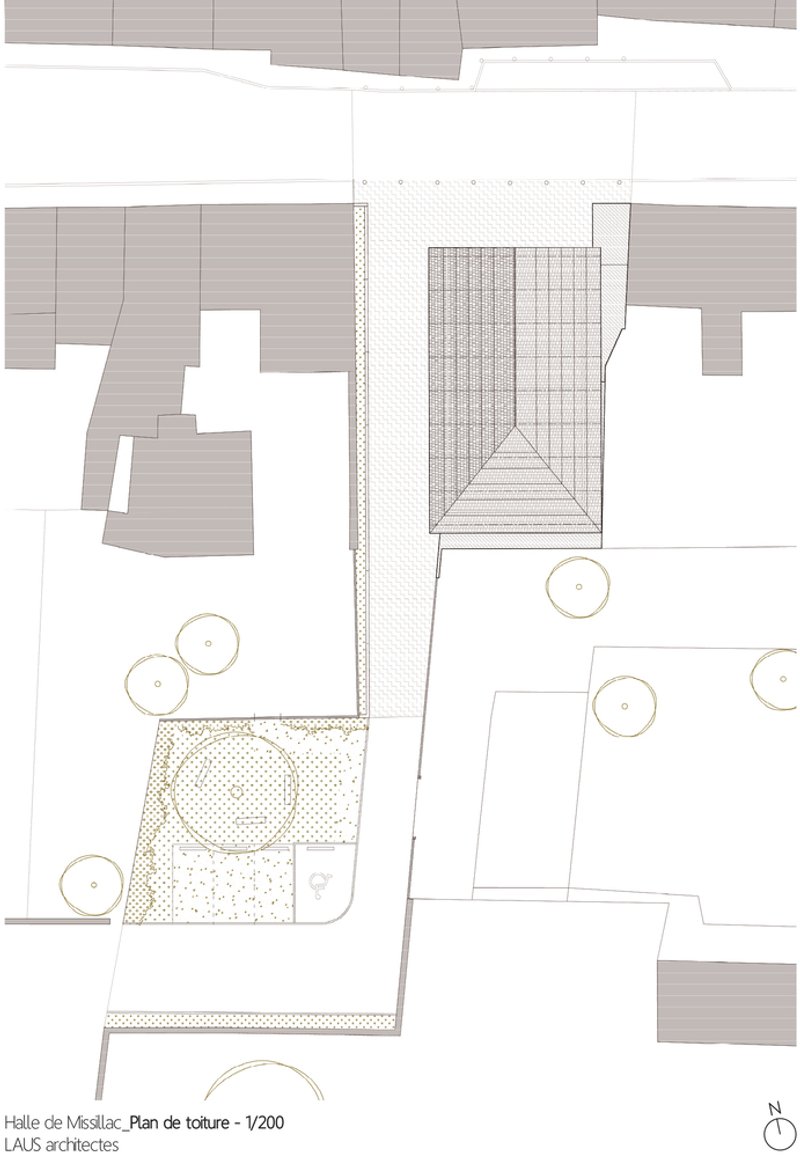
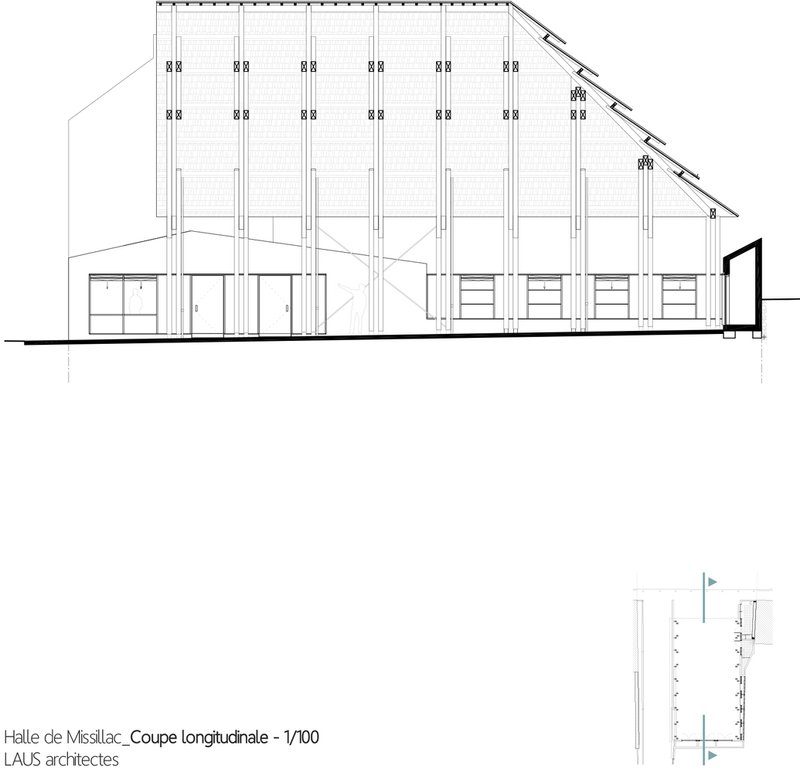
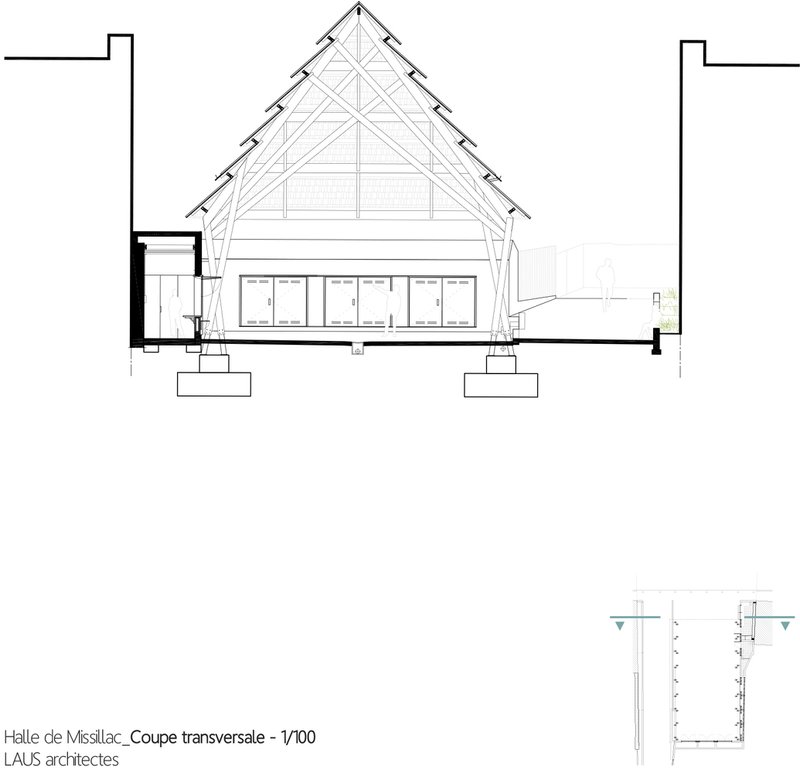
All photographs are works of Gaëtan Chevrier




Popular Articles
Popular articles from the community

Fausto Terán and Toro Fuse Japanese Craft with Mexican Tradition in a Lakeside Retreat
Nakamura House pairs Shou-Sugi-Ban charred pine with handmade clay tile at the foot of Atlangatepec Lagoon in Mexico.
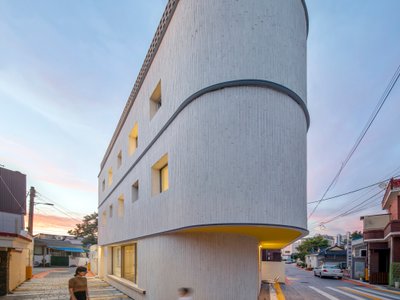
YOAP Architects Round a Corner in Yeongcheon with a Cylindrical Community Hub
A 197-square-meter brick and ribbed-clad tower turns a forgotten alley corner in South Korea into a public garden with a low threshold.

20 Most Popular Office Building Projects of 2025
From biophilic workspaces in India to net-positive energy offices in New Delhi, 20 office building projects that defined architecture in 2025.
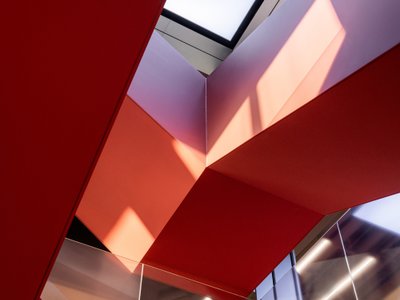
Ippolito Fleitz Group Identity Architects Turn Eight Floors in Shanghai into a Vertical Creative City
Publicis Groupe's new headquarters in Xintiandi reimagines the office as a courtyard-driven urban landscape stacked across eight floors.


Similar Reads
You might also enjoy these articles
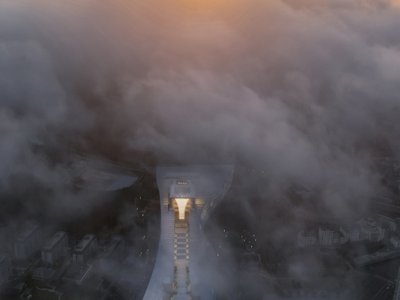
CSADI Carves a Jade Blade into the Qinling Mountains for China's First Ecology Museum
A 43,788 square meter terraced museum in Shangluo draws its form from a Xia Dynasty artifact and steps down toward the valley below.
Ippolito Fleitz Group Identity Architects Turn Eight Floors in Shanghai into a Vertical Creative City
Publicis Groupe's new headquarters in Xintiandi reimagines the office as a courtyard-driven urban landscape stacked across eight floors.
Díaz Webster Arquitectura Carves Light and Air into a Compact Zapopan House
A 237-square-meter residence in western Zapopan uses courtyards and double-height voids to dissolve the boundary between interior and garden.
BAST Slots a Four-Story Glass House into a Narrow Gap Between Toulouse Townhouses
In the dense Bonnefoy district, a stepped infill building merges home and office while preserving a majestic hackberry tree.


Explore Architecture Competitions
Discover active competitions in this discipline




The International Standard for Design Portfolios


The Global Benchmark for Architecture Dissertation Awards


The Global Benchmark for Graduation Excellence


Challenge to reimagine the Iron Throne
Comments (0)
Please login or sign up to add comments
No comments yet. Be the first to comment!