

Mission Rock Building B by WORKac — A New Vision for Sustainable Workplace Architecture
Mission Rock Building B blends sculpted terraces, sustainable design, and biophilic workspaces, creating a flexible, light-filled, nature-connected workplace in San Francisco.


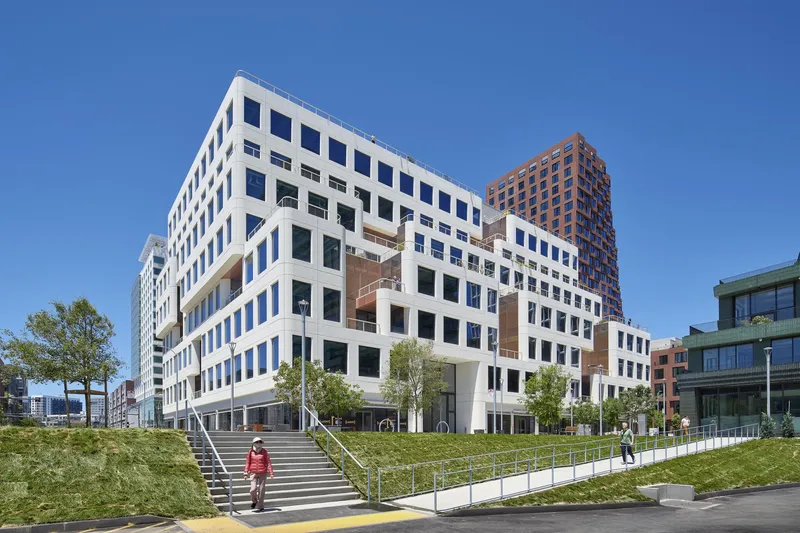
Mission Rock Building B in San Francisco represents a bold reimagining of the contemporary workplace. Designed by WORKac, the 300,000-square-foot building introduces a new model of urban innovation—one that seamlessly merges architecture, landscape, and sustainability. Through its terraced gardens, sculpted façade, and flexible interior planning, Building B embodies the future of biophilic, climate-responsive commercial architecture.
A Sculpted, Garden-Filled Workplace
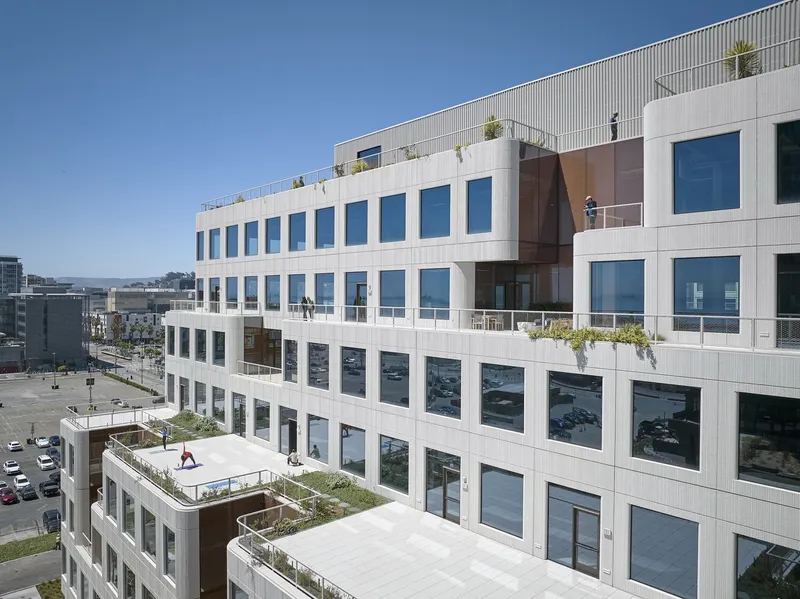
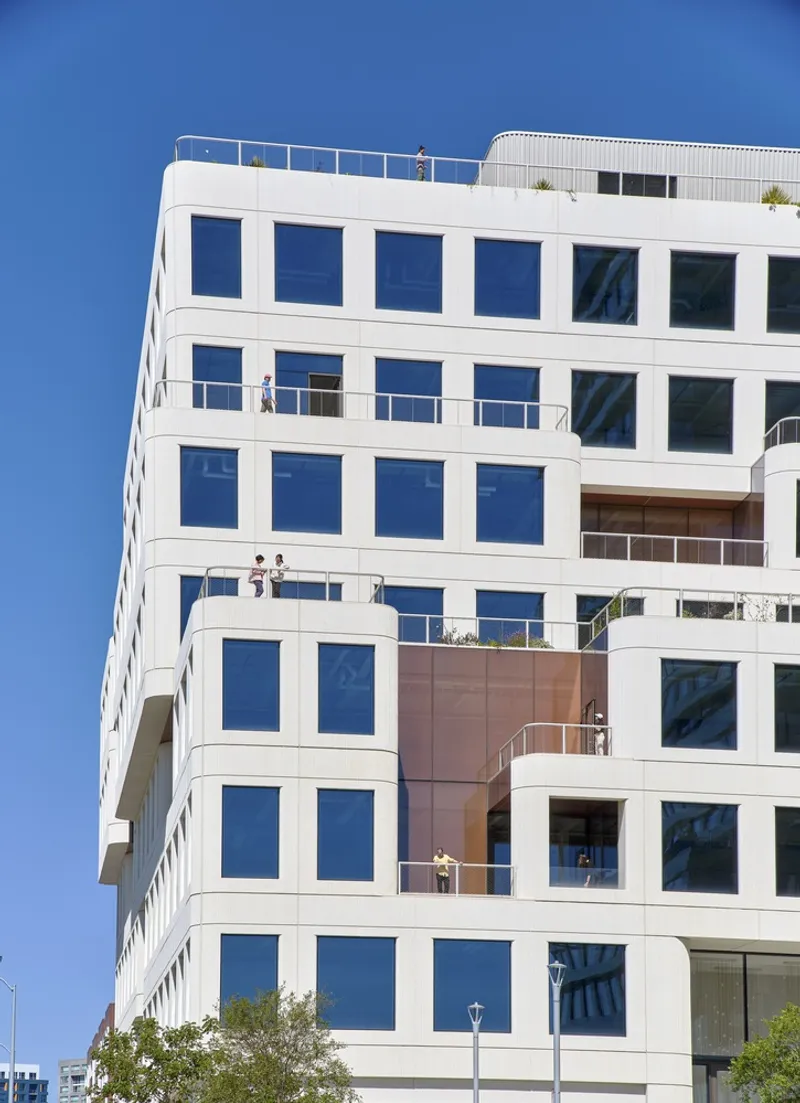
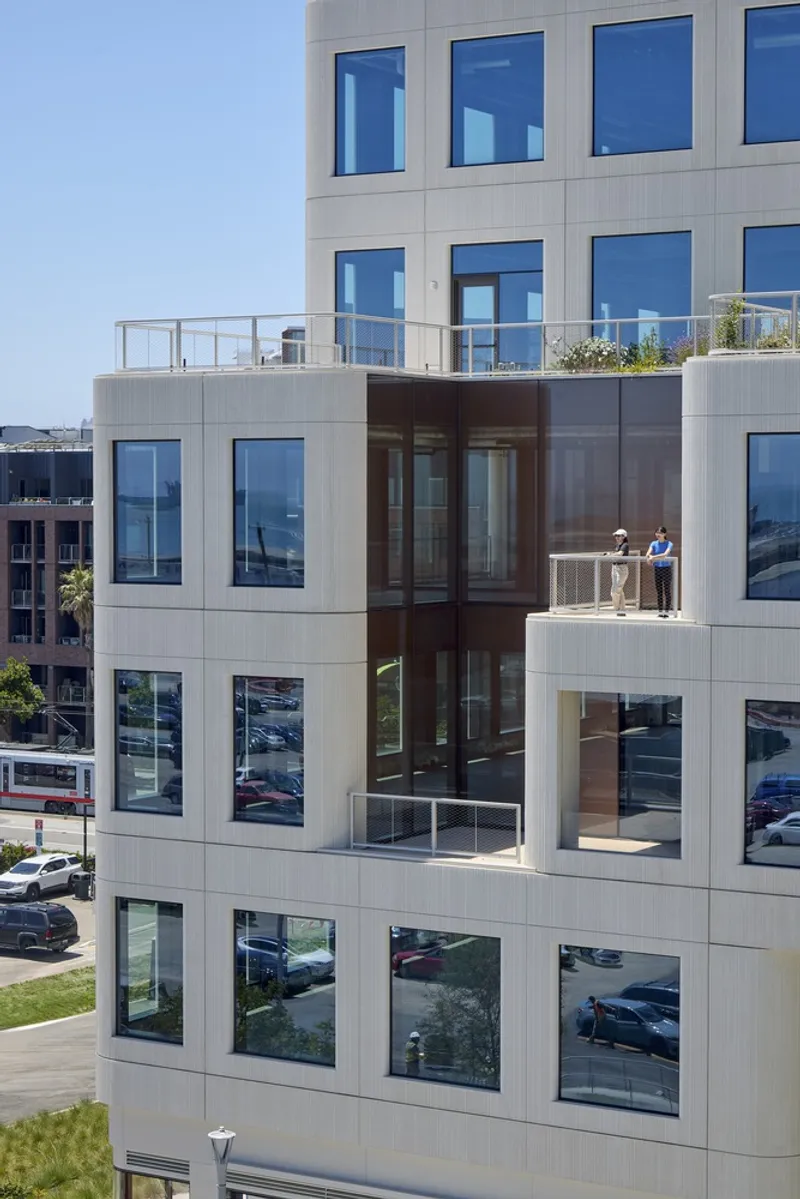
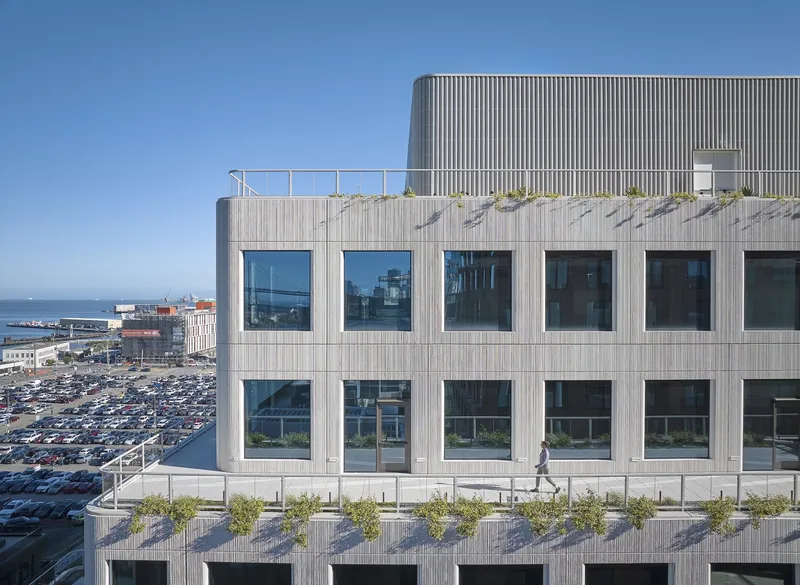
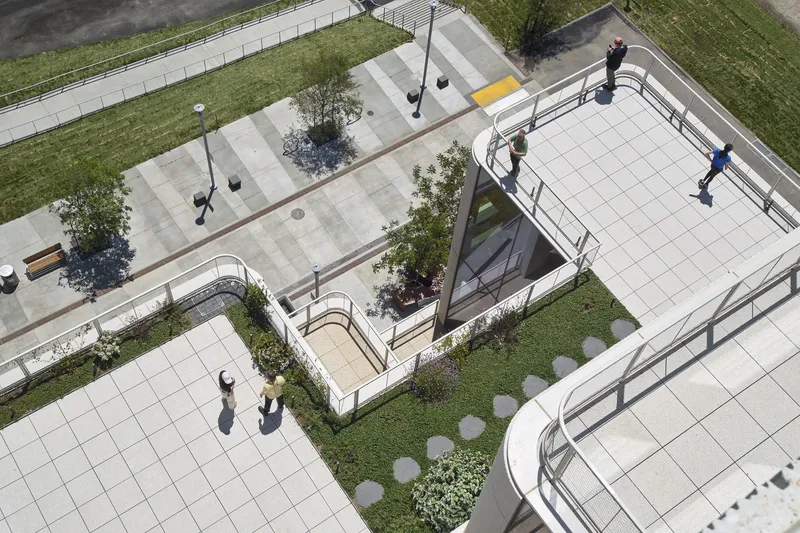
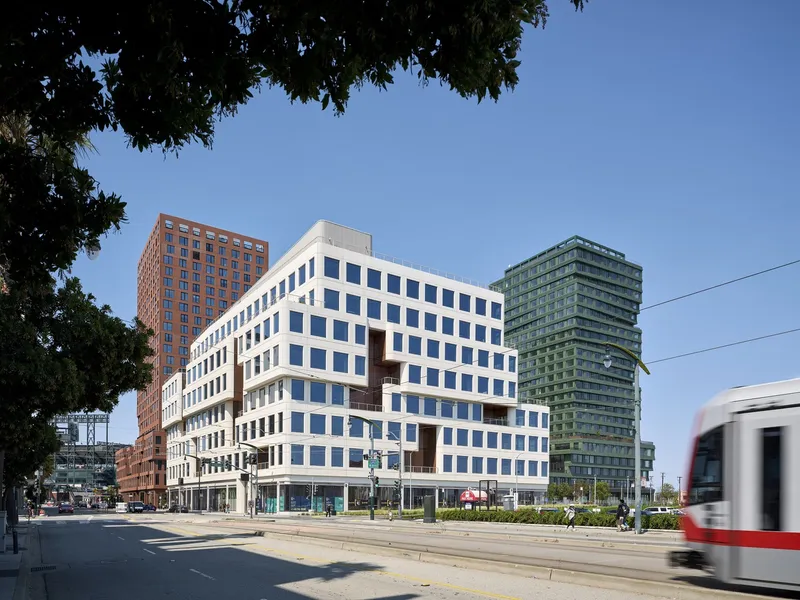
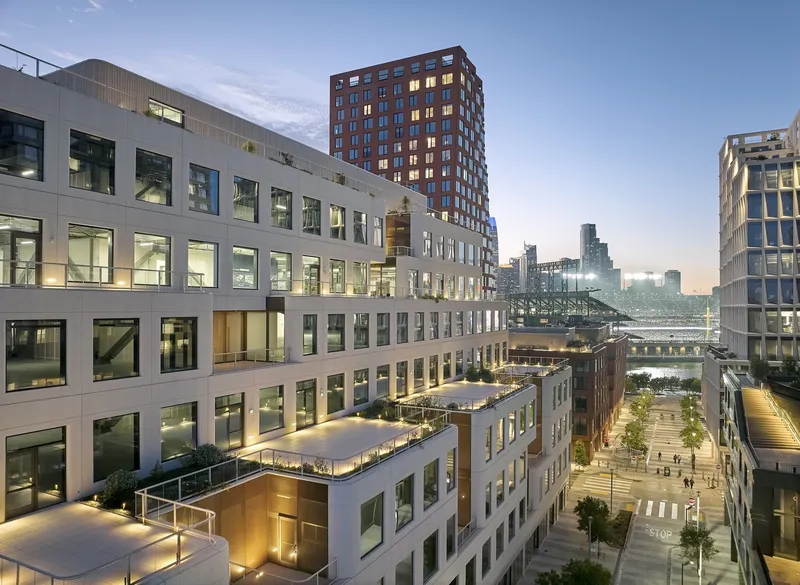
Building B stands eight stories high, but its perception is transformed by a series of horizontally shifting layers. These layers carve out lush outdoor terraces, creating cascading gardens that double as open-air meeting rooms and collaborative workspaces. This design not only brings nature into daily work life but also strengthens visual connections to the dramatic San Francisco Bay and skyline.
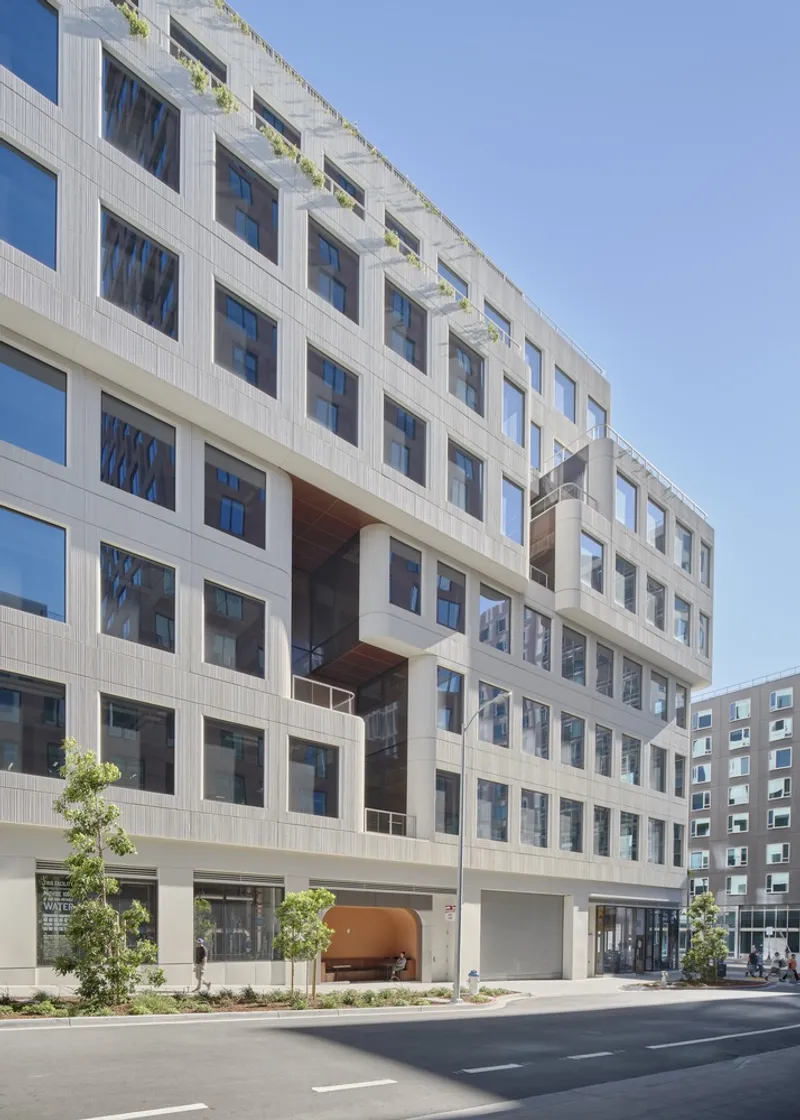
The facade integrates fritted glass, textural precast ripples, and deep shadow lines that add sculptural richness to the building. These carved-out portions invite daylight deeper into lower floors, giving tenants bright, open environments suited for traditional workplaces, life science labs, and creative studios.
To support inclusivity, WORKac designed open-concept, all-gender restrooms on every floor—showcasing a progressive, user-centered approach to workspace needs.
Ecological Topography as Architectural Expression
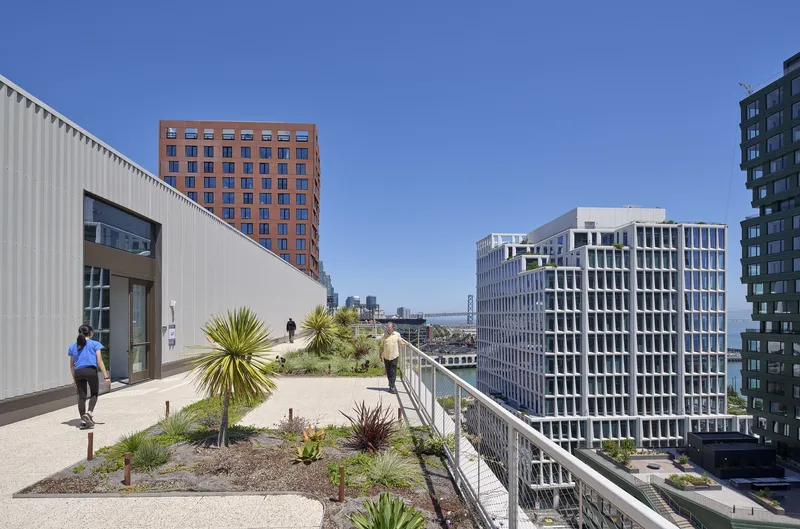
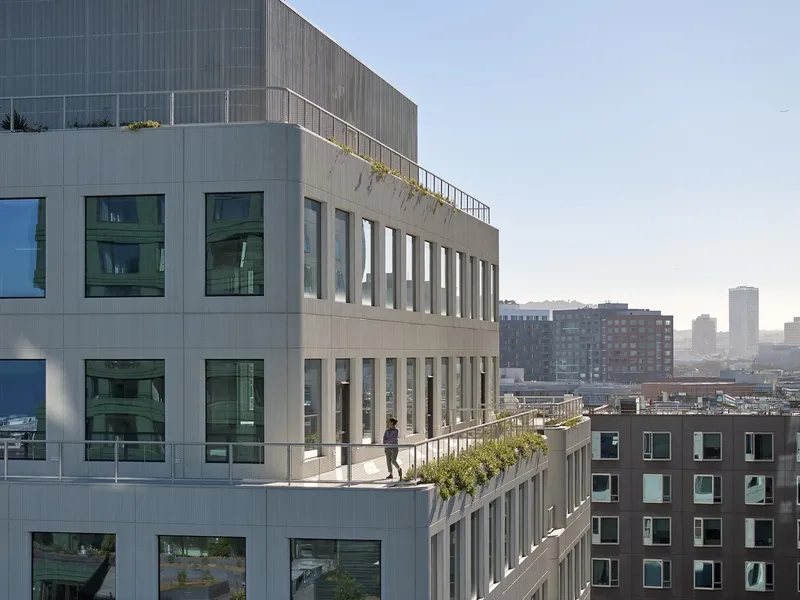
The architectural concept draws from San Francisco’s dynamic landscape. WORKac conceived the building as a stacked urban topography, with each terrace creating green micro-habitats. Collaborating with GLS Landscape Architecture, the design transitions from dense, leafy plantings on lower levels to wind-resistant succulents higher up.
These gardens function as a “fifth façade,” visible from surrounding towers and public spaces. The terraced forms lower the perceived scale of the building, connecting Mission Rock Square and Dr. Maya Angelou Lane to the development’s active, community-oriented street life.
Materiality and Street-Level Activation
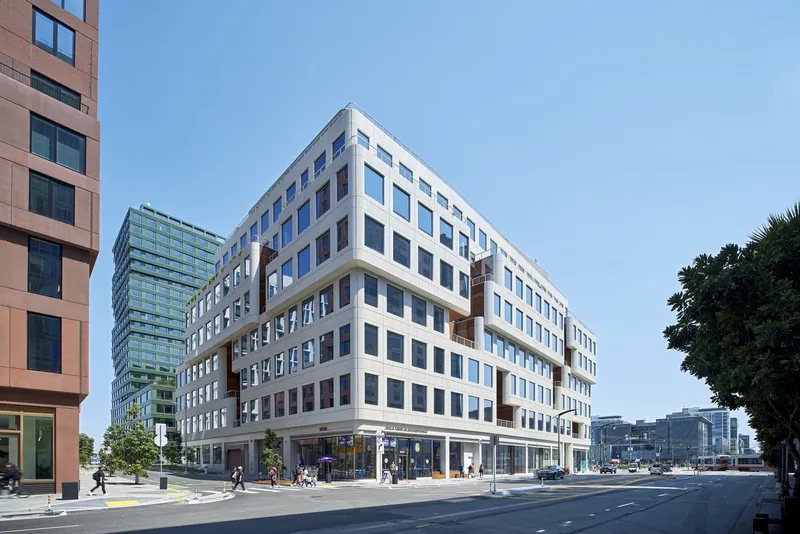
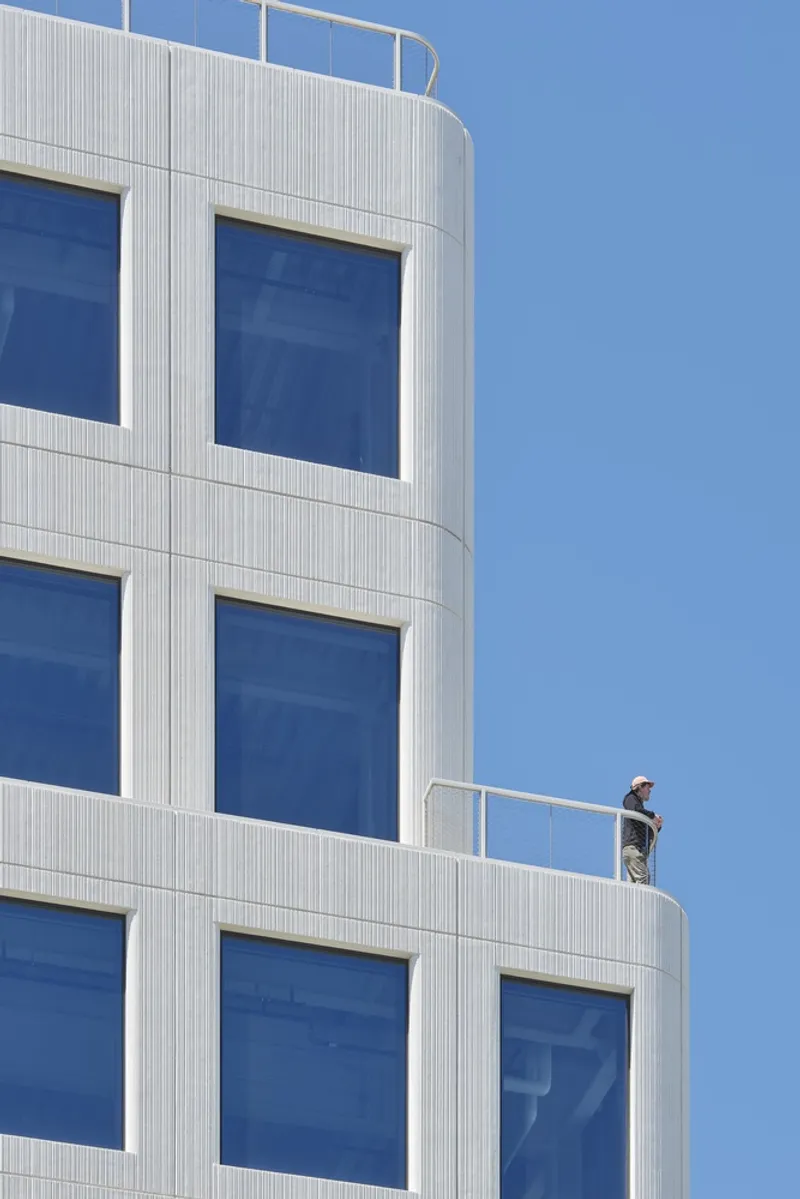
From afar, Building B appears monochromatic and light, enhancing its sculptural silhouette. Up close, its textured precast panels unfold into curtain-like ripples that animate the facade with shadow and movement.
At street level, WORKac designed a vibrant, animated glass storefront that pushes outward to invite pedestrians or pulls inward to create shaded outdoor seating. This gesture reinforces Mission Rock’s public character, offering welcoming transitions between indoor programs and urban life.
A large, secure bike storage room encourages sustainable commuting—complementing the nearby Mission Rock BART station and the site’s pedestrian-first planning.
LEED Gold Performance and Climate Resilience
Sustainability drives every aspect of Mission Rock Building B. Anticipating rising sea levels in the Bay Area, the entire development is elevated 5 feet above sea level.
The project achieves LEED Gold Certification, supported by advanced environmental systems including a district-wide blackwater treatment and recycling network. The building alone contributes to recycling more than 50,000 gallons of water per day, which is reused for irrigation and toilet flushing across Mission Rock.
This closed-loop strategy dramatically reduces potable water consumption and sets a new standard for sustainable urban districts.
Part of a Transformative 28-Acre Waterfront District
Mission Rock Building B is a key component of the ambitious 28-acre Mission Rock redevelopment, led by Tishman Speyer and the San Francisco Giants. Formerly an asphalt parking lot, the area is now a thriving mixed-use community introducing:
- 500+ new homes
- 600,000 sq ft of commercial and retail spaces
- Enhanced public access to the waterfront
- The new China Basin Park, a five-acre landmark designed by SCAPE (opened April 2024)
Building B joins notable architectural contributions from internationally recognized firms, including:
- MVRDV – The Canyon (residential, 2023)
- Henning Larsen – Visa Global Headquarters (2024)
- Studio Gang – Verde residential tower (2024)
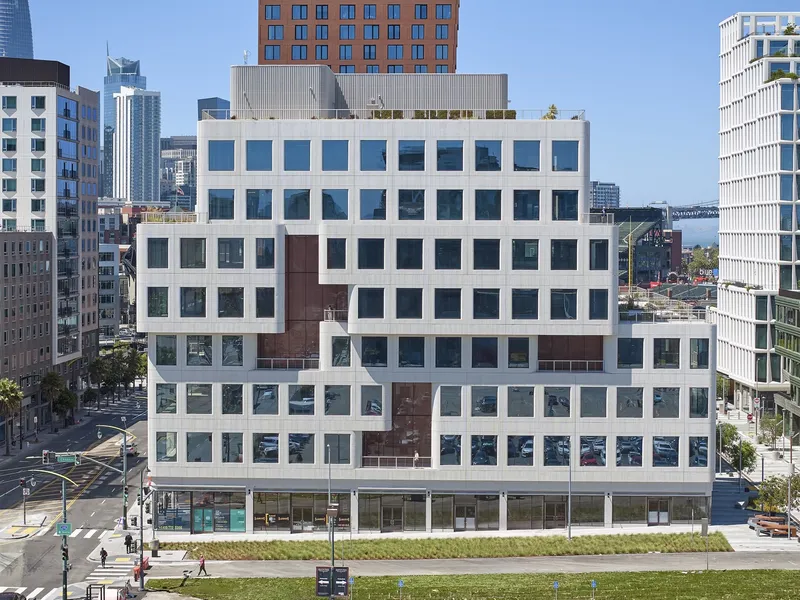
Together, these projects form a signature skyline that reflects San Francisco’s topography, sustainability goals, and cultural vibrancy.
Mission Rock Building B by WORKac sets a new benchmark for biophilic design, sustainable urban architecture, and flexible workplace environments. Its layered gardens, sculptural facade, and integrated ecological systems make it a model for climate-adaptive urban development—reshaping how architecture can nurture wellness, community, and environmental stewardship.
All photographs are works of Bruce Damonte


Popular Articles
Popular articles from the community


Juan García Correa, John González and Claudia Rueda Sink a Circular Amphitheater into a Manizales Engineering Building
On the La Nubia campus in Manizales, Colombia, the S1 Building folds labs and offices into a hillside of ramped lawns that double as a campus route.

LT2A and OPEN Architectes Thread a Brick and Glass High School Through a Wooded Belgian Campus
In Braine-l'Alleud, a 3,000 m² wing for Collège Cardinal Mercier pairs pale brick with a glazed colonnade, deferring to a small chapel and a dense wood.

longwave studio Reorganizes a 112 m² Tainan Apartment Around the Daily Routines of a Family and Two Cats
In Tainan, Taiwan, birch plywood, rust-red furniture and a freestanding plaster wall link arrival, storage, work and family life in one apartment.

David Ortega Stacks a Two-Story Mexico City Penthouse Around a Steel Stair and a Pergola-Shaded Roof Terrace
In Colonia Roma, a 300 m² penthouse uses oak joinery, a planted steel stair and a slatted roof pergola to make a new-build apartment feel like a house.

Similar Reads
You might also enjoy these articles


Hodi-Mandai Geram
Project Function: Preservation and revitalization of the Intangible heritage and socio-spatial identity of the Hodi by Housing, Cultural Memory Center, Sacred Grove, landscape, local tourism economy


Olio Towers: A Mid-Rise for Performers That Fuses Housing, Rehearsal, and Stage
Located blocks from Houston's Theater District, this modular tower stacks living units around a central performance atrium.

Oasis: Modular Green Housing Carved into Dhaka's Urban Fabric
A shortlisted Plugin Housing entry reclaims unauthorized settlements in Dhaka with stepped concrete volumes, green roofs, and ventilation-driven design.

Black Hole: A Floating Megastructure for the Post-Physical Era
Emiliano Mazzarotto envisions a spherical, self-scaling arena where e-sports, digital hotels, and holographic stadiums replace traditional public space.

Explore Residential Building Competitions
Discover active competitions in this discipline

Challenge to design mud housing for contemporary communities

Challenge to reimagine the Iron Throne

Photograph architecture without architects

Illustrate the lost glory of Angkor Wat - Render Challenge
Comments (0)
Please login or sign up to add comments
No comments yet. Be the first to comment!