

Mobile Architectural Office Stacks Six Timber Homes on a Paris Corner in Ten Days
A cross-laminated timber building near Canal Saint-Martin reinterprets faubourienne architecture with a very low carbon footprint.


Paris is not a city that tolerates newcomers easily. Its streetscapes are layered, opinionated, and deeply resistant to anything that reads as foreign. So when mobile architectural office slotted a six-story, cross-laminated timber residential building into a tight corner plot near Canal Saint-Martin, the task was less about making a statement and more about making something that could hold its own between an HBM brick complex, a postmodern housing block, and a row of rendered faubourienne buildings. The result is a quiet, precise piece of urban infill that manages to be both genuinely contemporary and deeply Parisian.
What makes 6 Housing Units on Rue Robert Blache interesting is not the way it looks, though the matt white ribbed metal skin is handsome. It is the way it was built. The entire CLT structure, prefabricated in the Basque Country, was assembled on site in ten days. That speed is not a gimmick. On a constrained urban plot with neighbors on every side, minimizing construction time is an act of civic responsibility. The building delivers six dwellings and a ground floor commercial space in just 318 square meters, every unit enjoying double or triple orientation, and it does so with a very low carbon footprint.
Holding the Corner
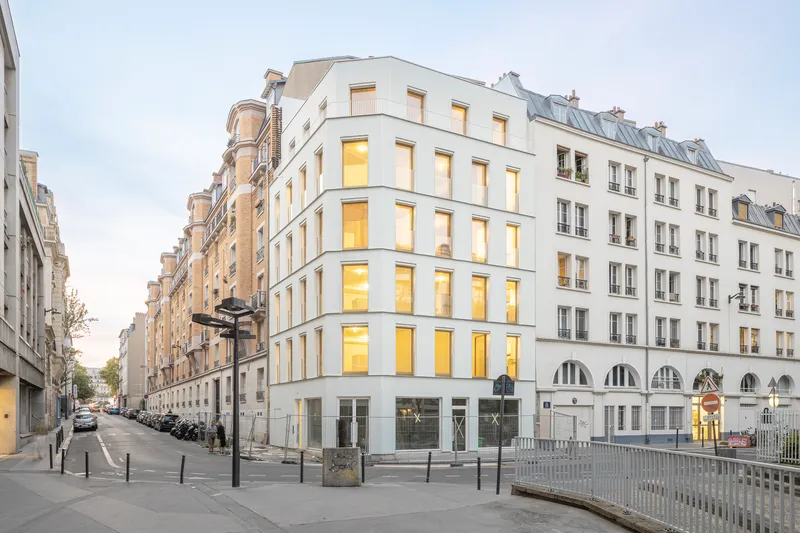
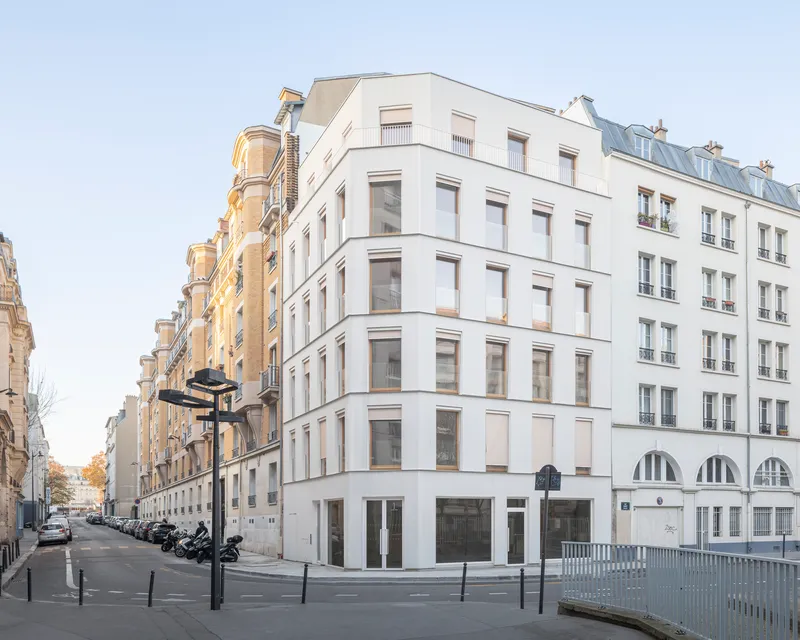
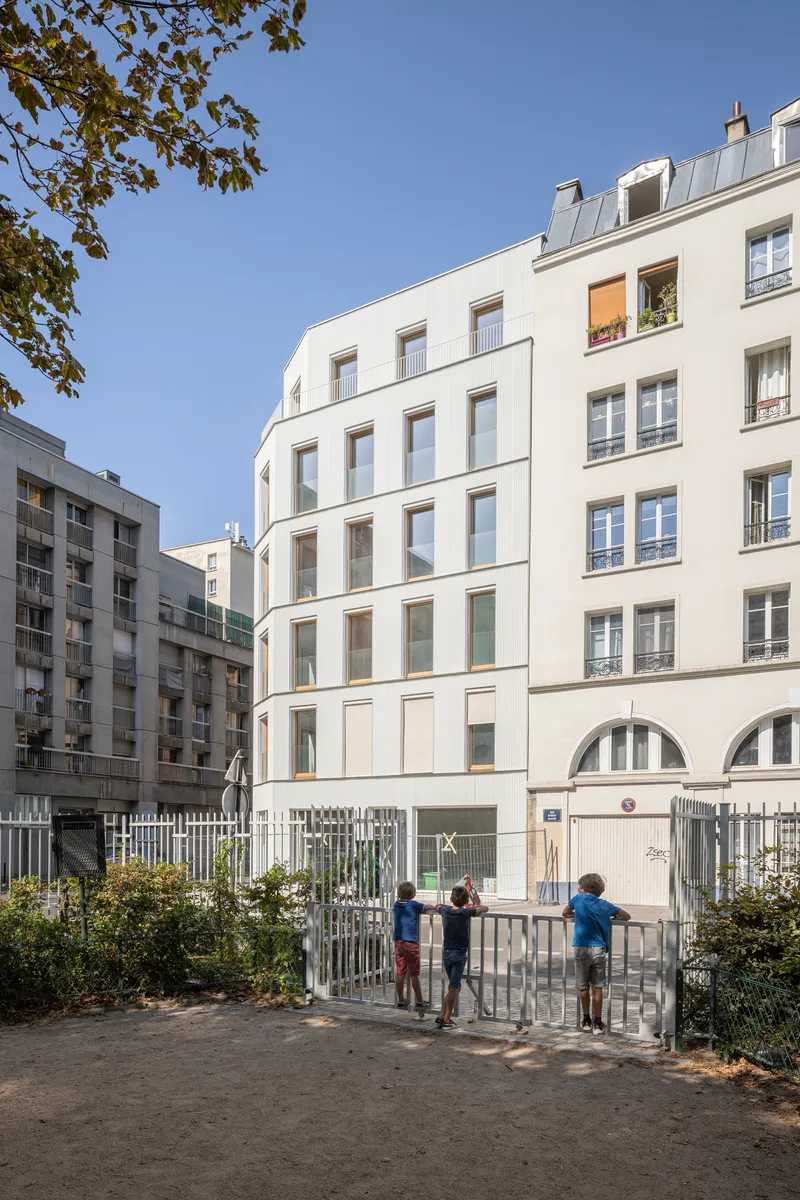
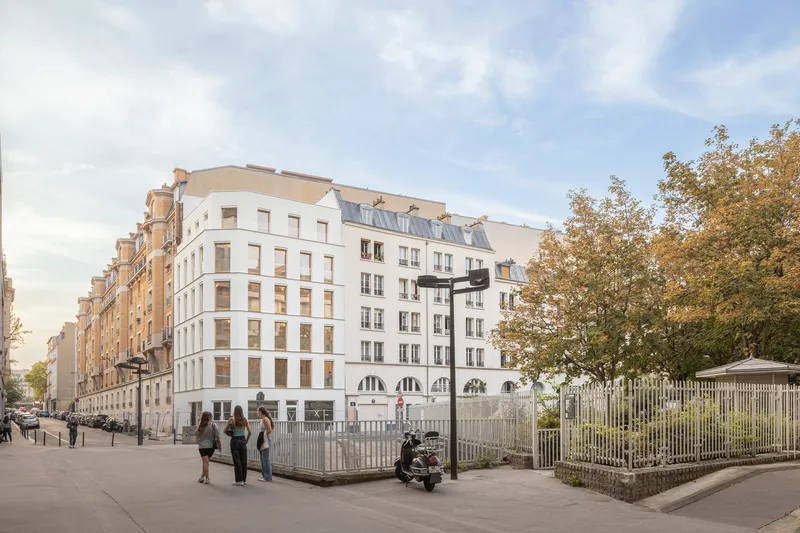
Corner sites in Paris come with expectations. They anchor the block, mediate between two streets, and often carry the most public face of a building. Mobile architectural office responds with a gently curved facade that wraps from Rue Robert Blache to Rue du Terrage, softening the junction rather than sharpening it. Arched openings at the ground floor echo the classical language found on neighboring structures without mimicking it directly. At dusk the building reads as a lantern, its recessed windows glowing against the ribbed white surface.
Viewed from the adjacent playground, the curve gives the building a civic presence that a sharp corner would not. Children play against the metal fence while the facade rises above the tree canopy, its regular fenestration providing a visual rhythm that sits comfortably beside the orderly brick of the HBM complex across the street.
A Skin of Ribbed Metal and Timber
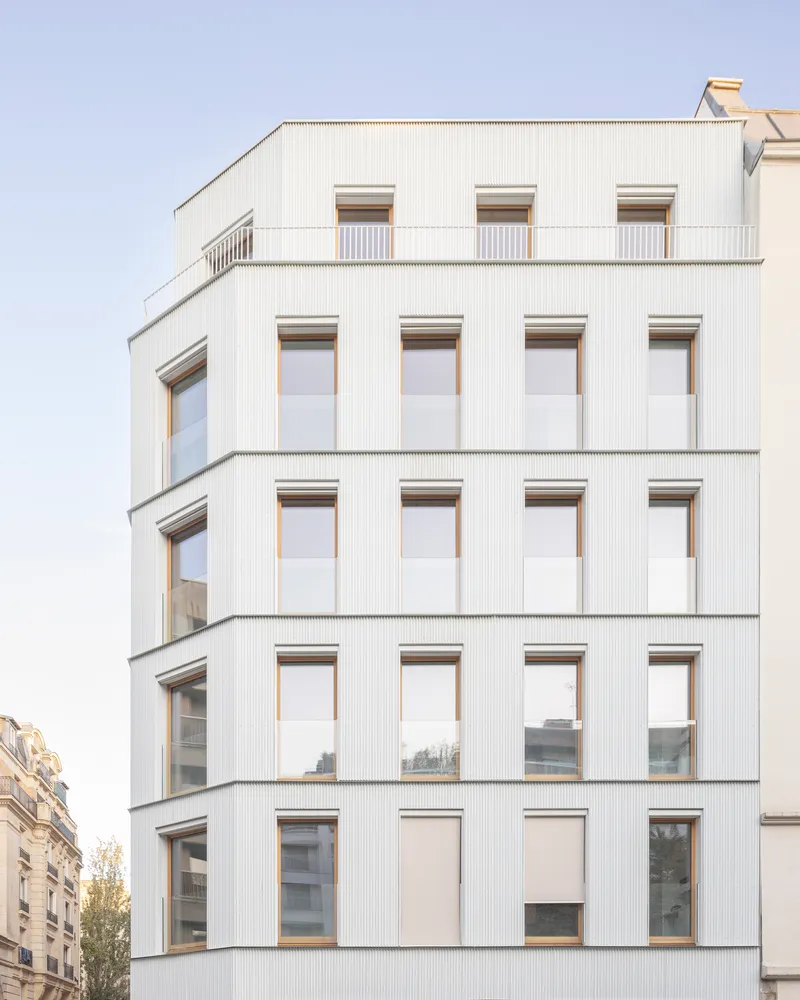
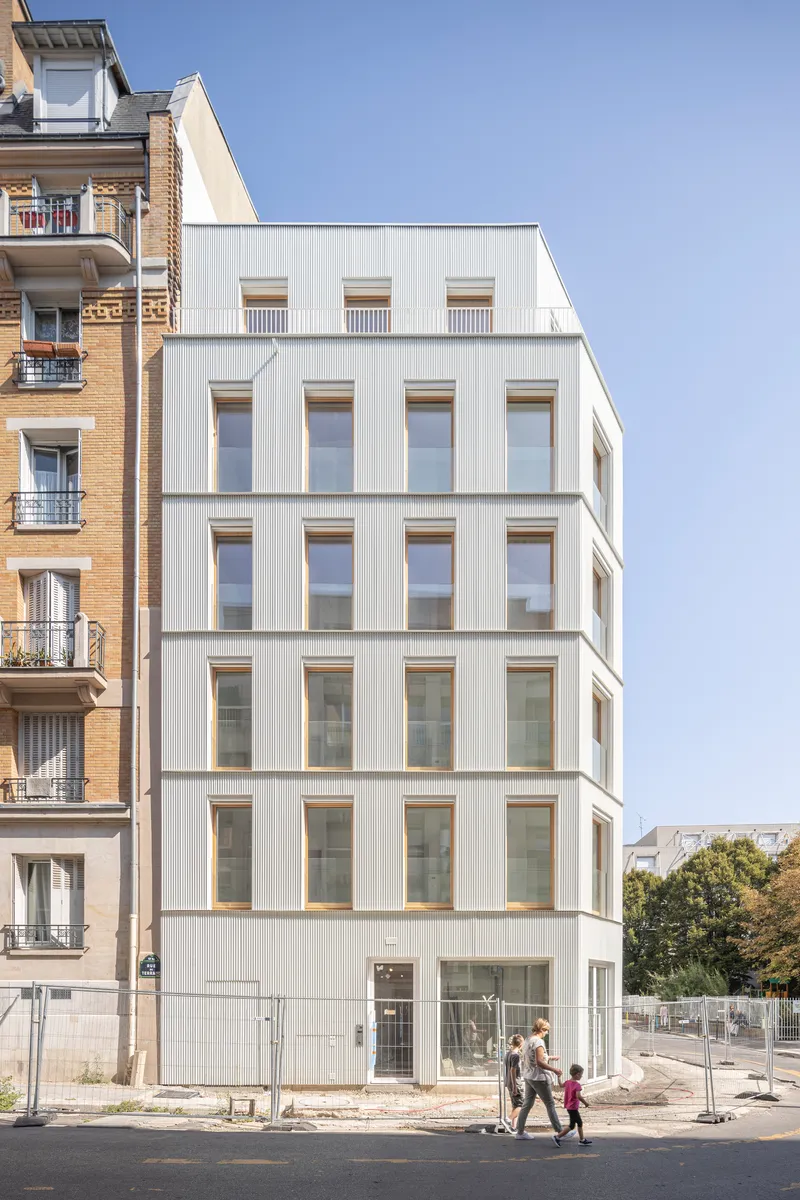
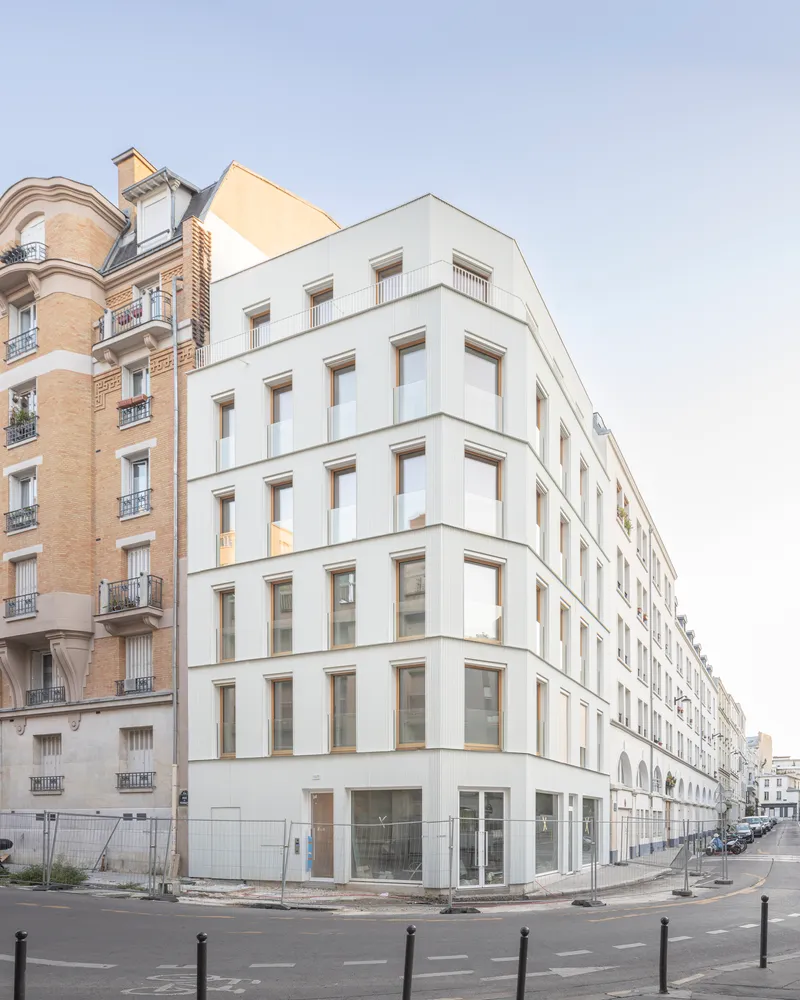
The street-facing facade is clad in ArcelorMittal Baïne ribbed metal panels, finished in a matt white that reads as plaster from a distance. Up close the corrugation catches light in fine vertical lines, giving the surface a textile quality that flat render cannot achieve. Timber-framed windows sit in deep reveals, their natural color providing the only warm note on the exterior. The depth of these reveals is not decorative; it results from the thickness of the wood fiber insulation wrapping the CLT structure.
The narrower elevation facing Rue du Terrage shows how carefully the building negotiates its neighbors. Horizontal window bands step across the facade, and the entrance is marked with little fanfare, just a clear opening between older buildings. This restraint is deliberate: the architects describe their approach as "discreet modernity," and the street elevation delivers exactly that.
The Courtyard Side
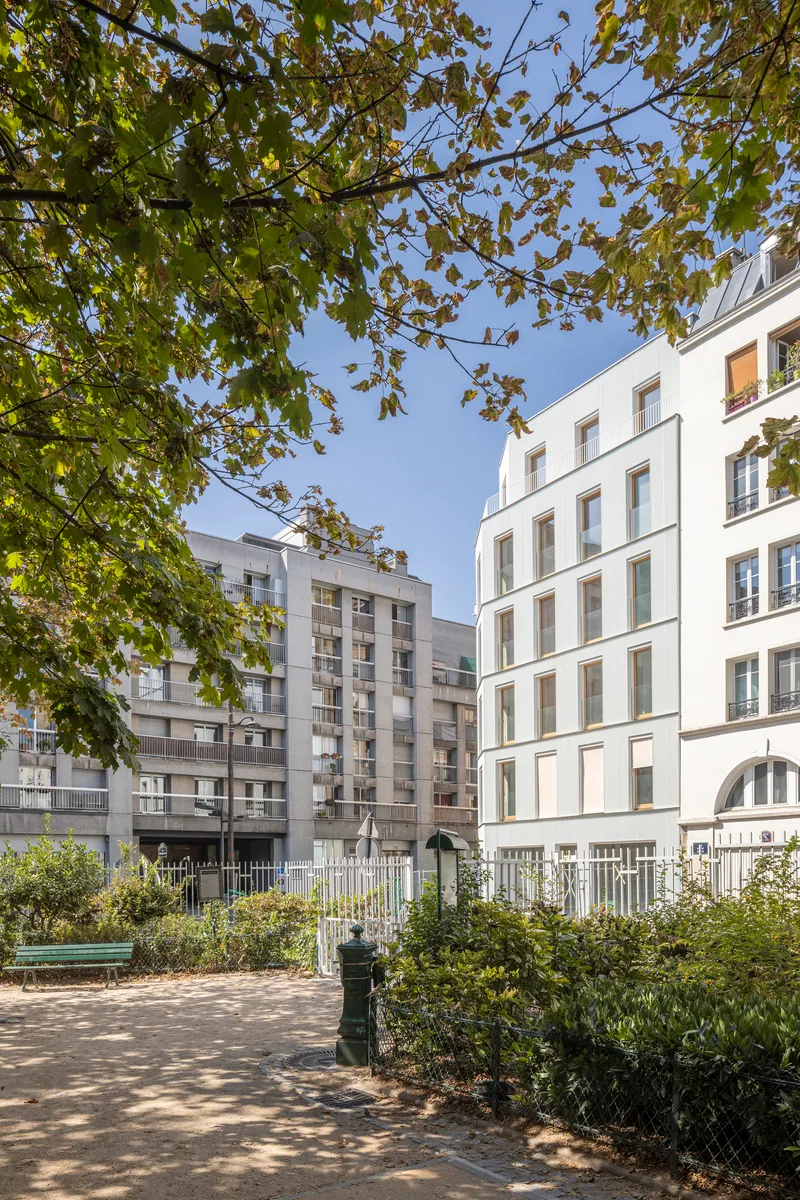
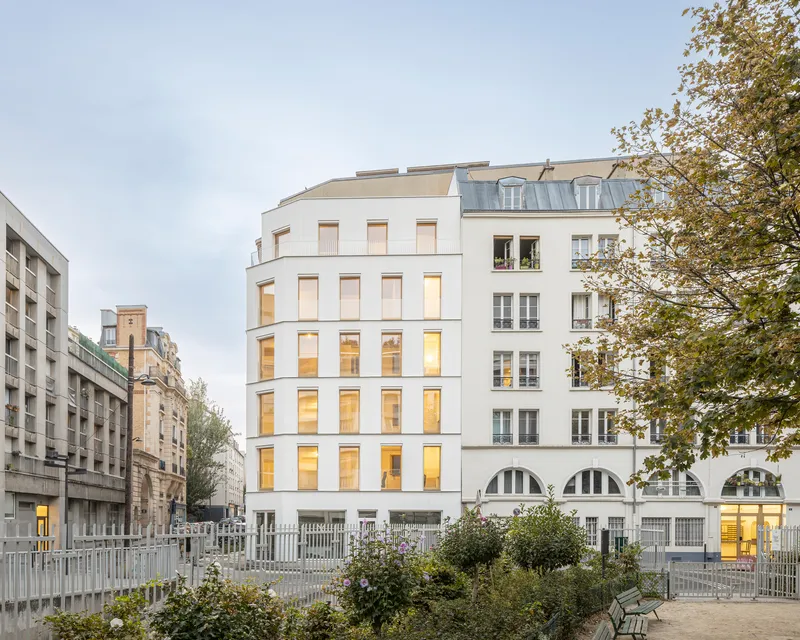
Flip the building around and the character shifts. The courtyard elevation is clad in natural-colored wood, a warmer, more domestic register that faces planted beds and mature trees. Rainwater collected from the zinc roof feeds a planter above the bicycle room and irrigates the ground floor green space, creating a small ecosystem that softens the hardscape of the plot. In autumn the warm tones of the timber cladding merge with the foliage, and the building nearly disappears into its own landscape.
This duality between street and courtyard is a classic Parisian move. The public face is mineral and restrained; the private face is organic and generous. Mobile architectural office updates the convention with contemporary materials, but the spatial logic is centuries old.
Timber Structure as Interior Finish
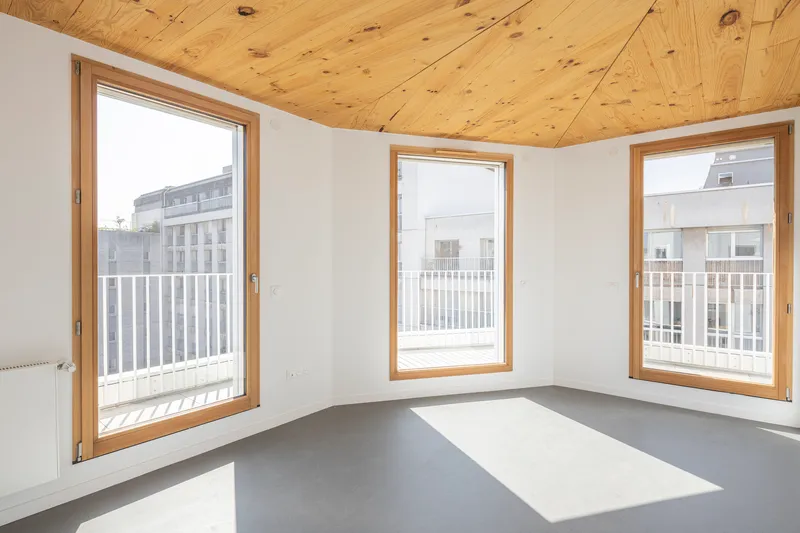
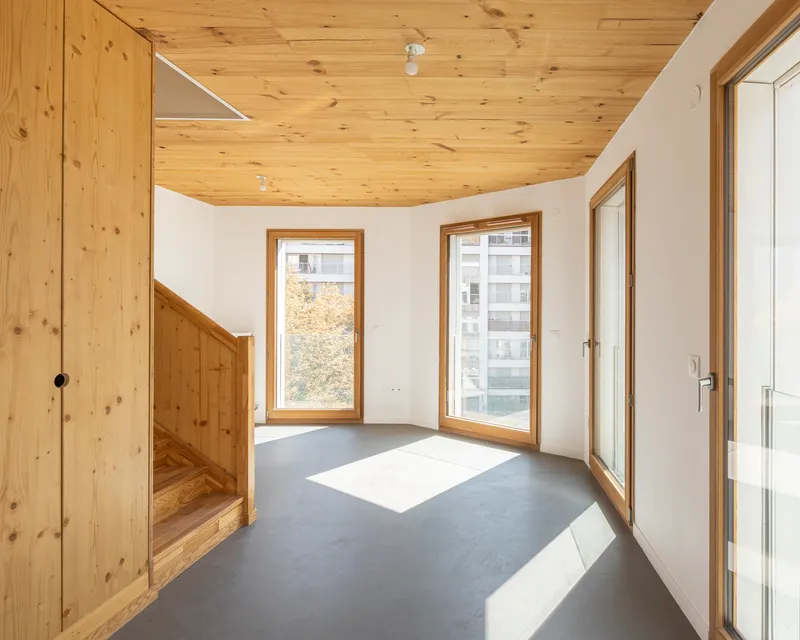
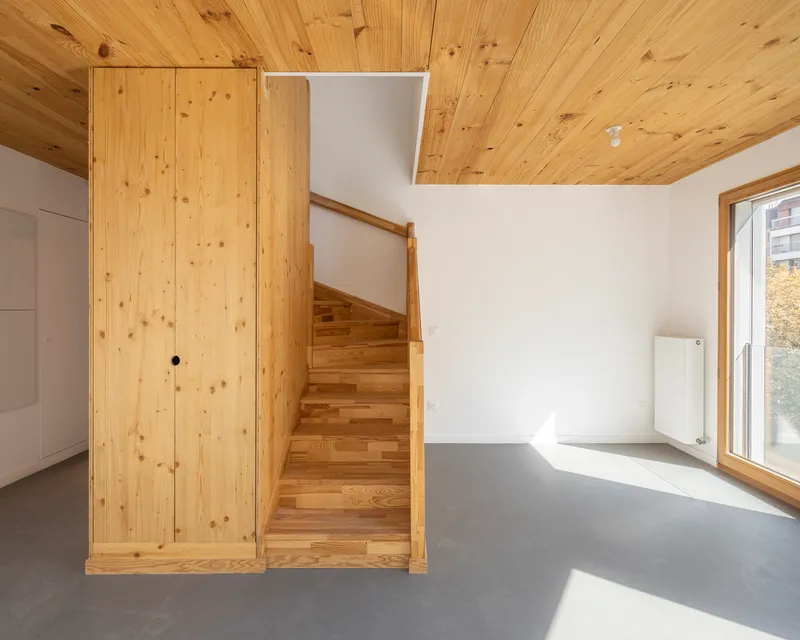
Inside the dwellings, the CLT structure is left exposed wherever possible. Plywood plank ceilings and wall panels give the rooms a warmth and tactility that plasterboard cannot replicate. The grain of the timber is visible, and the joints between panels register the modular logic of the construction. Floors are finished in Forbo Marmoleum linoleum, a grey surface that grounds the warmth of the wood and handles wear in a way that is both practical and quietly elegant.
The timber staircase connecting the triplexes is a compact, sculptural element wrapped in wooden wall panels. It is not a generous stair, but it does not need to be. In 318 square meters split across six units and a commercial ground floor, every centimeter of circulation must earn its keep. The exposed pine ceiling above gives even the stairwell a sense of material continuity.
Light, Orientation, and the Balcony
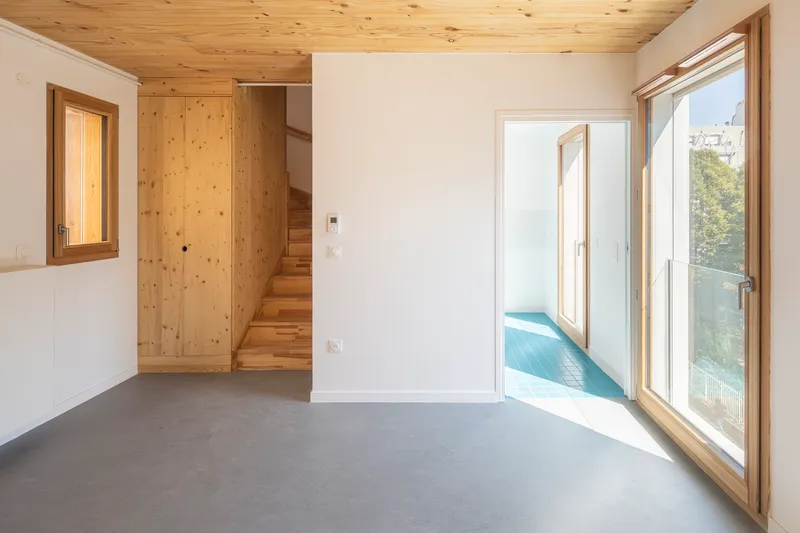
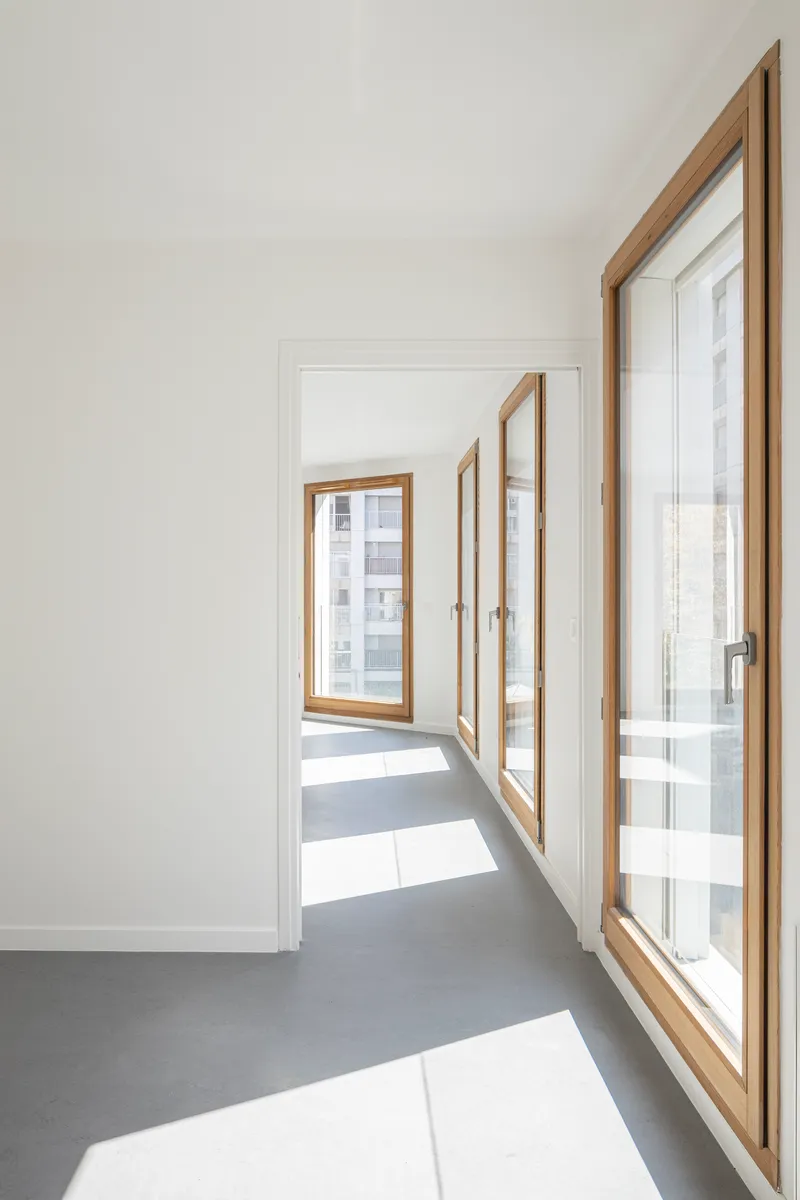
Every dwelling in the building has double or triple orientation, which is remarkable given the compactness of the plan. Timber-framed casement windows are large enough to flood rooms with sunlight, casting angular patches across the grey floors that move through the day. The corridor on the upper floors, lit by a row of angled casements, becomes an unexpected gallery of shifting light.
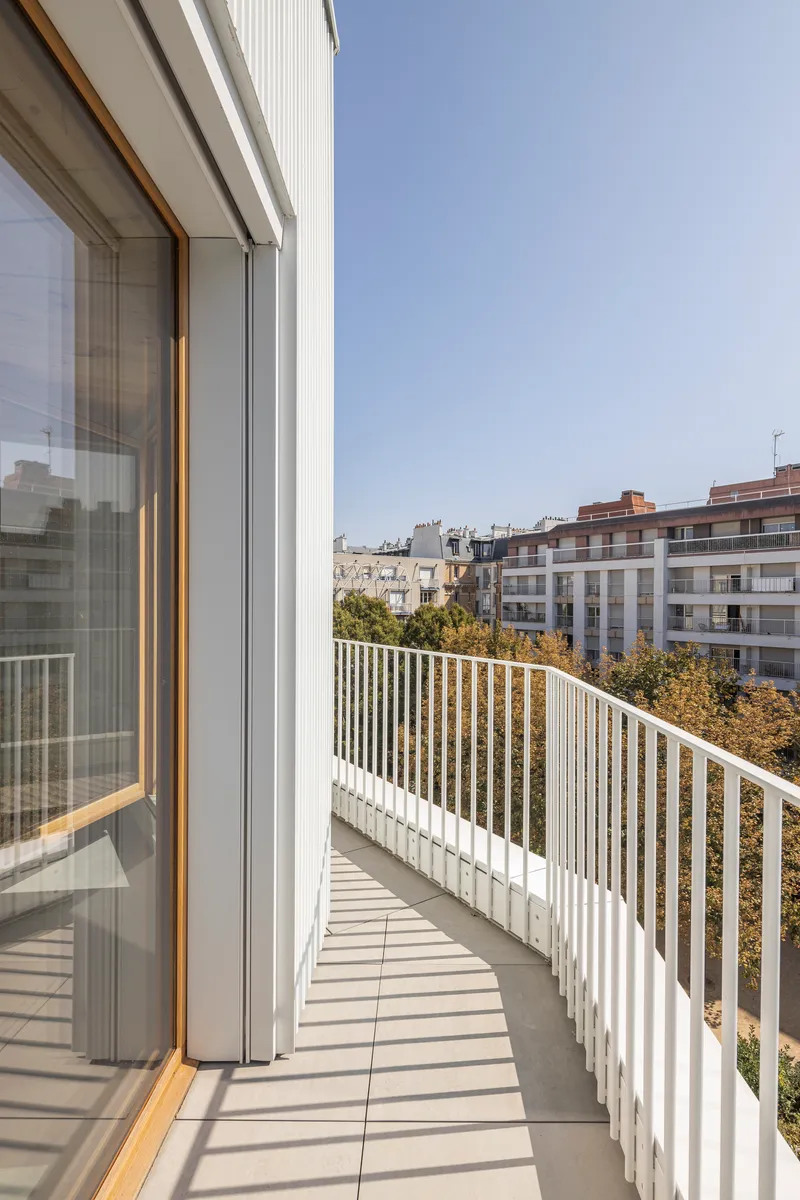
The curved balcony on the upper levels wraps the corner of the building, offering views over the treetops toward the Canal Saint-Martin neighborhood. White vertical metal railings keep the balustrade light and transparent. Timber-framed glass doors open the living spaces fully onto this outdoor room, collapsing the boundary between inside and out. For a building this compact, this degree of openness feels like a genuine luxury.
Living Spaces and Shelving
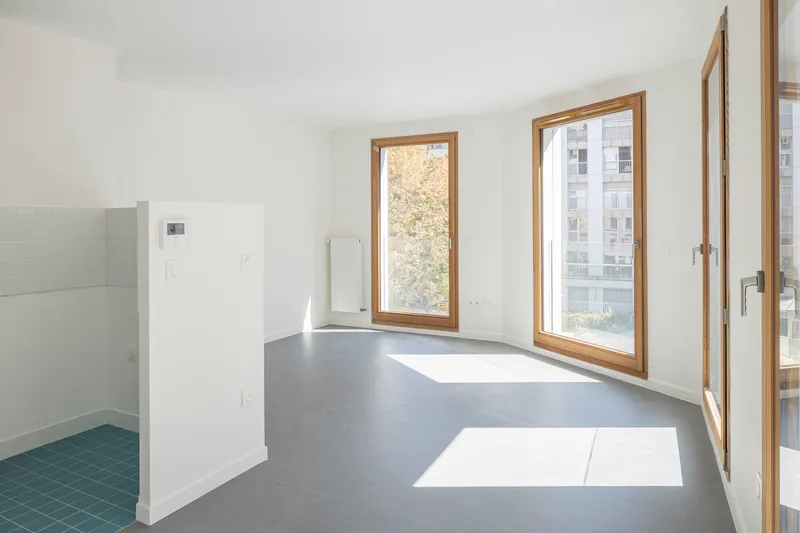
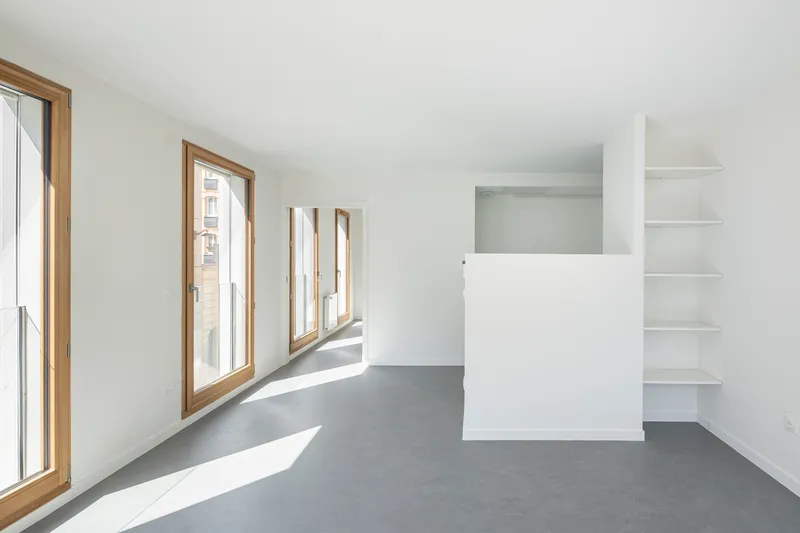
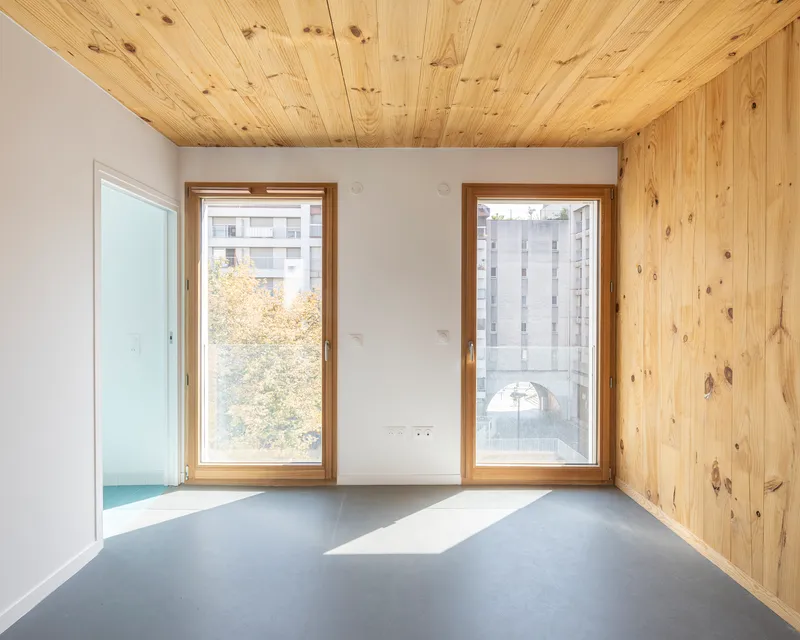
The interiors are spare but not austere. White walls combine with the plywood ceiling and natural timber window frames to create rooms that feel calm and bright. Built-in shelving, also white, lines the walls of some units, offering storage without consuming floor area. The open plan layouts allow residents to configure their spaces freely, and the structural CLT walls, which are load-bearing, define the boundaries of each unit without additional partitions.
Views from the upper floors look out over treetops and neighboring rooftops, a reminder that even in dense urban fabric, careful orientation can unlock unexpected sightlines. The combination of grey flooring, timber overhead, and white walls creates a palette that is neutral enough to absorb any furniture but specific enough to have character.
Plans and Drawings
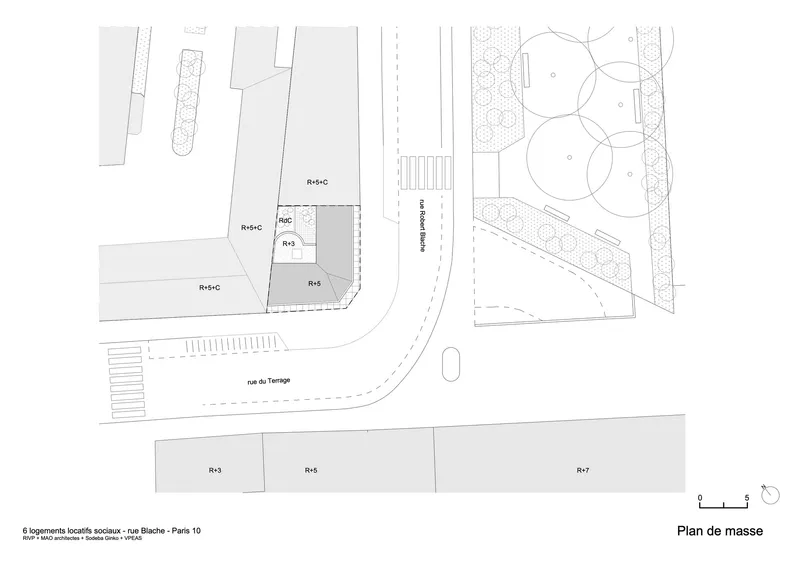
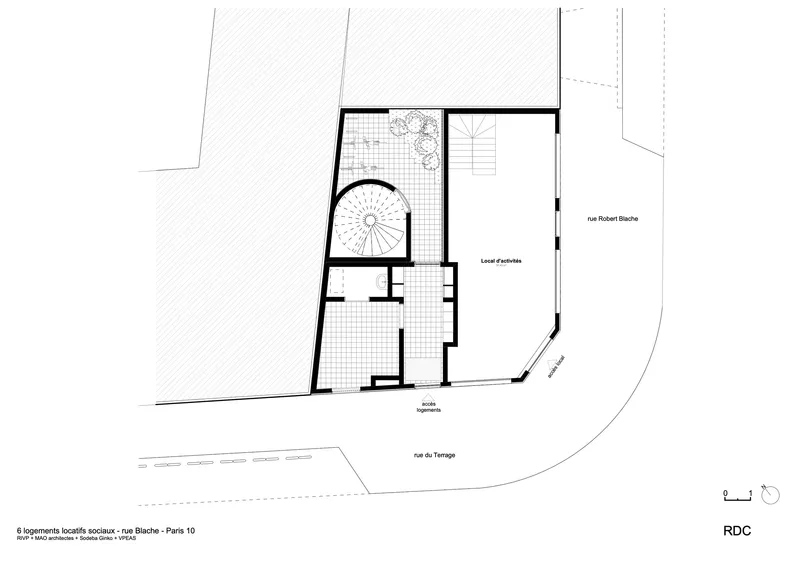
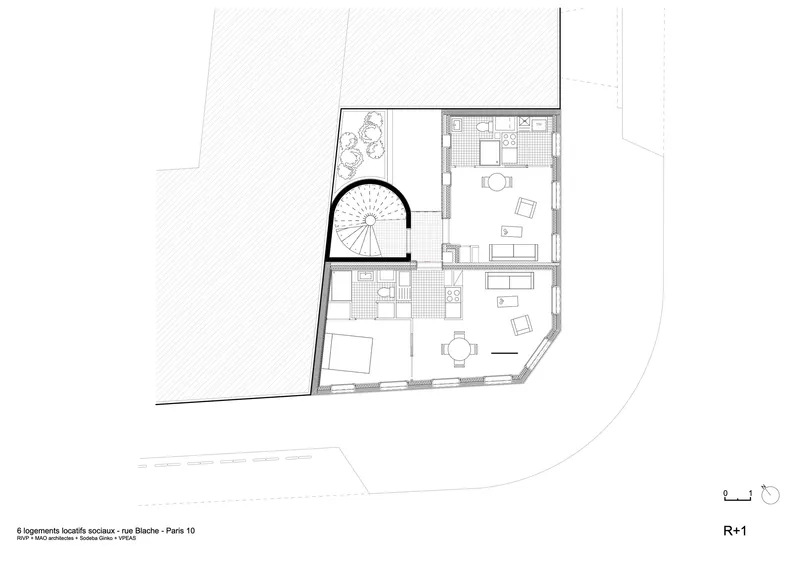
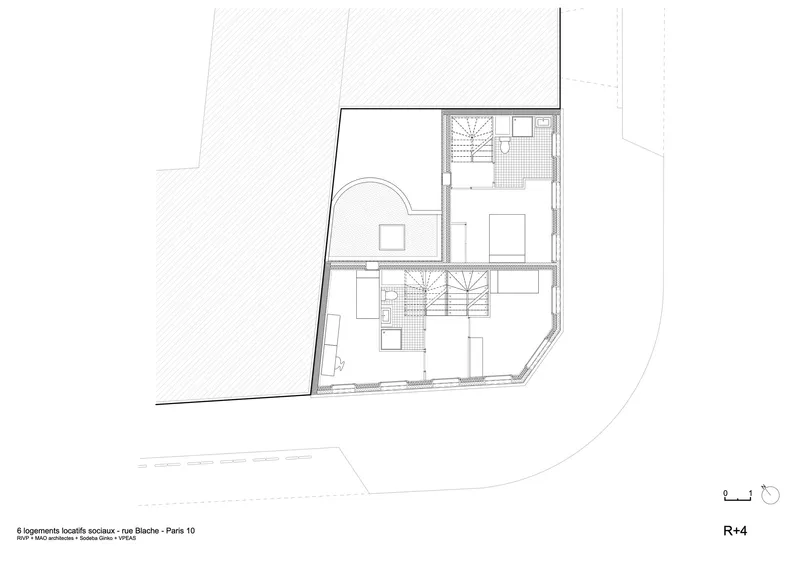
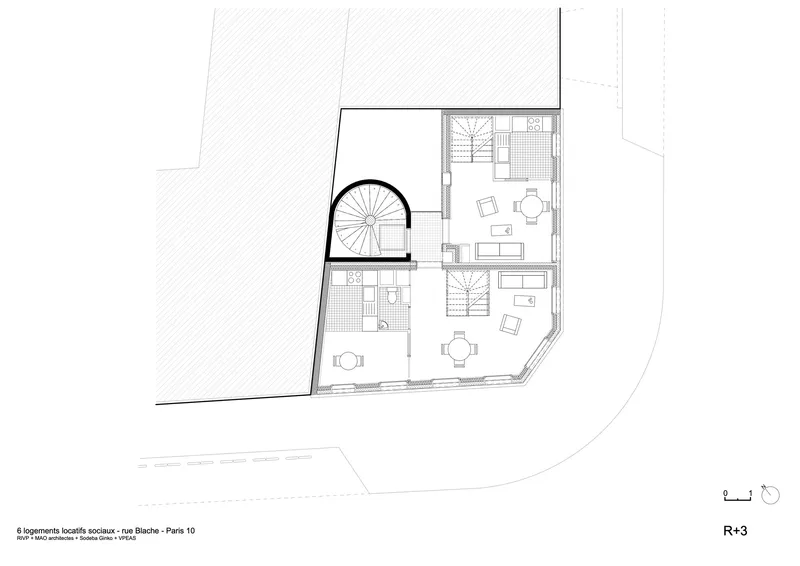
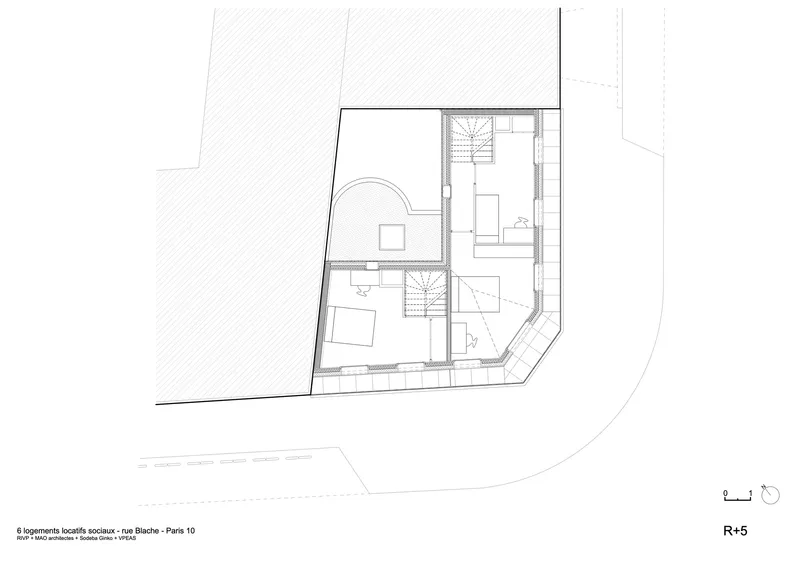
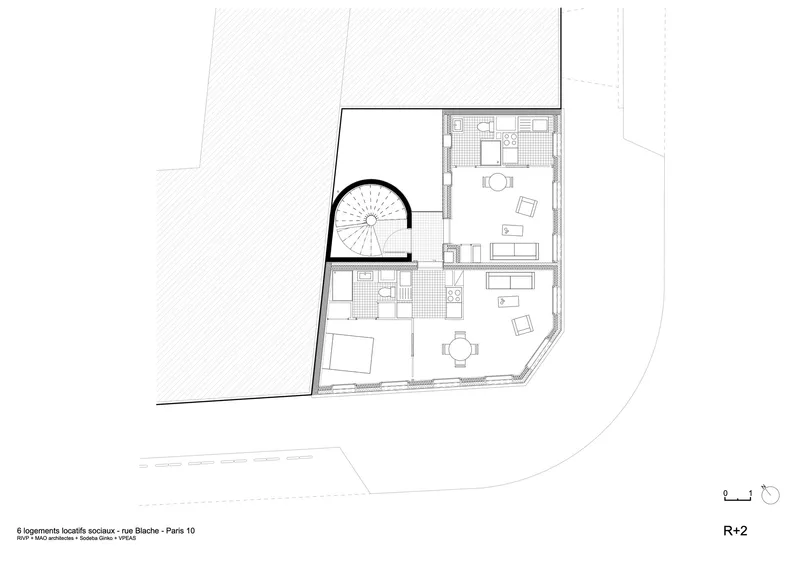
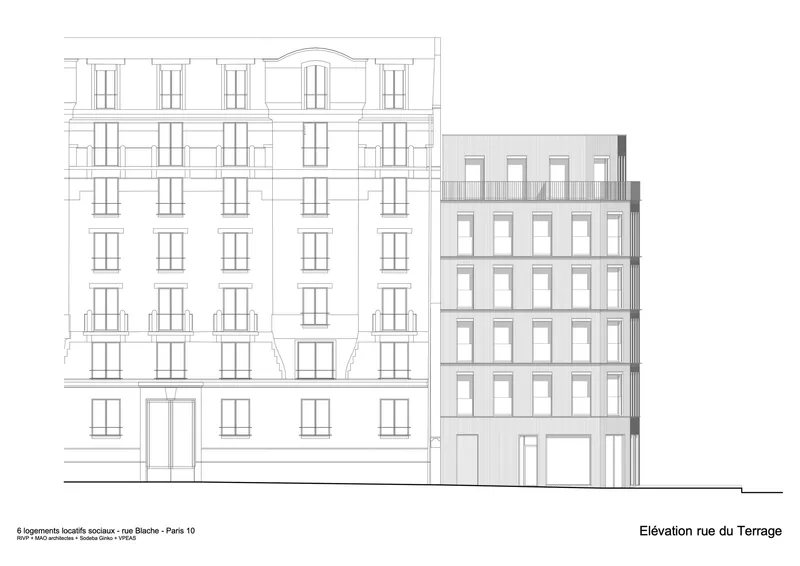
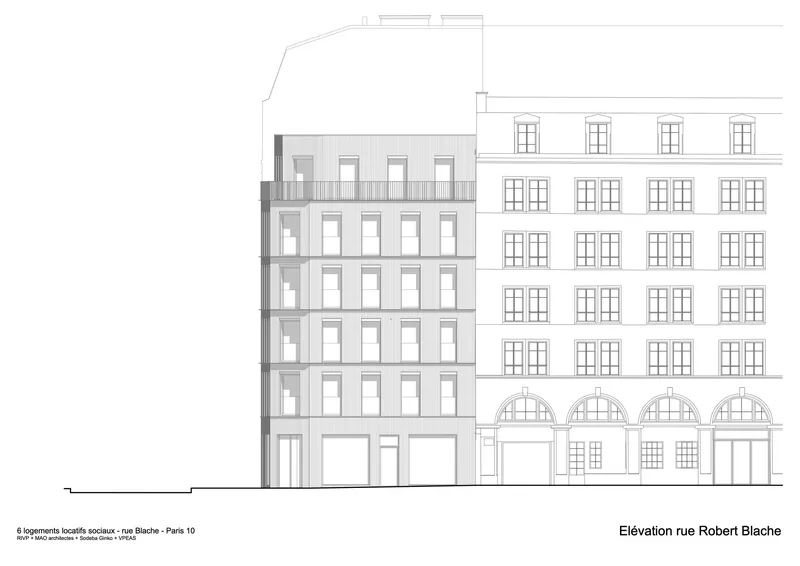
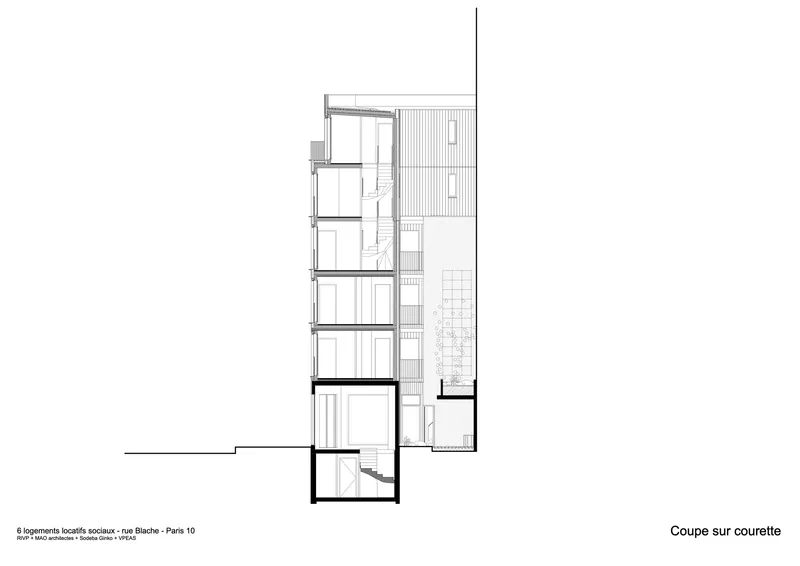
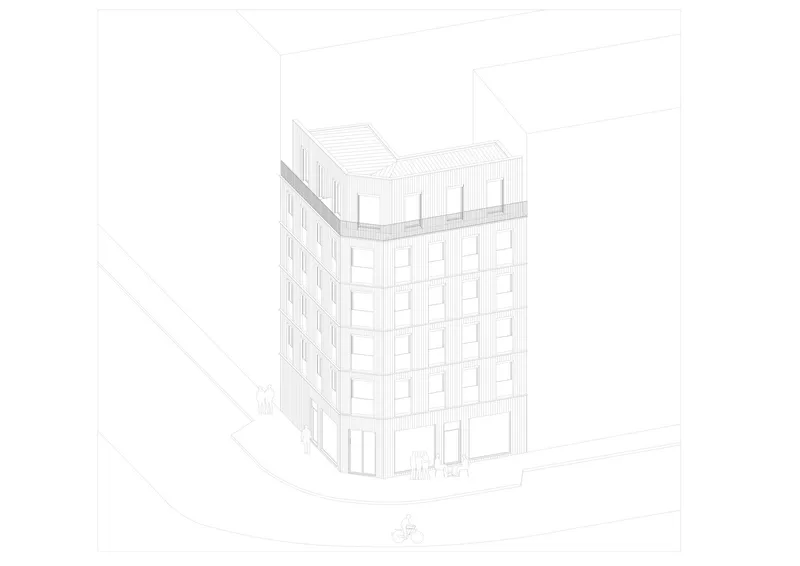
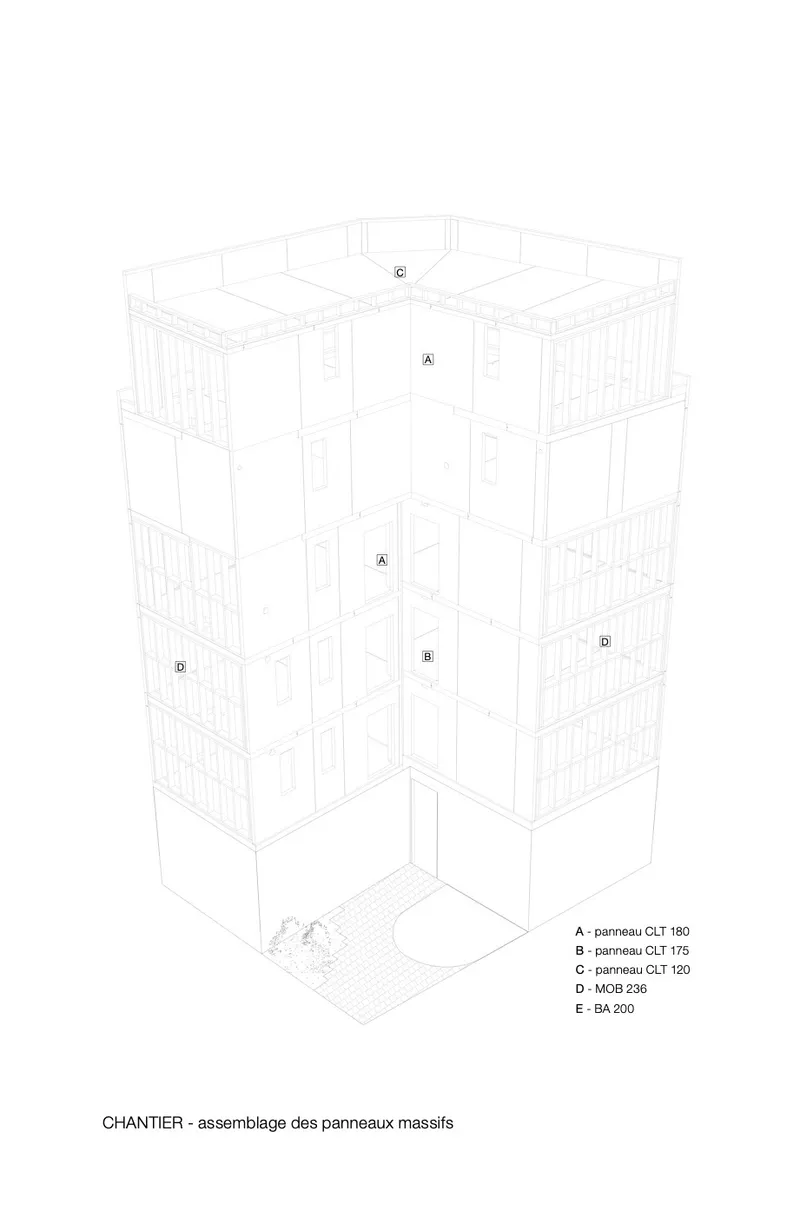
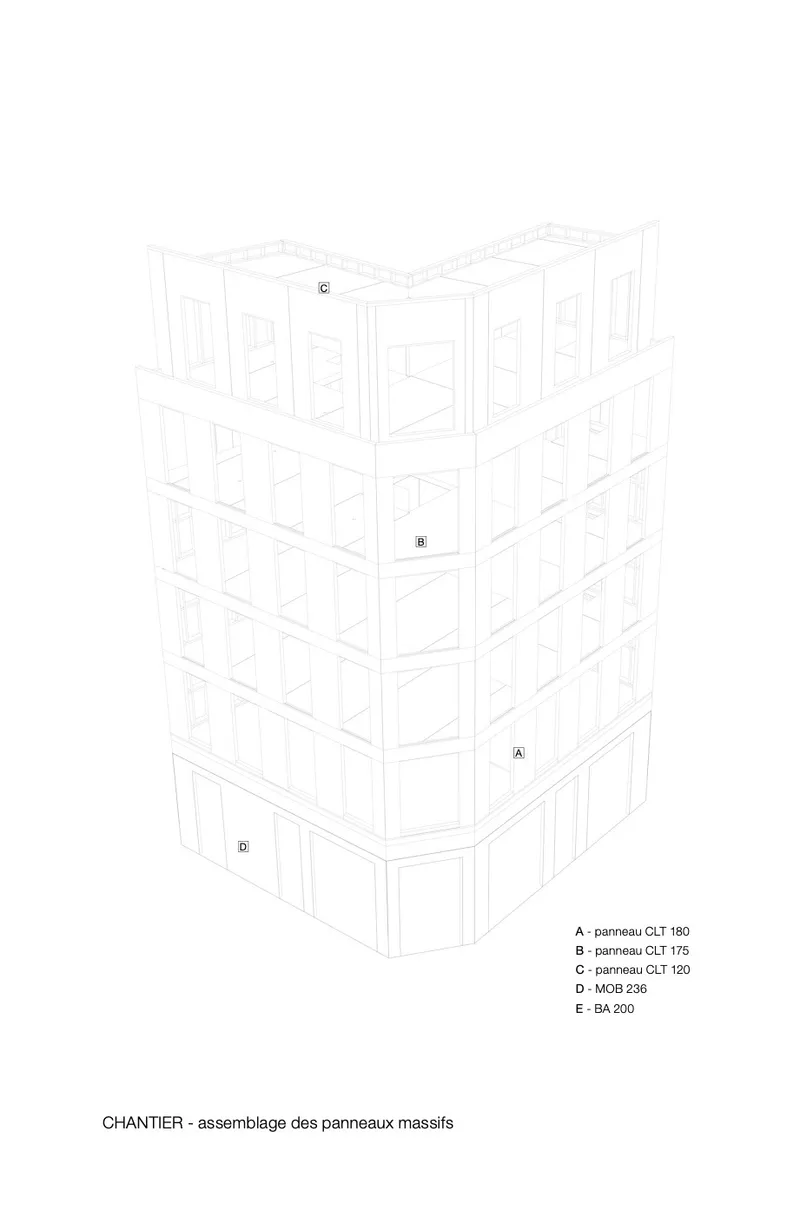
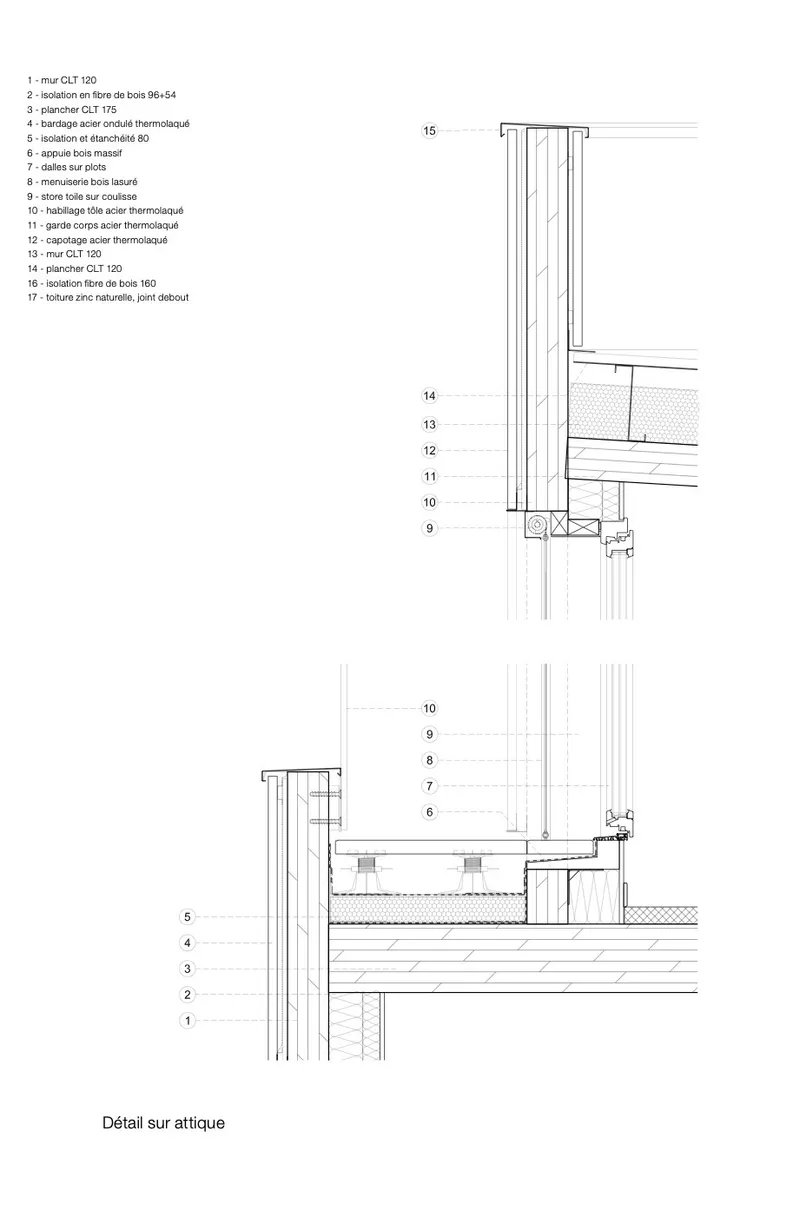
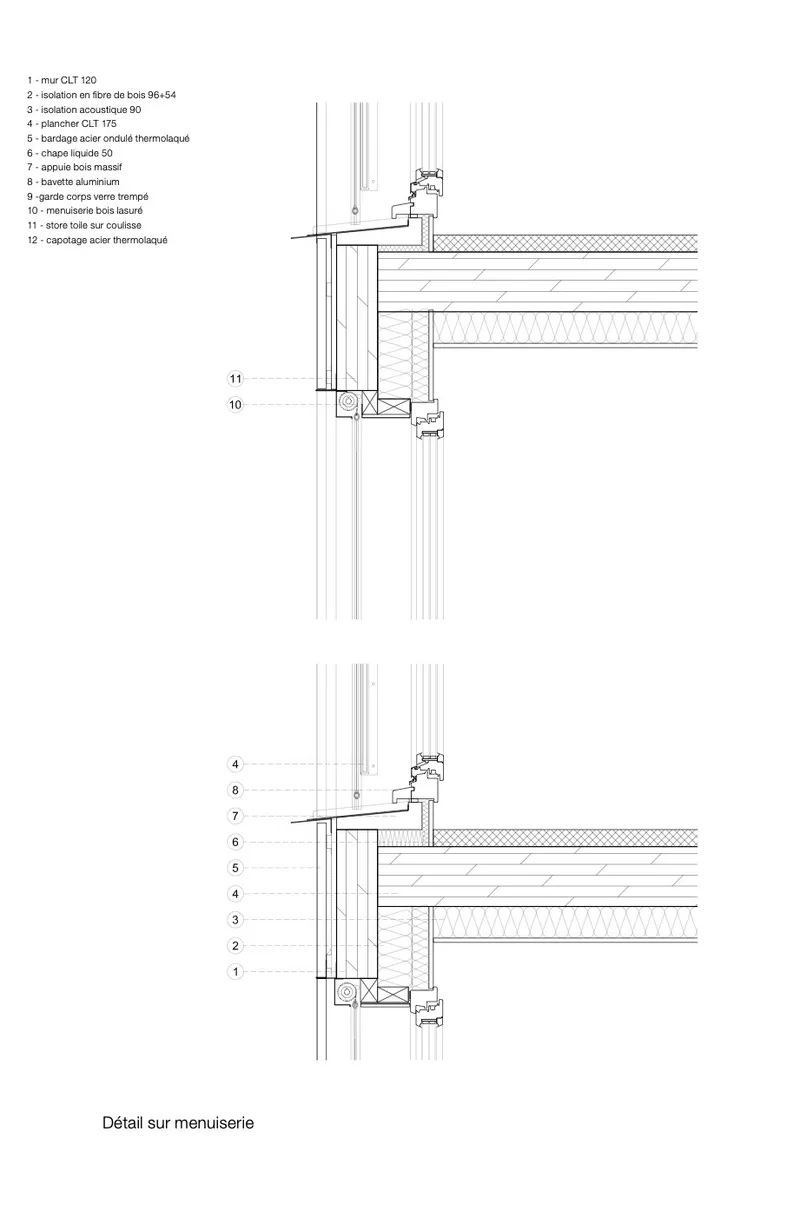
The floor plans reveal the ingenuity of the section. Two triplexes occupy the upper floors, served by a central staircase and external landings rather than an elevator. The spiral stair element appears on every plan, acting as the vertical spine of the building. The ground floor accommodates a commercial space with the large spans made possible by a reinforced concrete structure, while the CLT timber takes over from the first floor upward.
The exploded axonometric drawings are perhaps the most telling documents. They show the facade panels and structural components as discrete, prefabricated modules that slot together like a three-dimensional puzzle. This is how you assemble a five-story structure in ten days: every piece is cut to fit in a factory in the Basque Country, shipped north, and lifted into place. The detail sections showing the timber cladding connection to the attic roof and the window jamb connection to the floor slab reveal the care taken to maintain a continuous insulation envelope, with wood fiber wrapping the CLT panels to achieve very high thermal resistance.
Why This Project Matters
Timber construction in dense European cities is still treated as exceptional, even experimental. Mobile architectural office's building on Rue Robert Blache pushes back against that framing by being, in every visible respect, ordinary. It does not announce its material innovation. It does not wear its sustainability on its sleeve. It simply fills a corner plot with six well-lit, well-oriented homes and a shop, clad in a skin that any Parisian pedestrian would walk past without a second glance. That ordinariness is the achievement.
The ten-day assembly time, the very low carbon footprint, the prefabricated CLT panels sourced regionally, the rainwater recovery system: none of these features are visible from the street, and none of them need to be. The lesson here is that low-carbon urban housing does not require a new formal language. It requires architects who understand their context deeply enough to reinterpret it in timber, metal, and wood fiber without losing the thread. Mobile architectural office has done exactly that, and Paris is better for it.
6 Housing Units in Paris by mobile architectural office. Paris, France. 318 m². Completed 2022. Photography by Cyrille Lallement.
About the Studio
Share Your Own Work on uni.xyz
If projects like this are the kind of work you want to make, uni.xyz is a place to publish your own, find collaborators, and enter design competitions.


Popular Articles
Popular articles from the community


The Amber Palace Opera: A Geological Fiction Surfaces on Tallinn's Baltic Waterfront
Pierre Brillard reimagines a Baltic legend as a public landscape, opera house, and waterfront promenade rooted in Tallinn's coastal identity.

Temporary Home for Dogs: A Reversed Zoo Rethinks Animal Shelter Architecture
In Bucharest, a sinuous corridor and freed landscape flip the logic of containment, designing a shelter that works to make itself unnecessary.
Manzana Morphosis: Stretching Barcelona's Grid into a Living Landscape for 2050
A radical reworking of the Eixample manzana turns density into a tool for generous public space, vertical ecology, and environmental performance.
Opera by the Sea Estonia: Three Shells Dissolving Architecture into Tallinn's Coastline
A winning opera house proposal replaces monumental form with interconnected shells that blur the boundary between building, park and Baltic Sea.

Similar Reads
You might also enjoy these articles

Bao Huynh Watercolor Atelier: A Serene Art Retreat in Hội An
Bao Huynh Watercolor Atelier in Hội An blends multifunctional art spaces, sustainable design, local materials, and family-friendly living in a serene environment.

Atelier Macri Concept Store Interior Design by CASE-REAL
Atelier Macri store features a "ko" counter, walnut wood details, cork displays, blending retail, gallery, and seamless customer experiences.

Manuel Vargas Izquierdo Stadium and High-Performance Sports Center: Architectural Excellence in Jalpa de Méndez
The Manuel Vargas Izquierdo Stadium blends sustainable design, inclusive sports facilities, and cultural-inspired architecture, revitalizing Jalpa de Méndez’s public spaces.

KAKR Buluh Awar Hall: Revitalizing Community and Ecology Through Bamboo Architecture
Community built bamboo hall revitalizes Buluh Awar village, empowering youth, restoring ecology, celebrating vernacular craftsmanship through sustainable architecture and culture.

Comments (0)
Please login or sign up to add comments
No comments yet. Be the first to comment!